
Water and efflorescence resistant composition containing a polymer dispersion
By integrating an aqueous polymer dispersion with a vinyl acetate-ethylene polymer and an alkali salt of a fatty acid into coating compositions, the issues of insufficient water and efflorescence resistance are addressed, enhancing the durability and performance of the coatings.
Patent Information
- Application Number
- PCT/US2024/046769
- Authority / Receiving Office
- WO · WO
- Patent Type
- Applications
- Current Assignee / Owner
- Priority Date
- 2023-09-14
- Filing Date
- 2024-09-13
- Publication Date
- 2025-03-20
AI Technical Summary
Existing coating compositions, renders, façade paints, roof tile paints, and primers suffer from insufficient water resistance and efflorescence resistance, particularly when applied to substrates containing calcium carbonate (CaCO3).
Incorporating an aqueous polymer dispersion with a vinyl acetate-ethylene polymer and an alkali salt of a fatty acid, such as sodium oleate, into coating compositions. The alkali salt is added in amounts ranging from 0.05 to 5 wt.% based on the solids content of the dispersion, enhancing water and efflorescence resistance.
The proposed solution significantly improves the water resistance and efflorescence resistance of coating compositions, renders, façade paints, roof tile paints, and primers, extending their lifespan and preventing moisture-related damage.
Smart Images
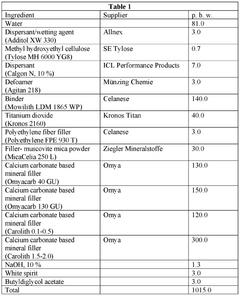
Figure IMGF000021_0001 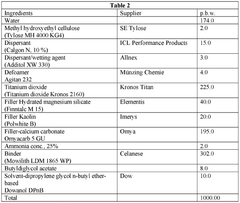
Figure IMGF000022_0001 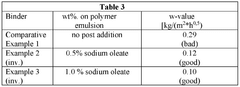
Figure IMGF000024_0001
Abstract
Description
2021P006-US-PSP PATENT Atty. Dkt. No.: 097844-1459846-60502WO-EP WATER AND EFFLORESCENCE RESISTANT FORMULATIONS WITH POLYMER DISPERSIONS CROSS-REFERENCE TO RELATED APPLICATION
[0001] This application claims priority to US Provisional Application No.63 / 582,666, filed on September 14, 2023, the entire contents and disclosures of which are incorporated by reference herein. FIELD OF THE DISCLOSURE
[0002] The present disclosure relates to binder compositions comprising an aqueous polymer dispersion and an alkali salt of a fatty acid. In particular, the present disclosure relates to vinyl ester copolymers including an alkali salt of a fatty acid such as sodium oleate, as well as the incorporation of such binders into coating compositions, renders, façade paints, roof tile paints, primers, and combinations thereof. BACKGROUND OF THE DISCLOSURE
[0003] Aqueous polymer dispersions, such as aqueous vinyl ester dispersions, are known for their use in binder compositions. The binder compositions may be incorporated into coating compositions, renders, façade paints, roof tile paints, and primers. Such coating compositions, renders, façade paints, roof tile paints, and primers may suffer from insufficient water resistance and / or efflorescence resistance. This may be particularly true when the coating compositions, renders, façade paints, roof tile paints, and primers are applied to substrates that include calcium carbonate (CaCO3).
[0004] U.S. Patent No.9,353,005 describes a process for the production of powders redispersible in water comprising an organic component and a water-soluble organic polymeric protective colloid. The organic component is dispersed and stabilized with the protective colloid in water to form a stable dispersion which is dried to form the powder redispersible in water. The organic component comprises abietic acid, sylvic acid, neoabietic acid, levopinaric acid, pimaric acid, isopimaric acid and / or palustric acid and / or their derivatives. The water-soluble organic polymeric protective colloid comprises synthetic protective colloids and naturally and / or synthetically produced biopolymer which can be synthetically modified. The obtained powder reduces efflorescence in hydraulically set systems.2021P006-US-PSP PATENT Atty. Dkt. No.: 097844-1459846-60502WO-EP
[0005] U.S. Patent No.7,183,358 describes hydrophobically modified polymer compositions containing at least one polymer based on one or more ethylenically unsaturated monomers, in the form of an aqueous polymer dispersions or water-redispersible polymer powder prepared therefrom, further containing, a) one or more silanes, polysilanes, oligosiloxanes, polysiloxanes, carbosilanes, polycarbosilanes, carbosiloxanes, polycarbosiloxanes, polysilylenedisiloxanes, and b) one or more fatty compounds from the group of the fatty acids having from 8 to 22 carbon atoms, their metal soaps, their amides, and their esters with monohydric alcohols having from 1 to 8 carbon atoms, with glycol, with polyglycol, with polyalkylene glycol, with glycerol, with mono-, di-, or triethanolamine, or with monosaccharides.
[0006] U.S. Pub. No.2019 / 0010266 describes a vinyl ester latex polymer composition, a process for preparing the composition, a water redispersible polymer powder with improved impact resistance obtained therefrom, and the use of the polymer powder for construction applications.
[0007] U.S. Patent No.7,972,424 describes hydrophobicizing agents which are easily admixed with construction chemical products, prepared by providing a solution of a protective colloid and adding thereto a fatty acid compound sensitive to high pH environments, optionally a hydrophobicizing organosilicon compound, and drying the resulting aqueous mixture.
[0008] A need remains, however, for coating compositions, renders, façade paints, roof tile paints, and primers that have acceptable water and efflorescence resistance. SUMMARY OF THE DISCLOSURE
[0009] In some embodiments, the present disclosure relates to a binder for coating compositions comprising: a) an aqueous polymer dispersion comprising a vinyl acetate- ethylene polymer having a solids content from 30-70%, preferably 34 to 65 %, more preferably from 40 to 60 %, most preferably from 45 to 55 %; and b) from 0.05 to 5 wt.% preferably 0.1 to 4 wt.%, more preferably 0.2 to 3 wt.% of an alkali salt of a fatty acid, preferably sodium oleate, based on the solids content of the aqueous polymer dispersion; c) optionally one of the following: c1) at least 0.5 pphm of an anionic emulsifier, c2) at least 2 pphm of a nonionic emulsifier; or c3) at least 0.5 pphm of an anionic emulsifier and at least 2 pphm of a nonionic emulsifier; c4) wherein the anionic emulsifier is not the alkali metal salt of a); d) wherein the at least one aqueous polymer dispersion is produced by emulsion2021P006-US-PSP PATENT Atty. Dkt. No.: 097844-1459846-60502WO-EP polymerization. In some aspects, the alkali salt of a fatty acid is present during the emulsion polymerization. The solids content of the aqueous polymer dispersion may be from 34 to 65 % preferably from 40 to 60 %, more preferably from 45 to 55 %. The alkali salt of a fatty acid may be sodium oleate, sodium stearate, or combinations thereof. The binder may comprise a rosin and / or resin.
[0010] In some embodiments, the present disclosure relates to a binder for coating compositions comprising: a) an aqueous polymer dispersion having a solids content from 30- 70%, preferably 34 to 65 %, more preferably from 40 to 60 %, most preferably from 45 to 55 %; and b) from 0.05 to 5 wt.% preferably 0.1 to 4 wt.%, more preferably 0.2 to 3 wt.% of an alkali salt of a fatty acid, preferably sodium oleate, based on the solids content of the aqueous polymer dispersion; c) wherein the at least one aqueous polymer dispersion is produced by emulsion polymerization, wherein the aqueous polymer dispersion comprises a vinyl ester copolymer, a vinyl acetate copolymer, a vinyl acetate-ethylene polymer, a vinyl acetate- ethylene-vinyl ester polymer, a vinyl acetate-ethylene-acrylic polymer, a vinyl acetate- ethylene-vinyl chloride polymer, an acrylic polymer, a styrene-acrylic polymer, or combinations thereof; d) wherein the alkali salt of a fatty acid is added to the aqueous polymer dispersion as a post addition. In some aspects, the binder comprises one of the following: e1) at least 0.5 pphm of an anionic emulsifier, e2) at least 2 pphm of a nonionic emulsifier; or e3) at least 0.5 pphm of an anionic emulsifier and at least 2 pphm of a nonionic emulsifier; e4) wherein the anionic emulsifier is not the alkali metal salt of a).The solids content of the aqueous polymer dispersion may be from 34 to 65 % preferably from 40 to 60 %, more preferably from 45 to 55 %. The alkali salt of a fatty acid may be sodium oleate, sodium stearate, or combinations thereof. The aqueous polymer dispersion may comprise an acrylic polymer and the acrylic polymer may be produced by: a) emulsifying at least one acrylic monomer in the presence of an emulsifier, an initiator, and / or optionally a protective colloid, wherein the emulsifying is conducted at a temperature from 60 to 95˚C. The aqueous polymer dispersion may comprise a vinyl ester copolymer, wherein the vinyl ester copolymer may be produced by: a) polymerizing at least one vinyl ester of a saturated carboxylic acid and optionally further monomers copolymerizable therewith in the presence of at least one emulsifier and / or at least one protective colloid up to a conversion of at least 90% of the monomers used, b) adding at least one free-radically polymerizable monomer other than the vinyl ester used in step a) in pure form or in the form of a solution to the polymerization mixture obtained in step a), and c) adding at least one initiator of free-radical polymerization2021P006-US-PSP PATENT Atty. Dkt. No.: 097844-1459846-60502WO-EP after the addition of the monomer(s) in step b) has ended, with the proviso that 1) the content of monomers with acid groups and / or with acid anhydride groups does not exceed 6% by weight, based on the total amount of monomers, 2) the content of protective colloid, based on the total monomer content is from 0 to less than 1 wt.%, or wherein 3) in step a) and / or in step b), at least one monomer containing ethylenically unsaturated silane groups and / or at least one ethylenically unsaturated epoxide compound is used. The aqueous polymer dispersion may comprise a vinyl ester copolymer, wherein the vinyl ester copolymer may be produced by: (a) polymerizing, in a first stage and under ethylene pressure, a first monomer composition comprising from about 60 weight percent to about 95 weight percent of at least one vinyl ester, and from about 5 weight percent to about 40 weight percent ethylene to produce a first stage product having a Tg of less than 25 °C; and (b) polymerizing, in a second stage and in the presence of said first stage product, a second monomer composition comprising at least 95 weight percent of a meth(acrylic) ester or a mixture of at least two different (meth) acrylic esters selected such that the polymer produced by said second monomer composition has a Tg from 5 to 90 °C. The aqueous polymer dispersion may comprise an acrylic polymer, wherein the acrylic polymer may be produced by: emulsion polymerization of at least one ethylenically unsaturated C1-C8 alkyl ester in the presence of a chain transfer agent, wherein the polymer has a Fikentscher K value less than 60. The aqueous polymer dispersion may comprise a vinyl ester copolymer, wherein the vinyl ester copolymer may be produced by: a) pre-charging a reactor with a pre-charge comprising vinyl acetate monomer, a second monomer, an ionic-group containing monomer, water, and an emulsifier system, wherein the pre charge comprises from 0.5 to 20% of the total amount of vinyl acetate and at least 30% of the total amount of the second monomer; b) adding a remaining amount of vinyl acetate monomer and the second monomer to the reactor; c) adding an initiator system to the reactor; and d) conducting the polymerization reaction at a temperature of > 65 °C to form an aqueous vinyl acetate-second monomer copolymer dispersion having a solids content from 5 to 55% and a particle size of dw < 120 nm as measured by dynamic light scattering at 90° (Contin Fit); wherein the emulsifier system is present in an amount from 4 to 8 pphm. The binder may comprise a rosin and / or resin.
[0011] In some embodiments, the present disclosure is directed to a coating composition comprising from 5 to 90 wt.% of a binder described in paragraphs
[0009] and
[0010] , based on the total weight of the coating. In some embodiments, the present disclosure is directed to a render comprising from 4 to 25 wt.% preferably from 7 to 18 wt.%, more preferably from 82021P006-US-PSP PATENT Atty. Dkt. No.: 097844-1459846-60502WO-EP to 15 wt.% of the binder described in paragraphs
[0009] and
[0010] , based on the total weight of the render. The render may have a water penetration w-value of < 0.5 kg / (m2*h0.5), preferably < 0.2 kg / (m2*h0.5), more preferably <0.10 kg / (m2*h0.5). The binder may comprise a rosin and / or resin.In some embodiments, the present disclosure is directed to a façade paint comprising from 20 to 90 wt.% preferably from 25 to 60 wt.%, more preferably from 30 to 50 wt.% of the binder described in paragraphs
[0009] and
[0010] , based on the total weight of the facade paint. The façade paint may have a water penetration w-value of < 0.5 kg / (m2*h0.5), preferably < 0.2 kg / (m2*h0.5), more preferably <0.1 kg / (m2*h0.5). The façade paint may have a water vapor penetration sD-value of < 1.4 m, preferably from 0.14 to 1.4 m, more preferably <0.14 m. The binder may comprise a rosin and / or resin.
[0012] In some embodiments, the present disclosure is directed to a roof tile paint comprising from 20 to 90 wt.% preferably from 25 to 60 wt.%, more preferably from 30 to 50 wt.% of a binder described in paragraphs
[0009] and
[0010] , based on the total weight of the roof tile paint.
[0013] In some embodiments, the present disclosure is directed to a primer comprising from 10 to 50 wt.% preferably from 15 to 40 wt.%, more preferably from 20 to 40 wt.% of a binder described in paragraphs
[0009] and
[0010] , based on the total weight of the primer. The primer may be used in primer application used on surfaces with CaCO3. The primer, when solidified and measured with Dolomite or CaCO3, may have a solidification of > 8g. The binder may comprise a rosin and / or resin. DETAILED DESCRIPTION OF THE DISCLOSURE
[0014] Introduction
[0015] The present disclosure relates to a binder for coating compositions, as well as to methods for preparing components of the binder, to methods for preparing the binder, and to products into which the binder may be incorporated, including coating compositions, renders, façade paints, roof tile paints, and primers. The binder may comprise an aqueous polymer dispersion and an alkali salt of a fatty acid. The aqueous polymer dispersion may have a solids content from 30 to 70% and may be produced by emulsion polymerization. The alkali salt of a fatty acid may be present from 0.05 to 5%, based on the solids content of the aqueous polymer dispersion. Specific binders having these general components are described herein.
[0016] As described in the background section, coating compositions, renders, façade paints, roof tile paints, and primers may suffer from insufficient water resistance and / or2021P006-US-PSP PATENT Atty. Dkt. No.: 097844-1459846-60502WO-EP efflorescence. Insufficient water resistance may be problematic because the coating compositions, renders, façade paints, roof tile paints, and primers may have an unacceptably shortened lifespan and the underlying substrate may be damaged by water. Efflorescence, a coating formed by the migration of a salt to the surface of a porous material, may be problematic because it is unsightly and can spread, leading to moisture problems and eventually structural damage to the underlying substrate. Such problems efflorescence may be especially true when the coating compositions, renders, façade paints, roof tile paints, and primers are applied to roof tiles containing acrylic polymer dispersions and, optionally to substrates comprising CaCO3. CaCO3 is frequently used in coating compositions, renders, façade paints, roof tile paints, and primers as an additive and is frequently included in substrates to which such compositions, renders, paints, and primers are applied. Depending on the product, it may be used as an extender, to reduce or enhance gloss, as an extender for titanium dioxide, as a rheology modifier, and / or to increase the density of the product.
[0017] Surprisingly and unexpectedly, the inventors have found that by including an alkali salt of a fatty acid, such as sodium oleate, sodium stearate, or combinations thereof, in a relatively small amount in coating compositions, renders, façade paints, roof tile paints, and primers, increases the water resistance significantly and improves the efflorescence resistance as compared to the same coating compositions, renders, façade paints, roof tile paints, and primers as formulated without the alkali salt of a fatty acid. The alkali salt of a fatty acid may be incorporated into the aqueous polymer dispersion itself. In some embodiments, the alkali salt of a fatty acid may be incorporated into the coating composition as a “post-addition” which may be at any point after the aqueous polymer dispersion is formed. In some aspects, the alkali salt of a fatty acid is added to the coating composition. In some aspects, alkali salt of a fatty acid may be added to a downstream product, such as a render, façade paint, roof tile pain, or primer.
[0018] Definitions
[0019] The terms “invention,” “the invention,” “this invention,” and “the present invention,” if used herein, are intended to refer broadly to all of the subject matter of this patent application and the claims below. Similarly, “in some aspects” and “in some embodiments” is meant to refer broadly to combinations of those aspects with all of the subject matter of this patent application and the claims below. Statements containing these terms should be understood not to limit the subject matter described herein or to limit the meaning or scope of the patent claims below.2021P006-US-PSP PATENT Atty. Dkt. No.: 097844-1459846-60502WO-EP
[0020] “As used herein”, the meaning of “a,” “an,” or “the” includes singular and plural references, unless the context clearly dictates otherwise.
[0021] All positive recitations of a feature also contemplate explicit exclusion of such a feature.
[0022] All ranges disclosed herein are to be understood to include and encompass any endpoints, and any and all ranges subsumed therein. Endpoints for ranges disclosed herein may be combined to form additional ranges.
[0023] All references cited to herein are incorporated by reference in their entirety.
[0024] Binder
[0025] As described above, the binder comprises an aqueous polymer dispersion and an alkali salt of a fatty acid. Each component is described in detail herein. The alkali salt of a fatty acid may be combined with the aqueous polymer dispersion as a post addition, i.e., after polymerization is complete, or during polymerization. In some aspects, the alkali salt of a fatty acid is added to the water phase during polymerization.
[0026] Aqueous polymer dispersion
[0027] The aqueous polymer dispersion, also referred to herein as a polymer emulsion, may comprise a vinyl ester copolymer, a vinyl acetate copolymer, a vinyl acetate-ethylene polymer, a vinyl acetate- ethylene-vinyl ester polymer, a vinyl acetate-ethylene-acrylic polymer, a vinyl acetate-ethylene-vinyl chloride polymer, an acrylic polymer, a styrene- acrylic polymer, or combinations thereof. In some aspects, the aqueous polymer dispersion comprises a vinyl ester copolymer. In further aspects, the aqueous polymer dispersion comprises an acrylic polymer.
[0028] The aqueous polymer dispersion may have a solids content from 30 to 70%, determined according to ISO 3251 (2019) at 130 °C for 30 minutes. In some aspects, the solids content may range from 34 to 65%, e.g., from 40 to 60%, or from 45 to 55%.
[0029] If desired, the final dispersion may be further diluted depending on the desired application and the desired solids content in a primer formulation. The aqueous polymer dispersion may have a pH from 2 to 7, e.g., from 3 to 6 or from 4 to 5.
[0030] The aqueous polymer dispersion may have a viscosity from 5 mPas and 10,000 mPas, e.g., less than 5000 mPas, from 10 mPas to 2,000 mPas, from 10 to 1,000 mPas, or from 10 to 100 mPas, as measured by a Brookfield viscometer at 25°C, 20 rpm, and the corresponding spindle for the correct measuring range.
[0031] When the aqueous polymer dispersion is a vinyl ester dispersion, it may have a2021P006-US-PSP PATENT Atty. Dkt. No.: 097844-1459846-60502WO-EP residual vinyl ester content of less than 0,1%, e.g., less than 0.05%, less than 0.035%, or less than 0.01%.
[0032] The aqueous polymer dispersion may have a glass transition temperature (Tg, mid point) from -10 to 20°C, e.g., from -5 to 10°C, or from -2.5 to 5°C.
[0033] When measured by dynamic light scattering at 90°, the aqueous polymer dispersion may have a particle size dw of less than or equal to 500 nanometers (nm), e.g., less than 350 nm, less than 150 nm, from 50 to 500 nm, from 70 to 350 nm, or from 70 to 150 nm. The distribution of the particle size (dw / dn) may be less than or equal to 2, e.g., less than or equal to 1.5 or less than 1.3.
[0034] Alkali salt of a fatty acid
[0035] As described herein, the inventors found that, surprisingly and unexpectedly, including an alkali salt of a fatty acid improved the water and / or efflorescence resistance of coating compositions, renders, façade paints, roof tile paints, and primers. Methods for determining water resistance and efflorescence resistance are described in the examples section.
[0036] Exemplary alkali metals for the alkali salt of a fatty acid include sodium, potassium, lithium, and combinations thereof. In some aspects, the alkali salt is sodium.
[0037] Exemplary fatty acids include saturated or unsaturated aliphatic chains containing a carboxylic acid. The fatty acid may have a C4 to C30 carbon chain. In some aspects, the fatty acid comprises an unbranched chain. Exemplary saturated fatty acids include caprylic acid, capric acid, lauric acid, myristic acid, palmitic acid, stearic acid, arachidic acid, behenic acid, lignoceric acid, cerotic acid, or combinations thereof. Exemplary unsaturated fatty acids include myristoleic acid, palmitoleic acid, sapienic acid, oleic acid, elaidic acid, vaccenic acid, linoleic acid, linolaidic acid, alpha-linolenic acid, arachidonic acid, eicosapentaenoic acid, erucic acid, docosahexaenoic acid, and combinations thereof. In some aspects, the fatty acid is a saturated fatty acid having a C10-C22 unbranched chain. In some aspects, the fatty acid is an unsaturated fatty acid having a C10-C22 unbranched chain.
[0038] In some aspects, the alkali salt of a fatty acid comprises a sodium salt of a C10-C22 unbranched fatty acid. Exemplary alkali salts of a fatty acid include sodium oleate, sodium stearate, and combinations thereof.
[0039] The alkali salt of a fatty acid may be present in a relatively small amount, as calculated based on the solids content of the aqueous polymer dispersion. For example, the alkali salt of a fatty acid may be present in an amount from 0.05 to 5 wt.%, based on the2021P006-US-PSP PATENT Atty. Dkt. No.: 097844-1459846-60502WO-EP solids content of the aqueous polymer dispersion, e.g., from 0.1 to 4 wt.%, or from 0.2 to 3 wt.%.
[0040] Emulsion Polymerization
[0041] The binder described herein comprises an aqueous polymer dispersion. The aqueous polymer dispersion used according to the invention is prepared by free radical emulsion polymerization. Any expedient and properly chosen technique is suitable for carrying out the emulsion polymerization. Examples of emulsion polymerization methods include a batch process in which a polymerization reactor is charged with water, a surfactant serving as an emulsifier and a monomeric component. For starting the polymerization, the temperature of the mixture is increased and suitable additives, such as a polymerization initiator, are added to the mixture. In the monomer metering process, water and emulsifier are fed to the polymerization reactor. The temperature of the mixture is increased, and a monomeric component is added dropwise to the mixture. In the monomer emulsion metering process, the monomeric component is first emulsified with a surfactant serving as an emulsifier and with water before the dropwise addition of the monomer, and the resulting emulsion is then added dropwise to the mixture.
[0042] The emulsion polymerization can therefore be carried out by the batch process, by the feed process, by the combined batch / feed process or by the continuous process. In addition to the preparation of single-phase emulsion polymers, the preparation of multiphase emulsion polymers is also possible. This is affected by polymerization of a plurality of different monomer combinations, preferably two different monomer combinations, in successive stages. However, single-phase emulsion polymers are preferably used.
[0043] For example, the following are used as free radical initiators: hydrogen peroxide, benzoyl peroxide, cyclohexanone peroxide, isopropyl cumyl hydroperoxide, persulfates of potassium, of sodium and of ammonium, peroxides of saturated monobasic aliphatic carboxylic acids having an even number of carbon atoms and a C8-C12chain length, tert-butyl hydroperoxide, di-tert-butyl peroxide, diisopropyl percarbonate, azoisobutyronitrile, acetylcyclohexanesulfonyl peroxide, tert-butyl perbenzoate, tert-butyl peroctanoate, bis(3,5,5-trimethyl)hexanoyl peroxide, tert-butyl perpivalate, hydroperoxypinane, p-methane hydroperoxide. The abovementioned compounds can also be used within a redox systems, transition metal salts, such as iron(II) salts, or other reducing agents being concomitantly used. Alkali metal salts of oxymethanesulfinic acid, mercaptans of chain length C10-C14, but- 1-en-3-ol, hydroxylamine salts, sodium dialkyldithiocarbamate, sodium bisulfite, ammonium2021P006-US-PSP PATENT Atty. Dkt. No.: 097844-1459846-60502WO-EP bisulfite, sodium dithionite, diisopropyl xanthogen disulfide, ascorbic acid, tartaric acid, isoascorbic acid, boric acid, urea and formic acid can be concomitantly used as reducing agents or regulators.
[0044] However, water-soluble persulfates, in particular ammonium persulfate or sodium persulfate, are preferably used for initiating polymerization.
[0045] Any chain-transfer reagents properly chosen from among the known substances can likewise preferably be used. Examples of these are, inter alia, alcohols, such as methanol, ethanol, propanol and butenol, aldehydes and ketones, such as acetone, methyl ethyl ketone, cyclohexane, acetophenone, acetaldehyde, propionaldehyde, n-butylaldehyde, furfural and benzaldehyde, and mercaptans, such as dodecyl mercaptan, lauryl mercaptan, normal mercaptan, thioglycolic acid, octyl thioglycolate and thioglycerol. Such chain-transfer reagents can be used alone or in the form of a combination of two or more thereof.
[0046] Any expediently and properly chosen aqueous medium can be used for the emulsion polymerization. Examples of aqueous media include water and aqueous alcoholic solutions. With regard to performance characteristics and costs, water is preferred. Water of all kinds, for example tap water or ion exchanger water, is suitable.
[0047] Protective colloid and / or emulsifier used for stabilization can likewise either be initially introduced completely at the beginning of the polymerization or partly initially introduced and partly metered or completely metered during the polymerization. The polymerization temperature is typically in the range from 20 to 120°C, preferably in the range from 30 to 110°C and very particularly preferably in the range from 45 to 95°C.
[0048] After the end of the polymerization, a further, preferably chemical aftertreatment, in particular with redox catalysts, such as, for example, combinations of the abovementioned oxidizing agents and reducing agents, can follow for demonomerization. Furthermore, residual monomer present can be removed in a known manner, for example by physical demonomerization, i.e., removed by distillation (in particular via steam distillation) or by stripping with an inert gas. A combination of physical and chemical methods which permits a reduction of the residual monomers to very low contents (<1000 ppm, preferably <100 ppm) is particularly efficient.
[0049] The compositions according to the invention can be prepared without problems by simple mixing of the intended amounts of the individual components by means of a conventional stirrer or the like. In the case of the compositions according to the invention, the plastics dispersion, which contains an acid group and an alkoxysilyl group and has various2021P006-US-PSP PATENT Atty. Dkt. No.: 097844-1459846-60502WO-EP outstanding physical properties, is combined with the colloidal silica. The compositions are therefore characterized by stable physical properties and excellent performance characteristics.
[0050] The compositions according to the invention can be used in the construction sector, namely as plasters and renders or as paints. These compositions are particularly preferably used as plasters, renders, facade paints and roofing tile paints. The present invention also relates to these uses.
[0051] Particularly preferred plasters, renders and paints according to the invention are stabilized with the use of nonionic emulsifiers as dispersants, for example with the products Surfynol 104H, Additol VXW 6208, Nuosperse 2006 and Nuosperse 2008.
[0052] In some aspects, the aqueous polymer dispersion comprises an acrylic polymer. The acrylic polymer may be produced according to methods disclosed in EP1276705, DE19812143, and / or WO2021 / 150669. Generally, the method may comprise emulsifying at least one acrylic monomer in the presence of an emulsifier, an initiator, and / or optionally a protective colloid, wherein the emulsifying is conducted at a temperature from 60 to 95˚C.
[0053] In some aspects, the aqueous polymer dispersion comprises an acrylic polymer. The acrylic polymer may be produced according to methods disclosed in WO2017 / 083122. Generally, the method may include: emulsion polymerization of at least one ethylenically unsaturated C1-C8 alkyl ester in the presence of a chain transfer agent, wherein the polymer has a Fikentscher K value less than 60.
[0054] In some aspects, the aqueous polymer dispersion comprises a vinyl ester polymer. The vinyl ester polymer may be produced according to methods disclosed in EP2025688 and / or EP2017313. Generally, the method may comprise: a) polymerizing at least one vinyl ester of a saturated carboxylic acid and optionally further monomers copolymerizable therewith in the presence of at least one emulsifier and / or at least one protective colloid up to a conversion of at least 90% of the monomers used, b) adding at least one free-radically polymerizable monomer other than the vinyl ester used in step a) in pure form or in the form of a solution to the polymerization mixture obtained in step a), and c) adding at least one initiator of free-radical polymerization after the addition of the monomer(s) in step b) has ended, with the proviso that 1) the content of monomers with acid groups and / or with acid anhydride groups does not exceed 6% by weight, based on the total amount of monomers, 2) the content of protective colloid, based on the total monomer content is from 0 to less than 1 wt.%, or wherein 3) in step a) and / or in step b), at least one monomer containing2021P006-US-PSP PATENT Atty. Dkt. No.: 097844-1459846-60502WO-EP ethylenically unsaturated silane groups and / or at least one ethylenically unsaturated epoxide compound is used.
[0055] In some aspects, the aqueous polymer dispersion comprises a vinyl ester polymer. The vinyl ester polymer may be produced according to methods disclosed in WO2013 / 093632. Generally, the method may include: (a) polymerizing, in a first stage and under ethylene pressure, a first monomer composition comprising from about 60 weight percent to about 95 weight percent of at least one vinyl ester, and from about 5 weight percent to about 40 weight percent ethylene to produce a first stage product having a Tg of less than 25 °C; and (b) polymerizing, in a second stage and in the presence of said first stage product, a second monomer composition comprising at least 95 weight percent of a meth(acrylic) ester or a mixture of at least two different (meth) acrylic esters selected such that the polymer produced by said second monomer composition has a Tgfrom 5 to 90 °C.
[0056] In some aspects, the aqueous polymer dispersion comprises a vinyl ester polymer. The vinyl ester polymer may be produced according to methods disclosed in WO2021 / 206706. Generally, the method may include a) pre-charging a reactor with a pre- charge comprising vinyl acetate monomer, a second monomer, an ionic-group containing monomer, water, and an emulsifier system, wherein the pre charge comprises from 0.5 to 20% of the total amount of vinyl acetate and at least 30% of the total amount of the second monomer; b) adding a remaining amount of vinyl acetate monomer and the second monomer to the reactor; c) adding an initiator system to the reactor; and d) conducting the polymerization reaction at a temperature of > 65 °C to form an aqueous vinyl acetate-second monomer copolymer dispersion having a solids content from 5 to 55% and a particle size of dw < 120 nm as measured by dynamic light scattering at 90° (Contin Fit); wherein the emulsifier system is present in an amount from 4 to 8 pphm.
[0057] In some aspects, as described in WO2020 / 0180616, the aqueous polymer dispersion may further comprise an additional monomer. For example, one such optional additional monomer comprises one or more ethylenically unsaturated epoxy containing compounds. Examples of suitable ethylenically unsaturated epoxy-containing compounds comprise glycidyl acrylate, glycidyl methacrylate, allyl glycidyl ether, vinyl glycidyl ether, vinylcyclohexene oxide, limonene oxide, myrcene oxide, caryophyllene oxide, vinyltoluenes and styrenes substituted with a glycidyl radical in the aromatic moiety, and vinylbenzoates substituted with a glycidyl radical in the aromatic moiety. Preference is given to glycidyl acrylate, glycidyl methacrylate, allyl glycidyl ether, and vinyl glycidyl ether. Where present,2021P006-US-PSP PATENT Atty. Dkt. No.: 097844-1459846-60502WO-EP the ethylenically unsaturated epoxy-containing compound(s) may comprise from 0.05 to 10, preferably from 0.2 to 3 parts by weight, based on the total amount of monomers in the monomer mixture.
[0058] Further optional monomers are stabilizing monomers selected from the group of ethylenically unsaturated sulfonic acids, ethylenically unsaturated phosphonic and phosphoric acids, ethylenically unsaturated carboxylic acids, ethylenically unsaturated carboxylic amides, ethylenically unsaturated carboxylic anhydrides and mixtures thereof. The amount of stabilizing monomers is typically up to 10 parts by weight, such as from 0.5 to 7.5 parts by weight, preferably from 1.0 to 5 parts by weight, based on the total amount of monomers.
[0059] For example, the stabilizing monomer may comprise an ethylenically unsaturated C3-C8 monocarboxylic acid and / or an ethylenically unsaturated C4-C8 dicarboxylic acid, together with the anhydrides or amides thereof. Examples of suitable ethylenically unsaturated C3-C8 monocarboxylic acids include acrylic acid, methacrylic acid and crotonic acid. Examples of suitable ethylenically unsaturated C4-C8 dicarboxylic acids include maleic acid, fumaric acid, itaconic acid and citraconic acid. Examples of suitable ethylenically unsaturated carboxylic amides include acrylamide and methacrylamide.
[0060] In some aspects, the binder may comprise the aqueous polymer dispersion and an emulsifier. In some aspects, the binder comprises at least 0.5 pphm of an anionic emulsifier, e.g., from 0.5 pphm to 5 pphm, at least 2pphm of a nonionic emulsifier, e.g., from 2 to 10 pphm, or both an anionic emulsifier and a nonionic emulsifier in the amounts describe herein. As used herein, “anionic” emulsifier when added to the binder is not the same alkali salt of a fatty acid present in the aqueous polymer dispersion, binder, or later products.
[0061] Examples of suitable nonionic emulsifiers include acyl, alkyl, oleyl, and alkylaryl ethoxylates (EO). These products are commercially available, for example, under the tradename Genapol™, Lutensol™ or Emulan™. They include, for example, ethoxylated mono-, di-, and tri-alkylphenols (mol EO: 3 to 80, alkyl substituent radical: C4 to C12) and also ethoxylated fatty alcohols (mol EO: 3 to 80; alkyl radical: C8 to C36), especially C10-C14fatty alcohol (mol EO 3-80) ethoxylates, C11-C15oxo-process alcohol (mol EO 3-80) ethoxylates, C16-Cis fatty alcohol (mol EO 3-80) ethoxylates, C11 oxo-process alcohol (mol EO 3-80) ethoxylates, C13 oxo-process alcohol (mol EO 3-80) ethoxylates, polyoxyethylenesorbitan monooleate with 20 ethylene oxide groups, copolymers of ethylene oxide and propylene oxide having a minimum ethylene oxide content of 10% by weight, the polyethylene oxide (mol EO 3-80) ethers of oleyl alcohol, and the polyethene2021P006-US-PSP PATENT Atty. Dkt. No.: 097844-1459846-60502WO-EP oxide (mol EO 3-80) ethers of nonylphenol. Particularly suitable are the polyethylene oxide (mol EO 3-80) ethers of fatty alcohols, more particularly of oleyl alcohol, stearyl alcohol or C11alkyl alcohols. In some aspects, the nonionic emulsifier is an alkyl ethoxylate, such as Emulsogen EPN 287, Rhodasurf 2870, Disponil A 3065, Disponil AFX 3070, Emulan TO 3070.
[0062] Examples of suitable ionic (anionic) emulsifiers include sodium, potassium, and ammonium salts of linear aliphatic carboxylic acids of chain length C12to C20, sodium hydroxyoctadecane-sulfonate, sodium, potassium, and ammonium salts of hydroxy fatty acids of chain length C12 to C20 and their sulfonation and / or sulfation and / or acetylation products, secondary alkyl sulfonates, alkyl sulfates, including those in the form of triethanolamine salts, alkyl(C10-C20) sulfonates, alkyl(C10-C20) arylsulfonates, and their sulfonation products, lignosulfonic acid and its calcium, magnesium, sodium, and ammonium salts, resin acids, hydrogenated and dehydrogenated resin acids, and their alkali metal salts, dodecylated sodium diphenyl ether disulfonate, sodium lauryl sulfate, sulfated alkyl or aryl ethoxylate with mol EO between 1 and 10, for example ethoxylated sodium lauryl ether sulfate (mol EO 3-9) or a salt of a bisester, preferably of a bis-C4-C18alkyl ester, of a sulfonated dicarboxylic acid having 4 to 8 carbon atoms, or a mixture of these salts, preferably sulfonated salts of esters of succinic acid, more preferably salts, such as alkali metal salts, of bis-C4-C18alkyl esters of sulfonated succinic acid, or phosphates of polyethoxylated alkanols or alkylphenols. In some aspects, the ionic emulsifier is an alkyl sulfate or sulfonate, such as sodium dodecyl sulfate.
[0063] Incorporation of the binder into further products
[0064] As described herein the binder may be incorporated into a coating composition, render, façade paint, roof tile paint, primer, or combinations thereof.
[0065] Coating composition
[0066] A coating composition may be prepared by incorporating from 5 to 90 wt.% of the binder described herein, based on the total weight of the coating composition, e.g., from 10 to 85 wt.%, from 15 to 75 wt.%, from 20 to 70 wt.%, or from 30 to 60 wt.%. Coating compositions may be used as interior paints. The coating composition may also comprise at least one of a filler, a pigment, and an auxiliary component. The auxiliary component may include a wetting agent, a dispersant, an emulsifier, a filler, a thickener, a defoamer, a dye, a2021P006-US-PSP PATENT Atty. Dkt. No.: 097844-1459846-60502WO-EP preservative, and combinations thereof. The filler, pigment, and auxiliary component may, individually or in total, comprise from 10 to 95 wt.% of the coating composition, e.g., from 10 to 85 wt.%, from 15 to 75 wt.%, from 20 to 70 wt.%, or from 30 to 60 wt.%.
[0067] Examples of mineral fillers are alkaline earth metal oxides, alkaline earth metal carbonates and / or silicate fillers, in particular calcium carbonate, mica, feldspar, kaolin, talc, quartz powders and / or particulate quartz fractions and marble powders and / or particulate marble fractions. The filler generally has a particle size of 1 to 40 μm.
[0068] Pigments may be any inorganic or organic and may be color-imparting or opaque finely divided solids. Preferred pigments have a mean diameter for the primary particle of less than or equal to 1 μm, preferably from 0.1 to 0.5 μm, determined by sedimentation analysis according to DIN 66115. Examples of inorganic pigments are metal oxides, such as titanium dioxide, iron oxide or zinc oxide, in particular titanium dioxide. Examples of organic pigments are phthalocyanines, in particular phthalocyanine blue, or diaryl pigments, azo pigments or quinacridone pigments.
[0069] To disperse the fillers and pigments in water, auxiliaries based on anionic or non- ionic wetting agents, such as preferably, for example, sodium pyrophosphate, sodium polyphosphate, naphthalenesulfonate, sodium polyacrylate, sodium polymaleinates and polyphosphonates such as sodium 1-hydroxyethane-1,1-diphosphonate and sodium nitrilotris(methylenephosphonate), may be added.
[0070] Thickeners may also be added to the coating compositions described herein. Thickeners which may be used include, inter alia, preferably cellulose derivates such as methylcellulose (MC), hydroxyethylcellulose (HEC) and carboxymethyl-cellulose. Other thickeners which may be used include casein, gum arabic, gum tragacanth, starch, sodium alginate, polyvinyl alcohol, polyvinylpyrrolidone, sodium polyacrylate and water-soluble copolymers based on acrylic and methacrylic acid, such as acrylic acid / acrylamide and methacrylic acid / acrylic ester copolymers. Hydrophobically-modified alkali soluble (acrylic) emulsions (HASE), hydrophobically-modified ethoxylate (poly)urethanes (HEUR), and polyether polyols (PEPO) are also available. Inorganic thickeners, such as, for example, bentonites or hectorite, may also be used.
[0071] For various applications, it is sometimes also desirable to include small amounts of other additives, such as biocides, pH modifiers, and defoamers and surfactants, incorporated in the latex paint compositions herein. This may be done in a conventional manner and at any convenient point in the preparation of the latexes. In some aspects, the additive comprises a2021P006-US-PSP PATENT Atty. Dkt. No.: 097844-1459846-60502WO-EP rosin and / or a resin, such as gum rosin, wood rosin, tall oil resin and / or polyterpene resins, and combinations thereof. The rosin and / or resin may be present in a modified and / or an unmodified form If modified, the modification may be of natural or synthetic origin. Exemplary terpeneoids include monoterpenes, sesquiterpenes, diterpenes, sesterterpenes, triterpenes, tetraterpenes and polyterpenes. Terpene resins are typically obtained by the polymerisation of terpenes, diterpenes and / or limonenes and terpene-phenol resins can be produced by the acid-catalysed addition of phenols to terpenes and / or colophony, but may also be based on other substances. The rosin and / or resin may be added at various points in the process, including prior to any spray drying.
[0072] Render (façade plaster)
[0073] The binder may be incorporated into a render. A render may be a coat of cement applied to the external walls of a property and may also be referred to as a façade plaster. Furthermore, a render may be a synthetic bound coating without cement, as described further herein.
[0074] Similar to the coating compositions described above, the render may further comprise fillers, pigments, and auxiliary additives. The filler may generally have a greater particle size in a render than in a paint, such as at least 40 microns, as compared to less than 40 microns in a paint.
[0075] The render may comprise from 4 to 25 wt.% preferably from 7 to 18 wt.%, more preferably from 8 to 15 wt.% of the binder, based on the total weight of the render. The remaining portion of the render, e.g., from 75 to 96 wt.%, may be made up from the filler, pigment, and / or auxiliary additives referenced herein.
[0076] In some aspects, the render may have a water penetration w-value of < 0.5 kg / (m2*h0.5), preferably < 0.2 kg / (m2*h0.5), more preferably <0.10 kg / (m2*h0.5). The water penetration w-value is measured according to DIN EN 1062-3 (2008).
[0077] The render may be applied in one or more steps, such as two steps. In some aspects, the render may be applied in a coat with a thickness of up to 20 mm and / or a coating with a thickness, such as from 0.1 to 20 mm, from 0.3 to 20 mm, from 1 to 15 mm, or any values or ranges therebetween.
[0078] Façade paint
[0079] The binder may be incorporated into a façade paint, e.g., an exterior paint. The façade paint may comprise from 20 to 90 wt.% preferably from 25 to 60 wt.%, more preferably from 30 to 50 wt.% of the binder, based on the total weight of the facade paint.2021P006-US-PSP PATENT Atty. Dkt. No.: 097844-1459846-60502WO-EP
[0080] The façade paint may have a water penetration w-value of < 0.5 kg / (m2*h0.5), preferably < 0.2 kg / (m2*h0.5), more preferably <0.10 kg / (m2*h0.5), measured according to DIN EN 1062-3 (2008). The façade paint may have a water vapor penetration sD-value of < 1.4 m, preferably from 0.14 to 1.4 m, more preferably <0.14 m, as measured according to DIN EN ISO 7783-2 (2018).
[0081] Roof tile paint
[0082] The binder may be incorporated into a roof tile paint. Roof tile paints may be specially formulated to withstand wide ranges of exposure temperatures, such as from -40 to 60˚C. The roof tile paint may comprise from 20 to 90 wt.% preferably from 25 to 60 wt.%, more preferably from 30 to 50 wt.% of the binder, based on the total weight of the roof tile paint. The roof tile paint may also comprise any of the other components described herein, including a pigment, a filler, and / or an auxiliary component.
[0083] Primer
[0084] The binder may be incorporated into a primer. The primer formulation may comprise from 10 to 50 wt.% preferably from 15 to 40 wt.%, more preferably from 20 to 40 wt.% of the binder, based on the total weight of the primer. In some aspects, the binder may be diluted to achieve the desired primer solids content. The primer may have a solids content from 10 to 90%, e.g., from 15 to 80%, from 20 to 70%, or from 30 to 60%.
[0085] The particle size of the polymer dispersion of the binder may be less than 500 nm, e.g., less than 350 nm, or less than 150 nm.
[0086] When solidified and measured using dolomite or calcium carbonate, the primer may have a solidification of > 8g.
[0087] The alkali salt of a fatty acid may, as described herein, be added at various parts of the process and its content may range from 0.2 to 1.5 wt.%, based on the polymer content in the polymer dispersion. Particularly in primers, the alkali salt of a fatty acid may be present from 0.2 to 1 wt.%, e.g., from 0.2 to 0.6 wt.%, or from 0.25 to 0.5 wt.%, although these weight percentages may be used in any of the compositions, paints, renders, and primers described herein. In some aspects, the alkali salt of a fatty acid is present from 0.2 to 1.5 wt.%, based on the primer having a solids content of 40%.
[0088] The primer may also include other components, including wetting agent (such as Calgon N), defoamer (such as Tego Foamex 805), preservative, hydrophobic agent, water glass, wood protection additive, pigments, thickener, dispersing agent / stabilizer, and2021P006-US-PSP PATENT Atty. Dkt. No.: 097844-1459846-60502WO-EP combinations thereof. These components may each generally be present, if at all, in an amount from 0 to 3 wt.%, based on the primer formulation. The primer may also comprise any of the other components described herein, including a pigment, a filler, and / or an auxiliary component.
[0089] The primer may be used in a variety of applications and fields, including in paint and coating primers, on gypsum materials, on inorganic surface materials, on organic surface materials, on soft wood materials, on hard wood materials, on old paint and rendering surfaces, in adhesive applications, and in construction applications. In particular, the primer may be applied to surfaces comprising CaCO3.
[0090] The present invention will be better understood in view of the following non- limiting examples.
[0091] EXAMPLES
[0092] Testing Parameters and Methodologies
[0093] Copolymer Dispersion Particle Size Determination by DLS: The size of the solid particles within the copolymer dispersions used herein can be determined by dynamic light scattering (DLS) or also named photon correlation spectroscopy (PCS) based on ISO 22412. The instrument used is an ALV goniometer CGS-3 which consists essentially of 1) the laser optics with toluene-filled index-matching bath for the sample cuvette, (toluene filtered by 0,2 µm PTFE filter), 2) the laser at 633 nm, 35 mW, 3) the PC-controlled servomotor for adjusting the angle of the photomultiplier to the fixed angle of 90° of the index-matching bath, 4) the thermo element for measuring and controlling the matching bath temperature (at 297 K) and 5) the ALV-Correlator Software V.3.0.
[0094] To measure the particle size, the cuvette is filled to 3 / 4 of its capacity with filtered water (conductivity of 18.2 pS / m) and the copolymer dispersion sample. If necessary, the diluted sample may be filtered before. The appropriate measurement concentration must be within the count rate of 40 - 300 kHz at an angel of 90 ° (cone.: 0.0002 % - 0.0005 %). The cuvette is placed in the toluene bath and the measurement is started, after a temperate time of 60 s. The measuring time at 90 ° at a wavelength of 633 nm, a refractive index of 1,332 and a viscosity of 0,89 mPas, is 120 s.
[0095] After completion of the fully automatic PCS measurement at 90 ° and its evaluation via the Contin fit method evaluation a statement about mean particle size values dn, dw and dw / dn can be made.2021P006-US-PSP PATENT Atty. Dkt. No.: 097844-1459846-60502WO-EP
[0096] Representation of results: ISO 9276-2 (2014): Representation of results of particle size analysis Part 2: Calculation of average particle sizes / diameters and moments from particle size distributions. The Contin evaluation uses the following parameters: min. decay time = 0,01 ms max decay time = 1000ms enable fit additional baseline, zero order regularizor, data weighting first datapoint = 4 last datapoint = 187 number of gridpoints = 65 lower radius for distribution = 5.00 nm upper radius for distribution = 1500 nm
[0097] Average values of the particle diameter:
[0098] Numerical mean value: dn = Σ nidi / Σ ni
[0099] Weight average: dw = Σ widi / Σ wi = Σ nidi4 / Σ nidi3
[0100] After evaluation the number and mass mean values within the range of 5 nm to 1500 nm and mean particle size values dn, dw and dw / dn are obtained.
[0101] Copolymer Glass Transition Temperature (Tg) Determination: The glass transition temperature, Tg, can be obtained by using a commercial differential scanning calorimeter Mettler DSC 820 with a fluid N2cooling system and autosampler at 10 K / min according to ISO 16805. For evaluation, the second heating curve is used and the DIN 51007 mid-point calculated.
[0102] Viscosity measurement by Brookfield measurement: The measurement is done according to ISO 2555. A Brookfield measurement system RVDV-I Prime is used.500 g of the dispersion is added into a small beaker. The measurement is done at 25 °C with 20 rpm and spindle 1. The viscosity is recorded after stable conditions are achieved.
[0103] Solids measurement: The solids measurement is done according to ISO 3251 (2019) at 130 °C for 30 minutes.
[0104] pH measurement: The pH measurement is done according to ISO 976 (2013).
[0105] Comparative example 1: Preparation of façade plaster (render)
[0106] A plaster was produced according to the recipe, shown in Table 1 below, by using the VAE inclusion polymer emulsion Mowilith LDM 1865 WP with 53% solid content from Celanese as binder. As used herein, “p.b.w.” is parts by weight.
[0107] Process Description
[0108] To prepare the render according to the recipe below, water was added to a preparation vessel. While stirring, the additives were included in the order of the recipe: dispersing agent, cellulose ether, wetting agent, and then defoamer. The mixture was stirred until well mixed. Next, the binder was added while stirring. Then the titanium dioxide and fibers were added while stirring. Next, the fillers were added while stirring, beginning with2021P006-US-PSP PATENT Atty. Dkt. No.: 097844-1459846-60502WO-EP the finest filler and continuing up to the coarsest filler. Finally, the sodium hydroxide solution and solvents were added while stirring. Stirring continued until a homogeneous consistency was achieved. To avoid grey discoloration, the process was checked to ensure that there was no metal abrasion from the stirrer, which could occur due to the present of coarse fillers. Table 1 Ingredient Supplier p. b. w.
[0109] Example 2 (inv.):
[0110] A façade plaster according to comparative example 1 was prepared except that a mixture of 0.7 p.b.w of sodium oleate was blended in 139.3 p.b.w of the polymer emulsion Mowilith LDM 1865 WP with 53% solid used as binder. This corresponded to 0.5 % by2021P006-US-PSP PATENT Atty. Dkt. No.: 097844-1459846-60502WO-EP weight of sodium oleate based on the total weight of sodium oleate and the polymer emulsion.
[0111] Example 3 (inv.):
[0112] A plaster according to comparative example 1 was prepared except that a mixture of 1.4 p.b.w of sodium oleate was blended in 138.6 p.b.w of the polymer emulsion Mowilith LDM 1865 WP with 53% solid is used as binder. This corresponded to 1.0 % by weight of sodium oleate based on the total weight of sodium oleate and the polymer emulsion.
[0113] Comparative example 4: preparation of façade paint
[0114] A façade paint was produced according to the following recipe, shown in Table 2 below, by using the VAE inclusion polymer emulsion Mowilith LDM 1865 WP with 53% solid content from Celanese as binder. Table 2 Ingredients Supplier p.b.w.
[0116] To prepare the façade paint according to the recipe in Table 2, water was added to a preparation vessel under a dissolver. While stirring, the additives were included in the order of the recipe: cellulose ether, wetting agent, dispersing agent, and then defoamer. The2021P006-US-PSP PATENT Atty. Dkt. No.: 097844-1459846-60502WO-EP mixture was stirred under well mixed and then titanium dioxide was added while stirring. Next, the fillers were added while stirring, beginning with the finest filler and continuing up to the coarsest filler. After adding the ammonia, the mixture was dispersed at a higher speed until a homogeneous paste was formed. If the paste became too viscous, approximately 1 / 3 of the binder quantity was added to the dispersing process. Finally, the stirring speed was reduced and the remaining binder and solvents were added and slowly stirred in.
[0117] Example 5 (inv.):
[0118] A façade paint according to comparative example 4 was prepared except that a mixture of 1.5 p.b.w of sodium oleate was blended in 300.5 p.b.w of the polymer emulsion Mowilith LDM 1865 WP with 53% solid used as binder. This corresponded to 0.5 % by weight of sodium oleate based on the total weight of sodium oleate and the polymer emulsion.
[0119] Example 6 (inv.):
[0120] A façade paint according comparative example 4 was prepared except that a mixture of 3.0 p.b.w of sodium oleate was blended in 299.0 p.b.w of the polymer emulsion Mowilith LDM 1865 WP with 53% solid used as binder. This corresponded to 1.0 % by weight of sodium oleate based on the total weight of sodium oleate and the polymer emulsion.
[0121] Example 7 (inv.):
[0122] A façade paint according comparative example 4 was prepared except that a mixture of 1.5 p.b.w of sodium stearate was blended in 300.5 p.b.w of the polymer emulsion Mowilith LDM 1865 WP with 53% solid used as binder. This corresponded to 0.5 % by weight of sodium stearate based on the total weight of sodium stearate and the polymer emulsion.
[0123] Example 8 (inv.):
[0124] A façade paint according comparative example 4 was prepared except that a mixture of 3.0 p.b.w of sodium stearate blended in 299.0 p.b.w of the polymer emulsion Mowilith LDM 1865 WP with 53% solid used as binder. This corresponded to 1.0 % by weight of sodium stearate based on the total weight of sodium stearate and the polymer emulsion.
[0125] Example 9 (results – w-value):
[0126] The water permeability (w-value) of the façade plasters from the examples 1-3 were measured according DIN EN 1062-3 (2008). The results are listed in Table 3 below.2021P006-US-PSP PATENT Atty. Dkt. No.: 097844-1459846-60502WO-EP Table 3 Binder wt%. on polymer w-value l i k2*h05
[0127] e polymer emulsion as binder system of façade plasters (renders), the water permeability can be significantly reduced.
[0128] Example 10 (results w-value and SD-value):
[0129] The water permeability (w-value) according DIN EN 1062-3 (2008) and the water vapor permeability sD-value according DIN EN ISO 7783-2 (2018) of the façade paints from examples 4-8 were measured and the results are listed in Table 4. Table 4 Binder weight% on W-value sD-value remulsion as binder system of façade paints, the water permeability can be significantly reduced without significantly affecting the sD- value.
[0131] Comparative example 11 (preparation of roof tile):
[0132] A roof tile paint was produced according to the following recipe as reported in Table 5 by using the pure acrylic polymer emulsion Mowilith LDM 7774 with 46% solid content from Celanese as binder.2021P006-US-PSP PATENT Atty. Dkt. No.: 097844-1459846-60502WO-EP Table 5 Ingredients Supplier p.b.w.p
[0134] To prepare the roof tile paint according to the recipe in Table 5, water was added to a preparation vessel. While stirring, the additives were included in the order of the recipe: cellulose ether, dispersing agent, AMP 90, bactericide / fungicide, fillers, and iron oxide. After 15 minutes of additional stirring, the binder and butyldiglycol were added. Then, the paint was stirred for an additional 15 minutes.
[0135] Example 12 (inv.):
[0136] A rooftile paint according to comparative example 11 was prepared except that a mixture of 1.1 p.b.w of sodium oleate was blended in 56.5 p.b.w of the polymer emulsion Mowilith LDM 7774 with 46% solid used as binder. This corresponded to 2.0 % by weight of sodium oleate based on the total weight of sodium oleate and the polymer emulsion.
[0137] Example 13 (results – efflorescence test):
[0138] Fiber cement boards were coated with a 33 % CaCl2 solution and dried for 24 hours at room temperature. These boards were used as substrates to test the efflorescence protection of the rooftile paints. The roof tile paints according the examples 11 and 12 were applied to the substrate with a wet film thickness of 300 µm and dried for 24 hours at room temperature. Afterwards, coated panels were stored for 7 days with the coated side over a 60°C water bath to force efflorescence. After drying at room temperature, the efflorescence was assessed by visual inspection. The results of the efflorescence tests are listed in table 6.2021P006-US-PSP PATENT Atty. Dkt. No.: 097844-1459846-60502WO-EP Table 6 Binder weight% on Visible white l l i ffl h [0139
[0140] A polymer dispersion according to Example 4 of WO 2021206706 was prepared. A primer was then prepared as recited in Example 4P. The components and amounts of the formulation are shown in Table 7 below. Table 7 Component Amount (g)
[0141] Into a pressure reactor fitted with an anchor stirrer (running at 120 rpm), a heating jacket, dosage pumps and having a volume of 30 liters, a water based solution of the components shown in Table 7 was added.
[0142] The reactor was purged with nitrogen to eliminate oxygen. Out of a total amount of 7637 g of vinyl acetate, 5.0 % of the vinyl acetate was added under stirring to the water phase in the reactor. The reactor was heated to 85 °C.
[0143] At 75 °C, the ethylene valve was opened to add approximately 950 g ethylene out of 1676 g ethylene total (57%) and the reactor was pressurized to 50 bar.
[0144] At 85 °C, 10 % of the initiator solution (46.6 g sodium peroxo disulfate in 784 g of deionized water) was added within 4 minutes into the reactor. The polymerization started by showing exothermic behavior and the cooling jacket was set to 73 °C. At the same time the monomer feed (the remaining vinyl acetate 7172 g) was started and ran for 2 hours. The initiator rate controlled the reaction temperature, which was kept at 85 °C. Within the feeding time, approximately 60 % of the initiator solution is used.2021P006-US-PSP PATENT Atty. Dkt. No.: 097844-1459846-60502WO-EP
[0145] After the polymerization was finished, the jacket temperature was set to 88 °C and the remaining 30 % of the initiator was fed into the reactor over a 15 minute period. Additionally, the temperature was kept at 85 °C for additional 15 minutes. The reactor was then cooled to approximately 55 °C and released.
[0146] A final redox treatment has been made at this point by introducing Brüggolite FF 6 (a mixture based on a sodium salt of a sulfinic acid and sulfonic acid derivatives, obtained from L. Brüggemann KG). For 3 kg of the copolymer dispersion 1.56 g FF6 in 19.3 g of deionized water was added at 50 °C, stirred for 15 min and afterwards 3.30 g of tert-butyl hydroperoxide (70 % active) was added. The mixture was stirred for 2 h at 50 °C.
[0147] The copolymer dispersion comprised 2 pphm nonionic emulsifier, 3.5 pphm ionic emulsifier, 0.6 pphm ethoxy vinyl silane, and 1.0 pphm glycidyl methacrylate. The solids content was 39.0%, the pH was 4.3, the Brookfield Viscosity (mPas) was 19, the glass transition temperature (Tg) was 3.3˚C, the dw particle size was 97nm, and the dw / dn particle size was 1.18.
[0148] A primer formulation was prepared with a laboratory stirrer. Water was placed in a suitable 2 liter stirring vessel. While stirring, 10 parts by weight of Calgon N, 10% (a wetting agent), 1.0 parts by weight Tego Foamex 805 (a defoamer) and 380 parts by weight Mowilith LDM 7667, approximately 34% solids (the binder) were added into 609.0 parts by weight water. The formulation was stirred for 10 minutes at room temperature. The resulting primer formulation had a solids content of 13% weight by weight and a specific gravity at 20 °C of 1.0 g / cm3and was the primer for further tests.
[0149] The primer formulation was then tested for its penetration on different surfaces as shown below in Table 8. The test method for each surface varied. Generally, 0.3 ml primer was dripped onto the surface of the test substrate. After the primer formulation dried, the penetration was assessed visually, with a score from 1 to 6. The scoring methodology was as follows: 1 full penetration / no gloss / no material on surface visible; 2 full penetration / slight gloss at the edges / small amount of material at the edges visible; 3 approximately 50 % of the material is not penetrated / gloss at the edges / significant amount of material at the edges visible; 4 approximately 70 % of the material is not penetrated / gloss at the edges / significant amount of material at the edges visible;2021P006-US-PSP PATENT Atty. Dkt. No.: 097844-1459846-60502WO-EP 5 More than approximately 70 % of the material is not penetrated / gloss overall on the surface / in the middle still a crater is visible; and 6 no penetration / material stays completely on the surface / gloss overall visible / in the middle no crater is visible.
[0150] A mean value 2 over all five tests indicated a good result. The test was carried out three times and averaged for a final score. The result was then confirmed by a second observer.
[0151] To prepare a gypsum plate, a gypsum plaster (e.g., Knauf rotband adhesive plaster) was mixed with water in a clean bucket or similar. The plaster was applied to a fiber cement plate and smoothed. While drying, the surface was moistened with a water sprayer and dried off with a felt pad. After drying, half of the test plate was sanded with sandpaper (e.g., 100 grit).
[0152] To prepare a soft wood plate (spruce), the wood was cut and planed into a 70 mm by 5 mm by 150 mm plate.
[0153] To prepare a hard wood plate (red cedar), the wood was cut and planed into a 70 mm by 10 mm by 250 mm plate.
[0154] The formulation was also tested for solidification but instead of using quartz sand as in WO 2021206706, Microdol A 100 Dolomit (Dolomite = MgCa(CO3)2), CaCO3was used in a 1:1 replacement. This corresponds to the binding capacity of the primer. For this test, a cup was filled with CaCO3which was then compacted by repeated, gentle belching. A trough with a diameter of approx.30 mm was created on the surface.2 ml of the primer were dropped into this well (solid content 13%). After a drying time of approximately 1 day, the solidified CaCO3 body was carefully removed from the loose sand with a brush. The CaCO3 body was weighed. The higher the weight, the better the solidification. The weight is noted in grams (g). A weight of 8 grams or greater indicated a good result.
[0155] An additional feature is the water resistance. Next, the water resistance of the dolomite body of Examples 1P-4P was tested by placing the dolomite body in water for one hour. The strength of the dolomite sand body was determined by slight pressure on the test body. A score of 1 to 4 was assigned. A score of 1 indicated very good water resistance and a hard and complete dolomite body. A score of 2 indicated that the dolomite body softened but was still complete. A score of 3 indicated that the dolomite body softened and its strength was low. A score of 4 indicated that the dolomite body fell apart completely.
[0156] Example 15 (inventive)2021P006-US-PSP PATENT Atty. Dkt. No.: 097844-1459846-60502WO-EP
[0157] A polymer dispersion and primer according comparative example 14 was prepared except that 0.25 % sodium oleate was added to the binder as a post addition to example 14.
[0158] Example 16 (inventive)
[0159] A polymer dispersion and primer according comparative example 14 was prepared except that 0.50 % sodium oleate was added to the binder as a post addition to example 14.
[0160] Example 17 (inventive)
[0161] A polymer dispersion and primer according comparative example 14 was prepared except that 0.5 pphm sodium oleate was added in the water-phase during polymerization of example 14.
[0162] Results VAE Primer with improved water resistance in formulations with dolomite: Table 8 (Properties Polymer Dispersions) Test Parameter ResultsTable 9 (Solidification of primer formulation, Dolomite) Ex 14 Ex 15 (inv) Ex 16 (inv) Ex 17 (inv.)Table 10 (Water resistance of primer formulation, after 2 h, Dolomite) E 14 E 1 i E 1 i E 1 i )Table 11 (Penetration [score 1 - 6]) )2021P006-US-PSP PATENT Atty. Dkt. No.: 097844-1459846-60502WO-EP Spruce 1 1 1 1 Red Cedar 1 1 1 1 [0 e test,when sodium oleate is present in the primer. The sodium oleate can be added in the polymer dispersion as post addition or also in the water-phase during emulsion polymerization.
[0164] Embodiments
[0165] Embodiment 1: A binder for coating compositions comprising: a) an aqueous polymer dispersion having a solids content from 30-70%; and b) from 0.05 to 5 wt.% preferably 0.1 to 4 wt.%, more preferably 0.2 to 3 wt.% of an alkali salt of a fatty acid, based on the solids content of the aqueous polymer dispersion; c) wherein the at least one aqueous polymer dispersion is produced by emulsion polymerization.
[0166] Embodiment 2: The binder of Embodiment 1, wherein the aqueous polymer dispersion comprises a vinyl ester copolymer, a vinyl acetate copolymer, a vinyl acetate- ethylene polymer, a vinyl acetate- ethylene-vinyl ester polymer, a vinyl acetate-ethylene- acrylic polymer, a vinyl acetate-ethylene-vinyl chloride polymer, an acrylic polymer, a styrene-acrylic polymer, or combinations thereof.
[0167] Embodiment 3: The binder of Embodiment 1 or 2, wherein the solids content of the aqueous polymer dispersion is from 34 to 65 % preferably from 40 to 60 %, more preferably from 45 to 55 %
[0168] Embodiment 4: The binder of any of the preceding Embodiments, wherein the alkali salt of a fatty acid is sodium oleate, sodium stearate, or combinations thereof.
[0169] Embodiment 5: The binder of Embodiment 1, wherein the aqueous polymer dispersion comprises an acrylic polymer and wherein the acrylic polymer is produced by: a) emulsifying at least one acrylic monomer in the presence of an emulsifier, an initiator, and / or optionally a protective colloid, wherein the emulsifying is conducted at a temperature from 60 to 95˚C.
[0170] Embodiment 6: The binder of Embodiment 1, wherein the aqueous polymer dispersion comprises a vinyl ester copolymer and wherein the vinyl ester copolymer is produced by: a) polymerizing at least one vinyl ester of a saturated carboxylic acid and optionally further monomers copolymerizable therewith in the presence of at least one emulsifier and / or at least one protective colloid up to a conversion of at least 90% of the2021P006-US-PSP PATENT Atty. Dkt. No.: 097844-1459846-60502WO-EP monomers used, b) adding at least one free-radically polymerizable monomer other than the vinyl ester used in step a) in pure form or in the form of a solution to the polymerization mixture obtained in step a), and c) adding at least one initiator of free-radical polymerization after the addition of the monomer(s) in step b) has ended, with the proviso that 1) the content of monomers with acid groups and / or with acid anhydride groups does not exceed 6% by weight, based on the total amount of monomers, 2) the content of protective colloid, based on the total monomer content is from 0 to less than 1 wt.%, or wherein 3) in step a) and / or in step b), at least one monomer containing ethylenically unsaturated silane groups and / or at least one ethylenically unsaturated epoxide compound is used.
[0171] Embodiment 7: The binder of Embodiment 1, wherein the aqueous polymer dispersion comprises a vinyl ester copolymer and wherein the vinyl ester copolymer is produced by: (a) polymerizing, in a first stage and under ethylene pressure, a first monomer composition comprising from about 60 weight percent to about 95 weight percent of at least one vinyl ester, and from about 5 weight percent to about 40 weight percent ethylene to produce a first stage product having a Tg of less than 25 °C; and (b) polymerizing, in a second stage and in the presence of said first stage product, a second monomer composition comprising at least 95 weight percent of a meth(acrylic) ester or a mixture of at least two different (meth) acrylic esters selected such that the polymer produced by said second monomer composition has a Tg from 5 to 90 °C.
[0172] Embodiment 8: The binder of Embodiment 1, wherein the aqueous polymer dispersion comprises an acrylic polymer and wherein the acrylic polymer is produced by: emulsion polymerization of at least one ethylenically unsaturated C1-C8 alkyl ester in the presence of a chain transfer agent, wherein the polymer has a Fikentscher K value less than 60.
[0173] Embodiment 9: The binder of Embodiment 1, wherein the aqueous polymer dispersion comprises a vinyl ester copolymer and wherein the vinyl ester copolymer is produced by: a) pre-charging a reactor with a pre-charge comprising vinyl acetate monomer, a second monomer, an ionic-group containing monomer, water, and an emulsifier system, wherein the pre charge comprises from 0.5 to 20% of the total amount of vinyl acetate and at least 30% of the total amount of the second monomer; b) adding a remaining amount of vinyl acetate monomer and the second monomer to the reactor; c) adding an initiator system to the reactor; and d) conducting the polymerization reaction at a temperature of > 65 °C to form an aqueous vinyl acetate-second monomer copolymer dispersion having a solids content from 52021P006-US-PSP PATENT Atty. Dkt. No.: 097844-1459846-60502WO-EP to 55% and a particle size of dw < 120 nm as measured by dynamic light scattering at 90° (Contin Fit); wherein the emulsifier system is present in an amount from 4 to 8 pphm.
[0174] Embodiment 10: The binder of any of Embodiments 1-9, further comprising a rosin and / or resin.
[0175] Embodiment 11: A coating composition comprising from 5 to 90 wt.% of the binder according any of Embodiments 1-10, based on the total weight of the coating.
[0176] Embodiment 12: A render comprising from 4 to 25 wt.% preferably from 7 to 18 wt.%, more preferably from 8 to 15 wt.% of a binder according any of Embodiments 1-10, based on the total weight of the render.
[0177] Embodiment 13: The render of Embodiment 12, wherein the render has a water penetration w-value of < 0.5 kg / (m2*h0.5), preferably < 0.2 kg / (m2*h0.5), more preferably <0.10 kg / (m2*h0.5).
[0178] Embodiment 14: A façade paint comprising from 20 to 90 wt.% preferably from 25 to 60 wt.%, more preferably from 30 to 50 wt.% of a binder according to any of claims 1 to 10, based on the total weight of the facade paint.
[0179] Embodiment 15: The façade paint according Embodiment 14, wherein the façade paint has a water penetration w-value of < 0.5 kg / (m2*h0.5), preferably < 0.2 kg / (m2*h0.5), more preferably <0.1 kg / (m2*h0.5)
[0180] Embodiment 16: The façade paint according Embodiment 14 or 15, wherein the façade paint has a water vapor penetration sD-value of < 1.4 m, preferably from 0.14 to 1.4 m, more preferably <0.14 m.
[0181] Embodiment 17: A roof tile paint comprising from 20 to 90 wt.% preferably from 25 to 60 wt.%, more preferably from 30 to 50 wt.% of a binder according to any of claims 1 to 10, based on the total weight of the roof tile paint.
[0182] Embodiment 18: A primer comprising from 10 to 50 wt.% preferably from 15 to 40 wt.%, more preferably from 20 to 40 wt.% of a binder according to any of Embodiments 1 to 10, based on the total weight of the primer.
[0183] Embodiment 19: The primer according Embodiment 18, wherein the particle size of the polymer dispersion is less than 500 nm, preferably less than 350 nm, more preferably less than 150 nm.
[0184] Embodiment 20: The primer according to Embodiment 18 or 19, wherein the alkali salt of a fatty acid is added to the polymer dispersion as a post addition.2021P006-US-PSP PATENT Atty. Dkt. No.: 097844-1459846-60502WO-EP
[0185] Embodiment 21: The primer according to any of Embodiments 18-20 where the alkali salt of a fatty acid is added into the water phase during polymerization.
[0186] Embodiment 22: The primer according to any of Embodiments 18-21, where the fatty acid is sodium oleate, sodium stearate, or combinations thereof, preferably wherein the fatty acid is sodium oleate.
[0187] Embodiment 23: The primer according Embodiments 18-22, wherein the alkali salt of a fatty acid is present in an amount from 0.2 to 1.0 wt.% based on the polymer content in the polymer dispersion and / or from 0.2 to 1.5 wt.% based on the primer having a solids content of 40%.
[0188] Embodiment 24: The primer according to Embodiment 20, wherein the alkali salt of a fatty acid is present in an amount from 0.2 to 0.6 wt.%, based on the polymer content in the polymer dispersion
[0189] Embodiment 25: The primer according to Embodiment 21, wherein the alkali salt of a fatty acid is present in an amount from 0.25 to 0.5 wt.%, based on the polymer content in the polymer dispersion.
[0190] Embodiment 26: The primer according to any of Embodiments 18-25 for use in primer application used on surfaces with CaCO3.
[0191] Embodiment 27: The primer according to any of Embodiments 18-25, wherein the primer, when solidified and measured with Dolomite or CaCO3, has a solidification of > 8g.
[0192] Embodiment 28: A binder for coating compositions comprising: a) an aqueous polymer dispersion comprising a vinyl acetate-ethylene polymer, having a solids content from 30-70%, preferably 34 to 65 %, more preferably from 40 to 60 %, most preferably from 45 to 55 %; b) from 0.05 to 5 wt.%, preferably 0.1 to 4 wt.%, more preferably 0.2 to 3 wt.% of an alkali salt of a fatty acid, preferably sodium oleate, based on the solids content of the aqueous polymer dispersion; and c) optionally one of the following: c1) at least 0.5 pphm of an anionic emulsifier; c2) at least 2 pphm of a nonionic emulsifier; or c3) at least 0.5 pphm of an anionic emulsifier and at least 2 pphm of a nonionic emulsifier; c4) wherein the anionic emulsifier is not the alkali salt of a fatty acid in a); d) wherein the at least one aqueous polymer dispersion is produced by emulsion polymerization.
[0193] Embodiment 29: The binder of Embodiment 28, wherein the alkali salt of a fatty acid is present during emulsion polymerization.
[0194] Embodiment 30: A binder for coating compositions comprising: a) an aqueous polymer dispersion having a solids content from 30-70%, preferably 34 to 65 %, more2021P006-US-PSP PATENT Atty. Dkt. No.: 097844-1459846-60502WO-EP preferably from 40 to 60 %, most preferably from 45 to 55 %; and b) from 0.05 to 5 wt.%, preferably 0.1 to 4 wt.%, more preferably 0.2 to 3 wt.% of an alkali salt of a fatty acid, preferably sodium oleate, based on the solids content of the aqueous polymer dispersion; c) wherein the at least one aqueous polymer dispersion is produced by emulsion polymerization, wherein the aqueous polymer dispersion comprises a vinyl ester copolymer, a vinyl acetate copolymer, a vinyl acetate-ethylene polymer, a vinyl acetate- ethylene-vinyl ester polymer, a vinyl acetate-ethylene-acrylic polymer, a vinyl acetate-ethylene-vinyl chloride polymer, an acrylic polymer, a styrene-acrylic polymer, or combinations thereof; and d) wherein the alkali salt of a fatty acid is added to the aqueous polymer dispersion as a post-addition.
[0195] Embodiment 31: The binder of Embodiment 30, wherein the alkali salt of a fatty acid is added as a post-addition to the binder.
[0196] Embodiment 32: The binder of Embodiment 30, further comprising: e1) at least 0.5 pphm of an anionic emulsifier; e2) at least 2 pphm of a nonionic emulsifier; or e3) at least 0.5 pphm of an anionic emulsifier and at least 2 pphm of a nonionic emulsifier; e4) wherein the anionic emulsifier is not the alkali salt of a fatty acid in a);
[0197] Embodiment 33: The binder of any of the preceding Embodiments, wherein the alkali salt of a fatty acid is sodium oleate, sodium stearate, or combinations thereof.
[0198] Embodiment 34: The binder of Embodiment 30, wherein the aqueous polymer dispersion comprises an acrylic polymer and wherein the acrylic polymer is produced by: a) emulsifying at least one acrylic monomer in the presence of an emulsifier, an initiator, and / or optionally a protective colloid, wherein the emulsifying is conducted at a temperature from 60 to 95˚C.
[0199] Embodiment 35: The binder of Embodiment 30, wherein the aqueous polymer dispersion comprises a vinyl ester copolymer and wherein the vinyl ester copolymer is produced by: a) polymerizing at least one vinyl ester of a saturated carboxylic acid and optionally further monomers copolymerizable therewith in the presence of at least one emulsifier and / or at least one protective colloid up to a conversion of at least 90% of the monomers used, b) adding at least one free-radically polymerizable monomer other than the vinyl ester used in step a) in pure form or in the form of a solution to the polymerization mixture obtained in step a), and c) adding at least one initiator of free-radical polymerization after the addition of the monomer(s) in step b) has ended, with the proviso that 1) the content of monomers with acid groups and / or with acid anhydride groups does not exceed 6% by weight, based on the total amount of monomers, 2) the content of protective colloid, based on2021P006-US-PSP PATENT Atty. Dkt. No.: 097844-1459846-60502WO-EP the total monomer content is from 0 to less than 1 wt.%, or wherein 3) in step a) and / or in step b), at least one monomer containing ethylenically unsaturated silane groups and / or at least one ethylenically unsaturated epoxide compound is used.
[0200] Embodiment 36: The binder of Embodiment 30, wherein the aqueous polymer dispersion comprises a vinyl ester copolymer and wherein the vinyl ester copolymer is produced by: (a) polymerizing, in a first stage and under ethylene pressure, a first monomer composition comprising from about 60 weight percent to about 95 weight percent of at least one vinyl ester, and from about 5 weight percent to about 40 weight percent ethylene to produce a first stage product having a Tg of less than 25 °C; and (b) polymerizing, in a second stage and in the presence of said first stage product, a second monomer composition comprising at least 95 weight percent of a meth(acrylic) ester or a mixture of at least two different (meth) acrylic esters selected such that the polymer produced by said second monomer composition has a Tg from 5 to 90 °C.
[0201] Embodiment 37: The binder of Embodiment 30, wherein the aqueous polymer dispersion comprises an acrylic polymer and wherein the acrylic polymer is produced by: emulsion polymerization of at least one ethylenically unsaturated C1-C8 alkyl ester in the presence of a chain transfer agent, wherein the polymer has a Fikentscher K value less than 60.
[0202] Embodiment 38: The binder of Embodiment 30, wherein the aqueous polymer dispersion comprises a vinyl ester copolymer and wherein the vinyl ester copolymer is produced by: a) pre-charging a reactor with a pre-charge comprising vinyl acetate monomer, a second monomer, an ionic-group containing monomer, water, and an emulsifier system, wherein the pre charge comprises from 0.5 to 20% of the total amount of vinyl acetate and at least 30% of the total amount of the second monomer; b) adding a remaining amount of vinyl acetate monomer and the second monomer to the reactor; c) adding an initiator system to the reactor; and d) conducting the polymerization reaction at a temperature of > 65 °C to form an aqueous vinyl acetate-second monomer copolymer dispersion having a solids content from 5 to 55% and a particle size of dw < 120 nm as measured by dynamic light scattering at 90° (Contin Fit); wherein the emulsifier system is present in an amount from 4 to 8 pphm.
[0203] Embodiment 39: The binder of any of Embodiments 28-38, further comprising a rosin and / or resin.2021P006-US-PSP PATENT Atty. Dkt. No.: 097844-1459846-60502WO-EP
[0204] Embodiment 40: A coating composition comprising from 5 to 90 wt.% of the binder according any of Embodiment 28-38, based on the total weight of the coating, optionally wherein the alkali salt of a fatty acid is added to the coating composition.
[0205] Embodiment 41: A render comprising from 4 to 25 wt.% preferably from 7 to 18 wt.%, more preferably from 8 to 15 wt.% of a binder according any of Embodiments 28-38, based on the total weight of the render, optionally wherein the alkali salt of a fatty acid is added to the render.
[0206] Embodiment 42: The render of Embodiment 40, wherein the render has a water penetration w-value of < 0.5 kg / (m2*h0.5), preferably < 0.2 kg / (m2*h0.5), more preferably <0.10 kg / (m2*h0.5).
[0207] Embodiment 43: A façade paint comprising from 20 to 90 wt.%, preferably from 25 to 60 wt.%, more preferably from 30 to 50 wt.% of a binder according to any of Embodiments 28 to 38, based on the total weight of the facade paint, optionally wherein the alkali salt of a fatty acid is added to the façade paint.
[0208] Embodiment 44: The façade paint according to Embodiment 43, wherein the façade paint has a water penetration w-value of < 0.5 kg / (m2*h0.5), preferably < 0.2 kg / (m2*h0.5), more preferably <0.1 kg / (m2*h0.5).
[0209] Embodiment 45: The façade paint according to Embodiment 16 or 17, wherein the façade paint has a water vapor penetration sD-value of < 1.4 m, preferably from 0.14 to 1.4 m, more preferably <0.14 m.
[0210] Embodiment 46: A roof tile paint comprising from 20 to 90 wt.% preferably from 25 to 60 wt.%, more preferably from 30 to 50 wt.% of a binder according to any of claims 28 to 38, based on the total weight of the roof tile paint, optionally wherein the alkali salt of a fatty acid is added to the roof tile paint.
[0211] Embodiment 47: A primer comprising from 10 to 50 wt.% preferably from 15 to 40 wt.%, more preferably from 20 to 40 wt.% of a binder according to any of claims 28 to 38, based on the total weight of the primer, optionally wherein the alkali salt of a fatty acid is added to the primer composition.
[0212] Embodiment 48: The primer according to Embodiment 47, wherein the particle size of the polymer dispersion is less than 500 nm, preferably less than 350 nm, more preferably less than 150 nm.
[0213] Embodiment 49: The primer according to Embodiment 47 or 48, wherein the alkali salt of a fatty acid is added to the polymer dispersion as a post addition.2021P006-US-PSP PATENT Atty. Dkt. No.: 097844-1459846-60502WO-EP
[0214] Embodiment 50: The primer according to any of Embodiments 47-49, where the alkali salt of a fatty acid is added into the water phase during polymerization.
[0215] Embodiment 51: The primer according to any of Embodiments 47-50, where the fatty acid is sodium oleate, sodium stearate, or combinations thereof, preferably wherein the fatty acid is sodium oleate.
[0216] Embodiment 52: The primer according to Embodiments 47-51, wherein the alkali salt of a fatty acid is present in an amount from 0.2 to 1.0 wt.% based on the polymer content in the polymer dispersion and / or from 0.2 to 1.5% based on the primer having a solids content of 40%.
[0217] Embodiment 53: The primer according to claim 29, wherein the alkali salt of a fatty acid is present in an amount from 0.2 to 0.6 wt.%, based on the polymer content in the polymer dispersion.
[0218] Embodiment 54: The primer according to Embodiment 50, wherein the alkali salt of a fatty acid is present in an amount from 0.25 to 0.5 wt.%, based on the polymer content in the polymer dispersion.
[0219] Embodiment 55: The primer according to any of Embodiments 47-54 for use in primer application used on surfaces with CaCO3.
[0220] Embodiment 56: The primer according to any of Embodiments 47-54, wherein the primer, when solidified and measured with Dolomite or CaCO3, has a solidification of > 8g.
[0221] While the present invention has been described and illustrated by reference to particular embodiments, those of ordinary skill in the art will appreciate that the invention lends itself to variations not necessarily illustrated herein. For this reason, then, reference should be made solely to the appended claims for purposes of determining the true scope of the present invention.
Claims
2021P006-US-PSP PATENT Atty. Dkt. No.: 097844-1459846-60502WO-EP CLAIMS We claim:
1. A binder for coating compositions comprising: a) an aqueous polymer dispersion comprising a vinyl acetate-ethylene polymer, having a solids content from 30-70%, preferably 34 to 65 %, more preferably from 40 to 60 %, most preferably from 45 to 55 %; b) from 0.05 to 5 wt.%, preferably 0.1 to 4 wt.%, more preferably 0.2 to 3 wt.% of an alkali salt of a fatty acid, preferably sodium oleate, based on the solids content of the aqueous polymer dispersion; and c) optionally one of the following: c1) at least 0.5 pphm of an anionic emulsifier; c2) at least 2 pphm of a nonionic emulsifier; or c3) at least 0.5 pphm of an anionic emulsifier and at least 2 pphm of a nonionic emulsifier; c4) wherein the anionic emulsifier is not the alkali salt of a fatty acid in a); d) wherein the at least one aqueous polymer dispersion is produced by emulsion polymerization.
2. The binder of claim 1, wherein the alkali salt of a fatty acid is present during the emulsion polymerization.
3. A binder for coating compositions comprising: a) an aqueous polymer dispersion having a solids content from 30-70%, preferably 34 to 65 %, more preferably from 40 to 60 %, most preferably from 45 to 55 %; and b) from 0.05 to 5 wt.%, preferably 0.1 to 4 wt.%, more preferably 0.2 to 3 wt.% of an alkali salt of a fatty acid, preferably sodium oleate, based on the solids2021P006-US-PSP PATENT Atty. Dkt. No.: 097844-1459846-60502WO-EP content of the aqueous polymer dispersion; c) wherein the at least one aqueous polymer dispersion is produced by emulsion polymerization, wherein the aqueous polymer dispersion comprises a vinyl ester copolymer, a vinyl acetate copolymer, a vinyl acetate-ethylene polymer, a vinyl acetate- ethylene-vinyl ester polymer, a vinyl acetate-ethylene-acrylic polymer, a vinyl acetate-ethylene-vinyl chloride polymer, an acrylic polymer, a styrene-acrylic polymer, or combinations thereof; and d) wherein the alkali salt of a fatty acid is added to the aqueous polymer dispersion as a post-addition.
4. The binder of claim 3, wherein the alkali salt of a fatty acid is added to the binder as a post-addition.
5. The binder of claim 3, further comprising: e1) at least 0.5 pphm of an anionic emulsifier; e2) at least 2 pphm of a nonionic emulsifier; or e3) at least 0.5 pphm of an anionic emulsifier and at least 2 pphm of a nonionic emulsifier; e4) wherein the anionic emulsifier is not the alkali salt of a fatty acid in a).
6. The binder of any of the preceding claims, wherein the alkali salt of a fatty acid is sodium oleate, sodium stearate, or combinations thereof.
7. The binder of claim 3, wherein the aqueous polymer dispersion comprises an acrylic polymer and wherein the acrylic polymer is produced by emulsifying at least one acrylic monomer in the presence of an emulsifier, an initiator, and / or optionally a protective colloid, wherein the emulsifying is conducted at a temperature from 60 to 95˚C.
8. The binder of claim 3, wherein the aqueous polymer dispersion comprises a vinyl ester copolymer and wherein the vinyl ester copolymer is produced by:2021P006-US-PSP PATENT Atty. Dkt. No.: 097844-1459846-60502WO-EP a) polymerizing at least one vinyl ester of a saturated carboxylic acid and optionally further monomers copolymerizable therewith in the presence of at least one emulsifier and / or at least one protective colloid up to a conversion of at least 90% of the monomers used, b) adding at least one free-radically polymerizable monomer other than the vinyl ester used in step a) in pure form or in the form of a solution to the polymerization mixture obtained in step a), and c) adding at least one initiator of free-radical polymerization after the addition of the monomer(s) in step b) has ended, with the proviso that 1) the content of monomers with acid groups and / or with acid anhydride groups does not exceed 6% by weight, based on the total amount of monomers, 2) the content of protective colloid, based on the total monomer content is from 0 to less than 1 wt.%, or wherein 3) in step a) and / or in step b), at least one monomer containing ethylenically unsaturated silane groups and / or at least one ethylenically unsaturated epoxide compound is used.
9. The binder of claim 3, wherein the aqueous polymer dispersion comprises a vinyl ester copolymer and wherein the vinyl ester copolymer is produced by: (a) polymerizing, in a first stage and under ethylene pressure, a first monomer composition comprising from about 60 weight percent to about 95 weight percent of at least one vinyl ester, and from about 5 weight percent to about 40 weight percent ethylene to produce a first stage product having a Tgof less than 25 °C; and (b) polymerizing, in a second stage and in the presence of said first stage product, a second monomer composition comprising at least 95 weight percent of a meth(acrylic) ester or a mixture of at least two different (meth) acrylic esters selected such that the polymer produced by said second monomer composition has a Tg from 5 to 90 °C.
10. The binder of claim 3, wherein the aqueous polymer dispersion comprises an acrylic polymer and wherein the acrylic polymer is produced by: emulsion polymerization of at least one ethylenically unsaturated C1-C8 alkyl ester in the presence of a chain transfer agent, wherein the polymer has a Fikentscher K value less than 60.2021P006-US-PSP PATENT Atty. Dkt. No.: 097844-1459846-60502WO-EP 11. The binder of claim 3, wherein the aqueous polymer dispersion comprises a vinyl ester copolymer and wherein the vinyl ester copolymer is produced by: a) pre-charging a reactor with a pre-charge comprising vinyl acetate monomer, a second monomer, an ionic-group containing monomer, water, and an emulsifier system, wherein the pre charge comprises from 0.5 to 20% of the total amount of vinyl acetate and at least 30% of the total amount of the second monomer; b) adding a remaining amount of vinyl acetate monomer and the second monomer to the reactor; c) adding an initiator system to the reactor; and d) conducting the polymerization reaction at a temperature of > 65 °C to form an aqueous vinyl acetate-second monomer copolymer dispersion having a solids content from 5 to 55% and a particle size of dw < 120 nm as measured by dynamic light scattering at 90° (Contin Fit); wherein the emulsifier system is present in an amount from 4 to 8 pphm.
12. The binder of any of claims 1-11, further comprising a rosin and / or resin.
13. A coating composition comprising from 5 to 90 wt.% of the binder according any of claims 1-11, based on the total weight of the coating, optionally wherein the alkali salt of a fatty acid is added to the coating composition.
14. A render comprising from 4 to 25 wt.% preferably from 7 to 18 wt.%, more preferably from 8 to 15 wt.% of a binder according any of claims 1-11, based on the total weight of the render, optionally wherein the alkali salt of a fatty acid is added to the render.
15. The render of claim 14, wherein the render has a water penetration w-value of < 0.5 kg / (m2*h0.5), preferably < 0.2 kg / (m2*h0.5), more preferably <0.10 kg / (m2*h0.5).
16. A façade paint comprising from 20 to 90 wt.%, preferably from 25 to 60 wt.%, more preferably from 30 to 50 wt.% of a binder according to any of claims 1 to 11, based on the total weight of the facade paint, optionally wherein the alkali salt of a fatty acid is added to the façade paint.
17. The façade paint according to claim 16, wherein the façade paint has a water penetration w-value of < 0.5 kg / (m2*h0.5), preferably < 0.2 kg / (m2*h0.5), more preferably <0.1 kg / (m2*h0.5).2021P006-US-PSP PATENT Atty. Dkt. No.: 097844-1459846-60502WO-EP 18. The façade paint according to claim 16 or 17, wherein the façade paint has a water vapor penetration sD-value of < 1.4 m, preferably from 0.14 to 1.4 m, more preferably <0.14 m.
19. A roof tile paint comprising from 20 to 90 wt.% preferably from 25 to 60 wt.%, more preferably from 30 to 50 wt.% of a binder according to any of claims 1 to 11, based on the total weight of the roof tile paint, optionally wherein the alkali salt of a fatty acid is added to the roof tile paint.
20. A primer comprising from 10 to 50 wt.% preferably from 15 to 40 wt.%, more preferably from 20 to 40 wt.% of a binder according to any of claims 1 to 11, based on the total weight of the primer, optionally wherein the alkali salt of a fatty acid is added to the primer composition.
21. The primer according to claim 20, wherein the particle size of the polymer dispersion is less than 500 nm, preferably less than 350 nm, more preferably less than 150 nm.
22. The primer according to claim 20 or 21, wherein the alkali salt of a fatty acid is added to the polymer dispersion as a post addition.
23. The primer according to any of claims 20-22, where the alkali salt of a fatty acid is added into the water phase during polymerization.
24. The primer according to any of claims 20-23, where the fatty acid is sodium oleate, sodium stearate, or combinations thereof, preferably wherein the fatty acid is sodium oleate.
25. The primer according claims 20-24, wherein the alkali salt of a fatty acid is present in an amount from 0.2 to 1.0 wt.% based on the polymer content in the polymer dispersion and / or from 0.2 to 1.5% based on the primer having a solids content of 40%.
26. The primer according to claim 22, wherein the alkali salt of a fatty acid is present in an amount from 0.2 to 0.6 wt.%, based on the polymer content in the polymer dispersion.
27. The primer according to claim 23, wherein the alkali salt of a fatty acid is present in an amount from 0.25 to 0.5 wt.%, based on the polymer content in the polymer dispersion.2021P006-US-PSP PATENT Atty. Dkt. No.: 097844-1459846-60502WO-EP 28. The primer according to any of claims 20-27 for use in primer application used on surfaces with CaCO3.
29. The primer according to any of claims 20-27, wherein the primer, when solidified and measured with Dolomite or CaCO3, has a solidification of > 8g.
Citation Information
Patent Citations
Carboxymethylcellulose as protective colloid
DE19812143A1
Method for producing coated mineral shaped bodies
EP1276705A1
Coating agent with high weathering resistance, method for its manufacture and application
EP2017313A1
Polyvinyl ester dispersions, method for their manufacture and application thereof
EP2025688A2
Hydrophobically modified polymers
US7183358B2