
Exploitation of natural hydrogen deposits using methane pyrolysis
The methane pyrolysis process addresses the challenge of extracting hydrogen from low-concentration natural deposits by converting hydrocarbons into hydrogen and carbon, achieving economic and low-CO2-emission hydrogen production.
Patent Information
- Application Number
- PCT/EP2024/077547
- Authority / Receiving Office
- WO · WO
- Patent Type
- Applications
- Current Assignee / Owner
- Priority Date
- 2023-10-06
- Filing Date
- 2024-10-01
- Publication Date
- 2025-04-10
AI Technical Summary
The economic extraction of hydrogen from natural hydrogen deposits with low hydrogen concentrations is challenging due to the need for costly purification technologies and the potential for high CO2 emissions from the use of separated methane and hydrocarbons.
A process involving methane pyrolysis, where natural hydrogen-hydrocarbon mixtures are fed into a hydrocarbon pyrolysis unit, causing the methane to decompose into hydrogen and solid carbon, with the solid carbon being separated from the hydrogen product stream.
This process allows for the economical production of pure hydrogen with low CO2 emissions, as it converts hydrocarbons into hydrogen and valuable carbon in a single step, and is flexible enough to handle fluctuating hydrogen concentrations.
Smart Images
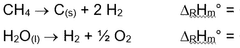
Figure IMGF000006_0001 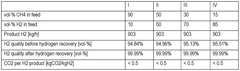
Figure IMGF000019_0001 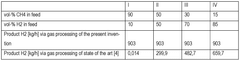
Figure IMGF000019_0002
Abstract
Description
[0001] Exploitation of natural hydrogen deposits using methane pyrolysis
[0002] Description
[0003] The present invention relates to a process of treatment of raw natural hydrogen-hydrocarbon mixtures that is produced naturally within the Earth's crust, mantle and / or core containing hydrogen in the range of 5 to 95 Vol% and gaseous hydrocarbons, especially methane, in the range of 5 to 95 Vol%, more preferably containing hydrogen in the range of 10 to 80 Vol% and gaseous hydrocarbons, especially methane, in the range of 20 to 90 Vol% in relation to the total volume of the hydrogen-hydrocarbon mixtures, wherein the natural hydrogen-hydrocarbon mixture is fed into a hydrocarbon pyrolysis unit and the hydrocarbons are pyrolyzed into hydrogen and solid carbon and wherein the solid carbon is separated from the hydrogen product stream.
[0004] State of the art
[0005] Hydrogen is considered potentially the cleanest energy in this century against the background of carbon neutrality. Currently, hydrogen is produced in industry mainly (96%)[2] by reforming hydrocarbons (such as coal and natural gas) and to a small extent by electrolysis of water. While reforming of hydrocarbons emits huge amounts of CO2, (-900 mio. t / a [2]) hydrogen production by electrolysis of water is relatively expensive and requires high amounts of renewable power.
[0006] In recent years different technologies of hydrocarbon pyrolysis, mainly natural gas pyrolysis, are under development. In contrast to reformation, however, no gaseous carbon dioxide is produced, but solid, high-purity carbon. Therefore, methane pyrolysis is considered a promising sustainable technology for future hydrogen production. In addition, methane pyrolysis is used to produce highly pure carbon, e.g. carbon nanotube.
[0007] US 2004 / 141654 describe a method for catalytic production of carbon nanotubes in a nano-agglomerate fluidized bed using supported nanosized metal catalysts as bed material. Lower hydrocarbons are used as feedstock. Hydrogen, nitrogen and carbon monoxide are also fed into the reactor (I) to reduce the nanosized transition metal oxide particles to nanosized metal particles, (II) for the reduction of the catalyst and (ill) to dilute the feedstock and thus steer and control the hydrocarbon composition, e.g. to minimize soot formation.
[0008] US 2022 / 0306462 discloses a method for producing highly pure hydrogen by coupling hydrocarbon pyrolysis with electrochemical hydrogen separation. It is disclosed that the thermal decomposition can be carried out in a fixed-bed reactor, fluidized-bed reactor or moving-bed reactor. Natural gas is typically used as feedstock for the hydrocarbon pyrolysis. It is disclosed that the natural gas is pre-purified by catalytic desulfurization before said pyrolysis. The hy- drogen-depleted anode off-gas of the electrochemical hydrogen separation is recycled and mixed with the natural gas feedstock resulting in a feed mixture of natural gas and up to 20 Vol% hydrogen from the off-gas. WO 2023 / 059520 describes a hydrocarbon pyrolysis in a plasma reactor. The hydrocarbon feedstock, e.g. natural gas or biological feedstock can be mixed with a process gas, e.g. hydrogen. Said process gas could be a recycled product gas from said hydrocarbon pyrolysis like hydrogen. A process gas is typically needed to minimize soot formation.
[0009] Natural hydrogen, also known as "golden”, "white”, "native” or "geologic” hydrogen, is a term used to describe hydrogen that is produced naturally within the Earth's crust, mantle and / or core and is a potential source of most economical and sustainable hydrogen, although the exploration and development had just begun. It is called "golden" or "white” due to its potential benefits as an environmentally friendly fuel, which did not emit any CO2 during its formation.
[0010] The natural process that leads to the formation of natural hydrogen is not yet clear, but three theories based on geological processes are discussed among experts as the most probable [1]:
[0011] • Serpentinization, that is the reaction between water and ultramafic rocks (e.g. olivine).
[0012] • Radiolysis of water that forms hydrogen.
[0013] • Trapping of larger amounts of hydrogen during the formation of the Earth in the core in the form of ironhydrides and -hydrates, which are released over time.
[0014] Natural hydrogen seeps have been discovered in several regions around the world, such as the United States, Russia, Brazil, Australia, Mali and recently in Spain and France. These occurrences suggest that natural hydrogen is not an isolated phenomenon and could be more widespread than initially thought.
[0015] Larger volumes have been documented since the 19thcentury, some examples are listed here [1]:
[0016] • 1st documented occurrence in 1888 by Mendeleev (Ukraine): CH2 = 5, 8-7, 5 Vol%
[0017] • Russia (1970, Udachnaya well): 100,000 m3 / d for 3 days; CH2 = 27-47 Vol%
[0018] • New Zealand (1972); cH2= 75.8 Vol%
[0019] • USA (1984, Hoffmann well): cH2= 96.3 Vol%
[0020] • Philippines (1990, burning for 25 years): CH2 = 41-45 Vol%
[0021] • Turkey (2007, eventually origin of Olympic fire): CH2 = 11 .3 Vol%
[0022] • Mali (2012, 1stcommercially used occurrence): cH2 = 98 Vol%
[0023] • Spain (2023): Helios Aragon PTE has announced to explore a natural hydrogen occurrence in Huesca (northern Spain); the geological examined structures indicate a deposit of approx. 1,1 mio t H2
[0024] • France (2023): The Geo Resources Lab in Nancy re-evaluated a natural gas deposit found in 2012 in Lorraine (F) and found now also hydrogen in deeper layers (CH2= 1-6 Vol% in 600-800m depth; CH2 = 15 Vol% in 1100 m depth); the deposit is estimated at 370 billion m3 of gas; calculated with CH2 = 15% this would result in about 5 mio t H2
[0025] Most of the natural hydrogen occurrences have concentrations ranging from 5-90% hydrogen depending on the place and depth of drilling. Natural gas (or methane) and higher hydrocarbons (C2-C6) occur as essential, additional components like Helium of up to 5 vol.-%, for example 1 to 5 Vol.-% Helium (along with traces of other gases, such as N2, H2S, CO2, etc.). The estimates of total global natural hydrogen "production” have been increased by an order of magnitude every 1-2 decades: According to literature [1] the estimates rose from 0,027 mio. t / a in 1983 to 0,54 mio t / a in 2000, to 6,0 mio t / a in 2005, to 97,4 mio t / a in 2015.
[0026] However, if the theories and occurrences are confirmed, a major problem will be the economic extraction of hydrogen, especially for sources that are not highly concentrated (>90 Vol% hydrogen content). As shown above, most occurrences do not have pure, directly usable hydrogen, but are usually a mixture of mainly methane (and higher hydrocarbons) and hydrogen.
[0027] As there is currently only one commercial plant for the exploitation of a natural hydrogen deposit, which contains high-purity hydrogen gas (Mali, CH2 = 98 Vol%), it can only be speculated on the development and exploration of deposits with more dilute hydrogen gas mixtures
[0028] However, the extraction part will probably be similar to that of natural gas: Most likely a hole supported by a cemented pipe and a stepwise-drilling method to maintain pressure uniformity will be used as described in [3], Likewise secondary and enhanced recovery methods will be applied to maximize deposit yields.
[0029] Furthermore, the first steps of gas-treatment will be similar to those used in natural gas extraction: In initial gas processing units solid particles (e.g. sands), liquids (e.g. water, oil) and gases (e.g. hydrocarbons, hydrogen) are separated [3], However, the subsequent treatment methods to receive the hydrogen in pure form will then differ from natural gas processing: Although mixtures of hydrogen and methane could be used for the energetic use , e.g. for heat or power generation by combustion, it can be assumed that political and regulatory pressure will continue to increase and that such possibilities will be heavily regulated in the coming years due to the associated CO2 emissions. Just as for use of hydrogen as a feedstock in the chemical or steel industry, it is therefore likely that only pure hydrogen will be used for energy use. Therefore, in the case of natural hydrogen, it is necessary to separate hydrogen from mainly hydrocarbons and thus special treatment methods will be necessary.
[0030] The state of the art in gas processing technology to separate hydrogen from mixtures as those expected from natural hydrogen deposits, are pressure swing adsorption (PSA), cryogenic distillation and amine-based absorption. However, there are only a few studies available in the literature which address the separation of H2 from gas as it occurs in natural hydrogen deposits. Most of the mentioned technologies are mainly used to purify hydrogen from hydrogenrich gas streams with H2 contents of >70%. PSA is the most used technology and relies on the selective adsorption of impurities from a gas stream, with the main disadvantage of the high H2 loss (15-20%). However, all of these technologies involve high equipment cost and high energy consumption and are therefore expensive. Membrane technology appears as an energy efficient alternative for producing pure hydrogen, although this technology has not reached the maturity level required for its industrial application.
[0031] Furthermore, the question arises how to utilize the separated methane (and hydrocarbons) from a sustainability point of view. An energetic or material use is usually associated with CO2 emissions and would reduce the sustainable benefit of use of natural hydrogen. Options to avoid or reduce these emissions with technologies such as Carbon Capture Storage (CCS) would add further equipment and operational costs, and with that further reducing the economics of natural hydrogen.
[0032] Another disadvantage of the mentioned technologies to purify hydrogen could be a changing gas composition during exploitation. As described for a deposit in north-east France, H2 concentrations in natural hydrogen could change as a function of depth by a factor of 10. A dedicated hydrogen purification plant is designed for a specific load case. If boundary conditions (such as input concentrations) change beyond this range, additional equipment would be necessary or existing ones must be modified, which would involve further costs.
[0033] Task
[0034] It is an object of the present invention to find a reasonable solution for all these described obvious problems. It is therefore an object of the present invention to make the exploitation of natural hydrogen reservoirs economically, especially with low CO2 emissions. It is a further object of the present invention to enable a sustainable use of the hydrocarbon impurities of the raw naturally produced hydrogen. It is a further object of the present invention to ensure flexibility of the plant in view of fluctuating or changing hydrogen and hydrocarbon contents in the exploited gas. Preferably, the obtained carbon is trapped in a solid state without emitting it to the atmosphere. Such carbon preferably results in a carbon-containing product that can be sold. It is a further object of the present invention to remove effectively solely carbon out of the natural hydrogen as carbon is the driver for CO2 emissions.
[0035] Invention
[0036] This task is solved by the present invention relating to a process of treatment, especially a process of combined purification and hydrogen production, of raw natural hydrogen-hydrocarbon mixtures containing hydrogen that is produced naturally within the Earth's crust, mantle and / or core in the range of 5 to 95 Vol% and gaseous hydrocarbons (especially methane) in the range of 5 to 95 Vol%, more preferably containing hydrogen in the range of 10 to 80 Vol% and gaseous hydrocarbons (especially methane) in the range of 20 to 90 Vol%, wherein the natural, hydrogenhydrocarbon mixture is fed into a hydrocarbon pyrolysis unit and the gaseous hydrocarbons, especially methane, are pyrolyzed into hydrogen and solid carbon and wherein the solid carbon is separated from the hydrogen product stream.
[0037] Extraction
[0038] Raw natural, golden hydrogen-hydrocarbon mixture are preferably extracted as known in the state of the art (see for example, "Recent Advances in White Hydrogen Exploration and Production: A Mini Review”). The basic pre-treat- ment methods are preferably similar to those used in natural gas extraction: Use of an inlet-processing unit to separate solid particles (e.g. sands) and liquids (e.g. water, oil).
[0039] By pyrolyzing the gaseous hydrocarbons into hydrogen and solid carbon sulfur-containing components can be tolerated and can be separated conventionally downstream of the hydrocarbon pyrolysis unit. In addition, other gas components, such as N2, CO2, He, Ar, do not interfere with the reaction and can also be separated conventionally downstream of the hydrocarbon pyrolysis unit.
[0040] Raw natural, golden hydrogen-hydrocarbon
[0041] The extracted and pre-processed natural hydrocarbon-hydrogen mixtures typically contain from 5 to 95 Vol%, preferably 5 to 90 Vol%, more preferably 25 to 90 Vol%, even more preferably 50 to 90 Vol%, even more preferably 75 to 90 Vol%, hydrogen, and 5 to 95 Vol%, preferably 10 to 95 Vol%, more preferably 10 to 75 Vol%, even more preferably 10 to 50 Vol%, even more preferably 10 to 25 Vol%, methane and higher hydrocarbons (C2-C6), and additional components, such as N2, H2S, CO2, Helium, Argon, etc.
[0042] The composition of the raw natural hydrogen-hydrocarbon mixtures might fluctuate depending on the drilling depth. The hydrogen and hydrocarbon contain might therefore fluctuate in the range of + / - 5 to 50 Vol.-%, preferably + / - 5 to 30 Vol.-%. Thus, the composition of the naturally produced hydrogen-hydrocarbon mixture drilled, pretreated and fed into the reactor preferably varies and / or fluctuates between a molar ratio of hydrogen to hydrocarbon from 20 to 0.05, preferably from 15 to 1, even more preferably from 10 to 3, during the pyrolysis process. The ratio of hydrogen to hydrocarbon of the naturally produced hydrogen-hydrocarbon mixture fed into the pyrolysis reactor is therefore not constant during the process.
[0043] Preferably, the extracted and pre-processed natural produced hydrocarbon-hydrogen mixtures are directly fed into the pyrolysis reactor. Preferably, the extraction unit (hydrogen wells) is upstream of and fluidically connected to the pre-processing unit (e.g. water separation) and the pre-processing unit is upstream of and fluidically connected to the hydrocarbon pyrolysis unit.
[0044] Hydrocarbon pyrolysis unit
[0045] In hydrocarbon pyrolysis, mainly named methane pyrolysis (reaction equation (1)), hydrogen is obtained from methane, which is usually to come from natural gas, synthetic methane, industrial off gas, e.g. cracker off gas, biogas or sewage gas.
[0046] In contrast to reformation, however, no gaseous carbon dioxide is produced, but solid, high-purity carbon as a byproduct. The greenhouse gas (GHG) emissions of the entire supply process are mainly determined by the upstream emissions of natural gas production and transport, as well as by the carbon footprint of the electrical energy used. Compared to water electrolysis (reaction equation (2)), methane pyrolysis requires significantly less energy: +37,3 kJ / mol H2(1 ) +285,8 kJ / mol H2(2)
[0047] The simultaneous production of high-purity carbon has a positive effect on economic efficiency. Therefore, methane pyrolysis is considered a promising sustainable technology for future hydrogen production. The generic term methane pyrolysis covers a wide range of different process technologies. The best known and most advanced of these are:
[0048] • Plasma pyrolysis
[0049] • Metal melting / Metal salt melting
[0050] • Moving bed process, Fixed bed process or Fluidized bed (catalytic) process
[0051] • Partial combustion
[0052] They differ in the form of the energy used (thermal, electrical, etc.), the process conditions (temperature, pressure, etc.), the catalysts and / or auxiliary materials used, the process flow and the technical readiness level (TRL).
[0053] The solid carbon type generated in the methane decomposition depends on the reaction conditions, reactor and heating technology. Examples are carbon black from plasma processes carbon powder from liquid metal processes granular carbon from thermal decomposition in fixed, moving or fluidized bed reactors.
[0054] The pyrolysis process is preferably heated electrically. Preferably, the pyrolysis process is a non-metal-catalytic hydrocarbon pyrolysis, thus, the present hydrocarbon pyrolysis is preferably not a process wherein the pyrolysis is catalyzed by metals.
[0055] Separating solid carbon
[0056] The separation of solid carbon depends on the chosen pyrolysis technology and is known by the skilled person in the art.
[0057] As mentioned above, for example, in a plasma pyrolysis the solid carbon in the form of carbon black is discharged from the reactor with the gas and subsequent separated, e.g. by a cyclone or a filter. The solid carbon might be posttreated, e.g. agglomerated. Depending on the process and the metals used in molten metal pyrolysis, the carbon floats on the melt and is skimmed off or leaves the reactor together with the gas stream and is then separated, e.g. filter / cyclone. In addition, a purification step to remove residual metal from the carbon could be required e.g. washing, evaporation. In the catalytic pyrolysis technology and in the fixed and moving bed technology, the solid carbon is deposited on the surface of the catalyst and / or support and withdrawn from the reactor via the catalyst and / or support.
[0058] Details to the pyrolysis technologies
[0059] Plasma Pyrolysis
[0060] For plasma pyrolysis (see for example WO2015116797, WO2015116800), a plasma with >3000 °C is generated in which the natural gas, is pyrolyzed. The gas mixture leaves the reactor at temperatures between 900 - 2000 °C.
[0061] The reaction produces solid carbon in the form of carbon black which is discharged from the reactor with the gas and then separated. Various technologies such as arc, microwave and gas plasma technologies can be used for this purpose. Partial Combustion process or pulsed reaction process
[0062] For a partial or pulsed combustion process, the heat for the thermal pyrolysis reaction is supplied by pulsed combustion (see for example WC2020118417 and US20220185664). Before a feedstock (containing hydrocarbon), is split into hydrogen and solid carbon in a combustion chamber, a combustible gas (containing hydrocarbons and oxidants) is pre-mixed in a mixing chamber. The reaction in the combustion chamber takes place when the gas mixture is heated up to 1350K and a pressure of over 20 bar is reached. Products leaving the reactor will be separated into gas and solid carbon for further processing.
[0063] Molten metal I molten metal salt
[0064] The pyrolysis processes using molten metals or molten metal salts (see for example W02020161192, WO2021183959) use the heat from the melt for pyrolysis. In addition, metals can be selected that have a catalytic effect, so that pyrolysis can take place at relatively low temperatures of approx. 800 - 1200 °C. The natural gas is fed into the molten metal; the bubbles formed in the process rise upwards in the reactor, whereby the hydrocarbons, preferably methane, decomposes and forms hydrogen and solid carbon. Depending on the process and the metals used, the carbon floats on the melt and is skimmed / blowed off or leaves the reactor together with the gas stream and is then separated. In both cases, the carbon is characterized by a very small particle size and bulk density. Due to adhesion of the melt to the carbon particles, purification of the carbon might be necessary for some processes and applications.
[0065] Catalytic processes
[0066] Catalysts can also be used to reduce the high reaction temperatures (see for example WC2011029144, WC2016154666). For hydrocarbon, preferably methane, pyrolysis, a very cost-effective alternative is the use of iron oxide catalysts. Reaction temperatures of approx. 700 to 1000°C can be realized. In order to achieve the best possible heat and mass transfer, the reactions take place, for example, in the fluidized bed, with the catalyst as the fluidized material. The methane is decomposed at the catalytic surface. Another advantage is that the carbon can be deposited on the particles. This reduces the density of the particles and, after sufficient deposition of carbon, they can be discharged from the reactor with the gas flow. This could be controlled by gas flow and the pressure of the fluidized bed reactor.
[0067] Moving bed process
[0068] The hydrocarbon, in particular methane, decomposition is preferably conducted in a moving, fluidized or fixed bed reactor, wherein the bed contains as substrates preferably carbon materials, metals, ceramics, and a mixture thereof, preferably at temperatures ranging from 500 to 2000°C, preferably ranging from 1000 to 1600°C, even more preferably ranging from 1200 to 1500°C, and at pressures ranging from 1 to 100 bar, preferably from 5 to 50 bar.
[0069] The decomposition can either be realized as fixed bed, preferably in a cyclical operation mode, preferably including a production and a regeneration mode as described for example in WO 2018 / 083002, in a moving bed as described for example in US 2982622, WO 2019 / 145279 and WO 2020 / 200522 or in a fluidized bed as described in WO 2024 / 119237, W02022 / 081170 and US20210331918.
[0070] The process of methane decomposition is also referred to as methane pyrolysis since no oxygen is involved. The decomposition can be conducted in different ways known to the persons skilled in the art: catalytically or thermally, and with heat input via plasma, microwave, heated carrier gas, resistance heating, induction, liquid metal processes or autothermal.
[0071] The decomposition process is preferably heated electrically, even more preferably by resistive heating (Joule heating) of the substrate material as described for example in US 2982622, WO 2019 / 145279 and WO 2020 / 200522.
[0072] Preferably the decomposition process is located at an existing chemical production site.
[0073] Preferred Process Conditions: Moving Bed
[0074] Preferably the substrate is guided in form of a moving bed through the reaction chamber, with the raw natural hydro- gen-hydrocarbon mixtures being passed advantageously in countercurrent to the substrate.
[0075] For this purpose, the reaction chamber is preferably rationally designed as a vertical reactor, which means that the movement of the moving bed is gravity driven. Flow through the moving bed is taking place, advantageously, homogeneously, and uniformly (see for example WO 2013 / 004398, WO 2019 / 145279 and WO 2020 / 200522). Said raw natural hydrogen-hydrocarbon mixtures are preferably introduced via the bottom of the reactor, preferably having a temperature of 10 to 200°C. The substrate is preferably introduced via the top of the reactor, preferably having a temperature of 10 to 200°C. Hydrogen product stream is preferably taken off via the top of the reactor, preferably having a temperature of 10 to 200°C. The granular pyrolytic carbon is preferably taken off via the bottom of the reactor, preferably having a temperature of 10 to 200°C.
[0076] The discharged carbon is preferably at least partly recycled and introduced into the reactor again using it as substrate for the moving bed. As a result, a continuous process of the moving bed is achieved. Preferably, the total feed for the pyrolysis unit (reactor) containing the raw natural hydrogen-hydrocarbon mixture has a fixed H2 / CH4 feed molar, the operation point. The operating point enables an optimal heat integration and is dependent on the hydrocarbon concentration, the substrate used and the deposition rate of the solid carbon. To adjust, preferably to continuously adjust, the feed concentration a dedicated amount of hydrogen could be recycled. Therefore, the total feed contains preferably (i) raw natural hydrogen-hydrocarbon mixture and (ii) additional hydrogen, wherein said additional hydrogen is preferably produced in the hydrocarbon pyrolysis and recycled (see the "internal gas recycle” in Figures 3 to 5).
[0077] Preferably, the operation point of the pyrolysis unit is preferably set between 50 to 99 vol.%, more preferably between 70 and 99 vol.-% hydrogen and 1 to 50 vol .-%, more preferably 1 and 30 vol.-% hydrocarbons related to the total volume of the total feed containing the raw natural, golden hydrogen-hydrocarbon mixture and optionally additional hydrogen if needed. Due to the fact that the total feed concentration of the reactor could be controlled by the internal hydrogen recycle there is a broad range for the concentration of hydrogen in the natural hydrogen-hydrocarbon mixture applicable. Preferably, the natural hydrogen-hydrocarbon mixture contains of 5 to 99 vol% hydrogen, preferred 10 to 95 vol%, more preferred 20 to 95 Vol.-% hydrogen and contains 1 to 95 vol % hydrocarbons, preferred 5 to 80 vol% hydrocarbons related to the total volume of the raw natural, golden hydrogen-hydrocarbon mixture.
[0078] Preferably, the operation point is set to the lowest hydrogen concentration expected for the reservoir to be exploited by the present invention.
[0079] Preferably, if a hydrogen dilution of the raw natural, golden hydrogen-hydrocarbon mixture is needed to reach the set operation point, a recycled hydrogen product stream is used for such dilution. Preferably, a direct hydrogen product stream recycle is used, that means, a portion of the raw hydrogen product stream is recycled, preferably without any purification steps (see Figures 3 to 5). Said recycled hydrogen stream may or may not be cooled, heated and / or compressed.
[0080] Preferably, the hydrogen and / or hydrocarbon concentration of the raw natural, golden hydrogen-hydrocarbon mixture is measured before feeding it into the pyrolysis unit. Depending on the difference of said concentration to the operation point, the direct hydrogen product stream recycle is increased or decreased during the pyrolysis process (see Figures 4 and 5). Optionally, additional hydrogen is added to the pyrolysis unit for adjusting, preferably continuously adjusting, the concentration to the operation point. Optionally, additional hydrocarbons, like natural gas or biomethane, are added to the pyrolysis unit for continuously adjusting the concentration to the operation point.
[0081] The flow velocity of the substrate is advantageously in the range of 0.005 to 0.5 cm / s. The flow velocity of the gas flow is advantageously in the range of 0.025 to 2 m / s. The gas residence time in the reactor is advantageously between 0.5 and 50 s, preferably between 1 and 20 s. The residence time of the substrate is preferably between 0.5 and 15 hours, preferably between 1 and 10 hours and more preferably between 2 and 8 hours.
[0082] Substrate
[0083] The substrate can either be a support substrate in the reactor (a pre-installed part) or a granular material. The preferred substrate is a carbon-containing substrate, for example pyrolytic carbon itself. The particle size of a preferred substrate is in the range of 0.1 to 10 mm, preferably 0.3 to 8 mm, even more preferably 1 to 8 mm, even more preferably 2 to 8 mm.
[0084] Preferably the substrates are carbonaceous materials that are macro-structured carbonaceous materials, wherein the porosity of the carbonaceous material is in the range of 30 to 70 vol.-% and the carbonaceous material contains of a carbon content of 98 wt.-% to 100 wt.-%, preferably 99 wt.-% to 100 wt.-%, even more preferably 99.5 wt.-% to 100 wt.-% and a content of alkaline-earth metals, transition metals and metalloids of 0 and 2 wt.-%, preferably 0 to 1 wt.-%, even more preferably 0 to 0.5 wt.-%, in relation to the total mass of solid carbonaceous material (see WO 2023 / 057242).
[0085] The BET surface area of the substrate is preferably between 0.1 and 100 m2 / g, preferably 0.1 and 50 m2 / g, in particular 0.1 to 30 m2 / g.
[0086] Preferably, the real density of the substrate is in the range of 1 .5 to 2.5 g / cc (real density in xylene, ISO 8004). Preferably, the bulk density of the substrate is in the range of 0.5 to 1 .5 g / cc.
[0087] Pyrolytic granular carbon
[0088] Typically, the real density of the granular pyrolytic carbon produced via the described methane decomposition process of step two is in the range of 1.5 to 2.5 g / cc, preferably 1.8 to 2.3 g / cc (real density in xylene, ISO 8004). Typically, the bulk density of the granular pyrolytic carbon is in the range of 0.5 to 1 .5 g / cc, more preferably 0.7 to 1 .3 g / cc.
[0089] Typically, the ash content of the granular pyrolytic carbon composition is in the range of 0.001 to 1 weight-% of the composition, preferably 0.01 to 0.2 weight-%.
[0090] Typically, the carbon content of the granular pyrolytic carbon composition is in the range of 98 to 100 weight-%, more preferably 99.5 to 100 weight-%, even more 99.75 to 100 weight-%, even more 99.9 to 100 weight-%.
[0091] Typically, the impurities of the granular pyrolytic carbon are: S in the range of 0 to 0.5 weight-%, more preferably 0 to 0.1 weight-%, Fe in the range of 0 to 1000 ppm, preferably 0 to 500 ppm, Ni in the range of 0 to 250 ppm, preferably 0 to 100 ppm, V in the range of 0 to 250 ppm, more preferably 0 to 100 ppm. Na in the range of 0 to 200 ppm, preferably 0 to 100 ppm. Oxygen is in the range of 0 to 100 ppm, preferably below the detection limit.
[0092] Typically, 90 weight-% of the carbon of the granular pyrolytic carbon composition is not-functionalized, preferably 95 weight-%, even more preferably 98 weight-%, especially 99 weight-%, wherein carbon functionalization refers to a reaction in which a carbon-carbon bond is broken and replaced by a carbon-X bond (where X is usually hydrogen, oxygen, sulfur, phosphorus, nitrogen, halogens, and / or metals).
[0093] Typically, the cation exchange capacity (CEC) of granular pyrolytic carbon is about 0.01 to 1.5 cmol / kg, preferably 0.025 to 0.75 cmol / kg.
[0094] Typically, the particle size of the granular pyrolytic carbon directly resulting of the decomposition of gaseous hydrocarbons - without any agglomeration step - is in the range of 0.3 mm (d 10) to 8 mm (d90), preferably 0.5 mm (d10) to 5 mm (d90), more preferably 1 mm (d10) to 4 mm (d90).
[0095] Typically, the porosity of the granular pyrolytic carbon is between 0% to 15%, preferably 0.2% to 10%, most preferably 0.2% to 5% (Hg porosimetry, DIN66133).
[0096] Typically, the specific surface area of the granular pyrolytic carbon measured by Hg porosimetry (DIN66133) is in the range of 0.001 to 10 m2 / g, preferably 0.001 to 5 m2 / g, even more preferably 0.05 to 2 m2 / g.
[0097] Preferred Reactor
[0098] Preferably, the reactor for carrying out the methane decomposition, in which hydrogen and granular pyrolytic carbon are produced from hydrocarbons present in the raw natural hydrogen-hydrocarbon mixtures, preferably methane, comprises: a reactor surrounding a reactor interior the reactor is configured to provide a gravity-driven moving bed in a reaction zone of the reactor interior, which gravity-driven moving bed comprises a large number plurality of solid substrates, wherein the reactor is also configured to guide natural produced hydrogen-hydrocarbon mixture into the reaction zone, wherein, in order to heat natural produced hydrogen-hydrocarbon mixture, the reactor is configured to heat the solid substrates in the reaction zone by generating an electric current in the solid substrates between a pair of first and second electrodes such that, by transferring heat from the solid substrates to natural produced hydrogen-hydrocarbon mixture, natural produced hydrogen-hydrocarbon mixture in the reaction zone can be heated to a reaction temperature to produce hydrogen and granular pyrolytic carbon, and wherein the reactor interior also comprises a first heat integration zone in which heat from hydrogen produced in the reaction zone can be transferred to solid substrates of the reactor gravity driven moving bed which are to be guided into the reaction zone, and wherein the reactor interior also comprises a second heat integration zone in which heat from solid substrates of the reactor gravity driven moving bed coming from the reaction zone can be transferred to natural produced hydrogen-hydrocarbon mixture in order to preheat natural produced hydrogen-hydrocarbon mixture, wherein said reaction zone is arranged between said pair of first and second electrodes and said first heat integration zone is arranged above said first electrode and said second heat integration zone is arranged below said second electrode.
[0099] Preferably, the electrodes comprise a grid or are formed by a grid.
[0100] Preferred Moving Bed Method
[0101] Preferably a moving bed technology is used for the hydrocarbon, in particular methane, decomposition / pyrolysis of the hydrocarbons present in the raw natural hydrogen-hydrocarbon mixtures comprising:
[0102] - a plurality of solid substrates is guided into the first heat integration zone and from there into the reaction zone,
[0103] - the solid substrates are heated in the reaction zone,
[0104] - the solid substrates are guided from the reaction zone into the second heat integration zone and are withdrawn from the second heat integration zone,
[0105] - natural produced hydrogen-hydrocarbon mixture is introduced into the second heat integration zone and from there into the reaction zone, wherein natural produced hydrogen-hydrocarbon mixture in the second heat integration zone is heated against solid substrates coming from the reaction zone, wherein the solid substrates are cooled, and wherein the natural produced hydrogen-hydrocarbon mixture is contacted with the heated solid substrates in the reaction zone, wherein heat from the heated solid substrates is transferred to natural produced hydrogen-hydrocarbon mixture in order to heat natural produced hydrogen-hydrocarbon mixture in the reaction zone, wherein natural produced hydrogen-hydrocarbon mixture is decomposed to hydrogen and granular pyrolytic carbon in the reaction zone,
[0106] - hydrogen produced is guided from the reaction zone into the first heat integration zone, wherein the solid substrates in the first heat integration zone are preheated against hydrogen coming from the reaction zone, wherein hydrogen is cooled, and wherein
[0107] - hydrogen product stream is withdrawn from the first heat integration zone
[0108] - granular pyrolytic carbon produced is deposited on solid substrates and withdrawn with the substrates
[0109] - withdrawn substrate is preferably at least partly recycled and introduced into the reactor
[0110] - withdrawn hydrogen is preferably at least partly recycled and introduced into the reactor.
[0111] Preferred Fixed Bed Method
[0112] Preferably a fixed bed technology is used for the hydrocarbon pyrolysis of the present invention comprising:
[0113] - a plurality of solid substrates having a particle size of 0.5 to 10 mm is introduced into the reactor and fixed in the reaction zone, preferably the substrates are introduced via the top of the reactor,
[0114] - the solid substrates are heated in the reaction zone, preferably the solids are electrically heated, more preferably the solids are heated via a direct electric Joule heating, - natural produced hydrogen-hydrocarbon mixture is introduced into the reaction zone, wherein the natural produced hydrogen-hydrocarbon mixture is contacted with the heated solid substrates in the reaction zone, wherein heat from the heated solid substrates is transferred to natural produced hydrogen-hydrocarbon mixture in order to heat natural produced hydrogen-hydrocarbon mixture in the reaction zone and wherein natural produced hydrogen-hydrocarbon mixture is decomposed to hydrogen and pyrolytic carbon that is deposited on the solid substrates in the reaction zone, preferably natural produced hydrogen-hydrocarbon mixture is introduced via the top of the reactor,
[0115] - hydrogen is withdrawn from the reaction zone, preferably from the bottom of the reactor
[0116] - By feeding hydrocarbon from the top into the reactor, the gas velocity is not limited by the fluidization regime of the solid particles, which allows higher space time yields compared to moving bed or fluidized bed reactors. Gas velocities in the reaction zone (calculated for an empty reactor) are 0,5 - 15 m / s and more preferred 1 - 10 m / s. In addition, the residence time of the substrate can be increased to 2 to 24 hours.
[0117] - batchwise the solid substrates with pyrolytic carbon deposited on it are withdrawn from the reaction zone
[0118] - withdrawn substrate is preferably at least partly recycled and introduced into the reactor
[0119] - withdrawn hydrogen is preferably at least partly recycled and introduced into the reactor.
[0120] Fixed bed reactors are known in the state of the art, e.g. Eigenberger, Ruppel, Ullmanns's encyclopedia of industrial chemistry Catalytic Fixed-Bed Reactors, 2012 Wiley-VCH Verlag GmbH & Co. KGaA, Weinheim.
[0121] Typically, several fixed bed reactors are combined in a cyclic mode operation e.g. One reactor is in production mode and carbon is deposed in the fixed bed until the maximum carbon deposition is reached. While the carbon is removed from this reactor, the next reactor starts with production and so on. With this cyclic operation mode, a continuous production is ensured.
[0122] Preferred Fluidized Bed Method
[0123] Preferably a fluidized bed technology is used for the hydrocarbon pyrolysis of the present invention comprising:
[0124] - a plurality of solid substrates having a particle size of 0.1 to 10 mm is introduced in the fluidization zone, the reaction zone, and placed on a distributor o optionally the substrates are heated externally and are introduced into the reactor at a temperature of 800 °C to 1500 °C
[0125] - optionally the solid substrates are heated in the reaction zone, preferably the solids are electrically heated,
[0126] - natural produced hydrogen-hydrocarbon mixture is introduced into the reactor via the bottom, distributed by the distributor fluidizing the solid substrates and guided through the reaction zone wherein natural produced hydrogen-hydrocarbon mixture is contacted with the heated solid substrates in the reaction zone, wherein heat from the heated solid substrates is transferred to natural produced hydrogen-hydrocarbon mixture in order to heat natural produced hydrogen-hydrocarbon mixture in the reaction zone, wherein natural produced hydrogen-hydrocarbon mixture is decomposed to hydrogen and pyrolytic carbon that is deposited on the solid substrates in the reaction zone, o Due to the relative motion of the particles in a fluidized, bed relative carbon depositions from the pyrolyzed gas on the solid granule per pass through the reactor are preferred above 10 w% and more preferred above 20 w%. The relative deposition is related to the mean solid particle mass flux out of the reactor. o The pressure is preferably 1 to 10 bar.
[0127] - hydrogen is withdrawn from the reaction zone, preferably from the top of the reactor
[0128] - preferably continuously, the solid substrates with pyrolytic carbon deposited on it are withdrawn from the reaction zone
[0129] - withdrawn substrate is preferably at least partly recycled and introduced into the reactor
[0130] - withdrawn hydrogen is preferably at least partly recycled and introduced into the reactor.
[0131] Fluidized bed reactors are known in the state of the art, e.g. Werther, Ullmanns's encyclopedia of industrial chemistry Fluidized Bed-Reactors, 2012 Wiley-VCH Verlag GmbH & Co. KGaA, Weinheim.
[0132] A fluidized bed reactor may have more than one stage as described in W02022081170 and US20210331918.
[0133] Hydrogen
[0134] The hydrogen product stream obtained from raw natural hydrogen- hydrocarbon- mixtures can be used as known in the art, for example material uses for chemicals, refineries, steel production or energetic uses for transport, heat, electricity or for energy storage.
[0135] Typically, the raw hydrogen product stream is purified in one or more removal apparatus, e.g. using adsorption or membrane technologies.
[0136] For example, the hydrogen product stream can still contain hydrogen sulfide. Hydrogen sulfide can preferably be removed from the gaseous product stream via gas scrubbing, e.g. via ZnO, CuZnO, Fe(OH)3, Zeolites, MOFs, as known in the state of the art.
[0137] If a gas compressor is needed before the hydrogen product stream can be used or fed into a hydrogen grid, the gas scrubbing is preferably embedded in such a compressor unit. Preferably, the inlet temperature of the absorber bed can be provided by the heat of compression between the compressor stages.
[0138] For example, the hydrogen product stream can still contain carbon oxide, hydrocarbons and inert gases, e.g. nitrogen. Corresponding hydrogen recovery apparatuses are common knowledge to the person skilled in the art, for example pressure swing adsorption or permeation.
[0139] Preferably, a part of the off gas from the hydrogen recovery is recycled to the pyrolysis unit. Preferably another part of the off gas from the hydrogen recovery is withdrawn. The preferred percentage of recycle and withdrawal is dependent on the amount of inert gases in the product hydrogen stream, especially on the nitrogen content. Preferably, the hydrogen is used materially. Preferably the hydrogen is used to produce (I) MeOH, (II) CH4, (ill) NH3, (iv) Syngas, (v) for hydrogenation reaction, (vi) downstream products like aromats, ketons (e.g. cyclododecanon), aldehydes (e.g hexanal), cyclic hydrocarbons (e.g. cyclohexan), amins (e.g. butylamine, propylamine), alcohols (e.g. butanol, heptanol, butandiol, menthol).
[0140] Carbon
[0141] The separated solid carbon can be is used in various industries, carbon is an essential raw material for several industrial products. Graphitic carbon can be used for the production of electrically conductive components such as electrodes. Carbon Black can be used in the tire industry and in printing inks. Dense, granular carbon can be used in the steel industry (as injection coal, carburizing agent, electrode raw material, refractory material), in the aluminum industry (as a raw material for the production of anode material), in the battery industry (as a raw material for the production of anode material), in the rubber industry (carbon black as an aggregate for the production of tires and technical rubber products) and as an soil conditioner. In addition, solid carbon can be stored or used as energy vector.
[0142] General advantages
[0143] What all these pyrolysis processes have in common, however, is the basic reaction principle described in equation 1. Due to the high efficiency and heat integration of the moving bed process, this technology is seen to play a leading role in economic efficiency, flexibility and product carbon footprint compared to other methane pyrolysis processes and is the preferred technology.
[0144] As described above, methane can be used in concentrated form as the feed for such a methane pyrolysis, such as is present in natural gas or biomethane. This is the mode of operation envisaged and preferred for hydrogen production by methane pyrolysis today (in pilot and production plants).
[0145] Surprisingly, however, methane pyrolysis can also be used for combined purification and hydrogen production, thus circumventing the disadvantages of natural hydrogen extraction and further treatment steps described above.
[0146] • Putting the natural hydrogen into a methane pyrolysis is the most economical solution, as all the hydrocarbons it contains are converted into pure hydrogen and valuable carbon in one step.
[0147] • No CO2 emissions are generated during the process and no unwanted by-products are produced.
[0148] • Changing gas compositions are not a problem.
[0149] • Previous basic treatment steps should be sufficient as described above depending on the exact compositions of the deposits in each individual case.
[0150] Indicative calculations show that even at relatively high H2 concentrations (85 Vol%), the costs of conventional purification will be more than twice as high compared to methane pyrolysis. With decreasing H2 concentrations of the natural hydrogen source, this gap increases.
[0151] Preferences In addition to the criterion of economic efficiency / manufacturing costs, which plays a very important role, especially in the industrial implementation of new processes, other factors such as sustainability, social acceptance and also technological maturity / manageability are also relevant.
[0152] The cost-effectiveness of the processes described depends heavily on the currently very volatile energy and raw material prices (especially electricity and natural gas), which make current comparability almost impossible. However, due to the high efficiency and heat integration of the moving bed process described above, this technology is seen as playing a leading role in economic efficiency.
[0153] A big advantage of the moving bed technology is the easy adaptation on changing gas compositions due to the flexibility that the operation point can be set between 5 and 95 vol.-% hydrogen and continuously adjusted by the internal hydrogen gas recycle. Even a high and / or fluctuating content of inert gases, mainly N2, is tolerable due to the adjustment possibilities of the purge gas recycle. In the moving bed pyrolysis technology conditions, nitrogen is an inert element, no reaction to hydrogen cyanide is observed yet. In addition, there is no need for any pre-desulfurization before the pyrolysis unit. For certification purpose, the differentiation between the amount of golden, natural hydrogen and the amount of turquoise hydrogen from the pyrolysis reaction is possible.
[0154] In addition to energy and raw material prices, however, the shape and property of the carbon obtained as a further reaction product is also of considerable importance in comparison with other processes. A high-purity carbon that can be used sustainably should significantly increase the chances of realizing a methane pyrolysis process, not only from an economic point of view.
[0155] Figures
[0156] Fig 1 shows the block diagram of a general embodiment of the process of the invention.
[0157] Fig 2 shows a block diagram of a general embodiment of the state of the art disclosed in [4]
[0158] Fig 3 shows the block diagram of a general embodiment of the process of the invention in which part of the product hydrogen stream is recycled to the pyrolysis unit.
[0159] Fig 4 shows the block diagram of a general embodiment of the process of the invention in which part of the off gas from the hydrogen recovery is recycled to the pyrolysis unit.
[0160] Fig 5 shows the block diagram of a general embodiment of the process of the invention in which part of the solid carbon are recycled to the pyrolysis unit.
[0161] Fig. 6 shows a schematic outline of an electrically heated pyrolysis moving bed technology.
[0162] Fig. 7 shows the variation of CO2 emissions as a function of H2 concentration in the natural, golden hydrogen-hydro- carbon mixture of the present invention in comparison to the state of the art gas procession disclosed in [4]
[0163] Literature
[0164] [1] Zgonniak, The occurrence and geoscience of natural hydrogen: A comprehensive review, Earth-Science Reviews, 203, 1031 40 (2020)
[0165] [2] Tian et al., Origin, discovery, exploration and development status and prospect of global natural hydrogen under the background of "carbon neutrality”, China Geology, 5, 722-733 (2022)- [3] Mazyan et al., Market and technology assessment of natural gas processing: A review, Journal of Natural Gas Science and Engineering 30, 487-514 (2016)
[0166] [4] Adam R. Brandt, "Greenhouse gas intensity of natural hydrogen produced from subsurface geologic accumulations”, Joule 7, 1818-1831, August 16, 2023
[0167] Process description
[0168] Fig 1 : A natural, golden hydrogen-hydrocarbon mixture is extracted from a hydrogen well. In the basic treatment, the raw mixture is fed into an inlet-processing unit to separate solid particles and liquids, especially water. In the post treatment, the gaseous raw hydrogen-hydrocarbon mixture is fed into a methane pyrolysis unit and the hydrocarbons are pyrolyzed into a raw hydrogen product stream and solid carbon. The raw hydrogen product stream is desulfurized and purified.
[0169] Examples:
[0170] Inventive Examples:
[0171] The following examples for the processing of natural, golden hydrogen-hydrocarbons mixtures having a hydrogen concentration of 10, 50, 70 and 85 Vol.-% are simulated using an internal BASF simulator software analogous to the simulation software PlusTM V11 based on a moving bed technology (as described in US 2982622, WO 2019 / 145279, WO 2020 / 200522 and WO 2023 / 57242) at 10 bar, 1400°C and 10000Nm3 / h H2 production rate.
[0172] Table 1 : Inventive Examples
[0173] Comparative Examples:
[0174] The inventive examples are compared to the state of the art processing of natural, golden hydrogen as described in [4], see Table 2 and 3 and Figure 7. Table 2: Comparison of produced and recovered hydrogen via gas processing of the present invention versus the state of the art Table 3: Comparison of CO2 emissions via gas processing of the present invention versus the state of the art
[0175] Summary
[0176] The inventive examples show that the use of methane pyrolysis for combined purification and hydrogen production converts the hydrocarbons in the natural, golden hydrogen feed into additional hydrogen and valuable carbon in one step, generates low CO2 emissions and is flexibly useable even with fluctuating hydrogen concentrations in the feed. Furthermore, the hydrogen (both natural and resulting from the hydrocarbon) is obtained as a product stream with a high purity, independently of the fluctuating hydrogen concentrations in the feed. Thus, the inventive examples show both the purification of natural hydrogen and the production and purification of additional (turquoise) hydrogen.
Claims
Claims1 . Process of combined purification and hydrogen production of raw naturally produced hydrogen-hydrocarbon mixture containing hydrogen that is produced naturally within the Earth's crust, mantle and / or core in the range of 5 to 95 Vol% and gaseous hydrocarbons in the range of 5 to 95 Vol.-% in relation to the total volume of the hydrogen-hydrocarbon mixture, wherein said natural hydrogen-hydrocarbon mixture is fed into a hydrocarbon pyrolysis unit and the gaseous hydrocarbons are pyrolyzed into hydrogen and solid carbon and wherein the solid carbon is separated from the hydrogen product stream.
2. Process according to claim 1 , wherein the molar ratio of hydrogen to hydrocarbon of the naturally produced hydrogen-hydrocarbon mixture fed into the reactor varies in the range from 10 to 1 during the pyrolysis process.
3. The process according to claim 2, wherein the molar ratio of hydrogen to hydrocarbon of the naturally produced hydrogen-hydrocarbon mixture fed into the reactor is not constant during the pyrolysis process.
4. The process according to any one of claims 1 to 3, wherein the raw naturally produced hydrogen-hydrocarbon mixture contains hydrogen that is produced naturally within the Earth's crust, mantle and / or core in the range of 75 to 90 Vol% and gaseous hydrocarbons in the range of 10 to 25 Vol.-%.
5. The process according to any one of claims 1 to 4, wherein naturally produced hydrogen-hydrocarbon mixture is extracted, pre-processed and fed into the hydrocarbon pyrolysis unit, wherein the extraction unit is upstream of and fluidically connected to the pre-processing unit and the pre-processing unit is upstream of and fluidically connected to the hydrocarbon pyrolysis unit.
6. The process according to any one of claims 1 to 5, wherein the pyrolysis unit is electrically heated.
7. The process according to any one of claims 1 to 6, wherein the pyrolysis process is conducted in a moving, fluidized or fixed bed reactor, wherein the bed contains substrates and the size of said substrate is in the range of 0.1 to 10 mm.
8. The process according to any one of claims 1 to 7, wherein the pyrolysis process is conducted in a moving bed reactor at temperatures ranging from 500 to 2000°C and at pressures ranging from 1 to 100 bar, wherein the bed contains as substrates carbon materials, metals, ceramics, and / or a mixture thereof and wherein the substrate is guided in countercurrent to said naturally produced hydrogen-hydrocarbon mixture.
9. The process according to any one of claims 1 to 8, wherein said hydrogen-hydrocarbon mixture is introduced via the bottom of a moving bed reactor, having a temperature of 10 to 200°C, and the substrate is introduced via the top of the moving bed reactor, having a temperature of 10 to 200°C.
10. The process according to any one of claims 1 to 9, wherein the hydrogen product stream is taken off via the top of the moving bed reactor, having a temperature of 10 to 200°C, and the pyrolytic carbon is taken off via the bottom of the moving bed reactor, having a temperature of 10 to 200°C.11 . The process according to any one of claims 1 to 10, wherein the total feed of the pyrolysis unit containing (I) the raw naturally produced hydrogen-hydrocarbon mixture and (ii) optionally additional hydrogen is continuously adjusted to a fixed H2 / CH4 molar feed, the operation point, by increasing or decreasing the amount of an internal hydrogen product stream recycle and / or by adding additional hydrogen and / or additional hydrocarbons.
12. The process according to claim 11, wherein the operation point is adjusted to a fixed H2 / CH4 molar feed by increasing or decreasing the amount of an internal hydrogen product stream recycle.
13. The process according to any one of claims 1 to 12, wherein the natural hydrogen-hydrocarbon mixture fed into the hydrocarbon pyrolysis unit contains sulfur-containing components.
14. The process according to any one of claims 1 to 13, wherein the hydrogen product stream is used to produce ammonia, syngas, aromats, ketons, aldehydes, cyclic hydrocarbons, amins, alcohols.
Citation Information
Patent Citations
new pad for car brakes
FR2023E
Texture encoding procedure
US20040141654A1
Methane pyrolysis using stacked fluidized beds
US20210331918A1
Methods of producing one or more products using a feedstock gas reactor
US20220185664A1
Hydrocarbon conversion process
US2982622A