
Multiphase ceramic composite
The multiphase ceramic composite, featuring a high-entropy or medium-entropy ceramic phase and an Al2O3 phase, addresses the low fracture toughness issue of high-entropy ceramics, achieving enhanced thermal-mechanical properties for thermal barrier coatings in high-temperature applications.
Patent Information
- Application Number
- PCT/SG2024/050697
- Authority / Receiving Office
- WO · WO
- Patent Type
- Applications
- Current Assignee / Owner
- Priority Date
- 2023-11-16
- Filing Date
- 2024-10-30
- Publication Date
- 2025-05-22
AI Technical Summary
High-entropy ceramics used as thermal barrier coatings in gas turbines and industrial machinery suffer from low fracture toughness, which can lead to crack propagation and reduced efficiency and shelf life of the machinery.
A multiphase ceramic composite is developed, comprising a first ceramic phase of high-entropy or medium-entropy material and a second ceramic phase of Al2O3, which is toughened by physically working, calcining, compacting, and sintering oxide powders of hafnium, zirconium, cerium, aluminium, and a selected metal.
The multiphase ceramic composite exhibits improved thermal-mechanical properties, including low thermal conductivities, matching coefficients of thermal expansion with metal substrates, high hardness, and enhanced fracture toughness, making it suitable for high-temperature applications such as thermal barrier coatings.
Smart Images
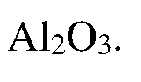
Figure IMGF000003_0001 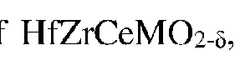
Figure IMGF000003_0002 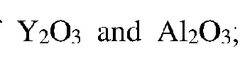
Figure IMGF000004_0001
Abstract
Description
MULTIPHASE CERAMIC COMPOSITECROSS-REFERENCE TO RELATED APPLICATION
[0001] This application claims the benefit of priority of Singapore patent application no. 10202303232Q filed 16 November 2023. the contents of which being hereby incorporated by reference in its entirety for all purposes.TECHNICAL FIELD
[0002] The invention relates to ceramic composites, and in particular, to multiphase ceramic composites and methods of producing the multiphase ceramic composites.BACKGROUND
[0003] High-entropy and medium-entropy ceramics are investigated for a wide range of applications, from photocatalysts, solar absorbers, thermoelectric applications to protective coatings. State of the art ceramic structures may include single-phase high-entropy fluorite oxides, which may be prepared by sol-gel methods or consolidated by pulsed current processing (PCP), or be prepared as a coating formed by thermal spraying composite powder.
[0004] These ceramics may contain multiple cations (4 or more) occupying a lattice site, usually in equal molar ratios. By mixing cations with different atomic sizes and masses, the ceramics may exhibit lattice distortion with mass disorder. These phenomena may enhance properties of the ceramics, such as increased hardness and reduced or low thermal conductivity. Due to phonon scattering, thermal insulating properties may be achieved. One practical application which requires these properties is thermal barrier coating (TBC) for gas turbines and other industrial machinery which are operated under high temperatures.
[0005] Notwithstanding the above, fracture toughness of entropy ceramics reported to-date as TBC material is lower than that of yttria-stabilized zirconia (YSZ), which is a commercial TBC material. Without sufficient fracture toughness, cracks that develop in a TBC materialmay propagate and grow to expose underlying turbine or machinery parts, thereby limiting their efficiencies and shelf life.
[0007] To overcome the above limitations, entropy ceramics are required to be toughened so that enhanced thermal-mechanical properties may be effectively realized in real life applications.
[0007] Tn light of the above, there exists a need for an improved ceramic composite that overcomes or at least alleviates one or more of the above-mentioned problems.SUMMARY
[0008] According to a first aspect, there is provided a multiphase ceramic composite comprising a first ceramic phase ofwherein M is a metal selected from the group consisting of an alkaline metal, a transition metal and a rare earth metal, and δ is a number determined by valence of elements other than oxygen in the first ceramic phase; and a second ceramic phase of A
[0009] According to a second aspect, there is provided a method of producing a multiphase ceramic composite, the method comprising physically working oxide powders of hafnium, zirconium, cerium, aluminium and M, wherein M is a metal selected from the group consisting of an alkaline metal, a transition metal and a rare earth metal to form a mixture; calcining the mixture to form a calcined mixture; compacting the calcined mixture to form a compacted mixture; and sintering the compacted mixture.
[0010] According to a third aspect, there is provided an article of manufacture comprising a multiphase ceramic composite according to the first aspect, or a multiphase ceramic composite produced by a method according to the second aspect, wherein the article of manufacture is a gas turbine, a furnace, a jet engine or an equipment operated under elevatedtemperature, wherein the multiphase ceramic composite is present as a thermal barrier coating or a thermal insulator in the article of manufacture.BRIEF DESCRIPTION OF THE DRAWINGS
[0011] In the drawings, like reference characters generally refer to the same parts throughout the different views. The drawings are not necessarily drawn to scale, emphasis instead generally being placed upon illustrating the principles of various embodiments. In the following description, various embodiments of the invention are described with reference to the following drawings.
[0012] FIG. 1A shows X-ray diffraction (XRD) patterns of compositions synthesized herein and YSZ. The compositions were referenced according to their oxides grouping: “YA1” refers to composition of, “GdAl” refers to composition of ;“CaAl” refers to composition ofand.
[0013] FIG. IB shows magnified XRD patterns with indexed planes of AI2O3. The compositions were referenced according to their oxides grouping: “YA1” refers to composition of“GdAl” refers to composition ofrefers to composition of.
[0014] FIG. 2 shows scanning electron microscopy (SEM) image and energy dispersive spectroscopy (EDS) mappings of elemental distributions of the synthesized,. Scale bar of the SEM image denotes 10 μm, while scale bar in the EDS mappings denote 100 μm.
[0015] FIG. 3 is a graph showing coefficient of thermal expansion (CTE) values ofceramic composites, for M = (a) Y, (b) Ca, and (c) Gd, and of (d) YSZ.
[0016] FIG. 4A is a graph showing thermal diffusivity of (i) YSZ, andceramic composites, whereby M = (ii) Gd, (iii) Y, and (iv) Ca.
[0017] FIG. 4B is a graph showing thermal conductivity of (i) YSZ, andceramic composites, whereby M = (ii) Gd, (iii) Y, and (iv) Ca.
[0018] FIG. 5A is an optical micrograph of indentations from Vickers hardness tests forceramic composite. Indentations are marked by solid lines; crack lines are circled in dashes to indicate their locations. Dashes in accompany inset indicate the directions of cracks. Scale bar denotes 20 μm.
[0019] FIG. 5B is an optical micrograph of indentations from Vickers hardness tests forceramic composite. Indentations are marked by solid lines; crack lines are circled in dashes to indicate their locations. Dashes in accompany inset indicate the directions of cracks. Scale bar denotes 20 μm.
[0020] FIG. 5C is an optical micrograph of indentations from Vickers hardness tests forceramic composite. Indentations arc marked by solid lines. Scale bar denotes 20 μm.
[0021] FIG. 5D is an optical micrograph of indentations from Vickers hardness tests for YSZ. Indentations are marked by solid lines; crack lines are circled in dashes to indicate their locations. Dashes in accompany inset indicate the directions of cracks. Scale bar denotes 20 μm.
[0022] FIG. 6 shows XRD patterns of ceramic composites with differentratios of a) 0.5, b) 1 , c) 2, d) 3, and e) 4. The dotted lines indicate peaks.
[0023] FIG 7A shows EDS mappings of Al with ratio of 2. Scale bar denotes100 μm.
[0024] FIG 7B shows EDS mappings of Al withratio of 4. Scale bar denotes 100 μm.
[0025] FIG. 8A shows optical micrograph of crack propagation inceramic composites with ratio of 1 / 2. Indentations are marked by solid lines; crack lines are indicated in dashes. Scale bar denotes 20 μm.
[0026] FIG. 8B show's optical micrograph of crack propagation inceramic composites withratio of 1. Indentations are marked by solid lines; crack lines are indicated in dashes. Scale bar denotes 20 μm.
[0027] FIG. 8C show's optical micrograph of crack propagation inceramic composites w'ithratio of 2. Indentations are marked by solid lines. Scale bar denotes 20 μm.
[0028] FIG. 8D show's optical micrograph of crack propagation inceramic composites w'ithratio of 3. Indentations are marked by solid lines. Scale bar denotes 20 μm.
[0029] FIG. 8E show's optical micrograph of crack propagation inceramic composites w'ithratio of 4. Indentations arc marked by solid lines. Scale bar denotes 20 μm.
[0030] FIG. 8F show's optical micrograph of crack propagation in YSZ. Indentations are marked by solid lines; crack lines are indicated in dashes. Scale bar denotes 20 μm.
[0031] FIG. 9A shows a higher magnification SEM image depictingw'hereby discreteparticles are dispersed as a second phase in a first ceramic phase of according to an embodiment. Scale bar denotes 10 μm.
[0032] FIG. 9B show's EDS mappings of Al inaccording to an embodiment. Scale bar denotes 25 μm.DESCRIPTION
[0033] The following detailed description refers to the accompanying drawings that show', by way of illustration, specific details and embodiments in w'hich the invention may be practised.These embodiments are described in sufficient detail to enable those skilled in the art to practise the invention. Other embodiments may be utilized and structural, logical, and electrical changes may be made without departing from the scope of the invention. The various embodiments are not necessarily mutually exclusive, as some embodiments can be combined with one or more other embodiments to form new embodiments.
[0034] A multiphase ceramic composite is disclosed herein. With a first ceramic phase of a high-entropy or medium-entropy material and a second ceramic phase of AI2O3 comprised in the multiphase ceramic composite, the second ceramic phase of AI2O3 may function to toughen the first ceramic phase, so as to synergistically result in an improved multiphase ceramic composite which is able to exhibit improved thermal-mechanical properties over either of the first or the second ceramic phase. The multiphase ceramic composite may be prepared by mixing oxide powders of constituent elements of both the first and the second ceramic phase, and processing the mixture during methods disclosed herein.
[0035] Advantageously, composites disclosed herein arc able to provide thermal-mechanical properties suitable for thermal barrier coating applications, such as low thermal conductivities, matching coefficients of thermal expansion with metal substrates, high hardness and fracture toughness.
[0036] With the above in mind, various embodiments refer in a first aspect to a multiphase ceramic composite. The term “ceramic composite” as used herein may refer to a material formed from two or more different components of inorganic, metallic solids, with the composite having a functional and / or a structural property that is different from that of the individual components used for its formation.
[0037] By the term “multiphase ceramic composite”, this may refer to the ceramic composite having a matrix or a first ceramic phase formed of one composition, and a constituent or a second ceramic phase having a different composition dispersed within the matrix. Inembodiments where the number of phases is two, the multiphase ceramic composite may alternatively be termed as a biphasic ceramic composite.
[0038] In various embodiments, the multiphase ceramic composite may comprise a first ceramic phase of wherein M is a metal selected from the group consisting ofan alkaline metal, a transition metal and a rare earth metal, and 8 is a number determined by valence of elements other than oxygen in the first ceramic phase, and a second ceramic phase of AI2O3.
[0039] The multiphase ceramic composite may be formed from oxide powders of hafnium, zirconium, cerium, aluminium and M. In various embodiments, the oxide powders of hafnium, zirconium, cerium, M and aluminium are respectively MO andnano powders, wherein M is Ca, Y, or Gd. MO may accordingly be, or .
[0040] 8 is a number determined by valence of elements other than oxygen in the first ceramic phase. For example, value of δ may be dependent on charge of cations present in the first ceramic phase, so as to obtain a charge neutral material.
[0041] Using methods disclosed herein, a mixture formed from the individual oxide powders of hafnium, zirconium, cerium, aluminium and M may be subjected to solid state processing, involving physically working the mixture such as by planetary ball milling, calcination, powder compaction and sintering, to obtain the multiphase ceramic composite.
[0042] Presence of multiple metals in the multiphase ceramic composite may mean that the multiphase ceramic composite may be considered as an alloy, and may be classified into high- entropy, medium-entropy and low-entropy, depending on factors such as composition ratio of constituent elements of the composite and configurational entropy of the composite.
[0043] For example, entropy of a composite with four cations may be about 1.39R, while entropy of a composite with five cations may be about 1.61R. Generally, systems orcomposites with five cations and / or with entropy values which are greater than 1.5R may be considered to be high-entropy. With presence of four cations, the first ceramic phase according to embodiments may be considered as a medium-entropy ceramic material.
[0044] In various embodiments, the first ceramic phase may be a medium-entropy ceramic material with fluorite oxide structure. The ceramic material is able to stably maintain its structure or form as the first ceramic phase even at elevated temperatures. This may be achieved by alloying multiple constituent elements at a similar ratio, for example, so that the ceramic phase may have a single-phase structure without forming intermediate phases due to entropy of mixing.
[0045] As disclosed herein, the first ceramic phase ofmay contain four different elements of hafnium (Hf), zirconium (Zr), cerium (Ce), and M, whereby M is a metal selected from the group consisting of an alkaline metal, a transition metal, and a rare earth metal.
[0046] In various embodiments, M is an alkaline metal. Examples of alkaline metals may include calcium (Ca), beryllium (Be), strontium (Sr), barium (Ba), and magnesium (Mg). In some embodiments, M is calcium (Ca).
[0047] In various embodiments, M is a transition metal. In some embodiments, M is yttrium (Y).
[0048] In various embodiments, M is a rare earth metal. In some embodiments, M is gadolinium (Gd).
[0049] As mentioned above, the multiphase ceramic composite according to embodiments disclosed herein comprises a second ceramic phase of . The multiphase ceramiccomposite comprising the first ceramic phase of H and the second ceramic phaseof may be obtained by an in situ synthesis process involving starting materials of individual oxide powders of hafnium, zirconium, cerium, aluminium and M. A mixtureformed from the individual oxide powders of hafnium, zirconium, cerium, aluminium and M may be subjected to solid state processing, involving physically working the mixture such as by planetary ball milling, calcination, powder compaction and sintering, to obtain the multiphase ceramic composite.
[0050] The second ceramic phase ofwas surprisingly found by the inventors to toughen the first ceramic phase of , such that the multiphase ceramic compositeis able to exhibit thermal- mechanical properties suitable for thermal barrier coating applications, for example, low thermal conductivities, matching coefficients of thermal expansion with metal substrates, high hardness and fracture toughness. It was also surprisingly found that a two-phase ceramic composite may be formed by an in situ synthesis process involving starting materials of individual oxide powders of hafnium, zirconium, cerium, aluminium and M, particularly for embodiments whereby it was not expected based on stoichiometric ratios of the cations in the starting materials that the composites disclosed herein may be formed.
[0051] Advantageously, a multiphase ceramic composite according to embodiments disclosed herein may be good for high temperature applications, such as in gas turbines, as a refractory material in furnaces, or in jet engines, just to name a few, whereby the multiphase ceramic composite functions as a thermal barrier coating or thermal insulator.
[0052] In various embodiments, the multiphase ceramic composite may have a coefficient of thermal expansion in the range of 13.9 to 15.8 x 10⁻⁶ / °C at 900 °C. For example, the multiphase ceramic composite may have a coefficient of thermal expansion in the range of
[0053] hi various embodiments, the multiphase ceramic composite may have a thermal conductivity in the range of 1.71 to 1.81 W / m.K at 900 °C. For example, the multiphaseceramic composite may have a thermal conductivity in the range of 1.73 to 1.81 W / m.K, 1.75 to 1.81 W / m.K, or 1.71 to 1.75 W / m.K at 900 °C.
[0054] In various embodiments, the multiphase ceramic composite may have a Vickers hardness value in the range of 12.07 GPa to 14.83 GPa at 1 kgf. For example, the multiphase ceramic composite may have a Vickers hardness value in the range of 12.5 GPa to 14.83 GPa, 13 GPa to 14.83 GPa, 13.5 GPa to 14.83 GPa, 12.07 GPa to 14 GPa, 12.07 GPa to 13.5 GPa at Ikgf.
[0055] The second ceramic phase of may, for example, have a size in the range of 1 μmto 10 μm in the multiphase ceramic composite. Size of the second ceramic phase ofmay be characterized by its maximal dimension, wherein the term “maximal dimension” refers to the maximal length of a straight line segment passing through the center of a figure and terminating at the periphery.
[0056] For example, the second ceramic phase of may have a size of 2 μm to 10 μm, 4μm to 10 μm, 5 μm to 10 μm, 1 μm to 8 μm, 1 μm to 6 μm, or 2 μm to 8 μm.
[0057] Various embodiments refer in a second aspect to a method of producing a multiphase ceramic composite.
[0058] The method may comprise physically working oxide powders of hafnium, zirconium, cerium, aluminium and M, wherein M is a metal selected from the group consisting of an alkaline metal, a transition metal and a rare earth metal to form a mixture; calcining the mixture to form a calcined mixture; compacting the calcined mixture to form a compacted mixture; and sintering the compacted mixture.
[0059] Physically working the oxide powders may, for example, involve crushing, grinding or milling the oxide powders. In so doing, size of the oxide powders may be reduced.
[0060] In various embodiments, the oxide powders of hafnium, zirconium, cerium, M and aluminium are respectively HfO2, Z1O2, CeC>2, MO and AI2O3 nano powders, wherein M isCa, Y, or Gd. Accordingly, the oxide powder of Ca, Y, and Gd may respectively be CaO,
[0062] In various embodiments, the oxide powder of cerium may be present at an amount in the range of 18 to 27 mol%, such as 20 to 27 mol%, 22 to 27 mol%, 18 to 25 mol%, 18 to 23 mol%, or 20 to 25 mol%.
[0062] The oxide powder of M may be present at an amount in the range of 9 to 13 mol%, such as 10 to 13 mol%, 9 to 11 mol% or 10 to 12 mol%.
[0063] hr various embodiments, the oxide powders of hafnium, zirconium, cerium, M and aluminium are provided in a molar ratio 2:2:2: l:n, wherein n is in the range from 1 / 2 to 4, such as 1 / 2, 1, 2, 3, and 4. In specific embodiments, n is 1.
[0064] Physically working the oxide powders according to embodiments disclosed herein may comprise mixing the oxide powders with a ball milling medium to form a powder slurry, and carrying out planetary ball milling on the powder slurry to form the mixture.
[0065] Examples of suitable ball milling medium may include an alcohol such as ethanol and / or isopropyl alcohol (IPA), and deionized water. Amount of the ball milling medium may not be particularly limited, and may be of a sufficient amount to form a slurry for subsequent processing.
[0066] Following physically working of the oxide powders to form a mixture, methods disclosed herein may comprise calcining the mixture. Calcining the mixture may be carried out to remove impurities from the oxide powders, and / or to form an intermediate phase compound to allow easier handling of powders in subsequent processes.
[0067] In various embodiments, calcining the mixture is carried out at a temperature in the range of 1100 °C to 1300 °C, and / or for a time period in the range of 5 hours to 7 hours.
[0068] For example, calcining the mixture may be carried out at a temperature in the range of 1150 °C to 1300 °C, in the range of 1200 °C to 1300 °C, in the range of 1100 °C to 1250 °C, inthe range of 1150 °C to 1250 °C, or 1200 °C. Calcining the mixture may be carried out for a time period in the range of 5 hours to 7 hours, such as 6 to 7 hours, 5 to 6 hours or 6 hours.
[0069] In various embodiments, methods of producing a multiphase ceramic composite disclosed herein may further comprise drying the mixture prior to the calcining. Drying the mixture may be carried out, for example, to remove any liquid such as ball milling medium that may be present. The drying may be carried out at a temperature in the range of 40 °C to 100 °C, such as 40 °C to 80 °C, 40 °C to 60 °C, 60 °C to 100 °C, 80 °C to 100 °C, or 60 °C to 80 °C. Following the drying, the dried mixture may be grinded, which may have effect of loosening the powder and reducing particle size of the powder to less than 90 μm.
[0070] The calcined mixture may be compacted to form a compacted mixture. A load may be applied to the calcined mixture to compress the calcined mixture. The compacting may be carried out in the presence of a binder so as to connect powder particles present in the calcined mixture together to render the powder particles in a compact form. In various embodiments, compacting the calcined mixture comprises blending the calcined mixture with a polymeric binder to form a blend, and subjecting the blend to a progressive pressure loading from 150 MPa to 450 MPa.
[0071] As used herein, the term “polymeric binder” refers to a polymeric material that is able to bind or hold the components in the ceramic composite together. Examples of polymeric binder may include, but are not limited to, polyvinyl alcohol (PVA), polyethylene glycol (PEG), and / or polyvinyl butyral (PVB).
[0072] The progressive pressure loading may be carried out for a time period in the range of 8 minutes to 12 minutes, such as 9 minutes to 12 minutes, 9 minutes to 11 minutes or about 10 minutes, starting from a pressure loading of 150 MPa and increased progressively or in a stepwise fashion to 450 MPa.
[0073] Methods disclosed herein may comprise sintering the compacted mixture. The sintering may be carried out to increase grain size of ceramic composites comprised in the compacted mixture, while reducing size of pores present in the composites. In so doing, density of the ceramic composites may increase. The sintering may, for example, be carried out at a temperature in the range of 1500 °C to 1700 °C, and / or for a time period in the range of 20 hours to 30 hours. For example, the sintering may be carried out at a temperature in the range of 1550 °C to 1700 °C, 1600 °C to 1700 °C, 1650 °C to 1700 °C, 1500 °C to 1650 °C, 1500 °C to 1600 °C, 1550 °C to 1650 °C, or 1600 °C. The sintering may, for example, be carried out for a time period in the range of 22 hours to 30 hours, 25 hours to 30 hours, 20 hours to 28 hours, 20 hours to 25 hours, or 22 hours to 28 hours.
[0074] In various embodiments, sintering the compacted mixture may comprise calcining the compacted mixture at a temperature that is 600 °C or less, such as in the range of 500 °C to 600 °C. The calcining may be carried out at this temperature to burn off binders that may be present, before increasing to the higher temperatures mentioned above. In various embodiments, the calcining may be carried out at a temperature in the range of 450 °C to 600 °C, 500 °C to 550 °C, 400 °C to 500 °C, 450 °C to 550 °C, or 600 °C.
[0075] Various embodiments refer in a further aspect to an article of manufacture comprising a multiphase ceramic composite according to the first aspect, or a multiphase ceramic composite produced by a method according to the second aspect, wherein the article of manufacture is a gas turbine, a furnace, a jet engine or an equiμment operated under elevated temperature, wherein the multiphase ceramic composite is present as a thermal barrier coating or thermal insulator in the article of manufacture.
[0076] As mentioned above, composites disclosed herein are able to provide thermalmechanical properties suitable for thermal barrier coating applications, such as low thermal conductivities, matching coefficients of thermal expansion with metal substrates, highhardness and fracture toughness. These attributes render their particular suitability for use in high temperature applications, such as applications involving temperatures of several hundred or more than 1000 °C.
[0077] In order that the invention may be readily understood and put into practical effect, particular embodiments will now be described by way of the following non-limiting examples.EXAMPLES
[0078] A multiphase ceramic composite is provided as disclosed herein. The multiphase ceramic composite may comprise a first ceramic phase ofwherein M is a metal selected from the group consisting of an alkaline metal such as Ca, a transition metal such as Y and a rare earth metal such as Gd, and a second ceramic phase of.
[0079] The multiphase ceramic composite may be prepared by a method comprising providing nano powders of H, mixing stoichoiometric amounts of the nano powders in the presence of a solvent to form a slurry, calcining the slurry, blending a polymeric binder with the calcined slurry to form a mixture, compacting the mixture, and sintering the compacted mixture.
[0080] The nano powders may, for example, be mixed in aratio of 2:2:2: 1: 1. Ratio ofmay be in the range from 2: 1 to 1:4.
[0081] Initial particle size may be nano size (< 100 nm), and powder mixture may be grounded to < 90 μm particle size between mixing and heat treatment stages.
[0082] As disclosed herein, theceramic composites may comprise or consist of medium-entropy ceramicsoxide toughened with second phase Toughening of ceramics which results from entropy mixing (high / mediumentropy) with as second phase is not previously known.
[0083] In exemplified embodiments, theceramic composites were in situ synthesised from starting oxides, a suitable metal oxide MO and . MO was selected from an alkaline metal oxide (e.g. CaO), a transition metal oxideor a rare earth metal oxide. In other words, five compounds of HfO2,were used as the starting materials and mixed. By using the five compounds, high- or medium- entropy ceramic composites may be produced. The molar ratios of the starting oxides were in a determined ratio of 2:2:2: 1: 1 for, and composites of medium-entropy ceramics and second phase were produced.
[0084] ceramic composites were also synthesized withratios in the range from 1 / 2 to 4. Within this range, the cubic fluorite crystal structures of the medium-entropy ceramic were preserved with no new secondary phase formation. The thermal and mechanical properties of the composites were suitable for protective coatings such as thermal barrier coating applications and for thermal insulation.
[0085] The in situ synthesis of medium-entropy ceramic composites may involve setting the type of starting oxides and their molar ratios. The in situ synthesis from the starting constituent oxides to result inceramic composites with improved properties is unexpected.
[0086] Amounts ofmay be used. If lower amounts ofare used, they may serve a different function of stabilizing ZrO2. In various embodiments, wt% of may be in the range from 2 to 15% of startingmixture, and wt% ofmay be in the range of 18 to 21% of starting mixture.
[0087] Varying the proportions of Hf, Zr, Ce, and M, along with amounts of AI2O3 in embodiments disclosed herein provide for a ceramic composite with a first phase of high / medium-entropy ceramics and second phase. As opposed to only mixing certain oxidessuch as , or mixing compounds to produce a multiphase formed of a hostmatrix and a second phase, embodiments disclosed herein involve mixing five distinctly different starting oxides, to provide for a multiphase ceramics composite. This differs from addition ofas a second phase to a ceramic material, whereby fabrication steps may include fabricating a ceramic material of high-entropy, and addingnano powders to the pre-formed high-entropy ceramic material to form a composite.
[0088]
[0089] ceramic composites were in situ synthesised from starting oxides . a suitable metal oxide MO and. MO may be selected from analkaline metal oxide (e.g. CaO), a transition metal oxideor a rare earth metal oxide. Each composite comprises a medium-entropy ceramicfluorite oxide toughened with second phaseComposites with differentratios were also synthesised.
[0090] nano powders (purity > 99%, US ResearchNanomaterials) and CaO nano powder (purity >98%, Sigma Aldrich) were used as the starting materials to synthesize three compositions. The molar ratios of the starting oxide powders were.
[0091] The samples were synthesized according to solid state reaction method which includes planetary ball milling, calcination, powder compaction and sintering. First, the nano powders in stoichiometric amounts were mixed with ethanol and YSZ grinding beads inside milling jars of a planetary ball mill at about 250 rμm for 16 hours. The powder slurry was dried in an oven for 24 hours, sieved through a 90 μm-mesh screen and calcined at 1200 °C for 6 hours.
[0092] The calcined powder was blended with a polymeric binder and then compacted inside a hardened stainless steel die mold. Using pelletisation die press, the mold was subjected to a progressive pressure loading from 150 MPa to 450 MPa for a total duration of 10 min.Finally, the green compact was calcined in a furnace at 600 °C to bum off the polymeric binder and then sintered at 1600 °C for 24 hours for further densification. Thermal-mechanical testings were carried out. For comparison, YSZ nano powderpurity 99.9%, US Research Nanomaterials) was compacted and sintered under the same conditions.
[0093] FIG. 1A shows X-ray diffraction (XRD) patterns of the synthesized compositions and YSZ, and FIG. IB shows magnified XRD patterns with indexed planes of. The compositions were referenced according to their oxides grouping:
[0094] X-ray diffraction (XRD) patterns in FIG. 1A show that strong and distinct peaks characteristic of cubic fluorite structure were present in both the synthesized compositions and YSZ. Diffraction peaks of lower intensities were also present in all the compositions as shown in the magnified XRD patterns in FIG. IB. These peaks can be ascribed to 01-AI2O3 (ICDD 01-070-5679).
[0095] FIG. 2 shows scanning electron microscopy (SEM) image and energy dispersive spectroscopy (EDS) mappings of elemental distributions of the synthesised. SEM image in FIG. 2 shows that discrete particles are randomly distributed in the microstructures. Elemental distributions acquired with EDS reveal all the synthesized compositions consist of homogenous distributions of Hf, Zr, Ce and M (M = Y, Ca, Gd) and local segregation of Al. Combined with the XRD results, the homogenous distribution would indicate a single-phase solid solution of medium-entropy non-equimolar fluorite oxide while the local segregation isIn the following sections,the synthesized compositions would be referred asceramic composite.
[0096] FIG. 3 is a graph showing Coefficient of thermal expansion (CTE) values ofceramic composites and YSZ, for M = (a) Y, (b) Ca and (c) Gd, and (d)YSZ.
[0097] FIG. 3 shows that the ceramic composites have higher coefficient of thermal expansion (CTE) values than YSZ with values at 900 °C in the range of 13.9 to 15.8 x 10⁻⁶ / °C. The CTE value of YSZ is 12.7xlO6 / °C. The ceramic composites have matching thermal expansion coefficients with underlying metallic substrates in thermal barrier coating (TBC).
[0098] FIG. 4A is a graph showing thermal diffusivity of (i) YSZ andceramic composites, whereby M = (ii) Gd, (iii) Y, and (iv) Ca.
[0099] FIG. 4B is a graph showing thermal conductivity of (i) YSZ andceramic composites, whereby M = (ii) Gd, (iii) Y, and (iv) Ca.
[0100] FIG. 4A and FIG. 4B compare thermal properties of the ceramic composites with YSZ. FIG. 4A shows that thermal diffusivities of the ceramic composites are lower than that of YSZ suggesting that phonon scattering is a dominant heat transfer process in the composites. FIG. 4B shows that thermal conductivities of the ceramic composites are in the range of 1.71 to 2.04 W / m.K, which are lower than that of YSZ which has a value between 2.17 and 2.49 W / m.K that is consistent with reported values. For example at 900 °C, thermal conductivities of the composites are about 1.71 to 1.81 W / m.K, compared to 2.49 W / m.K for YSZ. The ceramic composites are thermally insulating for TBC applications.
[0101] FIG. 5A to FIG. 5D show optical micrographs of indentations from Vickers hardness tests for ceramiccomposites and YSZ, respectively. Indentations are marked by solid lines; crack lines are circled in dashes to indicate their locations. Dashes in each accompany inset for FIG. 5A, FIG. 5B and FIG. 5D indicate the directions of cracks. The hardness value ofceramic composite is 12.07, 11.87 and14.83 GPa, respectively (TABLE 1) which is comparable to that of YSZ (14.97 GPa) and its reported values.
[0102] TABLE 1: Vickers hardness (1 kgf) of ceramic composites and YSZ
[0103] An important mechanical property of TBC is the fracture toughness to resist crack propagation and growth. FIG. 5A to FIG. 5C show that crack lengths are not apparent in the ceramic composites althougheach displays a weak zig-zag crack line. Tn contrast, the indentation of YSZ displays distinctly straight and longer crack lines radiating from the vertices of the indentation (FIG. 5D). Clearly the indentation profiles suggest different toughening mechanisms are involved in the ceramic composites and YSZ. YSZ exhibits a phase transformation toughening mechanism whereby the tetragonal phase transforms to monoclinic phase under stress application. Due to the bigger volume of the monoclinic phase, compressive stress is induced in the crack area to prevent crack propagation and thus improve the fracture toughness. On the other hand, the second phaseparticles in the ceramic composites could have played a role in toughening the high-entropy ceramics components. The AI2O3 particles (shown in FIG. 2) in theceramic composites are discrete and of considerable size (between 1 and 7 μm) to be effective to block crack propagation to cause crack deflection. Tn addition, the thermal expansion coefficient of is much lower compared to those of the high-entropyceramic components (FIG. 3). It is thus reasonable to expect theceramic composites to exhibit enhanced toughness. The ceramic composites have both comparable hardness and improved fracture toughness compared to YSZ.
[0104]
[0105] Composites with different ratios according to TABLE 2 weresynthesised using the solid-state reaction method as described in the previous sections.
[0106] TABLE 2: Composites with different AI2O3: Y2O3 ratios
[0107] FIG. 6 shows XRD patterns ofceramic composites with different ratios. The dotted lines indicate AI2O3 peaks. XRD graphs in FIG. 6show that was present in all the samples with the higher intensity peaks indexed to thecubic fluorite oxide phase. As theratio increases, the peak intensitiesincrease. Significantly, the intensities of the cubic fluorite are not reduced and no new secondary phase is formed which indicate that the formation of medium-entropy ceramic composites is still feasible even at the higher ratios. The increase in AI2O3 particles with increasingratio is shown in the EDS mappings in FIG. 7A and FIG. 7B, whereby FIG. 7A shows EDS mappings of Al withratio of 2, and FIG. 7B shows EDS mappings of Al with ratio of 4.
[0108] The thermal-mechanical properties of ceramic compositeswere also tested and summarized in TABLE 3.
[0109] TABLE 3: Thermal-mechanical properties ofceramic composites
[0110] The hardness of ceramic composites reaches a maximum value atwhich is comparable to the hardness value of YSZ. The crack propagation behaviour is improved with the presence ofparticles with no crack lines observed for composites withas shown when comparing FIG. 8A to FIG. 8E. In contrast, YSZ exhibits distinct long and straight radiating crack lines as shown in FIG. 8F.
[0111] The CTE values of the ceramic composites are higher than or match closely with the CTE of YSZ. The thermal conductivities of the ceramic composites are lower than or compatible with that of YSZ. The thermal-mechanical properties ofceramic composites make them suitable for thermal barrier coating applications.
[0112] TABLE 4: Summary of technology benchmarking data.1 New class of high-entropy defect fluorite oxidesas promising thermal barrier coatings, Junjic He, Guo He, Jing Liu, Jingchao Tao, Journal of the European Ceramic Society 41 (2021) 6080-6086.2 Low-Thermal-Conductivity Rare-Earth Zirconates for Potential Thermal-Barrier-Coating Applications, Jie Wu, Xuezheng Wei, Nitin P. Padture, Paul G. Klemens, Maurice Gell, Eugenio Garci a, Pilar Miranzo, and Maria I Osendi, J. Am. Ceram. Soc., 85
[0012] 3031-35 (2002).
[0113] As disclosed herein,ceramic composites were in situ synthesised from starting oxidesa suitable metal oxide MO andis selected from an alkaline metal oxide (e.g. CaO), a transition metal oxideor a rare earth metal oxide . The molar ratios of the starting oxides were 2:2:2: 1: 1for H.
[0114] ceramic composites withratios in the rangefrom 1 / 2 to 4 as shown in TABLE 2 above, whereby is an example of MO.
[0115] In various embodiments,ratios are in the range between 1 / 2 and 4 to attain thermal-mechanical properties suitable for practical applications. Outside of this range, CTE, thermal conductivities and hardness values may not be better than those of YSZ (sec TABLE 3).
[0116] ceramic composites which consist of medium-entropy ceramicsfluorite oxide toughened with second phase A . The compositesexhibit thermal-mechanical properties suitable for thermal barrier coating applications. The properties are low thermal conductivities, matching coefficients of thermal expansion with metal substrates, high hardness and fracture toughness.
[0117] By “comprising” it is meant including, but not limited to, whatever follows the word “comprising”. Thus, use of the term “comprising” indicates that the listed elements are required or mandatory, but that other elements are optional and may or may not be present.
[0118] By “consisting of’ is meant including, and limited to, whatever follows the phrase “consisting of’. Thus, the phrase “consisting of’ indicates that the listed elements are required or mandatory, and that no other elements may be present.
[0119] The inventions illustratively described herein may suitably be practiced in the absence of any element or elements, limitation or limitations, not specifically disclosed herein. Thus, for example, the terms “comprising”, “including”, “containing”, etc. shall be read expansively and without limitation. Additionally, the terms and expressions employed herein have been used as terms of description and not of limitation, and there is no intention in the use of such terms and expressions of excluding any equivalents of the features shown and described or portions thereof, but it is recognized that various modifications are possible within the scope of the invention claimed. Thus, it should be understood that although the present invention has been specifically disclosed by preferred embodiments and optional features, modification and variation of the inventions embodied therein herein disclosed may be resorted to by those skilled in the art, and that such modifications and variations arc considered to be within the scope of this invention.
[0120] By “about” in relation to a given numerical value, such as for temperature and period of time, it is meant to include numerical values within 10% of the specified value.
[0121] The invention has been described broadly and generically herein. Each of the narrower species and sub-generic groupings falling within the generic disclosure also form part of the invention. This includes the generic description of the invention with a proviso or negative limitation removing any subject matter from the genus, regardless of whether or not the excised material is specifically recited herein.
[0122] Other embodiments are within the following claims and non- limiting examples. In addition, where features or aspects of the invention are described in terms ofMarkush groups, those skilled in the art will recognize that the invention is also thereby described in terms of any individual member or subgroup of members of the Markush group.
Claims
CLAIMS1. A multiphase ceramic composite comprising a first ceramic phase ofwherein M is a metal selected from the group consisting of an alkaline metal, a transition metal and a rare earth metal, and 8 is a number determined by valence of elements other than oxygen in the first ceramic phase; and a second ceramic phase of2. The multiphase ceramic composite according to claim 1, wherein the first ceramic phase is a medium-entropy ceramic material with fluorite oxide structure.
3. The multiphase ceramic composite according to claim 1 or 2, wherein M is Ca, Y, or Gd.
4. The multiphase ceramic composite according to any one of claims 1 to 3, wherein the multiphase ceramic composite has a coefficient of thermal expansion in the range of 13.9 to 15.8 x 10’6 / °C at 900 °C.
5. The multiphase ceramic composite according to any one of claims 1 to 4, wherein the multiphase ceramic composite has a thermal conductivity in the range of 1.71 to 1.81 W / m.K at 900 °C.
6. The multiphase ceramic composite according to any one of claims 1 to 5, wherein the multiphase ceramic composite has a Vickers hardness value in the range of 12.07 GPa to 14.83 GPa at 1 kgf.
7. The multiphase ceramic composite according to any one of claims 1 to 6, wherein the second ceramic phase of AI2O3 has a size in the range of 1 μm to 10 μm in the multiphase ceramic composite.
8. A method of producing a multiphase ceramic composite, the method comprising physically working oxide powders of hafnium, zirconium, cerium, aluminium and M, wherein M is a metal selected from the group consisting of an alkaline metal, a transition metal and a rare earth metal to form a mixture; calcining the mixture to form a calcined mixture; compacting the calcined mixture to form a compacted mixture; and sintering the compacted mixture.
9. The method according to claim 8, wherein the oxide powders of hafnium, zirconium, cerium, M and aluminium are respectivelyMO and nano powders,wherein M is Ca, Y, or Gd.
10. The method according to claim 8 or 9, wherein the oxide powder of cerium is present at an amount in the range of 18 to 27 mol% and the oxide powder of M is present at an amount in the range of 9 to 13 mol%.
11. The method according to any one of claims 8 to 10, wherein the oxide powders of hafnium, zirconium, cerium, M and aluminium are provided in a molar ratio 2:2:2: l:n, wherein n is in the range from 1 / 2 to 4.
12. The method according to claim 11, wherein n is 1.
13. The method according to any one of claims 8 to 12, wherein physically working the oxide powders comprises mixing the oxide powders with a ball milling medium to form a powder slurry, and carrying out planetary ball milling on the powder slurry to form the mixture.
14. The method according to any one of claims 8 to 13, wherein calcining the mixture is carried out a temperature in the range of 1100 °C to 1300 °C, and / or for a time period in the range of 5 hours to 7 hours.
15. The method according to any one of claims 8 to 14, further comprising drying the mixture prior to the calcining.
16. The method according to any one of claims 8 to 15, wherein compacting the calcined mixture comprises blending the calcined mixture with a polymeric binder to form a blend, and subjecting the blend to a progressive pressure loading from 150 MPa to 450 MPa.
17. The method according to claim 16, wherein the progressive pressure loading is carried out for a time period in the range of 8 minutes to 12 minutes.
18. The method according to any one of claims 8 to 17, wherein sintering the compacted mixture is carried out at a temperature in the range of 1500 °C to 1700 °C, and / or for a time period in the range of 20 hours to 30 hours.
19. The method according to any one of claims 8 to 18, wherein the sintering comprises calcining the compacted mixture at a temperature of 600 °C or less.
20. An article of manufacture comprising a multiphase ceramic composite according to any one of claims 1 to 7, or a multiphase ceramic composite produced by a method according to any one or claims 8 to 19, wherein the article of manufacture is a gas turbine, a furnace, a jet engine or an equiμment operated under elevated temperature, wherein the multiphase ceramic composite is present as a thermal barrier coating or thermal insulator in the article of manufacture.
Citation Information
Patent Citations
The method for preparing high-entropy oxide ceramic material is simple and low in consumption
CN112723862A
High-entropy oxides for thermal barrier coating (TBC) top coats
US20210347699A1
High entropy ceramic thermal barrier coating
US20220290285A1
Cited By
Preparation method of yttrium-zirconium-cerium ternary medium-entropy oxide ceramic material
CN121318450A