
Process for preparing a cathode comprising a prussian blue analogue
By controlling the water content in the cathode active layer to specific ppm ranges during the drying process, the process addresses the brittleness and flaking issues of PBA-based cathodes, enhancing their mechanical integrity and performance in sodium-ion cells.
Patent Information
- Application Number
- PCT/EP2024/083111
- Authority / Receiving Office
- WO · WO
- Patent Type
- Applications
- Current Assignee / Owner
- Priority Date
- 2023-11-21
- Filing Date
- 2024-11-21
- Publication Date
- 2025-05-30
AI Technical Summary
Existing processes for preparing cathodes with Prussian blue analogues (PBA) materials often result in brittle layers that tend to flake and crack under mechanical stress, such as tension, during the manufacturing process, especially when using aqueous-based solvents.
A process involving the controlled drying of the cathode active layer to achieve an adsorbed water content between 12,000 ppm and 50,000 ppm, allowing the layer to withstand mechanical stress without flaking or cracking, while using an aqueous-based slurry to maintain environmental sustainability.
The controlled water content in the cathode active layer enhances its mechanical integrity and adhesion to the conductive foil, enabling the cathode to withstand processing tensions and maintain performance in sodium-ion cells.
Smart Images
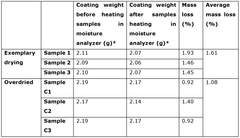
Figure IMGF000018_0001 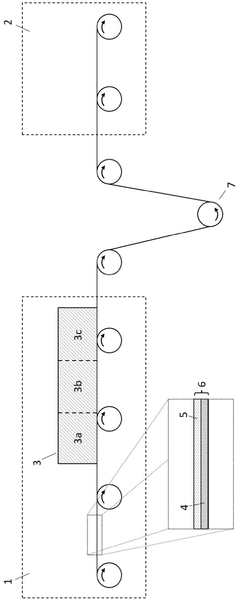
Figure 00000021_0000
Abstract
Description
[0001] PROCESS FOR PREPARING A CATHODE COMPRISING A PRUSSIAN BLUE ANALOGUE
[0002] TECHNICAL FIELD OF THE INVENTION
[0003] The present disclosure relates to an improved process for forming a cathode active layer comprising a Prussian blue analogue (PBA) material on a conductive foil. In particular, cathodes with consistent and homogenous coatings from slurries comprising PBA material dispersed in aqueous solvents are obtained.
[0004] BACKGROUND OF THE INVENTION
[0005] Increasing concerns regarding the sustainability of lithium sources, due to their limited availability and consequent expected price increase, have raised awareness of the importance of developing alternative energy-storage candidates that can sustain the evergrowing energy demand. Furthermore, limitations on the availability of certain transition metals used in the manufacturing of cathode materials typically used in lithium ion cells, together with questionable mining practices, are driving development towards more sustainable elements.
[0006] Sodium-ion batteries (Na-ion batteries) promise to revolutionise the area of low-cost, safe, and rapidly scalable energy-storage technologies. The use of raw elements, obtained ethically and sustainably from inexpensive and widely abundant sources, makes this technology extremely attractive, especially in applications where weight / volume are not of concern.
[0007] Prussian blue analogue (PBA) materials are promising cathode active materials for use in sodium ion batteries. PBA materials have a unique crystal structure with open three- dimensional frameworks and large interstitial voids, and are capable of storing sodium ions. Thus, high loading capacity may be achieved by cathodes prepared with PBA materials.
[0008] Cathodes may be prepared by coating a conductive foil with a slurry comprising PBA material dispersed in a solvent. The resulting cathode active layer is dried before the composite comprising the coated foil transit along the manufacturing line. Further process steps may include calendering, slitting and rewinding the composite on an end-roller. The tension of the composite must be controlled through the entire manufacturing process to ensure consistent coating of the conductive foil and avoid void areas that cannot be remedied by calendering. Tension rollers are placed along the manufacturing line to maintain composite tension throughout the cathode manufacturing process. In particular, tension rollers may be placed between different sub-steps of the cathode manufacturing process in a typical configuration of a production line.
[0009] Cathodes comprising PBA material can be deposited using organic solvents such as NMP, which provides cathode active layers of good quality. However, the use of NMP is environmentally problematic and its use should be avoided if possible. Alternative environmentally friendly solvents include aqueous-based solvents.
[0010] Hence there is a need to provide a process for preparing an environmentally friendly cathode comprising a homogenous cathode active layer comprising a Prussian blue analogue (PBA) material. In particular, it would be advantageous with process that is suitable for use with aqueous-based slurries.
[0011] SUMMARY OF THE INVENTION
[0012] The present disclosure relates to a process of preparing a cathode with a cathode active layer comprising a Prussian blue analogue (PBA) material starting from an aqueous-based slurry. The process involves a step of controlling the water content of the cathode active layer, e.g. by drying, to enable the cathode active layer to withstand tension experienced during transit along the manufacturing line. The process avoids flaking and cracking of the cathode active layers, thereby increasing the performance of the final sodium-ion cell.
[0013] Thus, an object of the present disclosure relates to provision of an improved process for preparing cathodes comprising a cathode active layer with a Prussian blue analogue (PBA) material.
[0014] Thus, an aspect of the present disclosure relates to a process of preparing a cathode, said process comprising the following steps:
[0015] (i) providing a conductive foil (4) on a first part of a manufacturing line (1)
[0016] (ii) providing a slurry comprising a Prussian blue analogue (PBA) material and an aqueous solvent;
[0017] (ii) preparing a coated foil (6) by applying the slurry onto at least one side of the conductive foil (4) to form a cathode active layer (5);
[0018] (iii) drying said coated foil (6) until the adsorbed water content of the cathode active layer (5) is in the range of from about 12,000 ppm to about 50,000 ppm; and (iv) transferring the dried coated foil (6) under tension to a second part of the manufacturing line (2).
[0019] Another aspect of the present disclosure relates to a coated foil wound on a roller, wherein the coated foil is prepared by the process as described herein.
[0020] Yet another aspect of the present disclosure relates to a coated foil wound on a roller, wherein the coated foil comprises: a conductive foil; and a cathode active layer comprising a PBA material, and optionally a binder and / or optionally a conductive agent; wherein the cathode active layer has a thickness of about 50 pm to about 500 pm and an adsorbed water content in the range of from about 12,000 ppm to about 50,000 ppm.
[0021] An even further aspect of the present disclosure relates to an electrode assembly comprising: a cathode precursor; a separator; and an anode, wherein the cathode precursor comprises a coated foil comprising: a conductive foil; and a cathode active layer comprising a PBA material, and optionally a binder and / or optionally a conductive agent; wherein the cathode active layer has a thickness of about 50 pm to about 500 pm and an adsorbed water content in the range of from about 12,000 ppm to about 50,000 ppm.
[0022] The electrode assembly may be wound or folded, for instance cylindrically wound, prismatically wound, or Z-folded.
[0023] The cathode precursor may be formed into a cathode by removal of the residual water, for instance by drying.
[0024] A still further aspect of the present disclosure relates to a cathode obtained by the process as described herein.
[0025] Another aspect of the present disclosure relates to a sodium-ion cell comprising: an anode; a separator; an electrolyte; and a cathode as described herein;
[0026] A still further aspect of the present disclosure relates to a battery comprising the sodium- ion cell as described herein.
[0027] Yet another aspect of the present disclosure relates to a vehicle comprising the sodium- ion cell or the battery as described herein.
[0028] BRIEF DESCRIPTION OF THE FIGURES
[0029] Figure 1 shows a schematic representation of a manufacturing line for preparing a cathode. The manufacturing line comprises a first part (1) and a second part (2) connected by tension rollers (7). A coated foil (6) comprising a cathode active layer (5) deposited on a conductive foil (4) is prepared and subsequently dried in an oven (3) on the first part of the manufacturing line (1), followed by transfer to the second part of the manufacturing line (2) via the tension rollers (7).
[0030] Figure 2 is a close up photograph of the layer formed by the process of Comparative Example 1.
[0031] The present invention will in the following be described in more detail.
[0032] DETAILED DESCRIPTION OF THE INVENTION
[0033] Definitions
[0034] Prior to outlining the present invention in more details, a set of terms and conventions is first defined:
[0035] Cathode active layer
[0036] In the present context, the term "cathode active layer" refers to a layer comprising cathode active material. Preferably, the cathode active layer also comprise a binder, and optionally a conductive agent.
[0037] To produce a cathode active layer, cathode active material, and optionally binder and / or conductive agent are typically dispersed in a dispersant to form a slurry. The slurry is then deposited on a conductive foil to form the cathode active layer. Cathode active material
[0038] In the present context, the term "cathode active material" refers to a material that can reversibly intercalate ions, such as sodium ions, during cell charge and discharge cycles. Preferably, the intercalation metal of the cathode active material is sodium.
[0039] Prussian blue analogue
[0040] In the present context, the term "Prussian blue analogue" refers to a cathode active material capable of intercalation and de-intercalation of sodium-ions, and comprising a sodium transition metal cyanide having six cyanide groups per formula unit.
[0041] Exemplary Prussian blue analogues include Prussian White, Turnbull's blue, potassium ferricyanide, and potassium ferrocyanide.
[0042] The Prussian blue analogue (PBA) material may be of a chemical formula represented by AxPy[Rz(CN)e]w, wherein A is one or more selected from a group consisting of alkali metal ion and alkaline-earth metal ion, P and R are transition metals, l<x<2, 0<y<2, l<z<2, and l<w<2. Preferably, A is sodium.
[0043] The Prussian blue analogue (PBA) material may be of a chemical formula represented by AxPy[Rz(CN)e]w, wherein A is one or more selected from a group consisting of alkali metal ion and alkaline-earth metal ion, P and R are transition metals, l<x<2, 0<y<2, l<z<2, and l<w<2. Preferably, A is sodium.
[0044] Water content
[0045] In the present context, the term "adsorbed water content" relates to the amount of adsorbed water held by the cathode active layer. In this context, Prussian blue analogue materials typically contain coordinated water, that is water complexed to the metal centres. Additionally, water may be present as adsorbed water, that is water that is not directly coordinated as part of the complex and thus less tightly bound.
[0046] The adsorbed water content can be determined by measuring the weight loss from a sample heated at 110°C. For instance, the initial weight of the sample can be measured, then the sample exposed to 110°C to remove adsorbed water. The final weight of the sample is taken as the weight of the sample when there is no difference in weight for a period of at least 45 seconds at 110°C. A suitable apparatus that can be used for this analysis is a Kern moisture analyzer DAB 200-2. The adsorbed water content is determined immediately after drying of the cathode active layer.
[0047] The adsorbed water content is herein reported in part per million (ppm), which is expressed as a gravimetric value so may be used interchangeably with pg / g.
[0048] Mean particle size
[0049] In the present context, the term "mean particle size" refers to the d50 value of a population of particles, e.g. Prussian blue analogue particles. The d50 value sets the value at which 50% of the particles within the population have a diameter below this value.
[0050] The particle diameter reported herein is preferably a d [4,3] diameter as measured by laser diffraction. Suitable apparatus for measuring the mean particle size include Malvern Mastersizer 3000 from Malvern Panalytical.
[0051] About
[0052] Wherever the term "about" is employed herein in the context of amounts, for example absolute amounts, such as numbers, purities, concentrations, weights, sizes, etc., or relative amounts (e.g. percentages, equivalents or ratios), timeframes, and parameters such as temperatures, pressure, etc., it will be appreciated that such variables are approximate and as such may vary by ±10%, for example ± 5% and preferably ± 2% (e.g. ± 1%) from the actual numbers specified. This is the case even if such numbers are presented as percentages in the first place (for example 'about 10%' may mean ±10% about the number 10, which is anything between 9% and 11%).
[0053] Cathodes comprising Prussian blue analogue
[0054] Cathodes are conventionally manufactured by mixing of a cathode active material in powder form with a solvent and further ingredients of the cathode active layer, such as a binder and conductive agent, to form a slurry. The slurry is then coated onto a conductive foil. The conductive foil is typically a metal foil, such as an aluminium foil. Following coating, the solvent is removed by drying to form the cathode active layer. Subsequently, the cathode may be assembled with an anode, a separator and an electrolyte to form a working electrochemical cell.
[0055] Prussian blue analogue (PBA) is a preferred cathode active material because it is capable of storing large amounts of intercalating ions in its structure. It has been found that the combination of PBA materials and environmentally reasonable aqueous-based solvents leads to brittle cathode active layers with a tendency to flake and crack if exposed mechanical stress, such as tension, folding or bending during manufacture.
[0056] Herein it has surprisingly been found that the tendency to flake and crack can be mitigated by careful control of the water content in the cathode active layer.
[0057] Without being bound by theory, it is contemplated that the reason for the importance of the water content is related to how the crystalline structure of PBA materials depend on the water captured in the three-dimensional structure. PBA materials may exist in different crystalline structures (monoclinic or rhombohedral) depending on the content of water. If the water content becomes too low, larger crystalline formations are created, which are less resistant to tension exerted on the material. Thus, as the coated foil transverses tension rollers, the large crystalline structures crack and eventually flake off the cathode active material, leaving an inhomogeneous coating.
[0058] The present disclosure relies on the finding that controlling the water content after an initial drying step provides the PBA-based cathode layer in a form that has good adhesion to the underlying foil and good mechanical integrity such that it is capable of withstanding processing over rollers such as tension rollers, as well as formation into an electrode assembly by winding, z-folding or the like without risk of flaking or crack formation.
[0059] Thus, an aspect of the present disclosure relates to a process of preparing a cathode, said process comprising the following steps:
[0060] (i) providing a conductive foil (4) on a first part of a manufacturing line (1)
[0061] (ii) providing a slurry comprising a Prussian blue analogue (PBA) material and an aqueous solvent;
[0062] (ii) preparing a coated foil (6) by applying the slurry onto at least one side of the conductive foil (4) to form a cathode active layer (5);
[0063] (iii) drying said coated foil (6) until the adsorbed water content of the cathode active layer (5) is in the range of from about 12,000 ppm to about 50,000 ppm; and
[0064] (iv) transferring the dried coated foil (6) under tension to a second part of the manufacturing line (2).
[0065] An embodiment of the present disclosure relates to the process as described herein, wherein the coated foil (6) is transferred from the first part of the manufacturing line (1) to the second part of the manufacturing line (2) via tension rollers (7). Another embodiment of the present disclosure relates to the process as described herein, wherein the first part of the manufacturing line (1) and / or the second part of the manufacturing line (2) comprises rollers.
[0066] To produce a cathode, a slurry with all the necessary components is formed. Typically, the slurry comprises cathode active material, binder, solvent, and optionally conductive agents. The addition of a solvent allows for easy preparation of the cathode. Suitable solvents are capable of dispersing the various components in the slurry without leading to undesirable side reactions or degradation of the components. The solvent of the process described herein is an environmentally friendly solvent that is aqueous. It is not limited to any particular solvent, but water is preferred.
[0067] Accordingly, an embodiment of the present disclosure relates to the process as described herein, wherein the solvent is an aqueous solution (i.e. comprises water), preferably wherein the solvent is more than 50wt% water, and more preferably wherein the solvent consists of water.
[0068] The cathode active layer may suitably be dried in an oven. The temperature and time of drying may be adjusted to obtain the desired water content in the cathode active layer. Accordingly, the temperature and drying time may be altered based on the materials in the slurry as well as thickness of the cathode active layer. In variations, the oven can be divided into multiple zones, each capable of exposing the cathode active layer to a separate temperature. By providing zones in the oven, a more nuanced drying program can be performed as the cathode active layer moves along the manufacturing line and through the oven.
[0069] Thus, an embodiment of the present disclosure relates to the process as described herein, wherein the coated foil is dried in an oven (3).
[0070] Another embodiment of the present disclosure relates to the process as described herein, wherein the coated foil is dried at a temperature in the range of from about 30°C to about 110°C.
[0071] Yet another embodiment of the present disclosure relates to the process as described herein, wherein the oven comprises two or more zones (3a, 3b, 3c) in which the temperature may be adjusted individually. A further embodiment of the present disclosure relates to the process as described herein, wherein the oven comprises three zones (3a, 3b, 3c) in which the temperature may be adjusted individually.
[0072] A still further embodiment of the present disclosure relates to the process as described herein, wherein the oven comprises a first zone (3a) with a temperature in the range of from about 90°C to about 110°C, a second zone (3b) with a temperature in the range of from about 70°C to about 90°C, and a third zone (3c) with a temperature in the range of from about 50°C to about 70°C.
[0073] The adsorbed water content of the cathode active layer after drying may be determined by weight loss at 110°C, for instance as measured using a Kern moisture analyzer DAB 200- 2. Typically, the weight loss will be determined as the difference between the initial weight and final weight, wherein the final weight is taken as the weight wherein there is no change in value after 45 seconds at 110°C, averaged over three samples.
[0074] For the avoidance of doubt, it is noted that the adsorbed water is typically measured on the coated foil with the foil still attached. The weight of the foil is insignificant in comparison to the cathode active layer, so the results from carrying out the measurement on the composite are accurate enough for the purposes of the present disclosure.
[0075] A further embodiment of the present disclosure relates to the process as described herein, wherein the adsorbed water content of the cathode active layer (5) of the dried coated foil (6) is in the range of from about 12,000 ppm to about 25,000 ppm, such as from 13,000 ppm to about 20,000 ppm, such as from about 14,000 ppm to about 18,000 ppm, such as from about 15,000 ppm to about 17,000 ppm, preferably about 16,000 ppm.
[0076] The upper adsorbed water content is not overly critical, but if it is too high the flow properties of the slurry mean that layer formation may not be possible. Thus, the upper content of adsorbed water is controlled to ensure that the layer maintains integrity and can be formed into a layer without slumping or deformation.
[0077] Prussian blue analogues (PBAs) are cathode active materials comprising sodium transition metal cyanides having six cyanide groups per formula unit. Each of these cyanide groups connect transition metals within the cathode active material to form a framework with large voids that allow intercalation and de-intercalation of sodium-ions. Examples of PBAs include Prussian White, Turnbull's blue, potassium ferricyanide, and potassium ferrocyanide. The PBA material may be represented by the chemical formula AxPy[Rz(CN)e]w, where A is an alkali metal ion or an alkaline-earth metal ion, and P and R are transition metals. PBA materials offer many opportunities for structural variation and hence the properties are highly tunable. For example, the stoichiometry may vary: l<x<2, 0<y<2, l<z<2, and l<w<2. The transition metals P and R may each be selected from manganese (Mn), Iron (Fe), Aluminium (Al), Titanium (Ti), Nickel (Ni), Vanadium (V) and Cobalt (Co). Preferably, R is iron (Fe).
[0078] Preferred are PBA materials selected from Fe-Fe-PBA, Mn-Fe-PBA, Fe-Ni-PBA, Ni-PBA, Co- PBA, or any combination thereof, especially Fe-Fe-PBA.
[0079] Thus, an embodiment of the present disclosure relates to the process as described herein, wherein the PBA material is of a chemical formula represented by AxPy[Rz(CN)e]w, wherein A is one or more selected from a group consisting of alkali metal ion and alkaline-earth metal ion, P and R are transition metals, l<x<2, 0<y<2, l<z<2, and l<w<2.
[0080] Another embodiment of the present disclosure relates to the process as described herein, wherein A is one or more selected from a group consisting of Na+, K+, Mg+and Ca2+.
[0081] Yet another embodiment of the present disclosure relates to the process as described herein, wherein A is Na+or K+, preferably A is Na+.
[0082] A further embodiment of the present disclosure relates to the process as described herein, wherein P is selected from a group consisting of Mn, Fe, Al, Ti, Co, Ni, Cu, Zn, V and Cr.
[0083] A still further embodiment of the present disclosure relates to the process as described herein, wherein R is selected from a group consisting of Mn, Fe, Al, Ti, Co, Ni, Cu, Zn, V and Cr.
[0084] An even further embodiment of the present disclosure relates to the process as described herein, wherein P and R are selected from Fe and / or Mn.
[0085] A preferred embodiment of the present disclosure relates to the process as described herein, wherein P and R are both Fe.
[0086] The PBA material may particularly enriched in sodium to increase the charge capacity of the sodium-ion cell. Cathode active layers comprising high contents of the cathode active material can be beneficial, and in particular PBA material with large particle size produce sodium-ion cells with high performance.
[0087] Therefore, an embodiment of the present disclosure relates to the process as described herein, wherein the PBA material has a sodium content x of above 1.8, preferably above 1.9 or even more preferably at 1.92.
[0088] Another embodiment of the present disclosure relates to the process as described herein, wherein the mean particle size (d50) of the PBA material is in the range of from about 8 pm to about 15 pm.
[0089] A further embodiment of the present disclosure relates to the process as described herein, wherein in the cathode active layer, the cathode active material comprises, by weight, from about 60-99.9 wt% active material, such as about 70-99.9 wt%, such as about 80-99.8 wt%, such as about 90-99.6 wt%, such as about 95-99.5 wt%, such as about 96-99.5 wt%, such as about 98 wt%.
[0090] Binders adhesively connect all the cathode materials for long-term charge / discharge cycling. It is preferred that the slurry (and therefore the cathode active layer) comprises a binder. Suitable binders are well known in the art and may be water-insoluble or water- soluble. The role of the conductive agent is to improve the electronic properties of the cathode and to provide an electrical connection between the particles of cathode active material in the cathode.
[0091] Thus, an embodiment of the present disclosure relates to the process as described herein, wherein the slurry further comprises a binder and / or a conductive agent.
[0092] Another embodiment of the present disclosure relates to the process as described herein, wherein the slurry further comprises a binder.
[0093] Yet another embodiment of the present disclosure relates to the process as described wherein the binder is selected from the group consisting of styrene butadiene rubber (SBR), carboxymethyl cellulose (CMC), sodium lignosulfonate (NaLS or LgSA), sodium alginate, polyacetylene, sodium carboxymethyl cellulose (Na-CMC), or any combination thereof.
[0094] A preferred embodiment of the present disclosure relates to the process as described wherein the binder comprises CMC and SBR. A further embodiment of the present disclosure relates to the process as described herein, wherein the cathode active layer comprises, by weight, from about 0.01-10 wt% binder, such as about 0.02-8 wt%, such as about 0.05-6 wt%, such as about 0.06-4 wt% binder, such as 1 to 3 wt% binder, such as 0.2 wt% to 2 wt% binder, such as 0.5 wt% to 1.5 wt% binder.
[0095] A still further embodiment of the present disclosure relates to the process as described herein, wherein the slurry further comprises a conductive agent.
[0096] An even further embodiment of the present disclosure relates to the process as described herein, wherein the conductive agent is selected from the group consisting of acetylene black, carbon black, graphene, graphite, mesocarbon microbead (MCMB), pitch-based carbon, coke powders, carbon nanotubes and metallic powders, or combinations thereof.
[0097] Another embodiment of the present disclosure relates to the process as described herein, wherein the cathode active layer comprises, by weight, from 0-10 wt% conductive agent, such as from about 0.01-8 wt%, such as about 0.05-6 wt%, such as about 0.06-4 wt%, such as from about 0.1 to 3 wt% conductive agent, such as about 0.2 wt% to 2 wt%, such as about 0.5 wt% to 1.5 wt%.
[0098] The slurry composition is formulated to a suitable viscosity to allow it to be processed into a cathode, for example by slot-die coating.
[0099] Therefore, an embodiment of the present disclosure relates to the process as described herein, wherein the slurry has a dynamic viscosity of from about 2 Pa-s to about 50 Pa-s, for instance from about 5 Pa-s to about 40 Pa • s or from about 5 Pa-s to about 25 Pa-s, as measured at 25°C.
[0100] Another embodiment of the present disclosure relates to the process as described herein, wherein the slurry is applied to the conductive foil by slot-die coating.
[0101] The slurry may be disposed on the conductive foil to provide coatings of different thicknesses and densities. The amount of solids in the slurry will influence the final weight of the coating. Therefore, an embodiment of the present disclosure relates to the process as described herein, wherein the slurry is applied onto the conductive foil (4) to form a cathode active layer (5) with a thickness of about 50 pm to about 500 pm.
[0102] Another embodiment of the present disclosure relates to the process as described herein, wherein the slurry comprises from about 50 to about 90 wt% solids, such as from about 60 to about 80 wt% solids, preferably from about 68 to about 73 wt% solids, with the remainder being solvent.
[0103] A further embodiment of the present disclosure relates to the process as described herein, wherein the weight of the cathode active layer with respect to the area of the conductive foil is in the range of from about 5 mg / cm2to about 40 mg / cm2, preferably from about 15 mg / cm2to about 35 mg / cm2, more preferably from about 18 to about 28 mg / cm2.
[0104] For the purpose of sodium-ion cells it is possible to replace the typical copper conductive foil with an aluminium conductive foil because sodium does not react with aluminium. The aluminium conductive foil is advantageous because it is cheaper.
[0105] Accordingly, an embodiment of the present disclosure relates to the process as described herein, wherein the conductive foil (4) is a foil containing aluminium.
[0106] After drying ("post-drying") the coated foil may be further processed to form a final cathode. Additional processing steps may include, but is not limited to, calendering, slitting and collecting the coated foil.
[0107] Typically, the cathode undergoes calendering to press and compact the cathode active layer onto the conductive foil. Calendering typically involves passing the cathode through heated rollers. In doing so, a cathode active layer having more uniform thickness and density is formed, for example the thickness may be altered by the calendering process. Calendering improves electrode adhesion and density and increases the electrical conductivity between particles.
[0108] Thus, an embodiment of the present disclosure relates to the process as described herein, wherein the process further comprises one or more post-drying steps of collecting the coated foil on an end-roller, calendering the coated foil, or slicing the coated foil.
[0109] A further embodiment of the present disclosure comprises: combining the coated foil with an anode and separator to form an electrode assembly.
[0110] The electrode assembly may be formed by cylindrical winding, prismatic winding, Z-folding, and single sheet stacking. Preferably, the electrode assembly is formed by Z-folding.
[0111] Another embodiment of the present disclosure relates to the process as described herein, wherein said post drying steps are performed at the second part of the manufacturing line (2).
[0112] The process described herein allows manufacture of cathodes with PBA materials using aqueous solvent without the cathode active layer flaking under tension. Thus, it is a step in the direction of more environmentally friendly production of electrochemical cells with limited organic solvent and no use of lithium. Because the cathode active layer is provided with a carefully selected water content it is possible to transfer the coated foils on rollers, either on the production line or by collecting on an end-roller.
[0113] Therefore, an aspect of the present disclosure relates to a coated foil wound on a roller, wherein the coated foil is prepared by the process as described herein
[0114] Another aspect of the present disclosure relates to a coated foil wound on a roller, wherein the coated foil comprises: a conductive foil; and a cathode active layer comprising a PBA material, and optionally a binder and / or optionally a conductive agent; wherein the cathode active layer has a thickness of about 50 pm to about 500 pm and an adsorbed water content in the range of from about 12,000 ppm to about 50,000 ppm.
[0115] A further aspect of the present disclosure relates to a cathode obtained by the process as described herein.
[0116] Cathodes may be assembled with anodes and separators to form an electrode assembly. The electrode assembly may further be arranged in a cell (or battery casing). Electrolyte is added to the cell (or battery) casing followed by sealing of the cell (or battery) casing to form the final cell (or battery).
[0117] Therefore, an aspect of the present disclosure relates to an electrode assembly comprising: a cathode precursor; a separator; and an anode, wherein the cathode precursor comprises a coated foil comprising: a conductive foil; and a cathode active layer comprising a PBA material, and optionally a binder and / or optionally a conductive agent; wherein the cathode active layer has a thickness of about 50 pm to about 500 pm and an adsorbed water content in the range of from about 12,000 ppm to about 50,000 ppm.
[0118] The electrode assembly may be assembled by any of the techniques well known in the art, such as cylindrical winding, prismatic winding, Z-folding, and single sheet stacking. Preferably, the electrode assembly is formed by Z-folding.
[0119] The cathode precursor may be converted to a cathode by removal of water, for instance by drying.
[0120] Another aspect of the present disclosure relates to a sodium-ion cell comprising: an anode; a separator; an electrolyte; and a cathode as described herein.
[0121] A separator is included in the sodium-ion cell to prevent electrical short circuit between the cathode and anode. Moreover, the separator also provide stability to the cell. The material of the separator is not particularly limited and can be any material which is chemically stable and electrically insulating.
[0122] An embodiment of the present disclosure relates to the electrode assembly and / or the sodium-ion cell as described herein, wherein the separator is selected from the group consisting of polypropylene film, polyethylene film, polyethylene / polypropylene / polyethylene composite film, cellulose film, non-woven fabrics film and glass fibre film, preferably cellulose film.
[0123] Non-aqueous electrolytes are preferred because they offer a large voltage window compared to aqueous electrolytes. An embodiment of the present disclosure relates to the sodium-ion cell as described herein, wherein the electrolyte is selected from the group consisting of sodium hexafluorophosphate, sodium tetrafluoroborate, sodium bis(oxalato)borate salt organic carbonates, propylene carbonate, ethylene carbonate, vinylene carbonate, ethyl methyl carbonate, dimethyl carbonate, and diethyl carbonate, or any combination thereof.
[0124] The sodium-ion cells may be combined to form a battery system (i.e. an array of cells), such as a stationary energy storage system, for instance a back-up generator, reserve power source, portable power bank (e.g. suitable for temporary use such as music events), or the like.
[0125] Accordingly, an aspect of the present disclosure relates to a battery comprising the sodium- ion cell as described herein.
[0126] The disclosure also relates to an electrical device comprising a cell of the disclosure. For instance, the disclosure relates to a vehicle comprising a cell (or battery system) of the disclosure. The vehicle is preferably an electric vehicle, such as a car, truck, bus, scooter, motorbike, bicycle or the like, preferably a car, truck or bus.
[0127] Thus, an aspect of the present disclosure relates to a vehicle comprising the sodium-ion cell or the battery as described herein.
[0128] The listing or discussion of an apparently prior published document in this specification should not necessarily be taken as an acknowledgement that the document is part of the state of the art or is common general knowledge.
[0129] Unless otherwise indicated, all technical and scientific terms used herein have the same meaning as commonly understood by one of ordinary skill in the art to which this disclosure pertains.
[0130] Preferences, options and embodiments for a given aspect, feature or parameter of the disclosure should, unless the context indicates otherwise, be regarded as having been disclosed in combination with any and all preferences, options and embodiments for all other aspects, features and parameters of the disclosure. This is especially true for the description of the process of preparing a cathode, and all its features, which may readily be part of the electrode assembly, coated foil, sodium-ion cell, and battery as described herein. EXAMPLES
[0131] EXAMPLE 1
[0132] A Prussian blue analogue cathode active material was mixed with binder, conductive additive and water to provide a slurry containing 53 wt% solids. This paste was coated on an aluminium foil and passed through a drying oven under differing conditions.
[0133] The water content of the coating layer was measured after drying by cutting out circular shapes by laser cutter and measuring the initial and final weight after drying at 110°C using a Kern moisture analyzer 200-2. The final weight was taken as the weight following no observed weight change after 45 seconds at 110°C. The results are shown below:
[0134] The overdried samples (Comparative Samples Cl, C2, C3) showed an average weight loss of about 10,800 ppm. Figure 2 shows a close up of the layer after drying which clearly shows cracking and loss of coherence within the layer.
Claims
CLAIMS1. A process of preparing a cathode, said process comprising the following steps:(i) providing a conductive foil (4) on a first part of a manufacturing line (1)(ii) providing a slurry comprising a Prussian blue analogue (PBA) material and an aqueous solvent;(ii) preparing a coated foil (6) by applying the slurry onto at least one side of the conductive foil (4) to form a cathode active layer (5);(iii) drying said coated foil (6) until the adsorbed water content of the cathode active layer (5) is in the range of from about 12,000 ppm to about 50,000 ppm; and(iv) transferring the dried coated foil (6) under tension to a second part of the manufacturing line (2).
2. The process according to claim 1, wherein the coated foil (6) is transferred from the first part of the manufacturing line (1) to the second part of the manufacturing line (2) via tension rollers (7).
3. The process according to any one of claims 1 or 2, wherein the solvent is an aqueous solution.
4. The process according to any one of the preceding claims, wherein the coated foil is dried in an oven (3).
5. The process according to any one of the preceding claims, wherein the adsorbed water content of the cathode active layer (5) of the dried coated foil (6) is in the range of from about 12,000 ppm to about 25,000 ppm, such as from 13,000 ppm to about 20,000 ppm, such as from about 14,000 ppm to about 18,000 ppm, such as from about 15,000 ppm to about 17,000 ppm, preferably about 16,000 ppm.
6. The process according to any one of the preceding claims, wherein the PBA material is of a chemical formula represented by AxPy[Rz(CN)6]w, wherein A is one or more selected from a group consisting of alkali metal ion and alkaline-earth metal ion, P and R are transition metals, l<x<2, 0<y<2, l<z<2, and l<w<2.
7. The process according to claim 6, wherein A is Na+or K+, preferably A is Na+.
8. The process according to any one of the preceding claims, wherein the slurry further comprises a binder and / or a conductive agent.
9. The process according to claim 8, wherein the binder comprises CMC and SBR.
10. The process according to any one of the preceding claims, wherein the conductive foil (4) is an aluminium foil.
11. The process according to any one of the preceding claims, wherein the adsorbed water content is determined by measuring weight change of the coated foil at 110°C.
12. The process according to any one of the preceding claims, wherein the coated foil is combined with an anode and a separator to form an electrode assembly, preferably wherein the electrode assembly is formed cylindrical winding, prismatic winding or Z-folding.
13. The process of any preceding claim, wherein the water is removed from the cathode active layer to provide a cathode.
14. A cathode formed by the process of claim 13.
15. A coated foil wound on a roller, wherein the coated foil comprises: a conductive foil; and a cathode active layer comprising a PBA material, and optionally a binder and / or optionally a conductive agent; wherein the cathode active layer has a thickness of about 50 pm to about 500 pm and an adsorbed water content in the range of from about 12,000 ppm to about 50,000 ppm.
16. An electrode assembly comprising: a cathode precursor; a separator; and an anode, wherein the cathode precursor comprises a coated foil comprising: a conductive foil; and a cathode active layer comprising a PBA material, and optionally a binder and / or optionally a conductive agent;wherein the cathode active layer has a thickness of about 50 pm to about 500 pm and an adsorbed water content in the range of from about 12,000 ppm to about 50,000 ppm.
17. A sodium-ion cell comprising: a cathode according to claim 14; a separator; and an anode.
18. A battery comprising the sodium-ion cell according to claim 17.
19. A vehicle comprising the sodium-ion cell according to claim 17 or the battery according to claim 18.
20. A stationary energy storage system comprising the sodium-ion cell according to claim17 or the battery according to claim 18.
Citation Information
Patent Citations
Positive pole piece of secondary battery, preparation method of positive pole piece and secondary battery
CN116759539A
A method for manufacturing a sodium or potassium ion battery cell
EP4170741A1
Positive electrode plate, preparation method thereof and sodium-ion battery
US20190131625A1