Adapting Laminar Flow for High-Precision Manufacturing
JUL 10, 20259 MIN READ
Generate Your Research Report Instantly with AI Agent
PatSnap Eureka helps you evaluate technical feasibility & market potential.
Laminar Flow in Manufacturing: Background and Objectives
Laminar flow, a fundamental concept in fluid dynamics, has become increasingly crucial in high-precision manufacturing processes. This controlled, streamlined flow of fluids or gases has evolved from its initial applications in aerodynamics to become a cornerstone of modern manufacturing techniques. The historical trajectory of laminar flow in manufacturing can be traced back to the mid-20th century when industries began recognizing its potential for enhancing precision and efficiency in various processes.
The primary objective of adapting laminar flow for high-precision manufacturing is to achieve unprecedented levels of control over the manufacturing environment. By minimizing turbulence and maintaining a steady, predictable flow of fluids or gases, manufacturers aim to reduce contamination, improve uniformity, and enhance overall product quality. This is particularly critical in industries such as semiconductor fabrication, pharmaceutical production, and advanced materials processing, where even microscopic impurities or irregularities can lead to significant defects.
As manufacturing technologies have advanced, the demands for precision have grown exponentially. This has led to a continuous evolution in the application of laminar flow principles. From cleanroom designs to specialized equipment, the integration of laminar flow has become more sophisticated and tailored to specific manufacturing needs. The goal is not only to maintain a clean environment but also to optimize the interaction between the manufacturing process and the surrounding fluid dynamics.
Recent technological trends have further expanded the scope of laminar flow applications in manufacturing. The rise of nanotechnology and advanced materials has pushed the boundaries of what is possible with traditional manufacturing methods. Laminar flow techniques are now being adapted to manipulate matter at the molecular level, opening up new possibilities for creating materials with unprecedented properties and functionalities.
Looking ahead, the objectives for laminar flow in high-precision manufacturing are multifaceted. There is a growing focus on developing more energy-efficient laminar flow systems, addressing the environmental concerns associated with maintaining large-scale controlled environments. Additionally, researchers are exploring ways to integrate laminar flow principles with emerging technologies such as 3D printing and additive manufacturing, aiming to enhance the precision and capabilities of these revolutionary production methods.
The convergence of laminar flow technology with data analytics and artificial intelligence presents another frontier. The goal is to create smart manufacturing systems that can dynamically adjust flow parameters in real-time, responding to minute changes in environmental conditions or process requirements. This level of adaptive control promises to push the boundaries of manufacturing precision even further, enabling the production of increasingly complex and high-performance products.
The primary objective of adapting laminar flow for high-precision manufacturing is to achieve unprecedented levels of control over the manufacturing environment. By minimizing turbulence and maintaining a steady, predictable flow of fluids or gases, manufacturers aim to reduce contamination, improve uniformity, and enhance overall product quality. This is particularly critical in industries such as semiconductor fabrication, pharmaceutical production, and advanced materials processing, where even microscopic impurities or irregularities can lead to significant defects.
As manufacturing technologies have advanced, the demands for precision have grown exponentially. This has led to a continuous evolution in the application of laminar flow principles. From cleanroom designs to specialized equipment, the integration of laminar flow has become more sophisticated and tailored to specific manufacturing needs. The goal is not only to maintain a clean environment but also to optimize the interaction between the manufacturing process and the surrounding fluid dynamics.
Recent technological trends have further expanded the scope of laminar flow applications in manufacturing. The rise of nanotechnology and advanced materials has pushed the boundaries of what is possible with traditional manufacturing methods. Laminar flow techniques are now being adapted to manipulate matter at the molecular level, opening up new possibilities for creating materials with unprecedented properties and functionalities.
Looking ahead, the objectives for laminar flow in high-precision manufacturing are multifaceted. There is a growing focus on developing more energy-efficient laminar flow systems, addressing the environmental concerns associated with maintaining large-scale controlled environments. Additionally, researchers are exploring ways to integrate laminar flow principles with emerging technologies such as 3D printing and additive manufacturing, aiming to enhance the precision and capabilities of these revolutionary production methods.
The convergence of laminar flow technology with data analytics and artificial intelligence presents another frontier. The goal is to create smart manufacturing systems that can dynamically adjust flow parameters in real-time, responding to minute changes in environmental conditions or process requirements. This level of adaptive control promises to push the boundaries of manufacturing precision even further, enabling the production of increasingly complex and high-performance products.
Market Demand for High-Precision Manufacturing
The market demand for high-precision manufacturing has been steadily increasing across various industries, driven by the need for more sophisticated and miniaturized products. This trend is particularly evident in sectors such as electronics, aerospace, medical devices, and automotive manufacturing. As consumer expectations for product quality and performance continue to rise, manufacturers are under pressure to deliver components and products with ever-tighter tolerances and higher levels of precision.
In the electronics industry, the ongoing miniaturization of devices and the development of advanced semiconductors require manufacturing processes capable of nanometer-scale precision. The demand for smaller, more powerful, and energy-efficient electronic components has led to a surge in the need for high-precision manufacturing techniques. This is especially crucial in the production of microprocessors, memory chips, and other integrated circuits.
The aerospace sector also demonstrates a growing demand for high-precision manufacturing. Aircraft and spacecraft components require exceptional accuracy to ensure safety, reliability, and optimal performance. The use of advanced materials and complex geometries in modern aerospace designs further emphasizes the need for precision manufacturing capabilities. This demand extends to both commercial and defense applications, driving innovation in manufacturing processes.
Medical device manufacturing is another area where the demand for high-precision techniques is rapidly expanding. The development of minimally invasive surgical tools, implantable devices, and diagnostic equipment requires manufacturing processes that can produce intricate components with extreme accuracy. As personalized medicine advances, the need for customized medical devices with precise specifications is expected to grow significantly.
In the automotive industry, the shift towards electric vehicles and the integration of advanced driver assistance systems (ADAS) have increased the demand for high-precision components. Electric powertrains, sensors, and control systems require manufacturing processes that can consistently produce parts with tight tolerances. This demand is further amplified by the industry's focus on improving fuel efficiency and reducing emissions, which often involves the use of lightweight materials and complex designs.
The market for high-precision manufacturing equipment and services is projected to grow substantially in the coming years. This growth is fueled by the increasing adoption of Industry 4.0 technologies, such as artificial intelligence, machine learning, and advanced robotics, which enable more precise and efficient manufacturing processes. Additionally, the development of new materials and the need for sustainable manufacturing practices are driving innovation in high-precision manufacturing techniques.
As industries continue to push the boundaries of what is possible in terms of product design and functionality, the demand for high-precision manufacturing solutions is expected to remain strong. This trend presents significant opportunities for companies that can develop and implement advanced manufacturing technologies, such as those leveraging laminar flow principles, to meet the evolving needs of various sectors.
In the electronics industry, the ongoing miniaturization of devices and the development of advanced semiconductors require manufacturing processes capable of nanometer-scale precision. The demand for smaller, more powerful, and energy-efficient electronic components has led to a surge in the need for high-precision manufacturing techniques. This is especially crucial in the production of microprocessors, memory chips, and other integrated circuits.
The aerospace sector also demonstrates a growing demand for high-precision manufacturing. Aircraft and spacecraft components require exceptional accuracy to ensure safety, reliability, and optimal performance. The use of advanced materials and complex geometries in modern aerospace designs further emphasizes the need for precision manufacturing capabilities. This demand extends to both commercial and defense applications, driving innovation in manufacturing processes.
Medical device manufacturing is another area where the demand for high-precision techniques is rapidly expanding. The development of minimally invasive surgical tools, implantable devices, and diagnostic equipment requires manufacturing processes that can produce intricate components with extreme accuracy. As personalized medicine advances, the need for customized medical devices with precise specifications is expected to grow significantly.
In the automotive industry, the shift towards electric vehicles and the integration of advanced driver assistance systems (ADAS) have increased the demand for high-precision components. Electric powertrains, sensors, and control systems require manufacturing processes that can consistently produce parts with tight tolerances. This demand is further amplified by the industry's focus on improving fuel efficiency and reducing emissions, which often involves the use of lightweight materials and complex designs.
The market for high-precision manufacturing equipment and services is projected to grow substantially in the coming years. This growth is fueled by the increasing adoption of Industry 4.0 technologies, such as artificial intelligence, machine learning, and advanced robotics, which enable more precise and efficient manufacturing processes. Additionally, the development of new materials and the need for sustainable manufacturing practices are driving innovation in high-precision manufacturing techniques.
As industries continue to push the boundaries of what is possible in terms of product design and functionality, the demand for high-precision manufacturing solutions is expected to remain strong. This trend presents significant opportunities for companies that can develop and implement advanced manufacturing technologies, such as those leveraging laminar flow principles, to meet the evolving needs of various sectors.
Current Challenges in Laminar Flow Implementation
The implementation of laminar flow in high-precision manufacturing faces several significant challenges that hinder its widespread adoption and optimal performance. One of the primary obstacles is maintaining consistent laminar flow conditions across large surface areas or complex geometries. As manufacturing processes become more intricate, ensuring uniform flow patterns becomes increasingly difficult, especially in areas with sudden changes in direction or cross-sectional area.
Another major challenge lies in controlling environmental factors that can disrupt laminar flow. Vibrations from nearby machinery, temperature fluctuations, and air currents can all introduce turbulence, compromising the desired laminar flow regime. These disturbances are particularly problematic in cleanroom environments where even minor perturbations can have significant impacts on manufacturing precision.
The scalability of laminar flow systems presents a further hurdle. While laminar flow can be effectively achieved in small-scale laboratory settings, translating this to industrial-scale manufacturing processes often proves challenging. The increased flow rates and larger volumes of fluid required for large-scale production can lead to the onset of turbulence, necessitating careful design considerations and potentially limiting the applicability of laminar flow in certain manufacturing contexts.
Material compatibility is another critical issue in laminar flow implementation. Some manufacturing processes involve corrosive or reactive substances that may interact with the materials used in flow control systems. This can lead to degradation of equipment, contamination of the manufactured products, or alterations in flow characteristics over time.
The high costs associated with implementing and maintaining laminar flow systems pose a significant barrier to adoption, particularly for smaller manufacturers. The need for specialized equipment, precise control systems, and rigorous maintenance protocols can make laminar flow solutions economically unfeasible for some applications, limiting their use to high-value, high-precision manufacturing processes.
Lastly, the integration of laminar flow systems with existing manufacturing processes and equipment presents a substantial challenge. Retrofitting older facilities or adapting current production lines to incorporate laminar flow technology often requires significant modifications and downtime, which can be disruptive to ongoing operations and productivity.
Another major challenge lies in controlling environmental factors that can disrupt laminar flow. Vibrations from nearby machinery, temperature fluctuations, and air currents can all introduce turbulence, compromising the desired laminar flow regime. These disturbances are particularly problematic in cleanroom environments where even minor perturbations can have significant impacts on manufacturing precision.
The scalability of laminar flow systems presents a further hurdle. While laminar flow can be effectively achieved in small-scale laboratory settings, translating this to industrial-scale manufacturing processes often proves challenging. The increased flow rates and larger volumes of fluid required for large-scale production can lead to the onset of turbulence, necessitating careful design considerations and potentially limiting the applicability of laminar flow in certain manufacturing contexts.
Material compatibility is another critical issue in laminar flow implementation. Some manufacturing processes involve corrosive or reactive substances that may interact with the materials used in flow control systems. This can lead to degradation of equipment, contamination of the manufactured products, or alterations in flow characteristics over time.
The high costs associated with implementing and maintaining laminar flow systems pose a significant barrier to adoption, particularly for smaller manufacturers. The need for specialized equipment, precise control systems, and rigorous maintenance protocols can make laminar flow solutions economically unfeasible for some applications, limiting their use to high-value, high-precision manufacturing processes.
Lastly, the integration of laminar flow systems with existing manufacturing processes and equipment presents a substantial challenge. Retrofitting older facilities or adapting current production lines to incorporate laminar flow technology often requires significant modifications and downtime, which can be disruptive to ongoing operations and productivity.
Existing Laminar Flow Solutions for Manufacturing
01 Laminar flow control in fluid systems
Techniques for controlling and maintaining laminar flow in fluid systems, including the use of specialized nozzles, flow straighteners, and precise pressure regulation. These methods enhance flow stability and reduce turbulence, leading to improved precision in various applications such as fluid dispensing, measurement, and analysis.- Laminar flow control in fluid systems: Techniques for controlling and maintaining laminar flow in various fluid systems, including precision flow control devices, flow stabilizers, and laminar flow chambers. These methods enhance the accuracy and consistency of fluid flow, which is crucial for applications requiring high precision.
- Precision measurement and analysis in laminar flow: Advanced methods for precise measurement and analysis of laminar flow characteristics, including flow rate, velocity, and pressure. These techniques utilize sophisticated sensors, imaging systems, and data processing algorithms to achieve high levels of accuracy in flow analysis.
- Laminar flow applications in manufacturing processes: Integration of laminar flow principles in various manufacturing processes to improve product quality, reduce contamination, and enhance process efficiency. This includes applications in semiconductor manufacturing, coating processes, and precision material deposition.
- Laminar flow in medical and biological applications: Utilization of laminar flow principles in medical and biological fields, including drug delivery systems, cell culture environments, and diagnostic devices. These applications leverage the predictable and controlled nature of laminar flow to improve accuracy and reliability in sensitive biological processes.
- Laminar flow optimization in fluid handling equipment: Design and optimization of fluid handling equipment to maintain laminar flow conditions, including pumps, valves, and piping systems. These innovations focus on minimizing turbulence, reducing pressure drops, and improving overall system efficiency while maintaining precise flow characteristics.
02 Precision flow measurement devices
Development of high-precision flow measurement devices that utilize laminar flow principles. These instruments often incorporate advanced sensors, calibration techniques, and signal processing to achieve accurate and repeatable measurements in diverse industrial and scientific applications.Expand Specific Solutions03 Laminar flow in microfluidic devices
Application of laminar flow principles in microfluidic devices for precise control of small fluid volumes. This includes the design of microchannels, mixing chambers, and flow control structures to achieve highly controlled and predictable fluid behavior at the microscale level.Expand Specific Solutions04 Environmental control systems using laminar flow
Utilization of laminar flow principles in environmental control systems, such as cleanrooms, HVAC systems, and air purification units. These systems aim to maintain precise environmental conditions by controlling airflow patterns and minimizing turbulence.Expand Specific Solutions05 Laminar flow in material processing and manufacturing
Implementation of laminar flow techniques in various material processing and manufacturing processes. This includes applications in coating, spraying, and deposition systems where precise control of fluid flow is critical for achieving uniform and high-quality results.Expand Specific Solutions
Key Players in Precision Manufacturing Industry
The adaptation of laminar flow for high-precision manufacturing is currently in a growth phase, with increasing market demand driven by the need for enhanced precision in various industries. The global market for laminar flow technologies is expanding, particularly in sectors like semiconductor manufacturing, aerospace, and medical devices. Technologically, the field is advancing rapidly, with companies like Robert Bosch GmbH, Siemens Corp., and ASML Netherlands BV leading innovation. These firms are developing sophisticated control systems and integrating laminar flow principles into their manufacturing processes. While the technology is mature in some applications, there's ongoing research to extend its capabilities, particularly in nanoscale manufacturing and complex geometries, indicating a dynamic and evolving competitive landscape.
Robert Bosch GmbH
Technical Solution: Robert Bosch GmbH has developed advanced laminar flow control systems for high-precision manufacturing. Their technology utilizes microfluidic channels and precise pressure control to maintain stable laminar flow conditions. The system incorporates real-time monitoring and feedback mechanisms to adjust flow parameters dynamically, ensuring consistent laminar flow even in variable manufacturing environments. Bosch's solution also integrates with Industry 4.0 principles, allowing for data-driven optimization and predictive maintenance of the laminar flow system[1][3].
Strengths: Highly precise control, adaptability to various manufacturing processes, and integration with smart factory systems. Weaknesses: Potentially high initial implementation costs and complexity in retrofitting existing production lines.
Siemens Corp.
Technical Solution: Siemens has developed a comprehensive laminar flow solution for high-precision manufacturing, leveraging their expertise in industrial automation and digital twin technology. Their system uses advanced computational fluid dynamics (CFD) modeling to design optimal laminar flow environments for specific manufacturing processes. Siemens' solution incorporates smart sensors and AI-driven control algorithms to maintain laminar flow conditions in real-time, adapting to changes in temperature, humidity, and particulate levels. The system is integrated with Siemens' MindSphere IoT platform, enabling remote monitoring and optimization of laminar flow parameters across multiple manufacturing sites[2][5].
Strengths: Comprehensive digital integration, scalability across manufacturing facilities, and advanced predictive capabilities. Weaknesses: May require significant investment in digital infrastructure and staff training.
Core Innovations in Laminar Flow Control
Microfluidic device
PatentWO2019166279A1
Innovation
- A microfluidic device with a chamber design that generates precise laminar flow through branching distributors, allowing for automated and controlled sample movement in multiple directions using fluid pressure, and an optical detection unit for precise positioning within a grid of wells for parallel analysis.


Cartridge having a microfluidic system for performance of an analysis of a sample
PatentWO2021122511A1
Innovation
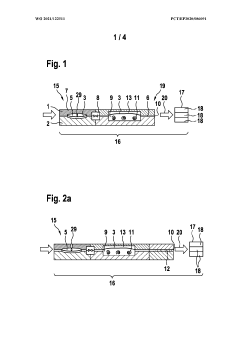
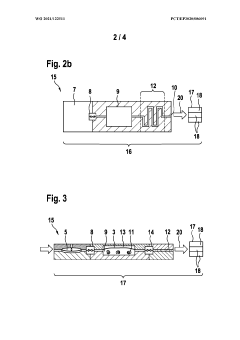
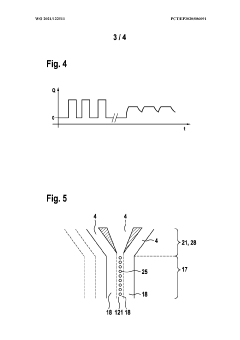
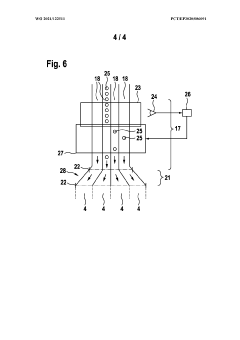
- A microfluidic cartridge with a flow laminarizer and compensation capacity is designed to generate laminar flows by slowing down fluid flow through channel geometry changes and using a flexible membrane to dampen pressure fluctuations, ensuring laminar conditions are maintained in the analysis section for precise sample analysis and sorting.
Environmental Impact of Laminar Flow Systems
Laminar flow systems, widely used in high-precision manufacturing, have significant environmental implications that warrant careful consideration. These systems, while essential for maintaining clean and controlled environments, can have both positive and negative impacts on the environment.
One of the primary environmental benefits of laminar flow systems is their ability to reduce contamination and waste in manufacturing processes. By creating a controlled airflow environment, these systems minimize the presence of airborne particles, leading to fewer defects in products and less material waste. This reduction in waste contributes to more efficient resource utilization and lower environmental impact associated with raw material extraction and disposal.
However, the energy consumption of laminar flow systems presents a notable environmental concern. These systems require continuous operation of fans and air handling units to maintain the desired airflow patterns. The substantial energy demand can result in increased greenhouse gas emissions if the power source is not from renewable energy. Manufacturers must balance the need for precision control with energy efficiency to mitigate this environmental impact.
Water usage is another environmental aspect to consider in laminar flow systems. Some applications, particularly in cleanroom environments, may require humidity control or water-based cleaning processes. The treatment and disposal of this water can have implications for local water resources and ecosystems if not managed properly.
The use of filtration media in laminar flow systems also has environmental considerations. High-efficiency particulate air (HEPA) filters and other specialized filtration materials require regular replacement, contributing to solid waste generation. The production and disposal of these filters involve resource consumption and potential environmental impacts throughout their lifecycle.
On a positive note, the precise control offered by laminar flow systems can lead to more efficient use of chemicals and materials in manufacturing processes. This precision can result in reduced chemical waste and emissions, thereby lessening the environmental footprint of industrial operations.
The implementation of laminar flow technology in sustainable building design represents an emerging area of environmental impact. When integrated into HVAC systems, laminar flow principles can enhance energy efficiency in large structures, potentially reducing overall energy consumption and associated carbon emissions.
As industries continue to adopt and refine laminar flow technologies, there is a growing emphasis on developing more environmentally friendly solutions. This includes research into energy-efficient fan designs, advanced filtration materials with longer lifespans, and intelligent control systems that optimize airflow based on real-time environmental conditions.
One of the primary environmental benefits of laminar flow systems is their ability to reduce contamination and waste in manufacturing processes. By creating a controlled airflow environment, these systems minimize the presence of airborne particles, leading to fewer defects in products and less material waste. This reduction in waste contributes to more efficient resource utilization and lower environmental impact associated with raw material extraction and disposal.
However, the energy consumption of laminar flow systems presents a notable environmental concern. These systems require continuous operation of fans and air handling units to maintain the desired airflow patterns. The substantial energy demand can result in increased greenhouse gas emissions if the power source is not from renewable energy. Manufacturers must balance the need for precision control with energy efficiency to mitigate this environmental impact.
Water usage is another environmental aspect to consider in laminar flow systems. Some applications, particularly in cleanroom environments, may require humidity control or water-based cleaning processes. The treatment and disposal of this water can have implications for local water resources and ecosystems if not managed properly.
The use of filtration media in laminar flow systems also has environmental considerations. High-efficiency particulate air (HEPA) filters and other specialized filtration materials require regular replacement, contributing to solid waste generation. The production and disposal of these filters involve resource consumption and potential environmental impacts throughout their lifecycle.
On a positive note, the precise control offered by laminar flow systems can lead to more efficient use of chemicals and materials in manufacturing processes. This precision can result in reduced chemical waste and emissions, thereby lessening the environmental footprint of industrial operations.
The implementation of laminar flow technology in sustainable building design represents an emerging area of environmental impact. When integrated into HVAC systems, laminar flow principles can enhance energy efficiency in large structures, potentially reducing overall energy consumption and associated carbon emissions.
As industries continue to adopt and refine laminar flow technologies, there is a growing emphasis on developing more environmentally friendly solutions. This includes research into energy-efficient fan designs, advanced filtration materials with longer lifespans, and intelligent control systems that optimize airflow based on real-time environmental conditions.
Regulatory Framework for Precision Manufacturing
The regulatory framework for precision manufacturing, particularly in the context of adapting laminar flow techniques, is a complex and evolving landscape. Governments and industry bodies worldwide are increasingly recognizing the need for stringent regulations to ensure the quality, safety, and consistency of high-precision manufacturing processes.
In the United States, the Food and Drug Administration (FDA) plays a crucial role in regulating precision manufacturing in industries such as pharmaceuticals and medical devices. The FDA's Current Good Manufacturing Practice (cGMP) regulations provide guidelines for manufacturers to ensure product quality and safety. These regulations are particularly relevant when implementing laminar flow technologies in cleanroom environments for sensitive manufacturing processes.
The European Union has established the EU Good Manufacturing Practice (EU GMP) guidelines, which are similar to the FDA's cGMP but tailored to the European context. These guidelines emphasize the importance of contamination control and environmental monitoring, both of which are critical aspects of laminar flow applications in precision manufacturing.
In the aerospace industry, regulatory bodies such as the Federal Aviation Administration (FAA) in the United States and the European Union Aviation Safety Agency (EASA) have established strict standards for manufacturing processes. These regulations often require the use of advanced technologies like laminar flow to achieve the necessary precision and quality in aircraft component manufacturing.
International standards organizations, such as the International Organization for Standardization (ISO), have developed specific standards related to precision manufacturing. For example, ISO 14644 provides guidelines for cleanroom classification and monitoring, which are essential for maintaining laminar flow conditions in high-precision manufacturing environments.
As the adoption of laminar flow technologies in precision manufacturing continues to grow, regulatory bodies are likely to develop more specific guidelines and standards. This may include regulations addressing the design and validation of laminar flow systems, monitoring and control requirements, and documentation practices to ensure compliance and traceability.
Manufacturers implementing laminar flow technologies must also consider environmental regulations, as these systems often require significant energy consumption and may involve the use of specialized materials or chemicals. Compliance with local and national environmental protection laws is essential to ensure sustainable and responsible manufacturing practices.
In the United States, the Food and Drug Administration (FDA) plays a crucial role in regulating precision manufacturing in industries such as pharmaceuticals and medical devices. The FDA's Current Good Manufacturing Practice (cGMP) regulations provide guidelines for manufacturers to ensure product quality and safety. These regulations are particularly relevant when implementing laminar flow technologies in cleanroom environments for sensitive manufacturing processes.
The European Union has established the EU Good Manufacturing Practice (EU GMP) guidelines, which are similar to the FDA's cGMP but tailored to the European context. These guidelines emphasize the importance of contamination control and environmental monitoring, both of which are critical aspects of laminar flow applications in precision manufacturing.
In the aerospace industry, regulatory bodies such as the Federal Aviation Administration (FAA) in the United States and the European Union Aviation Safety Agency (EASA) have established strict standards for manufacturing processes. These regulations often require the use of advanced technologies like laminar flow to achieve the necessary precision and quality in aircraft component manufacturing.
International standards organizations, such as the International Organization for Standardization (ISO), have developed specific standards related to precision manufacturing. For example, ISO 14644 provides guidelines for cleanroom classification and monitoring, which are essential for maintaining laminar flow conditions in high-precision manufacturing environments.
As the adoption of laminar flow technologies in precision manufacturing continues to grow, regulatory bodies are likely to develop more specific guidelines and standards. This may include regulations addressing the design and validation of laminar flow systems, monitoring and control requirements, and documentation practices to ensure compliance and traceability.
Manufacturers implementing laminar flow technologies must also consider environmental regulations, as these systems often require significant energy consumption and may involve the use of specialized materials or chemicals. Compliance with local and national environmental protection laws is essential to ensure sustainable and responsible manufacturing practices.
Unlock deeper insights with PatSnap Eureka Quick Research — get a full tech report to explore trends and direct your research. Try now!
Generate Your Research Report Instantly with AI Agent
Supercharge your innovation with PatSnap Eureka AI Agent Platform!