

Linear Low Density Polyethylene Film Grade: Advanced Material Properties, Processing Technologies, And Industrial Applications
JUL 10, 20259 MIN READ
Generate Your Research Report Instantly with AI Agent
PatSnap Eureka helps you evaluate technical feasibility & market potential.
Wind Tunnel Evolution and Optimization Goals
Wind tunnels have been an essential tool in aerodynamics research and development since their inception in the late 19th century. The evolution of wind tunnels has been driven by the need for more accurate and reliable data to support advancements in aerospace engineering, automotive design, and other fields requiring precise airflow analysis. Initially, wind tunnels were simple open-circuit designs with limited flow control capabilities. However, as the demands for higher-quality data increased, closed-circuit designs emerged, offering better flow control and energy efficiency.
The primary goal in wind tunnel optimization has always been to achieve laminar flow, which is characterized by smooth, parallel layers of air moving in the same direction. Laminar flow is crucial for accurate aerodynamic testing as it closely mimics real-world conditions and minimizes experimental errors. Over the years, various techniques have been developed to optimize laminar flow, including the use of honeycomb structures, screens, and contraction cones to reduce turbulence and improve flow uniformity.
In recent decades, computational fluid dynamics (CFD) has played an increasingly important role in wind tunnel design and optimization. CFD simulations allow engineers to predict and analyze airflow patterns within the tunnel, enabling more efficient design iterations and reducing the need for costly physical prototypes. This has led to significant improvements in wind tunnel performance and has allowed for the development of more sophisticated test sections and flow control systems.
The optimization of laminar flow in wind tunnels continues to be a critical area of research, with ongoing efforts focused on several key objectives. These include expanding the range of achievable Reynolds numbers, reducing flow angularity and turbulence intensity, and improving the overall stability and uniformity of the airflow. Additionally, there is a growing emphasis on developing wind tunnels capable of simulating more complex environmental conditions, such as atmospheric boundary layers and transient weather phenomena.
As we look to the future, the goals for wind tunnel optimization are becoming increasingly ambitious. There is a push towards creating "smart" wind tunnels that can dynamically adjust their configuration to maintain optimal flow conditions throughout a test. This involves integrating advanced sensors, real-time data processing, and adaptive control systems. Furthermore, there is a growing interest in developing hybrid testing environments that combine physical wind tunnels with virtual reality and augmented reality technologies, allowing for more comprehensive and flexible aerodynamic analysis.
The primary goal in wind tunnel optimization has always been to achieve laminar flow, which is characterized by smooth, parallel layers of air moving in the same direction. Laminar flow is crucial for accurate aerodynamic testing as it closely mimics real-world conditions and minimizes experimental errors. Over the years, various techniques have been developed to optimize laminar flow, including the use of honeycomb structures, screens, and contraction cones to reduce turbulence and improve flow uniformity.
In recent decades, computational fluid dynamics (CFD) has played an increasingly important role in wind tunnel design and optimization. CFD simulations allow engineers to predict and analyze airflow patterns within the tunnel, enabling more efficient design iterations and reducing the need for costly physical prototypes. This has led to significant improvements in wind tunnel performance and has allowed for the development of more sophisticated test sections and flow control systems.
The optimization of laminar flow in wind tunnels continues to be a critical area of research, with ongoing efforts focused on several key objectives. These include expanding the range of achievable Reynolds numbers, reducing flow angularity and turbulence intensity, and improving the overall stability and uniformity of the airflow. Additionally, there is a growing emphasis on developing wind tunnels capable of simulating more complex environmental conditions, such as atmospheric boundary layers and transient weather phenomena.
As we look to the future, the goals for wind tunnel optimization are becoming increasingly ambitious. There is a push towards creating "smart" wind tunnels that can dynamically adjust their configuration to maintain optimal flow conditions throughout a test. This involves integrating advanced sensors, real-time data processing, and adaptive control systems. Furthermore, there is a growing interest in developing hybrid testing environments that combine physical wind tunnels with virtual reality and augmented reality technologies, allowing for more comprehensive and flexible aerodynamic analysis.
Aerodynamic Testing Market Analysis
The aerodynamic testing market has experienced significant growth in recent years, driven by increasing demand for advanced testing solutions across various industries. This market segment is primarily fueled by the aerospace and automotive sectors, where the need for precise aerodynamic performance evaluation is critical for product development and optimization.
In the aerospace industry, the push for more fuel-efficient aircraft designs has led to a surge in demand for sophisticated wind tunnel testing facilities. Major aircraft manufacturers are investing heavily in aerodynamic testing to reduce drag and improve overall performance. This trend is expected to continue as the industry focuses on developing next-generation aircraft with enhanced fuel efficiency and reduced environmental impact.
The automotive sector is another key driver of the aerodynamic testing market. With stringent fuel efficiency standards and the growing popularity of electric vehicles, automakers are placing greater emphasis on aerodynamic optimization. Wind tunnel testing plays a crucial role in shaping vehicle designs to minimize air resistance and improve range, particularly for electric vehicles where energy efficiency is paramount.
Beyond these traditional sectors, the renewable energy industry, particularly wind power, is emerging as a significant contributor to the aerodynamic testing market. As wind turbine designs become more complex and efficient, the need for advanced testing methodologies to optimize blade designs and overall turbine performance has increased substantially.
The global aerodynamic testing market is characterized by a mix of established players and innovative startups. Leading companies in this space include Boeing, Lockheed Martin, and European Transonic Windtunnel GmbH. These organizations offer a range of testing services and facilities, from large-scale wind tunnels to computational fluid dynamics (CFD) simulations.
Geographically, North America and Europe dominate the aerodynamic testing market, owing to the presence of major aerospace and automotive manufacturers. However, the Asia-Pacific region is witnessing rapid growth, driven by increasing investments in aerospace and automotive research and development in countries like China and India.
Looking ahead, the aerodynamic testing market is poised for continued expansion. Technological advancements, such as the integration of artificial intelligence and machine learning in testing processes, are expected to enhance the efficiency and accuracy of aerodynamic evaluations. Additionally, the growing focus on sustainable transportation solutions and the development of urban air mobility concepts are likely to create new opportunities for aerodynamic testing services.
In the aerospace industry, the push for more fuel-efficient aircraft designs has led to a surge in demand for sophisticated wind tunnel testing facilities. Major aircraft manufacturers are investing heavily in aerodynamic testing to reduce drag and improve overall performance. This trend is expected to continue as the industry focuses on developing next-generation aircraft with enhanced fuel efficiency and reduced environmental impact.
The automotive sector is another key driver of the aerodynamic testing market. With stringent fuel efficiency standards and the growing popularity of electric vehicles, automakers are placing greater emphasis on aerodynamic optimization. Wind tunnel testing plays a crucial role in shaping vehicle designs to minimize air resistance and improve range, particularly for electric vehicles where energy efficiency is paramount.
Beyond these traditional sectors, the renewable energy industry, particularly wind power, is emerging as a significant contributor to the aerodynamic testing market. As wind turbine designs become more complex and efficient, the need for advanced testing methodologies to optimize blade designs and overall turbine performance has increased substantially.
The global aerodynamic testing market is characterized by a mix of established players and innovative startups. Leading companies in this space include Boeing, Lockheed Martin, and European Transonic Windtunnel GmbH. These organizations offer a range of testing services and facilities, from large-scale wind tunnels to computational fluid dynamics (CFD) simulations.
Geographically, North America and Europe dominate the aerodynamic testing market, owing to the presence of major aerospace and automotive manufacturers. However, the Asia-Pacific region is witnessing rapid growth, driven by increasing investments in aerospace and automotive research and development in countries like China and India.
Looking ahead, the aerodynamic testing market is poised for continued expansion. Technological advancements, such as the integration of artificial intelligence and machine learning in testing processes, are expected to enhance the efficiency and accuracy of aerodynamic evaluations. Additionally, the growing focus on sustainable transportation solutions and the development of urban air mobility concepts are likely to create new opportunities for aerodynamic testing services.
Laminar Flow Challenges in Wind Tunnels
Laminar flow in wind tunnels is a critical aspect of aerodynamic testing, presenting numerous challenges that researchers and engineers must overcome to achieve accurate and reliable results. The primary difficulty lies in maintaining a stable, uniform flow throughout the test section, which is essential for precise measurements and simulations of real-world conditions.
One of the main challenges is the prevention of flow separation and transition to turbulent flow. As air moves through the wind tunnel, it encounters various obstacles and changes in geometry, which can disrupt the laminar flow. These disruptions can lead to premature transition to turbulence, compromising the validity of test results. Engineers must carefully design the tunnel's contraction section, test section, and diffuser to minimize these disturbances.
Another significant challenge is the control of boundary layer growth along the tunnel walls. As the air flows over the surfaces, the boundary layer naturally thickens, potentially interfering with the test model and altering flow characteristics. This issue is particularly pronounced in low-speed wind tunnels, where the boundary layer has more time to develop. Techniques such as suction or blowing are often employed to manage boundary layer growth, but implementing these solutions without introducing additional flow disturbances is a delicate balance.
Temperature and pressure fluctuations within the tunnel can also disrupt laminar flow. Even small variations can trigger instabilities that lead to turbulence. Maintaining consistent temperature and pressure throughout the test section requires sophisticated control systems and careful monitoring. Additionally, acoustic disturbances from the tunnel's fan or external sources can propagate through the airflow, potentially triggering premature transition to turbulence.
The presence of the test model itself introduces complexities in maintaining laminar flow. The model's shape and surface roughness can induce local flow disturbances, which may propagate upstream and affect the overall flow quality. Minimizing these effects often requires careful model design and positioning within the test section.
Scaling effects present another challenge in wind tunnel testing. Achieving the same Reynolds number as full-scale conditions while maintaining laminar flow can be difficult, especially for large-scale applications. This often necessitates compromises in test parameters or the use of specialized facilities capable of operating at high pressures or with alternative working fluids.
Lastly, the measurement and visualization of laminar flow pose their own set of challenges. Instrumentation must be non-intrusive to avoid disturbing the delicate flow conditions, yet sensitive enough to capture subtle flow characteristics. Advanced techniques such as Particle Image Velocimetry (PIV) and hot-wire anemometry are commonly used, but each comes with its own limitations and potential sources of error.
One of the main challenges is the prevention of flow separation and transition to turbulent flow. As air moves through the wind tunnel, it encounters various obstacles and changes in geometry, which can disrupt the laminar flow. These disruptions can lead to premature transition to turbulence, compromising the validity of test results. Engineers must carefully design the tunnel's contraction section, test section, and diffuser to minimize these disturbances.
Another significant challenge is the control of boundary layer growth along the tunnel walls. As the air flows over the surfaces, the boundary layer naturally thickens, potentially interfering with the test model and altering flow characteristics. This issue is particularly pronounced in low-speed wind tunnels, where the boundary layer has more time to develop. Techniques such as suction or blowing are often employed to manage boundary layer growth, but implementing these solutions without introducing additional flow disturbances is a delicate balance.
Temperature and pressure fluctuations within the tunnel can also disrupt laminar flow. Even small variations can trigger instabilities that lead to turbulence. Maintaining consistent temperature and pressure throughout the test section requires sophisticated control systems and careful monitoring. Additionally, acoustic disturbances from the tunnel's fan or external sources can propagate through the airflow, potentially triggering premature transition to turbulence.
The presence of the test model itself introduces complexities in maintaining laminar flow. The model's shape and surface roughness can induce local flow disturbances, which may propagate upstream and affect the overall flow quality. Minimizing these effects often requires careful model design and positioning within the test section.
Scaling effects present another challenge in wind tunnel testing. Achieving the same Reynolds number as full-scale conditions while maintaining laminar flow can be difficult, especially for large-scale applications. This often necessitates compromises in test parameters or the use of specialized facilities capable of operating at high pressures or with alternative working fluids.
Lastly, the measurement and visualization of laminar flow pose their own set of challenges. Instrumentation must be non-intrusive to avoid disturbing the delicate flow conditions, yet sensitive enough to capture subtle flow characteristics. Advanced techniques such as Particle Image Velocimetry (PIV) and hot-wire anemometry are commonly used, but each comes with its own limitations and potential sources of error.
Current Laminar Flow Control Techniques
01 Wind tunnel design for laminar flow testing
Specialized wind tunnels are designed to create and maintain laminar flow conditions for accurate aerodynamic testing. These tunnels incorporate features such as flow straighteners, contraction sections, and smooth surfaces to minimize turbulence and ensure uniform airflow. The design allows for precise measurements of drag, lift, and other aerodynamic properties in laminar flow conditions.- Wind tunnel design for laminar flow: Specialized wind tunnel designs are developed to achieve and maintain laminar flow conditions. These designs incorporate features such as flow straighteners, contraction sections, and carefully engineered test sections to minimize turbulence and ensure smooth, parallel airflow. The goal is to create a controlled environment for studying aerodynamic phenomena under laminar flow conditions.
- Flow control mechanisms in wind tunnels: Various flow control mechanisms are employed in wind tunnels to establish and maintain laminar flow. These may include active and passive flow control devices, such as suction systems, boundary layer control techniques, and surface treatments. These mechanisms help to reduce disturbances and maintain the desired flow characteristics throughout the test section.
- Measurement and visualization techniques for laminar flow: Advanced measurement and visualization techniques are utilized to assess and analyze laminar flow in wind tunnels. These may include particle image velocimetry (PIV), laser Doppler velocimetry (LDV), and other optical methods. Such techniques allow researchers to accurately characterize flow properties and verify the achievement of laminar conditions.
- Applications of laminar flow wind tunnels: Laminar flow wind tunnels find applications in various fields, including aerospace, automotive, and environmental studies. They are particularly useful for investigating low-speed aerodynamics, boundary layer behavior, and drag reduction techniques. These specialized wind tunnels enable researchers to study phenomena that are difficult to observe in turbulent flow conditions.
- Innovations in laminar flow wind tunnel technology: Ongoing research and development efforts focus on improving laminar flow wind tunnel technology. This includes advancements in materials, construction techniques, and control systems to enhance flow quality and extend the range of achievable Reynolds numbers. Novel approaches, such as adaptive wall technology and hybrid wind tunnels, are being explored to expand the capabilities of laminar flow testing facilities.
02 Flow visualization techniques in laminar flow wind tunnels
Various methods are employed to visualize laminar flow patterns in wind tunnels. These techniques include smoke injection, particle image velocimetry (PIV), and laser-based flow visualization. These methods help researchers observe and analyze the behavior of laminar flow around test objects, enabling better understanding of aerodynamic phenomena and validation of computational models.Expand Specific Solutions03 Laminar flow control systems for wind tunnels
Advanced control systems are implemented in wind tunnels to maintain and manipulate laminar flow conditions. These systems may include active flow control devices, boundary layer suction, and adaptive wall technology. Such controls allow researchers to study the effects of various flow parameters on laminar-to-turbulent transition and to simulate different atmospheric conditions.Expand Specific Solutions04 Instrumentation for laminar flow measurements
Specialized instruments are used to measure and characterize laminar flow in wind tunnels. These may include hot-wire anemometers, pressure sensors, and advanced optical systems. The instrumentation allows for high-precision measurements of velocity profiles, boundary layer characteristics, and flow uniformity, essential for validating laminar flow conditions and conducting accurate aerodynamic experiments.Expand Specific Solutions05 Applications of laminar flow wind tunnels
Laminar flow wind tunnels find applications in various fields, including aerospace, automotive, and renewable energy. They are used for testing and optimizing airfoil designs, studying drag reduction techniques, and developing energy-efficient transportation systems. These tunnels also play a crucial role in validating computational fluid dynamics (CFD) models and advancing our understanding of fundamental fluid mechanics principles.Expand Specific Solutions
Leading Wind Tunnel Manufacturers and Research Institutions
The optimization of laminar flow in wind tunnels is a critical area of research in aerodynamics, currently in a mature development stage. The market for wind tunnel technology is substantial, driven by aerospace, automotive, and defense industries. Companies like Airbus, Volkswagen AG, and Saab AB are key players, leveraging advanced wind tunnel facilities for product development. Technical maturity in this field is high, with research institutions such as South China University of Technology and the High Speed Aerodynamics Research Institute of China Aerodynamics Research and Development Center contributing to cutting-edge advancements. The competitive landscape is characterized by a mix of established aerospace companies and specialized research organizations, all striving to enhance wind tunnel efficiency and accuracy for improved aerodynamic testing.
High Speed Aerodynamics Research Institute of China Aerodynamics Research and Development Center
Technical Solution: The High Speed Aerodynamics Research Institute has developed a comprehensive approach to optimize laminar flow in wind tunnels, focusing on both passive and active flow control methods. They have implemented advanced surface treatments and coatings to reduce surface roughness and minimize flow disturbances[2]. Their research includes the development of porous surfaces with precisely controlled permeability to stabilize the boundary layer. The institute has also pioneered the use of adaptive wall technology in their wind tunnels, allowing for real-time adjustment of wall contours to maintain optimal flow conditions[4]. Additionally, they have integrated advanced measurement techniques, such as particle image velocimetry (PIV) and pressure-sensitive paint (PSP), to provide detailed flow visualization and quantitative data for laminar flow optimization[5].
Strengths: Comprehensive approach combining passive and active flow control, advanced measurement techniques, and adaptive wall technology. Weaknesses: Potential complexity in integrating multiple technologies and maintaining precise control in high-speed flow conditions.
Airbus Real Estate UK Ltd.
Technical Solution: Airbus, through its research facilities, has developed innovative approaches to optimize laminar flow in wind tunnels, particularly for aircraft design and testing. They have implemented a hybrid laminar flow control (HLFC) system that combines passive and active flow control methods[8]. This system uses carefully designed airfoil shapes with smooth surfaces to promote natural laminar flow, complemented by suction through micro-perforations in critical areas to stabilize the boundary layer. Airbus has also developed advanced computational tools that couple CFD simulations with wind tunnel data to optimize test configurations and predict transition locations accurately. Their wind tunnels feature adaptive walls and advanced flow visualization techniques, including infrared thermography for detecting laminar-turbulent transition[9]. Additionally, Airbus has invested in cryogenic wind tunnel technology to achieve higher Reynolds numbers while maintaining laminar flow conditions.
Strengths: Extensive experience in aerospace applications, advanced HLFC technology, and integration of computational and experimental methods. Weaknesses: Solutions may be highly specialized for aircraft testing and potentially costly to implement in other industries.
Innovative Approaches to Laminar Flow Optimization
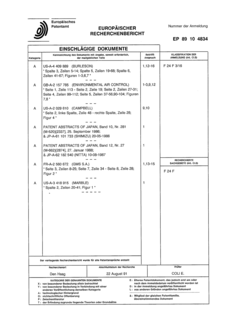
Method and device for laminarization of turbulent flow of continuous medium
PatentWO1993013321A1
Innovation
- A method involving a conical channel with a longitudinal axis of symmetry, where the cross-sectional area is reduced to achieve laminarization by controlling the flow's linear scores and coordinates, allowing for universal application across different scenarios by optimizing the channel's geometry and flow parameters.




Tunnel module for creating a clean space by the laminar flow technique
PatentInactiveEP0340433A3
Innovation
- The tunnel module design positions the fan in the middle chamber opposite the return air opening, uses backward-curved blades with an external rotor motor, and incorporates sound-damping baffles and a spoiler to reduce friction losses and convert dynamic to static pressure efficiently, ensuring even airflow and minimizing energy consumption.
Computational Fluid Dynamics Integration
Computational Fluid Dynamics (CFD) has revolutionized the optimization of laminar flow in wind tunnels, offering a powerful tool for researchers and engineers to simulate and analyze complex fluid dynamics without the need for extensive physical testing. The integration of CFD into wind tunnel design and operation has significantly enhanced the ability to predict and control laminar flow characteristics.
CFD simulations allow for the detailed examination of flow patterns, pressure distributions, and boundary layer behavior within wind tunnels. By creating high-fidelity digital models of wind tunnel geometries, researchers can investigate the effects of various design parameters on laminar flow stability and uniformity. This virtual approach enables rapid iteration and optimization of tunnel configurations, reducing the time and cost associated with physical prototyping and testing.
One of the key advantages of CFD integration is the ability to visualize and quantify flow phenomena that may be difficult or impossible to observe directly in physical wind tunnels. Advanced CFD software can provide insights into subtle flow disturbances, transition points, and areas of potential turbulence, allowing engineers to identify and address issues that could compromise laminar flow quality.
The coupling of CFD with experimental data from wind tunnel tests has led to the development of hybrid approaches that leverage the strengths of both methods. By validating CFD models against physical measurements, researchers can refine their simulations to achieve higher accuracy and reliability. This iterative process of simulation, validation, and refinement has become a cornerstone of modern wind tunnel design and optimization.
CFD integration has also facilitated the development of active flow control systems for wind tunnels. By simulating the effects of various control mechanisms, such as suction or blowing at strategic locations, engineers can optimize the placement and operation of these systems to maintain laminar flow over a wider range of test conditions. This has expanded the operational envelope of wind tunnels and improved the quality of aerodynamic data obtained from testing.
Furthermore, CFD has enabled the exploration of novel wind tunnel designs that were previously impractical to evaluate through physical testing alone. Concepts such as adaptive wall wind tunnels, which adjust their geometry to minimize wall interference, can be thoroughly analyzed and optimized using CFD before committing to costly construction.
As computational power continues to increase, the role of CFD in wind tunnel optimization is expected to grow. Advanced techniques such as Large Eddy Simulation (LES) and Direct Numerical Simulation (DNS) are becoming more feasible for complex geometries, promising even greater fidelity in laminar flow prediction and control. The ongoing integration of CFD with wind tunnel design and operation represents a critical pathway for advancing aerodynamic research and development across various industries.
CFD simulations allow for the detailed examination of flow patterns, pressure distributions, and boundary layer behavior within wind tunnels. By creating high-fidelity digital models of wind tunnel geometries, researchers can investigate the effects of various design parameters on laminar flow stability and uniformity. This virtual approach enables rapid iteration and optimization of tunnel configurations, reducing the time and cost associated with physical prototyping and testing.
One of the key advantages of CFD integration is the ability to visualize and quantify flow phenomena that may be difficult or impossible to observe directly in physical wind tunnels. Advanced CFD software can provide insights into subtle flow disturbances, transition points, and areas of potential turbulence, allowing engineers to identify and address issues that could compromise laminar flow quality.
The coupling of CFD with experimental data from wind tunnel tests has led to the development of hybrid approaches that leverage the strengths of both methods. By validating CFD models against physical measurements, researchers can refine their simulations to achieve higher accuracy and reliability. This iterative process of simulation, validation, and refinement has become a cornerstone of modern wind tunnel design and optimization.
CFD integration has also facilitated the development of active flow control systems for wind tunnels. By simulating the effects of various control mechanisms, such as suction or blowing at strategic locations, engineers can optimize the placement and operation of these systems to maintain laminar flow over a wider range of test conditions. This has expanded the operational envelope of wind tunnels and improved the quality of aerodynamic data obtained from testing.
Furthermore, CFD has enabled the exploration of novel wind tunnel designs that were previously impractical to evaluate through physical testing alone. Concepts such as adaptive wall wind tunnels, which adjust their geometry to minimize wall interference, can be thoroughly analyzed and optimized using CFD before committing to costly construction.
As computational power continues to increase, the role of CFD in wind tunnel optimization is expected to grow. Advanced techniques such as Large Eddy Simulation (LES) and Direct Numerical Simulation (DNS) are becoming more feasible for complex geometries, promising even greater fidelity in laminar flow prediction and control. The ongoing integration of CFD with wind tunnel design and operation represents a critical pathway for advancing aerodynamic research and development across various industries.
Environmental Impact of Wind Tunnel Operations
Wind tunnel operations, while essential for aerodynamic research and development, can have significant environmental impacts that need to be carefully considered and mitigated. The primary environmental concerns associated with wind tunnel operations include energy consumption, noise pollution, and air quality issues.
Energy consumption is a major environmental factor in wind tunnel operations. Large-scale wind tunnels require substantial amounts of electricity to power their fan systems and maintain consistent airflow. This high energy demand contributes to increased carbon emissions, particularly if the energy source is not renewable. To address this issue, many research facilities are exploring ways to improve energy efficiency in wind tunnel operations, such as implementing variable speed drives and optimizing test schedules to reduce overall power consumption.
Noise pollution is another significant environmental impact of wind tunnel operations. The high-speed airflow and powerful fan systems generate considerable noise levels, which can affect both the immediate surroundings and nearby communities. This noise pollution can disrupt local ecosystems and potentially impact human health if not properly managed. Facilities often implement noise reduction strategies, including sound-absorbing materials, acoustic enclosures, and strategic scheduling of tests during less sensitive hours.
Air quality is also a concern in wind tunnel operations, particularly for those using smoke or particle injection systems for flow visualization. These substances can potentially release harmful particulates or chemicals into the atmosphere. Additionally, the high-speed airflow can create dust and debris, further impacting local air quality. To mitigate these effects, modern wind tunnel facilities often incorporate advanced filtration systems and closed-loop designs to minimize the release of contaminants into the environment.
Water usage and waste management are additional environmental considerations in wind tunnel operations. Cooling systems for large wind tunnels can consume significant amounts of water, and the disposal of used fluids and materials must be carefully managed to prevent contamination of local water sources. Implementing water recycling systems and proper waste disposal protocols are crucial steps in reducing the environmental footprint of these operations.
The environmental impact of wind tunnel operations extends beyond the immediate facility. The manufacturing and transportation of specialized equipment and materials used in wind tunnels also contribute to the overall environmental footprint. This includes the production of high-precision components, sensors, and data acquisition systems, as well as the logistics involved in transporting large-scale models and equipment.
To address these environmental challenges, many research institutions and aerospace companies are adopting more sustainable practices in their wind tunnel operations. This includes investing in renewable energy sources to power facilities, developing more efficient wind tunnel designs, and implementing comprehensive environmental management systems. Additionally, the increasing use of computational fluid dynamics (CFD) simulations as a complement to physical wind tunnel testing helps reduce the overall environmental impact by decreasing the need for extensive physical testing.
Energy consumption is a major environmental factor in wind tunnel operations. Large-scale wind tunnels require substantial amounts of electricity to power their fan systems and maintain consistent airflow. This high energy demand contributes to increased carbon emissions, particularly if the energy source is not renewable. To address this issue, many research facilities are exploring ways to improve energy efficiency in wind tunnel operations, such as implementing variable speed drives and optimizing test schedules to reduce overall power consumption.
Noise pollution is another significant environmental impact of wind tunnel operations. The high-speed airflow and powerful fan systems generate considerable noise levels, which can affect both the immediate surroundings and nearby communities. This noise pollution can disrupt local ecosystems and potentially impact human health if not properly managed. Facilities often implement noise reduction strategies, including sound-absorbing materials, acoustic enclosures, and strategic scheduling of tests during less sensitive hours.
Air quality is also a concern in wind tunnel operations, particularly for those using smoke or particle injection systems for flow visualization. These substances can potentially release harmful particulates or chemicals into the atmosphere. Additionally, the high-speed airflow can create dust and debris, further impacting local air quality. To mitigate these effects, modern wind tunnel facilities often incorporate advanced filtration systems and closed-loop designs to minimize the release of contaminants into the environment.
Water usage and waste management are additional environmental considerations in wind tunnel operations. Cooling systems for large wind tunnels can consume significant amounts of water, and the disposal of used fluids and materials must be carefully managed to prevent contamination of local water sources. Implementing water recycling systems and proper waste disposal protocols are crucial steps in reducing the environmental footprint of these operations.
The environmental impact of wind tunnel operations extends beyond the immediate facility. The manufacturing and transportation of specialized equipment and materials used in wind tunnels also contribute to the overall environmental footprint. This includes the production of high-precision components, sensors, and data acquisition systems, as well as the logistics involved in transporting large-scale models and equipment.
To address these environmental challenges, many research institutions and aerospace companies are adopting more sustainable practices in their wind tunnel operations. This includes investing in renewable energy sources to power facilities, developing more efficient wind tunnel designs, and implementing comprehensive environmental management systems. Additionally, the increasing use of computational fluid dynamics (CFD) simulations as a complement to physical wind tunnel testing helps reduce the overall environmental impact by decreasing the need for extensive physical testing.
Unlock deeper insights with PatSnap Eureka Quick Research — get a full tech report to explore trends and direct your research. Try now!
Generate Your Research Report Instantly with AI Agent
Supercharge your innovation with PatSnap Eureka AI Agent Platform!