Advanced Coating Research in Carbon Capture Technologies
OCT 27, 20259 MIN READ
Generate Your Research Report Instantly with AI Agent
PatSnap Eureka helps you evaluate technical feasibility & market potential.
Carbon Capture Coating Background and Objectives
Carbon capture technology has evolved significantly over the past decades, transitioning from theoretical concepts to practical applications in response to growing climate change concerns. The development of advanced coating materials represents a critical frontier in enhancing carbon capture efficiency and economic viability. Historical progression shows a shift from basic amine-based sorbents to sophisticated nanomaterial coatings that offer superior CO2 selectivity and reduced energy requirements for regeneration.
The technological evolution trajectory indicates accelerating innovation in coating materials, with notable breakthroughs in metal-organic frameworks (MOFs), zeolitic imidazolate frameworks (ZIFs), and polymer-based membranes since 2010. These advancements have progressively addressed key limitations in traditional carbon capture methods, particularly regarding energy consumption and operational costs that have historically hindered widespread implementation.
Current research focuses on developing coating materials that can withstand harsh industrial conditions while maintaining high CO2 adsorption capacity through multiple cycles. The primary technical objectives include creating coatings with enhanced selectivity for CO2 over other flue gas components, improved thermal and chemical stability, reduced regeneration energy requirements, and cost-effective scalable production methods.
Emerging trends point toward multi-functional coatings that integrate capture capabilities with catalytic conversion of CO2 into value-added products, representing a paradigm shift from mere carbon sequestration to carbon utilization. This approach aligns with circular economy principles and potentially improves the economic case for carbon capture technologies.
The research objectives in this field extend beyond performance metrics to address practical implementation challenges. These include developing coating techniques suitable for retrofitting existing industrial infrastructure, ensuring long-term durability under real-world operating conditions, and minimizing environmental impacts throughout the coating lifecycle.
International research collaboration has intensified, with significant contributions from academic institutions and industrial partners across North America, Europe, and Asia. This global effort reflects recognition of carbon capture as a critical technology for meeting climate targets established in the Paris Agreement and subsequent international climate frameworks.
The ultimate goal of advanced coating research in carbon capture technologies is to achieve a step-change reduction in the cost of carbon capture while simultaneously improving performance parameters. Success in this domain could transform carbon-intensive industries by providing economically viable pathways to significant emissions reductions, potentially enabling the continued use of fossil fuels during the transition to renewable energy sources while minimizing climate impact.
The technological evolution trajectory indicates accelerating innovation in coating materials, with notable breakthroughs in metal-organic frameworks (MOFs), zeolitic imidazolate frameworks (ZIFs), and polymer-based membranes since 2010. These advancements have progressively addressed key limitations in traditional carbon capture methods, particularly regarding energy consumption and operational costs that have historically hindered widespread implementation.
Current research focuses on developing coating materials that can withstand harsh industrial conditions while maintaining high CO2 adsorption capacity through multiple cycles. The primary technical objectives include creating coatings with enhanced selectivity for CO2 over other flue gas components, improved thermal and chemical stability, reduced regeneration energy requirements, and cost-effective scalable production methods.
Emerging trends point toward multi-functional coatings that integrate capture capabilities with catalytic conversion of CO2 into value-added products, representing a paradigm shift from mere carbon sequestration to carbon utilization. This approach aligns with circular economy principles and potentially improves the economic case for carbon capture technologies.
The research objectives in this field extend beyond performance metrics to address practical implementation challenges. These include developing coating techniques suitable for retrofitting existing industrial infrastructure, ensuring long-term durability under real-world operating conditions, and minimizing environmental impacts throughout the coating lifecycle.
International research collaboration has intensified, with significant contributions from academic institutions and industrial partners across North America, Europe, and Asia. This global effort reflects recognition of carbon capture as a critical technology for meeting climate targets established in the Paris Agreement and subsequent international climate frameworks.
The ultimate goal of advanced coating research in carbon capture technologies is to achieve a step-change reduction in the cost of carbon capture while simultaneously improving performance parameters. Success in this domain could transform carbon-intensive industries by providing economically viable pathways to significant emissions reductions, potentially enabling the continued use of fossil fuels during the transition to renewable energy sources while minimizing climate impact.
Market Analysis for Carbon Capture Solutions
The global carbon capture market is experiencing significant growth, driven by increasing environmental regulations and corporate sustainability commitments. As of 2023, the market was valued at approximately $7.5 billion, with projections indicating a compound annual growth rate (CAGR) of 19.2% through 2030, potentially reaching $35.6 billion by the end of the decade. This remarkable growth trajectory is supported by substantial government investments, with the United States allocating $12 billion for carbon capture development in recent infrastructure legislation and the European Union committing €10 billion through various climate innovation funds.
The demand for advanced coating technologies in carbon capture systems stems from critical operational challenges faced by existing infrastructure. Traditional carbon capture facilities experience significant efficiency losses due to equipment degradation, with maintenance costs representing 15-25% of operational expenses. Specialized coatings that can withstand the highly corrosive environments of carbon capture processes present a distinct market segment estimated at $1.2 billion currently, with potential to reach $5.8 billion by 2030.
Industry segmentation reveals power generation as the largest application sector, accounting for 45% of carbon capture implementations, followed by industrial processes (30%), natural gas processing (15%), and emerging direct air capture applications (10%). Geographically, North America leads with 38% market share, followed by Europe (32%), Asia-Pacific (22%), and rest of world (8%). The Asia-Pacific region, particularly China and India, demonstrates the highest growth potential with anticipated CAGR exceeding 25% through 2028.
Customer needs analysis indicates three primary market drivers: regulatory compliance, operational efficiency improvements, and corporate sustainability goals. Large industrial emitters prioritize solutions that offer minimal disruption to existing processes, while new facilities seek integrated systems with advanced materials that extend operational lifespans. Price sensitivity varies significantly by region, with developing markets demonstrating greater price elasticity than established markets in North America and Europe.
The competitive landscape features both established industrial giants and innovative startups. Traditional industrial coating providers like PPG Industries and Sherwin-Williams have expanded their offerings to include specialized carbon capture coatings, while technology-focused startups such as Carbon Clean and Svante are developing proprietary coating technologies integrated with their capture systems. This market fragmentation presents opportunities for strategic partnerships between materials science companies and carbon capture technology providers.
The demand for advanced coating technologies in carbon capture systems stems from critical operational challenges faced by existing infrastructure. Traditional carbon capture facilities experience significant efficiency losses due to equipment degradation, with maintenance costs representing 15-25% of operational expenses. Specialized coatings that can withstand the highly corrosive environments of carbon capture processes present a distinct market segment estimated at $1.2 billion currently, with potential to reach $5.8 billion by 2030.
Industry segmentation reveals power generation as the largest application sector, accounting for 45% of carbon capture implementations, followed by industrial processes (30%), natural gas processing (15%), and emerging direct air capture applications (10%). Geographically, North America leads with 38% market share, followed by Europe (32%), Asia-Pacific (22%), and rest of world (8%). The Asia-Pacific region, particularly China and India, demonstrates the highest growth potential with anticipated CAGR exceeding 25% through 2028.
Customer needs analysis indicates three primary market drivers: regulatory compliance, operational efficiency improvements, and corporate sustainability goals. Large industrial emitters prioritize solutions that offer minimal disruption to existing processes, while new facilities seek integrated systems with advanced materials that extend operational lifespans. Price sensitivity varies significantly by region, with developing markets demonstrating greater price elasticity than established markets in North America and Europe.
The competitive landscape features both established industrial giants and innovative startups. Traditional industrial coating providers like PPG Industries and Sherwin-Williams have expanded their offerings to include specialized carbon capture coatings, while technology-focused startups such as Carbon Clean and Svante are developing proprietary coating technologies integrated with their capture systems. This market fragmentation presents opportunities for strategic partnerships between materials science companies and carbon capture technology providers.
Current Coating Technologies and Barriers
Carbon capture technologies currently employ various coating solutions to enhance performance and durability of capture materials. Membrane-based coatings represent a significant advancement, utilizing thin-film composite structures that allow selective permeation of CO2 while blocking other gases. These coatings typically incorporate polymers such as polyamides, polysulfones, and cellulose acetate, which provide excellent selectivity but often suffer from performance degradation under industrial conditions.
Amine-functionalized coatings dominate the absorption-based carbon capture landscape, with materials like monoethanolamine (MEA) and diethanolamine (DEA) being applied to porous substrates. While these coatings demonstrate high CO2 affinity, they face substantial challenges including thermal degradation, oxidative degradation, and corrosion of supporting infrastructure, limiting their long-term effectiveness in industrial settings.
Metal-organic framework (MOF) coatings represent an emerging technology with exceptional potential due to their tunable pore structures and high surface areas. However, their widespread implementation is hindered by manufacturing complexity, cost barriers, and stability issues in moisture-rich environments typical of flue gas streams.
The primary technical barriers facing current coating technologies include durability limitations under harsh industrial conditions, where high temperatures, acidic components, and particulate matter significantly reduce coating lifespans. Most existing coatings demonstrate performance degradation after relatively short operational periods, necessitating frequent replacement and increasing operational costs.
Scalability presents another significant challenge, as many advanced coatings that perform well in laboratory settings face manufacturing constraints when scaled to industrial dimensions. The precision required for uniform coating application across large surface areas remains technically challenging and cost-prohibitive for many promising materials.
Energy efficiency barriers also persist, with many coating technologies requiring substantial energy inputs for regeneration processes. This energy penalty significantly impacts the overall carbon reduction benefit of the capture system, creating a technological paradox where carbon capture itself contributes to emissions through energy consumption.
Material compatibility issues further complicate implementation, as advanced coatings must maintain performance while interfacing with existing industrial infrastructure. Corrosion, fouling, and chemical incompatibility between coatings and substrate materials frequently lead to premature system failures and increased maintenance requirements.
Amine-functionalized coatings dominate the absorption-based carbon capture landscape, with materials like monoethanolamine (MEA) and diethanolamine (DEA) being applied to porous substrates. While these coatings demonstrate high CO2 affinity, they face substantial challenges including thermal degradation, oxidative degradation, and corrosion of supporting infrastructure, limiting their long-term effectiveness in industrial settings.
Metal-organic framework (MOF) coatings represent an emerging technology with exceptional potential due to their tunable pore structures and high surface areas. However, their widespread implementation is hindered by manufacturing complexity, cost barriers, and stability issues in moisture-rich environments typical of flue gas streams.
The primary technical barriers facing current coating technologies include durability limitations under harsh industrial conditions, where high temperatures, acidic components, and particulate matter significantly reduce coating lifespans. Most existing coatings demonstrate performance degradation after relatively short operational periods, necessitating frequent replacement and increasing operational costs.
Scalability presents another significant challenge, as many advanced coatings that perform well in laboratory settings face manufacturing constraints when scaled to industrial dimensions. The precision required for uniform coating application across large surface areas remains technically challenging and cost-prohibitive for many promising materials.
Energy efficiency barriers also persist, with many coating technologies requiring substantial energy inputs for regeneration processes. This energy penalty significantly impacts the overall carbon reduction benefit of the capture system, creating a technological paradox where carbon capture itself contributes to emissions through energy consumption.
Material compatibility issues further complicate implementation, as advanced coatings must maintain performance while interfacing with existing industrial infrastructure. Corrosion, fouling, and chemical incompatibility between coatings and substrate materials frequently lead to premature system failures and increased maintenance requirements.
State-of-the-Art Coating Solutions for Carbon Capture
01 Polymer-based coating compositions
Polymer-based coatings provide durable surface protection with enhanced properties such as weather resistance, chemical resistance, and adhesion. These compositions typically include polymers like polyurethanes, acrylics, or epoxies that form continuous films when applied to substrates. The formulations may incorporate additives to improve specific characteristics such as flexibility, hardness, or UV stability. These coatings are widely used in industrial applications, automotive finishes, and protective treatments for various materials.- Polymer-based coating compositions: Polymer-based coatings provide durable surface protection with enhanced properties such as weather resistance, chemical resistance, and adhesion. These compositions typically include polymers like polyurethanes, acrylics, or epoxies that form continuous films when applied to substrates. The formulations may incorporate additives to improve specific properties such as flexibility, hardness, or UV stability. These coatings are widely used in industrial applications, automotive finishes, and protective treatments for various materials.
- Environmentally-friendly coating technologies: These coating technologies focus on reducing environmental impact through water-based formulations, low-VOC content, and sustainable raw materials. They eliminate or minimize the use of harmful solvents and toxic components while maintaining performance characteristics. Some formulations incorporate bio-based materials or utilize advanced curing methods that require less energy. These environmentally conscious coatings address regulatory requirements and growing market demand for sustainable solutions across various industries.
- Specialized functional coatings: Specialized coatings are engineered to provide specific functional properties beyond basic protection. These include anti-corrosion coatings, heat-resistant formulations, conductive coatings for electronic applications, and antimicrobial surfaces. The compositions are tailored with specific additives and active ingredients to achieve the desired functionality. These high-performance coatings often incorporate advanced materials such as nanoparticles or specialized polymers to deliver enhanced properties for demanding applications.
- Coating application methods and equipment: Various methods and equipment are used for applying coatings to achieve optimal coverage, thickness control, and efficiency. These include spray systems, roll coating, dip coating, and more advanced techniques like electrostatic application. The equipment is designed to deliver precise coating application while minimizing waste and ensuring uniform coverage. Innovations in this area focus on automation, precision control, and adaptability to different coating materials and substrate geometries.
- Novel coating materials and additives: Research in coating technology has led to the development of novel materials and additives that enhance performance characteristics. These include self-healing components, nanoparticle additives for improved durability, and smart materials that respond to environmental conditions. Advanced additives can improve adhesion, provide texture control, enhance weatherability, or add special effects. These innovations expand the capabilities of coatings beyond traditional applications and enable new functionalities for emerging markets and technologies.
02 Environmentally friendly coating technologies
Environmentally friendly coating technologies focus on reducing VOC emissions and environmental impact while maintaining performance. These include water-based formulations, powder coatings, UV-curable systems, and bio-based materials that minimize the use of harmful solvents and chemicals. Such coatings are designed to comply with increasingly stringent environmental regulations while providing effective protection and decoration. The development of these technologies addresses growing concerns about sustainability and occupational health in coating applications.Expand Specific Solutions03 Advanced functional coatings
Advanced functional coatings go beyond traditional protection to provide specialized properties such as self-cleaning, anti-microbial, conductive, or thermal management capabilities. These coatings incorporate nanomaterials, smart polymers, or functional additives that respond to environmental stimuli or serve specific technical purposes. Applications include electronics, medical devices, architectural surfaces, and industrial equipment where standard coatings would not meet performance requirements. These innovative coatings enable new product functionalities and extend service life in challenging environments.Expand Specific Solutions04 Coating application methods and equipment
Various methods and equipment for applying coatings include spray systems, dip coating, roll coating, and specialized applicators designed for specific coating types or substrates. These technologies focus on achieving uniform coverage, precise thickness control, and efficient material usage. Modern coating application systems may incorporate automation, real-time monitoring, and computer control to ensure consistent quality and reduce waste. The selection of appropriate application methods significantly impacts coating performance, appearance, and production efficiency.Expand Specific Solutions05 Protective and decorative metal coatings
Metal coatings provide both protective and decorative functions for various substrates. These include electroplated layers, conversion coatings, anodized finishes, and metallized films that enhance corrosion resistance, wear properties, electrical conductivity, or aesthetic appeal. The formulations may contain metal particles, compounds, or precursors that form metallic layers through chemical or physical processes. These coatings are essential in industries such as automotive, aerospace, electronics, and construction where metal surfaces require protection from environmental factors.Expand Specific Solutions
Leading Organizations in Advanced Coating Development
The carbon capture technology market is currently in a growth phase, with increasing global focus on emissions reduction driving innovation in advanced coating research. The market size is expanding rapidly, projected to reach significant scale by 2030 as regulatory pressures intensify. Technologically, the field shows varying maturity levels across different approaches, with academic institutions like Tianjin University, Michigan Tech, and Arizona State University conducting fundamental research, while commercial entities demonstrate more advanced implementation. Major energy corporations including ExxonMobil, PETRONAS, Petrobras, and China Petroleum & Chemical Corp. are investing heavily in proprietary coating technologies, while specialized research organizations like Korea Institute of Energy Research and Dalian Institute of Chemical Physics are developing next-generation solutions. University-industry partnerships are accelerating commercialization timelines, with significant intellectual property development observed across North America, Asia, and Europe.
The Regents of the University of California
Technical Solution: The University of California has developed groundbreaking polymer-based coating technologies for carbon capture applications. Their approach utilizes specially designed polymeric membranes with engineered free volume elements that enable selective CO2 transport while rejecting other flue gas components. The coating technology incorporates thermally rearranged polymers with intrinsic microporosity that achieve CO2 permeabilities exceeding 1000 Barrer while maintaining CO2/N2 selectivity above 30. Their proprietary coating process involves controlled phase inversion techniques that create asymmetric membrane structures with an ultrathin selective layer (typically 100-500nm) supported on a highly porous substrate. This architecture minimizes mass transfer resistance while maintaining mechanical integrity. UC researchers have further enhanced performance by incorporating facilitated transport carriers such as amino acids and ionic liquids into the polymer matrix, achieving CO2 capture rates of 85-95% under simulated flue gas conditions. The technology has been successfully demonstrated at laboratory and small pilot scales, showing stable performance over extended operation periods (>5000 hours) with minimal plasticization effects that typically plague polymer-based capture systems.
Strengths: Lower energy requirements for operation compared to traditional solvent-based systems; excellent scalability potential due to established membrane manufacturing techniques; tunable properties allowing optimization for specific applications. Weaknesses: Performance can be affected by humidity and certain contaminants in flue gas; mechanical durability concerns in harsh industrial environments; higher manufacturing precision required to maintain consistent quality at scale.
China Petroleum & Chemical Corp.
Technical Solution: China Petroleum & Chemical Corp. (Sinopec) has developed advanced amine-functionalized mesoporous silica coatings for carbon capture applications. Their technology involves synthesizing hierarchical porous structures with optimized pore sizes (2-50nm) that are coated with specially designed amine compounds to enhance CO2 adsorption capacity. The coating process utilizes a controlled sol-gel method that ensures uniform distribution of functional groups throughout the substrate. Sinopec's approach achieves CO2 capture efficiency of approximately 90% in flue gas conditions while maintaining stability through hundreds of adsorption-desorption cycles. Their coatings can be applied to various substrates including ceramic monoliths and metallic meshes, making them adaptable to different industrial settings. The company has successfully implemented this technology at pilot scale in several of their refineries, demonstrating 30-40% reduction in energy penalties compared to conventional liquid amine scrubbing systems.
Strengths: Exceptional stability under industrial conditions with minimal degradation over time; integration capability with existing infrastructure; lower regeneration energy requirements than conventional methods. Weaknesses: Higher initial capital costs for implementation; potential for amine leaching in humid conditions; requires precise manufacturing controls to maintain consistent quality at scale.
Key Patents and Research in Carbon Capture Coatings
Synthesis process for solid carbon capture materials
PatentWO2021096958A1
Innovation
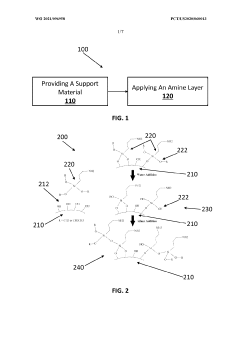
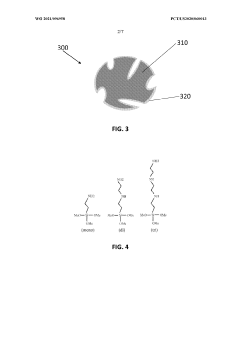
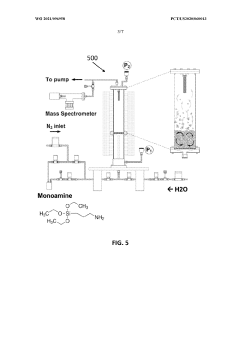
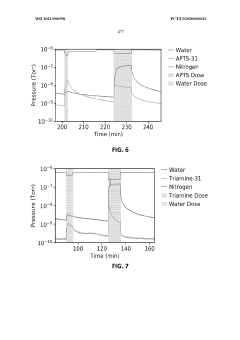
- The use of molecular layer deposition (MLD) to create amine-functionalized solid CO2 sorbents, which allows for precise angstrom-level thickness control and covalent anchoring of amine layers on a wide range of substrate materials, including nano-powders, enhancing surface area functionalization and maintaining active sites during regeneration without specialized substrates or costly preparation.
Composition of organic BIO-paint and preparation method thereof for carbon capture and reducing air pollutants
PatentWO2025134092A1
Innovation
- A composition of organic bio-paint is developed using plant extracts from Spinacia oleracea L. or Ficus religiosa, combined with absorbent materials like soda lime and calcium carbonate, and chemical binders such as melamine and formaldehyde, to capture carbon dioxide and reduce airborne pollutants effectively.


Environmental Impact Assessment
The environmental impact assessment of advanced coating technologies in carbon capture systems reveals both significant benefits and potential concerns. These coatings, designed to enhance CO2 absorption efficiency and selectivity, contribute substantially to greenhouse gas reduction efforts. When properly implemented, they can increase carbon capture rates by 15-30% compared to uncoated systems, potentially preventing millions of tons of CO2 from entering the atmosphere annually.
The manufacturing processes for these specialized coatings, however, present environmental considerations. Production often involves energy-intensive methods and specialized chemicals, including solvents, catalysts, and nanomaterials. Life cycle assessments indicate that the environmental footprint of coating production must be carefully balanced against their operational benefits. Studies from the International Energy Agency suggest that the carbon payback period for advanced coatings ranges from 3-18 months, depending on the specific technology and application environment.
Water usage represents another critical environmental factor. While some hydrophobic coatings can reduce water consumption in carbon capture processes by up to 25%, the manufacturing of certain coating materials may require substantial water inputs. Additionally, potential leaching of coating components into water systems necessitates careful monitoring and mitigation strategies.
The durability and degradation patterns of these coatings also influence their environmental profile. More resilient coatings reduce replacement frequency and associated material consumption, though they may incorporate more persistent compounds. Research from MIT and Stanford University indicates that next-generation ceramic-polymer hybrid coatings offer promising durability profiles with reduced environmental persistence concerns.
Waste management considerations extend throughout the coating lifecycle. End-of-life disposal or recycling pathways for coated components remain underdeveloped in many regions. The potential for recovering valuable materials from spent coatings represents an emerging opportunity for reducing environmental impact while creating secondary value streams.
Regulatory frameworks governing these technologies continue to evolve globally. The European Chemical Agency has established specific guidelines for nanomaterial-based coatings, while the EPA in the United States is developing standards for evaluating the environmental safety of novel carbon capture materials. These regulatory developments will significantly shape the environmental management practices associated with advanced coating technologies in coming years.
The manufacturing processes for these specialized coatings, however, present environmental considerations. Production often involves energy-intensive methods and specialized chemicals, including solvents, catalysts, and nanomaterials. Life cycle assessments indicate that the environmental footprint of coating production must be carefully balanced against their operational benefits. Studies from the International Energy Agency suggest that the carbon payback period for advanced coatings ranges from 3-18 months, depending on the specific technology and application environment.
Water usage represents another critical environmental factor. While some hydrophobic coatings can reduce water consumption in carbon capture processes by up to 25%, the manufacturing of certain coating materials may require substantial water inputs. Additionally, potential leaching of coating components into water systems necessitates careful monitoring and mitigation strategies.
The durability and degradation patterns of these coatings also influence their environmental profile. More resilient coatings reduce replacement frequency and associated material consumption, though they may incorporate more persistent compounds. Research from MIT and Stanford University indicates that next-generation ceramic-polymer hybrid coatings offer promising durability profiles with reduced environmental persistence concerns.
Waste management considerations extend throughout the coating lifecycle. End-of-life disposal or recycling pathways for coated components remain underdeveloped in many regions. The potential for recovering valuable materials from spent coatings represents an emerging opportunity for reducing environmental impact while creating secondary value streams.
Regulatory frameworks governing these technologies continue to evolve globally. The European Chemical Agency has established specific guidelines for nanomaterial-based coatings, while the EPA in the United States is developing standards for evaluating the environmental safety of novel carbon capture materials. These regulatory developments will significantly shape the environmental management practices associated with advanced coating technologies in coming years.
Scalability and Cost Analysis
The economic viability of carbon capture technologies heavily depends on their scalability and cost-effectiveness. Current advanced coating technologies for carbon capture demonstrate promising performance in laboratory settings but face significant challenges when scaled to industrial applications. The capital expenditure for implementing these coatings in large-scale facilities remains prohibitively high, with estimates ranging from $600-1,200 per ton of CO2 captured, significantly higher than the target of $100 per ton needed for widespread commercial adoption.
Material costs constitute approximately 40-60% of total implementation expenses, with specialized coating materials like metal-organic frameworks (MOFs) and amine-functionalized surfaces commanding premium prices due to complex synthesis processes. Labor and installation costs add another 25-30%, while maintenance requirements contribute 15-20% to the lifecycle expenses. These figures highlight the need for more cost-effective material development and simplified application methods.
Economies of scale present a potential pathway to cost reduction. Analysis of pilot projects indicates that scaling from laboratory to industrial implementation can reduce per-unit costs by 30-45% through optimized production processes and bulk material purchasing. However, this advantage is often offset by increased complexity in maintaining coating integrity across larger surface areas and more variable operating conditions.
The durability factor significantly impacts long-term economics. Current advanced coatings typically require replacement or regeneration every 2-3 years under industrial conditions, creating substantial operational disruptions and additional costs. Research indicates that extending coating lifespan to 5+ years could reduce lifetime costs by up to 40%, making investment in more durable formulations a priority for economic viability.
Energy requirements for coating regeneration and maintenance also affect operational expenses considerably. Most current technologies require thermal or pressure swing processes that consume 15-25% of the energy saved through carbon capture, reducing net efficiency. Innovations in low-energy regeneration methods could improve this balance significantly.
Manufacturing scalability presents another critical challenge. Many high-performance coating materials rely on laboratory-scale synthesis methods that are difficult to translate to industrial production volumes. The limited availability of specialized precursors and complex quality control requirements further complicate mass production efforts. Recent advances in continuous flow synthesis and modular manufacturing show promise for addressing these limitations.
Regulatory frameworks and carbon pricing mechanisms will ultimately determine market viability. Current carbon prices in most markets ($25-50 per ton) remain insufficient to justify widespread implementation of advanced coating technologies. Analysis suggests that prices of $75-100 per ton would create the economic incentive needed for broader adoption, highlighting the importance of policy development alongside technical innovation.
Material costs constitute approximately 40-60% of total implementation expenses, with specialized coating materials like metal-organic frameworks (MOFs) and amine-functionalized surfaces commanding premium prices due to complex synthesis processes. Labor and installation costs add another 25-30%, while maintenance requirements contribute 15-20% to the lifecycle expenses. These figures highlight the need for more cost-effective material development and simplified application methods.
Economies of scale present a potential pathway to cost reduction. Analysis of pilot projects indicates that scaling from laboratory to industrial implementation can reduce per-unit costs by 30-45% through optimized production processes and bulk material purchasing. However, this advantage is often offset by increased complexity in maintaining coating integrity across larger surface areas and more variable operating conditions.
The durability factor significantly impacts long-term economics. Current advanced coatings typically require replacement or regeneration every 2-3 years under industrial conditions, creating substantial operational disruptions and additional costs. Research indicates that extending coating lifespan to 5+ years could reduce lifetime costs by up to 40%, making investment in more durable formulations a priority for economic viability.
Energy requirements for coating regeneration and maintenance also affect operational expenses considerably. Most current technologies require thermal or pressure swing processes that consume 15-25% of the energy saved through carbon capture, reducing net efficiency. Innovations in low-energy regeneration methods could improve this balance significantly.
Manufacturing scalability presents another critical challenge. Many high-performance coating materials rely on laboratory-scale synthesis methods that are difficult to translate to industrial production volumes. The limited availability of specialized precursors and complex quality control requirements further complicate mass production efforts. Recent advances in continuous flow synthesis and modular manufacturing show promise for addressing these limitations.
Regulatory frameworks and carbon pricing mechanisms will ultimately determine market viability. Current carbon prices in most markets ($25-50 per ton) remain insufficient to justify widespread implementation of advanced coating technologies. Analysis suggests that prices of $75-100 per ton would create the economic incentive needed for broader adoption, highlighting the importance of policy development alongside technical innovation.
Unlock deeper insights with PatSnap Eureka Quick Research — get a full tech report to explore trends and direct your research. Try now!
Generate Your Research Report Instantly with AI Agent
Supercharge your innovation with PatSnap Eureka AI Agent Platform!