

Comparative Study on Carbon Capture Technologies Across Sectors
OCT 27, 20259 MIN READ
Generate Your Research Report Instantly with AI Agent
PatSnap Eureka helps you evaluate technical feasibility & market potential.
Carbon Capture Technology Background and Objectives
Carbon capture technologies have evolved significantly over the past several decades, transitioning from theoretical concepts to practical applications across multiple industrial sectors. The historical development began in the 1970s with early experiments in enhanced oil recovery, which utilized captured carbon dioxide to improve petroleum extraction efficiency. By the 1990s, carbon capture had gained recognition as a potential climate change mitigation strategy, leading to increased research funding and technological innovation.
The evolution of carbon capture technologies has followed three distinct generations. First-generation technologies focused primarily on post-combustion capture using amine-based solvents, which remain widely implemented despite their energy intensity. Second-generation approaches introduced pre-combustion capture and oxyfuel combustion, offering improved efficiency but requiring significant infrastructure modifications. Current third-generation technologies explore novel materials such as metal-organic frameworks, enzymatic systems, and direct air capture methods that promise reduced energy penalties and broader applicability.
Global carbon emissions continue to rise, with 2022 data showing approximately 36.8 billion tonnes of CO2 released into the atmosphere. The Intergovernmental Panel on Climate Change (IPCC) has identified carbon capture as a critical component in limiting global warming to 1.5°C above pre-industrial levels. This technological imperative drives the current acceleration in research and deployment efforts across energy production, manufacturing, transportation, and other carbon-intensive sectors.
The primary objective of carbon capture technology development is to achieve economically viable solutions that can be implemented at scale across diverse industrial applications. Current capture costs range from $40-120 per tonne of CO2, with the ambitious target of reducing this to below $30 per tonne by 2030. Secondary objectives include minimizing the energy penalty associated with capture processes, which currently ranges from 15-30% of a facility's energy output, and developing versatile technologies adaptable to both retrofitting existing infrastructure and integration into new construction.
Technological goals also extend to improving capture efficiency rates from the current industry standard of 85-95% to over 98%, while simultaneously reducing the environmental footprint of the capture process itself. The development of comprehensive carbon utilization pathways represents another critical objective, transforming captured carbon from a waste product into a valuable resource for manufacturing, agriculture, and synthetic fuel production.
The convergence of environmental imperatives, policy incentives, and technological innovation has positioned carbon capture as a pivotal technology in the global transition to a low-carbon economy, with significant implications for industrial processes, energy systems, and climate change mitigation strategies.
The evolution of carbon capture technologies has followed three distinct generations. First-generation technologies focused primarily on post-combustion capture using amine-based solvents, which remain widely implemented despite their energy intensity. Second-generation approaches introduced pre-combustion capture and oxyfuel combustion, offering improved efficiency but requiring significant infrastructure modifications. Current third-generation technologies explore novel materials such as metal-organic frameworks, enzymatic systems, and direct air capture methods that promise reduced energy penalties and broader applicability.
Global carbon emissions continue to rise, with 2022 data showing approximately 36.8 billion tonnes of CO2 released into the atmosphere. The Intergovernmental Panel on Climate Change (IPCC) has identified carbon capture as a critical component in limiting global warming to 1.5°C above pre-industrial levels. This technological imperative drives the current acceleration in research and deployment efforts across energy production, manufacturing, transportation, and other carbon-intensive sectors.
The primary objective of carbon capture technology development is to achieve economically viable solutions that can be implemented at scale across diverse industrial applications. Current capture costs range from $40-120 per tonne of CO2, with the ambitious target of reducing this to below $30 per tonne by 2030. Secondary objectives include minimizing the energy penalty associated with capture processes, which currently ranges from 15-30% of a facility's energy output, and developing versatile technologies adaptable to both retrofitting existing infrastructure and integration into new construction.
Technological goals also extend to improving capture efficiency rates from the current industry standard of 85-95% to over 98%, while simultaneously reducing the environmental footprint of the capture process itself. The development of comprehensive carbon utilization pathways represents another critical objective, transforming captured carbon from a waste product into a valuable resource for manufacturing, agriculture, and synthetic fuel production.
The convergence of environmental imperatives, policy incentives, and technological innovation has positioned carbon capture as a pivotal technology in the global transition to a low-carbon economy, with significant implications for industrial processes, energy systems, and climate change mitigation strategies.
Market Demand Analysis for Carbon Capture Solutions
The global carbon capture market is experiencing significant growth, driven by increasing environmental concerns and regulatory pressures. Current market valuations place the carbon capture, utilization, and storage (CCUS) sector at approximately 3 billion USD in 2022, with projections indicating potential growth to reach 7-9 billion USD by 2030. This represents a compound annual growth rate (CAGR) of 12-15%, significantly outpacing many traditional industrial sectors.
Demand for carbon capture solutions varies considerably across different industries. The power generation sector currently constitutes the largest market segment, accounting for roughly 40% of the total carbon capture market. This is primarily due to the high carbon emissions associated with fossil fuel-based electricity production and the relatively mature state of post-combustion capture technologies applicable to power plants.
Industrial processes, particularly cement production, steel manufacturing, and chemical processing, collectively represent approximately 35% of market demand. These hard-to-abate sectors face unique challenges in decarbonization due to process emissions that cannot be eliminated through electrification alone, making carbon capture technologies increasingly essential for their sustainability strategies.
Regional analysis reveals significant geographical variations in market demand. North America leads with approximately 38% of global market share, driven by favorable tax incentives like the 45Q tax credit in the United States and Canada's carbon pricing mechanisms. Europe follows closely at 32%, supported by the EU Emissions Trading System and ambitious climate targets. The Asia-Pacific region, while currently accounting for only 22% of the market, is expected to demonstrate the fastest growth rate over the next decade, particularly in China and Japan.
Customer segmentation within the carbon capture market reveals three primary buyer categories: large industrial emitters seeking compliance solutions, energy companies pursuing enhanced oil recovery opportunities, and forward-looking corporations implementing voluntary carbon reduction initiatives as part of ESG commitments. The first category currently dominates purchasing decisions, but the third segment is growing at the fastest rate, indicating a shift toward proactive rather than reactive adoption.
Market research indicates that cost remains the primary barrier to wider adoption, with current carbon capture solutions averaging $50-100 per ton of CO₂ captured. Industry surveys suggest that widespread commercial viability would require costs to fall below $30-40 per ton. This price sensitivity varies by sector, with higher willingness to pay in industries facing stringent regulations or those able to monetize captured carbon through utilization pathways.
Demand for carbon capture solutions varies considerably across different industries. The power generation sector currently constitutes the largest market segment, accounting for roughly 40% of the total carbon capture market. This is primarily due to the high carbon emissions associated with fossil fuel-based electricity production and the relatively mature state of post-combustion capture technologies applicable to power plants.
Industrial processes, particularly cement production, steel manufacturing, and chemical processing, collectively represent approximately 35% of market demand. These hard-to-abate sectors face unique challenges in decarbonization due to process emissions that cannot be eliminated through electrification alone, making carbon capture technologies increasingly essential for their sustainability strategies.
Regional analysis reveals significant geographical variations in market demand. North America leads with approximately 38% of global market share, driven by favorable tax incentives like the 45Q tax credit in the United States and Canada's carbon pricing mechanisms. Europe follows closely at 32%, supported by the EU Emissions Trading System and ambitious climate targets. The Asia-Pacific region, while currently accounting for only 22% of the market, is expected to demonstrate the fastest growth rate over the next decade, particularly in China and Japan.
Customer segmentation within the carbon capture market reveals three primary buyer categories: large industrial emitters seeking compliance solutions, energy companies pursuing enhanced oil recovery opportunities, and forward-looking corporations implementing voluntary carbon reduction initiatives as part of ESG commitments. The first category currently dominates purchasing decisions, but the third segment is growing at the fastest rate, indicating a shift toward proactive rather than reactive adoption.
Market research indicates that cost remains the primary barrier to wider adoption, with current carbon capture solutions averaging $50-100 per ton of CO₂ captured. Industry surveys suggest that widespread commercial viability would require costs to fall below $30-40 per ton. This price sensitivity varies by sector, with higher willingness to pay in industries facing stringent regulations or those able to monetize captured carbon through utilization pathways.
Current Status and Challenges in Carbon Capture Technologies
Carbon capture technologies have evolved significantly over the past two decades, with varying levels of maturity across different sectors. Currently, post-combustion capture dominates the commercial landscape, particularly in power generation and industrial applications, with absorption using amine solvents being the most established method. This technology has reached commercial deployment in several large-scale projects worldwide, including the Boundary Dam in Canada and Petra Nova in the United States, demonstrating capture rates of 90% or higher in controlled environments.
Pre-combustion and oxy-fuel combustion technologies have also seen substantial development but remain less widely deployed than post-combustion methods. Direct air capture (DAC), while promising for addressing distributed emissions, faces significant economic barriers with current costs ranging from $250-600 per ton of CO2 captured, substantially higher than point-source capture methods.
The geographical distribution of carbon capture technology development shows concentration in North America, Europe, and parts of Asia, particularly China and Japan. The United States leads in research output and patent filings, while the European Union has established the most comprehensive regulatory framework supporting deployment. China has rapidly increased its research and development activities in this field over the past five years, particularly focusing on industrial applications.
Despite progress, carbon capture technologies face several critical challenges. Energy penalties remain substantial, with current technologies requiring 15-30% of a power plant's energy output for operation, significantly reducing overall efficiency. Cost barriers persist as a major obstacle, with capture costs ranging from $40-120 per ton of CO2 for industrial applications, making economic viability difficult without strong policy support or carbon pricing mechanisms.
Technical limitations include solvent degradation in amine-based systems, corrosion issues in equipment, and challenges in scaling up promising laboratory technologies to industrial applications. The integration of capture systems with existing infrastructure presents additional complexities, particularly for retrofitting older facilities not designed with carbon capture considerations.
Regulatory uncertainty and inconsistent policy frameworks across regions create investment risks that hinder widespread adoption. Many countries lack clear long-term carbon pricing signals or regulatory mandates necessary to drive investment in these capital-intensive technologies. Additionally, public acceptance issues related to CO2 transportation and storage infrastructure have delayed or halted several projects, highlighting the need for comprehensive stakeholder engagement strategies.
Material innovation represents another challenge, as current sorbents and membranes have limitations in selectivity, capacity, and durability under real-world operating conditions. Research efforts are increasingly focused on developing novel materials with improved performance characteristics and reduced environmental footprints.
Pre-combustion and oxy-fuel combustion technologies have also seen substantial development but remain less widely deployed than post-combustion methods. Direct air capture (DAC), while promising for addressing distributed emissions, faces significant economic barriers with current costs ranging from $250-600 per ton of CO2 captured, substantially higher than point-source capture methods.
The geographical distribution of carbon capture technology development shows concentration in North America, Europe, and parts of Asia, particularly China and Japan. The United States leads in research output and patent filings, while the European Union has established the most comprehensive regulatory framework supporting deployment. China has rapidly increased its research and development activities in this field over the past five years, particularly focusing on industrial applications.
Despite progress, carbon capture technologies face several critical challenges. Energy penalties remain substantial, with current technologies requiring 15-30% of a power plant's energy output for operation, significantly reducing overall efficiency. Cost barriers persist as a major obstacle, with capture costs ranging from $40-120 per ton of CO2 for industrial applications, making economic viability difficult without strong policy support or carbon pricing mechanisms.
Technical limitations include solvent degradation in amine-based systems, corrosion issues in equipment, and challenges in scaling up promising laboratory technologies to industrial applications. The integration of capture systems with existing infrastructure presents additional complexities, particularly for retrofitting older facilities not designed with carbon capture considerations.
Regulatory uncertainty and inconsistent policy frameworks across regions create investment risks that hinder widespread adoption. Many countries lack clear long-term carbon pricing signals or regulatory mandates necessary to drive investment in these capital-intensive technologies. Additionally, public acceptance issues related to CO2 transportation and storage infrastructure have delayed or halted several projects, highlighting the need for comprehensive stakeholder engagement strategies.
Material innovation represents another challenge, as current sorbents and membranes have limitations in selectivity, capacity, and durability under real-world operating conditions. Research efforts are increasingly focused on developing novel materials with improved performance characteristics and reduced environmental footprints.
Current Carbon Capture Implementation Approaches
01 Direct Air Capture Technologies
Direct Air Capture (DAC) technologies involve systems that extract carbon dioxide directly from the atmosphere. These technologies typically use sorbent materials or chemical solutions to selectively capture CO2 from ambient air. After capture, the CO2 can be concentrated and either stored underground or utilized in various applications. DAC systems can be deployed in various locations regardless of emission sources and offer a solution for addressing historical emissions.- Direct Air Capture Technologies: Direct air capture (DAC) technologies involve systems that extract carbon dioxide directly from the atmosphere. These technologies typically use sorbent materials or chemical solutions to selectively capture CO2 from ambient air. After capture, the CO2 can be concentrated and either stored underground or utilized in various applications. DAC systems can be deployed in various locations regardless of emission sources and represent a promising approach for negative emissions.
- Post-Combustion Carbon Capture: Post-combustion carbon capture technologies focus on removing CO2 from flue gases after the combustion process in power plants and industrial facilities. These systems typically employ chemical solvents, solid sorbents, or membrane separation to selectively extract CO2 from exhaust streams. This approach allows for retrofitting existing infrastructure rather than requiring complete redesign of combustion systems, making it a practical solution for reducing emissions from established industrial processes.
- Biological Carbon Sequestration Methods: Biological carbon sequestration leverages natural processes to capture and store carbon dioxide. These methods include enhanced forestry practices, algae-based systems, and agricultural techniques that increase carbon storage in soil. Engineered biological systems can be designed to accelerate natural carbon fixation rates through photosynthesis or other biological pathways. These approaches often provide co-benefits such as improved soil health, increased biodiversity, and enhanced ecosystem services while capturing atmospheric carbon.
- Mineral Carbonation and Enhanced Weathering: Mineral carbonation technologies accelerate natural weathering processes to convert CO2 into stable carbonate minerals. These processes involve reactions between CO2 and calcium or magnesium-rich materials such as basalt, olivine, or industrial waste products like steel slag. The resulting carbonate minerals provide permanent and secure carbon storage. Enhanced weathering approaches can be applied to agricultural soils, mine tailings, or dedicated processing facilities to increase carbon sequestration rates while potentially improving soil quality.
- Novel Carbon Capture Materials and Systems: Advanced materials and innovative system designs are being developed to improve the efficiency and reduce the cost of carbon capture. These include metal-organic frameworks (MOFs), specialized polymers, and advanced membrane materials with high CO2 selectivity. Novel system configurations incorporate energy integration, process intensification, and hybrid approaches that combine multiple capture mechanisms. These technologies aim to overcome limitations of conventional carbon capture methods by reducing energy penalties, improving capture rates, and enabling more flexible deployment options.
02 Post-Combustion Carbon Capture
Post-combustion carbon capture technologies focus on removing CO2 from flue gases after the combustion process in power plants and industrial facilities. These systems typically employ chemical solvents, solid sorbents, or membrane separation techniques to selectively extract CO2 from exhaust streams. The captured carbon dioxide can then be compressed and transported for storage or utilization. This approach allows retrofitting existing infrastructure without major modifications to the original combustion process.Expand Specific Solutions03 Carbon Utilization and Conversion
Carbon utilization technologies focus on converting captured CO2 into valuable products rather than simply storing it. These processes transform carbon dioxide into fuels, chemicals, building materials, and other commercial products. Methods include catalytic conversion, electrochemical reduction, biological conversion using microorganisms, and mineralization processes. By creating economic value from captured carbon, these technologies can help offset the costs of carbon capture while reducing net emissions.Expand Specific Solutions04 Biological Carbon Sequestration
Biological carbon sequestration leverages natural processes to remove CO2 from the atmosphere. These approaches include enhanced forestry management, agricultural practices that increase soil carbon content, algae cultivation systems, and engineered biological systems. Some technologies accelerate natural carbon fixation through genetic modification of organisms or optimization of growing conditions. Biological methods often provide co-benefits such as improved soil health, increased biodiversity, and enhanced ecosystem services alongside carbon capture.Expand Specific Solutions05 Carbon Storage and Sequestration Infrastructure
Carbon storage technologies focus on the long-term containment of captured CO2 to prevent its release into the atmosphere. These include geological storage in depleted oil and gas reservoirs, deep saline formations, and unminable coal seams. The infrastructure encompasses injection wells, monitoring systems, transportation pipelines, and compression facilities. Advanced monitoring technologies ensure the integrity of storage sites and prevent leakage, while regulatory frameworks govern site selection, operation, and long-term stewardship of stored carbon.Expand Specific Solutions
Key Industry Players in Carbon Capture Sector
The carbon capture technology landscape is evolving rapidly across multiple sectors, currently transitioning from early commercialization to growth phase. The global market is projected to reach $7-12 billion by 2030, with increasing momentum driven by climate policies. Technology maturity varies significantly: established players like Saudi Aramco, Sinopec, and State Grid focus on industrial-scale implementation, while innovative approaches emerge from research institutions including Dalian University of Technology and KAIST. IBM and 8 Rivers Capital are advancing AI-integrated solutions, while specialized firms like CocoonCarbon and C-TECH develop niche applications. Cross-sector collaboration between energy giants, academic institutions, and technology startups is accelerating development, with particular growth in power generation, petrochemical, and manufacturing applications.
China Petroleum & Chemical Corp.
Technical Solution: Sinopec has developed an integrated carbon capture, utilization, and storage (CCUS) technology system focusing on post-combustion capture using advanced amine-based solvents. Their approach includes proprietary solvent formulations that reduce energy penalties by approximately 30% compared to conventional MEA systems. The company has implemented large-scale demonstration projects, including the Sinopec Qilu Petrochemical CCUS project with an annual CO2 capture capacity of 1 million tonnes. Their technology integrates with existing industrial infrastructure, particularly in refineries and petrochemical plants, allowing for retrofitting capabilities. Sinopec has also pioneered CO2-EOR (Enhanced Oil Recovery) applications, creating a circular economy model where captured carbon is utilized for increasing oil production while being permanently stored underground[1][3].
Strengths: Extensive industrial implementation experience; integrated approach covering capture, transport, utilization and storage; proprietary solvent technology with reduced energy penalties; strong integration with existing infrastructure. Weaknesses: Technology primarily focused on high-concentration CO2 sources; relatively high capital costs for implementation; dependent on suitable geological formations for storage.
Saudi Arabian Oil Co.
Technical Solution: Saudi Aramco has developed a multi-faceted carbon capture technology portfolio centered around both pre-combustion and post-combustion capture systems. Their flagship technology is the Converge® polyols system, which converts captured CO2 into high-value polymers and materials. The company has pioneered mobile carbon capture technology that can be installed on vehicles to capture emissions directly at the source. Their approach includes advanced membrane separation technology that operates at significantly lower energy requirements than conventional amine-based systems. Saudi Aramco's carbon capture facilities at Hawiyah and Uthmaniyah gas plants demonstrate large-scale implementation, capturing approximately 800,000 tonnes of CO2 annually. The company has also developed innovative catalytic processes that convert CO2 directly into valuable chemicals and fuels, creating economic incentives for carbon capture beyond storage[2][5].
Strengths: Diverse technology portfolio spanning capture and utilization; significant financial resources for large-scale implementation; integration with existing oil and gas infrastructure; innovative mobile capture solutions. Weaknesses: Heavy focus on utilization pathways that support continued fossil fuel production; limited pure sequestration projects; technologies primarily deployed within company operations rather than broader market.
Critical Carbon Capture Patents and Technical Innovations
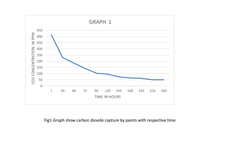
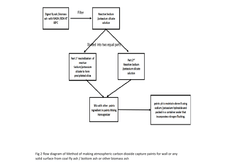
Method of making atmospheric carbon dioxide capture paints for wall or any solid surface from coal fly ash / bottom ash or other biomass ash
PatentPendingIN202321036002A
Innovation
- Development of paints from coal fly ash or biomass ash containing reactive sodium/potassium silicate that react with atmospheric CO2 at normal temperatures and pressures, reducing energy consumption and waste, using a process involving heating ash with sodium/potassium hydroxide, filtration, and mixing with additives to form a paint that captures CO2 through a thermodynamically favorable reaction.
Cross-Sector Carbon Capture Efficiency Comparison
The efficiency of carbon capture technologies varies significantly across different industrial sectors, primarily due to variations in CO2 concentration, process conditions, and implementation constraints. Power generation facilities typically demonstrate capture efficiencies ranging from 85-95% for post-combustion technologies, while pre-combustion methods can achieve up to 90% efficiency in integrated gasification combined cycle (IGCC) plants. However, these efficiencies come with energy penalties of 20-30% for post-combustion and 7-15% for pre-combustion approaches.
In the cement industry, where CO2 emissions are both process-related and combustion-related, capture efficiencies reach 80-90% using specialized calcium looping technologies. These systems are particularly effective due to the synergies with the calcium-rich environment inherent to cement production, though they require significant process integration.
Steel manufacturing presents a more challenging environment with capture efficiencies typically ranging from 65-80% due to the distributed nature of emission sources within integrated steel mills. The highest efficiencies are achieved in blast furnace applications where top gas recycling with carbon capture can be implemented.
Chemical production facilities demonstrate some of the highest capture efficiencies across sectors, often exceeding 95% in ammonia production plants where CO2 separation is already an integral part of the process. This advantage stems from the high purity CO2 streams generated during hydrogen production via steam methane reforming.
Oil refineries show variable efficiency rates between 60-85% depending on the specific unit operations targeted for capture. Hydrogen production units within refineries offer the most cost-effective capture opportunities with efficiencies approaching 90%.
When comparing direct air capture (DAC) technologies across these industrial applications, efficiency metrics shift dramatically. While DAC systems can theoretically be deployed anywhere, their capture efficiency relative to energy input remains significantly lower than point-source capture, with current technologies requiring 1.5-3.5 GJ of energy per ton of CO2 captured compared to 0.4-2.0 GJ for industrial point sources.
Cross-sector analysis reveals that the most efficient carbon capture implementations occur where: (1) CO2 streams are highly concentrated (>20% by volume), (2) capture technology can be integrated with existing heat management systems, and (3) economies of scale can be achieved through centralized capture infrastructure. These factors explain why early adoption has been most successful in natural gas processing, hydrogen production, and certain chemical manufacturing processes.
In the cement industry, where CO2 emissions are both process-related and combustion-related, capture efficiencies reach 80-90% using specialized calcium looping technologies. These systems are particularly effective due to the synergies with the calcium-rich environment inherent to cement production, though they require significant process integration.
Steel manufacturing presents a more challenging environment with capture efficiencies typically ranging from 65-80% due to the distributed nature of emission sources within integrated steel mills. The highest efficiencies are achieved in blast furnace applications where top gas recycling with carbon capture can be implemented.
Chemical production facilities demonstrate some of the highest capture efficiencies across sectors, often exceeding 95% in ammonia production plants where CO2 separation is already an integral part of the process. This advantage stems from the high purity CO2 streams generated during hydrogen production via steam methane reforming.
Oil refineries show variable efficiency rates between 60-85% depending on the specific unit operations targeted for capture. Hydrogen production units within refineries offer the most cost-effective capture opportunities with efficiencies approaching 90%.
When comparing direct air capture (DAC) technologies across these industrial applications, efficiency metrics shift dramatically. While DAC systems can theoretically be deployed anywhere, their capture efficiency relative to energy input remains significantly lower than point-source capture, with current technologies requiring 1.5-3.5 GJ of energy per ton of CO2 captured compared to 0.4-2.0 GJ for industrial point sources.
Cross-sector analysis reveals that the most efficient carbon capture implementations occur where: (1) CO2 streams are highly concentrated (>20% by volume), (2) capture technology can be integrated with existing heat management systems, and (3) economies of scale can be achieved through centralized capture infrastructure. These factors explain why early adoption has been most successful in natural gas processing, hydrogen production, and certain chemical manufacturing processes.
Policy and Regulatory Framework for Carbon Capture
The global policy landscape for carbon capture technologies has evolved significantly over the past decade, reflecting growing recognition of their importance in climate change mitigation strategies. National and international frameworks now increasingly incorporate specific provisions for carbon capture, utilization, and storage (CCUS) technologies, though with substantial variation across jurisdictions.
In the United States, the 45Q tax credit has emerged as a cornerstone policy, offering up to $50 per metric ton of CO2 permanently sequestered and $35 per ton for CO2 used in enhanced oil recovery or other utilization pathways. Recent amendments have lowered capture thresholds and increased credit values, making projects more economically viable across multiple sectors. The Infrastructure Investment and Jobs Act of 2021 further allocated $12 billion toward carbon capture initiatives.
The European Union has developed a comprehensive regulatory framework through its CCS Directive, establishing legal parameters for geological storage of CO2 and integrating carbon capture into its Emissions Trading System (ETS). This market-based approach has been complemented by the Innovation Fund, which provides substantial financial support for demonstration projects across industrial sectors.
In Asia, policy approaches vary considerably. China has incorporated carbon capture into its Five-Year Plans and established regional pilot programs, while Japan has focused on technology export opportunities through bilateral agreements. Meanwhile, emerging economies are increasingly exploring regulatory frameworks that balance environmental goals with development priorities.
International cooperation mechanisms, including the Clean Development Mechanism under the Kyoto Protocol and Article 6 of the Paris Agreement, provide frameworks for cross-border collaboration on carbon capture projects. The International Organization for Standardization (ISO) has developed technical standards (ISO 27900 series) specifically addressing carbon capture technologies, facilitating international harmonization.
Sectoral policies reveal significant differences in approach. Power generation typically faces the most stringent regulatory requirements, with some jurisdictions implementing emissions performance standards that effectively mandate carbon capture for new coal plants. Industrial applications often benefit from sector-specific incentives, particularly in hard-to-abate sectors like cement and steel production.
Looking forward, policy innovation continues with increased interest in carbon removal credits, border carbon adjustments, and procurement requirements for low-carbon materials. These emerging frameworks will likely shape the next generation of carbon capture deployment across diverse sectors and geographies.
In the United States, the 45Q tax credit has emerged as a cornerstone policy, offering up to $50 per metric ton of CO2 permanently sequestered and $35 per ton for CO2 used in enhanced oil recovery or other utilization pathways. Recent amendments have lowered capture thresholds and increased credit values, making projects more economically viable across multiple sectors. The Infrastructure Investment and Jobs Act of 2021 further allocated $12 billion toward carbon capture initiatives.
The European Union has developed a comprehensive regulatory framework through its CCS Directive, establishing legal parameters for geological storage of CO2 and integrating carbon capture into its Emissions Trading System (ETS). This market-based approach has been complemented by the Innovation Fund, which provides substantial financial support for demonstration projects across industrial sectors.
In Asia, policy approaches vary considerably. China has incorporated carbon capture into its Five-Year Plans and established regional pilot programs, while Japan has focused on technology export opportunities through bilateral agreements. Meanwhile, emerging economies are increasingly exploring regulatory frameworks that balance environmental goals with development priorities.
International cooperation mechanisms, including the Clean Development Mechanism under the Kyoto Protocol and Article 6 of the Paris Agreement, provide frameworks for cross-border collaboration on carbon capture projects. The International Organization for Standardization (ISO) has developed technical standards (ISO 27900 series) specifically addressing carbon capture technologies, facilitating international harmonization.
Sectoral policies reveal significant differences in approach. Power generation typically faces the most stringent regulatory requirements, with some jurisdictions implementing emissions performance standards that effectively mandate carbon capture for new coal plants. Industrial applications often benefit from sector-specific incentives, particularly in hard-to-abate sectors like cement and steel production.
Looking forward, policy innovation continues with increased interest in carbon removal credits, border carbon adjustments, and procurement requirements for low-carbon materials. These emerging frameworks will likely shape the next generation of carbon capture deployment across diverse sectors and geographies.
Unlock deeper insights with PatSnap Eureka Quick Research — get a full tech report to explore trends and direct your research. Try now!
Generate Your Research Report Instantly with AI Agent
Supercharge your innovation with PatSnap Eureka AI Agent Platform!