

What are the applications of neuromorphic computing in robotics?
SEP 2, 202510 MIN READ
Generate Your Research Report Instantly with AI Agent
PatSnap Eureka helps you evaluate technical feasibility & market potential.
Neuromorphic Computing Evolution and Robotics Integration Goals
Neuromorphic computing represents a paradigm shift in computational architecture, drawing inspiration from the structure and function of biological neural systems. Since its conceptual inception in the late 1980s by Carver Mead, this field has evolved from theoretical frameworks to practical implementations that mimic the brain's parallel processing capabilities, energy efficiency, and adaptive learning mechanisms. The trajectory of neuromorphic computing has been marked by significant milestones, including the development of silicon neurons, spike-based communication protocols, and hardware implementations such as IBM's TrueNorth and Intel's Loihi chips.
The integration of neuromorphic computing with robotics presents a natural convergence of technologies that addresses fundamental limitations in conventional robotic systems. Traditional robots rely on von Neumann architecture computers that process information sequentially, creating bottlenecks in real-time processing and consuming substantial power. Neuromorphic systems offer an alternative that aligns with the dynamic, unpredictable environments robots must navigate.
Current technological trends indicate an accelerating progression toward more sophisticated neuromorphic hardware with increased neuron counts, improved synaptic plasticity mechanisms, and enhanced learning capabilities. These advancements are occurring alongside developments in event-based sensors, particularly neuromorphic vision systems like Dynamic Vision Sensors (DVS) that operate on principles similar to the human retina, capturing changes in scenes rather than static frames.
The primary integration goals for neuromorphic computing in robotics encompass several dimensions. First, achieving real-time sensorimotor processing that enables robots to react instantaneously to environmental changes without computational delays. Second, developing energy-efficient robotic systems that can operate autonomously for extended periods, particularly crucial for mobile and field robotics applications. Third, implementing on-device learning capabilities that allow robots to adapt to new situations without requiring extensive pre-programming or cloud connectivity.
Beyond these immediate objectives, longer-term goals include creating truly cognitive robotic systems capable of unsupervised learning, decision-making under uncertainty, and natural human-robot interaction. The ultimate vision involves robots with neuromorphic brains that can perceive, learn, and interact with their environment in ways that approximate biological intelligence, while maintaining the efficiency advantages inherent to neuromorphic architectures.
The convergence of neuromorphic computing and robotics also aims to address the growing demand for edge intelligence in IoT ecosystems, autonomous vehicles, and smart manufacturing environments where centralized computing approaches face limitations in latency, connectivity, and power consumption.
The integration of neuromorphic computing with robotics presents a natural convergence of technologies that addresses fundamental limitations in conventional robotic systems. Traditional robots rely on von Neumann architecture computers that process information sequentially, creating bottlenecks in real-time processing and consuming substantial power. Neuromorphic systems offer an alternative that aligns with the dynamic, unpredictable environments robots must navigate.
Current technological trends indicate an accelerating progression toward more sophisticated neuromorphic hardware with increased neuron counts, improved synaptic plasticity mechanisms, and enhanced learning capabilities. These advancements are occurring alongside developments in event-based sensors, particularly neuromorphic vision systems like Dynamic Vision Sensors (DVS) that operate on principles similar to the human retina, capturing changes in scenes rather than static frames.
The primary integration goals for neuromorphic computing in robotics encompass several dimensions. First, achieving real-time sensorimotor processing that enables robots to react instantaneously to environmental changes without computational delays. Second, developing energy-efficient robotic systems that can operate autonomously for extended periods, particularly crucial for mobile and field robotics applications. Third, implementing on-device learning capabilities that allow robots to adapt to new situations without requiring extensive pre-programming or cloud connectivity.
Beyond these immediate objectives, longer-term goals include creating truly cognitive robotic systems capable of unsupervised learning, decision-making under uncertainty, and natural human-robot interaction. The ultimate vision involves robots with neuromorphic brains that can perceive, learn, and interact with their environment in ways that approximate biological intelligence, while maintaining the efficiency advantages inherent to neuromorphic architectures.
The convergence of neuromorphic computing and robotics also aims to address the growing demand for edge intelligence in IoT ecosystems, autonomous vehicles, and smart manufacturing environments where centralized computing approaches face limitations in latency, connectivity, and power consumption.
Market Demand for Brain-Inspired Computing in Robotics
The global market for neuromorphic computing in robotics is experiencing significant growth, driven by the increasing demand for more efficient, adaptive, and intelligent robotic systems. Current projections indicate that the neuromorphic computing market will reach approximately $8.9 billion by 2025, with robotics applications representing a substantial portion of this expansion. This growth trajectory reflects the industry's recognition of brain-inspired computing as a transformative technology for next-generation robotic systems.
In industrial settings, manufacturers are actively seeking neuromorphic solutions to enhance robotic capabilities in dynamic environments. The ability of neuromorphic systems to process sensory information in real-time while consuming minimal power addresses critical limitations in traditional robotic control systems. Manufacturing sectors, particularly automotive and electronics assembly, demonstrate willingness to invest in these advanced technologies to improve production efficiency and flexibility.
Healthcare robotics represents another significant market segment, with surgical robots and rehabilitation systems benefiting from neuromorphic computing's ability to process complex sensory inputs and adapt to patient-specific conditions. Market research indicates that healthcare institutions are increasingly allocating budget for robotics solutions that can demonstrate improved patient outcomes through more natural and responsive operation.
Consumer robotics companies are also driving demand, as they compete to develop more intuitive and engaging products. The household robot market, expected to grow at a CAGR of 22% through 2027, is particularly interested in neuromorphic solutions that enable more natural human-robot interactions and autonomous navigation in unstructured environments.
Military and defense sectors constitute a substantial market for neuromorphic robotics, with applications in autonomous vehicles, surveillance systems, and field robots. These applications require robust decision-making capabilities in unpredictable environments, creating strong demand for brain-inspired computing architectures that can operate effectively with limited connectivity and power constraints.
A key market driver is the growing recognition of energy efficiency limitations in conventional computing approaches for advanced robotics. As robots become more sophisticated and deploy increasingly complex AI algorithms, the power consumption of traditional computing architectures becomes prohibitive, especially for mobile and field robotics. Neuromorphic computing's inherent energy efficiency presents a compelling value proposition, with some implementations demonstrating 100-1000x improvements in energy efficiency for specific tasks.
Market analysis reveals that early adopters are primarily focused on specific use cases where neuromorphic computing provides clear advantages: visual processing for navigation, adaptive motor control, and real-time decision making under uncertainty. These application-specific implementations are expected to expand into more general-purpose neuromorphic robotics platforms as the technology matures and standardization efforts progress.
In industrial settings, manufacturers are actively seeking neuromorphic solutions to enhance robotic capabilities in dynamic environments. The ability of neuromorphic systems to process sensory information in real-time while consuming minimal power addresses critical limitations in traditional robotic control systems. Manufacturing sectors, particularly automotive and electronics assembly, demonstrate willingness to invest in these advanced technologies to improve production efficiency and flexibility.
Healthcare robotics represents another significant market segment, with surgical robots and rehabilitation systems benefiting from neuromorphic computing's ability to process complex sensory inputs and adapt to patient-specific conditions. Market research indicates that healthcare institutions are increasingly allocating budget for robotics solutions that can demonstrate improved patient outcomes through more natural and responsive operation.
Consumer robotics companies are also driving demand, as they compete to develop more intuitive and engaging products. The household robot market, expected to grow at a CAGR of 22% through 2027, is particularly interested in neuromorphic solutions that enable more natural human-robot interactions and autonomous navigation in unstructured environments.
Military and defense sectors constitute a substantial market for neuromorphic robotics, with applications in autonomous vehicles, surveillance systems, and field robots. These applications require robust decision-making capabilities in unpredictable environments, creating strong demand for brain-inspired computing architectures that can operate effectively with limited connectivity and power constraints.
A key market driver is the growing recognition of energy efficiency limitations in conventional computing approaches for advanced robotics. As robots become more sophisticated and deploy increasingly complex AI algorithms, the power consumption of traditional computing architectures becomes prohibitive, especially for mobile and field robotics. Neuromorphic computing's inherent energy efficiency presents a compelling value proposition, with some implementations demonstrating 100-1000x improvements in energy efficiency for specific tasks.
Market analysis reveals that early adopters are primarily focused on specific use cases where neuromorphic computing provides clear advantages: visual processing for navigation, adaptive motor control, and real-time decision making under uncertainty. These application-specific implementations are expected to expand into more general-purpose neuromorphic robotics platforms as the technology matures and standardization efforts progress.
Current State and Challenges of Neuromorphic Robotics
Neuromorphic computing in robotics currently stands at a critical juncture, with significant advancements in both hardware and software implementations. The field has evolved from theoretical concepts to practical applications, though widespread commercial deployment remains limited. Leading research institutions such as ETH Zurich, Intel Labs, and the University of Manchester have demonstrated promising prototypes that integrate neuromorphic chips with robotic systems, achieving improvements in energy efficiency and real-time processing capabilities.
The current state of neuromorphic robotics is characterized by a dichotomy between research achievements and practical implementation challenges. While laboratory demonstrations have shown that neuromorphic systems can process sensory information with lower latency and power consumption compared to traditional computing architectures, scaling these solutions to complex robotic applications remains problematic. Most existing implementations focus on specific functions such as visual processing, motor control, or simple decision-making rather than comprehensive robotic systems.
Hardware limitations represent a significant challenge in the field. Current neuromorphic chips, including Intel's Loihi and IBM's TrueNorth, while groundbreaking, still face issues with integration into robotic platforms due to form factor constraints, power delivery requirements, and interfacing complexities. The specialized nature of these chips often requires custom interfaces that complicate their adoption in standardized robotic frameworks.
Software development for neuromorphic robotics presents another substantial hurdle. Programming paradigms for spiking neural networks differ fundamentally from conventional computing approaches, creating a steep learning curve for robotics engineers. The lack of standardized development tools, libraries, and frameworks specifically designed for neuromorphic robotics impedes broader adoption and experimentation in the field.
Data representation and processing models present unique challenges in neuromorphic robotics. Converting traditional sensor data into spike-based formats suitable for neuromorphic processing requires specialized encoding schemes that are not yet fully optimized. This translation layer often introduces inefficiencies that partially negate the inherent advantages of neuromorphic computing.
Scalability remains a persistent issue, with current neuromorphic systems struggling to handle the complexity required for advanced robotic applications such as autonomous navigation in unstructured environments or complex manipulation tasks. The limited size of current neuromorphic arrays constrains the implementation of large-scale neural networks necessary for sophisticated cognitive functions.
Geographic distribution of neuromorphic robotics research shows concentration in North America, Europe, and East Asia, with the United States, Germany, Switzerland, China, and Japan leading development efforts. This concentration creates potential gaps in global expertise and application diversity, potentially limiting innovation in addressing region-specific robotics challenges.
The current state of neuromorphic robotics is characterized by a dichotomy between research achievements and practical implementation challenges. While laboratory demonstrations have shown that neuromorphic systems can process sensory information with lower latency and power consumption compared to traditional computing architectures, scaling these solutions to complex robotic applications remains problematic. Most existing implementations focus on specific functions such as visual processing, motor control, or simple decision-making rather than comprehensive robotic systems.
Hardware limitations represent a significant challenge in the field. Current neuromorphic chips, including Intel's Loihi and IBM's TrueNorth, while groundbreaking, still face issues with integration into robotic platforms due to form factor constraints, power delivery requirements, and interfacing complexities. The specialized nature of these chips often requires custom interfaces that complicate their adoption in standardized robotic frameworks.
Software development for neuromorphic robotics presents another substantial hurdle. Programming paradigms for spiking neural networks differ fundamentally from conventional computing approaches, creating a steep learning curve for robotics engineers. The lack of standardized development tools, libraries, and frameworks specifically designed for neuromorphic robotics impedes broader adoption and experimentation in the field.
Data representation and processing models present unique challenges in neuromorphic robotics. Converting traditional sensor data into spike-based formats suitable for neuromorphic processing requires specialized encoding schemes that are not yet fully optimized. This translation layer often introduces inefficiencies that partially negate the inherent advantages of neuromorphic computing.
Scalability remains a persistent issue, with current neuromorphic systems struggling to handle the complexity required for advanced robotic applications such as autonomous navigation in unstructured environments or complex manipulation tasks. The limited size of current neuromorphic arrays constrains the implementation of large-scale neural networks necessary for sophisticated cognitive functions.
Geographic distribution of neuromorphic robotics research shows concentration in North America, Europe, and East Asia, with the United States, Germany, Switzerland, China, and Japan leading development efforts. This concentration creates potential gaps in global expertise and application diversity, potentially limiting innovation in addressing region-specific robotics challenges.
Existing Neuromorphic Solutions for Robotic Applications
01 Neuromorphic hardware architectures
Neuromorphic computing systems implement hardware architectures that mimic the structure and function of biological neural networks. These architectures typically include specialized circuits, memristive devices, and novel interconnection schemes designed to process information in a brain-like manner. Such hardware implementations enable efficient parallel processing, reduced power consumption, and improved performance for AI applications compared to traditional computing architectures.- Neuromorphic hardware architectures: Neuromorphic computing systems implement hardware architectures that mimic the structure and function of biological neural networks. These architectures include specialized circuits, memristive devices, and three-dimensional integration techniques that enable efficient parallel processing and low power consumption. The hardware designs incorporate features such as spike-based communication, distributed memory, and analog computing elements to achieve brain-like computational capabilities.
- Memristive devices for synaptic functions: Memristive devices serve as artificial synapses in neuromorphic computing systems, enabling efficient implementation of synaptic plasticity and weight storage. These devices can change their resistance states based on the history of applied voltage or current, mimicking biological synaptic behavior. Various materials and structures are used to create memristive elements with properties suitable for neuromorphic applications, including phase-change materials, resistive switching materials, and ferroelectric devices.
- Spiking neural network implementations: Spiking neural networks (SNNs) represent a biologically inspired approach to neuromorphic computing where information is encoded in the timing and frequency of discrete spikes. These implementations use specialized learning algorithms adapted for spike-based processing, such as spike-timing-dependent plasticity (STDP). SNNs offer advantages in terms of energy efficiency and temporal information processing compared to traditional artificial neural networks.
- Neuromorphic algorithms and training methods: Specialized algorithms and training methods have been developed for neuromorphic computing systems that account for the unique characteristics of neuromorphic hardware. These include unsupervised learning approaches, reinforcement learning adaptations, and hardware-aware training techniques that optimize neural network performance on neuromorphic platforms. The algorithms often incorporate bio-inspired mechanisms such as homeostasis, structural plasticity, and neuromodulation to enhance learning capabilities.
- Applications of neuromorphic computing: Neuromorphic computing systems are being applied to various domains that benefit from their energy efficiency and parallel processing capabilities. Applications include edge computing for IoT devices, real-time sensor processing, autonomous systems, pattern recognition, and natural language processing. These systems are particularly valuable in resource-constrained environments where traditional computing approaches would consume too much power or require excessive computational resources.
02 Memristive devices for neuromorphic computing
Memristive devices serve as artificial synapses in neuromorphic computing systems, enabling efficient implementation of neural networks in hardware. These devices can store and process information simultaneously, mimicking biological synaptic behavior through their variable resistance states. Memristive technologies facilitate low-power, high-density neural network implementations with capabilities for on-chip learning and adaptation.Expand Specific Solutions03 Spiking neural networks implementation
Spiking neural networks (SNNs) represent a biologically inspired approach to neuromorphic computing where information is processed using discrete spikes rather than continuous values. These networks more closely resemble biological neural systems in their temporal processing capabilities and energy efficiency. Implementations focus on spike-timing-dependent plasticity (STDP) learning rules, event-driven processing, and specialized hardware optimized for sparse, asynchronous communication.Expand Specific Solutions04 On-chip learning and adaptation algorithms
Neuromorphic computing systems incorporate on-chip learning and adaptation algorithms that enable continuous learning from data streams without requiring external training. These algorithms implement various forms of synaptic plasticity, unsupervised and reinforcement learning mechanisms that allow the system to adapt to new inputs and optimize performance over time. Such capabilities are essential for edge AI applications where adaptability and autonomous operation are required.Expand Specific Solutions05 Energy-efficient neuromorphic processing
Energy efficiency is a primary advantage of neuromorphic computing systems, achieved through event-driven processing, sparse coding, and specialized low-power hardware designs. These systems significantly reduce power consumption compared to conventional computing architectures by processing information only when necessary and utilizing analog computation principles. Various techniques including approximate computing, low-precision representations, and optimized signal encoding contribute to minimizing energy requirements while maintaining computational capabilities.Expand Specific Solutions
Leading Companies and Research Institutions in Neuromorphic Robotics
Neuromorphic computing in robotics is evolving rapidly, currently transitioning from early research to commercial applications. The market is projected to grow significantly, reaching several billion dollars by 2030, driven by demands for energy-efficient edge computing in autonomous systems. Leading players include established technology giants like IBM, Intel, and Samsung, who are developing specialized neuromorphic chips, alongside innovative startups such as Syntiant and Polyn Technology focusing on ultra-low-power solutions. Academic institutions including KAIST, Tsinghua University, and Peking University are contributing fundamental research. The technology is approaching commercial viability with companies like IBM and Intel releasing programmable neuromorphic platforms, while specialized applications in robotic vision, sensory processing, and adaptive control are emerging from university-industry collaborations.
International Business Machines Corp.
Technical Solution: IBM's neuromorphic computing approach for robotics centers around their TrueNorth and subsequent neuromorphic chips. Their architecture mimics the brain's neural structure with millions of programmable neurons and synapses, enabling efficient sensory processing and decision-making for robotic systems. IBM has demonstrated applications in real-time visual recognition, obstacle avoidance, and adaptive motion control for robots. Their SyNAPSE program has developed neuromorphic systems that process sensory data with 1/10,000th the power of conventional chips[1]. IBM's neuromorphic technology enables robots to learn from interactions and adapt to changing environments through spike-timing-dependent plasticity mechanisms. Recent implementations have shown 100x energy efficiency improvements for robotic vision tasks compared to traditional computing approaches[2]. IBM has also integrated their neuromorphic systems with Loihi chips to create hybrid architectures that combine the strengths of different neuromorphic approaches for complex robotic control tasks.
Strengths: Extremely low power consumption enabling longer robot operation times; highly parallel processing architecture suitable for simultaneous sensory inputs; proven scalability with millions of neurons. Weaknesses: Programming complexity requires specialized knowledge; still requires integration with conventional computing for certain tasks; commercial deployment in robotics remains limited compared to traditional computing approaches.
Samsung Electronics Co., Ltd.
Technical Solution: Samsung has developed neuromorphic computing solutions for robotics that focus on integrating their memory-centric computing architecture with robotic systems. Their approach utilizes Processing-In-Memory (PIM) technology that places computing elements directly within memory arrays, dramatically reducing the energy costs of data movement for robotic perception tasks. Samsung's neuromorphic chips feature high-density memory integration with neural processing elements, enabling efficient implementation of convolutional neural networks for robotic vision and pattern recognition. Their technology demonstrates up to 10x improvement in energy efficiency for visual processing tasks compared to conventional GPU implementations[7]. Samsung has showcased robotic applications including real-time object detection, simultaneous localization and mapping (SLAM), and gesture recognition systems powered by their neuromorphic hardware. Their architecture is particularly effective for robots requiring complex visual processing, with implementations showing latency reductions of up to 5x for critical robotic vision tasks[8]. Samsung has also explored neuromorphic sensor fusion, combining visual, auditory and tactile inputs for more comprehensive environmental understanding in robotic systems, with their integrated solutions demonstrating significant advantages for multi-modal robotic perception tasks.
Strengths: Strong integration with memory systems reducing data movement bottlenecks; excellent performance for vision-intensive robotic applications; backed by Samsung's manufacturing capabilities ensuring production scalability. Weaknesses: Less focus on learning capabilities compared to other neuromorphic approaches; requires integration with conventional computing for complete robotic control; relatively newer to the neuromorphic robotics field compared to some competitors.
Key Neuromorphic Hardware and Algorithms for Robotics
Neuromorphic computing: brain-inspired hardware for efficient ai processing
PatentPendingIN202411005149A
Innovation
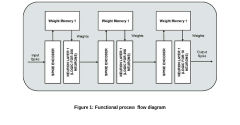
- Neuromorphic computing systems mimic the brain's neural networks and synapses to enable parallel and adaptive processing, leveraging advances in neuroscience and hardware to create energy-efficient AI systems that can learn and adapt in real-time.
Energy Efficiency and Performance Metrics in Neuromorphic Robotics
Neuromorphic computing systems offer significant advantages in energy efficiency compared to traditional computing architectures when applied to robotics. These brain-inspired systems typically consume orders of magnitude less power while performing complex cognitive tasks, with some implementations demonstrating power requirements in the milliwatt range for tasks that would demand watts in conventional systems. This efficiency stems from their event-driven processing nature, where computation occurs only when necessary rather than in constant clock cycles.
Performance metrics for neuromorphic robotics systems require specialized frameworks that differ from traditional computing benchmarks. Key metrics include synaptic operations per second per watt (SOPS/W), which measures computational efficiency; latency in spike processing, which affects real-time responsiveness; and learning adaptability in dynamic environments. These metrics better capture the unique processing characteristics of neuromorphic systems than conventional measures like FLOPS.
The SpiNNaker neuromorphic platform demonstrates this efficiency advantage, consuming approximately 1W while simulating neural networks that would require significantly more power on traditional hardware. Similarly, Intel's Loihi chip shows 1000x better energy efficiency than conventional GPUs for certain robotic vision and navigation tasks, while IBM's TrueNorth architecture achieves remarkable power density at 20mW per square centimeter.
Energy constraints represent a critical consideration in mobile robotics applications, where battery life directly impacts operational duration. Neuromorphic systems excel in this domain, enabling sophisticated sensorimotor integration and decision-making capabilities while maintaining low power profiles. This advantage becomes particularly evident in edge robotics applications operating without consistent power sources.
Benchmark comparisons between neuromorphic and traditional computing approaches reveal that while conventional systems may outperform in raw computational throughput, neuromorphic systems demonstrate superior energy-normalized performance in pattern recognition, anomaly detection, and adaptive control—capabilities essential for autonomous robotics. The energy-per-inference metric often shows neuromorphic solutions requiring only 1-10% of the energy needed by traditional approaches.
Future developments in neuromorphic hardware promise further efficiency gains through advanced materials science, including memristive devices and spintronic components that could potentially achieve femtojoule-per-operation efficiency levels. These advancements would enable increasingly sophisticated robotic behaviors while maintaining strict power budgets, potentially revolutionizing fields like swarm robotics and long-duration autonomous operations.
Performance metrics for neuromorphic robotics systems require specialized frameworks that differ from traditional computing benchmarks. Key metrics include synaptic operations per second per watt (SOPS/W), which measures computational efficiency; latency in spike processing, which affects real-time responsiveness; and learning adaptability in dynamic environments. These metrics better capture the unique processing characteristics of neuromorphic systems than conventional measures like FLOPS.
The SpiNNaker neuromorphic platform demonstrates this efficiency advantage, consuming approximately 1W while simulating neural networks that would require significantly more power on traditional hardware. Similarly, Intel's Loihi chip shows 1000x better energy efficiency than conventional GPUs for certain robotic vision and navigation tasks, while IBM's TrueNorth architecture achieves remarkable power density at 20mW per square centimeter.
Energy constraints represent a critical consideration in mobile robotics applications, where battery life directly impacts operational duration. Neuromorphic systems excel in this domain, enabling sophisticated sensorimotor integration and decision-making capabilities while maintaining low power profiles. This advantage becomes particularly evident in edge robotics applications operating without consistent power sources.
Benchmark comparisons between neuromorphic and traditional computing approaches reveal that while conventional systems may outperform in raw computational throughput, neuromorphic systems demonstrate superior energy-normalized performance in pattern recognition, anomaly detection, and adaptive control—capabilities essential for autonomous robotics. The energy-per-inference metric often shows neuromorphic solutions requiring only 1-10% of the energy needed by traditional approaches.
Future developments in neuromorphic hardware promise further efficiency gains through advanced materials science, including memristive devices and spintronic components that could potentially achieve femtojoule-per-operation efficiency levels. These advancements would enable increasingly sophisticated robotic behaviors while maintaining strict power budgets, potentially revolutionizing fields like swarm robotics and long-duration autonomous operations.
Human-Robot Interaction through Neuromorphic Interfaces
Neuromorphic interfaces represent a revolutionary approach to human-robot interaction (HRI), leveraging brain-inspired computing architectures to create more intuitive and responsive robotic systems. These interfaces bridge the gap between human cognitive processes and robotic perception, enabling more natural communication channels that transcend traditional input methods.
The fundamental advantage of neuromorphic interfaces lies in their ability to process sensory information in ways that mimic human neural systems. By implementing spiking neural networks (SNNs) and event-based processing, these interfaces can interpret human gestures, facial expressions, and even emotional states with unprecedented accuracy and minimal latency. This capability dramatically enhances the quality of interaction between humans and robotic systems.
Recent advancements in neuromorphic vision sensors have enabled robots to perceive their environment in ways similar to human visual processing. Dynamic Vision Sensors (DVS) and Asynchronous Time-based Image Sensors (ATIS) capture changes in visual scenes rather than static frames, allowing robots to respond to human movements with millisecond precision. This event-based approach significantly reduces power consumption while improving responsiveness in dynamic environments.
Tactile neuromorphic interfaces represent another frontier in HRI, with electronic skin technologies that mimic human touch sensitivity. These interfaces utilize arrays of pressure-sensitive elements connected to neuromorphic processors, enabling robots to interpret touch with human-like sensitivity. Such capabilities are particularly valuable in collaborative robotics scenarios where physical human-robot interaction must be both safe and intuitive.
Speech recognition and natural language processing have also benefited from neuromorphic approaches. Neuromorphic auditory systems can filter and process speech signals in noisy environments, mimicking the human auditory cortex's ability to focus on relevant sounds. This enables more robust voice command recognition in real-world settings where traditional systems often struggle.
Brain-computer interfaces (BCIs) based on neuromorphic principles represent perhaps the most direct form of human-robot interaction. These systems interpret neural signals from the human brain and translate them into robot control commands. While still largely experimental, neuromorphic BCIs have shown promise in assistive robotics applications, allowing individuals with mobility impairments to control robotic limbs or assistive devices through thought alone.
The integration of these neuromorphic interfaces with reinforcement learning algorithms enables robots to adapt their interaction styles based on human feedback, creating personalized experiences that evolve over time. This adaptive capability represents a significant step toward robots that can develop genuine social intelligence and form meaningful relationships with their human counterparts.
The fundamental advantage of neuromorphic interfaces lies in their ability to process sensory information in ways that mimic human neural systems. By implementing spiking neural networks (SNNs) and event-based processing, these interfaces can interpret human gestures, facial expressions, and even emotional states with unprecedented accuracy and minimal latency. This capability dramatically enhances the quality of interaction between humans and robotic systems.
Recent advancements in neuromorphic vision sensors have enabled robots to perceive their environment in ways similar to human visual processing. Dynamic Vision Sensors (DVS) and Asynchronous Time-based Image Sensors (ATIS) capture changes in visual scenes rather than static frames, allowing robots to respond to human movements with millisecond precision. This event-based approach significantly reduces power consumption while improving responsiveness in dynamic environments.
Tactile neuromorphic interfaces represent another frontier in HRI, with electronic skin technologies that mimic human touch sensitivity. These interfaces utilize arrays of pressure-sensitive elements connected to neuromorphic processors, enabling robots to interpret touch with human-like sensitivity. Such capabilities are particularly valuable in collaborative robotics scenarios where physical human-robot interaction must be both safe and intuitive.
Speech recognition and natural language processing have also benefited from neuromorphic approaches. Neuromorphic auditory systems can filter and process speech signals in noisy environments, mimicking the human auditory cortex's ability to focus on relevant sounds. This enables more robust voice command recognition in real-world settings where traditional systems often struggle.
Brain-computer interfaces (BCIs) based on neuromorphic principles represent perhaps the most direct form of human-robot interaction. These systems interpret neural signals from the human brain and translate them into robot control commands. While still largely experimental, neuromorphic BCIs have shown promise in assistive robotics applications, allowing individuals with mobility impairments to control robotic limbs or assistive devices through thought alone.
The integration of these neuromorphic interfaces with reinforcement learning algorithms enables robots to adapt their interaction styles based on human feedback, creating personalized experiences that evolve over time. This adaptive capability represents a significant step toward robots that can develop genuine social intelligence and form meaningful relationships with their human counterparts.
Unlock deeper insights with PatSnap Eureka Quick Research — get a full tech report to explore trends and direct your research. Try now!
Generate Your Research Report Instantly with AI Agent
Supercharge your innovation with PatSnap Eureka AI Agent Platform!