

Comparing Dynamic Light Scattering vs UV-Spectroscopy
SEP 5, 202510 MIN READ
Generate Your Research Report Instantly with AI Agent
PatSnap Eureka helps you evaluate technical feasibility & market potential.
Molecular Analysis Technology Evolution and Objectives
Molecular analysis techniques have evolved significantly over the past several decades, transforming our ability to characterize and understand molecular structures and interactions. Dynamic Light Scattering (DLS) and UV-Spectroscopy represent two distinct yet complementary approaches in this evolution, each with its own historical trajectory and technological advancements.
DLS emerged in the 1960s as a technique for measuring particle size distributions in solutions, leveraging the Brownian motion principles established decades earlier. The technology progressed from simple photon correlation spectroscopy systems to today's sophisticated instruments capable of analyzing polydisperse samples with nanometer precision. This evolution has been driven by advances in laser technology, digital signal processing, and computational algorithms that have dramatically improved measurement accuracy and resolution.
UV-Spectroscopy has a longer history, dating back to the early 20th century, but has undergone equally transformative developments. From basic absorption measurements using prism spectrometers, the technology has evolved to include advanced diode array detectors, microvolume sampling capabilities, and integration with automated sample handling systems. Modern UV-Spectroscopy instruments offer unprecedented sensitivity, allowing for detection of molecular concentrations in the nanomolar range.
The convergence of these technologies with computational methods represents a significant trend in molecular analysis. Machine learning algorithms now enhance data interpretation, while cloud-based platforms enable collaborative analysis and database integration. This computational revolution has expanded the application scope of both techniques beyond their traditional boundaries.
The primary objective in comparing DLS and UV-Spectroscopy is to establish a comprehensive understanding of their respective strengths, limitations, and complementary aspects. This includes evaluating their efficacy in various molecular characterization scenarios, from protein aggregation studies to nanoparticle analysis and quality control in pharmaceutical formulations.
Additional objectives include identifying potential synergies between these techniques when used in combination, exploring emerging hybrid methodologies that incorporate elements of both approaches, and assessing their integration potential with other analytical platforms to create more powerful molecular characterization workflows.
Understanding the evolutionary trajectory of these technologies provides valuable context for predicting future developments, including miniaturization for point-of-care applications, increased automation for high-throughput screening, and enhanced sensitivity for single-molecule detection. These advancements will likely reshape molecular analysis capabilities across multiple industries, from pharmaceuticals to materials science and environmental monitoring.
DLS emerged in the 1960s as a technique for measuring particle size distributions in solutions, leveraging the Brownian motion principles established decades earlier. The technology progressed from simple photon correlation spectroscopy systems to today's sophisticated instruments capable of analyzing polydisperse samples with nanometer precision. This evolution has been driven by advances in laser technology, digital signal processing, and computational algorithms that have dramatically improved measurement accuracy and resolution.
UV-Spectroscopy has a longer history, dating back to the early 20th century, but has undergone equally transformative developments. From basic absorption measurements using prism spectrometers, the technology has evolved to include advanced diode array detectors, microvolume sampling capabilities, and integration with automated sample handling systems. Modern UV-Spectroscopy instruments offer unprecedented sensitivity, allowing for detection of molecular concentrations in the nanomolar range.
The convergence of these technologies with computational methods represents a significant trend in molecular analysis. Machine learning algorithms now enhance data interpretation, while cloud-based platforms enable collaborative analysis and database integration. This computational revolution has expanded the application scope of both techniques beyond their traditional boundaries.
The primary objective in comparing DLS and UV-Spectroscopy is to establish a comprehensive understanding of their respective strengths, limitations, and complementary aspects. This includes evaluating their efficacy in various molecular characterization scenarios, from protein aggregation studies to nanoparticle analysis and quality control in pharmaceutical formulations.
Additional objectives include identifying potential synergies between these techniques when used in combination, exploring emerging hybrid methodologies that incorporate elements of both approaches, and assessing their integration potential with other analytical platforms to create more powerful molecular characterization workflows.
Understanding the evolutionary trajectory of these technologies provides valuable context for predicting future developments, including miniaturization for point-of-care applications, increased automation for high-throughput screening, and enhanced sensitivity for single-molecule detection. These advancements will likely reshape molecular analysis capabilities across multiple industries, from pharmaceuticals to materials science and environmental monitoring.
Market Applications and Demand for Particle Characterization
Particle characterization represents a critical analytical need across multiple industries, with the global market for particle analysis instruments projected to reach $470 million by 2025, growing at a CAGR of 5.8%. This growth is primarily driven by increasing quality control requirements in pharmaceutical manufacturing, advanced materials development, and environmental monitoring applications.
The pharmaceutical and biotechnology sectors constitute the largest market segment, accounting for approximately 35% of the total demand. These industries require precise particle characterization for drug formulation, stability testing, and quality assurance. The ability to detect protein aggregation and characterize nanoparticle-based drug delivery systems has become particularly valuable, with over 50 FDA-approved nanomedicine products currently on the market.
Environmental monitoring represents another significant application area, where particle characterization technologies are employed to analyze particulate matter in air and water samples. Regulatory pressures from agencies like the EPA and European Environment Agency have intensified the need for accurate particle measurement technologies, especially for PM2.5 and ultrafine particles.
The food and beverage industry increasingly relies on particle characterization for quality control and product development. Applications include emulsion stability assessment, ingredient characterization, and detection of contaminants. This sector values rapid, non-destructive testing methods that can be integrated into production lines.
Academic and research institutions constitute approximately 20% of the market, utilizing these technologies for fundamental research in materials science, colloid chemistry, and nanotechnology. The growing focus on nanomaterials has significantly expanded this segment's demand for advanced characterization tools.
Regional analysis reveals North America and Europe as the dominant markets, collectively accounting for over 60% of global demand. However, the Asia-Pacific region, particularly China and India, demonstrates the fastest growth rate due to expanding pharmaceutical manufacturing and environmental monitoring requirements.
End-users increasingly demand integrated solutions that combine multiple characterization techniques, allowing for comprehensive particle analysis. This trend has driven instrument manufacturers to develop modular systems that can accommodate both DLS and UV-spectroscopy capabilities, providing complementary data sets from a single sample.
The market also shows growing interest in portable and field-deployable instruments, particularly for environmental monitoring and on-site quality control applications. This trend represents a significant opportunity for technology developers to create more compact, robust versions of traditionally laboratory-bound analytical instruments.
The pharmaceutical and biotechnology sectors constitute the largest market segment, accounting for approximately 35% of the total demand. These industries require precise particle characterization for drug formulation, stability testing, and quality assurance. The ability to detect protein aggregation and characterize nanoparticle-based drug delivery systems has become particularly valuable, with over 50 FDA-approved nanomedicine products currently on the market.
Environmental monitoring represents another significant application area, where particle characterization technologies are employed to analyze particulate matter in air and water samples. Regulatory pressures from agencies like the EPA and European Environment Agency have intensified the need for accurate particle measurement technologies, especially for PM2.5 and ultrafine particles.
The food and beverage industry increasingly relies on particle characterization for quality control and product development. Applications include emulsion stability assessment, ingredient characterization, and detection of contaminants. This sector values rapid, non-destructive testing methods that can be integrated into production lines.
Academic and research institutions constitute approximately 20% of the market, utilizing these technologies for fundamental research in materials science, colloid chemistry, and nanotechnology. The growing focus on nanomaterials has significantly expanded this segment's demand for advanced characterization tools.
Regional analysis reveals North America and Europe as the dominant markets, collectively accounting for over 60% of global demand. However, the Asia-Pacific region, particularly China and India, demonstrates the fastest growth rate due to expanding pharmaceutical manufacturing and environmental monitoring requirements.
End-users increasingly demand integrated solutions that combine multiple characterization techniques, allowing for comprehensive particle analysis. This trend has driven instrument manufacturers to develop modular systems that can accommodate both DLS and UV-spectroscopy capabilities, providing complementary data sets from a single sample.
The market also shows growing interest in portable and field-deployable instruments, particularly for environmental monitoring and on-site quality control applications. This trend represents a significant opportunity for technology developers to create more compact, robust versions of traditionally laboratory-bound analytical instruments.
DLS and UV-Spectroscopy: Current Capabilities and Limitations
Dynamic Light Scattering (DLS) and UV-Spectroscopy represent two distinct analytical techniques with complementary capabilities in characterizing particles and molecules in solution. DLS excels in determining particle size distributions in the nanometer to micrometer range by measuring fluctuations in scattered light intensity caused by Brownian motion. This technique provides valuable information about hydrodynamic diameter, polydispersity, and aggregation states of particles in suspension.
The primary strength of DLS lies in its non-invasive nature and ability to analyze samples across a wide concentration range without sample destruction. Modern DLS instruments offer high sensitivity, detecting particles as small as 1 nm and as large as several micrometers. Additionally, DLS can perform measurements rapidly, typically within minutes, making it suitable for high-throughput applications and real-time monitoring of dynamic processes.
However, DLS faces significant limitations. The technique struggles with polydisperse samples containing particles of vastly different sizes, as larger particles can dominate the scattering signal and mask smaller components. DLS also provides limited chemical specificity, offering no information about the chemical composition or structure of the analyzed particles.
UV-Spectroscopy, conversely, measures the absorption of ultraviolet and visible light by molecules, providing information about molecular structure, concentration, and purity. This technique excels in quantitative analysis, allowing precise determination of sample concentration through Beer-Lambert law applications. UV-Spectroscopy demonstrates exceptional sensitivity for detecting chromophores, with detection limits often reaching nanomolar concentrations.
The technique offers excellent specificity for molecules with characteristic absorption spectra, enabling identification and differentiation of compounds in complex mixtures. Modern UV-Spectrophotometers provide rapid analysis with high reproducibility and can be easily automated for high-throughput screening applications.
Nevertheless, UV-Spectroscopy has notable limitations. It requires molecules to possess chromophores that absorb in the UV-visible range, making it unsuitable for many non-absorbing species. The technique provides limited structural information compared to more sophisticated spectroscopic methods like NMR or mass spectrometry.
Both techniques face challenges with sample preparation. DLS requires careful control of dust contamination and sample concentration to avoid multiple scattering effects. UV-Spectroscopy demands proper baseline correction and consideration of potential interfering substances that may absorb at similar wavelengths.
Recent technological advancements have addressed some limitations through multi-angle DLS systems that improve resolution for polydisperse samples and multiwavelength UV-Spectrophotometers that enhance specificity. Integration with complementary techniques, such as combining DLS with Raman spectroscopy or UV-Spectroscopy with chromatographic separation, has expanded the analytical capabilities of both methods.
The primary strength of DLS lies in its non-invasive nature and ability to analyze samples across a wide concentration range without sample destruction. Modern DLS instruments offer high sensitivity, detecting particles as small as 1 nm and as large as several micrometers. Additionally, DLS can perform measurements rapidly, typically within minutes, making it suitable for high-throughput applications and real-time monitoring of dynamic processes.
However, DLS faces significant limitations. The technique struggles with polydisperse samples containing particles of vastly different sizes, as larger particles can dominate the scattering signal and mask smaller components. DLS also provides limited chemical specificity, offering no information about the chemical composition or structure of the analyzed particles.
UV-Spectroscopy, conversely, measures the absorption of ultraviolet and visible light by molecules, providing information about molecular structure, concentration, and purity. This technique excels in quantitative analysis, allowing precise determination of sample concentration through Beer-Lambert law applications. UV-Spectroscopy demonstrates exceptional sensitivity for detecting chromophores, with detection limits often reaching nanomolar concentrations.
The technique offers excellent specificity for molecules with characteristic absorption spectra, enabling identification and differentiation of compounds in complex mixtures. Modern UV-Spectrophotometers provide rapid analysis with high reproducibility and can be easily automated for high-throughput screening applications.
Nevertheless, UV-Spectroscopy has notable limitations. It requires molecules to possess chromophores that absorb in the UV-visible range, making it unsuitable for many non-absorbing species. The technique provides limited structural information compared to more sophisticated spectroscopic methods like NMR or mass spectrometry.
Both techniques face challenges with sample preparation. DLS requires careful control of dust contamination and sample concentration to avoid multiple scattering effects. UV-Spectroscopy demands proper baseline correction and consideration of potential interfering substances that may absorb at similar wavelengths.
Recent technological advancements have addressed some limitations through multi-angle DLS systems that improve resolution for polydisperse samples and multiwavelength UV-Spectrophotometers that enhance specificity. Integration with complementary techniques, such as combining DLS with Raman spectroscopy or UV-Spectroscopy with chromatographic separation, has expanded the analytical capabilities of both methods.
Technical Comparison of DLS and UV-Spectroscopy Methodologies
01 Particle characterization using combined DLS and UV-Spectroscopy
Dynamic Light Scattering (DLS) combined with UV-Spectroscopy enables comprehensive characterization of particles in solution. This dual-method approach allows for simultaneous measurement of particle size distribution and chemical composition. The integration of these techniques provides more accurate analysis of nanoparticles, colloids, and biological samples by correlating optical properties with physical dimensions.- Particle characterization using combined DLS and UV-spectroscopy: Dynamic Light Scattering (DLS) combined with UV-spectroscopy enables comprehensive characterization of particles in solution. This dual approach allows for simultaneous measurement of particle size distribution and chemical composition. The combination provides more accurate analysis of nanoparticles, colloids, and biological samples by correlating physical dimensions with spectral properties, enhancing the reliability of measurements in complex systems.
- Biomedical applications of DLS and UV-spectroscopy: DLS and UV-spectroscopy techniques are widely applied in biomedical research and diagnostics. These methods enable the analysis of biological samples such as proteins, DNA, and cellular components. The integration of these techniques allows for monitoring of biomolecular interactions, detection of disease markers, and evaluation of drug delivery systems. This approach provides valuable insights into biological processes at the molecular level.
- Advanced instrumentation for DLS and UV-spectroscopy measurements: Innovative instrumentation designs enhance the capabilities of DLS and UV-spectroscopy measurements. These advancements include integrated systems that perform both analyses simultaneously, improved detection sensitivity, and automated data processing algorithms. Modern instruments feature enhanced optical components, laser technologies, and detection systems that minimize interference and increase measurement accuracy across diverse sample types.
- Nanomaterial characterization and quality control: DLS and UV-spectroscopy provide essential tools for nanomaterial characterization and quality control in manufacturing processes. These techniques enable monitoring of nanoparticle synthesis, stability assessment, and batch-to-batch consistency verification. The combination allows for detection of aggregation, surface modifications, and chemical composition changes, ensuring nanomaterial products meet specified quality standards for research and industrial applications.
- Environmental and industrial monitoring applications: DLS and UV-spectroscopy techniques are employed for environmental and industrial monitoring applications. These methods enable detection and characterization of particulates in water systems, air quality monitoring, and process control in manufacturing. The combined approach allows for identification of contaminants, assessment of water treatment efficacy, and monitoring of industrial processes where particle size and chemical composition are critical parameters.
02 Biomedical applications of DLS and UV-Spectroscopy
The combination of Dynamic Light Scattering and UV-Spectroscopy is widely used in biomedical research and diagnostics. These techniques enable the analysis of biological macromolecules, protein aggregation, drug delivery systems, and disease biomarkers. The non-invasive nature of these methods makes them particularly valuable for monitoring biomolecular interactions and structural changes in physiological conditions.Expand Specific Solutions03 Advanced instrumentation for DLS and UV-Spectroscopy measurements
Specialized instruments have been developed to perform both Dynamic Light Scattering and UV-Spectroscopy analyses with enhanced precision and efficiency. These systems incorporate innovative optical components, detection methods, and data processing algorithms to improve measurement accuracy and resolution. Modern instruments often feature automated sample handling, temperature control, and real-time analysis capabilities.Expand Specific Solutions04 Nanomaterial characterization and quality control
Dynamic Light Scattering and UV-Spectroscopy are essential tools for nanomaterial characterization and quality control in industrial applications. These techniques provide critical information about nanoparticle size, dispersion stability, surface properties, and chemical composition. The combined approach enables manufacturers to ensure batch-to-batch consistency and meet regulatory requirements for nanomaterial-based products.Expand Specific Solutions05 Environmental and water quality monitoring
Dynamic Light Scattering and UV-Spectroscopy techniques are employed for environmental monitoring and water quality assessment. These methods can detect and characterize suspended particles, colloids, and dissolved substances in water samples. The combination allows for the identification of contaminants, microplastics, and other pollutants, providing valuable data for environmental protection and water treatment processes.Expand Specific Solutions
Leading Manufacturers and Research Institutions in Spectroscopy
Dynamic Light Scattering (DLS) and UV-Spectroscopy technologies are positioned in a mature analytical instrumentation market, with an estimated global size exceeding $5 billion. The competitive landscape reveals established players like Malvern Panalytical, Shimadzu, and Wyatt Technology dominating DLS technology with advanced particle characterization capabilities, while UV-Spectroscopy is led by industry giants including FUJIFILM, Shimadzu, and Excelitas Technologies. These technologies serve complementary analytical functions - DLS excels in size distribution analysis of nanoparticles and macromolecules in solution, while UV-Spectroscopy provides precise concentration and structural information through absorption measurements. Recent innovations from academic institutions like South China Normal University and California Institute of Technology are advancing both technologies toward greater sensitivity and application versatility, particularly in biomedical and materials science fields.
Shimadzu Corp.
Technical Solution: Shimadzu Corporation has developed integrated analytical platforms that combine their SPD series UV-Vis detectors with dynamic light scattering capabilities. Their HPLC-DLS coupling technology enables real-time monitoring of both molecular absorption characteristics and particle size distributions in a single analytical run. Shimadzu's LabSolutions software platform provides unified control and data analysis for both techniques, allowing researchers to correlate spectroscopic properties with particle characteristics. Their systems incorporate temperature-controlled flow cells (range 4-80°C) to maintain sample integrity during analysis. Shimadzu's proprietary optical bench design minimizes stray light to less than 0.005% at 220nm, enhancing UV detection sensitivity while their DLS modules achieve size resolution down to 0.5nm. The company's latest innovations include automated dilution systems that optimize sample concentration for both DLS and UV measurements, addressing the different sensitivity requirements of each technique.
Strengths: Excellent integration with chromatography systems enables powerful hyphenated techniques; robust engineering provides exceptional reliability in routine laboratory environments; comprehensive service network ensures minimal downtime. Weaknesses: Less specialized in DLS technology compared to dedicated manufacturers; limited angular measurement capabilities compared to multi-angle systems; software interface less intuitive for comparative analysis.
Trinean NV
Technical Solution: Trinean NV has pioneered microfluidic spectroscopy systems that combine aspects of UV-spectroscopy with light scattering detection. Their DropSense96 platform utilizes proprietary microfluidic chips (μCuvette) that require only 2μL sample volumes while providing both absorbance measurements and limited light scattering data. Their patented cDrop™ technology employs a specialized algorithm to extract and separate the absorbance signal from the light scattering component, enabling researchers to quantify both nucleic acid concentration and purity without separate DLS measurements. Trinean's DropQuant software incorporates machine learning algorithms that analyze spectral patterns to identify contaminants and aggregates that might affect downstream applications. Their systems operate across a 200-800nm wavelength range with a photometric accuracy of ±2% and precision of ±0.5%. The company has recently developed multi-wavelength detection capabilities that enhance their ability to differentiate between true absorbance and scattering phenomena in complex biological samples.
Strengths: Extremely low sample volume requirements ideal for precious samples; high-throughput capabilities with 96-well format; specialized algorithms effectively separate absorbance from scattering signals. Weaknesses: Limited dynamic range compared to dedicated DLS systems; cannot provide detailed particle size distribution data; primarily focused on nucleic acid and protein applications rather than broader particle characterization.
Breakthrough Patents and Literature in Light Scattering Technologies
Method and apparatus to illuminate sample and containing vessel in a light scattering detector
PatentActiveUS20130286381A1
Innovation
- The use of an absorbing/transmitting optical structure above the sample, which absorbs the wavelength of the light scattering source but transmits the wavelength of the imaging illumination source, allows for simultaneous imaging and light scattering measurements without interfering with the laser beam, using a diffuser to provide diffuse illumination for imaging while preventing damage to the light scattering source.


Methods and kits for detecting exosomal protein
PatentActiveUS20210373022A1
Innovation
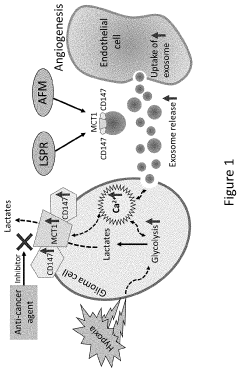
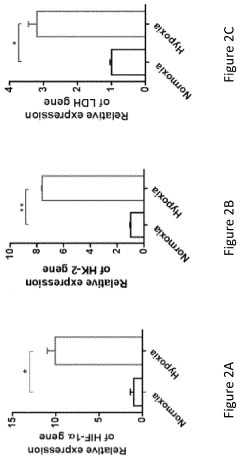
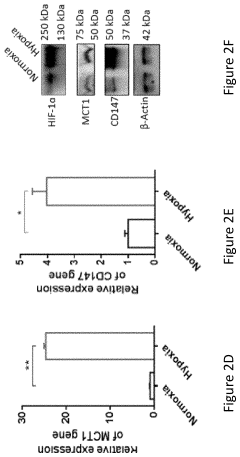
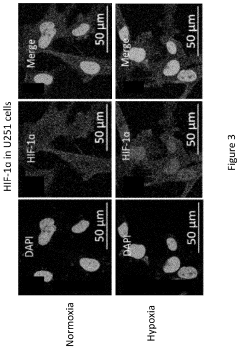
- A method utilizing nanostructured sensors with localized surface plasmon resonance (LSPR) and atomic force microscopy (AFM) to detect exosomal proteins, specifically MCT1 and CD147, through optical radiation-induced phase responses and antibody-functionalized probes, enabling precise detection in serum samples.
Sample Preparation Requirements and Optimization Strategies
Sample preparation represents a critical determinant of analytical accuracy and reliability in both Dynamic Light Scattering (DLS) and UV-Spectroscopy techniques. The two methods exhibit distinct requirements that must be carefully addressed to ensure optimal performance and valid results.
For DLS measurements, sample cleanliness is paramount due to the technique's extreme sensitivity to large particles. Dust particles or aggregates can dominate scattering signals and lead to erroneous size distribution results. Filtration through 0.2-0.45 μm membrane filters is typically recommended immediately before measurement. Additionally, samples must be prepared at appropriate concentrations—too dilute may yield insufficient scattering intensity, while overly concentrated samples can introduce multiple scattering effects that complicate data interpretation.
Temperature equilibration constitutes another critical factor for DLS sample preparation. Samples should be allowed to thermally equilibrate for 3-5 minutes before measurement to prevent convection currents that can be misinterpreted as Brownian motion. The viscosity of the dispersant medium must be precisely known at the measurement temperature, as this parameter directly impacts the calculation of particle size.
UV-Spectroscopy, conversely, presents different optimization challenges. Sample transparency is essential, requiring careful consideration of solvent selection to avoid interference with analyte absorption bands. Baseline correction using matched cuvettes with identical optical properties is necessary to eliminate systematic errors. Concentration ranges must be calibrated to operate within the linear response range of Beer-Lambert law, typically with absorbance values between 0.1-1.0 AU.
Buffer composition significantly impacts both techniques but in different ways. For DLS, buffer ionic strength affects the electrical double layer around particles and consequently their hydrodynamic diameter. For UV-Spectroscopy, buffer components may absorb in the UV region, potentially interfering with analyte signals, particularly below 220 nm where many buffer components show significant absorption.
Optimization strategies for both techniques include systematic evaluation of sample dilution series to identify concentration-dependent effects. For protein samples, filtration protocols must be validated to ensure no target material is lost during preparation. Regular verification using reference standards of known properties helps establish system suitability and validates preparation protocols.
Cross-validation between complementary techniques provides a robust approach to sample preparation optimization. When discrepancies arise between DLS and UV-Spectroscopy results, they often indicate sample preparation issues rather than instrumental limitations, highlighting the value of employing both methods in comprehensive analytical workflows.
For DLS measurements, sample cleanliness is paramount due to the technique's extreme sensitivity to large particles. Dust particles or aggregates can dominate scattering signals and lead to erroneous size distribution results. Filtration through 0.2-0.45 μm membrane filters is typically recommended immediately before measurement. Additionally, samples must be prepared at appropriate concentrations—too dilute may yield insufficient scattering intensity, while overly concentrated samples can introduce multiple scattering effects that complicate data interpretation.
Temperature equilibration constitutes another critical factor for DLS sample preparation. Samples should be allowed to thermally equilibrate for 3-5 minutes before measurement to prevent convection currents that can be misinterpreted as Brownian motion. The viscosity of the dispersant medium must be precisely known at the measurement temperature, as this parameter directly impacts the calculation of particle size.
UV-Spectroscopy, conversely, presents different optimization challenges. Sample transparency is essential, requiring careful consideration of solvent selection to avoid interference with analyte absorption bands. Baseline correction using matched cuvettes with identical optical properties is necessary to eliminate systematic errors. Concentration ranges must be calibrated to operate within the linear response range of Beer-Lambert law, typically with absorbance values between 0.1-1.0 AU.
Buffer composition significantly impacts both techniques but in different ways. For DLS, buffer ionic strength affects the electrical double layer around particles and consequently their hydrodynamic diameter. For UV-Spectroscopy, buffer components may absorb in the UV region, potentially interfering with analyte signals, particularly below 220 nm where many buffer components show significant absorption.
Optimization strategies for both techniques include systematic evaluation of sample dilution series to identify concentration-dependent effects. For protein samples, filtration protocols must be validated to ensure no target material is lost during preparation. Regular verification using reference standards of known properties helps establish system suitability and validates preparation protocols.
Cross-validation between complementary techniques provides a robust approach to sample preparation optimization. When discrepancies arise between DLS and UV-Spectroscopy results, they often indicate sample preparation issues rather than instrumental limitations, highlighting the value of employing both methods in comprehensive analytical workflows.
Data Analysis Algorithms and Computational Approaches
The computational approaches for data analysis in both Dynamic Light Scattering (DLS) and UV-Spectroscopy represent critical components that determine measurement accuracy and interpretation reliability. DLS algorithms primarily employ autocorrelation functions to analyze the temporal fluctuations in scattered light intensity. These algorithms transform time-domain signals into particle size distributions through mathematical operations including Laplace transformations and regularization methods such as CONTIN or non-negative least squares (NNLS).
Advanced DLS computational methods incorporate multi-modal analysis capabilities that can distinguish between different particle populations in heterogeneous samples. Machine learning approaches have recently enhanced these capabilities, with neural networks demonstrating improved resolution in complex mixtures compared to traditional algorithms. These computational advancements have significantly improved the ability to resolve polydisperse samples that previously presented analytical challenges.
UV-Spectroscopy data analysis, conversely, relies on different computational principles centered around the Beer-Lambert law. The primary algorithms focus on peak detection, baseline correction, and spectral deconvolution. Chemometric approaches including Principal Component Analysis (PCA) and Partial Least Squares (PLS) regression are frequently employed to extract meaningful information from complex spectral datasets.
Derivative spectroscopy algorithms represent another computational approach in UV analysis, enhancing spectral resolution by calculating first or second derivatives of absorbance data. This technique effectively eliminates baseline shifts and improves the detection of overlapping peaks that might be indistinguishable in raw absorbance spectra.
Both techniques benefit from recent developments in signal processing algorithms. Wavelet transforms have proven particularly valuable for noise reduction while preserving critical spectral features. Fourier transform methods facilitate the conversion between time and frequency domains, especially relevant for DLS data processing.
The computational requirements differ significantly between these techniques. DLS algorithms typically demand greater processing power due to the complex correlation calculations and inversion problems involved in extracting particle size distributions. UV-Spectroscopy computations are generally less intensive but may require sophisticated deconvolution algorithms when analyzing complex mixtures.
Integration of artificial intelligence and machine learning represents the frontier in computational approaches for both techniques. Deep learning models trained on extensive datasets have demonstrated superior performance in identifying subtle spectral features and improving measurement precision. These AI-enhanced algorithms show particular promise for automated quality control applications and real-time monitoring systems where rapid, accurate analysis is essential.
Advanced DLS computational methods incorporate multi-modal analysis capabilities that can distinguish between different particle populations in heterogeneous samples. Machine learning approaches have recently enhanced these capabilities, with neural networks demonstrating improved resolution in complex mixtures compared to traditional algorithms. These computational advancements have significantly improved the ability to resolve polydisperse samples that previously presented analytical challenges.
UV-Spectroscopy data analysis, conversely, relies on different computational principles centered around the Beer-Lambert law. The primary algorithms focus on peak detection, baseline correction, and spectral deconvolution. Chemometric approaches including Principal Component Analysis (PCA) and Partial Least Squares (PLS) regression are frequently employed to extract meaningful information from complex spectral datasets.
Derivative spectroscopy algorithms represent another computational approach in UV analysis, enhancing spectral resolution by calculating first or second derivatives of absorbance data. This technique effectively eliminates baseline shifts and improves the detection of overlapping peaks that might be indistinguishable in raw absorbance spectra.
Both techniques benefit from recent developments in signal processing algorithms. Wavelet transforms have proven particularly valuable for noise reduction while preserving critical spectral features. Fourier transform methods facilitate the conversion between time and frequency domains, especially relevant for DLS data processing.
The computational requirements differ significantly between these techniques. DLS algorithms typically demand greater processing power due to the complex correlation calculations and inversion problems involved in extracting particle size distributions. UV-Spectroscopy computations are generally less intensive but may require sophisticated deconvolution algorithms when analyzing complex mixtures.
Integration of artificial intelligence and machine learning represents the frontier in computational approaches for both techniques. Deep learning models trained on extensive datasets have demonstrated superior performance in identifying subtle spectral features and improving measurement precision. These AI-enhanced algorithms show particular promise for automated quality control applications and real-time monitoring systems where rapid, accurate analysis is essential.
Unlock deeper insights with PatSnap Eureka Quick Research — get a full tech report to explore trends and direct your research. Try now!
Generate Your Research Report Instantly with AI Agent
Supercharge your innovation with PatSnap Eureka AI Agent Platform!