How to Determine Aggregation Levels in Viruses via Dynamic Light Scattering
SEP 5, 20259 MIN READ
Generate Your Research Report Instantly with AI Agent
Patsnap Eureka helps you evaluate technical feasibility & market potential.
Viral Aggregation Detection Background and Objectives
Viral aggregation, the process by which virus particles cluster together, represents a critical phenomenon in virology with significant implications for vaccine development, therapeutic interventions, and diagnostic methodologies. The study of viral aggregation has evolved considerably over the past decades, from rudimentary visual observations to sophisticated analytical techniques. Dynamic Light Scattering (DLS) has emerged as a particularly valuable tool in this domain, offering non-invasive, real-time measurements of particle size distributions in solution.
The historical trajectory of viral aggregation research began in the mid-20th century with basic microscopy techniques, progressing through ultracentrifugation methods in the 1970s and 1980s, to the adoption of light scattering technologies in the 1990s. DLS specifically gained prominence in the early 2000s as instrumentation became more accessible and computational analysis more sophisticated. This evolution reflects the growing recognition of aggregation's importance in viral behavior and pathogenicity.
Current technological trends in this field include the integration of artificial intelligence for data interpretation, miniaturization of DLS systems for point-of-care applications, and combination with complementary techniques such as nanoparticle tracking analysis (NTA) and multi-angle light scattering (MALS) for enhanced resolution and accuracy. These developments are driving toward more precise quantification of viral aggregation states across diverse viral families.
The primary objectives of viral aggregation detection via DLS encompass several dimensions. First, to establish standardized protocols for sample preparation and measurement that ensure reproducibility across laboratories. Second, to develop algorithms capable of distinguishing between viral aggregates and other particulates in complex biological matrices. Third, to correlate aggregation profiles with functional properties such as infectivity, immunogenicity, and stability.
Additionally, there exists a pressing need to understand the kinetics of viral aggregation under various environmental conditions, including temperature fluctuations, pH changes, and ionic strength variations. This knowledge is particularly crucial for vaccine formulation and storage, where aggregation can significantly impact efficacy and shelf-life. The ability to predict and control aggregation behavior represents a key technological goal with substantial implications for public health interventions.
Furthermore, the application of DLS to emerging and re-emerging viral pathogens presents unique challenges that must be addressed through technological innovation. These include adapting methodologies for diverse viral morphologies, from small non-enveloped viruses to large, pleomorphic enveloped viruses, and developing approaches for analyzing low-concentration samples typical in clinical specimens.
The historical trajectory of viral aggregation research began in the mid-20th century with basic microscopy techniques, progressing through ultracentrifugation methods in the 1970s and 1980s, to the adoption of light scattering technologies in the 1990s. DLS specifically gained prominence in the early 2000s as instrumentation became more accessible and computational analysis more sophisticated. This evolution reflects the growing recognition of aggregation's importance in viral behavior and pathogenicity.
Current technological trends in this field include the integration of artificial intelligence for data interpretation, miniaturization of DLS systems for point-of-care applications, and combination with complementary techniques such as nanoparticle tracking analysis (NTA) and multi-angle light scattering (MALS) for enhanced resolution and accuracy. These developments are driving toward more precise quantification of viral aggregation states across diverse viral families.
The primary objectives of viral aggregation detection via DLS encompass several dimensions. First, to establish standardized protocols for sample preparation and measurement that ensure reproducibility across laboratories. Second, to develop algorithms capable of distinguishing between viral aggregates and other particulates in complex biological matrices. Third, to correlate aggregation profiles with functional properties such as infectivity, immunogenicity, and stability.
Additionally, there exists a pressing need to understand the kinetics of viral aggregation under various environmental conditions, including temperature fluctuations, pH changes, and ionic strength variations. This knowledge is particularly crucial for vaccine formulation and storage, where aggregation can significantly impact efficacy and shelf-life. The ability to predict and control aggregation behavior represents a key technological goal with substantial implications for public health interventions.
Furthermore, the application of DLS to emerging and re-emerging viral pathogens presents unique challenges that must be addressed through technological innovation. These include adapting methodologies for diverse viral morphologies, from small non-enveloped viruses to large, pleomorphic enveloped viruses, and developing approaches for analyzing low-concentration samples typical in clinical specimens.
Market Applications for Virus Aggregation Analysis
Virus aggregation analysis through Dynamic Light Scattering (DLS) has established itself as a critical technology across multiple industries, with applications extending far beyond academic research. The biopharmaceutical sector represents the largest market segment, where virus aggregation monitoring is essential for vaccine development and quality control. Manufacturers utilize this technology to ensure batch consistency, stability assessment, and formulation optimization of viral vaccines, with particular importance in mRNA and viral vector-based vaccines that have seen unprecedented growth following the COVID-19 pandemic.
The diagnostic industry constitutes another significant market, incorporating DLS-based virus aggregation analysis into advanced viral detection platforms. These systems offer advantages in sensitivity and speed compared to traditional methods, enabling rapid screening in clinical settings and potentially revolutionizing point-of-care testing for viral infections. The technology's ability to detect viral particles without extensive sample preparation has made it particularly valuable during epidemic outbreaks.
Research institutions and biotechnology companies represent a steadily growing market segment, employing virus aggregation analysis for fundamental virology research, viral vector development for gene therapy, and virus-like particle (VLP) characterization. The precision offered by DLS in determining particle size distributions has proven invaluable for researchers developing novel therapeutic approaches and delivery systems.
Environmental monitoring has emerged as an expanding application area, with water treatment facilities and public health agencies implementing DLS-based systems for viral contamination surveillance. This application has gained particular attention following increased awareness of waterborne viral pathogens and their potential public health impacts.
The food and beverage industry has begun adopting virus aggregation analysis for quality control and safety assurance, particularly in production processes where viral contamination poses significant risks. This represents a smaller but growing market segment with considerable potential for expansion as food safety regulations become more stringent globally.
Geographically, North America dominates the market for virus aggregation analysis technologies, followed by Europe and rapidly growing adoption in Asia-Pacific regions, particularly China and India. The global market is projected to expand significantly over the next decade, driven by increasing investment in biopharmaceutical development, growing concerns about viral outbreaks, and continuous technological improvements in DLS instrumentation that enhance accessibility and reduce operational costs.
The diagnostic industry constitutes another significant market, incorporating DLS-based virus aggregation analysis into advanced viral detection platforms. These systems offer advantages in sensitivity and speed compared to traditional methods, enabling rapid screening in clinical settings and potentially revolutionizing point-of-care testing for viral infections. The technology's ability to detect viral particles without extensive sample preparation has made it particularly valuable during epidemic outbreaks.
Research institutions and biotechnology companies represent a steadily growing market segment, employing virus aggregation analysis for fundamental virology research, viral vector development for gene therapy, and virus-like particle (VLP) characterization. The precision offered by DLS in determining particle size distributions has proven invaluable for researchers developing novel therapeutic approaches and delivery systems.
Environmental monitoring has emerged as an expanding application area, with water treatment facilities and public health agencies implementing DLS-based systems for viral contamination surveillance. This application has gained particular attention following increased awareness of waterborne viral pathogens and their potential public health impacts.
The food and beverage industry has begun adopting virus aggregation analysis for quality control and safety assurance, particularly in production processes where viral contamination poses significant risks. This represents a smaller but growing market segment with considerable potential for expansion as food safety regulations become more stringent globally.
Geographically, North America dominates the market for virus aggregation analysis technologies, followed by Europe and rapidly growing adoption in Asia-Pacific regions, particularly China and India. The global market is projected to expand significantly over the next decade, driven by increasing investment in biopharmaceutical development, growing concerns about viral outbreaks, and continuous technological improvements in DLS instrumentation that enhance accessibility and reduce operational costs.
DLS Technology Status and Limitations for Viral Particles
Dynamic Light Scattering (DLS) has emerged as a powerful analytical technique for characterizing viral particles and their aggregation states. The technology utilizes the Brownian motion of particles in suspension to determine their hydrodynamic size distribution. When applied to viral particles, DLS offers non-invasive, real-time monitoring capabilities that are essential for vaccine development, gene therapy vector production, and fundamental virology research.
Currently, DLS technology can detect particles ranging from approximately 0.3 nm to 10 μm in diameter, making it suitable for analyzing individual viral particles (typically 20-400 nm) as well as their aggregates. Modern DLS instruments achieve high sensitivity with minimal sample volumes (as little as 2 μL) and can complete measurements in minutes, offering significant advantages over more labor-intensive techniques like electron microscopy.
Despite these capabilities, DLS faces several critical limitations when applied to viral particle aggregation analysis. The technique inherently biases toward larger particles due to the relationship between scattering intensity and particle diameter (proportional to d^6), which can mask smaller particles in polydisperse samples. This presents particular challenges when attempting to quantify minor aggregation events in viral preparations.
Resolution constraints also affect DLS performance, as the technique typically cannot distinguish between particles that differ in size by less than a factor of 3-5. This limitation becomes problematic when analyzing complex viral samples containing both monomers and small oligomers, which may have biological significance but remain unresolved by conventional DLS methods.
Sample preparation introduces additional complications, as viral particles may aggregate during the measurement process due to environmental factors such as temperature fluctuations, pH changes, or surface interactions with measurement cuvettes. These artifacts can lead to misinterpretation of the actual aggregation state in the original sample.
Data interpretation presents further challenges, particularly for non-spherical viral particles. DLS algorithms typically assume spherical particle geometry, which may not accurately represent the morphology of many viruses, leading to potential errors in size determination and aggregation assessment.
The technology also struggles with concentration limitations. At high viral concentrations, multiple scattering effects can distort results, while at very low concentrations, signal-to-noise ratios deteriorate, compromising measurement accuracy. This creates a narrow operational window that may not align with concentrations relevant for specific applications.
Recent technological advances have attempted to address these limitations through multi-angle DLS, machine learning-enhanced data processing, and hybrid approaches combining DLS with complementary techniques. However, significant challenges remain in accurately quantifying viral aggregation states across diverse sample types and concentration ranges.
Currently, DLS technology can detect particles ranging from approximately 0.3 nm to 10 μm in diameter, making it suitable for analyzing individual viral particles (typically 20-400 nm) as well as their aggregates. Modern DLS instruments achieve high sensitivity with minimal sample volumes (as little as 2 μL) and can complete measurements in minutes, offering significant advantages over more labor-intensive techniques like electron microscopy.
Despite these capabilities, DLS faces several critical limitations when applied to viral particle aggregation analysis. The technique inherently biases toward larger particles due to the relationship between scattering intensity and particle diameter (proportional to d^6), which can mask smaller particles in polydisperse samples. This presents particular challenges when attempting to quantify minor aggregation events in viral preparations.
Resolution constraints also affect DLS performance, as the technique typically cannot distinguish between particles that differ in size by less than a factor of 3-5. This limitation becomes problematic when analyzing complex viral samples containing both monomers and small oligomers, which may have biological significance but remain unresolved by conventional DLS methods.
Sample preparation introduces additional complications, as viral particles may aggregate during the measurement process due to environmental factors such as temperature fluctuations, pH changes, or surface interactions with measurement cuvettes. These artifacts can lead to misinterpretation of the actual aggregation state in the original sample.
Data interpretation presents further challenges, particularly for non-spherical viral particles. DLS algorithms typically assume spherical particle geometry, which may not accurately represent the morphology of many viruses, leading to potential errors in size determination and aggregation assessment.
The technology also struggles with concentration limitations. At high viral concentrations, multiple scattering effects can distort results, while at very low concentrations, signal-to-noise ratios deteriorate, compromising measurement accuracy. This creates a narrow operational window that may not align with concentrations relevant for specific applications.
Recent technological advances have attempted to address these limitations through multi-angle DLS, machine learning-enhanced data processing, and hybrid approaches combining DLS with complementary techniques. However, significant challenges remain in accurately quantifying viral aggregation states across diverse sample types and concentration ranges.
Current DLS Methodologies for Virus Aggregation Assessment
01 DLS techniques for measuring protein aggregation
Dynamic Light Scattering (DLS) is used to measure protein aggregation levels by analyzing the scattered light from particles in solution. This technique can detect various sizes of protein aggregates, from small oligomers to larger complexes, providing information about their hydrodynamic radius and distribution. The method is particularly valuable in biopharmaceutical applications for monitoring protein stability and quality control during formulation development.- DLS for protein aggregation detection: Dynamic Light Scattering (DLS) is used to detect and measure protein aggregation levels in biological samples. This technique allows for the characterization of protein stability, monitoring of aggregation kinetics, and assessment of formulation conditions that may affect protein aggregation. DLS provides real-time data on particle size distribution and can detect aggregates at early stages, making it valuable for pharmaceutical development and quality control.
- Advanced DLS instrumentation and methodology: Innovations in DLS instrumentation and methodology have enhanced the accuracy and sensitivity of aggregation level measurements. These advancements include improved optical components, detection algorithms, and data processing techniques that allow for better resolution of particle size distributions. Modern DLS systems can distinguish between different types of aggregates and provide more detailed characterization of complex mixtures, enabling more precise monitoring of aggregation levels.
- DLS applications in pharmaceutical formulation development: DLS is extensively used in pharmaceutical formulation development to assess the stability of drug products and optimize formulation conditions. By monitoring aggregation levels under various conditions such as temperature, pH, and ionic strength, researchers can identify factors that promote or inhibit aggregation. This information is crucial for developing stable formulations with extended shelf life and maintaining therapeutic efficacy of biopharmaceuticals.
- Correlation of DLS data with other analytical techniques: Combining DLS with complementary analytical techniques provides comprehensive characterization of aggregation levels. Methods such as size exclusion chromatography, analytical ultracentrifugation, and light obscuration are often used alongside DLS to validate results and gain additional insights into aggregate properties. This multi-method approach enables researchers to distinguish between different types of aggregates and better understand aggregation mechanisms.
- Automated DLS systems for high-throughput screening: Automated DLS systems have been developed for high-throughput screening of aggregation levels in multiple samples. These systems integrate sample handling, measurement, and data analysis to efficiently process large numbers of samples with minimal operator intervention. Such automation is particularly valuable in research and development settings where numerous formulation conditions need to be evaluated, as well as in quality control environments requiring routine monitoring of product stability.
02 Advanced DLS instrumentation for aggregate detection
Specialized DLS instruments have been developed to enhance the detection and characterization of particle aggregation. These instruments incorporate improved optical components, detection algorithms, and data processing techniques to increase sensitivity and resolution. Some systems combine DLS with other analytical methods to provide comprehensive characterization of aggregates across different size ranges and concentrations.Expand Specific Solutions03 DLS data analysis methods for aggregation assessment
Various data analysis approaches have been developed to interpret DLS measurements for aggregation assessment. These include algorithms for deconvoluting complex particle size distributions, statistical methods for identifying aggregate populations, and mathematical models for tracking aggregation kinetics. Advanced software solutions can process raw DLS data to quantify aggregation levels and distinguish between different types of aggregates.Expand Specific Solutions04 Application of DLS in quality control of nanoparticles and colloids
DLS is widely used for quality control of nanoparticles and colloidal systems by monitoring aggregation states. This application is crucial in industries such as pharmaceuticals, cosmetics, and materials science, where particle size and stability are critical quality attributes. The technique allows for real-time monitoring of aggregation processes, enabling optimization of formulation conditions to minimize unwanted aggregation.Expand Specific Solutions05 Integration of DLS with other analytical techniques
Combining DLS with complementary analytical techniques provides comprehensive characterization of aggregation phenomena. These integrated approaches may include coupling DLS with chromatography, spectroscopy, or microscopy methods to correlate particle size with other physical or chemical properties. Such multi-method approaches enable more accurate assessment of aggregation levels and mechanisms, particularly for complex biological samples or heterogeneous particle systems.Expand Specific Solutions
Leading Institutions and Companies in Viral Analytics
The dynamic light scattering (DLS) virus aggregation analysis market is in a growth phase, with increasing demand driven by pharmaceutical research and diagnostic applications. The global market size is expanding as viral research becomes critical in vaccine development and disease monitoring. Technologically, the field is maturing with companies like Malvern Panalytical leading instrumentation development, while pharmaceutical giants such as F. Hoffmann-La Roche and Regeneron Pharmaceuticals integrate these technologies into their R&D pipelines. Academic institutions including South China Normal University and Oxford University contribute significant research advancements. The ecosystem shows a balanced mix of specialized equipment manufacturers, pharmaceutical companies leveraging the technology, and research institutions developing novel applications, indicating a healthy competitive landscape with opportunities for innovation in sensitivity and specificity improvements.
Malvern Panalytical Ltd.
Technical Solution: Malvern Panalytical has developed advanced Dynamic Light Scattering (DLS) systems specifically optimized for virus aggregation analysis. Their Zetasizer Ultra platform incorporates Multi-Angle Dynamic Light Scattering (MADLS) technology that measures scattered light at multiple angles simultaneously, providing more accurate size distribution data for heterogeneous viral samples. The system employs proprietary Non-Invasive Back Scatter (NIBS) technology that automatically adjusts the measurement position within the sample to optimize signal quality based on sample concentration. Their adaptive correlation algorithms can distinguish between monomeric virus particles and aggregates with high resolution, even in complex biological media. The platform includes specialized disposable cuvettes designed to minimize sample volume requirements (as little as 3μL) while maintaining measurement accuracy. Their software suite incorporates machine learning algorithms that can identify and characterize different aggregation patterns based on historical data from various virus types[1][3].
Strengths: Industry-leading expertise in light scattering technology with decades of experience; comprehensive software solutions that simplify data interpretation; high sensitivity for detecting small changes in particle size distribution. Weaknesses: Premium pricing compared to academic solutions; requires regular calibration and maintenance for optimal performance; some advanced features have steep learning curves for new users.
Oxford University Innovation Ltd.
Technical Solution: Oxford University Innovation has developed a novel approach to virus aggregation analysis through their enhanced DLS platform. Their system incorporates depolarized dynamic light scattering (DDLS) techniques that can distinguish between spherical and non-spherical viral particles, providing insights into structural changes during aggregation. The technology features adaptive correlation algorithms specifically optimized for polydisperse biological samples containing both monomeric viruses and various aggregate sizes. Their platform includes specialized sample preparation protocols that minimize buffer interference while preserving native viral structures. Oxford's approach incorporates machine learning algorithms that can identify specific aggregation patterns characteristic of different virus families based on their extensive viral database. The system features temperature-controlled measurement capabilities that can monitor aggregation kinetics in real-time while simulating various environmental conditions. Their analytical software provides detailed aggregate population analysis, distinguishing between reversible and irreversible aggregation processes critical for vaccine development and storage optimization[7][8].
Strengths: Strong scientific foundation based on academic research excellence; innovative approaches to complex aggregation analysis; extensive validation across diverse virus types including enveloped and non-enveloped viruses. Weaknesses: Less streamlined for industrial applications compared to commercial systems; requires more expert interpretation of results; limited automation compared to fully commercial platforms.
Key Innovations in Viral Particle Characterization
Dynamic light scattering for particle size distribution measurement
PatentWO2019108731A1
Innovation
- The implementation of multispectral DLS techniques, which involve directing light of different wavelengths into the mixture and detecting corresponding signals to determine particle size distribution by processing differences in scattered light intensities, allowing for more accurate separation of particle species and reduction of interference from air bubbles.


Dynamic light scattering method and apparatus
PatentInactiveEP1022549B1
Innovation
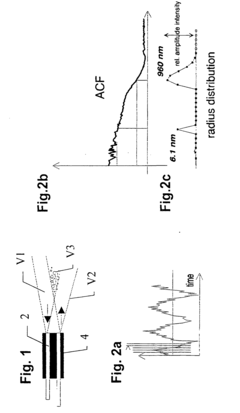
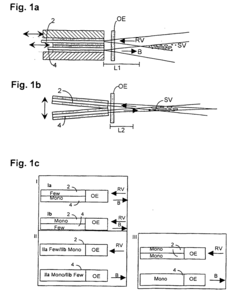
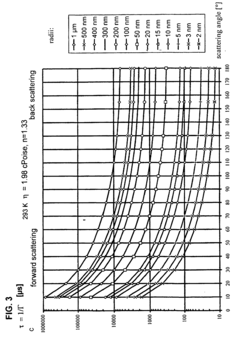
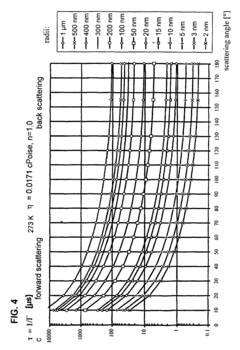
- A simplified DLS apparatus and method using laser light of different wavelengths to detect fluctuations, replacing angle-dependent measurements with wavelength-dependent ones, allowing for simultaneous multi-channel operation to derive particle sizes and velocity components, and compensating for multiple scattering effects.
Standardization Protocols for Viral DLS Analysis
Standardization of Dynamic Light Scattering (DLS) protocols for viral analysis represents a critical advancement in virology research and vaccine development. The establishment of consistent methodologies ensures reproducible and comparable results across different laboratories and research institutions, addressing a significant challenge in the field.
The foundation of standardized viral DLS protocols begins with sample preparation guidelines. These include specific recommendations for buffer composition, pH levels, and ionic strength that minimize interference with light scattering measurements. Optimal concentration ranges for different virus types must be established, as excessive concentrations can lead to multiple scattering effects while insufficient concentrations may result in poor signal-to-noise ratios.
Temperature control emerges as another crucial parameter in standardized protocols. Viral particles exhibit temperature-dependent behavior that can significantly impact aggregation measurements. Standard protocols typically recommend maintaining samples at physiologically relevant temperatures (usually 25°C or 37°C) with maximum variations not exceeding ±0.1°C during measurement cycles.
Instrument calibration procedures form an essential component of standardization efforts. Regular verification using certified reference materials such as polystyrene latex beads of known size distribution ensures measurement accuracy. Calibration frequency recommendations typically suggest daily verification for intensive research applications and weekly checks for routine analysis.
Data acquisition parameters must be harmonized across laboratories to enable meaningful comparisons. These include standardized measurement durations (typically 10-30 seconds per run with 10-15 repeat measurements), scattering angle specifications (commonly 90° or 173° backscatter), and laser wavelength selection (typically 633 nm for most viral applications).
Data processing algorithms represent another critical area for standardization. Consensus has emerged around specific mathematical models for viral particle analysis, including cumulant analysis for polydisperse samples and CONTIN algorithms for multimodal distributions. Standardized approaches to baseline determination and outlier rejection further enhance reproducibility.
Quality control metrics have been developed to validate DLS results for viral samples. These include acceptance criteria for polydispersity index values (typically <0.3 for monodisperse viral preparations), count rate stability thresholds, and correlation function characteristics that indicate measurement reliability. Implementation of these standardized protocols significantly enhances the robustness of viral aggregation analysis across the scientific community.
The foundation of standardized viral DLS protocols begins with sample preparation guidelines. These include specific recommendations for buffer composition, pH levels, and ionic strength that minimize interference with light scattering measurements. Optimal concentration ranges for different virus types must be established, as excessive concentrations can lead to multiple scattering effects while insufficient concentrations may result in poor signal-to-noise ratios.
Temperature control emerges as another crucial parameter in standardized protocols. Viral particles exhibit temperature-dependent behavior that can significantly impact aggregation measurements. Standard protocols typically recommend maintaining samples at physiologically relevant temperatures (usually 25°C or 37°C) with maximum variations not exceeding ±0.1°C during measurement cycles.
Instrument calibration procedures form an essential component of standardization efforts. Regular verification using certified reference materials such as polystyrene latex beads of known size distribution ensures measurement accuracy. Calibration frequency recommendations typically suggest daily verification for intensive research applications and weekly checks for routine analysis.
Data acquisition parameters must be harmonized across laboratories to enable meaningful comparisons. These include standardized measurement durations (typically 10-30 seconds per run with 10-15 repeat measurements), scattering angle specifications (commonly 90° or 173° backscatter), and laser wavelength selection (typically 633 nm for most viral applications).
Data processing algorithms represent another critical area for standardization. Consensus has emerged around specific mathematical models for viral particle analysis, including cumulant analysis for polydisperse samples and CONTIN algorithms for multimodal distributions. Standardized approaches to baseline determination and outlier rejection further enhance reproducibility.
Quality control metrics have been developed to validate DLS results for viral samples. These include acceptance criteria for polydispersity index values (typically <0.3 for monodisperse viral preparations), count rate stability thresholds, and correlation function characteristics that indicate measurement reliability. Implementation of these standardized protocols significantly enhances the robustness of viral aggregation analysis across the scientific community.
Biosafety Considerations in Viral Aggregation Studies
Biosafety considerations are paramount when conducting viral aggregation studies using dynamic light scattering (DLS) techniques. The manipulation of viral particles, regardless of their aggregation state, presents inherent biological hazards that must be systematically addressed through comprehensive safety protocols and containment strategies.
Laboratory facilities conducting viral aggregation analysis via DLS must adhere to appropriate biosafety level (BSL) classifications based on the pathogenicity of the studied viruses. For highly pathogenic viruses, BSL-3 or BSL-4 facilities with negative pressure environments, HEPA filtration systems, and controlled access are mandatory to prevent environmental contamination and personnel exposure.
Sample preparation for DLS measurements introduces specific biosafety challenges. The process often requires dilution, filtration, or other manipulations that may generate aerosols containing infectious particles. Implementation of engineering controls such as certified biosafety cabinets (Class II or III) is essential during these procedures to minimize aerosol exposure risks.
Instrument decontamination protocols represent another critical biosafety consideration. DLS equipment components that contact viral samples must undergo validated decontamination procedures between experiments to prevent cross-contamination and laboratory-acquired infections. This typically involves chemical disinfection with virucidal agents compatible with sensitive optical components.
Waste management strategies must address the disposal of potentially infectious materials generated during viral aggregation studies. All liquid and solid waste requires appropriate decontamination through autoclaving, chemical treatment, or incineration before disposal through approved waste streams.
Personal protective equipment (PPE) requirements for researchers conducting viral DLS studies typically include disposable gloves, laboratory coats, eye protection, and potentially respiratory protection depending on the risk assessment. Training programs must ensure personnel understand proper donning and doffing procedures to prevent self-contamination.
Risk assessment frameworks specifically tailored to viral aggregation studies should consider the unique properties of viral aggregates. Evidence suggests that viral aggregation may alter infectivity, stability, and transmission characteristics, potentially modifying the risk profile compared to monodisperse viral preparations.
Transportation and storage of viral samples for DLS analysis require compliance with international regulations for infectious substances, including appropriate containment, labeling, and documentation to prevent accidental exposure during handling and transport.
Laboratory facilities conducting viral aggregation analysis via DLS must adhere to appropriate biosafety level (BSL) classifications based on the pathogenicity of the studied viruses. For highly pathogenic viruses, BSL-3 or BSL-4 facilities with negative pressure environments, HEPA filtration systems, and controlled access are mandatory to prevent environmental contamination and personnel exposure.
Sample preparation for DLS measurements introduces specific biosafety challenges. The process often requires dilution, filtration, or other manipulations that may generate aerosols containing infectious particles. Implementation of engineering controls such as certified biosafety cabinets (Class II or III) is essential during these procedures to minimize aerosol exposure risks.
Instrument decontamination protocols represent another critical biosafety consideration. DLS equipment components that contact viral samples must undergo validated decontamination procedures between experiments to prevent cross-contamination and laboratory-acquired infections. This typically involves chemical disinfection with virucidal agents compatible with sensitive optical components.
Waste management strategies must address the disposal of potentially infectious materials generated during viral aggregation studies. All liquid and solid waste requires appropriate decontamination through autoclaving, chemical treatment, or incineration before disposal through approved waste streams.
Personal protective equipment (PPE) requirements for researchers conducting viral DLS studies typically include disposable gloves, laboratory coats, eye protection, and potentially respiratory protection depending on the risk assessment. Training programs must ensure personnel understand proper donning and doffing procedures to prevent self-contamination.
Risk assessment frameworks specifically tailored to viral aggregation studies should consider the unique properties of viral aggregates. Evidence suggests that viral aggregation may alter infectivity, stability, and transmission characteristics, potentially modifying the risk profile compared to monodisperse viral preparations.
Transportation and storage of viral samples for DLS analysis require compliance with international regulations for infectious substances, including appropriate containment, labeling, and documentation to prevent accidental exposure during handling and transport.
Unlock deeper insights with Patsnap Eureka Quick Research — get a full tech report to explore trends and direct your research. Try now!
Generate Your Research Report Instantly with AI Agent
Supercharge your innovation with Patsnap Eureka AI Agent Platform!