Comparing LS2 Engine vs LS1: Thermal Management Capabilities
SEP 3, 20259 MIN READ
Generate Your Research Report Instantly with AI Agent
PatSnap Eureka helps you evaluate technical feasibility & market potential.
LS2 vs LS1 Thermal Evolution Background
The LS engine family represents a significant evolution in General Motors' small-block V8 design philosophy, with thermal management capabilities playing a crucial role in performance and reliability. The LS1 engine, introduced in 1997, marked the beginning of GM's third-generation small-block architecture, featuring an aluminum block design that fundamentally changed the thermal characteristics compared to its iron-block predecessors. This revolutionary shift reduced overall engine weight while presenting new challenges in heat dissipation and thermal expansion management.
The thermal management evolution from LS1 to LS2 reflects broader industry trends toward higher efficiency powertrains with improved heat rejection capabilities. The LS1's initial thermal management system utilized a conventional water pump design with a relatively straightforward cooling passage layout. This system, while adequate for the performance targets of the late 1990s, began showing limitations as power outputs increased and emissions regulations tightened in the early 2000s.
When the LS2 was introduced in 2005, it incorporated significant thermal management improvements based on lessons learned from nearly eight years of LS1 production and field data. The LS2's cooling system featured revised water jacket designs with more uniform coolant flow distribution, particularly around the cylinder bores and combustion chambers where thermal loads are most concentrated. These refinements addressed hotspot issues that had been identified in high-performance applications of the LS1.
A key technological advancement in the LS2's thermal management was the implementation of more sophisticated electronic cooling control systems. While the LS1 utilized relatively basic thermostat and fan control mechanisms, the LS2 integrated more advanced engine control module (ECM) algorithms that could more precisely regulate coolant temperature based on multiple operating parameters, resulting in more consistent thermal conditions across varying loads and ambient temperatures.
Material science advancements also played a significant role in the thermal evolution between these engines. The LS2's aluminum alloy composition was refined to better handle thermal cycling, with improved microstructure stability at elevated temperatures. Additionally, the head gasket design evolved to provide better sealing under the increased thermal and mechanical stresses associated with the LS2's higher output capabilities.
The industry context surrounding this evolution included increasing pressure for manufacturers to improve both performance and efficiency simultaneously. The LS2's thermal management improvements supported its higher output (400 hp vs the LS1's 350 hp) while maintaining reliability and meeting stricter emissions standards. This development trajectory aligned with broader automotive trends toward more thermally efficient combustion processes and more effective heat management systems.
The thermal management evolution from LS1 to LS2 reflects broader industry trends toward higher efficiency powertrains with improved heat rejection capabilities. The LS1's initial thermal management system utilized a conventional water pump design with a relatively straightforward cooling passage layout. This system, while adequate for the performance targets of the late 1990s, began showing limitations as power outputs increased and emissions regulations tightened in the early 2000s.
When the LS2 was introduced in 2005, it incorporated significant thermal management improvements based on lessons learned from nearly eight years of LS1 production and field data. The LS2's cooling system featured revised water jacket designs with more uniform coolant flow distribution, particularly around the cylinder bores and combustion chambers where thermal loads are most concentrated. These refinements addressed hotspot issues that had been identified in high-performance applications of the LS1.
A key technological advancement in the LS2's thermal management was the implementation of more sophisticated electronic cooling control systems. While the LS1 utilized relatively basic thermostat and fan control mechanisms, the LS2 integrated more advanced engine control module (ECM) algorithms that could more precisely regulate coolant temperature based on multiple operating parameters, resulting in more consistent thermal conditions across varying loads and ambient temperatures.
Material science advancements also played a significant role in the thermal evolution between these engines. The LS2's aluminum alloy composition was refined to better handle thermal cycling, with improved microstructure stability at elevated temperatures. Additionally, the head gasket design evolved to provide better sealing under the increased thermal and mechanical stresses associated with the LS2's higher output capabilities.
The industry context surrounding this evolution included increasing pressure for manufacturers to improve both performance and efficiency simultaneously. The LS2's thermal management improvements supported its higher output (400 hp vs the LS1's 350 hp) while maintaining reliability and meeting stricter emissions standards. This development trajectory aligned with broader automotive trends toward more thermally efficient combustion processes and more effective heat management systems.
Market Demand for Enhanced Engine Cooling Systems
The automotive industry has witnessed a significant increase in demand for enhanced engine cooling systems, particularly in high-performance vehicles utilizing LS series engines. Market research indicates that as engine power outputs continue to rise, the need for more efficient thermal management solutions has become critical for maintaining performance, reliability, and longevity. This trend is especially evident in the aftermarket sector, where enthusiasts and professional builders seek to maximize the potential of LS1 and LS2 platforms.
Consumer expectations have evolved substantially over the past decade, with buyers now demanding engines that can deliver sustained high performance without thermal degradation. This shift has created a robust market for advanced cooling components and systems specifically designed for LS engines. The performance automotive segment has seen annual growth rates exceeding industry averages, with thermal management products representing a substantial portion of this expansion.
Racing applications have been a primary driver for innovation in cooling technologies, as competitive environments push engines to their thermal limits. Data from professional racing series shows that teams utilizing enhanced cooling systems for LS engines consistently achieve better performance metrics and fewer heat-related failures. This success has accelerated the adoption of racing-derived cooling solutions in street applications.
The restoration and restomod markets have emerged as unexpected growth sectors for advanced cooling systems. As enthusiasts increasingly install LS engines into classic vehicles not originally designed to handle their heat output, the demand for retrofit cooling solutions has surged. Industry surveys indicate that approximately 70% of LS engine swaps include upgrades to the cooling system beyond factory specifications.
Environmental regulations and efficiency requirements have further stimulated market demand for better thermal management. As manufacturers face stricter emissions standards, the ability to precisely control engine operating temperatures has become essential for compliance while maintaining performance. This regulatory pressure has accelerated research and development in cooling technologies across both OEM and aftermarket channels.
Regional market analysis reveals varying demand patterns, with hot-climate regions showing particularly strong interest in enhanced cooling solutions for LS engines. The southern United States, Australia, and Middle Eastern markets demonstrate higher per-capita spending on thermal management upgrades compared to cooler regions, reflecting the practical necessity of these systems in challenging environments.
Consumer expectations have evolved substantially over the past decade, with buyers now demanding engines that can deliver sustained high performance without thermal degradation. This shift has created a robust market for advanced cooling components and systems specifically designed for LS engines. The performance automotive segment has seen annual growth rates exceeding industry averages, with thermal management products representing a substantial portion of this expansion.
Racing applications have been a primary driver for innovation in cooling technologies, as competitive environments push engines to their thermal limits. Data from professional racing series shows that teams utilizing enhanced cooling systems for LS engines consistently achieve better performance metrics and fewer heat-related failures. This success has accelerated the adoption of racing-derived cooling solutions in street applications.
The restoration and restomod markets have emerged as unexpected growth sectors for advanced cooling systems. As enthusiasts increasingly install LS engines into classic vehicles not originally designed to handle their heat output, the demand for retrofit cooling solutions has surged. Industry surveys indicate that approximately 70% of LS engine swaps include upgrades to the cooling system beyond factory specifications.
Environmental regulations and efficiency requirements have further stimulated market demand for better thermal management. As manufacturers face stricter emissions standards, the ability to precisely control engine operating temperatures has become essential for compliance while maintaining performance. This regulatory pressure has accelerated research and development in cooling technologies across both OEM and aftermarket channels.
Regional market analysis reveals varying demand patterns, with hot-climate regions showing particularly strong interest in enhanced cooling solutions for LS engines. The southern United States, Australia, and Middle Eastern markets demonstrate higher per-capita spending on thermal management upgrades compared to cooler regions, reflecting the practical necessity of these systems in challenging environments.
Current Thermal Management Challenges in LS Engines
The LS series engines, particularly the LS1 and LS2, face several significant thermal management challenges that impact their performance, reliability, and efficiency. The primary challenge stems from the high operating temperatures these high-performance V8 engines generate, especially under demanding conditions such as racing, towing, or operation in hot climates. Peak cylinder temperatures can exceed 2000°F (1093°C), creating substantial thermal stress on engine components.
Cooling system capacity limitations represent another critical challenge. The stock cooling systems in both engines were designed for standard driving conditions, not for sustained high-performance operation. This becomes particularly evident in the LS1, which utilizes a less efficient cooling jacket design compared to the later LS2. Under high load conditions, coolant temperatures can rise rapidly, approaching the boiling point and reducing cooling efficiency.
Heat distribution across cylinder banks presents a persistent challenge in both engines. The center cylinders typically run hotter than the outer cylinders due to their limited exposure to cooling airflow. This temperature differential can reach up to 40°F between cylinders, potentially causing uneven thermal expansion and increased mechanical stress on the engine block and head gaskets.
Oil cooling capabilities also present significant limitations. The stock oil cooling systems struggle to maintain optimal oil temperatures during extended high-performance driving. Oil temperatures exceeding 260°F (127°C) can occur, leading to reduced lubrication effectiveness and accelerated oil degradation. This issue is more pronounced in the LS1 due to its smaller oil capacity and less efficient oil cooling pathways.
Thermal expansion management represents another engineering challenge. The aluminum block and heads expand at different rates than the iron components, creating potential sealing issues at gasket interfaces. This becomes particularly problematic during rapid temperature changes, such as cold starts followed by immediate high-load operation.
Electronic component heat sensitivity further complicates thermal management. Various sensors, the ECU, and ignition components can experience performance degradation or failure when subjected to excessive heat. The proximity of these components to hot exhaust manifolds and cylinder heads makes them vulnerable to heat-related issues, especially in modified engines with increased power output.
Exhaust heat management presents additional challenges, particularly in confined engine bay configurations. The stock exhaust manifolds generate significant heat that can affect surrounding components and contribute to overall engine bay temperatures. This becomes more problematic in modified applications where higher exhaust temperatures are common.
Cooling system capacity limitations represent another critical challenge. The stock cooling systems in both engines were designed for standard driving conditions, not for sustained high-performance operation. This becomes particularly evident in the LS1, which utilizes a less efficient cooling jacket design compared to the later LS2. Under high load conditions, coolant temperatures can rise rapidly, approaching the boiling point and reducing cooling efficiency.
Heat distribution across cylinder banks presents a persistent challenge in both engines. The center cylinders typically run hotter than the outer cylinders due to their limited exposure to cooling airflow. This temperature differential can reach up to 40°F between cylinders, potentially causing uneven thermal expansion and increased mechanical stress on the engine block and head gaskets.
Oil cooling capabilities also present significant limitations. The stock oil cooling systems struggle to maintain optimal oil temperatures during extended high-performance driving. Oil temperatures exceeding 260°F (127°C) can occur, leading to reduced lubrication effectiveness and accelerated oil degradation. This issue is more pronounced in the LS1 due to its smaller oil capacity and less efficient oil cooling pathways.
Thermal expansion management represents another engineering challenge. The aluminum block and heads expand at different rates than the iron components, creating potential sealing issues at gasket interfaces. This becomes particularly problematic during rapid temperature changes, such as cold starts followed by immediate high-load operation.
Electronic component heat sensitivity further complicates thermal management. Various sensors, the ECU, and ignition components can experience performance degradation or failure when subjected to excessive heat. The proximity of these components to hot exhaust manifolds and cylinder heads makes them vulnerable to heat-related issues, especially in modified engines with increased power output.
Exhaust heat management presents additional challenges, particularly in confined engine bay configurations. The stock exhaust manifolds generate significant heat that can affect surrounding components and contribute to overall engine bay temperatures. This becomes more problematic in modified applications where higher exhaust temperatures are common.
Existing Thermal Management Solutions for LS Platforms
01 Cooling system design for LS engines
LS engines employ advanced cooling system designs to manage thermal loads effectively. These systems include optimized coolant flow paths, strategic placement of cooling channels, and enhanced water pump designs. The cooling systems are designed to maintain optimal operating temperatures across various engine components, preventing overheating during high-performance operation while ensuring quick warm-up times for efficiency.- Cooling system design for LS engines: LS engines employ advanced cooling system designs to manage thermal loads effectively. These systems include optimized coolant flow paths, strategic placement of cooling channels, and enhanced water pump designs. The cooling systems are engineered to maintain optimal operating temperatures across various engine components, preventing hotspots and ensuring consistent performance under different driving conditions.
- Electronic thermal management control systems: Modern LS1 and LS2 engines utilize sophisticated electronic control systems to manage thermal conditions. These systems incorporate temperature sensors, electronic thermostats, and computer-controlled cooling fans to dynamically adjust cooling based on real-time engine demands. The electronic management systems optimize engine performance while maintaining ideal operating temperatures, improving both efficiency and longevity.
- Heat dissipation technologies in LS engines: LS engines feature innovative heat dissipation technologies to handle thermal loads. These include specialized cylinder head designs that promote efficient heat transfer, thermal barrier coatings that manage heat distribution, and optimized exhaust manifold configurations. These technologies work together to effectively remove heat from critical engine components, preventing thermal stress and maintaining performance integrity.
- Oil cooling systems for thermal management: Oil cooling plays a crucial role in the thermal management capabilities of LS1 and LS2 engines. These engines incorporate advanced oil cooling systems including oil-to-water heat exchangers, high-capacity oil pumps, and optimized oil passages. The oil cooling systems help regulate temperatures in high-stress areas such as bearings, pistons, and valve trains, contributing significantly to overall engine thermal stability.
- Integrated thermal management for performance optimization: LS engines employ integrated thermal management approaches that coordinate multiple cooling systems for optimal performance. These integrated systems balance coolant flow, oil temperature, intake air cooling, and exhaust heat management to achieve ideal operating conditions. The holistic approach allows for better fuel efficiency, increased power output, and improved emissions control across various operating conditions and engine loads.
02 Oil cooling and lubrication management
Thermal management in LS1 and LS2 engines includes sophisticated oil cooling and lubrication systems. These systems feature oil jets for piston cooling, dedicated oil coolers, and optimized oil flow paths to critical components. The oil management systems help dissipate heat from high-stress areas like cylinder heads and bearings, contributing significantly to overall engine thermal stability during various operating conditions.Expand Specific Solutions03 Electronic thermal control systems
LS series engines incorporate electronic thermal control systems that actively monitor and regulate engine temperatures. These systems use temperature sensors, electronic thermostats, and engine control modules to adjust cooling parameters based on real-time operating conditions. Advanced algorithms optimize fan operation, coolant flow, and combustion parameters to maintain ideal thermal conditions across varying loads and environmental conditions.Expand Specific Solutions04 Heat dissipation and material technologies
The thermal management capabilities of LS1 and LS2 engines are enhanced through advanced materials and heat dissipation technologies. These include aluminum block and head construction for improved heat transfer, specialized coatings to reduce thermal stress, and optimized fin designs on external components. The strategic use of materials with different thermal properties helps manage heat concentration and dissipation throughout the engine assembly.Expand Specific Solutions05 Integrated thermal management systems
LS engines feature integrated thermal management systems that coordinate multiple cooling circuits and subsystems. These integrated approaches balance cooling needs across the engine, transmission, and auxiliary systems. The holistic design includes variable-speed water pumps, split cooling systems that can target specific engine regions, and intelligent thermal management that prioritizes cooling based on operating conditions to maximize both performance and efficiency.Expand Specific Solutions
Key Manufacturers and Suppliers in LS Engine Ecosystem
The thermal management capabilities comparison between LS2 and LS1 engines reflects an evolving automotive thermal technology landscape currently in a mature growth phase. The market for advanced engine thermal management systems is expanding steadily, valued at approximately $3.5-4 billion globally. Major automotive manufacturers including GM Global Technology Operations, Toyota Motor Corp., and BYD Co. are leading innovation in this space, with GM being the original developer of both engine variants. The technology has reached high maturity with companies like Rolls-Royce Plc and Caterpillar SARL adapting similar thermal management principles for industrial applications. Chinese manufacturers including Great Wall Motor and Geely are increasingly incorporating comparable thermal management technologies in their powertrains, signaling global technology convergence.
Toyota Motor Corp.
Technical Solution: Toyota's approach to thermal management comparable to the LS1-LS2 evolution is evident in their GR series engines. Toyota implemented a dual cooling circuit system that separately manages cylinder head and block temperatures, allowing for optimized thermal conditions in different engine regions. Their D-4S injection system combines direct and port fuel injection, which improves combustion efficiency and reduces hot spots that plagued earlier engine designs. Toyota's thermal management includes variable-flow water pumps that adjust coolant circulation based on engine load and temperature requirements, reducing parasitic losses during warm-up and steady-state operation. The company utilizes advanced computational fluid dynamics to design cooling jackets with optimized flow characteristics, targeting areas prone to thermal stress. Toyota's engines feature integrated exhaust manifolds within the cylinder head casting on some models, which improves warm-up times and allows for more precise thermal management of exhaust gas temperatures. Their systems also incorporate electronic thermostat control that maintains ideal operating temperatures across a wider range of conditions than conventional mechanical thermostats.
Strengths: Exceptional reliability under varied operating conditions; excellent thermal stability during repeated high-load/low-load transitions; lower warranty claims related to cooling system failures. Weaknesses: Somewhat conservative designs that may sacrifice peak performance for reliability; higher component count in cooling systems increases potential failure points; premium materials used in cooling system components increase replacement costs.
GM Global Technology Operations LLC
Technical Solution: GM's thermal management approach for the LS2 engine represents a significant advancement over the LS1. The LS2 features an improved cooling jacket design with revised water pump flow patterns that increase coolant velocity through critical areas of the cylinder heads and block. The engine incorporates strategically positioned temperature sensors that provide real-time feedback to the Engine Control Module (ECM), allowing for more precise fan and pump control. GM engineers implemented a 58mm throttle body (versus the LS1's 55mm) which contributes to better airflow management and heat dissipation. The LS2 also utilizes an enhanced oil cooling system with a larger capacity oil pan (6.0-quarts versus 5.5 in the LS1) and improved oil passages that facilitate better lubrication and heat transfer from critical components. The redesigned cylinder heads feature improved coolant flow channels that address the LS1's known hotspots near exhaust valves.
Strengths: Superior heat dissipation in high-performance applications; more uniform temperature distribution across cylinder heads; improved protection against detonation under heavy loads. Weaknesses: Slightly more complex cooling system requiring more precise maintenance; potentially higher manufacturing costs due to more intricate casting requirements for the block and heads.
Critical Innovations in LS2 Cooling Architecture
Control apparatus for internal combustion engine and method of controlling internal combustion engine
PatentActiveUS7826961B2
Innovation
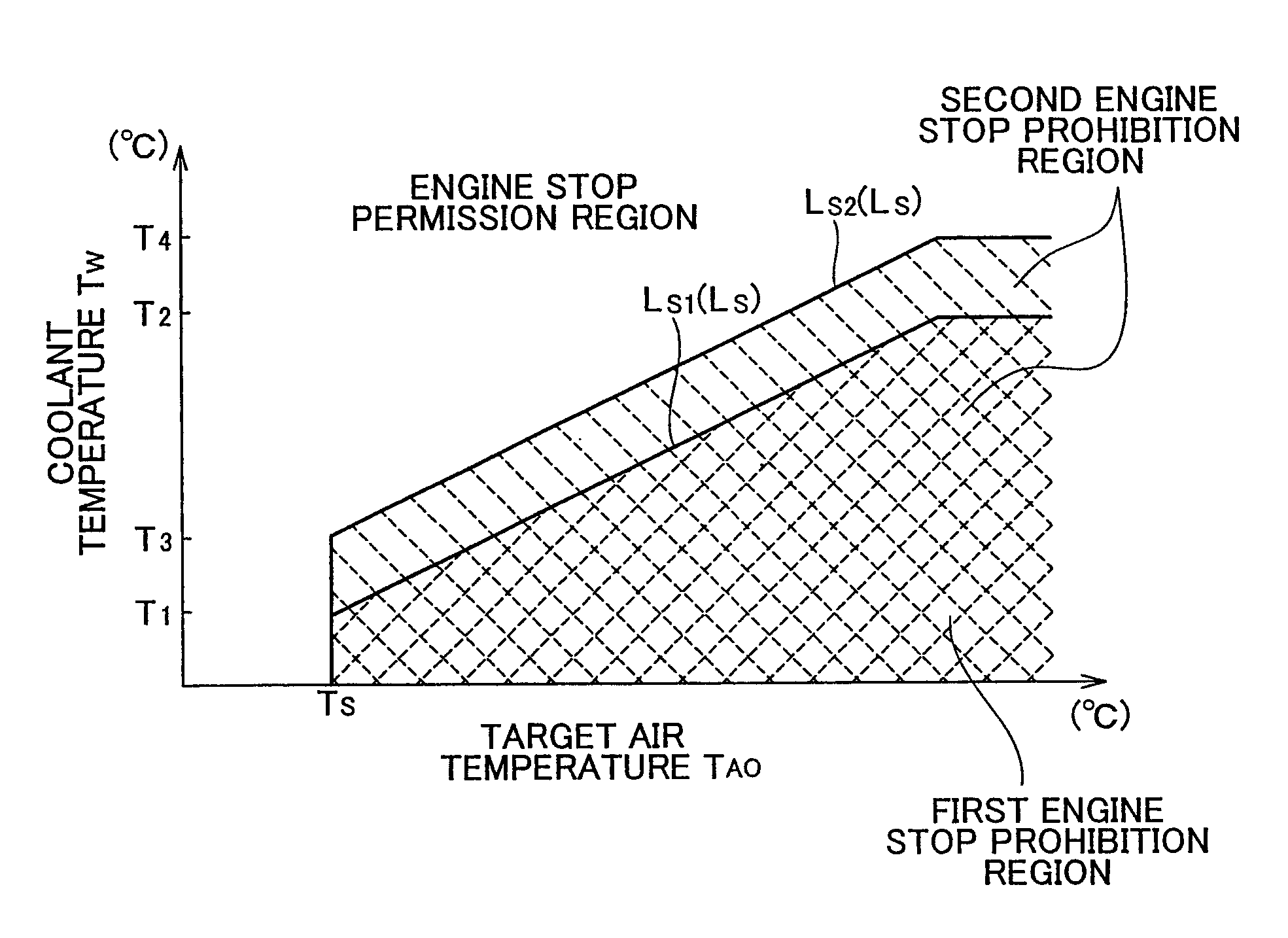
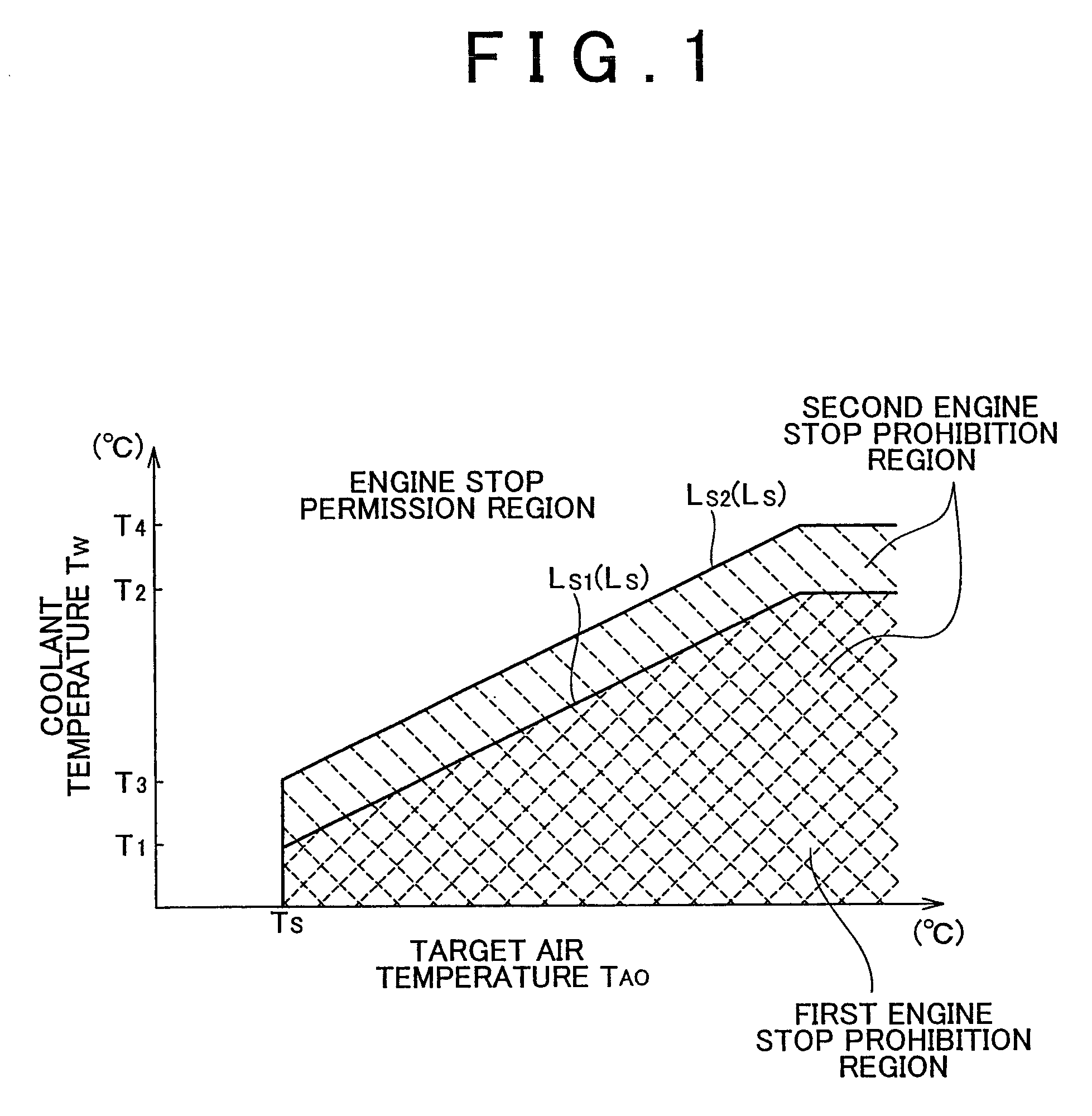
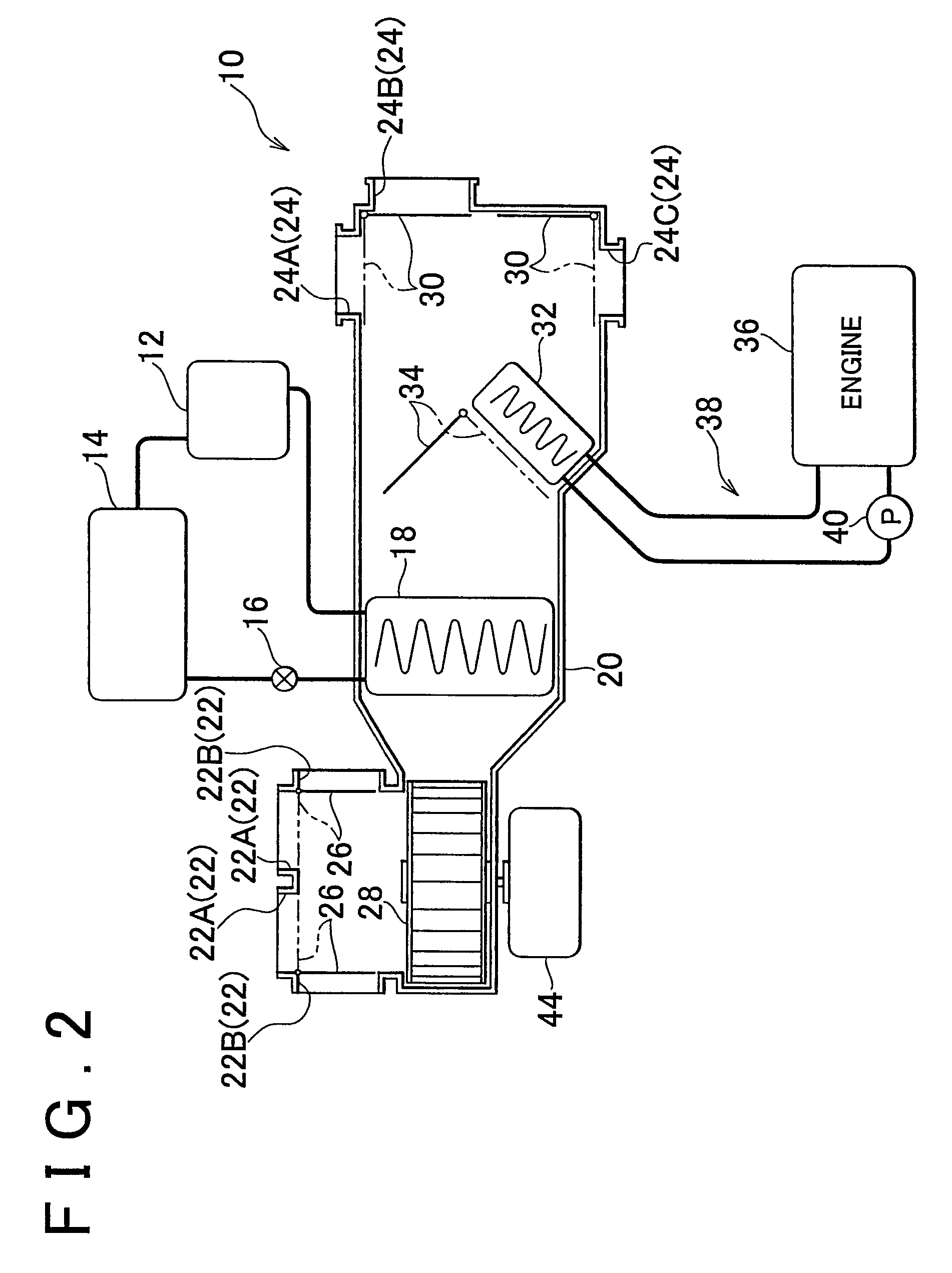
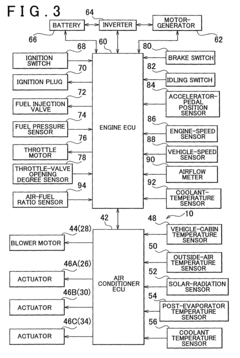
- A control apparatus for internal combustion engines that includes coolant-temperature detection, stop prohibition, and movement determination means, allowing for the selection of different threshold values based on vehicle movement to maintain heating capacity and reduce engine start frequency.
Vehicle thermal management system applying an integrated thermal management valve and a cooling circuit control method thereof
PatentInactiveUS11022024B2
Innovation
- The implementation of a vehicle thermal management system that incorporates an integrated thermal management valve with a layer valve body and an electronic water pump, along with a Smart Single Valve, to control coolant flow rates and optimize heat recovery, thereby preventing turbo boiling and enabling fast warm-up.


Environmental Impact and Emissions Compliance
The environmental impact of automotive engines has become increasingly significant in the regulatory landscape, with emissions compliance serving as a critical factor in engine design and development. When comparing the LS2 and LS1 engines' thermal management capabilities, their environmental performance emerges as a key differentiator with substantial implications for emissions control and regulatory compliance.
The LS2 engine demonstrates notable improvements in emissions performance compared to its predecessor, largely attributable to its enhanced thermal management system. The more efficient cooling architecture of the LS2 enables more consistent combustion chamber temperatures, which directly correlates with reduced formation of nitrogen oxides (NOx) during operation. This improvement is particularly evident during cold-start conditions, where the LS2's faster warm-up cycle helps minimize the high-emission period that typically occurs before catalytic converters reach optimal operating temperature.
Advanced electronic control systems in the LS2 provide more precise fuel delivery and timing adjustments based on engine temperature data, resulting in more complete combustion across various operating conditions. This optimization translates to measurably lower hydrocarbon (HC) and carbon monoxide (CO) emissions compared to the LS1, particularly during transient operations where thermal management becomes most challenging.
From a regulatory perspective, the LS2's improved thermal management capabilities positioned it more favorably for compliance with the increasingly stringent emissions standards implemented in the mid-2000s. The engine's design incorporated specific features to address the EPA Tier 2 emissions standards and California Air Resources Board (CARB) requirements, which represented significant regulatory hurdles for performance engines of that era.
The thermal efficiency gains in the LS2 also contribute to reduced carbon dioxide emissions through improved fuel economy, addressing greenhouse gas concerns that were beginning to influence automotive regulations during this period. Studies indicate approximately 3-5% improvement in fuel efficiency under comparable driving conditions, directly attributable to the enhanced thermal management system.
Manufacturing and materials considerations also factor into the environmental assessment. The LS2's aluminum block construction, similar to the LS1 but with refined cooling passages, represents a continuation of General Motors' commitment to lightweight design principles that indirectly benefit emissions through vehicle weight reduction. However, the production processes for these components carried their own environmental footprint that must be considered in comprehensive lifecycle analyses.
Looking beyond tailpipe emissions, the thermal management improvements in the LS2 also contributed to extended engine longevity and reduced oil degradation rates, factors that influence the overall environmental impact through resource conservation and reduced waste generation over the operational lifespan of the engine.
The LS2 engine demonstrates notable improvements in emissions performance compared to its predecessor, largely attributable to its enhanced thermal management system. The more efficient cooling architecture of the LS2 enables more consistent combustion chamber temperatures, which directly correlates with reduced formation of nitrogen oxides (NOx) during operation. This improvement is particularly evident during cold-start conditions, where the LS2's faster warm-up cycle helps minimize the high-emission period that typically occurs before catalytic converters reach optimal operating temperature.
Advanced electronic control systems in the LS2 provide more precise fuel delivery and timing adjustments based on engine temperature data, resulting in more complete combustion across various operating conditions. This optimization translates to measurably lower hydrocarbon (HC) and carbon monoxide (CO) emissions compared to the LS1, particularly during transient operations where thermal management becomes most challenging.
From a regulatory perspective, the LS2's improved thermal management capabilities positioned it more favorably for compliance with the increasingly stringent emissions standards implemented in the mid-2000s. The engine's design incorporated specific features to address the EPA Tier 2 emissions standards and California Air Resources Board (CARB) requirements, which represented significant regulatory hurdles for performance engines of that era.
The thermal efficiency gains in the LS2 also contribute to reduced carbon dioxide emissions through improved fuel economy, addressing greenhouse gas concerns that were beginning to influence automotive regulations during this period. Studies indicate approximately 3-5% improvement in fuel efficiency under comparable driving conditions, directly attributable to the enhanced thermal management system.
Manufacturing and materials considerations also factor into the environmental assessment. The LS2's aluminum block construction, similar to the LS1 but with refined cooling passages, represents a continuation of General Motors' commitment to lightweight design principles that indirectly benefit emissions through vehicle weight reduction. However, the production processes for these components carried their own environmental footprint that must be considered in comprehensive lifecycle analyses.
Looking beyond tailpipe emissions, the thermal management improvements in the LS2 also contributed to extended engine longevity and reduced oil degradation rates, factors that influence the overall environmental impact through resource conservation and reduced waste generation over the operational lifespan of the engine.
Performance Testing Methodologies
To effectively evaluate the thermal management capabilities of LS2 versus LS1 engines, rigorous performance testing methodologies must be implemented. These methodologies should isolate thermal variables while maintaining scientific validity across multiple test scenarios.
Dynamometer testing represents the foundation of thermal performance evaluation, allowing for controlled load conditions while monitoring coolant temperatures, oil temperatures, and heat rejection rates. Standard protocols typically involve running both engine types at identical RPM ranges (1000-6000 RPM) with progressive load increases, while thermal imaging cameras capture heat distribution patterns across engine blocks, cylinder heads, and exhaust manifolds.
Thermal cycle testing provides critical insights into how each engine design responds to repeated heating and cooling cycles. This methodology involves subjecting both the LS1 and LS2 engines to programmed temperature fluctuations between ambient temperature and maximum operating temperature (typically 210-230°F) over 500-1000 cycles, with continuous monitoring of component expansion rates and cooling system efficiency.
Real-world driving simulations complement laboratory testing by incorporating variable environmental conditions. These tests typically follow standardized driving cycles such as the EPA Federal Test Procedure or the Worldwide Harmonized Light Vehicles Test Procedure, with additional thermal sensors installed at critical points throughout the cooling system. Data logging occurs at 10-second intervals to capture thermal response during acceleration, steady-state cruising, and idle conditions.
Computational Fluid Dynamics (CFD) modeling serves as both a predictive and analytical tool in thermal management assessment. Advanced 3D models of both engine designs are subjected to simulated operating conditions, with particular focus on coolant flow patterns through water jackets, heat transfer coefficients across material boundaries, and thermal gradient visualization. CFD results are then validated against physical test data to ensure model accuracy.
Infrared thermography provides non-contact temperature measurement capabilities essential for identifying hotspots and thermal gradients. Using calibrated FLIR cameras with 0.05°C thermal sensitivity, engineers can capture comparative thermal signatures of both engines under identical operating conditions, revealing differences in heat dissipation efficiency and potential areas of thermal stress.
Endurance testing under extreme conditions represents the ultimate validation methodology. Both engine types undergo extended operation (typically 100+ hours) at 90% maximum load while subjected to elevated ambient temperatures (100-110°F). Cooling system performance degradation, component wear patterns, and thermal protection system responses are documented throughout the test duration.
Dynamometer testing represents the foundation of thermal performance evaluation, allowing for controlled load conditions while monitoring coolant temperatures, oil temperatures, and heat rejection rates. Standard protocols typically involve running both engine types at identical RPM ranges (1000-6000 RPM) with progressive load increases, while thermal imaging cameras capture heat distribution patterns across engine blocks, cylinder heads, and exhaust manifolds.
Thermal cycle testing provides critical insights into how each engine design responds to repeated heating and cooling cycles. This methodology involves subjecting both the LS1 and LS2 engines to programmed temperature fluctuations between ambient temperature and maximum operating temperature (typically 210-230°F) over 500-1000 cycles, with continuous monitoring of component expansion rates and cooling system efficiency.
Real-world driving simulations complement laboratory testing by incorporating variable environmental conditions. These tests typically follow standardized driving cycles such as the EPA Federal Test Procedure or the Worldwide Harmonized Light Vehicles Test Procedure, with additional thermal sensors installed at critical points throughout the cooling system. Data logging occurs at 10-second intervals to capture thermal response during acceleration, steady-state cruising, and idle conditions.
Computational Fluid Dynamics (CFD) modeling serves as both a predictive and analytical tool in thermal management assessment. Advanced 3D models of both engine designs are subjected to simulated operating conditions, with particular focus on coolant flow patterns through water jackets, heat transfer coefficients across material boundaries, and thermal gradient visualization. CFD results are then validated against physical test data to ensure model accuracy.
Infrared thermography provides non-contact temperature measurement capabilities essential for identifying hotspots and thermal gradients. Using calibrated FLIR cameras with 0.05°C thermal sensitivity, engineers can capture comparative thermal signatures of both engines under identical operating conditions, revealing differences in heat dissipation efficiency and potential areas of thermal stress.
Endurance testing under extreme conditions represents the ultimate validation methodology. Both engine types undergo extended operation (typically 100+ hours) at 90% maximum load while subjected to elevated ambient temperatures (100-110°F). Cooling system performance degradation, component wear patterns, and thermal protection system responses are documented throughout the test duration.
Unlock deeper insights with PatSnap Eureka Quick Research — get a full tech report to explore trends and direct your research. Try now!
Generate Your Research Report Instantly with AI Agent
Supercharge your innovation with PatSnap Eureka AI Agent Platform!