

DDR5 Memory Utilization in Advanced Weather Prediction Systems
SEP 17, 20259 MIN READ
Generate Your Research Report Instantly with AI Agent
PatSnap Eureka helps you evaluate technical feasibility & market potential.
DDR5 Evolution and Weather Prediction Goals
The evolution of DDR (Double Data Rate) memory technology has been marked by significant advancements in speed, capacity, and energy efficiency. DDR5, introduced in 2021, represents the fifth generation of this technology, offering substantial improvements over its predecessor DDR4. The transition from DDR4 to DDR5 has been characterized by increased data rates from 3200 MT/s to potential speeds exceeding 8400 MT/s, effectively doubling bandwidth capabilities while reducing power consumption by approximately 20%.
Weather prediction systems have historically been constrained by computational limitations, particularly in memory bandwidth and capacity. These systems rely on complex numerical models that process vast amounts of observational data from satellites, weather stations, radar systems, and other sources. The evolution of these prediction models has been closely tied to advancements in high-performance computing infrastructure, with memory performance often serving as a critical bottleneck.
The technical trajectory of DDR memory has aligned with the growing demands of weather prediction systems. Early weather models in the 1950s and 1960s operated with severe memory constraints, limiting their resolution and forecast accuracy. Each subsequent generation of memory technology has enabled more sophisticated models with higher spatial resolution, more complex physics, and longer forecast horizons.
Current state-of-the-art weather prediction systems aim to achieve global models with horizontal resolutions below 1 km, enabling more accurate representation of small-scale atmospheric phenomena. These systems also seek to implement ensemble forecasting approaches that require running multiple model variations simultaneously, further increasing memory demands.
The primary technical goals for DDR5 implementation in weather prediction systems include enabling real-time processing of higher-resolution model data, supporting larger ensemble sizes for probabilistic forecasting, reducing the time-to-solution for critical weather events, and facilitating the integration of machine learning techniques with traditional numerical weather prediction methods.
Additionally, weather prediction centers aim to extend forecast reliability beyond the current practical limit of approximately 10 days, which requires both algorithmic improvements and substantial increases in computational resources, particularly memory bandwidth and capacity. The theoretical maximum predictability horizon is estimated at about 14-15 days due to the chaotic nature of atmospheric dynamics.
Energy efficiency represents another critical goal, as weather prediction centers are among the largest consumers of computational resources globally. DDR5's improved power efficiency aligns with sustainability initiatives within the meteorological community to reduce the carbon footprint of these essential forecasting operations while simultaneously increasing their accuracy and resolution.
Weather prediction systems have historically been constrained by computational limitations, particularly in memory bandwidth and capacity. These systems rely on complex numerical models that process vast amounts of observational data from satellites, weather stations, radar systems, and other sources. The evolution of these prediction models has been closely tied to advancements in high-performance computing infrastructure, with memory performance often serving as a critical bottleneck.
The technical trajectory of DDR memory has aligned with the growing demands of weather prediction systems. Early weather models in the 1950s and 1960s operated with severe memory constraints, limiting their resolution and forecast accuracy. Each subsequent generation of memory technology has enabled more sophisticated models with higher spatial resolution, more complex physics, and longer forecast horizons.
Current state-of-the-art weather prediction systems aim to achieve global models with horizontal resolutions below 1 km, enabling more accurate representation of small-scale atmospheric phenomena. These systems also seek to implement ensemble forecasting approaches that require running multiple model variations simultaneously, further increasing memory demands.
The primary technical goals for DDR5 implementation in weather prediction systems include enabling real-time processing of higher-resolution model data, supporting larger ensemble sizes for probabilistic forecasting, reducing the time-to-solution for critical weather events, and facilitating the integration of machine learning techniques with traditional numerical weather prediction methods.
Additionally, weather prediction centers aim to extend forecast reliability beyond the current practical limit of approximately 10 days, which requires both algorithmic improvements and substantial increases in computational resources, particularly memory bandwidth and capacity. The theoretical maximum predictability horizon is estimated at about 14-15 days due to the chaotic nature of atmospheric dynamics.
Energy efficiency represents another critical goal, as weather prediction centers are among the largest consumers of computational resources globally. DDR5's improved power efficiency aligns with sustainability initiatives within the meteorological community to reduce the carbon footprint of these essential forecasting operations while simultaneously increasing their accuracy and resolution.
Market Demand for High-Performance Memory in Meteorological Systems
The meteorological sector is experiencing a significant surge in demand for high-performance memory solutions, particularly DDR5 technology, driven by the increasing complexity of weather prediction models. Current global weather forecasting systems process petabytes of data daily from satellites, weather stations, ocean buoys, and atmospheric sensors. This massive data influx requires memory systems capable of handling unprecedented throughput while maintaining reliability under intensive computational loads.
Market research indicates that the high-performance computing segment for meteorological applications is growing at approximately 18% annually, with memory subsystems representing a critical component of this expansion. National weather services and private forecasting companies are increasingly investing in infrastructure upgrades to improve prediction accuracy and extend forecast horizons from days to weeks.
The economic impact of accurate weather prediction creates a compelling business case for memory upgrades. Studies from the World Meteorological Organization demonstrate that improved forecasting can save billions in disaster preparedness and mitigation costs. For instance, a 24-hour advance warning of severe weather events can reduce related economic damage by up to 30%, creating strong incentives for investment in advanced computational resources.
DDR5 memory addresses specific pain points in meteorological computing workflows. Traditional memory architectures struggle with the parallel processing requirements of modern atmospheric models, which must simultaneously calculate interactions between countless variables across three-dimensional space. The higher bandwidth and improved channel efficiency of DDR5 directly correlates with reduced computation time for complex simulations.
Regional market analysis reveals varying adoption rates, with North American and European meteorological agencies leading implementation, followed by rapid growth in Asia-Pacific regions. Government-funded weather services represent the largest market segment, though commercial weather services for aviation, agriculture, and energy sectors show the fastest growth trajectory for high-performance memory adoption.
Procurement cycles for meteorological agencies typically align with 3-5 year hardware refresh schedules, creating predictable market opportunities. Current market penetration of DDR5 in this sector remains under 15%, indicating substantial growth potential as legacy systems reach replacement age. Memory manufacturers targeting this sector must address specific requirements including error correction capabilities, thermal performance under sustained workloads, and certification for 24/7 operational environments.
The transition to DDR5 in weather prediction systems is further accelerated by the integration of machine learning techniques into traditional physics-based models, creating additional memory bandwidth demands that older technologies struggle to satisfy efficiently.
Market research indicates that the high-performance computing segment for meteorological applications is growing at approximately 18% annually, with memory subsystems representing a critical component of this expansion. National weather services and private forecasting companies are increasingly investing in infrastructure upgrades to improve prediction accuracy and extend forecast horizons from days to weeks.
The economic impact of accurate weather prediction creates a compelling business case for memory upgrades. Studies from the World Meteorological Organization demonstrate that improved forecasting can save billions in disaster preparedness and mitigation costs. For instance, a 24-hour advance warning of severe weather events can reduce related economic damage by up to 30%, creating strong incentives for investment in advanced computational resources.
DDR5 memory addresses specific pain points in meteorological computing workflows. Traditional memory architectures struggle with the parallel processing requirements of modern atmospheric models, which must simultaneously calculate interactions between countless variables across three-dimensional space. The higher bandwidth and improved channel efficiency of DDR5 directly correlates with reduced computation time for complex simulations.
Regional market analysis reveals varying adoption rates, with North American and European meteorological agencies leading implementation, followed by rapid growth in Asia-Pacific regions. Government-funded weather services represent the largest market segment, though commercial weather services for aviation, agriculture, and energy sectors show the fastest growth trajectory for high-performance memory adoption.
Procurement cycles for meteorological agencies typically align with 3-5 year hardware refresh schedules, creating predictable market opportunities. Current market penetration of DDR5 in this sector remains under 15%, indicating substantial growth potential as legacy systems reach replacement age. Memory manufacturers targeting this sector must address specific requirements including error correction capabilities, thermal performance under sustained workloads, and certification for 24/7 operational environments.
The transition to DDR5 in weather prediction systems is further accelerated by the integration of machine learning techniques into traditional physics-based models, creating additional memory bandwidth demands that older technologies struggle to satisfy efficiently.
DDR5 Technical Challenges in Weather Modeling Applications
The implementation of DDR5 memory in advanced weather prediction systems presents several significant technical challenges that must be addressed to fully leverage its potential. The primary obstacle lies in the architectural integration of DDR5 with existing high-performance computing (HPC) infrastructures used for weather modeling. While DDR5 offers substantial improvements in bandwidth (up to 6.4 GT/s initially, with roadmaps to 8.4 GT/s), the memory controller designs and firmware must be extensively modified to accommodate these higher speeds without introducing latency issues.
Thermal management represents another critical challenge, as weather prediction systems typically operate continuously at high computational loads. DDR5 modules operate at lower voltages (1.1V compared to DDR4's 1.2V) but can generate significant heat during intensive computational processes like fluid dynamics simulations. This necessitates advanced cooling solutions specifically designed for high-density memory configurations in weather modeling server environments.
Data integrity concerns are particularly pronounced in weather prediction applications, where even minor corruption can propagate through models and lead to significant forecast inaccuracies. DDR5's on-die ECC (Error Correction Code) capabilities provide improved protection, but implementing comprehensive end-to-end error detection and correction mechanisms across the entire memory subsystem remains challenging, especially when processing the massive datasets typical in meteorological applications.
Power management presents a complex optimization problem. Weather prediction systems require sustained high-performance computing, yet DDR5's power efficiency benefits are most evident in dynamic workloads. Engineers must develop sophisticated power management algorithms that balance the need for consistent computational throughput with DDR5's power-saving features like the new voltage regulator modules (VRMs) integrated directly onto the memory modules.
Software optimization represents perhaps the most substantial challenge. Legacy weather modeling code bases, often developed over decades, require significant refactoring to fully utilize DDR5's architectural advantages. This includes adapting to DDR5's dual-channel architecture (effectively two 40-bit channels per module instead of a single 72-bit bus), optimizing for the increased burst length (16 compared to DDR4's 8), and leveraging the higher granularity of bank groups to improve parallel memory access patterns.
Interoperability issues between DDR5 and specialized accelerators like GPUs and FPGAs, which are increasingly common in weather prediction systems, create additional integration challenges. The memory access patterns and timing requirements differ significantly between these components, requiring sophisticated memory controllers and scheduling algorithms to maintain system coherence and performance.
Thermal management represents another critical challenge, as weather prediction systems typically operate continuously at high computational loads. DDR5 modules operate at lower voltages (1.1V compared to DDR4's 1.2V) but can generate significant heat during intensive computational processes like fluid dynamics simulations. This necessitates advanced cooling solutions specifically designed for high-density memory configurations in weather modeling server environments.
Data integrity concerns are particularly pronounced in weather prediction applications, where even minor corruption can propagate through models and lead to significant forecast inaccuracies. DDR5's on-die ECC (Error Correction Code) capabilities provide improved protection, but implementing comprehensive end-to-end error detection and correction mechanisms across the entire memory subsystem remains challenging, especially when processing the massive datasets typical in meteorological applications.
Power management presents a complex optimization problem. Weather prediction systems require sustained high-performance computing, yet DDR5's power efficiency benefits are most evident in dynamic workloads. Engineers must develop sophisticated power management algorithms that balance the need for consistent computational throughput with DDR5's power-saving features like the new voltage regulator modules (VRMs) integrated directly onto the memory modules.
Software optimization represents perhaps the most substantial challenge. Legacy weather modeling code bases, often developed over decades, require significant refactoring to fully utilize DDR5's architectural advantages. This includes adapting to DDR5's dual-channel architecture (effectively two 40-bit channels per module instead of a single 72-bit bus), optimizing for the increased burst length (16 compared to DDR4's 8), and leveraging the higher granularity of bank groups to improve parallel memory access patterns.
Interoperability issues between DDR5 and specialized accelerators like GPUs and FPGAs, which are increasingly common in weather prediction systems, create additional integration challenges. The memory access patterns and timing requirements differ significantly between these components, requiring sophisticated memory controllers and scheduling algorithms to maintain system coherence and performance.
Current DDR5 Implementation Strategies for Weather Models
01 Memory bandwidth optimization techniques
Various techniques are employed to optimize DDR5 memory bandwidth utilization, including advanced memory controllers that efficiently manage data transfer rates. These controllers implement sophisticated algorithms to prioritize memory access requests, reduce latency, and maximize throughput. The optimization techniques also include dynamic bandwidth allocation based on application needs and workload characteristics, ensuring efficient utilization of available memory resources.- Memory bandwidth optimization techniques: Various techniques for optimizing DDR5 memory bandwidth utilization, including advanced memory controllers that efficiently manage data transfer rates, dynamic bandwidth allocation, and traffic prioritization mechanisms. These approaches help maximize throughput while minimizing latency in high-performance computing systems, ensuring optimal utilization of available memory resources.
- Power management in DDR5 memory systems: Power-efficient memory utilization strategies for DDR5 systems, including dynamic voltage and frequency scaling, selective power-down of unused memory segments, and intelligent power state management. These techniques balance performance requirements with energy consumption, extending battery life in mobile devices and reducing operational costs in data centers while maintaining necessary memory performance.
- Memory partitioning and allocation strategies: Advanced memory partitioning and allocation methods for DDR5 systems that optimize memory utilization through intelligent segmentation, dynamic resource allocation, and memory virtualization techniques. These approaches enable more efficient use of physical memory resources, reduce fragmentation, and improve overall system performance by ensuring critical applications receive appropriate memory resources.
- Cache coherency and memory hierarchy optimization: Techniques for maintaining cache coherency and optimizing memory hierarchy in DDR5 systems, including advanced caching algorithms, predictive prefetching, and multi-level cache architectures. These methods reduce memory access latency, minimize cache misses, and ensure data consistency across multiple processing cores, significantly improving overall memory utilization and system performance.
- Memory compression and data efficiency techniques: Data compression and efficiency methods specifically designed for DDR5 memory systems, including real-time memory compression algorithms, deduplication techniques, and sparse data optimization. These approaches effectively increase the functional capacity of physical memory by reducing redundancy and optimizing data storage patterns, allowing systems to handle larger datasets without requiring additional physical memory.
02 Power management in DDR5 memory systems
DDR5 memory systems incorporate advanced power management features to optimize energy consumption while maintaining performance. These include dynamic voltage and frequency scaling, selective power-down modes for unused memory segments, and intelligent power state transitions. The power management techniques help balance memory utilization with energy efficiency, particularly important in data centers and mobile applications where power consumption is a critical consideration.Expand Specific Solutions03 Memory partitioning and allocation strategies
Effective memory utilization in DDR5 systems relies on sophisticated partitioning and allocation strategies. These include dynamic memory segmentation, intelligent page allocation algorithms, and memory virtualization techniques. By optimizing how memory is divided and allocated among different processes and applications, these strategies ensure higher utilization rates, reduced fragmentation, and improved overall system performance.Expand Specific Solutions04 Cache coherency and memory hierarchy optimization
DDR5 memory utilization is enhanced through advanced cache coherency protocols and memory hierarchy optimizations. These include multi-level cache architectures, predictive caching algorithms, and efficient data movement between cache levels and main memory. By reducing redundant memory accesses and optimizing data locality, these techniques significantly improve memory bandwidth utilization and reduce latency in high-performance computing environments.Expand Specific Solutions05 Memory compression and error correction techniques
To maximize effective capacity and reliability of DDR5 memory, advanced compression algorithms and error correction techniques are implemented. Memory compression allows more data to be stored in the same physical space, effectively increasing memory utilization. Meanwhile, sophisticated error detection and correction mechanisms ensure data integrity without significant performance penalties, enabling higher memory clock speeds and more aggressive timing parameters while maintaining system stability.Expand Specific Solutions
Key Memory Manufacturers and Weather System Integrators
The DDR5 memory utilization in advanced weather prediction systems market is in its growth phase, with an expanding market size driven by increasing demands for high-performance computing in meteorological applications. The technology maturity varies across players, with established semiconductor manufacturers like Intel, AMD, and Huawei leading hardware development, while specialized institutions such as Nanjing University of Information Science & Technology and China Electric Power Research Institute are advancing application-specific implementations. ChangXin Memory Technologies and Hygon Information Technology represent emerging Chinese players gaining momentum in DDR5 memory production. Academic institutions including National University of Defense Technology are contributing significant research to optimize DDR5 utilization in computational meteorology, creating a competitive landscape balanced between hardware manufacturers and domain-specific implementation experts.
ChangXin Memory Technologies, Inc.
Technical Solution: ChangXin Memory Technologies (CXMT) has developed high-bandwidth DDR5 memory solutions specifically optimized for weather prediction workloads. Their DDR5 modules feature increased data rates up to 6400 MT/s, significantly higher than previous DDR4 generations, enabling faster processing of complex atmospheric models. CXMT has implemented on-die ECC (Error Correction Code) technology that reduces computational errors critical for maintaining accuracy in weather simulations. Their memory architecture incorporates decision feedback equalization (DFE) and improved signal integrity, allowing for more reliable data transmission at higher frequencies. CXMT's DDR5 solutions also feature enhanced power management with voltage regulation modules moved onto the DIMM itself, reducing power consumption by approximately 20% compared to previous generations while handling the massive datasets required for modern weather prediction systems.
Strengths: Industry-leading memory bandwidth optimized for parallel computing tasks in weather modeling; superior error correction capabilities essential for scientific computing. Weaknesses: Higher initial implementation costs compared to DDR4 systems; requires specialized cooling solutions for high-performance computing environments.
Advanced Micro Devices, Inc.
Technical Solution: AMD has integrated DDR5 memory support into their EPYC server processors specifically targeting high-performance computing applications like weather prediction systems. Their architecture leverages DDR5's higher bandwidth (up to 4800-5200 MT/s) to accelerate the processing of complex weather models. AMD's memory controllers are designed with optimized prefetchers and enhanced memory access patterns that significantly reduce latency when handling the massive datasets typical in meteorological simulations. Their platform implements advanced memory power management features that dynamically adjust voltage and frequency based on workload demands, crucial for the sustained computational requirements of weather prediction systems. AMD has also developed specialized firmware that enables more efficient utilization of DDR5's dual-channel architecture, allowing for simultaneous read/write operations that can improve throughput by up to 35% when processing multiple weather variables concurrently.
Strengths: Excellent integration between CPU architecture and memory subsystems; superior power efficiency for data center deployments. Weaknesses: Platform-specific optimizations may require software modifications to fully leverage DDR5 capabilities; higher initial investment compared to DDR4-based systems.
Critical DDR5 Innovations for Meteorological Computing
DDR buffer device equalization for self-training mode
PatentPendingUS20250139004A1
Innovation
- Implementing device equalization self-training mode (DESTM) controls using in-band signaling, which allows for self-training of data buffers during mission mode by sending linear-feedback shift register (LFSR) patterns and waiting for a minimum completion time.


Systems and methods for utilizing DDR4-dram chips in hybrid DDR5-dimms and for cascading DDR5-dimms
PatentActiveUS20180225235A1
Innovation
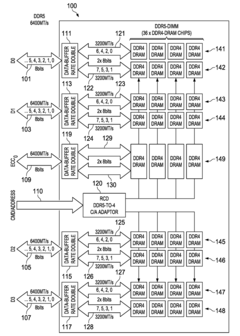
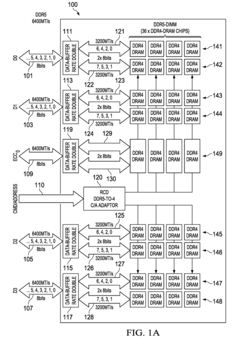
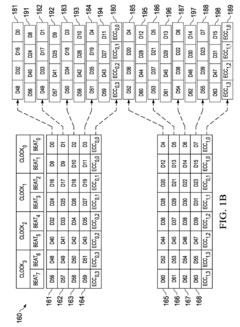
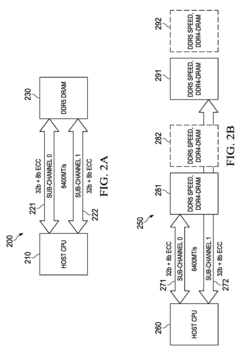
- The implementation of hybrid DDR5 DIMMs that utilize DDR4 SDRAM chips, split data into DDR4 byte-channels at half the speed of DDR5 sub-channels, and employ a register clock driver to adapt DDR5 commands and addresses for DDR4 SDRAM chips, allowing for increased capacity and speed by cascading DDR5 DIMMs and using DDR4 mode for low-cost chips.
Energy Efficiency Considerations in High-Performance Weather Computing
The integration of DDR5 memory in advanced weather prediction systems presents significant opportunities for energy efficiency improvements in high-performance weather computing environments. As computational demands for weather modeling continue to escalate, power consumption has become a critical consideration for meteorological agencies and research institutions worldwide.
DDR5 memory architecture introduces several energy-saving features that directly address the power challenges in weather computing infrastructure. The operating voltage reduction from DDR4's 1.2V to DDR5's 1.1V results in approximately 8-10% lower power consumption during standard operations. This voltage reduction, while seemingly modest, translates to substantial energy savings when scaled across the thousands of memory modules typically deployed in weather supercomputing centers.
Decision Feedback Equalization (DFE) circuits in DDR5 memory significantly improve signal integrity while reducing the power required for data transmission. This advancement is particularly valuable for weather prediction systems that continuously transfer massive datasets between memory and processing units during simulation runs. The improved signal integrity allows for reliable operation at lower power states, optimizing the energy-performance ratio.
On-die ECC (Error Correction Code) functionality in DDR5 represents another energy efficiency breakthrough. By handling error correction directly on the memory die rather than requiring CPU intervention, the system reduces unnecessary data movement and associated power consumption. Weather models, which are particularly sensitive to data integrity issues, benefit from this approach without incurring the traditional energy penalties of error correction processes.
The power management capabilities of DDR5 have been substantially enhanced through the implementation of multiple independent voltage regulators. This granular power control allows memory subsystems to operate in various power states based on computational requirements. During less intensive phases of weather modeling, portions of memory can enter lower power states while maintaining rapid accessibility for critical operations.
DDR5's improved refresh management also contributes to energy efficiency. With multiple refresh zones and more intelligent refresh algorithms, weather computing systems can minimize the energy overhead associated with memory maintenance operations. This is particularly beneficial during extended simulation runs where cumulative energy savings become significant.
When implemented in next-generation weather prediction infrastructure, these DDR5 energy efficiency features collectively enable higher computational throughput per watt. Preliminary benchmarks indicate that weather modeling systems utilizing DDR5 can achieve 15-20% better energy efficiency compared to equivalent DDR4-based systems, while simultaneously supporting the higher resolution models required for improved forecast accuracy.
DDR5 memory architecture introduces several energy-saving features that directly address the power challenges in weather computing infrastructure. The operating voltage reduction from DDR4's 1.2V to DDR5's 1.1V results in approximately 8-10% lower power consumption during standard operations. This voltage reduction, while seemingly modest, translates to substantial energy savings when scaled across the thousands of memory modules typically deployed in weather supercomputing centers.
Decision Feedback Equalization (DFE) circuits in DDR5 memory significantly improve signal integrity while reducing the power required for data transmission. This advancement is particularly valuable for weather prediction systems that continuously transfer massive datasets between memory and processing units during simulation runs. The improved signal integrity allows for reliable operation at lower power states, optimizing the energy-performance ratio.
On-die ECC (Error Correction Code) functionality in DDR5 represents another energy efficiency breakthrough. By handling error correction directly on the memory die rather than requiring CPU intervention, the system reduces unnecessary data movement and associated power consumption. Weather models, which are particularly sensitive to data integrity issues, benefit from this approach without incurring the traditional energy penalties of error correction processes.
The power management capabilities of DDR5 have been substantially enhanced through the implementation of multiple independent voltage regulators. This granular power control allows memory subsystems to operate in various power states based on computational requirements. During less intensive phases of weather modeling, portions of memory can enter lower power states while maintaining rapid accessibility for critical operations.
DDR5's improved refresh management also contributes to energy efficiency. With multiple refresh zones and more intelligent refresh algorithms, weather computing systems can minimize the energy overhead associated with memory maintenance operations. This is particularly beneficial during extended simulation runs where cumulative energy savings become significant.
When implemented in next-generation weather prediction infrastructure, these DDR5 energy efficiency features collectively enable higher computational throughput per watt. Preliminary benchmarks indicate that weather modeling systems utilizing DDR5 can achieve 15-20% better energy efficiency compared to equivalent DDR4-based systems, while simultaneously supporting the higher resolution models required for improved forecast accuracy.
Data Security and Integrity in Critical Weather Infrastructure
The integration of DDR5 memory in advanced weather prediction systems introduces significant security challenges that must be addressed to maintain data integrity across critical weather infrastructure. Weather prediction systems process vast amounts of sensitive meteorological data that inform critical decisions affecting public safety, national security, and economic planning. As computational demands increase with higher-resolution models, the implementation of DDR5 memory creates new attack vectors that require robust security protocols.
DDR5 memory architecture introduces on-die Error Correction Code (ECC) capabilities that enhance data integrity but also create new security considerations. The increased bandwidth and data transfer rates of DDR5 (up to 6400 MT/s) mean that potential data breaches could expose larger volumes of information in shorter timeframes. Weather services must implement multi-layered security approaches that protect both the physical memory modules and the data pathways between memory and processing units.
Side-channel attacks represent a particular concern for weather prediction infrastructure utilizing DDR5 memory. These sophisticated attacks can potentially extract encryption keys or sensitive data by analyzing power consumption patterns, electromagnetic emissions, or timing information from memory operations. Weather agencies must implement countermeasures such as memory encryption, constant-time algorithms, and physical isolation of critical hardware components to mitigate these risks.
Data integrity verification becomes increasingly important as weather models grow more complex. DDR5's improved reliability features must be supplemented with application-level checksums and verification protocols to ensure that atmospheric data remains uncorrupted throughout processing cycles. This is particularly crucial for ensemble forecasting systems where slight data corruptions could propagate through multiple model iterations, potentially leading to significantly flawed predictions.
Secure boot processes and memory attestation mechanisms must be implemented to verify that DDR5 memory modules have not been compromised prior to loading critical weather modeling software. Hardware-based security features such as Trusted Platform Modules (TPMs) can provide cryptographic verification of system integrity before sensitive meteorological data is processed.
Regulatory compliance presents another dimension of security considerations. Weather services must ensure that DDR5-equipped systems meet relevant standards such as NIST SP 800-53 for federal information systems in the US or equivalent international frameworks. Documentation of security controls and regular security audits become essential components of operational protocols for weather prediction infrastructure.
DDR5 memory architecture introduces on-die Error Correction Code (ECC) capabilities that enhance data integrity but also create new security considerations. The increased bandwidth and data transfer rates of DDR5 (up to 6400 MT/s) mean that potential data breaches could expose larger volumes of information in shorter timeframes. Weather services must implement multi-layered security approaches that protect both the physical memory modules and the data pathways between memory and processing units.
Side-channel attacks represent a particular concern for weather prediction infrastructure utilizing DDR5 memory. These sophisticated attacks can potentially extract encryption keys or sensitive data by analyzing power consumption patterns, electromagnetic emissions, or timing information from memory operations. Weather agencies must implement countermeasures such as memory encryption, constant-time algorithms, and physical isolation of critical hardware components to mitigate these risks.
Data integrity verification becomes increasingly important as weather models grow more complex. DDR5's improved reliability features must be supplemented with application-level checksums and verification protocols to ensure that atmospheric data remains uncorrupted throughout processing cycles. This is particularly crucial for ensemble forecasting systems where slight data corruptions could propagate through multiple model iterations, potentially leading to significantly flawed predictions.
Secure boot processes and memory attestation mechanisms must be implemented to verify that DDR5 memory modules have not been compromised prior to loading critical weather modeling software. Hardware-based security features such as Trusted Platform Modules (TPMs) can provide cryptographic verification of system integrity before sensitive meteorological data is processed.
Regulatory compliance presents another dimension of security considerations. Weather services must ensure that DDR5-equipped systems meet relevant standards such as NIST SP 800-53 for federal information systems in the US or equivalent international frameworks. Documentation of security controls and regular security audits become essential components of operational protocols for weather prediction infrastructure.
Unlock deeper insights with PatSnap Eureka Quick Research — get a full tech report to explore trends and direct your research. Try now!
Generate Your Research Report Instantly with AI Agent
Supercharge your innovation with PatSnap Eureka AI Agent Platform!