

Dynamic Light Scattering for Advanced Ceramic Material Studies
SEP 5, 20259 MIN READ
Generate Your Research Report Instantly with AI Agent
PatSnap Eureka helps you evaluate technical feasibility & market potential.
DLS Technology Background and Objectives
Dynamic Light Scattering (DLS) has evolved significantly since its theoretical foundations were established in the early 20th century through Einstein's work on Brownian motion. The technique gained practical application in the 1960s with the advent of laser technology, which provided the coherent light source necessary for precise measurements. Over subsequent decades, DLS has transformed from a specialized laboratory technique into an essential analytical tool across multiple industries, with particular relevance to advanced ceramic materials research.
The fundamental principle of DLS involves measuring the time-dependent fluctuations in scattered light intensity caused by particles in suspension undergoing Brownian motion. These fluctuations directly correlate to particle size, making DLS an invaluable non-destructive method for characterizing nanomaterials and colloidal systems critical to ceramic processing.
Recent technological advancements have significantly enhanced DLS capabilities, including improved detection sensitivity, expanded measurement ranges, and sophisticated data processing algorithms. Modern DLS systems can accurately measure particles from sub-nanometer to several micrometers in diameter, with some advanced instruments capable of measuring at multiple angles simultaneously to provide more comprehensive characterization data.
In the context of advanced ceramics, DLS addresses several critical needs in the material development pipeline. The technique enables precise monitoring of particle size distributions in ceramic slurries and suspensions, which directly impacts processing parameters and final material properties. Additionally, DLS provides crucial insights into agglomeration behavior, stability of suspensions, and the effectiveness of dispersants - all factors that significantly influence the microstructural development and ultimate performance of ceramic components.
The primary technical objectives for DLS application in advanced ceramic studies include enhancing measurement precision for complex multi-component systems, developing specialized sample preparation protocols for highly concentrated ceramic suspensions, and creating advanced data interpretation models that can correlate DLS measurements with final ceramic properties. There is also significant interest in combining DLS with complementary techniques such as zeta potential measurements to provide more comprehensive characterization of ceramic particle surface properties and suspension stability.
Looking forward, the integration of artificial intelligence and machine learning algorithms with DLS technology represents a promising frontier, potentially enabling predictive modeling of ceramic processing outcomes based on initial suspension characteristics. Additionally, the development of in-situ DLS monitoring systems could revolutionize ceramic manufacturing by allowing real-time process adjustments based on particle behavior during various stages of production.
The fundamental principle of DLS involves measuring the time-dependent fluctuations in scattered light intensity caused by particles in suspension undergoing Brownian motion. These fluctuations directly correlate to particle size, making DLS an invaluable non-destructive method for characterizing nanomaterials and colloidal systems critical to ceramic processing.
Recent technological advancements have significantly enhanced DLS capabilities, including improved detection sensitivity, expanded measurement ranges, and sophisticated data processing algorithms. Modern DLS systems can accurately measure particles from sub-nanometer to several micrometers in diameter, with some advanced instruments capable of measuring at multiple angles simultaneously to provide more comprehensive characterization data.
In the context of advanced ceramics, DLS addresses several critical needs in the material development pipeline. The technique enables precise monitoring of particle size distributions in ceramic slurries and suspensions, which directly impacts processing parameters and final material properties. Additionally, DLS provides crucial insights into agglomeration behavior, stability of suspensions, and the effectiveness of dispersants - all factors that significantly influence the microstructural development and ultimate performance of ceramic components.
The primary technical objectives for DLS application in advanced ceramic studies include enhancing measurement precision for complex multi-component systems, developing specialized sample preparation protocols for highly concentrated ceramic suspensions, and creating advanced data interpretation models that can correlate DLS measurements with final ceramic properties. There is also significant interest in combining DLS with complementary techniques such as zeta potential measurements to provide more comprehensive characterization of ceramic particle surface properties and suspension stability.
Looking forward, the integration of artificial intelligence and machine learning algorithms with DLS technology represents a promising frontier, potentially enabling predictive modeling of ceramic processing outcomes based on initial suspension characteristics. Additionally, the development of in-situ DLS monitoring systems could revolutionize ceramic manufacturing by allowing real-time process adjustments based on particle behavior during various stages of production.
Market Applications in Ceramic Industry
The ceramic industry has witnessed significant transformation through the integration of Dynamic Light Scattering (DLS) technology, creating substantial market opportunities across various sectors. In advanced structural ceramics, DLS enables precise particle size distribution analysis critical for manufacturing high-performance components used in aerospace, automotive, and defense industries. These applications collectively represent a market valued at approximately $10.5 billion, with annual growth rates exceeding 7% as industries increasingly demand materials with superior mechanical properties and thermal resistance.
The electronics sector presents another lucrative application area, where DLS-analyzed ceramic materials serve as essential components in semiconductor manufacturing, multilayer ceramic capacitors, and piezoelectric devices. The ability to control nanoscale properties through DLS characterization directly impacts product performance in consumer electronics, telecommunications infrastructure, and emerging IoT devices, contributing to a specialized ceramic materials segment worth over $8 billion globally.
Medical and bioceramics represent a rapidly expanding market application, where DLS technology ensures the quality and consistency of materials used in dental implants, bone replacements, and drug delivery systems. The biocompatibility and longevity of these materials depend heavily on precise particle characterization that DLS provides, supporting a market segment growing at 9-10% annually and projected to reach $3.2 billion by 2026.
In energy applications, DLS-optimized ceramic materials are increasingly utilized in solid oxide fuel cells, battery technologies, and solar energy systems. The technology's ability to characterize ceramic nanomaterials has proven instrumental in developing more efficient energy storage and conversion solutions, addressing a market estimated at $5.7 billion with substantial growth potential as renewable energy adoption accelerates.
The traditional ceramics sector, encompassing tableware, sanitaryware, and building materials, has also embraced DLS technology to improve product quality and manufacturing efficiency. By enabling better control of raw material properties, DLS helps manufacturers reduce defects and energy consumption while enhancing product performance, serving a global market exceeding $80 billion.
Emerging applications include environmental ceramics for filtration systems, catalytic converters, and water purification, where DLS-characterized materials offer superior performance in removing contaminants and processing industrial waste. This segment is experiencing rapid growth as environmental regulations tighten globally, creating new market opportunities estimated at $4.3 billion with double-digit annual growth rates.
The electronics sector presents another lucrative application area, where DLS-analyzed ceramic materials serve as essential components in semiconductor manufacturing, multilayer ceramic capacitors, and piezoelectric devices. The ability to control nanoscale properties through DLS characterization directly impacts product performance in consumer electronics, telecommunications infrastructure, and emerging IoT devices, contributing to a specialized ceramic materials segment worth over $8 billion globally.
Medical and bioceramics represent a rapidly expanding market application, where DLS technology ensures the quality and consistency of materials used in dental implants, bone replacements, and drug delivery systems. The biocompatibility and longevity of these materials depend heavily on precise particle characterization that DLS provides, supporting a market segment growing at 9-10% annually and projected to reach $3.2 billion by 2026.
In energy applications, DLS-optimized ceramic materials are increasingly utilized in solid oxide fuel cells, battery technologies, and solar energy systems. The technology's ability to characterize ceramic nanomaterials has proven instrumental in developing more efficient energy storage and conversion solutions, addressing a market estimated at $5.7 billion with substantial growth potential as renewable energy adoption accelerates.
The traditional ceramics sector, encompassing tableware, sanitaryware, and building materials, has also embraced DLS technology to improve product quality and manufacturing efficiency. By enabling better control of raw material properties, DLS helps manufacturers reduce defects and energy consumption while enhancing product performance, serving a global market exceeding $80 billion.
Emerging applications include environmental ceramics for filtration systems, catalytic converters, and water purification, where DLS-characterized materials offer superior performance in removing contaminants and processing industrial waste. This segment is experiencing rapid growth as environmental regulations tighten globally, creating new market opportunities estimated at $4.3 billion with double-digit annual growth rates.
Current Limitations and Technical Challenges
Despite the significant advancements in Dynamic Light Scattering (DLS) technology for ceramic material characterization, several critical limitations and technical challenges persist that hinder its broader application in advanced ceramic research. The fundamental physical constraint of DLS lies in its limited applicability to highly concentrated ceramic suspensions, as multiple scattering effects distort measurement accuracy when particle concentration exceeds certain thresholds.
Signal interpretation challenges represent another significant hurdle, particularly when analyzing polydisperse ceramic systems. The presence of larger particles can overshadow the scattering signal from smaller particles, leading to biased size distribution results that fail to accurately represent the actual composition of ceramic precursors and slurries.
Temperature sensitivity poses additional complications, as ceramic processing often involves high-temperature environments that can affect Brownian motion dynamics and consequently alter DLS measurements. The technology currently lacks robust compensation mechanisms for these thermal effects, limiting its reliability in real-time monitoring of ceramic synthesis processes.
For non-spherical ceramic particles, which are common in advanced ceramic applications, DLS shows inherent limitations as its underlying mathematical models primarily assume spherical particle geometry. This discrepancy introduces systematic errors in size determination for plate-like clay minerals, rod-shaped whiskers, or irregularly shaped ceramic powders used in cutting-edge applications.
The temporal resolution of current DLS systems remains insufficient for capturing rapid agglomeration or disaggregation phenomena in ceramic suspensions, which often occur on timescales faster than conventional DLS sampling rates. This limitation restricts the technology's ability to monitor dynamic processes critical to ceramic quality control.
Sample preparation inconsistencies further complicate DLS applications in ceramics research. The technique requires careful dispersion protocols that may alter the native state of ceramic particle systems, raising questions about measurement authenticity and reproducibility across different laboratory environments.
From an instrumentation perspective, most commercial DLS systems lack specialized features for ceramic-specific applications, such as high-temperature measurement capabilities or resistance to corrosive ceramic precursors. This equipment gap necessitates significant modifications or compromises when applying DLS to advanced ceramic research.
The integration of DLS with complementary characterization techniques remains underdeveloped, limiting the holistic understanding of ceramic materials that could be achieved through multi-modal analysis approaches combining DLS with techniques like X-ray diffraction or electron microscopy in unified analytical frameworks.
Signal interpretation challenges represent another significant hurdle, particularly when analyzing polydisperse ceramic systems. The presence of larger particles can overshadow the scattering signal from smaller particles, leading to biased size distribution results that fail to accurately represent the actual composition of ceramic precursors and slurries.
Temperature sensitivity poses additional complications, as ceramic processing often involves high-temperature environments that can affect Brownian motion dynamics and consequently alter DLS measurements. The technology currently lacks robust compensation mechanisms for these thermal effects, limiting its reliability in real-time monitoring of ceramic synthesis processes.
For non-spherical ceramic particles, which are common in advanced ceramic applications, DLS shows inherent limitations as its underlying mathematical models primarily assume spherical particle geometry. This discrepancy introduces systematic errors in size determination for plate-like clay minerals, rod-shaped whiskers, or irregularly shaped ceramic powders used in cutting-edge applications.
The temporal resolution of current DLS systems remains insufficient for capturing rapid agglomeration or disaggregation phenomena in ceramic suspensions, which often occur on timescales faster than conventional DLS sampling rates. This limitation restricts the technology's ability to monitor dynamic processes critical to ceramic quality control.
Sample preparation inconsistencies further complicate DLS applications in ceramics research. The technique requires careful dispersion protocols that may alter the native state of ceramic particle systems, raising questions about measurement authenticity and reproducibility across different laboratory environments.
From an instrumentation perspective, most commercial DLS systems lack specialized features for ceramic-specific applications, such as high-temperature measurement capabilities or resistance to corrosive ceramic precursors. This equipment gap necessitates significant modifications or compromises when applying DLS to advanced ceramic research.
The integration of DLS with complementary characterization techniques remains underdeveloped, limiting the holistic understanding of ceramic materials that could be achieved through multi-modal analysis approaches combining DLS with techniques like X-ray diffraction or electron microscopy in unified analytical frameworks.
Current DLS Methodologies for Ceramics
01 Principles and apparatus for dynamic light scattering measurements
Dynamic light scattering (DLS) is a technique used to measure the size distribution of particles in suspension. The basic principle involves analyzing the fluctuations in scattered light intensity caused by Brownian motion of particles. Advanced DLS apparatus typically includes a light source (usually a laser), optical components for beam focusing, a sample holder, and detection systems that can measure the scattered light at various angles. Modern systems incorporate digital correlators and sophisticated algorithms to process the scattered light data and extract particle size information.- Principles and apparatus for Dynamic Light Scattering measurement: Dynamic Light Scattering (DLS) is a technique used to measure the size distribution of particles in suspension. The fundamental principles involve analyzing the fluctuations in scattered light intensity caused by Brownian motion of particles. Various apparatus designs incorporate laser light sources, detectors, and optical components to accurately measure these fluctuations. Advanced systems may include multiple angle detection capabilities and specialized signal processing algorithms to improve measurement accuracy and resolution.
- Applications of DLS in particle characterization: Dynamic Light Scattering is widely applied for characterizing particles in various fields. It enables the determination of particle size distributions in nanometer to micrometer range, particularly useful for analyzing colloids, polymers, proteins, and nanoparticles. The technique provides valuable information about particle aggregation, stability, and polydispersity. DLS measurements help in quality control of pharmaceutical formulations, industrial suspensions, and research samples where particle size and distribution are critical parameters.
- Advanced data processing methods for DLS: Advanced computational methods enhance the analysis of Dynamic Light Scattering data. These include sophisticated algorithms for correlation function analysis, regularization techniques for solving ill-posed inversion problems, and machine learning approaches for pattern recognition in scattering data. Modern data processing methods improve the resolution of multimodal distributions and enable more accurate characterization of complex mixtures. Signal filtering techniques help eliminate noise and artifacts, resulting in more reliable particle size measurements.
- Integration of DLS with other analytical techniques: The integration of Dynamic Light Scattering with complementary analytical techniques creates powerful hybrid systems for comprehensive particle characterization. Combinations with techniques such as Raman spectroscopy, static light scattering, zeta potential measurements, or microscopy provide multidimensional information about particle properties. These integrated approaches allow simultaneous determination of size, structure, composition, and surface properties, offering more complete characterization than any single technique alone.
- Innovations in DLS for specialized applications: Recent innovations in Dynamic Light Scattering technology address specialized applications and challenging sample types. These include adaptations for highly concentrated samples, non-invasive in-situ measurements, microfluidic DLS systems, and temperature-controlled measurements. Novel approaches enable DLS analysis of biological samples, industrial processes monitoring, and environmental applications. Miniaturized and portable DLS instruments expand the technique's accessibility and applicability to field measurements and point-of-care diagnostics.
02 Applications of DLS in biological and pharmaceutical research
Dynamic light scattering has become an essential analytical tool in biological and pharmaceutical research. It is widely used for characterizing proteins, liposomes, viruses, and other biomolecules in solution. In pharmaceutical development, DLS helps in formulation studies, stability testing, and quality control of drug delivery systems. The non-invasive nature of DLS makes it particularly valuable for analyzing delicate biological samples without disrupting their native state. Recent advancements have enabled the application of DLS in more complex biological media and at lower concentrations than previously possible.Expand Specific Solutions03 Innovations in DLS data processing and analysis algorithms
Significant advancements have been made in the algorithms used to process and analyze dynamic light scattering data. Modern approaches include machine learning techniques, improved correlation functions, and multi-angle analysis methods that enhance the accuracy and resolution of particle size measurements. These innovations allow for better differentiation between polydisperse samples and improved detection of multimodal distributions. Advanced software solutions now offer real-time data processing, automated quality control checks, and integration with other analytical techniques to provide more comprehensive characterization of complex samples.Expand Specific Solutions04 Miniaturization and integration of DLS technology
Recent developments have focused on miniaturizing dynamic light scattering instruments and integrating them with other analytical platforms. These advancements have led to portable DLS devices, microfluidic DLS systems, and multi-modal instruments that combine DLS with complementary techniques such as Raman spectroscopy or static light scattering. Miniaturized systems enable on-site measurements in various environments and can be integrated into automated production lines for continuous monitoring. The integration of DLS with other technologies provides more comprehensive characterization of complex samples with reduced sample volumes and analysis time.Expand Specific Solutions05 Enhanced sensitivity and specialized DLS techniques
Specialized dynamic light scattering techniques have been developed to address specific analytical challenges. These include depolarized DLS for studying anisotropic particles, multi-angle DLS for improved resolution, and surface-enhanced DLS for increased sensitivity to small particles or low concentrations. Other innovations include temperature-controlled measurements, high-pressure DLS systems, and techniques optimized for highly concentrated or turbid samples. These specialized approaches extend the applicability of DLS to a wider range of sample types and experimental conditions, enabling measurements that were previously impossible with conventional DLS instruments.Expand Specific Solutions
Leading Research Institutions and Manufacturers
Dynamic Light Scattering (DLS) for ceramic material studies is in a growth phase, with the market expanding due to increasing applications in nanomaterials research. The global market is estimated at $300-400 million, growing at 8-10% annually. Technologically, DLS has reached moderate maturity but continues evolving for specialized ceramic applications. Key players include SCHOTT AG and Shanghai Institute of Ceramics leading in advanced ceramic development, Murata Manufacturing and Tokuyama Corp focusing on industrial applications, while research institutions like National Institute for Materials Science and Tokyo University of Agriculture & Technology drive innovation. Companies like Corning and Sumitomo Electric are leveraging DLS for next-generation ceramic materials in electronics and telecommunications.
SCHOTT AG
Technical Solution: SCHOTT AG has pioneered a multi-angle DLS system specifically engineered for advanced ceramic materials research. Their technology employs simultaneous detection at multiple scattering angles (15°-150°) to provide comprehensive characterization of complex ceramic particle systems with heterogeneous morphologies. The system incorporates high-power laser sources (typically 50-100mW) with wavelength options (488nm, 532nm, 633nm) optimized for different ceramic material types. SCHOTT's proprietary signal processing algorithms can distinguish between Brownian motion and sedimentation effects, critical for accurate analysis of dense ceramic suspensions. Their DLS platform features specialized sample cells designed to minimize multiple scattering effects that typically compromise measurements in concentrated ceramic slurries. The system also includes temperature gradient capabilities (5-95°C) that enable researchers to study temperature-dependent agglomeration behavior crucial for optimizing ceramic processing parameters.
Strengths: Multi-angle detection provides superior characterization of non-spherical ceramic particles; specialized algorithms effectively handle complex ceramic suspensions; excellent temperature control for process simulation. Weaknesses: Significant capital investment required; complex data interpretation necessitates specialized expertise; limited portability for field measurements.
Shanghai Institute of Ceramics, Chinese Academy of Sciences
Technical Solution: The Shanghai Institute of Ceramics has developed a comprehensive DLS platform specifically for advanced ceramic materials research. Their system combines traditional DLS capabilities with proprietary algorithms designed to address the unique challenges of ceramic particle characterization. The institute's technology employs dual-wavelength laser sources (532nm and 633nm) to provide complementary scattering data across different size regimes, particularly valuable for multimodal ceramic powder distributions. Their DLS system incorporates specialized sample preparation protocols that effectively disperse ceramic agglomerates without altering fundamental particle characteristics. A key innovation is their integration of electrophoretic mobility measurements with DLS, allowing simultaneous determination of particle size and surface charge—critical parameters for understanding ceramic colloidal stability. The institute has also developed temperature-controlled measurement capabilities (20-95°C) that enable researchers to study the temperature-dependent behavior of ceramic suspensions under conditions that simulate actual processing environments.
Strengths: Specialized algorithms optimized specifically for ceramic materials; dual-wavelength capability provides more comprehensive size distribution data; integrated electrophoretic measurements offer additional characterization dimensions. Weaknesses: Less commercialized than competing systems; requires significant expertise for data interpretation; limited availability outside research collaborations.
Key Patents and Scientific Literature
Dynamic light scattering measurement device, dynamic light scattering measurement analysis method, and measurement program
PatentPendingJP2022184699A
Innovation
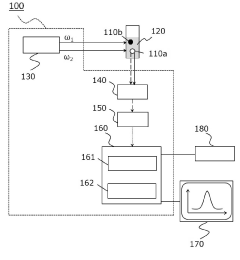
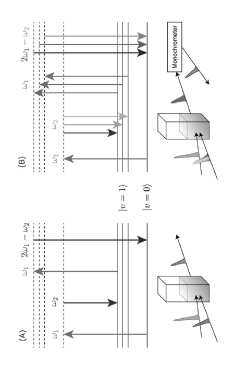
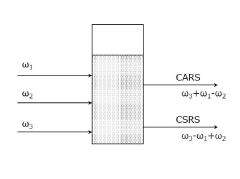
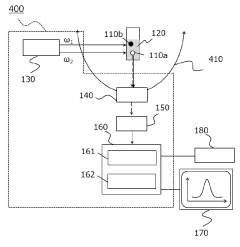
- A dynamic light scattering measurement device using synchronized pulsed laser beams with specific angular frequencies to induce Coherent Anti-Stokes Raman Scattering (CARS) or Coherent Stokes Raman Scattering (CSRS) photons, combined with a separation device and photon detection, allows for molecularly selective measurement of particle sizes and distributions by calculating time correlation functions.
Methods and apparatus for in vivo characterization of the lens crystallin aggregation index
PatentInactiveUS20190335995A1
Innovation
- A portable, cost-effective ophthalmic diagnostic system using a Vision Index Pen with a fiber optic transreceiver, field programmable gate array correlator, and abnormal count sensor and discriminator to measure the lens crystallin index through dynamic light scattering, providing real-time, quantitative assessment of lens transparency by correlating backscattered laser light signals.


Data Analysis Algorithms and Software
The evolution of data analysis algorithms for Dynamic Light Scattering (DLS) has significantly enhanced the characterization capabilities for advanced ceramic materials. Traditional correlation function analysis methods have been supplemented by more sophisticated approaches including CONTIN, non-negative least squares (NNLS), and maximum entropy methods, each offering distinct advantages for specific ceramic material analysis scenarios.
CONTIN algorithms, developed initially by Provencher, have become particularly valuable for analyzing polydisperse ceramic suspensions and precursors. These algorithms employ Tikhonov regularization techniques to convert autocorrelation functions into particle size distributions, effectively addressing the ill-posed nature of the inversion problem common in ceramic slurry analysis.
Commercial DLS software packages have incorporated increasingly sophisticated mathematical models tailored specifically for ceramic material characterization. Malvern's Zetasizer series utilizes proprietary algorithms optimized for high-concentration ceramic suspensions, while Brookhaven Instruments' NanoBrook systems employ adaptive baseline techniques that improve accuracy when analyzing ceramic nanoparticles with complex morphologies.
Open-source alternatives have emerged as powerful tools for ceramic researchers requiring customizable analysis approaches. The DynaLS platform allows implementation of user-defined fitting models particularly useful for non-spherical ceramic particles, while ALV-NonLin provides advanced capabilities for multi-modal ceramic powder distributions commonly encountered in sintering precursors.
Machine learning integration represents the cutting edge of DLS data processing for ceramics. Neural network approaches have demonstrated superior performance in deconvoluting complex scattering patterns from ceramic composites with heterogeneous compositions. Particularly promising are convolutional neural networks trained on synthetic DLS data, which have shown remarkable accuracy in characterizing alumina and zirconia nanopowders with irregular morphologies.
Real-time analysis capabilities have advanced significantly, with modern algorithms capable of processing DLS data streams at millisecond intervals. This enables in-situ monitoring of ceramic synthesis processes, capturing transient states during sol-gel transitions or hydrothermal crystallization events that were previously undetectable with conventional batch processing approaches.
Cloud-based computational platforms have democratized access to advanced DLS analysis for ceramic researchers. Services like ScatterBrain and DLScloud provide browser-based interfaces to high-performance computing resources, enabling complex analysis of ceramic materials without specialized local hardware, while facilitating collaborative research through shared data repositories and analysis workflows.
CONTIN algorithms, developed initially by Provencher, have become particularly valuable for analyzing polydisperse ceramic suspensions and precursors. These algorithms employ Tikhonov regularization techniques to convert autocorrelation functions into particle size distributions, effectively addressing the ill-posed nature of the inversion problem common in ceramic slurry analysis.
Commercial DLS software packages have incorporated increasingly sophisticated mathematical models tailored specifically for ceramic material characterization. Malvern's Zetasizer series utilizes proprietary algorithms optimized for high-concentration ceramic suspensions, while Brookhaven Instruments' NanoBrook systems employ adaptive baseline techniques that improve accuracy when analyzing ceramic nanoparticles with complex morphologies.
Open-source alternatives have emerged as powerful tools for ceramic researchers requiring customizable analysis approaches. The DynaLS platform allows implementation of user-defined fitting models particularly useful for non-spherical ceramic particles, while ALV-NonLin provides advanced capabilities for multi-modal ceramic powder distributions commonly encountered in sintering precursors.
Machine learning integration represents the cutting edge of DLS data processing for ceramics. Neural network approaches have demonstrated superior performance in deconvoluting complex scattering patterns from ceramic composites with heterogeneous compositions. Particularly promising are convolutional neural networks trained on synthetic DLS data, which have shown remarkable accuracy in characterizing alumina and zirconia nanopowders with irregular morphologies.
Real-time analysis capabilities have advanced significantly, with modern algorithms capable of processing DLS data streams at millisecond intervals. This enables in-situ monitoring of ceramic synthesis processes, capturing transient states during sol-gel transitions or hydrothermal crystallization events that were previously undetectable with conventional batch processing approaches.
Cloud-based computational platforms have democratized access to advanced DLS analysis for ceramic researchers. Services like ScatterBrain and DLScloud provide browser-based interfaces to high-performance computing resources, enabling complex analysis of ceramic materials without specialized local hardware, while facilitating collaborative research through shared data repositories and analysis workflows.
Environmental Impact and Sustainability
The integration of Dynamic Light Scattering (DLS) in advanced ceramic material studies presents significant environmental implications that warrant careful consideration. Traditional ceramic manufacturing processes are notorious for their substantial energy consumption, high carbon emissions, and generation of hazardous waste materials. DLS technology offers promising pathways to mitigate these environmental concerns through more precise characterization and optimization of ceramic materials.
By enabling accurate particle size distribution analysis at the nanoscale, DLS facilitates the development of ceramic materials with enhanced properties using fewer raw materials. This resource efficiency translates directly to reduced mining activities and associated environmental degradation. Studies indicate that DLS-optimized ceramic formulations can achieve comparable performance characteristics while utilizing up to 15-20% less raw material input compared to conventionally developed ceramics.
Energy consumption represents another critical environmental factor in ceramic production. DLS technology allows researchers to fine-tune sintering parameters based on precise understanding of particle behavior, potentially lowering firing temperatures and durations. Recent research demonstrates that DLS-informed processing can reduce energy requirements by 10-30% in certain advanced ceramic applications, with corresponding reductions in greenhouse gas emissions.
Water usage in ceramic processing also benefits from DLS implementation. The technology enables more efficient dispersion and stabilization of ceramic slurries, reducing water requirements in wet processing methods. Additionally, DLS monitoring of waste streams helps in developing more effective recycling systems for process water, minimizing discharge of contaminated effluents into natural water bodies.
From a lifecycle perspective, DLS contributes to sustainability through enabling the development of more durable ceramic products. Enhanced understanding of microstructural evolution leads to ceramics with superior mechanical properties and longer service lives. This longevity reduces replacement frequency and associated environmental impacts of manufacturing replacement components.
Regulatory frameworks increasingly emphasize environmental performance metrics for manufacturing processes. DLS technology provides valuable data for environmental compliance documentation and supports the transition toward greener manufacturing practices. Companies implementing DLS in their ceramic research and development processes report improved environmental performance indicators and greater alignment with sustainability certification requirements.
As circular economy principles gain prominence, DLS also facilitates the characterization and incorporation of recycled materials into advanced ceramic formulations. This capability supports the development of closed-loop manufacturing systems where waste ceramic materials can be effectively reprocessed into new high-performance products, further reducing environmental footprint.
By enabling accurate particle size distribution analysis at the nanoscale, DLS facilitates the development of ceramic materials with enhanced properties using fewer raw materials. This resource efficiency translates directly to reduced mining activities and associated environmental degradation. Studies indicate that DLS-optimized ceramic formulations can achieve comparable performance characteristics while utilizing up to 15-20% less raw material input compared to conventionally developed ceramics.
Energy consumption represents another critical environmental factor in ceramic production. DLS technology allows researchers to fine-tune sintering parameters based on precise understanding of particle behavior, potentially lowering firing temperatures and durations. Recent research demonstrates that DLS-informed processing can reduce energy requirements by 10-30% in certain advanced ceramic applications, with corresponding reductions in greenhouse gas emissions.
Water usage in ceramic processing also benefits from DLS implementation. The technology enables more efficient dispersion and stabilization of ceramic slurries, reducing water requirements in wet processing methods. Additionally, DLS monitoring of waste streams helps in developing more effective recycling systems for process water, minimizing discharge of contaminated effluents into natural water bodies.
From a lifecycle perspective, DLS contributes to sustainability through enabling the development of more durable ceramic products. Enhanced understanding of microstructural evolution leads to ceramics with superior mechanical properties and longer service lives. This longevity reduces replacement frequency and associated environmental impacts of manufacturing replacement components.
Regulatory frameworks increasingly emphasize environmental performance metrics for manufacturing processes. DLS technology provides valuable data for environmental compliance documentation and supports the transition toward greener manufacturing practices. Companies implementing DLS in their ceramic research and development processes report improved environmental performance indicators and greater alignment with sustainability certification requirements.
As circular economy principles gain prominence, DLS also facilitates the characterization and incorporation of recycled materials into advanced ceramic formulations. This capability supports the development of closed-loop manufacturing systems where waste ceramic materials can be effectively reprocessed into new high-performance products, further reducing environmental footprint.
Unlock deeper insights with PatSnap Eureka Quick Research — get a full tech report to explore trends and direct your research. Try now!
Generate Your Research Report Instantly with AI Agent
Supercharge your innovation with PatSnap Eureka AI Agent Platform!