

EREV systems for low-emission zones implementation
AUG 14, 20259 MIN READ
Generate Your Research Report Instantly with AI Agent
PatSnap Eureka helps you evaluate technical feasibility & market potential.
EREV Technology Evolution
The evolution of Extended-Range Electric Vehicle (EREV) technology has been marked by significant advancements in battery technology, powertrain efficiency, and energy management systems. Initially, EREVs were developed as a bridge between conventional hybrid vehicles and fully electric vehicles, offering a solution to range anxiety while still providing substantial electric-only driving capabilities.
In the early stages of EREV development, the focus was primarily on improving battery capacity and reducing costs. Lithium-ion batteries became the standard, replacing earlier nickel-metal hydride batteries due to their higher energy density and longer lifespan. This shift allowed for increased electric-only range and improved overall vehicle performance.
As the technology progressed, manufacturers began to optimize the integration of electric motors and internal combustion engines. Advanced power electronics and control systems were developed to seamlessly manage the transition between electric and gasoline power, maximizing efficiency and reducing emissions. This led to the introduction of more sophisticated energy management algorithms that could adapt to driving conditions and user preferences.
The next phase of EREV evolution saw improvements in regenerative braking systems, which became more efficient at capturing and storing energy during deceleration. This technology not only extended the electric range but also contributed to reduced wear on traditional braking components.
In recent years, the focus has shifted towards increasing the electric-only range of EREVs, with some models now capable of traveling over 50 miles on battery power alone. This improvement has been driven by advancements in battery chemistry, thermal management, and packaging efficiency.
The integration of smart charging capabilities and vehicle-to-grid (V2G) technology has also become a key area of development. These features allow EREVs to interact more intelligently with the power grid, potentially providing grid stabilization services and optimizing charging based on electricity rates and renewable energy availability.
As low-emission zones become more prevalent in urban areas, EREV technology has adapted to meet these stringent requirements. Manufacturers have developed geofencing capabilities that automatically switch the vehicle to electric-only mode when entering designated low-emission areas, ensuring compliance with local regulations.
Looking forward, the evolution of EREV technology is likely to continue with a focus on further extending electric range, reducing the size and weight of battery packs, and improving overall system efficiency. The development of more advanced lightweight materials and aerodynamic designs will contribute to these goals, potentially leading to EREVs that can operate primarily on electric power for most daily driving scenarios while still retaining the flexibility of long-range travel.
In the early stages of EREV development, the focus was primarily on improving battery capacity and reducing costs. Lithium-ion batteries became the standard, replacing earlier nickel-metal hydride batteries due to their higher energy density and longer lifespan. This shift allowed for increased electric-only range and improved overall vehicle performance.
As the technology progressed, manufacturers began to optimize the integration of electric motors and internal combustion engines. Advanced power electronics and control systems were developed to seamlessly manage the transition between electric and gasoline power, maximizing efficiency and reducing emissions. This led to the introduction of more sophisticated energy management algorithms that could adapt to driving conditions and user preferences.
The next phase of EREV evolution saw improvements in regenerative braking systems, which became more efficient at capturing and storing energy during deceleration. This technology not only extended the electric range but also contributed to reduced wear on traditional braking components.
In recent years, the focus has shifted towards increasing the electric-only range of EREVs, with some models now capable of traveling over 50 miles on battery power alone. This improvement has been driven by advancements in battery chemistry, thermal management, and packaging efficiency.
The integration of smart charging capabilities and vehicle-to-grid (V2G) technology has also become a key area of development. These features allow EREVs to interact more intelligently with the power grid, potentially providing grid stabilization services and optimizing charging based on electricity rates and renewable energy availability.
As low-emission zones become more prevalent in urban areas, EREV technology has adapted to meet these stringent requirements. Manufacturers have developed geofencing capabilities that automatically switch the vehicle to electric-only mode when entering designated low-emission areas, ensuring compliance with local regulations.
Looking forward, the evolution of EREV technology is likely to continue with a focus on further extending electric range, reducing the size and weight of battery packs, and improving overall system efficiency. The development of more advanced lightweight materials and aerodynamic designs will contribute to these goals, potentially leading to EREVs that can operate primarily on electric power for most daily driving scenarios while still retaining the flexibility of long-range travel.
Low-Emission Zone Demand
The implementation of low-emission zones (LEZs) in urban areas has created a significant demand for Extended Range Electric Vehicles (EREVs) as a viable solution for reducing emissions while maintaining vehicle functionality. LEZs are designated areas within cities where access is restricted or charged for vehicles that do not meet specific emission standards. This regulatory approach aims to improve air quality and reduce the environmental impact of transportation in densely populated areas.
The market demand for EREVs in LEZs is driven by several factors. Firstly, the increasing number of cities implementing LEZs worldwide has created a growing need for vehicles that can operate within these zones without incurring penalties or restrictions. Major European cities such as London, Paris, and Berlin have already established LEZs, with many more cities planning to introduce similar measures in the coming years.
Secondly, the unique characteristics of EREVs make them particularly well-suited for LEZ compliance. These vehicles combine the benefits of electric propulsion for short-distance urban driving with the extended range capabilities provided by an internal combustion engine generator. This dual-mode operation allows EREVs to operate in zero-emission mode within LEZs while maintaining the flexibility to travel longer distances when needed.
The commercial sector, including delivery services and urban logistics companies, represents a significant portion of the EREV market demand in LEZs. These businesses require vehicles that can operate efficiently within urban areas while also having the capability to make longer trips when necessary. EREVs offer a compelling solution by allowing companies to comply with LEZ regulations without sacrificing operational flexibility.
Furthermore, the demand for EREVs in LEZs is influenced by consumer preferences and government incentives. As awareness of environmental issues grows, consumers are increasingly seeking vehicles that align with their values and comply with local regulations. Government incentives, such as tax breaks, subsidies, and preferential parking policies for low-emission vehicles, further stimulate demand for EREVs in LEZ-affected areas.
The automotive industry has responded to this demand by developing a range of EREV models tailored for LEZ operation. These vehicles often feature advanced battery management systems, regenerative braking technologies, and intelligent powertrain control strategies to maximize electric-only range within urban environments. As LEZ regulations become more stringent, the demand for EREVs with improved electric range and reduced emissions is expected to grow further.
In conclusion, the implementation of low-emission zones has created a substantial and growing market demand for EREV systems. This demand is driven by regulatory pressures, the unique advantages of EREVs in meeting LEZ requirements, commercial sector needs, consumer preferences, and government incentives. As more cities adopt LEZ policies and existing zones expand or tighten their restrictions, the demand for EREV technology is likely to continue its upward trajectory in the coming years.
The market demand for EREVs in LEZs is driven by several factors. Firstly, the increasing number of cities implementing LEZs worldwide has created a growing need for vehicles that can operate within these zones without incurring penalties or restrictions. Major European cities such as London, Paris, and Berlin have already established LEZs, with many more cities planning to introduce similar measures in the coming years.
Secondly, the unique characteristics of EREVs make them particularly well-suited for LEZ compliance. These vehicles combine the benefits of electric propulsion for short-distance urban driving with the extended range capabilities provided by an internal combustion engine generator. This dual-mode operation allows EREVs to operate in zero-emission mode within LEZs while maintaining the flexibility to travel longer distances when needed.
The commercial sector, including delivery services and urban logistics companies, represents a significant portion of the EREV market demand in LEZs. These businesses require vehicles that can operate efficiently within urban areas while also having the capability to make longer trips when necessary. EREVs offer a compelling solution by allowing companies to comply with LEZ regulations without sacrificing operational flexibility.
Furthermore, the demand for EREVs in LEZs is influenced by consumer preferences and government incentives. As awareness of environmental issues grows, consumers are increasingly seeking vehicles that align with their values and comply with local regulations. Government incentives, such as tax breaks, subsidies, and preferential parking policies for low-emission vehicles, further stimulate demand for EREVs in LEZ-affected areas.
The automotive industry has responded to this demand by developing a range of EREV models tailored for LEZ operation. These vehicles often feature advanced battery management systems, regenerative braking technologies, and intelligent powertrain control strategies to maximize electric-only range within urban environments. As LEZ regulations become more stringent, the demand for EREVs with improved electric range and reduced emissions is expected to grow further.
In conclusion, the implementation of low-emission zones has created a substantial and growing market demand for EREV systems. This demand is driven by regulatory pressures, the unique advantages of EREVs in meeting LEZ requirements, commercial sector needs, consumer preferences, and government incentives. As more cities adopt LEZ policies and existing zones expand or tighten their restrictions, the demand for EREV technology is likely to continue its upward trajectory in the coming years.
EREV Technical Challenges
Extended Range Electric Vehicles (EREVs) face several technical challenges in their implementation for low-emission zones. One of the primary hurdles is the optimization of the powertrain system. EREVs require a complex integration of electric motors, internal combustion engines, and battery systems. Balancing these components to achieve optimal performance, efficiency, and emissions reduction is a significant engineering challenge.
Battery technology remains a critical area of focus. While advancements have been made, current battery systems still struggle with energy density limitations. This affects the vehicle's all-electric range, which is crucial for operation in low-emission zones. Additionally, battery degradation over time and in various environmental conditions poses long-term performance and reliability concerns.
Thermal management is another key challenge for EREV systems. The combination of electric and combustion components generates substantial heat, requiring sophisticated cooling systems. Efficient thermal management is essential not only for performance but also for battery longevity and overall system reliability, especially in diverse climatic conditions encountered in urban environments.
Control systems and power electronics present further complexities. The seamless transition between electric and combustion power sources demands advanced control algorithms and robust electronic systems. These must manage power flow, optimize energy usage, and ensure smooth operation across various driving conditions while maintaining low emissions in designated zones.
Weight reduction is a persistent challenge in EREV design. The inclusion of both electric and combustion powertrains, along with substantial battery packs, contributes to increased vehicle weight. This affects overall efficiency, handling, and range. Engineers must continually explore lightweight materials and innovative design solutions to mitigate these effects.
Charging infrastructure compatibility is an ongoing concern. As EREVs are designed to operate in low-emission zones, they must be compatible with various charging standards and infrastructure. This includes fast-charging capabilities and the ability to integrate with smart grid systems, which are crucial for efficient energy management in urban areas.
Cost remains a significant barrier to widespread EREV adoption. The complexity of dual powertrain systems and advanced battery technology contributes to higher production costs compared to conventional vehicles. Achieving cost parity while maintaining performance and emissions standards is a key challenge for manufacturers and policymakers alike.
Lastly, regulatory compliance and emissions testing pose unique challenges for EREVs. Developing standardized testing procedures that accurately reflect real-world usage patterns in low-emission zones is crucial. This includes accounting for the vehicle's ability to switch between electric and combustion power, and ensuring consistent low-emission performance across various operating conditions.
Battery technology remains a critical area of focus. While advancements have been made, current battery systems still struggle with energy density limitations. This affects the vehicle's all-electric range, which is crucial for operation in low-emission zones. Additionally, battery degradation over time and in various environmental conditions poses long-term performance and reliability concerns.
Thermal management is another key challenge for EREV systems. The combination of electric and combustion components generates substantial heat, requiring sophisticated cooling systems. Efficient thermal management is essential not only for performance but also for battery longevity and overall system reliability, especially in diverse climatic conditions encountered in urban environments.
Control systems and power electronics present further complexities. The seamless transition between electric and combustion power sources demands advanced control algorithms and robust electronic systems. These must manage power flow, optimize energy usage, and ensure smooth operation across various driving conditions while maintaining low emissions in designated zones.
Weight reduction is a persistent challenge in EREV design. The inclusion of both electric and combustion powertrains, along with substantial battery packs, contributes to increased vehicle weight. This affects overall efficiency, handling, and range. Engineers must continually explore lightweight materials and innovative design solutions to mitigate these effects.
Charging infrastructure compatibility is an ongoing concern. As EREVs are designed to operate in low-emission zones, they must be compatible with various charging standards and infrastructure. This includes fast-charging capabilities and the ability to integrate with smart grid systems, which are crucial for efficient energy management in urban areas.
Cost remains a significant barrier to widespread EREV adoption. The complexity of dual powertrain systems and advanced battery technology contributes to higher production costs compared to conventional vehicles. Achieving cost parity while maintaining performance and emissions standards is a key challenge for manufacturers and policymakers alike.
Lastly, regulatory compliance and emissions testing pose unique challenges for EREVs. Developing standardized testing procedures that accurately reflect real-world usage patterns in low-emission zones is crucial. This includes accounting for the vehicle's ability to switch between electric and combustion power, and ensuring consistent low-emission performance across various operating conditions.
Current EREV Solutions
01 Energy management in EREV systems
Extended Range Electric Vehicles (EREVs) require sophisticated energy management systems to optimize the use of battery power and range extender. These systems involve complex algorithms for power distribution, charging strategies, and efficient operation of both electric and combustion components.- Battery management in EREV systems: Extended Range Electric Vehicles (EREVs) require sophisticated battery management systems to optimize performance and longevity. These systems monitor and control battery charge levels, temperature, and power distribution to ensure efficient operation of the electric drivetrain and extended range capabilities.
- Control systems for EREV powertrains: EREV systems utilize advanced control algorithms to manage the interaction between electric motors, internal combustion engines, and energy storage systems. These control systems optimize power delivery, fuel efficiency, and emissions reduction by seamlessly switching between electric and hybrid modes based on driving conditions and energy demands.
- Energy recovery and regenerative braking in EREVs: EREV systems incorporate energy recovery mechanisms, particularly regenerative braking, to capture and store kinetic energy during deceleration. This recovered energy is used to recharge the battery, extending the vehicle's electric range and improving overall efficiency.
- Charging infrastructure for EREV systems: The development of charging infrastructure is crucial for the widespread adoption of EREVs. This includes the implementation of fast-charging stations, wireless charging technologies, and smart grid integration to support the unique charging requirements of extended range electric vehicles.
- Integration of renewable energy sources in EREV charging: EREV systems can be designed to integrate with renewable energy sources such as solar and wind power for charging. This integration helps reduce the carbon footprint of EREVs and enhances their environmental benefits by utilizing clean energy for battery recharging.
02 Communication and data handling in EREV systems
EREV systems incorporate advanced communication networks and data handling capabilities. These features enable real-time monitoring, diagnostics, and optimization of vehicle performance, as well as integration with smart grid technologies and user interfaces for improved energy management.Expand Specific Solutions03 Battery technology for EREV systems
Advancements in battery technology play a crucial role in EREV systems. This includes improvements in energy density, charging efficiency, thermal management, and overall battery life to enhance the electric range and performance of these vehicles.Expand Specific Solutions04 Control systems and algorithms for EREV
EREV systems employ sophisticated control systems and algorithms to manage power flow, optimize energy usage, and ensure seamless transition between electric and range-extended modes. These systems often utilize artificial intelligence and machine learning techniques for adaptive control and predictive energy management.Expand Specific Solutions05 Integration of EREV systems with smart grid and IoT
EREV systems are increasingly being integrated with smart grid technologies and the Internet of Things (IoT). This integration allows for improved charging infrastructure, vehicle-to-grid communication, and enhanced energy management capabilities, contributing to overall grid stability and efficient energy utilization.Expand Specific Solutions
Key EREV Manufacturers
The EREV systems for low-emission zones implementation market is in a growth phase, driven by increasing environmental regulations and the push for cleaner transportation solutions. The market size is expanding as more cities adopt low-emission zones, creating opportunities for EREV technology. While the technology is maturing, it's not yet fully mature, with ongoing developments in battery technology and powertrain efficiency. Key players like Geely, Chery New Energy, and Beijing Electric Vehicle are leading the charge in China, while global automakers such as Ford, GM, and Toyota are also investing heavily in EREV technology. The competitive landscape is diverse, with both established automotive giants and newer entrants vying for market share in this rapidly evolving sector.
Zhejiang Geely Holding Group Co., Ltd.
Technical Solution: Geely has developed an advanced EREV (Extended Range Electric Vehicle) system for low-emission zones implementation. Their system utilizes a small, efficient internal combustion engine as a range extender, coupled with a high-capacity battery pack and electric motors. This configuration allows for pure electric driving in city centers and low-emission zones, while providing extended range for longer journeys. Geely's EREV technology incorporates intelligent energy management systems that optimize the use of electric and gasoline power based on driving conditions and battery state of charge[1]. The system also features regenerative braking to maximize energy recovery and improve overall efficiency[2].
Strengths: Flexibility for both urban and long-distance driving, reduced range anxiety, lower emissions in city centers. Weaknesses: Higher complexity and cost compared to pure EVs, potential for reduced efficiency in certain driving scenarios.
Ford Global Technologies LLC
Technical Solution: Ford's EREV system for low-emission zones focuses on a modular approach, allowing for easy integration into various vehicle platforms. Their technology utilizes a compact, high-efficiency gasoline engine as a range extender, working in conjunction with advanced lithium-ion battery packs and electric drive units. Ford's system incorporates predictive energy management algorithms that use real-time traffic and navigation data to optimize power distribution between electric and gasoline modes[3]. This allows for seamless transitions when entering or exiting low-emission zones. Additionally, Ford has developed a geofencing feature that automatically switches the vehicle to all-electric mode when entering designated low-emission areas[4].
Strengths: Adaptability to different vehicle types, smart energy management for optimal efficiency, automatic compliance with low-emission zone regulations. Weaknesses: Dependency on accurate GPS and mapping data, potential for increased vehicle weight due to dual powertrains.
EREV Core Innovations
Low content extended-range electric vehicle powertrain
PatentInactiveUS20110297466A1
Innovation
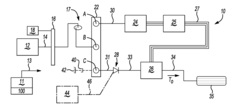
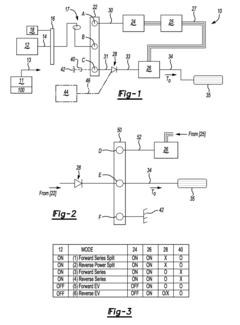
- The EREV design incorporates a direct mechanical path between the engine and drive wheels through a series mode, utilizing two electric machines, a one-way clutch, and an auxiliary starter motor, allowing for efficient operation in various modes including electric-only, power-split, and series modes, with a planetary gear set and controller algorithm to manage these modes.
Emission Regulations
Emission regulations play a crucial role in shaping the implementation of Extended Range Electric Vehicle (EREV) systems for low-emission zones. These regulations are designed to reduce air pollution and greenhouse gas emissions in urban areas, promoting the adoption of cleaner transportation technologies.
In recent years, many cities worldwide have introduced low-emission zones (LEZs) to address air quality concerns. These zones restrict or ban high-emission vehicles from entering specific urban areas, encouraging the use of cleaner alternatives. The implementation of LEZs has significantly impacted the automotive industry, driving manufacturers to develop more environmentally friendly vehicles, including EREVs.
EREV systems offer a promising solution for meeting stringent emission standards in LEZs. These vehicles combine the benefits of electric propulsion with the extended range capabilities of internal combustion engines, making them well-suited for urban environments with occasional longer trips. As emission regulations become more stringent, EREVs are increasingly seen as a viable option for complying with LEZ requirements while providing flexibility for drivers.
The European Union has been at the forefront of implementing emission regulations, with its Euro standards setting progressively stricter limits on vehicle emissions. The latest Euro 6d standard, introduced in 2020, has further tightened restrictions on nitrogen oxides (NOx) and particulate matter emissions. This has created a favorable environment for EREV adoption, as these vehicles can operate in pure electric mode within LEZs while still offering extended range capabilities for longer journeys.
In the United States, the Environmental Protection Agency (EPA) and California Air Resources Board (CARB) have established similar emission standards, with CARB's regulations often being more stringent. These standards have led to increased interest in EREV technology as a means of meeting both local and federal emission requirements.
China, the world's largest automotive market, has also implemented strict emission regulations in major cities. The China 6 standard, comparable to Euro 6, has accelerated the development and adoption of new energy vehicles, including EREVs. The country's emphasis on reducing urban air pollution has created a significant market opportunity for EREV systems in low-emission zones.
As emission regulations continue to evolve, EREV systems are likely to play an increasingly important role in meeting the requirements of low-emission zones. The technology's ability to provide zero-emission operation in urban areas while offering extended range capabilities makes it a compelling option for both consumers and policymakers seeking to balance environmental concerns with practical transportation needs.
In recent years, many cities worldwide have introduced low-emission zones (LEZs) to address air quality concerns. These zones restrict or ban high-emission vehicles from entering specific urban areas, encouraging the use of cleaner alternatives. The implementation of LEZs has significantly impacted the automotive industry, driving manufacturers to develop more environmentally friendly vehicles, including EREVs.
EREV systems offer a promising solution for meeting stringent emission standards in LEZs. These vehicles combine the benefits of electric propulsion with the extended range capabilities of internal combustion engines, making them well-suited for urban environments with occasional longer trips. As emission regulations become more stringent, EREVs are increasingly seen as a viable option for complying with LEZ requirements while providing flexibility for drivers.
The European Union has been at the forefront of implementing emission regulations, with its Euro standards setting progressively stricter limits on vehicle emissions. The latest Euro 6d standard, introduced in 2020, has further tightened restrictions on nitrogen oxides (NOx) and particulate matter emissions. This has created a favorable environment for EREV adoption, as these vehicles can operate in pure electric mode within LEZs while still offering extended range capabilities for longer journeys.
In the United States, the Environmental Protection Agency (EPA) and California Air Resources Board (CARB) have established similar emission standards, with CARB's regulations often being more stringent. These standards have led to increased interest in EREV technology as a means of meeting both local and federal emission requirements.
China, the world's largest automotive market, has also implemented strict emission regulations in major cities. The China 6 standard, comparable to Euro 6, has accelerated the development and adoption of new energy vehicles, including EREVs. The country's emphasis on reducing urban air pollution has created a significant market opportunity for EREV systems in low-emission zones.
As emission regulations continue to evolve, EREV systems are likely to play an increasingly important role in meeting the requirements of low-emission zones. The technology's ability to provide zero-emission operation in urban areas while offering extended range capabilities makes it a compelling option for both consumers and policymakers seeking to balance environmental concerns with practical transportation needs.
EREV Infrastructure
The implementation of Extended Range Electric Vehicle (EREV) systems in low-emission zones requires a robust and comprehensive infrastructure to support their operation. This infrastructure encompasses charging stations, energy management systems, and smart grid integration.
Charging stations form the backbone of EREV infrastructure. A network of strategically placed charging points is essential to alleviate range anxiety and ensure seamless operation within low-emission zones. These stations should offer both slow and fast charging options to cater to various user needs. Slow charging stations, typically installed in residential areas and workplaces, provide overnight or long-term charging solutions. Fast charging stations, located along major routes and in urban centers, enable quick top-ups during short stops.
Energy management systems play a crucial role in optimizing the charging process and balancing the load on the electrical grid. These systems monitor and control the charging of multiple vehicles simultaneously, ensuring efficient energy distribution and preventing grid overload. Advanced energy management solutions incorporate predictive algorithms to anticipate charging demand and adjust power allocation accordingly.
Smart grid integration is vital for the successful implementation of EREV infrastructure. This involves two-way communication between vehicles, charging stations, and the power grid. Smart grid technology enables dynamic pricing, allowing users to charge their vehicles during off-peak hours at lower rates. It also facilitates vehicle-to-grid (V2G) capabilities, where EREVs can feed excess energy back into the grid during peak demand periods, contributing to grid stability and reducing overall energy costs.
The development of EREV infrastructure also necessitates the establishment of standardized protocols for charging connectors and payment systems. Interoperability between different charging networks and vehicle models is essential for widespread adoption. Efforts to create universal charging standards, such as the Combined Charging System (CCS) and CHAdeMO, are crucial in this regard.
To support the growing number of EREVs, upgrades to the existing power distribution infrastructure may be necessary. This includes reinforcing local power grids, installing transformers with higher capacity, and implementing smart substations capable of managing increased electrical loads. Additionally, the integration of renewable energy sources, such as solar and wind power, into the charging infrastructure can further reduce emissions and enhance the sustainability of EREV systems in low-emission zones.
Charging stations form the backbone of EREV infrastructure. A network of strategically placed charging points is essential to alleviate range anxiety and ensure seamless operation within low-emission zones. These stations should offer both slow and fast charging options to cater to various user needs. Slow charging stations, typically installed in residential areas and workplaces, provide overnight or long-term charging solutions. Fast charging stations, located along major routes and in urban centers, enable quick top-ups during short stops.
Energy management systems play a crucial role in optimizing the charging process and balancing the load on the electrical grid. These systems monitor and control the charging of multiple vehicles simultaneously, ensuring efficient energy distribution and preventing grid overload. Advanced energy management solutions incorporate predictive algorithms to anticipate charging demand and adjust power allocation accordingly.
Smart grid integration is vital for the successful implementation of EREV infrastructure. This involves two-way communication between vehicles, charging stations, and the power grid. Smart grid technology enables dynamic pricing, allowing users to charge their vehicles during off-peak hours at lower rates. It also facilitates vehicle-to-grid (V2G) capabilities, where EREVs can feed excess energy back into the grid during peak demand periods, contributing to grid stability and reducing overall energy costs.
The development of EREV infrastructure also necessitates the establishment of standardized protocols for charging connectors and payment systems. Interoperability between different charging networks and vehicle models is essential for widespread adoption. Efforts to create universal charging standards, such as the Combined Charging System (CCS) and CHAdeMO, are crucial in this regard.
To support the growing number of EREVs, upgrades to the existing power distribution infrastructure may be necessary. This includes reinforcing local power grids, installing transformers with higher capacity, and implementing smart substations capable of managing increased electrical loads. Additionally, the integration of renewable energy sources, such as solar and wind power, into the charging infrastructure can further reduce emissions and enhance the sustainability of EREV systems in low-emission zones.
Unlock deeper insights with PatSnap Eureka Quick Research — get a full tech report to explore trends and direct your research. Try now!
Generate Your Research Report Instantly with AI Agent
Supercharge your innovation with PatSnap Eureka AI Agent Platform!