

Overcoming charging infrastructure gaps for EREV users
AUG 14, 20259 MIN READ
Generate Your Research Report Instantly with AI Agent
PatSnap Eureka helps you evaluate technical feasibility & market potential.
EREV Charging Landscape
The charging landscape for Extended Range Electric Vehicles (EREVs) presents a unique set of challenges and opportunities in the evolving electric vehicle market. EREVs, which combine battery-electric propulsion with a range-extending internal combustion engine, occupy a middle ground between pure electric vehicles and traditional hybrid vehicles.
The current charging infrastructure for EREVs is largely integrated with the broader electric vehicle charging network. This includes a mix of home charging options, public charging stations, and workplace charging facilities. However, the specific needs of EREV users often differ from those of pure electric vehicle owners, creating gaps in the existing infrastructure.
One of the primary challenges in the EREV charging landscape is the limited availability of fast-charging stations specifically optimized for these vehicles. While EREVs can utilize standard EV charging stations, their unique powertrain configuration often results in different charging patterns and requirements. This discrepancy can lead to inefficient use of charging resources and potential inconvenience for EREV users.
The geographic distribution of charging stations also plays a crucial role in the EREV charging landscape. Urban areas typically have a higher concentration of charging points, while rural and highway locations often lack sufficient coverage. This disparity can limit the practical range of EREVs and potentially discourage adoption in certain regions.
Another significant aspect of the EREV charging landscape is the integration of smart charging technologies. These systems aim to optimize charging times and power distribution, taking into account factors such as grid load, energy prices, and user preferences. For EREVs, smart charging can be particularly beneficial in managing the interplay between battery charging and the use of the range extender.
The role of workplace charging in the EREV landscape is increasingly important. As many EREV users rely on their vehicles for daily commutes, the availability of charging options at workplaces can significantly enhance the practicality and appeal of these vehicles. However, the implementation of workplace charging infrastructure remains inconsistent across different industries and regions.
Looking ahead, the EREV charging landscape is likely to evolve in response to technological advancements and changing user needs. This may include the development of more efficient charging protocols, the expansion of wireless charging options, and the integration of vehicle-to-grid (V2G) technologies. These advancements could potentially address some of the current infrastructure gaps and enhance the overall user experience for EREV owners.
The current charging infrastructure for EREVs is largely integrated with the broader electric vehicle charging network. This includes a mix of home charging options, public charging stations, and workplace charging facilities. However, the specific needs of EREV users often differ from those of pure electric vehicle owners, creating gaps in the existing infrastructure.
One of the primary challenges in the EREV charging landscape is the limited availability of fast-charging stations specifically optimized for these vehicles. While EREVs can utilize standard EV charging stations, their unique powertrain configuration often results in different charging patterns and requirements. This discrepancy can lead to inefficient use of charging resources and potential inconvenience for EREV users.
The geographic distribution of charging stations also plays a crucial role in the EREV charging landscape. Urban areas typically have a higher concentration of charging points, while rural and highway locations often lack sufficient coverage. This disparity can limit the practical range of EREVs and potentially discourage adoption in certain regions.
Another significant aspect of the EREV charging landscape is the integration of smart charging technologies. These systems aim to optimize charging times and power distribution, taking into account factors such as grid load, energy prices, and user preferences. For EREVs, smart charging can be particularly beneficial in managing the interplay between battery charging and the use of the range extender.
The role of workplace charging in the EREV landscape is increasingly important. As many EREV users rely on their vehicles for daily commutes, the availability of charging options at workplaces can significantly enhance the practicality and appeal of these vehicles. However, the implementation of workplace charging infrastructure remains inconsistent across different industries and regions.
Looking ahead, the EREV charging landscape is likely to evolve in response to technological advancements and changing user needs. This may include the development of more efficient charging protocols, the expansion of wireless charging options, and the integration of vehicle-to-grid (V2G) technologies. These advancements could potentially address some of the current infrastructure gaps and enhance the overall user experience for EREV owners.
EREV Market Demand Analysis
The market demand for Extended Range Electric Vehicles (EREVs) has been steadily growing in recent years, driven by increasing environmental awareness and the desire for more sustainable transportation options. EREVs offer a unique solution to range anxiety, a common concern among potential electric vehicle buyers, by combining the benefits of both electric and conventional powertrains.
Consumer interest in EREVs has been particularly strong in urban and suburban areas, where drivers often face long commutes but also have access to charging infrastructure. This demographic values the flexibility of EREVs, which allow for all-electric operation during daily commutes while providing the option of extended range for longer trips.
Market research indicates that EREV sales have been increasing at a compound annual growth rate of over 15% in major automotive markets such as North America, Europe, and China. This growth is expected to continue as more automakers introduce EREV models and charging infrastructure expands.
The potential market size for EREVs is substantial, with some industry analysts projecting that EREVs could capture up to 20% of the global passenger vehicle market by 2030. This growth is supported by favorable government policies, including tax incentives and emissions regulations, which are encouraging the adoption of low-emission vehicles.
However, the market demand for EREVs is not without challenges. The primary obstacle remains the limited availability of charging infrastructure, particularly in rural and less developed areas. This infrastructure gap creates a significant barrier to widespread EREV adoption and highlights the need for innovative solutions to overcome this challenge.
Consumer surveys reveal that potential EREV buyers are particularly concerned about the availability of charging stations during long-distance travel. This concern is more pronounced for EREVs compared to traditional hybrid vehicles, as EREV owners rely more heavily on electric charging to maximize the benefits of their vehicles.
To address these market demands and overcome infrastructure gaps, several strategies are being explored. These include the development of fast-charging technologies, the implementation of smart grid solutions to optimize charging patterns, and the creation of mobile charging units for areas with limited fixed infrastructure.
Additionally, there is growing interest in vehicle-to-grid (V2G) technology, which could allow EREVs to serve as mobile energy storage units. This technology has the potential to create new market opportunities and address some of the infrastructure challenges by enabling a more flexible and distributed charging network.
Consumer interest in EREVs has been particularly strong in urban and suburban areas, where drivers often face long commutes but also have access to charging infrastructure. This demographic values the flexibility of EREVs, which allow for all-electric operation during daily commutes while providing the option of extended range for longer trips.
Market research indicates that EREV sales have been increasing at a compound annual growth rate of over 15% in major automotive markets such as North America, Europe, and China. This growth is expected to continue as more automakers introduce EREV models and charging infrastructure expands.
The potential market size for EREVs is substantial, with some industry analysts projecting that EREVs could capture up to 20% of the global passenger vehicle market by 2030. This growth is supported by favorable government policies, including tax incentives and emissions regulations, which are encouraging the adoption of low-emission vehicles.
However, the market demand for EREVs is not without challenges. The primary obstacle remains the limited availability of charging infrastructure, particularly in rural and less developed areas. This infrastructure gap creates a significant barrier to widespread EREV adoption and highlights the need for innovative solutions to overcome this challenge.
Consumer surveys reveal that potential EREV buyers are particularly concerned about the availability of charging stations during long-distance travel. This concern is more pronounced for EREVs compared to traditional hybrid vehicles, as EREV owners rely more heavily on electric charging to maximize the benefits of their vehicles.
To address these market demands and overcome infrastructure gaps, several strategies are being explored. These include the development of fast-charging technologies, the implementation of smart grid solutions to optimize charging patterns, and the creation of mobile charging units for areas with limited fixed infrastructure.
Additionally, there is growing interest in vehicle-to-grid (V2G) technology, which could allow EREVs to serve as mobile energy storage units. This technology has the potential to create new market opportunities and address some of the infrastructure challenges by enabling a more flexible and distributed charging network.
Charging Infrastructure Challenges
The development of Extended Range Electric Vehicles (EREVs) has been a significant step towards sustainable transportation. However, the widespread adoption of these vehicles faces a critical challenge: the inadequacy of charging infrastructure. This issue is particularly acute for EREV users who rely on both electric and gasoline power sources.
One of the primary obstacles is the limited availability of charging stations, especially in rural and suburban areas. While urban centers have seen a gradual increase in charging points, the distribution remains uneven, creating "charging deserts" that deter potential EREV users. This scarcity not only inconveniences existing owners but also acts as a significant barrier to new adopters, perpetuating range anxiety and limiting the market growth of EREVs.
The existing charging infrastructure also faces challenges in terms of charging speed and capacity. Many public charging stations are still equipped with Level 2 chargers, which can take several hours to fully charge an EREV. This prolonged charging time is impractical for users on long journeys or those without access to overnight charging facilities. The need for fast-charging stations that can rival the refueling speed of conventional gas stations is paramount.
Compatibility issues further complicate the charging landscape. The lack of standardization in charging connectors and protocols means that not all EREVs can use every available charging station. This fragmentation of the charging network reduces the effective number of charging points for individual users and adds an layer of complexity to trip planning.
Grid capacity presents another significant challenge. As the number of EREVs on the road increases, the demand for electricity will surge, potentially straining local power grids. This is particularly concerning during peak hours or in areas with already fragile electrical infrastructure. The need for smart grid solutions and load balancing technologies becomes crucial to prevent blackouts and ensure reliable charging services.
The financial aspect of charging infrastructure development cannot be overlooked. The high initial costs of installing charging stations, especially fast-charging units, pose a significant barrier to rapid expansion. This is compounded by uncertain return on investment due to the current relatively low utilization rates in many areas, deterring private investment in charging infrastructure.
Lastly, the challenge of integrating charging infrastructure into existing urban landscapes and building codes presents logistical and regulatory hurdles. Many older buildings and parking structures were not designed with EV charging in mind, making retrofitting costly and complex. Zoning laws and property rights issues can further complicate the process of installing new charging stations in optimal locations.
One of the primary obstacles is the limited availability of charging stations, especially in rural and suburban areas. While urban centers have seen a gradual increase in charging points, the distribution remains uneven, creating "charging deserts" that deter potential EREV users. This scarcity not only inconveniences existing owners but also acts as a significant barrier to new adopters, perpetuating range anxiety and limiting the market growth of EREVs.
The existing charging infrastructure also faces challenges in terms of charging speed and capacity. Many public charging stations are still equipped with Level 2 chargers, which can take several hours to fully charge an EREV. This prolonged charging time is impractical for users on long journeys or those without access to overnight charging facilities. The need for fast-charging stations that can rival the refueling speed of conventional gas stations is paramount.
Compatibility issues further complicate the charging landscape. The lack of standardization in charging connectors and protocols means that not all EREVs can use every available charging station. This fragmentation of the charging network reduces the effective number of charging points for individual users and adds an layer of complexity to trip planning.
Grid capacity presents another significant challenge. As the number of EREVs on the road increases, the demand for electricity will surge, potentially straining local power grids. This is particularly concerning during peak hours or in areas with already fragile electrical infrastructure. The need for smart grid solutions and load balancing technologies becomes crucial to prevent blackouts and ensure reliable charging services.
The financial aspect of charging infrastructure development cannot be overlooked. The high initial costs of installing charging stations, especially fast-charging units, pose a significant barrier to rapid expansion. This is compounded by uncertain return on investment due to the current relatively low utilization rates in many areas, deterring private investment in charging infrastructure.
Lastly, the challenge of integrating charging infrastructure into existing urban landscapes and building codes presents logistical and regulatory hurdles. Many older buildings and parking structures were not designed with EV charging in mind, making retrofitting costly and complex. Zoning laws and property rights issues can further complicate the process of installing new charging stations in optimal locations.
Current Charging Solutions
01 Charging station location optimization
Techniques for optimizing the placement of charging stations to address infrastructure gaps. This involves analyzing traffic patterns, population density, and existing infrastructure to determine optimal locations for new charging stations. The goal is to maximize coverage and accessibility while minimizing costs and redundancy.- Charging station location optimization: Techniques for optimizing the placement of charging stations to address infrastructure gaps. This involves analyzing traffic patterns, population density, and existing infrastructure to determine optimal locations for new charging stations. The goal is to maximize coverage and accessibility while minimizing costs and redundancy.
- Smart grid integration for EV charging: Methods for integrating electric vehicle charging infrastructure with smart grid technologies. This includes load balancing, demand response, and renewable energy integration to improve grid stability and efficiency while supporting increased EV adoption. The approach helps address infrastructure gaps by making better use of existing electrical grid capacity.
- Mobile and portable charging solutions: Development of mobile and portable charging solutions to fill gaps in fixed charging infrastructure. This includes mobile charging units, portable battery packs, and temporary charging stations that can be deployed quickly to areas with limited charging options. These solutions provide flexibility in addressing infrastructure gaps, especially in rural or underserved areas.
- Wireless charging infrastructure: Implementation of wireless charging technologies to supplement traditional plug-in charging infrastructure. This includes both stationary wireless charging pads and dynamic wireless charging embedded in roadways. Wireless charging can help address infrastructure gaps by providing more convenient and accessible charging options, particularly in urban areas with limited space for traditional charging stations.
- Public-private partnerships for infrastructure development: Strategies for leveraging public-private partnerships to accelerate the development of charging infrastructure. This includes innovative funding models, shared risk arrangements, and collaborative planning processes to address infrastructure gaps more efficiently. These partnerships can help overcome financial and regulatory barriers to rapid infrastructure deployment.
02 Smart grid integration for EV charging
Methods for integrating electric vehicle charging infrastructure with smart grid technologies. This includes load balancing, demand response, and renewable energy integration to improve grid stability and efficiency. The approach helps address infrastructure gaps by optimizing the use of existing power distribution networks.Expand Specific Solutions03 Mobile and portable charging solutions
Development of mobile and portable charging solutions to fill gaps in fixed charging infrastructure. This includes mobile charging units, portable battery packs, and temporary charging stations that can be deployed in areas with limited permanent infrastructure or during peak demand periods.Expand Specific Solutions04 Charging infrastructure management systems
Software and systems for managing and monitoring charging infrastructure to identify and address gaps. These solutions provide real-time data on charging station availability, usage patterns, and maintenance needs, enabling more efficient infrastructure planning and deployment.Expand Specific Solutions05 Public-private partnerships for infrastructure development
Strategies for leveraging public-private partnerships to accelerate the development of charging infrastructure and address gaps. This includes innovative financing models, shared investment approaches, and collaborative planning efforts to expand charging networks in underserved areas.Expand Specific Solutions
Key EREV Industry Players
The market for extended-range electric vehicle (EREV) charging infrastructure is in a growth phase, with increasing demand driven by rising EREV adoption. The global EREV market size is projected to expand significantly in the coming years. However, the technology is still evolving, with varying levels of maturity across different companies. Key players like Geely, Chery, and Beijing Electric Vehicle are advancing EREV technologies, while infrastructure providers such as State Grid and PowerFlex Systems are working to address charging gaps. Collaboration between automakers, charging network operators, and technology firms is crucial for overcoming infrastructure challenges and accelerating EREV market growth.
Zhejiang Geely Holding Group Co., Ltd.
Technical Solution: Geely is addressing EREV charging infrastructure gaps through a combination of technological innovation and strategic partnerships. The company has developed its own EREV technology, which includes advanced battery management systems and range extenders to reduce dependency on frequent charging[13]. Geely is also investing in battery swapping technology as an alternative to traditional charging, with plans to deploy 5,000 battery swapping stations across China by 2025[14]. Additionally, Geely has partnered with State Grid and other charging network operators to provide its customers with access to a wide range of charging options. The company is also exploring vehicle-to-everything (V2X) technologies to enable EREVs to interact with smart grids and potentially serve as mobile power sources[15].
Strengths: Innovative EREV technology, battery swapping solutions, and strategic partnerships for charging access. Weaknesses: Limited global charging infrastructure outside of China and potential standardization issues with battery swapping technology.
State Grid Corp. of China
Technical Solution: State Grid Corp. of China is addressing EREV charging infrastructure gaps through a massive rollout of charging stations across the country. They have implemented a "Internet of Vehicles" platform that integrates charging facilities, power grids, and user information to optimize charging experiences[4]. The company is also developing smart charging technologies that can balance grid load and utilize renewable energy sources more effectively. State Grid has committed to installing over 1 million public charging piles by 2025, with a focus on intercity highways and urban areas[5]. Furthermore, they are exploring vehicle-to-grid (V2G) technologies to allow EREVs to contribute to grid stability during peak demand periods[6].
Strengths: Extensive national coverage, integration with power grid infrastructure, and commitment to smart charging technologies. Weaknesses: Potential challenges in rural area coverage and dependency on government policies.
Innovative Charging Tech
Miniature EV Battery Charger and Range Extender
PatentInactiveUS20230331108A1
Innovation
- A hydrogen-based charging system for EVs, comprising a hydrogen storage tank, a PEM miniature fuel cell, a DC to AC converter, a storage capacitor, a system monitor, an overload protection circuit, and a flame-proof enclosure, utilizing semi-conductor grade hydrogen of at least 98.5% purity to extend the battery life and reduce charging needs.


Blended charge depletion and navigation-based charge allocation for range-extended electrified vehicles
PatentActiveUS20240101100A1
Innovation
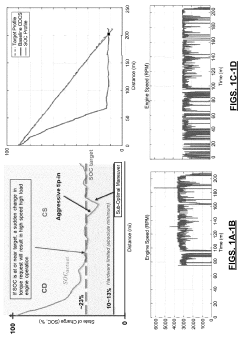
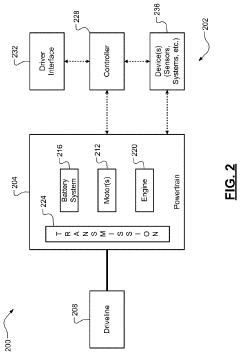
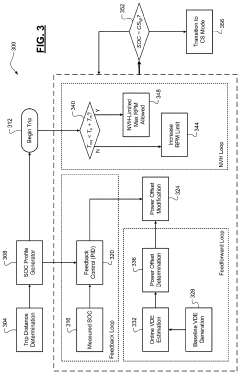
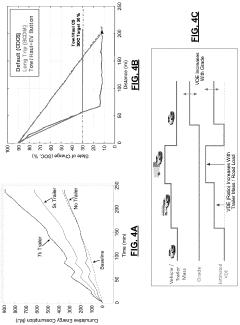
- An intelligent battery depletion system that monitors state of charge (SOC) and trip distance, using a controller to determine an optimized charge depletion or allocation profile, blending engine and electric motor power to maintain a desired SOC level, and transitioning to charge sustaining mode, while considering navigation information, vehicle demand energy, and noise/vibration/harshness constraints.
EREV Policy Framework
The development of a comprehensive EREV (Extended Range Electric Vehicle) Policy Framework is crucial for addressing the charging infrastructure gaps faced by EREV users. This framework should encompass a multi-faceted approach, integrating regulatory measures, financial incentives, and technological standards to create a supportive ecosystem for EREV adoption and operation.
At the regulatory level, the framework should establish clear guidelines for the installation and operation of charging stations specifically designed for EREVs. These regulations should address zoning requirements, permitting processes, and safety standards to facilitate the rapid deployment of charging infrastructure. Additionally, the framework should mandate a minimum number of EREV-compatible charging stations in public spaces, commercial areas, and along major highways to ensure adequate coverage.
Financial incentives play a vital role in encouraging private sector investment in EREV charging infrastructure. The policy framework should include tax credits, grants, and low-interest loans for businesses and property owners who install EREV charging stations. These incentives can be tiered based on the charging station's capacity and location, with higher incentives for fast-charging stations and those placed in underserved areas.
To address technological challenges, the framework should establish standardization requirements for EREV charging equipment. This includes defining common plug types, communication protocols, and payment systems to ensure interoperability across different EREV models and charging networks. The framework should also promote the development of smart charging technologies that can optimize charging schedules based on grid capacity and energy prices.
Collaboration between government agencies, utility companies, and EREV manufacturers is essential for the successful implementation of the policy framework. The framework should outline mechanisms for public-private partnerships to share costs and risks associated with infrastructure development. It should also establish a coordinated approach to grid integration, ensuring that the power distribution network can support increased demand from EREV charging.
Education and awareness programs should be incorporated into the framework to inform consumers about the benefits of EREVs and the availability of charging infrastructure. This can include public information campaigns, driver training programs, and integration of EREV-related information into navigation systems and mobile apps.
Lastly, the policy framework should include provisions for regular review and adaptation. As EREV technology evolves and adoption rates change, the framework must remain flexible to accommodate new developments and address emerging challenges in the charging infrastructure landscape.
At the regulatory level, the framework should establish clear guidelines for the installation and operation of charging stations specifically designed for EREVs. These regulations should address zoning requirements, permitting processes, and safety standards to facilitate the rapid deployment of charging infrastructure. Additionally, the framework should mandate a minimum number of EREV-compatible charging stations in public spaces, commercial areas, and along major highways to ensure adequate coverage.
Financial incentives play a vital role in encouraging private sector investment in EREV charging infrastructure. The policy framework should include tax credits, grants, and low-interest loans for businesses and property owners who install EREV charging stations. These incentives can be tiered based on the charging station's capacity and location, with higher incentives for fast-charging stations and those placed in underserved areas.
To address technological challenges, the framework should establish standardization requirements for EREV charging equipment. This includes defining common plug types, communication protocols, and payment systems to ensure interoperability across different EREV models and charging networks. The framework should also promote the development of smart charging technologies that can optimize charging schedules based on grid capacity and energy prices.
Collaboration between government agencies, utility companies, and EREV manufacturers is essential for the successful implementation of the policy framework. The framework should outline mechanisms for public-private partnerships to share costs and risks associated with infrastructure development. It should also establish a coordinated approach to grid integration, ensuring that the power distribution network can support increased demand from EREV charging.
Education and awareness programs should be incorporated into the framework to inform consumers about the benefits of EREVs and the availability of charging infrastructure. This can include public information campaigns, driver training programs, and integration of EREV-related information into navigation systems and mobile apps.
Lastly, the policy framework should include provisions for regular review and adaptation. As EREV technology evolves and adoption rates change, the framework must remain flexible to accommodate new developments and address emerging challenges in the charging infrastructure landscape.
Environmental Impact
The environmental impact of extended-range electric vehicles (EREVs) and their charging infrastructure is a critical consideration in the broader context of sustainable transportation. While EREVs offer significant advantages in terms of reduced emissions compared to conventional internal combustion engine vehicles, the environmental implications of their charging infrastructure require careful examination.
One of the primary environmental benefits of EREVs is their potential to reduce greenhouse gas emissions and air pollution. By relying on electricity for a portion of their power, these vehicles can significantly decrease tailpipe emissions, particularly in urban areas where air quality is a major concern. However, the environmental impact of EREV charging infrastructure is closely tied to the source of electricity used to power these stations.
In regions where the electricity grid relies heavily on fossil fuels, the environmental benefits of EREVs may be somewhat diminished. The carbon footprint of charging these vehicles can be substantial if the electricity is generated from coal or natural gas power plants. Conversely, in areas with a high proportion of renewable energy sources, such as solar, wind, or hydroelectric power, the environmental impact of EREV charging is considerably lower.
The construction and maintenance of charging infrastructure also have environmental implications. The production of charging stations, including the extraction and processing of raw materials, contributes to the overall environmental footprint. Additionally, the installation of charging points may require modifications to existing infrastructure, potentially leading to short-term environmental disruptions.
However, it is important to note that as charging infrastructure expands and becomes more widespread, economies of scale and technological advancements are likely to reduce the environmental impact of production and installation. Furthermore, the development of smart grid technologies and vehicle-to-grid (V2G) systems could enable EREVs to serve as distributed energy storage units, potentially enhancing grid stability and facilitating the integration of renewable energy sources.
The environmental impact of EREV charging infrastructure also extends to land use considerations. While charging stations generally have a smaller footprint compared to traditional gas stations, the need for widespread charging points could lead to increased land use in urban and suburban areas. This aspect underscores the importance of thoughtful urban planning and the integration of charging infrastructure into existing structures and parking facilities.
In conclusion, while the environmental impact of EREV charging infrastructure is complex and multifaceted, the overall potential for reducing emissions and improving air quality remains significant. As the electricity grid continues to decarbonize and charging technologies advance, the environmental benefits of EREVs and their supporting infrastructure are likely to increase, contributing to a more sustainable transportation ecosystem.
One of the primary environmental benefits of EREVs is their potential to reduce greenhouse gas emissions and air pollution. By relying on electricity for a portion of their power, these vehicles can significantly decrease tailpipe emissions, particularly in urban areas where air quality is a major concern. However, the environmental impact of EREV charging infrastructure is closely tied to the source of electricity used to power these stations.
In regions where the electricity grid relies heavily on fossil fuels, the environmental benefits of EREVs may be somewhat diminished. The carbon footprint of charging these vehicles can be substantial if the electricity is generated from coal or natural gas power plants. Conversely, in areas with a high proportion of renewable energy sources, such as solar, wind, or hydroelectric power, the environmental impact of EREV charging is considerably lower.
The construction and maintenance of charging infrastructure also have environmental implications. The production of charging stations, including the extraction and processing of raw materials, contributes to the overall environmental footprint. Additionally, the installation of charging points may require modifications to existing infrastructure, potentially leading to short-term environmental disruptions.
However, it is important to note that as charging infrastructure expands and becomes more widespread, economies of scale and technological advancements are likely to reduce the environmental impact of production and installation. Furthermore, the development of smart grid technologies and vehicle-to-grid (V2G) systems could enable EREVs to serve as distributed energy storage units, potentially enhancing grid stability and facilitating the integration of renewable energy sources.
The environmental impact of EREV charging infrastructure also extends to land use considerations. While charging stations generally have a smaller footprint compared to traditional gas stations, the need for widespread charging points could lead to increased land use in urban and suburban areas. This aspect underscores the importance of thoughtful urban planning and the integration of charging infrastructure into existing structures and parking facilities.
In conclusion, while the environmental impact of EREV charging infrastructure is complex and multifaceted, the overall potential for reducing emissions and improving air quality remains significant. As the electricity grid continues to decarbonize and charging technologies advance, the environmental benefits of EREVs and their supporting infrastructure are likely to increase, contributing to a more sustainable transportation ecosystem.
Unlock deeper insights with PatSnap Eureka Quick Research — get a full tech report to explore trends and direct your research. Try now!
Generate Your Research Report Instantly with AI Agent
Supercharge your innovation with PatSnap Eureka AI Agent Platform!