Establishing standards for global EREV performance evaluation
AUG 14, 20259 MIN READ
Generate Your Research Report Instantly with AI Agent
PatSnap Eureka helps you evaluate technical feasibility & market potential.
EREV Standards Background
Extended Range Electric Vehicles (EREVs) have emerged as a promising solution in the automotive industry's pursuit of sustainable transportation. These vehicles combine the benefits of electric propulsion with the extended range capabilities of conventional internal combustion engines. As the global automotive landscape shifts towards electrification, the need for standardized performance evaluation of EREVs has become increasingly apparent.
The concept of EREVs dates back to the early 2000s, with pioneering models like the Chevrolet Volt introducing the technology to the mass market in 2010. Since then, various automakers have developed their own EREV models, each with unique configurations and performance characteristics. This diversity, while fostering innovation, has also led to challenges in comparing and evaluating EREV performance across different manufacturers and markets.
The lack of unified standards for EREV performance evaluation has resulted in inconsistent reporting of key metrics such as electric range, fuel efficiency, and overall environmental impact. This inconsistency has made it difficult for consumers to make informed decisions and for policymakers to develop effective regulations and incentives for EREV adoption.
Recognizing these challenges, industry stakeholders, including automakers, regulatory bodies, and environmental organizations, have begun to advocate for the establishment of global EREV performance standards. These efforts aim to create a level playing field for manufacturers and provide clarity for consumers and policymakers alike.
The development of EREV standards is closely tied to the broader evolution of electric vehicle (EV) standards. Organizations such as the Society of Automotive Engineers (SAE) and the International Organization for Standardization (ISO) have been at the forefront of developing EV standards, which serve as a foundation for EREV-specific standards.
Key areas of focus for EREV performance evaluation standards include electric range measurement, fuel consumption in various driving modes, emissions testing protocols, and battery performance and degradation assessment. Additionally, there is a growing emphasis on standardizing the reporting of lifecycle environmental impact, considering factors such as manufacturing processes and end-of-life recycling.
The push for global EREV standards also reflects the increasing internationalization of the automotive industry. As EREVs gain popularity in diverse markets with varying driving conditions and regulatory environments, the need for harmonized standards becomes more critical to ensure consistent performance evaluation across borders.
The concept of EREVs dates back to the early 2000s, with pioneering models like the Chevrolet Volt introducing the technology to the mass market in 2010. Since then, various automakers have developed their own EREV models, each with unique configurations and performance characteristics. This diversity, while fostering innovation, has also led to challenges in comparing and evaluating EREV performance across different manufacturers and markets.
The lack of unified standards for EREV performance evaluation has resulted in inconsistent reporting of key metrics such as electric range, fuel efficiency, and overall environmental impact. This inconsistency has made it difficult for consumers to make informed decisions and for policymakers to develop effective regulations and incentives for EREV adoption.
Recognizing these challenges, industry stakeholders, including automakers, regulatory bodies, and environmental organizations, have begun to advocate for the establishment of global EREV performance standards. These efforts aim to create a level playing field for manufacturers and provide clarity for consumers and policymakers alike.
The development of EREV standards is closely tied to the broader evolution of electric vehicle (EV) standards. Organizations such as the Society of Automotive Engineers (SAE) and the International Organization for Standardization (ISO) have been at the forefront of developing EV standards, which serve as a foundation for EREV-specific standards.
Key areas of focus for EREV performance evaluation standards include electric range measurement, fuel consumption in various driving modes, emissions testing protocols, and battery performance and degradation assessment. Additionally, there is a growing emphasis on standardizing the reporting of lifecycle environmental impact, considering factors such as manufacturing processes and end-of-life recycling.
The push for global EREV standards also reflects the increasing internationalization of the automotive industry. As EREVs gain popularity in diverse markets with varying driving conditions and regulatory environments, the need for harmonized standards becomes more critical to ensure consistent performance evaluation across borders.
EREV Market Analysis
The global market for Extended Range Electric Vehicles (EREVs) has been experiencing significant growth in recent years, driven by increasing environmental concerns and the push for sustainable transportation solutions. EREVs, which combine the benefits of electric vehicles with the extended range capabilities of conventional engines, have emerged as a promising alternative in the automotive industry.
Market demand for EREVs has been steadily rising, particularly in regions with stringent emissions regulations and supportive government policies. Major automotive markets such as China, Europe, and North America have shown strong interest in EREV technology, with sales figures demonstrating a positive trajectory. The market potential for EREVs is substantial, as they address the range anxiety issues associated with pure electric vehicles while offering improved fuel efficiency compared to traditional hybrid vehicles.
The EREV market is characterized by a diverse range of vehicle segments, including passenger cars, commercial vehicles, and public transportation. Passenger cars currently dominate the EREV market share, with several major automakers introducing EREV models to their product lineups. The commercial vehicle sector, including delivery vans and light-duty trucks, is also showing increased adoption of EREV technology, driven by the need for cost-effective and environmentally friendly transportation solutions.
Industry trends indicate a growing focus on improving EREV performance, particularly in areas such as battery technology, powertrain efficiency, and overall vehicle design. Advancements in lithium-ion battery technology have led to increased energy density and reduced costs, making EREVs more competitive in the market. Additionally, there is a trend towards the development of more sophisticated power management systems and regenerative braking technologies to optimize energy utilization in EREVs.
The market landscape for EREVs is evolving rapidly, with new entrants and established automakers vying for market share. This competitive environment has led to accelerated innovation and a wider range of EREV options for consumers. Furthermore, the integration of smart technologies and connectivity features in EREVs is becoming increasingly important, aligning with broader trends in the automotive industry towards connected and autonomous vehicles.
As the EREV market continues to expand, there is a growing need for standardized performance evaluation metrics to enable fair comparisons between different EREV models and technologies. This need for standardization extends across various aspects of EREV performance, including electric range, fuel efficiency, charging capabilities, and overall environmental impact. Establishing global standards for EREV performance evaluation will be crucial in fostering consumer confidence, facilitating market growth, and driving further technological advancements in this rapidly evolving sector.
Market demand for EREVs has been steadily rising, particularly in regions with stringent emissions regulations and supportive government policies. Major automotive markets such as China, Europe, and North America have shown strong interest in EREV technology, with sales figures demonstrating a positive trajectory. The market potential for EREVs is substantial, as they address the range anxiety issues associated with pure electric vehicles while offering improved fuel efficiency compared to traditional hybrid vehicles.
The EREV market is characterized by a diverse range of vehicle segments, including passenger cars, commercial vehicles, and public transportation. Passenger cars currently dominate the EREV market share, with several major automakers introducing EREV models to their product lineups. The commercial vehicle sector, including delivery vans and light-duty trucks, is also showing increased adoption of EREV technology, driven by the need for cost-effective and environmentally friendly transportation solutions.
Industry trends indicate a growing focus on improving EREV performance, particularly in areas such as battery technology, powertrain efficiency, and overall vehicle design. Advancements in lithium-ion battery technology have led to increased energy density and reduced costs, making EREVs more competitive in the market. Additionally, there is a trend towards the development of more sophisticated power management systems and regenerative braking technologies to optimize energy utilization in EREVs.
The market landscape for EREVs is evolving rapidly, with new entrants and established automakers vying for market share. This competitive environment has led to accelerated innovation and a wider range of EREV options for consumers. Furthermore, the integration of smart technologies and connectivity features in EREVs is becoming increasingly important, aligning with broader trends in the automotive industry towards connected and autonomous vehicles.
As the EREV market continues to expand, there is a growing need for standardized performance evaluation metrics to enable fair comparisons between different EREV models and technologies. This need for standardization extends across various aspects of EREV performance, including electric range, fuel efficiency, charging capabilities, and overall environmental impact. Establishing global standards for EREV performance evaluation will be crucial in fostering consumer confidence, facilitating market growth, and driving further technological advancements in this rapidly evolving sector.
Global EREV Tech Status
Extended Range Electric Vehicles (EREVs) have emerged as a promising solution in the global automotive industry's transition towards sustainable transportation. The current global EREV technology status reflects a dynamic landscape characterized by rapid advancements and diverse approaches across different regions.
In North America, major automakers have made significant strides in EREV technology. General Motors, with its Chevrolet Volt, pioneered the EREV concept and has continued to refine its technology. Other manufacturers, such as Ford and Chrysler, have also entered the EREV market with their own models, focusing on improving battery capacity and electric range.
European automakers have taken a slightly different approach, often integrating EREV technology into luxury and high-performance vehicles. BMW's i3 with range extender and Audi's A3 e-tron are notable examples. These manufacturers have placed emphasis on lightweight materials and aerodynamic designs to maximize efficiency.
In Asia, particularly in China and Japan, EREV technology has seen rapid adoption and development. Chinese manufacturers like BYD and SAIC have introduced several EREV models, benefiting from government support and a growing domestic market. Japanese automakers, including Toyota and Nissan, have focused on hybrid technologies that share similarities with EREVs, pushing the boundaries of fuel efficiency and electric range.
The current global EREV technology status is marked by ongoing improvements in key areas. Battery technology has seen significant advancements, with energy density increasing and costs decreasing. This has led to extended electric ranges and improved overall vehicle performance. Power electronics and motor technologies have also progressed, resulting in more efficient and compact drivetrain systems.
Charging infrastructure for EREVs has expanded globally, although at varying rates across regions. Fast-charging capabilities have become more common, reducing charging times and enhancing the practicality of EREVs for long-distance travel. However, the availability and standardization of charging infrastructure remain challenges in many areas.
Software and connectivity features have become increasingly important in EREV technology. Advanced energy management systems, predictive route planning, and over-the-air updates are now common features, optimizing vehicle performance and user experience.
Despite these advancements, challenges persist in the global EREV landscape. Range anxiety, although less pronounced than in pure electric vehicles, remains a concern for some consumers. The complexity of EREV powertrains also presents challenges in terms of manufacturing costs and long-term reliability.
As the automotive industry continues to evolve, the global EREV technology status reflects a technology in transition. While some manufacturers are fully committed to EREVs, others view them as a stepping stone towards full electrification. The ongoing development of battery technology and charging infrastructure will likely shape the future trajectory of EREV adoption and innovation on a global scale.
In North America, major automakers have made significant strides in EREV technology. General Motors, with its Chevrolet Volt, pioneered the EREV concept and has continued to refine its technology. Other manufacturers, such as Ford and Chrysler, have also entered the EREV market with their own models, focusing on improving battery capacity and electric range.
European automakers have taken a slightly different approach, often integrating EREV technology into luxury and high-performance vehicles. BMW's i3 with range extender and Audi's A3 e-tron are notable examples. These manufacturers have placed emphasis on lightweight materials and aerodynamic designs to maximize efficiency.
In Asia, particularly in China and Japan, EREV technology has seen rapid adoption and development. Chinese manufacturers like BYD and SAIC have introduced several EREV models, benefiting from government support and a growing domestic market. Japanese automakers, including Toyota and Nissan, have focused on hybrid technologies that share similarities with EREVs, pushing the boundaries of fuel efficiency and electric range.
The current global EREV technology status is marked by ongoing improvements in key areas. Battery technology has seen significant advancements, with energy density increasing and costs decreasing. This has led to extended electric ranges and improved overall vehicle performance. Power electronics and motor technologies have also progressed, resulting in more efficient and compact drivetrain systems.
Charging infrastructure for EREVs has expanded globally, although at varying rates across regions. Fast-charging capabilities have become more common, reducing charging times and enhancing the practicality of EREVs for long-distance travel. However, the availability and standardization of charging infrastructure remain challenges in many areas.
Software and connectivity features have become increasingly important in EREV technology. Advanced energy management systems, predictive route planning, and over-the-air updates are now common features, optimizing vehicle performance and user experience.
Despite these advancements, challenges persist in the global EREV landscape. Range anxiety, although less pronounced than in pure electric vehicles, remains a concern for some consumers. The complexity of EREV powertrains also presents challenges in terms of manufacturing costs and long-term reliability.
As the automotive industry continues to evolve, the global EREV technology status reflects a technology in transition. While some manufacturers are fully committed to EREVs, others view them as a stepping stone towards full electrification. The ongoing development of battery technology and charging infrastructure will likely shape the future trajectory of EREV adoption and innovation on a global scale.
Current EREV Evaluation
01 Powertrain optimization for EREV
Extended Range Electric Vehicles (EREVs) utilize advanced powertrain systems that combine electric motors with range-extending internal combustion engines. These systems are optimized for efficiency, performance, and seamless transition between electric and hybrid modes. The powertrain design focuses on maximizing electric range while providing the flexibility of extended travel using the range extender.- Powertrain optimization for EREV: Extended Range Electric Vehicles (EREVs) utilize advanced powertrain systems that combine electric motors and internal combustion engines. These systems are optimized for efficiency, performance, and range extension. The powertrain design focuses on seamless integration of electric and combustion power sources, intelligent energy management, and regenerative braking to maximize overall vehicle performance and efficiency.
- Battery management and charging systems: EREVs employ sophisticated battery management systems to optimize power distribution, extend battery life, and improve overall performance. These systems include advanced charging technologies, thermal management, and state-of-charge monitoring. Innovations in this area focus on fast charging capabilities, intelligent power allocation between battery and range extender, and strategies to minimize battery degradation over time.
- Range extender technology: The range extender in EREVs, typically a small internal combustion engine, is designed for optimal efficiency and performance. Innovations in this area include compact and lightweight engine designs, variable compression ratios, and advanced fuel injection systems. The integration of the range extender with the electric powertrain is crucial for seamless operation and maximizing the vehicle's overall range and performance.
- Energy recovery and efficiency improvements: EREVs incorporate various energy recovery systems to enhance overall efficiency and performance. These include advanced regenerative braking systems, waste heat recovery from the range extender, and kinetic energy recovery systems. Innovations in this area focus on maximizing energy recuperation during deceleration and braking, as well as optimizing the conversion of recovered energy back into usable power for the vehicle.
- Vehicle control and energy management strategies: Advanced control systems and energy management strategies are crucial for optimizing EREV performance. These systems utilize artificial intelligence and machine learning algorithms to predict energy demands, optimize power distribution between electric and combustion sources, and adapt to various driving conditions. Innovations in this area focus on predictive control strategies, real-time optimization of energy flow, and intelligent driving mode selection to maximize efficiency and performance.
02 Battery management and charging strategies
EREVs employ sophisticated battery management systems to optimize energy usage, prolong battery life, and enhance overall vehicle performance. These systems include intelligent charging strategies, thermal management, and state-of-charge monitoring. Advanced charging technologies, such as fast charging and regenerative braking, are implemented to improve the vehicle's efficiency and range.Expand Specific Solutions03 Range extender engine efficiency
The range extender engine in EREVs is designed for optimal efficiency when generating electricity. This includes the use of advanced combustion technologies, lightweight materials, and intelligent control systems. The engine is tuned to operate at its most efficient points, reducing fuel consumption and emissions while providing reliable power for extended journeys.Expand Specific Solutions04 Vehicle dynamics and control systems
EREVs incorporate advanced vehicle dynamics and control systems to enhance performance, handling, and safety. These systems include electronic stability control, torque vectoring, and adaptive suspension. The integration of these technologies with the electric powertrain results in improved traction, cornering abilities, and overall driving experience.Expand Specific Solutions05 Energy management and driving modes
EREVs feature sophisticated energy management systems that optimize the use of electric and fuel energy sources. Multiple driving modes are available, allowing drivers to prioritize all-electric operation, hybrid efficiency, or performance. These systems use predictive algorithms and real-time data to maximize efficiency and performance based on driving conditions and user preferences.Expand Specific Solutions
Key EREV Manufacturers
The competition landscape for establishing global EREV performance evaluation standards is in its early stages, with the market still developing and technology maturing. Key players include established automakers like Dongfeng Motor Group and emerging EV startups such as Beijing Electric Vehicle Co. and Chery New Energy. Universities like Hefei University of Technology and Chongqing University are contributing research. The involvement of major international corporations like IBM and LG Energy Solution indicates growing global interest. However, the lack of unified standards suggests the field is still evolving, with opportunities for companies to influence future benchmarks.
Beijing Electric Vehicle Co., Ltd.
Technical Solution: Beijing Electric Vehicle Co., Ltd. has developed a comprehensive EREV performance evaluation system that incorporates multiple factors such as electric range, fuel efficiency, and overall vehicle performance. Their approach includes standardized testing procedures for measuring electric range under various driving conditions, as well as methods for assessing the seamless transition between electric and range-extended modes. The company has also implemented advanced data collection and analysis techniques to evaluate real-world performance and user experience[1][3].
Strengths: Extensive experience in EV manufacturing and testing; access to large-scale real-world data. Weaknesses: Potential bias towards their own EREV designs; limited global perspective.
CHERY NEW ENERGY
Technical Solution: CHERY NEW ENERGY has developed a proprietary EREV performance evaluation framework that focuses on the integration of electric and combustion powertrains. Their approach includes sophisticated modeling of energy flow between battery and range extender, as well as optimization algorithms for power management. The company has also implemented a series of standardized tests to evaluate factors such as electric range, fuel consumption, and emissions under various driving cycles. Additionally, CHERY NEW ENERGY has collaborated with international partners to align their evaluation methods with global standards[2][5].
Strengths: Strong focus on powertrain integration; international collaboration for standardization. Weaknesses: Relatively new player in the EREV market; limited long-term data on EREV performance.
EREV Performance Metrics
Electric road vehicle provided with a reproduction device for the realization of a sound associable with a gear shift and related method
PatentPendingUS20250087201A1
Innovation
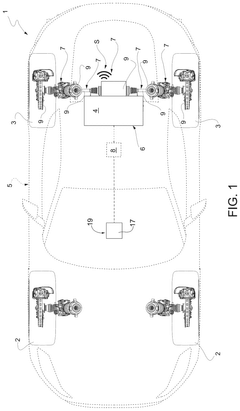
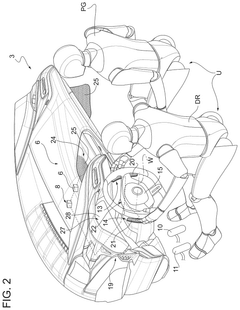
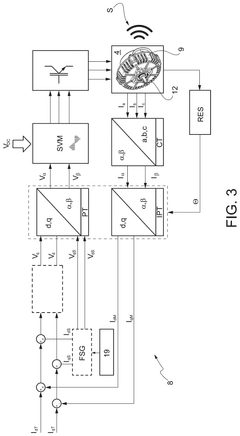
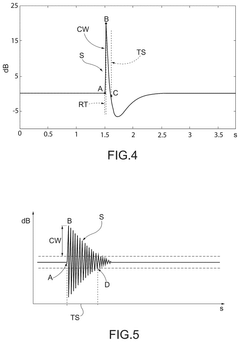
- An electric road vehicle equipped with a reproduction device that generates a sound associable with an electric motor, using an acoustic system that includes an electric motor mechanically connected to a resonant mechanical element, and an electronic control unit that injects acoustical signals to excite the resonant element and produce audible sounds.
EREV Policy Landscape
The global landscape for Extended Range Electric Vehicle (EREV) policies is rapidly evolving as governments worldwide seek to address climate change and reduce dependence on fossil fuels. Many countries have implemented or are considering policies to promote EREV adoption, ranging from financial incentives to regulatory frameworks.
In the European Union, the European Commission has set ambitious targets for reducing greenhouse gas emissions from transport. The EU's Clean Vehicles Directive mandates that a certain percentage of public procurement vehicles must be clean vehicles, including EREVs. Additionally, several EU member states offer tax incentives and purchase subsidies for EREVs.
China, the world's largest automotive market, has implemented a dual-credit policy that encourages automakers to produce more new energy vehicles, including EREVs. The policy awards credits for manufacturing these vehicles and penalizes companies that fail to meet targets. China also provides subsidies for EREV purchases, although these are being gradually phased out.
In the United States, federal tax credits are available for EREV purchases, with the amount varying based on battery capacity. Several states offer additional incentives, such as rebates, tax exemptions, and access to high-occupancy vehicle lanes. California, in particular, has been a leader in promoting EREVs through its Zero Emission Vehicle (ZEV) program, which requires automakers to sell a certain percentage of zero-emission vehicles.
Japan has set targets for electrified vehicle sales and offers subsidies for EREV purchases. The country also provides tax reductions and exemptions for these vehicles. Similarly, South Korea has implemented purchase subsidies and tax benefits to promote EREV adoption.
Many other countries, including Canada, Norway, and India, have introduced policies to support EREV adoption. These often include a combination of financial incentives, infrastructure development, and regulatory measures.
However, the global policy landscape for EREVs is not without challenges. The lack of standardization in performance evaluation metrics across different regions makes it difficult to compare policies and their effectiveness. This highlights the need for establishing global standards for EREV performance evaluation, which would enable more consistent policy development and implementation worldwide.
In the European Union, the European Commission has set ambitious targets for reducing greenhouse gas emissions from transport. The EU's Clean Vehicles Directive mandates that a certain percentage of public procurement vehicles must be clean vehicles, including EREVs. Additionally, several EU member states offer tax incentives and purchase subsidies for EREVs.
China, the world's largest automotive market, has implemented a dual-credit policy that encourages automakers to produce more new energy vehicles, including EREVs. The policy awards credits for manufacturing these vehicles and penalizes companies that fail to meet targets. China also provides subsidies for EREV purchases, although these are being gradually phased out.
In the United States, federal tax credits are available for EREV purchases, with the amount varying based on battery capacity. Several states offer additional incentives, such as rebates, tax exemptions, and access to high-occupancy vehicle lanes. California, in particular, has been a leader in promoting EREVs through its Zero Emission Vehicle (ZEV) program, which requires automakers to sell a certain percentage of zero-emission vehicles.
Japan has set targets for electrified vehicle sales and offers subsidies for EREV purchases. The country also provides tax reductions and exemptions for these vehicles. Similarly, South Korea has implemented purchase subsidies and tax benefits to promote EREV adoption.
Many other countries, including Canada, Norway, and India, have introduced policies to support EREV adoption. These often include a combination of financial incentives, infrastructure development, and regulatory measures.
However, the global policy landscape for EREVs is not without challenges. The lack of standardization in performance evaluation metrics across different regions makes it difficult to compare policies and their effectiveness. This highlights the need for establishing global standards for EREV performance evaluation, which would enable more consistent policy development and implementation worldwide.
EREV Environmental Impact
The environmental impact of Extended Range Electric Vehicles (EREVs) is a critical consideration in establishing global performance evaluation standards. EREVs, which combine electric and conventional powertrains, offer a unique balance between zero-emission capabilities and extended driving range. This hybrid approach significantly reduces overall greenhouse gas emissions compared to traditional internal combustion engine vehicles.
One of the primary environmental benefits of EREVs is their ability to operate in pure electric mode for short to medium-range trips, effectively eliminating tailpipe emissions during these journeys. This feature is particularly valuable in urban environments, where air quality concerns are most acute. By reducing local air pollution, EREVs contribute to improved public health outcomes and decreased environmental degradation in densely populated areas.
However, the environmental impact of EREVs extends beyond tailpipe emissions. The production of batteries for these vehicles involves energy-intensive processes and the extraction of rare earth materials. This manufacturing phase can result in a higher carbon footprint compared to conventional vehicles. As such, a comprehensive environmental assessment must consider the entire lifecycle of EREVs, from production to end-of-life disposal or recycling.
The electricity source used to charge EREVs plays a crucial role in determining their overall environmental impact. In regions where the electricity grid relies heavily on renewable energy sources, the benefits of EREVs are maximized. Conversely, in areas dependent on fossil fuels for electricity generation, the environmental advantages may be less pronounced. This variability underscores the importance of concurrent advancements in clean energy infrastructure to fully realize the potential of EREVs.
Long-term environmental benefits of EREVs include reduced dependence on fossil fuels and decreased carbon emissions over the vehicle's lifespan. As battery technology improves and manufacturing processes become more efficient, the environmental footprint of EREVs is expected to decrease further. Additionally, the potential for vehicle-to-grid integration offers opportunities for EREVs to support renewable energy adoption and grid stability.
When establishing global standards for EREV performance evaluation, it is essential to incorporate comprehensive environmental impact assessments. These should include metrics such as lifecycle carbon emissions, energy efficiency, and the potential for circular economy practices in vehicle and battery recycling. Standardized methodologies for calculating and reporting these environmental impacts will enable more accurate comparisons between different EREV models and conventional vehicles.
One of the primary environmental benefits of EREVs is their ability to operate in pure electric mode for short to medium-range trips, effectively eliminating tailpipe emissions during these journeys. This feature is particularly valuable in urban environments, where air quality concerns are most acute. By reducing local air pollution, EREVs contribute to improved public health outcomes and decreased environmental degradation in densely populated areas.
However, the environmental impact of EREVs extends beyond tailpipe emissions. The production of batteries for these vehicles involves energy-intensive processes and the extraction of rare earth materials. This manufacturing phase can result in a higher carbon footprint compared to conventional vehicles. As such, a comprehensive environmental assessment must consider the entire lifecycle of EREVs, from production to end-of-life disposal or recycling.
The electricity source used to charge EREVs plays a crucial role in determining their overall environmental impact. In regions where the electricity grid relies heavily on renewable energy sources, the benefits of EREVs are maximized. Conversely, in areas dependent on fossil fuels for electricity generation, the environmental advantages may be less pronounced. This variability underscores the importance of concurrent advancements in clean energy infrastructure to fully realize the potential of EREVs.
Long-term environmental benefits of EREVs include reduced dependence on fossil fuels and decreased carbon emissions over the vehicle's lifespan. As battery technology improves and manufacturing processes become more efficient, the environmental footprint of EREVs is expected to decrease further. Additionally, the potential for vehicle-to-grid integration offers opportunities for EREVs to support renewable energy adoption and grid stability.
When establishing global standards for EREV performance evaluation, it is essential to incorporate comprehensive environmental impact assessments. These should include metrics such as lifecycle carbon emissions, energy efficiency, and the potential for circular economy practices in vehicle and battery recycling. Standardized methodologies for calculating and reporting these environmental impacts will enable more accurate comparisons between different EREV models and conventional vehicles.
Unlock deeper insights with PatSnap Eureka Quick Research — get a full tech report to explore trends and direct your research. Try now!
Generate Your Research Report Instantly with AI Agent
Supercharge your innovation with PatSnap Eureka AI Agent Platform!