How Laminar Flow is Integral to Future Manufacturing Processes?
JUL 10, 20259 MIN READ
Generate Your Research Report Instantly with AI Agent
PatSnap Eureka helps you evaluate technical feasibility & market potential.
Laminar Flow in Manufacturing: Background and Objectives
Laminar flow, characterized by smooth and predictable fluid motion, has been a cornerstone of manufacturing processes for decades. Its significance in industrial applications stems from its ability to maintain consistent and controlled conditions, which is crucial for various production techniques. The evolution of laminar flow technology in manufacturing can be traced back to the mid-20th century when industries began recognizing the importance of precise environmental control in production processes.
The primary objective of incorporating laminar flow in manufacturing is to enhance product quality, increase production efficiency, and minimize contamination risks. By creating a controlled environment where air or fluid moves in parallel layers without mixing, manufacturers can achieve unprecedented levels of precision and cleanliness in their operations. This is particularly vital in industries such as semiconductor manufacturing, pharmaceutical production, and advanced materials processing.
Over the years, the application of laminar flow principles has expanded beyond traditional clean room environments. Modern manufacturing processes are increasingly relying on laminar flow techniques to optimize various stages of production, from material handling to final product assembly. The integration of laminar flow concepts has led to significant advancements in areas such as 3D printing, where precise control of material deposition is critical for achieving high-quality outputs.
The technological trajectory of laminar flow in manufacturing is closely aligned with the broader trends of Industry 4.0 and smart manufacturing. As production processes become more automated and data-driven, the role of laminar flow in ensuring consistent and predictable outcomes becomes even more crucial. Future manufacturing systems are expected to leverage advanced sensors and control systems to dynamically adjust laminar flow conditions in real-time, further enhancing production precision and flexibility.
Looking ahead, the objectives for laminar flow technology in manufacturing are multifaceted. Researchers and engineers are working towards developing more energy-efficient laminar flow systems, reducing the environmental footprint of manufacturing processes while maintaining high levels of performance. Additionally, there is a growing focus on scaling laminar flow technologies to accommodate larger production volumes and more complex manufacturing scenarios.
The integration of laminar flow principles with emerging technologies such as artificial intelligence and machine learning presents exciting possibilities for future manufacturing processes. These advancements could lead to self-optimizing production environments that adapt to changing conditions and requirements, pushing the boundaries of what is possible in terms of product quality and manufacturing efficiency.
The primary objective of incorporating laminar flow in manufacturing is to enhance product quality, increase production efficiency, and minimize contamination risks. By creating a controlled environment where air or fluid moves in parallel layers without mixing, manufacturers can achieve unprecedented levels of precision and cleanliness in their operations. This is particularly vital in industries such as semiconductor manufacturing, pharmaceutical production, and advanced materials processing.
Over the years, the application of laminar flow principles has expanded beyond traditional clean room environments. Modern manufacturing processes are increasingly relying on laminar flow techniques to optimize various stages of production, from material handling to final product assembly. The integration of laminar flow concepts has led to significant advancements in areas such as 3D printing, where precise control of material deposition is critical for achieving high-quality outputs.
The technological trajectory of laminar flow in manufacturing is closely aligned with the broader trends of Industry 4.0 and smart manufacturing. As production processes become more automated and data-driven, the role of laminar flow in ensuring consistent and predictable outcomes becomes even more crucial. Future manufacturing systems are expected to leverage advanced sensors and control systems to dynamically adjust laminar flow conditions in real-time, further enhancing production precision and flexibility.
Looking ahead, the objectives for laminar flow technology in manufacturing are multifaceted. Researchers and engineers are working towards developing more energy-efficient laminar flow systems, reducing the environmental footprint of manufacturing processes while maintaining high levels of performance. Additionally, there is a growing focus on scaling laminar flow technologies to accommodate larger production volumes and more complex manufacturing scenarios.
The integration of laminar flow principles with emerging technologies such as artificial intelligence and machine learning presents exciting possibilities for future manufacturing processes. These advancements could lead to self-optimizing production environments that adapt to changing conditions and requirements, pushing the boundaries of what is possible in terms of product quality and manufacturing efficiency.
Market Demand for Laminar Flow Technologies
The market demand for laminar flow technologies in manufacturing processes is experiencing significant growth, driven by the increasing need for precision, efficiency, and quality control across various industries. Laminar flow, characterized by smooth and predictable fluid motion, is becoming integral to advanced manufacturing techniques, particularly in sectors such as aerospace, automotive, electronics, and pharmaceuticals.
In the aerospace industry, laminar flow technologies are crucial for improving fuel efficiency and reducing drag on aircraft surfaces. This has led to a surge in demand for laminar flow control systems and materials that can maintain smooth airflow over wings and fuselages. The automotive sector is also embracing laminar flow concepts in vehicle design and manufacturing processes to enhance aerodynamics and fuel economy.
The electronics industry relies heavily on laminar flow technologies for clean room environments, where maintaining a controlled, particle-free atmosphere is essential for the production of sensitive components like semiconductors and microchips. As the demand for smaller, more powerful electronic devices continues to rise, the market for laminar flow solutions in clean room design and operation is expanding rapidly.
Pharmaceutical and biotechnology companies are another significant driver of market demand for laminar flow technologies. The need for sterile manufacturing environments in drug production and research facilities has intensified the adoption of laminar flow systems. These technologies are critical in ensuring product purity and preventing contamination during the manufacturing process of medicines, vaccines, and other biological products.
The food and beverage industry is also contributing to the growing market for laminar flow technologies. As food safety regulations become more stringent, manufacturers are investing in laminar flow systems for processing and packaging areas to minimize the risk of contamination and maintain product quality.
The global market for laminar flow technologies in manufacturing is projected to experience robust growth in the coming years. This expansion is fueled by the increasing emphasis on product quality, regulatory compliance, and operational efficiency across industries. Additionally, the ongoing trend towards automation and smart manufacturing is expected to further boost the demand for advanced laminar flow solutions that can integrate with Industry 4.0 technologies.
As manufacturers strive to optimize their processes and reduce waste, the role of laminar flow in achieving precise control over production environments becomes increasingly valuable. This has led to a growing interest in research and development of innovative laminar flow technologies, including advanced materials, sensors, and control systems that can enhance the effectiveness and efficiency of manufacturing processes.
In the aerospace industry, laminar flow technologies are crucial for improving fuel efficiency and reducing drag on aircraft surfaces. This has led to a surge in demand for laminar flow control systems and materials that can maintain smooth airflow over wings and fuselages. The automotive sector is also embracing laminar flow concepts in vehicle design and manufacturing processes to enhance aerodynamics and fuel economy.
The electronics industry relies heavily on laminar flow technologies for clean room environments, where maintaining a controlled, particle-free atmosphere is essential for the production of sensitive components like semiconductors and microchips. As the demand for smaller, more powerful electronic devices continues to rise, the market for laminar flow solutions in clean room design and operation is expanding rapidly.
Pharmaceutical and biotechnology companies are another significant driver of market demand for laminar flow technologies. The need for sterile manufacturing environments in drug production and research facilities has intensified the adoption of laminar flow systems. These technologies are critical in ensuring product purity and preventing contamination during the manufacturing process of medicines, vaccines, and other biological products.
The food and beverage industry is also contributing to the growing market for laminar flow technologies. As food safety regulations become more stringent, manufacturers are investing in laminar flow systems for processing and packaging areas to minimize the risk of contamination and maintain product quality.
The global market for laminar flow technologies in manufacturing is projected to experience robust growth in the coming years. This expansion is fueled by the increasing emphasis on product quality, regulatory compliance, and operational efficiency across industries. Additionally, the ongoing trend towards automation and smart manufacturing is expected to further boost the demand for advanced laminar flow solutions that can integrate with Industry 4.0 technologies.
As manufacturers strive to optimize their processes and reduce waste, the role of laminar flow in achieving precise control over production environments becomes increasingly valuable. This has led to a growing interest in research and development of innovative laminar flow technologies, including advanced materials, sensors, and control systems that can enhance the effectiveness and efficiency of manufacturing processes.
Current State and Challenges in Laminar Flow Applications
Laminar flow technology has made significant strides in recent years, finding applications across various manufacturing sectors. Currently, it is widely utilized in industries such as pharmaceuticals, electronics, and food processing, where maintaining a controlled environment is crucial. The primary advantage of laminar flow lies in its ability to create a uniform, unidirectional airflow that minimizes turbulence and contamination.
In the pharmaceutical industry, laminar flow cabinets and cleanrooms are essential for ensuring product quality and safety. These systems provide a sterile environment for drug manufacturing, packaging, and research activities. Similarly, in electronics manufacturing, laminar flow technology is employed to protect sensitive components from airborne particles during production and assembly processes.
Despite its widespread adoption, laminar flow technology faces several challenges in its current applications. One significant issue is the high energy consumption associated with maintaining laminar flow conditions. The continuous operation of air handling units and filtration systems requires substantial power, leading to increased operational costs and environmental concerns.
Another challenge is the difficulty in scaling up laminar flow systems for larger manufacturing spaces. As the area to be covered increases, maintaining uniform airflow becomes more complex and expensive. This limitation often restricts the use of laminar flow technology to smaller, specialized production areas rather than entire manufacturing facilities.
The sensitivity of laminar flow systems to external disturbances poses another challenge. Factors such as personnel movement, equipment operation, and thermal variations can disrupt the carefully controlled airflow patterns. Overcoming these disruptions while maintaining efficiency and effectiveness remains an ongoing concern for manufacturers.
Furthermore, the integration of laminar flow technology with other advanced manufacturing processes, such as robotics and automation, presents both opportunities and challenges. While these technologies can enhance precision and reduce human intervention, they also introduce new variables that must be accounted for in laminar flow system design.
As manufacturing processes become increasingly sophisticated, there is a growing need for more adaptive and intelligent laminar flow systems. Current technologies often lack the flexibility to respond dynamically to changing production requirements or environmental conditions. Developing smart, sensor-driven systems that can adjust airflow patterns in real-time represents a significant area for improvement.
In conclusion, while laminar flow technology has established itself as a critical component in various manufacturing processes, there are still substantial challenges to overcome. Addressing these issues will be crucial for expanding the application of laminar flow in future manufacturing environments and realizing its full potential across a broader range of industries.
In the pharmaceutical industry, laminar flow cabinets and cleanrooms are essential for ensuring product quality and safety. These systems provide a sterile environment for drug manufacturing, packaging, and research activities. Similarly, in electronics manufacturing, laminar flow technology is employed to protect sensitive components from airborne particles during production and assembly processes.
Despite its widespread adoption, laminar flow technology faces several challenges in its current applications. One significant issue is the high energy consumption associated with maintaining laminar flow conditions. The continuous operation of air handling units and filtration systems requires substantial power, leading to increased operational costs and environmental concerns.
Another challenge is the difficulty in scaling up laminar flow systems for larger manufacturing spaces. As the area to be covered increases, maintaining uniform airflow becomes more complex and expensive. This limitation often restricts the use of laminar flow technology to smaller, specialized production areas rather than entire manufacturing facilities.
The sensitivity of laminar flow systems to external disturbances poses another challenge. Factors such as personnel movement, equipment operation, and thermal variations can disrupt the carefully controlled airflow patterns. Overcoming these disruptions while maintaining efficiency and effectiveness remains an ongoing concern for manufacturers.
Furthermore, the integration of laminar flow technology with other advanced manufacturing processes, such as robotics and automation, presents both opportunities and challenges. While these technologies can enhance precision and reduce human intervention, they also introduce new variables that must be accounted for in laminar flow system design.
As manufacturing processes become increasingly sophisticated, there is a growing need for more adaptive and intelligent laminar flow systems. Current technologies often lack the flexibility to respond dynamically to changing production requirements or environmental conditions. Developing smart, sensor-driven systems that can adjust airflow patterns in real-time represents a significant area for improvement.
In conclusion, while laminar flow technology has established itself as a critical component in various manufacturing processes, there are still substantial challenges to overcome. Addressing these issues will be crucial for expanding the application of laminar flow in future manufacturing environments and realizing its full potential across a broader range of industries.
Existing Laminar Flow Solutions in Manufacturing
01 Laminar flow measurement and control systems
Various systems and methods for measuring and controlling laminar flow in different applications. These include optical systems for detecting flow characteristics, flow control devices for maintaining laminar flow conditions, and sensors for monitoring flow parameters.- Laminar flow measurement and control systems: Various systems and methods for measuring and controlling laminar flow in different applications. These include optical systems for detecting flow characteristics, flow control devices for maintaining laminar flow conditions, and sensors for monitoring flow parameters in real-time.
- Laminar flow in fluid handling devices: Designs and techniques for achieving laminar flow in fluid handling devices such as nozzles, valves, and pipes. This includes specialized geometries, surface treatments, and flow conditioning elements to promote smooth, non-turbulent fluid movement.
- Laminar flow in aerodynamic applications: Innovations related to maintaining laminar flow over surfaces in aerodynamic contexts, such as aircraft wings or wind turbine blades. This includes boundary layer control techniques, surface modifications, and active flow control systems to reduce drag and improve efficiency.
- Laminar flow in microfluidic devices: Approaches for achieving and utilizing laminar flow in microfluidic devices for applications in chemistry, biology, and medicine. This includes channel designs, flow focusing techniques, and methods for precise fluid manipulation at small scales.
- Laminar flow in environmental control systems: Applications of laminar flow principles in environmental control systems, such as clean rooms, HVAC systems, and air purification devices. This includes methods for creating laminar airflow patterns, filtration techniques, and contamination control strategies.
02 Laminar flow in fluid handling devices
Innovations in fluid handling devices that utilize or promote laminar flow. This includes designs for nozzles, valves, and other components that maintain laminar flow conditions for improved efficiency and performance in various applications.Expand Specific Solutions03 Laminar flow in air purification and ventilation systems
Applications of laminar flow principles in air purification and ventilation systems. This includes designs for clean rooms, HVAC systems, and air filtration devices that use laminar flow to improve air quality and reduce contamination.Expand Specific Solutions04 Laminar flow in manufacturing and material processing
Utilization of laminar flow in manufacturing processes and material handling. This includes applications in coating technologies, material separation, and precision manufacturing where controlled laminar flow is crucial for product quality and process efficiency.Expand Specific Solutions05 Laminar flow in microfluidic and biomedical applications
Innovations in microfluidic devices and biomedical applications that leverage laminar flow properties. This includes lab-on-a-chip technologies, drug delivery systems, and diagnostic tools that rely on precise control of small fluid volumes under laminar flow conditions.Expand Specific Solutions
Key Players in Laminar Flow Technology
The laminar flow technology in manufacturing processes is currently in a transitional phase, moving from early adoption to more widespread implementation. The market size is expanding, driven by increasing demand for precision manufacturing and energy efficiency across industries. While the technology is maturing, it's not yet fully standardized. Companies like The Boeing Co. and Airbus Espana SL are leveraging laminar flow in aerospace applications, while Taiwan Semiconductor Manufacturing Co., Ltd. and Ichor Systems, Inc. are exploring its potential in semiconductor manufacturing. The technology's adoption is also evident in other sectors, with firms like General Motors LLC and EOS GmbH incorporating laminar flow principles into their production processes, indicating a growing cross-industry relevance.
The Boeing Co.
Technical Solution: Boeing has developed advanced laminar flow technology for its aircraft, particularly focusing on Natural Laminar Flow (NLF) and Hybrid Laminar Flow Control (HLFC) systems. Their approach involves optimizing wing design to maintain laminar flow over larger portions of the wing surface, reducing drag and improving fuel efficiency. Boeing's HLFC system combines passive shaping with active suction to maintain laminar flow, potentially reducing fuel burn by up to 10% [1][3]. The company has also explored the use of micro-perforated titanium surfaces and advanced coatings to enhance laminar flow characteristics in manufacturing processes.
Strengths: Extensive aerospace experience, proven fuel efficiency improvements. Weaknesses: High implementation costs, complexity in retrofitting existing aircraft.
Airbus Espana SL
Technical Solution: Airbus has been at the forefront of laminar flow research in aviation manufacturing. Their BLADE (Breakthrough Laminar Aircraft Demonstrator in Europe) project showcases the implementation of Natural Laminar Flow (NLF) technology on wing surfaces. The project involves modifying an A340 aircraft with specially designed outer wings to test NLF in real flight conditions. Airbus's approach includes using smooth composite materials and precise manufacturing tolerances to maintain laminar flow over a significant portion of the wing surface. This technology has demonstrated potential fuel savings of up to 5% [2][4]. Additionally, Airbus is exploring Hybrid Laminar Flow Control (HLFC) systems, combining passive design with active suction techniques to further extend laminar flow regions.
Strengths: Proven fuel efficiency gains, extensive flight testing experience. Weaknesses: Challenges in scaling technology to larger aircraft, sensitivity to surface imperfections.
Core Innovations in Laminar Flow Control
Columnar laminar flow generation device and method for generating columnar laminar flows
PatentActiveUS20170072438A1
Innovation
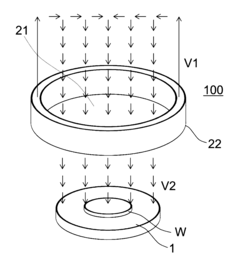
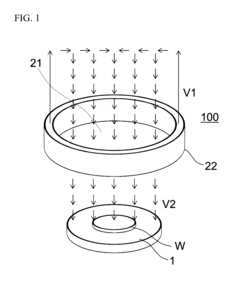
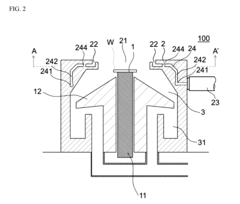
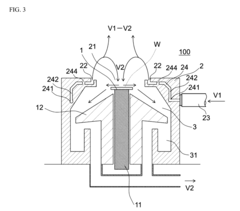
- A columnar laminar flow generation device that focuses gas blow-out and suction within a localized columnar area, allowing for adjustable flow velocity and reduced gas usage by positioning a gas blow-out port vertically within an opening and a corresponding suction path, thereby generating laminar flows only where needed, with a feed pipe filter for purification.
Cartridge having a microfluidic system for performance of an analysis of a sample
PatentWO2021122511A1
Innovation
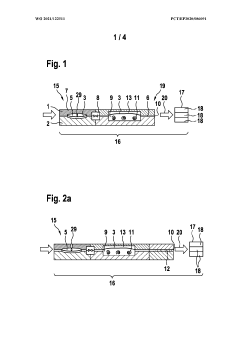
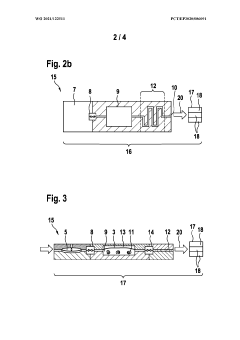
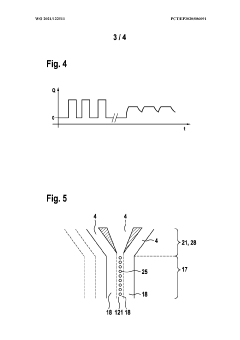
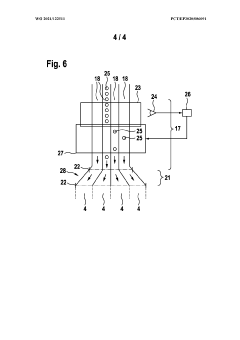
- A microfluidic cartridge with a flow laminarizer and compensation capacity is designed to generate laminar flows by slowing down fluid flow through channel geometry changes and using a flexible membrane to dampen pressure fluctuations, ensuring laminar conditions are maintained in the analysis section for precise sample analysis and sorting.
Energy Efficiency Implications of Laminar Flow
Laminar flow, characterized by smooth and predictable fluid motion, holds significant potential for enhancing energy efficiency in future manufacturing processes. This streamlined flow regime minimizes turbulence and energy dissipation, leading to reduced power consumption in various industrial applications. By leveraging laminar flow principles, manufacturers can optimize fluid handling systems, resulting in substantial energy savings and improved overall process efficiency.
One of the primary energy efficiency benefits of laminar flow is its application in heat transfer systems. In heat exchangers and cooling systems, laminar flow allows for more precise control of fluid dynamics, enabling better heat transfer rates with lower pumping power requirements. This improved thermal management can lead to significant reductions in energy consumption, particularly in energy-intensive industries such as chemical processing and power generation.
In fluid transport systems, laminar flow can dramatically reduce friction losses compared to turbulent flow regimes. This reduction in friction translates directly to lower energy requirements for pumping and moving fluids through pipes and channels. By designing manufacturing processes to maintain laminar flow conditions, industries can minimize the energy needed to transport liquids and gases, resulting in substantial cost savings and reduced carbon footprint.
The application of laminar flow principles in coating and surface treatment processes also contributes to energy efficiency. Laminar flow enables more uniform and controlled deposition of materials, reducing waste and improving the quality of finished products. This precision not only enhances product quality but also minimizes the energy expended in rework and material reprocessing, leading to a more streamlined and energy-efficient manufacturing process.
Furthermore, laminar flow plays a crucial role in the development of microfluidic devices and lab-on-a-chip technologies. These miniaturized systems rely on laminar flow to achieve precise control over small volumes of fluids, enabling more efficient and energy-conserving analytical and manufacturing processes. The energy savings in these applications stem from reduced reagent consumption, faster processing times, and the ability to perform multiple operations in a single, compact device.
In the context of clean room environments and contamination control, laminar flow systems offer energy-efficient solutions for maintaining ultra-clean conditions. By creating controlled, unidirectional airflow, laminar flow systems can effectively remove particulates and maintain sterile conditions with lower energy input compared to traditional turbulent air handling systems. This has significant implications for energy efficiency in industries requiring high levels of cleanliness, such as semiconductor manufacturing and pharmaceutical production.
One of the primary energy efficiency benefits of laminar flow is its application in heat transfer systems. In heat exchangers and cooling systems, laminar flow allows for more precise control of fluid dynamics, enabling better heat transfer rates with lower pumping power requirements. This improved thermal management can lead to significant reductions in energy consumption, particularly in energy-intensive industries such as chemical processing and power generation.
In fluid transport systems, laminar flow can dramatically reduce friction losses compared to turbulent flow regimes. This reduction in friction translates directly to lower energy requirements for pumping and moving fluids through pipes and channels. By designing manufacturing processes to maintain laminar flow conditions, industries can minimize the energy needed to transport liquids and gases, resulting in substantial cost savings and reduced carbon footprint.
The application of laminar flow principles in coating and surface treatment processes also contributes to energy efficiency. Laminar flow enables more uniform and controlled deposition of materials, reducing waste and improving the quality of finished products. This precision not only enhances product quality but also minimizes the energy expended in rework and material reprocessing, leading to a more streamlined and energy-efficient manufacturing process.
Furthermore, laminar flow plays a crucial role in the development of microfluidic devices and lab-on-a-chip technologies. These miniaturized systems rely on laminar flow to achieve precise control over small volumes of fluids, enabling more efficient and energy-conserving analytical and manufacturing processes. The energy savings in these applications stem from reduced reagent consumption, faster processing times, and the ability to perform multiple operations in a single, compact device.
In the context of clean room environments and contamination control, laminar flow systems offer energy-efficient solutions for maintaining ultra-clean conditions. By creating controlled, unidirectional airflow, laminar flow systems can effectively remove particulates and maintain sterile conditions with lower energy input compared to traditional turbulent air handling systems. This has significant implications for energy efficiency in industries requiring high levels of cleanliness, such as semiconductor manufacturing and pharmaceutical production.
Regulatory Considerations for Laminar Flow Systems
The regulatory landscape for laminar flow systems in manufacturing processes is complex and multifaceted, requiring careful consideration and compliance. Manufacturers implementing laminar flow technologies must adhere to various standards and guidelines set by regulatory bodies to ensure product quality, safety, and environmental protection.
One of the primary regulatory considerations is compliance with Good Manufacturing Practices (GMP) as established by agencies such as the FDA and EMA. These guidelines outline specific requirements for cleanroom environments, including air quality, particle counts, and microbial contamination levels. Laminar flow systems play a crucial role in maintaining these standards, necessitating regular monitoring and validation of airflow patterns and filtration efficiency.
Environmental regulations also impact the implementation of laminar flow systems. Energy efficiency standards and sustainability requirements may influence the design and operation of these systems. Manufacturers must balance the need for clean air with energy consumption, often leading to the adoption of advanced control systems and energy-recovery technologies.
Occupational health and safety regulations are another critical aspect to consider. Proper design and operation of laminar flow systems are essential to protect workers from exposure to hazardous materials and maintain a safe working environment. This includes considerations for noise levels, ergonomics, and potential chemical exposures.
Product-specific regulations may also apply, particularly in industries such as pharmaceuticals, medical devices, and food processing. These regulations often dictate specific environmental conditions that must be maintained during manufacturing, with laminar flow systems playing a key role in achieving and documenting compliance.
Documentation and traceability requirements are increasingly stringent, with regulatory bodies demanding comprehensive records of system performance, maintenance, and validation. This necessitates the implementation of robust monitoring and data management systems to track and report on laminar flow system parameters.
As manufacturing processes evolve, regulatory frameworks are also adapting. Emerging technologies such as 3D printing and advanced materials processing may require new or modified regulations specific to laminar flow applications. Manufacturers must stay informed of these developments and be prepared to adapt their systems accordingly.
International harmonization of regulations is an ongoing challenge, with different regions often having varying requirements. Companies operating globally must navigate these differences and ensure their laminar flow systems meet the most stringent applicable standards across all markets.
One of the primary regulatory considerations is compliance with Good Manufacturing Practices (GMP) as established by agencies such as the FDA and EMA. These guidelines outline specific requirements for cleanroom environments, including air quality, particle counts, and microbial contamination levels. Laminar flow systems play a crucial role in maintaining these standards, necessitating regular monitoring and validation of airflow patterns and filtration efficiency.
Environmental regulations also impact the implementation of laminar flow systems. Energy efficiency standards and sustainability requirements may influence the design and operation of these systems. Manufacturers must balance the need for clean air with energy consumption, often leading to the adoption of advanced control systems and energy-recovery technologies.
Occupational health and safety regulations are another critical aspect to consider. Proper design and operation of laminar flow systems are essential to protect workers from exposure to hazardous materials and maintain a safe working environment. This includes considerations for noise levels, ergonomics, and potential chemical exposures.
Product-specific regulations may also apply, particularly in industries such as pharmaceuticals, medical devices, and food processing. These regulations often dictate specific environmental conditions that must be maintained during manufacturing, with laminar flow systems playing a key role in achieving and documenting compliance.
Documentation and traceability requirements are increasingly stringent, with regulatory bodies demanding comprehensive records of system performance, maintenance, and validation. This necessitates the implementation of robust monitoring and data management systems to track and report on laminar flow system parameters.
As manufacturing processes evolve, regulatory frameworks are also adapting. Emerging technologies such as 3D printing and advanced materials processing may require new or modified regulations specific to laminar flow applications. Manufacturers must stay informed of these developments and be prepared to adapt their systems accordingly.
International harmonization of regulations is an ongoing challenge, with different regions often having varying requirements. Companies operating globally must navigate these differences and ensure their laminar flow systems meet the most stringent applicable standards across all markets.
Unlock deeper insights with PatSnap Eureka Quick Research — get a full tech report to explore trends and direct your research. Try now!
Generate Your Research Report Instantly with AI Agent
Supercharge your innovation with PatSnap Eureka AI Agent Platform!