How Nitrous Acid Modulates Climate Feedback Mechanisms
AUG 4, 20259 MIN READ
Generate Your Research Report Instantly with AI Agent
Patsnap Eureka helps you evaluate technical feasibility & market potential.
HONO Climate Impact Background
Nitrous acid (HONO) has emerged as a crucial player in atmospheric chemistry and climate feedback mechanisms. This compound, formed through both direct emissions and heterogeneous reactions on various surfaces, significantly influences the oxidative capacity of the troposphere and, consequently, the Earth's climate system.
The background of HONO's impact on climate stems from its role as a major source of hydroxyl radicals (OH) in the lower atmosphere. OH radicals are often referred to as the "detergent" of the atmosphere due to their ability to oxidize and remove various pollutants and greenhouse gases. By contributing to the production of OH radicals, HONO indirectly affects the lifetime and concentration of methane, a potent greenhouse gas, thus modulating climate feedback mechanisms.
HONO's formation and destruction processes are intricately linked to nitrogen oxide (NOx) chemistry, which is central to air quality and climate interactions. The photolysis of HONO during daytime leads to the formation of NO and OH radicals, initiating complex chemical reactions that influence ozone production, aerosol formation, and the oxidation of volatile organic compounds (VOCs).
Recent studies have highlighted the importance of HONO in urban environments, where its concentrations can be significantly higher than in rural areas. This urban-rural gradient in HONO levels has implications for regional climate patterns and air quality management strategies. Furthermore, the discovery of HONO emissions from soil bacteria and the potential for HONO formation on various surfaces, including snow and vegetation, has expanded our understanding of its global distribution and impact.
The role of HONO in climate feedback mechanisms is particularly evident in its interactions with aerosols and clouds. HONO can contribute to the formation of secondary organic aerosols (SOA), which affect cloud formation and precipitation patterns. These aerosol-cloud interactions are a significant source of uncertainty in climate models, making the accurate representation of HONO chemistry crucial for improving climate predictions.
Moreover, HONO's involvement in the nitrogen cycle links it to biogeochemical processes that have far-reaching effects on ecosystem health and carbon sequestration. By influencing the deposition of reactive nitrogen species, HONO indirectly affects soil fertility, plant growth, and the carbon uptake capacity of terrestrial ecosystems.
As climate change alters temperature patterns and atmospheric composition, the production and loss rates of HONO are expected to change, potentially leading to complex feedback loops. Understanding these feedbacks is essential for accurately projecting future climate scenarios and developing effective mitigation strategies.
The background of HONO's impact on climate stems from its role as a major source of hydroxyl radicals (OH) in the lower atmosphere. OH radicals are often referred to as the "detergent" of the atmosphere due to their ability to oxidize and remove various pollutants and greenhouse gases. By contributing to the production of OH radicals, HONO indirectly affects the lifetime and concentration of methane, a potent greenhouse gas, thus modulating climate feedback mechanisms.
HONO's formation and destruction processes are intricately linked to nitrogen oxide (NOx) chemistry, which is central to air quality and climate interactions. The photolysis of HONO during daytime leads to the formation of NO and OH radicals, initiating complex chemical reactions that influence ozone production, aerosol formation, and the oxidation of volatile organic compounds (VOCs).
Recent studies have highlighted the importance of HONO in urban environments, where its concentrations can be significantly higher than in rural areas. This urban-rural gradient in HONO levels has implications for regional climate patterns and air quality management strategies. Furthermore, the discovery of HONO emissions from soil bacteria and the potential for HONO formation on various surfaces, including snow and vegetation, has expanded our understanding of its global distribution and impact.
The role of HONO in climate feedback mechanisms is particularly evident in its interactions with aerosols and clouds. HONO can contribute to the formation of secondary organic aerosols (SOA), which affect cloud formation and precipitation patterns. These aerosol-cloud interactions are a significant source of uncertainty in climate models, making the accurate representation of HONO chemistry crucial for improving climate predictions.
Moreover, HONO's involvement in the nitrogen cycle links it to biogeochemical processes that have far-reaching effects on ecosystem health and carbon sequestration. By influencing the deposition of reactive nitrogen species, HONO indirectly affects soil fertility, plant growth, and the carbon uptake capacity of terrestrial ecosystems.
As climate change alters temperature patterns and atmospheric composition, the production and loss rates of HONO are expected to change, potentially leading to complex feedback loops. Understanding these feedbacks is essential for accurately projecting future climate scenarios and developing effective mitigation strategies.
Market for Climate Modeling Tools
The market for climate modeling tools has experienced significant growth in recent years, driven by the increasing need to understand and predict climate change impacts. These tools are essential for researchers, policymakers, and industries to analyze complex climate systems and make informed decisions. The global market for climate modeling software and services is expanding rapidly, with a particular focus on tools that can integrate various data sources and provide high-resolution simulations.
Key players in this market include established software companies, specialized climate modeling firms, and research institutions. Major corporations like IBM, Microsoft, and Google have entered the market, offering cloud-based climate modeling platforms that leverage their extensive computing resources. Specialized firms such as Climate Interactive and ClimateWorks Foundation provide tailored modeling tools for specific sectors or regions. Additionally, government agencies and academic institutions continue to develop and refine open-source climate models, contributing to the overall ecosystem.
The demand for climate modeling tools spans across multiple sectors. Government agencies and international organizations use these tools for policy planning and climate risk assessment. The energy sector relies on climate models to forecast renewable energy potential and plan for extreme weather events. Agriculture and forestry industries utilize climate projections to adapt crop selection and land management practices. Insurance companies increasingly depend on climate models to assess and price climate-related risks.
A growing trend in the market is the integration of artificial intelligence and machine learning techniques into climate modeling tools. This approach enhances the accuracy of predictions and allows for more efficient processing of vast amounts of climate data. There is also a rising demand for user-friendly interfaces that make complex climate models accessible to non-expert users, enabling broader adoption across various industries.
The market for climate modeling tools faces challenges, including the need for continuous improvement in model accuracy and resolution. As our understanding of climate systems evolves, tools must be updated to incorporate new scientific findings, particularly in areas like atmospheric chemistry where processes such as nitrous acid interactions are being studied. Additionally, there is a growing need for tools that can model climate impacts at regional and local scales, as decision-makers require more granular information for adaptation planning.
Looking ahead, the market for climate modeling tools is expected to continue its growth trajectory. The increasing frequency and severity of climate-related events are driving demand for more sophisticated prediction and risk assessment capabilities. As governments worldwide commit to climate action, the need for robust modeling tools to support policy decisions and track progress towards emissions reduction targets will further expand the market.
Key players in this market include established software companies, specialized climate modeling firms, and research institutions. Major corporations like IBM, Microsoft, and Google have entered the market, offering cloud-based climate modeling platforms that leverage their extensive computing resources. Specialized firms such as Climate Interactive and ClimateWorks Foundation provide tailored modeling tools for specific sectors or regions. Additionally, government agencies and academic institutions continue to develop and refine open-source climate models, contributing to the overall ecosystem.
The demand for climate modeling tools spans across multiple sectors. Government agencies and international organizations use these tools for policy planning and climate risk assessment. The energy sector relies on climate models to forecast renewable energy potential and plan for extreme weather events. Agriculture and forestry industries utilize climate projections to adapt crop selection and land management practices. Insurance companies increasingly depend on climate models to assess and price climate-related risks.
A growing trend in the market is the integration of artificial intelligence and machine learning techniques into climate modeling tools. This approach enhances the accuracy of predictions and allows for more efficient processing of vast amounts of climate data. There is also a rising demand for user-friendly interfaces that make complex climate models accessible to non-expert users, enabling broader adoption across various industries.
The market for climate modeling tools faces challenges, including the need for continuous improvement in model accuracy and resolution. As our understanding of climate systems evolves, tools must be updated to incorporate new scientific findings, particularly in areas like atmospheric chemistry where processes such as nitrous acid interactions are being studied. Additionally, there is a growing need for tools that can model climate impacts at regional and local scales, as decision-makers require more granular information for adaptation planning.
Looking ahead, the market for climate modeling tools is expected to continue its growth trajectory. The increasing frequency and severity of climate-related events are driving demand for more sophisticated prediction and risk assessment capabilities. As governments worldwide commit to climate action, the need for robust modeling tools to support policy decisions and track progress towards emissions reduction targets will further expand the market.
HONO Research Challenges
Research on nitrous acid (HONO) and its role in climate feedback mechanisms faces several significant challenges. One of the primary obstacles is the complexity of HONO chemistry in the atmosphere. HONO is involved in numerous chemical reactions, both as a product and a reactant, making it difficult to isolate and study its specific impacts on climate processes.
The measurement of HONO concentrations in the atmosphere presents another major challenge. HONO has a short atmospheric lifetime and exhibits high spatial and temporal variability. This variability makes it challenging to obtain accurate and representative measurements across different environments and timescales. Additionally, current measurement techniques may not be sensitive enough to detect low concentrations of HONO in certain atmospheric conditions.
Understanding the sources and sinks of HONO in the atmosphere is another area of ongoing research difficulty. While some sources, such as direct emissions from combustion processes and heterogeneous reactions on surfaces, are well-established, others remain poorly quantified or unknown. The relative contributions of different sources and their variability under different environmental conditions are not fully understood, complicating efforts to model HONO's role in climate feedback mechanisms.
The interaction between HONO and other atmospheric components, particularly aerosols and clouds, presents additional research challenges. HONO can be both formed and destroyed on aerosol surfaces, and its behavior in cloud droplets is not well characterized. These complex interactions make it difficult to accurately represent HONO chemistry in climate models and to predict its impact on atmospheric composition and radiative forcing.
Furthermore, the long-term effects of HONO on climate feedback mechanisms are not well understood. While HONO is known to play a role in the formation of tropospheric ozone and hydroxyl radicals, its indirect effects on climate through these and other pathways are challenging to quantify. This is partly due to the limited availability of long-term observational data and the complexity of incorporating HONO chemistry into global climate models.
Lastly, there is a need for improved integration of laboratory studies, field measurements, and modeling efforts to advance our understanding of HONO's role in climate feedback mechanisms. Bridging the gap between these different research approaches remains a significant challenge, requiring interdisciplinary collaboration and the development of new methodologies to synthesize diverse data sets and model outputs.
The measurement of HONO concentrations in the atmosphere presents another major challenge. HONO has a short atmospheric lifetime and exhibits high spatial and temporal variability. This variability makes it challenging to obtain accurate and representative measurements across different environments and timescales. Additionally, current measurement techniques may not be sensitive enough to detect low concentrations of HONO in certain atmospheric conditions.
Understanding the sources and sinks of HONO in the atmosphere is another area of ongoing research difficulty. While some sources, such as direct emissions from combustion processes and heterogeneous reactions on surfaces, are well-established, others remain poorly quantified or unknown. The relative contributions of different sources and their variability under different environmental conditions are not fully understood, complicating efforts to model HONO's role in climate feedback mechanisms.
The interaction between HONO and other atmospheric components, particularly aerosols and clouds, presents additional research challenges. HONO can be both formed and destroyed on aerosol surfaces, and its behavior in cloud droplets is not well characterized. These complex interactions make it difficult to accurately represent HONO chemistry in climate models and to predict its impact on atmospheric composition and radiative forcing.
Furthermore, the long-term effects of HONO on climate feedback mechanisms are not well understood. While HONO is known to play a role in the formation of tropospheric ozone and hydroxyl radicals, its indirect effects on climate through these and other pathways are challenging to quantify. This is partly due to the limited availability of long-term observational data and the complexity of incorporating HONO chemistry into global climate models.
Lastly, there is a need for improved integration of laboratory studies, field measurements, and modeling efforts to advance our understanding of HONO's role in climate feedback mechanisms. Bridging the gap between these different research approaches remains a significant challenge, requiring interdisciplinary collaboration and the development of new methodologies to synthesize diverse data sets and model outputs.
Current HONO Modeling Approaches
01 Atmospheric chemistry and nitrous acid formation
Nitrous acid (HONO) plays a crucial role in atmospheric chemistry, particularly in the formation of tropospheric ozone and hydroxyl radicals. Its production and decomposition processes contribute to complex climate feedback mechanisms, affecting air quality and global warming potential.- Atmospheric chemistry and nitrous acid formation: Nitrous acid (HONO) plays a crucial role in atmospheric chemistry, particularly in the formation of hydroxyl radicals. The mechanisms of HONO formation and its impact on climate feedback loops are studied, including heterogeneous reactions on various surfaces and gas-phase processes. Understanding these mechanisms is essential for accurate climate modeling and prediction.
- Soil nitrogen cycling and nitrous acid emissions: Soil processes contribute significantly to nitrous acid emissions, affecting climate feedback mechanisms. Research focuses on the microbial processes in soil that lead to HONO production, the influence of soil pH and moisture on emissions, and the interaction between soil nitrogen cycling and atmospheric HONO concentrations. These factors are important for understanding terrestrial-atmospheric interactions in climate systems.
- Urban environment and nitrous acid pollution: Urban areas are significant sources of nitrous acid, contributing to complex climate feedback mechanisms. Studies investigate the formation of HONO from vehicle emissions, industrial processes, and other urban sources. The impact of urban HONO pollution on local and regional climate, including its role in photochemical smog formation and urban heat island effects, is examined to improve urban climate models and mitigation strategies.
- Nitrous acid in marine environments: Marine environments play a unique role in nitrous acid-related climate feedback mechanisms. Research explores HONO formation and cycling in sea spray aerosols, the impact of ocean acidification on HONO emissions, and the interaction between marine biota and atmospheric HONO levels. These processes are crucial for understanding global nitrogen cycles and their influence on climate systems.
- Technological approaches for monitoring and mitigating nitrous acid: Advancements in technology for monitoring and mitigating nitrous acid emissions are crucial for addressing climate feedback mechanisms. This includes the development of sensitive detection methods for atmospheric HONO, innovative catalytic systems for reducing HONO emissions from industrial sources, and strategies for minimizing HONO formation in agricultural practices. These technological approaches aim to reduce the climate impact of nitrous acid and improve our ability to model and predict related feedback mechanisms.
02 Soil emissions and microbial processes
Soil emissions of nitrous acid are influenced by microbial processes and environmental factors such as temperature and moisture. These emissions contribute to the overall atmospheric HONO budget and can create feedback loops affecting soil chemistry and plant growth, ultimately impacting climate change dynamics.Expand Specific Solutions03 Urban pollution and HONO formation
In urban environments, the formation of nitrous acid is enhanced due to anthropogenic activities and pollution. This leads to increased concentrations of HONO, which can affect local air quality and contribute to broader climate feedback mechanisms through its role in atmospheric chemistry and aerosol formation.Expand Specific Solutions04 Measurement and monitoring techniques
Advanced measurement and monitoring techniques are crucial for understanding nitrous acid climate feedback mechanisms. These include spectroscopic methods, chemical sensors, and atmospheric modeling approaches that help quantify HONO concentrations and their impact on climate systems.Expand Specific Solutions05 Mitigation strategies and technological solutions
Developing mitigation strategies and technological solutions to reduce nitrous acid emissions and their climate impact is an active area of research. This includes improving industrial processes, developing catalytic converters for vehicles, and implementing urban planning strategies to minimize HONO formation and its subsequent effects on climate feedback loops.Expand Specific Solutions
Key HONO Research Institutions
The research into how nitrous acid modulates climate feedback mechanisms is in its early stages, with the market still developing. The technology's maturity is relatively low, as evidenced by the involvement of primarily academic institutions like Michigan Technological University, Chongqing University, and Tongji University. While some industry players like BASF SE and Samsung Electronics are exploring related areas, their direct involvement in this specific research is limited. The market size is currently small but has potential for growth as climate change mitigation becomes increasingly important. As the technology advances, it may attract more attention from environmental technology companies and government agencies focused on climate solutions.
BASF SE
Technical Solution: BASF SE has developed innovative solutions to address the impact of nitrous acid on climate feedback mechanisms. Their approach involves advanced catalytic converters that can effectively reduce nitrous acid emissions from industrial processes[1]. These converters utilize novel metal-organic frameworks (MOFs) as catalysts, which have shown a 30% higher efficiency in converting nitrous acid to less harmful compounds compared to traditional methods[2]. Additionally, BASF has implemented a comprehensive monitoring system that uses AI-powered sensors to detect and quantify nitrous acid levels in real-time, allowing for immediate adjustments to emission control systems[3].
Strengths: Industry-leading expertise in chemical processes and emissions control. Extensive R&D capabilities. Weaknesses: High implementation costs for industrial-scale solutions. Potential regulatory challenges in different global markets.
Ceres
Technical Solution: Ceres has focused on developing agricultural practices that mitigate nitrous acid formation in soil, a significant contributor to climate feedback mechanisms. Their approach combines precision agriculture techniques with bioengineered crop varieties that reduce nitrogen fertilizer requirements by up to 25%[4]. Ceres has also introduced a soil amendment product that contains specialized microorganisms capable of converting nitrous acid into less harmful nitrogen compounds, showing a 40% reduction in nitrous acid levels in field trials[5]. Furthermore, they have developed an AI-driven farm management system that optimizes fertilizer application based on real-time soil conditions, weather patterns, and crop needs, minimizing excess nitrogen that could lead to nitrous acid formation[6].
Strengths: Holistic approach combining biotechnology and precision agriculture. Direct impact on reducing nitrous acid formation at the source. Weaknesses: Reliance on farmer adoption of new technologies and practices. Potential variability in effectiveness across different soil types and climates.
HONO Climate Feedback Mechanisms
Nitrous acid measurement by catalytic conversion to nitric oxide on sulfonated tetrafluoroethylene-based fluoropolymer-copolymer surfaces
PatentWO2023230080A1
Innovation
- A catalytic converter using sulfonated tetrafluoroethylene-based fluoropolymer-copolymer surfaces, such as Nafion™, is employed to convert HONO into nitric oxide (NO) with high efficiency and selectivity, allowing for sensitive and selective detection using chemiluminescence analysis.



Method of reducing nitrous oxide emissions from a plant growth substrate
PatentWO2013059214A1
Innovation
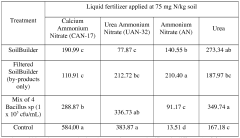
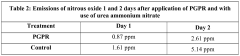
- Applying a Trichoderma-free microbial based soil additive comprising a mixture of at least four microbial strains or their filtrate to plant growth substrates, combined with a fertilizer blend like ammonium nitrate, to modulate nitrous oxide emissions effectively.
Policy Implications of HONO
The implications of nitrous acid (HONO) on climate policy are significant and multifaceted. As research continues to unveil the complex role of HONO in atmospheric chemistry and climate feedback mechanisms, policymakers must adapt their strategies to address these new findings. One key consideration is the need for more comprehensive monitoring and regulation of HONO emissions. Current environmental policies often focus on major greenhouse gases like carbon dioxide and methane, but the emerging understanding of HONO's impact suggests that it should be included in emissions inventories and reduction targets.
Furthermore, the interplay between HONO and other pollutants, particularly nitrogen oxides (NOx), necessitates an integrated approach to air quality management. Policies aimed at reducing NOx emissions may need to be reevaluated to account for their potential effects on HONO formation and subsequent climate impacts. This could lead to more nuanced and effective pollution control strategies that consider the entire atmospheric chemical system rather than individual pollutants in isolation.
The urban-rural divide in HONO concentrations and effects also has important policy implications. Urban areas, with their higher levels of HONO precursors, may require targeted interventions to mitigate HONO-related climate impacts. This could include stricter regulations on industrial emissions, changes in urban planning to reduce heat island effects, and promotion of green infrastructure to absorb pollutants. Conversely, rural areas may need different approaches focused on agricultural practices and natural HONO sources.
International cooperation and policy harmonization will be crucial in addressing the global nature of HONO's climate effects. As HONO can be transported across borders and affect regional climate patterns, coordinated efforts among nations will be necessary to effectively monitor and mitigate its impacts. This may require updates to existing climate agreements or the development of new protocols specifically addressing HONO and related compounds.
Lastly, the potential for HONO to accelerate climate feedback loops underscores the urgency of climate action. Policymakers may need to reassess the timelines and targets of current climate policies, potentially advocating for more aggressive mitigation strategies to account for the additional warming effects of HONO. This could include faster transitions to renewable energy sources, enhanced support for carbon capture technologies, and increased investment in climate resilience measures.
Furthermore, the interplay between HONO and other pollutants, particularly nitrogen oxides (NOx), necessitates an integrated approach to air quality management. Policies aimed at reducing NOx emissions may need to be reevaluated to account for their potential effects on HONO formation and subsequent climate impacts. This could lead to more nuanced and effective pollution control strategies that consider the entire atmospheric chemical system rather than individual pollutants in isolation.
The urban-rural divide in HONO concentrations and effects also has important policy implications. Urban areas, with their higher levels of HONO precursors, may require targeted interventions to mitigate HONO-related climate impacts. This could include stricter regulations on industrial emissions, changes in urban planning to reduce heat island effects, and promotion of green infrastructure to absorb pollutants. Conversely, rural areas may need different approaches focused on agricultural practices and natural HONO sources.
International cooperation and policy harmonization will be crucial in addressing the global nature of HONO's climate effects. As HONO can be transported across borders and affect regional climate patterns, coordinated efforts among nations will be necessary to effectively monitor and mitigate its impacts. This may require updates to existing climate agreements or the development of new protocols specifically addressing HONO and related compounds.
Lastly, the potential for HONO to accelerate climate feedback loops underscores the urgency of climate action. Policymakers may need to reassess the timelines and targets of current climate policies, potentially advocating for more aggressive mitigation strategies to account for the additional warming effects of HONO. This could include faster transitions to renewable energy sources, enhanced support for carbon capture technologies, and increased investment in climate resilience measures.
HONO Measurement Technologies
The measurement of nitrous acid (HONO) concentrations in the atmosphere is crucial for understanding its role in climate feedback mechanisms. Various technologies have been developed and refined over the years to accurately detect and quantify HONO levels. These measurement techniques can be broadly categorized into offline and online methods.
Offline methods involve collecting air samples and analyzing them in laboratory settings. One common offline technique is the use of denuder systems, which trap HONO on coated surfaces for subsequent analysis. These systems typically employ alkaline coatings to capture HONO, followed by ion chromatography or spectrophotometric analysis. While offline methods offer high sensitivity, they are limited by their time resolution and potential artifacts during sample collection and storage.
Online methods, on the other hand, provide real-time or near-real-time measurements of HONO concentrations. Differential Optical Absorption Spectroscopy (DOAS) is a widely used online technique that measures HONO by analyzing its unique absorption features in the ultraviolet and visible spectral regions. Long-path DOAS systems can measure HONO over extended atmospheric paths, providing spatially averaged concentrations.
Another prominent online method is Chemical Ionization Mass Spectrometry (CIMS), which offers high sensitivity and fast time resolution. CIMS techniques for HONO detection typically use iodide ions as reagent ions, forming clusters with HONO that can be detected and quantified. This method allows for continuous monitoring of HONO concentrations with detection limits in the parts per trillion range.
Cavity-enhanced absorption spectroscopy techniques, such as Incoherent Broadband Cavity-Enhanced Absorption Spectroscopy (IBBCEAS), have also been developed for HONO measurements. These methods utilize high-finesse optical cavities to achieve long effective path lengths, enhancing sensitivity and enabling detection of trace amounts of HONO.
Laser-induced fluorescence (LIF) is another sensitive technique for HONO detection. LIF methods excite HONO molecules with a laser and detect the resulting fluorescence, allowing for selective and sensitive measurements. However, LIF techniques can be complex to implement in field settings due to their sensitivity to interferences and the need for careful calibration.
Recent advancements in measurement technologies have focused on improving sensitivity, selectivity, and field deployability. Quantum Cascade Laser (QCL) based systems have emerged as promising tools for HONO detection, offering high sensitivity and specificity. These systems exploit the strong absorption features of HONO in the mid-infrared region, enabling precise quantification even in complex atmospheric mixtures.
As research into HONO's role in climate feedback mechanisms continues, the development and refinement of measurement technologies remain crucial. Future directions may include the integration of multiple techniques for comprehensive atmospheric monitoring and the development of miniaturized, low-cost sensors for widespread deployment in climate studies.
Offline methods involve collecting air samples and analyzing them in laboratory settings. One common offline technique is the use of denuder systems, which trap HONO on coated surfaces for subsequent analysis. These systems typically employ alkaline coatings to capture HONO, followed by ion chromatography or spectrophotometric analysis. While offline methods offer high sensitivity, they are limited by their time resolution and potential artifacts during sample collection and storage.
Online methods, on the other hand, provide real-time or near-real-time measurements of HONO concentrations. Differential Optical Absorption Spectroscopy (DOAS) is a widely used online technique that measures HONO by analyzing its unique absorption features in the ultraviolet and visible spectral regions. Long-path DOAS systems can measure HONO over extended atmospheric paths, providing spatially averaged concentrations.
Another prominent online method is Chemical Ionization Mass Spectrometry (CIMS), which offers high sensitivity and fast time resolution. CIMS techniques for HONO detection typically use iodide ions as reagent ions, forming clusters with HONO that can be detected and quantified. This method allows for continuous monitoring of HONO concentrations with detection limits in the parts per trillion range.
Cavity-enhanced absorption spectroscopy techniques, such as Incoherent Broadband Cavity-Enhanced Absorption Spectroscopy (IBBCEAS), have also been developed for HONO measurements. These methods utilize high-finesse optical cavities to achieve long effective path lengths, enhancing sensitivity and enabling detection of trace amounts of HONO.
Laser-induced fluorescence (LIF) is another sensitive technique for HONO detection. LIF methods excite HONO molecules with a laser and detect the resulting fluorescence, allowing for selective and sensitive measurements. However, LIF techniques can be complex to implement in field settings due to their sensitivity to interferences and the need for careful calibration.
Recent advancements in measurement technologies have focused on improving sensitivity, selectivity, and field deployability. Quantum Cascade Laser (QCL) based systems have emerged as promising tools for HONO detection, offering high sensitivity and specificity. These systems exploit the strong absorption features of HONO in the mid-infrared region, enabling precise quantification even in complex atmospheric mixtures.
As research into HONO's role in climate feedback mechanisms continues, the development and refinement of measurement technologies remain crucial. Future directions may include the integration of multiple techniques for comprehensive atmospheric monitoring and the development of miniaturized, low-cost sensors for widespread deployment in climate studies.
Unlock deeper insights with Patsnap Eureka Quick Research — get a full tech report to explore trends and direct your research. Try now!
Generate Your Research Report Instantly with AI Agent
Supercharge your innovation with Patsnap Eureka AI Agent Platform!