How Software Innovations Optimize V12 Engine Performance
AUG 5, 20259 MIN READ
Generate Your Research Report Instantly with AI Agent
Patsnap Eureka helps you evaluate technical feasibility & market potential.
V12 Engine Software Evolution and Objectives
The evolution of V12 engine software has been a journey of continuous innovation, driven by the relentless pursuit of performance optimization. From the early days of mechanical fuel injection to today's advanced electronic control units (ECUs), software has played an increasingly crucial role in enhancing engine efficiency, power output, and overall performance.
In the 1980s and 1990s, V12 engines primarily relied on basic electronic fuel injection systems with limited computational power. These early systems focused on maintaining proper air-fuel ratios and ignition timing. As computing capabilities improved, engine management systems became more sophisticated, allowing for real-time adjustments based on various sensor inputs.
The turn of the millennium marked a significant leap in V12 engine software development. Multi-point fuel injection systems, coupled with more powerful ECUs, enabled precise control over fuel delivery and ignition timing for each cylinder individually. This level of control allowed engineers to fine-tune engine performance across a wide range of operating conditions.
As environmental concerns grew, software innovations shifted towards improving fuel efficiency and reducing emissions without compromising performance. Advanced algorithms were developed to optimize combustion processes, implement variable valve timing, and manage complex forced induction systems. These innovations helped V12 engines meet increasingly stringent emissions regulations while maintaining their characteristic power and smoothness.
Recent years have seen a focus on integrating V12 engine management systems with other vehicle subsystems. Software now coordinates engine performance with transmission control, stability systems, and even active aerodynamics to deliver a holistic performance package. Machine learning and artificial intelligence are being explored to predict and adapt to driving conditions and driver behavior, further enhancing engine responsiveness and efficiency.
Looking ahead, the objectives for V12 engine software development are multifaceted. Engineers aim to push the boundaries of performance while meeting ever-tightening emissions standards. This includes developing more advanced combustion models, implementing predictive control strategies, and further optimizing the integration of hybrid technologies with traditional V12 powertrains.
Another key objective is to enhance the adaptability of V12 engines to different fuel types, including sustainable alternatives. Software innovations will play a crucial role in enabling seamless operation across various fuel compositions without compromising performance or reliability.
Ultimately, the goal of V12 engine software evolution is to preserve the allure and performance of these iconic powerplants in an era of increasing electrification and environmental consciousness. By leveraging cutting-edge software technologies, engineers strive to ensure that V12 engines remain at the pinnacle of automotive engineering, delivering unparalleled power, refinement, and driving experience for years to come.
In the 1980s and 1990s, V12 engines primarily relied on basic electronic fuel injection systems with limited computational power. These early systems focused on maintaining proper air-fuel ratios and ignition timing. As computing capabilities improved, engine management systems became more sophisticated, allowing for real-time adjustments based on various sensor inputs.
The turn of the millennium marked a significant leap in V12 engine software development. Multi-point fuel injection systems, coupled with more powerful ECUs, enabled precise control over fuel delivery and ignition timing for each cylinder individually. This level of control allowed engineers to fine-tune engine performance across a wide range of operating conditions.
As environmental concerns grew, software innovations shifted towards improving fuel efficiency and reducing emissions without compromising performance. Advanced algorithms were developed to optimize combustion processes, implement variable valve timing, and manage complex forced induction systems. These innovations helped V12 engines meet increasingly stringent emissions regulations while maintaining their characteristic power and smoothness.
Recent years have seen a focus on integrating V12 engine management systems with other vehicle subsystems. Software now coordinates engine performance with transmission control, stability systems, and even active aerodynamics to deliver a holistic performance package. Machine learning and artificial intelligence are being explored to predict and adapt to driving conditions and driver behavior, further enhancing engine responsiveness and efficiency.
Looking ahead, the objectives for V12 engine software development are multifaceted. Engineers aim to push the boundaries of performance while meeting ever-tightening emissions standards. This includes developing more advanced combustion models, implementing predictive control strategies, and further optimizing the integration of hybrid technologies with traditional V12 powertrains.
Another key objective is to enhance the adaptability of V12 engines to different fuel types, including sustainable alternatives. Software innovations will play a crucial role in enabling seamless operation across various fuel compositions without compromising performance or reliability.
Ultimately, the goal of V12 engine software evolution is to preserve the allure and performance of these iconic powerplants in an era of increasing electrification and environmental consciousness. By leveraging cutting-edge software technologies, engineers strive to ensure that V12 engines remain at the pinnacle of automotive engineering, delivering unparalleled power, refinement, and driving experience for years to come.
Market Demand for High-Performance V12 Engines
The market demand for high-performance V12 engines remains robust, driven by a combination of factors including luxury car enthusiasts, motorsport applications, and the prestige associated with these powerful powerplants. Despite increasing environmental regulations and a shift towards electrification in the automotive industry, V12 engines continue to hold a significant niche in the high-end market.
Luxury car manufacturers such as Ferrari, Lamborghini, and Aston Martin maintain V12 engines in their flagship models, catering to discerning customers who value the unique characteristics of these engines. The smooth power delivery, distinctive sound, and heritage associated with V12 engines contribute to their ongoing appeal in the luxury segment.
In the motorsport arena, V12 engines are still utilized in certain racing categories, particularly in endurance racing and high-performance GT classes. The demand for these engines in competitive environments drives continuous innovation and performance optimization, which often trickles down to road-going vehicles.
The exclusivity and prestige of V12 engines also play a crucial role in their market demand. High-net-worth individuals and collectors seek out vehicles equipped with these engines as status symbols and investments, contributing to a stable demand in the ultra-luxury segment.
However, the market for V12 engines faces challenges due to stringent emissions regulations and the global push towards more fuel-efficient vehicles. This has led to a shift in focus towards optimizing V12 engine performance through software innovations, allowing manufacturers to meet regulatory requirements while maintaining the desirable characteristics of these powerplants.
The integration of advanced engine management systems, variable valve timing, and cylinder deactivation technologies has become crucial in enhancing the efficiency and performance of V12 engines. These software-driven innovations enable manufacturers to extract maximum power while improving fuel economy and reducing emissions, thus meeting both consumer demands and regulatory standards.
As the automotive industry continues to evolve, the market for high-performance V12 engines is expected to remain stable, albeit in a more specialized and limited capacity. The demand will likely be sustained by a core group of enthusiasts and luxury car buyers who value the unique attributes of V12 engines, driving continued investment in software innovations to optimize their performance and maintain their relevance in a changing automotive landscape.
Luxury car manufacturers such as Ferrari, Lamborghini, and Aston Martin maintain V12 engines in their flagship models, catering to discerning customers who value the unique characteristics of these engines. The smooth power delivery, distinctive sound, and heritage associated with V12 engines contribute to their ongoing appeal in the luxury segment.
In the motorsport arena, V12 engines are still utilized in certain racing categories, particularly in endurance racing and high-performance GT classes. The demand for these engines in competitive environments drives continuous innovation and performance optimization, which often trickles down to road-going vehicles.
The exclusivity and prestige of V12 engines also play a crucial role in their market demand. High-net-worth individuals and collectors seek out vehicles equipped with these engines as status symbols and investments, contributing to a stable demand in the ultra-luxury segment.
However, the market for V12 engines faces challenges due to stringent emissions regulations and the global push towards more fuel-efficient vehicles. This has led to a shift in focus towards optimizing V12 engine performance through software innovations, allowing manufacturers to meet regulatory requirements while maintaining the desirable characteristics of these powerplants.
The integration of advanced engine management systems, variable valve timing, and cylinder deactivation technologies has become crucial in enhancing the efficiency and performance of V12 engines. These software-driven innovations enable manufacturers to extract maximum power while improving fuel economy and reducing emissions, thus meeting both consumer demands and regulatory standards.
As the automotive industry continues to evolve, the market for high-performance V12 engines is expected to remain stable, albeit in a more specialized and limited capacity. The demand will likely be sustained by a core group of enthusiasts and luxury car buyers who value the unique attributes of V12 engines, driving continued investment in software innovations to optimize their performance and maintain their relevance in a changing automotive landscape.
Current Software Challenges in V12 Engine Optimization
Optimizing V12 engine performance through software innovations presents several significant challenges. One of the primary obstacles is the complexity of managing the intricate interplay between multiple engine parameters. V12 engines, with their high cylinder count and sophisticated design, require precise control over fuel injection, ignition timing, and valve actuation across a wide range of operating conditions.
The sheer volume of data generated by modern engine sensors poses another challenge. Real-time processing and analysis of this data to make instantaneous adjustments to engine performance demand substantial computational power and highly efficient algorithms. Balancing the need for rapid decision-making with the limitations of onboard computing resources remains a persistent issue.
Calibration and tuning of engine management software for V12 engines is particularly demanding. The software must account for variations in manufacturing tolerances, environmental conditions, and driver behavior, all while maintaining optimal performance, fuel efficiency, and emissions compliance. This calibration process is time-consuming and requires extensive testing across diverse scenarios.
Emissions regulations present an ongoing challenge for V12 engine software optimization. As standards become increasingly stringent, software must continuously adapt to ensure compliance without compromising performance. This often involves complex trade-offs between power output, fuel economy, and emissions control, necessitating advanced predictive models and adaptive control strategies.
The integration of new technologies, such as hybrid systems or advanced materials, into V12 engines introduces additional software challenges. These innovations require seamless coordination between traditional engine management systems and new components, often with different control paradigms and response characteristics.
Ensuring software reliability and robustness in high-performance V12 engines is critical. The software must maintain stable operation under extreme conditions, such as high-speed racing or prolonged high-load situations, without compromising safety or performance. This requires extensive validation and fail-safe mechanisms to be built into the software architecture.
Lastly, the challenge of backward compatibility and future-proofing software for V12 engines cannot be overlooked. As vehicles become more connected and autonomous features are introduced, engine management software must be designed to accommodate future updates and integrate with evolving vehicle systems, all while maintaining compatibility with existing hardware.
The sheer volume of data generated by modern engine sensors poses another challenge. Real-time processing and analysis of this data to make instantaneous adjustments to engine performance demand substantial computational power and highly efficient algorithms. Balancing the need for rapid decision-making with the limitations of onboard computing resources remains a persistent issue.
Calibration and tuning of engine management software for V12 engines is particularly demanding. The software must account for variations in manufacturing tolerances, environmental conditions, and driver behavior, all while maintaining optimal performance, fuel efficiency, and emissions compliance. This calibration process is time-consuming and requires extensive testing across diverse scenarios.
Emissions regulations present an ongoing challenge for V12 engine software optimization. As standards become increasingly stringent, software must continuously adapt to ensure compliance without compromising performance. This often involves complex trade-offs between power output, fuel economy, and emissions control, necessitating advanced predictive models and adaptive control strategies.
The integration of new technologies, such as hybrid systems or advanced materials, into V12 engines introduces additional software challenges. These innovations require seamless coordination between traditional engine management systems and new components, often with different control paradigms and response characteristics.
Ensuring software reliability and robustness in high-performance V12 engines is critical. The software must maintain stable operation under extreme conditions, such as high-speed racing or prolonged high-load situations, without compromising safety or performance. This requires extensive validation and fail-safe mechanisms to be built into the software architecture.
Lastly, the challenge of backward compatibility and future-proofing software for V12 engines cannot be overlooked. As vehicles become more connected and autonomous features are introduced, engine management software must be designed to accommodate future updates and integrate with evolving vehicle systems, all while maintaining compatibility with existing hardware.
Existing Software Solutions for V12 Performance Enhancement
01 Performance optimization techniques
Software innovations focus on improving performance through various optimization techniques. These may include algorithmic improvements, efficient resource utilization, and code optimization strategies. Such innovations aim to enhance the speed, responsiveness, and overall efficiency of software applications.- Performance optimization techniques: Software innovations focus on various techniques to optimize performance, including algorithm improvements, code refactoring, and resource management. These methods aim to enhance execution speed, reduce memory usage, and improve overall system efficiency.
- Machine learning for performance prediction: Utilizing machine learning algorithms to predict and analyze software performance. This approach involves training models on historical performance data to forecast potential bottlenecks and optimize resource allocation in real-time.
- Cloud-based performance enhancement: Leveraging cloud computing technologies to improve software performance. This includes distributed computing, load balancing, and scalable architectures that can dynamically adjust to varying workloads and user demands.
- Performance monitoring and analytics: Implementing advanced monitoring tools and analytics platforms to track software performance metrics in real-time. These solutions provide insights into system behavior, helping identify and resolve performance issues quickly.
- Automated performance testing: Developing automated testing frameworks specifically designed to evaluate and improve software performance. These tools simulate various load conditions and user scenarios to identify performance bottlenecks and validate optimizations.
02 Machine learning for performance enhancement
Incorporating machine learning algorithms into software systems can significantly boost performance. These innovations leverage AI techniques to analyze patterns, predict outcomes, and optimize processes automatically. This approach can lead to more intelligent and adaptive software solutions that improve over time.Expand Specific Solutions03 Cloud-based performance solutions
Cloud computing technologies are being utilized to enhance software performance. These innovations involve distributed computing, load balancing, and scalable architectures that leverage cloud resources. Such approaches can significantly improve processing speed and handling of large-scale data operations.Expand Specific Solutions04 Real-time performance monitoring and analytics
Innovations in real-time performance monitoring and analytics enable continuous assessment and improvement of software systems. These tools provide insights into system behavior, identify bottlenecks, and suggest optimizations. Such capabilities allow for proactive performance management and quick resolution of issues.Expand Specific Solutions05 User experience-driven performance enhancements
Software innovations are increasingly focusing on enhancing performance from a user experience perspective. This includes optimizing user interfaces, reducing latency in user interactions, and personalizing software behavior based on user preferences and patterns. The goal is to create more responsive and user-friendly software applications.Expand Specific Solutions
Key Players in V12 Engine Software Innovation
The competition landscape for software innovations optimizing V12 engine performance is characterized by a mature market with established players and emerging technologies. Major automotive manufacturers like Ford, Honda, Toyota, and Nissan are at the forefront, leveraging their extensive R&D capabilities. Specialized companies such as Continental Automotive and Robert Bosch are also key players, offering advanced engine management systems. The market size is substantial, driven by the luxury and high-performance vehicle segments. Technological maturity varies, with traditional optimization techniques well-established, while newer areas like AI-driven engine control and electrification of V12 engines are still evolving, presenting opportunities for innovation and market differentiation.
Ford Global Technologies LLC
Technical Solution: Ford's software innovations for V12 engine performance optimization focus on advanced engine control units (ECUs) with sophisticated algorithms. These ECUs utilize real-time data from multiple sensors to precisely control fuel injection, ignition timing, and valve actuation. Ford has implemented machine learning models that continuously adapt to driving conditions, optimizing performance and fuel efficiency[1]. Their software also incorporates predictive maintenance features, analyzing engine data to forecast potential issues before they occur, thus enhancing reliability[3]. Additionally, Ford has developed a cloud-connected engine management system that allows for over-the-air updates, ensuring the V12 engines always run on the latest optimization software[5].
Strengths: Adaptive learning capabilities, predictive maintenance, and remote update functionality. Weaknesses: High computational requirements and potential cybersecurity vulnerabilities in connected systems.
Honda Motor Co., Ltd.
Technical Solution: Honda's approach to V12 engine performance optimization through software innovations centers on their i-VTEC (intelligent Variable Valve Timing and Lift Electronic Control) system. This advanced software-controlled system dynamically adjusts valve timing and lift to optimize engine performance across all RPM ranges. Honda has further enhanced this technology with AI-driven predictive algorithms that anticipate driving conditions and adjust engine parameters accordingly[2]. Their software also integrates with hybrid systems in high-performance applications, managing power distribution between the V12 engine and electric motors for maximum efficiency and performance[4]. Honda's latest innovations include a neural network-based combustion control system that fine-tunes the air-fuel mixture in real-time, significantly improving both power output and fuel economy[6].
Strengths: Seamless integration with hybrid systems and advanced AI-driven optimization. Weaknesses: Complexity of the system may lead to higher maintenance costs and potential reliability issues in the long term.
Core Innovations in V12 Engine Control Algorithms
Engine performance optimizing method and device and electronic control unit
PatentActiveCN110905676A
Innovation
- By obtaining the current gear signal of the gearbox, the target smoke correction table is determined, and the corresponding smoke correction value is found according to the current operating parameters of the engine, the basic smoke value is corrected, and the fuel injection amount is finally controlled. For each gear Perform optimal calibration of power and NVH performance in order to achieve balanced optimization of power and NVH performance.


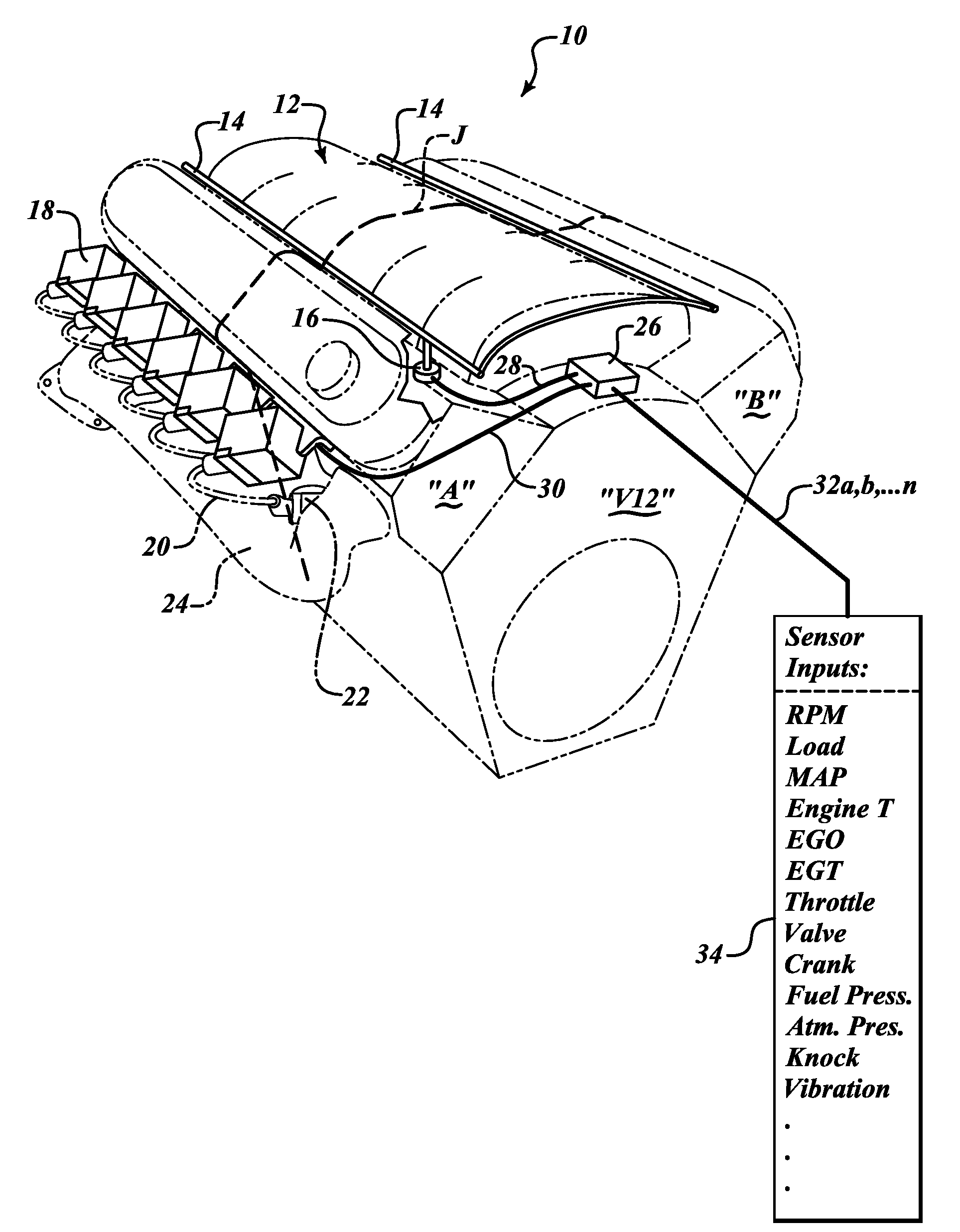
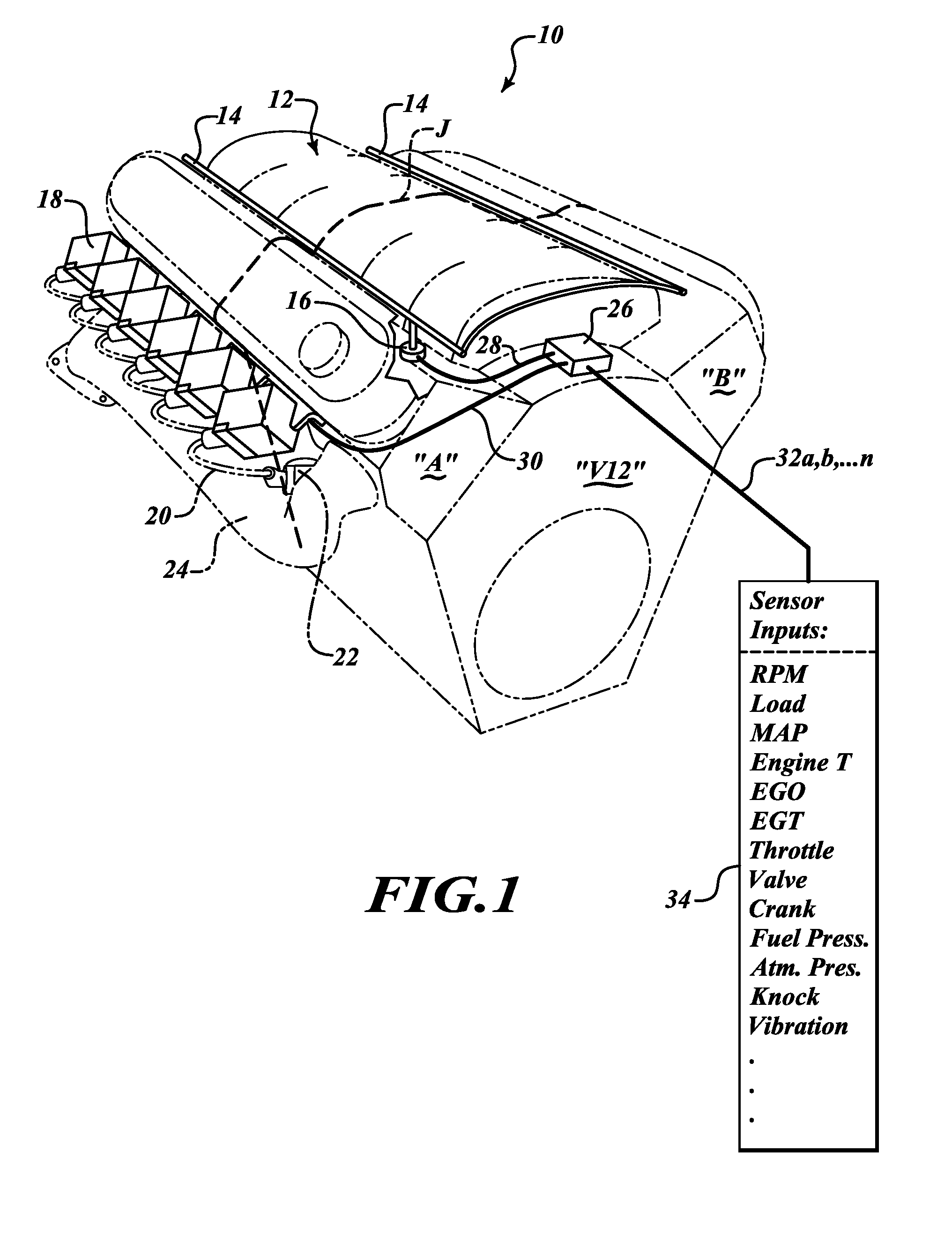
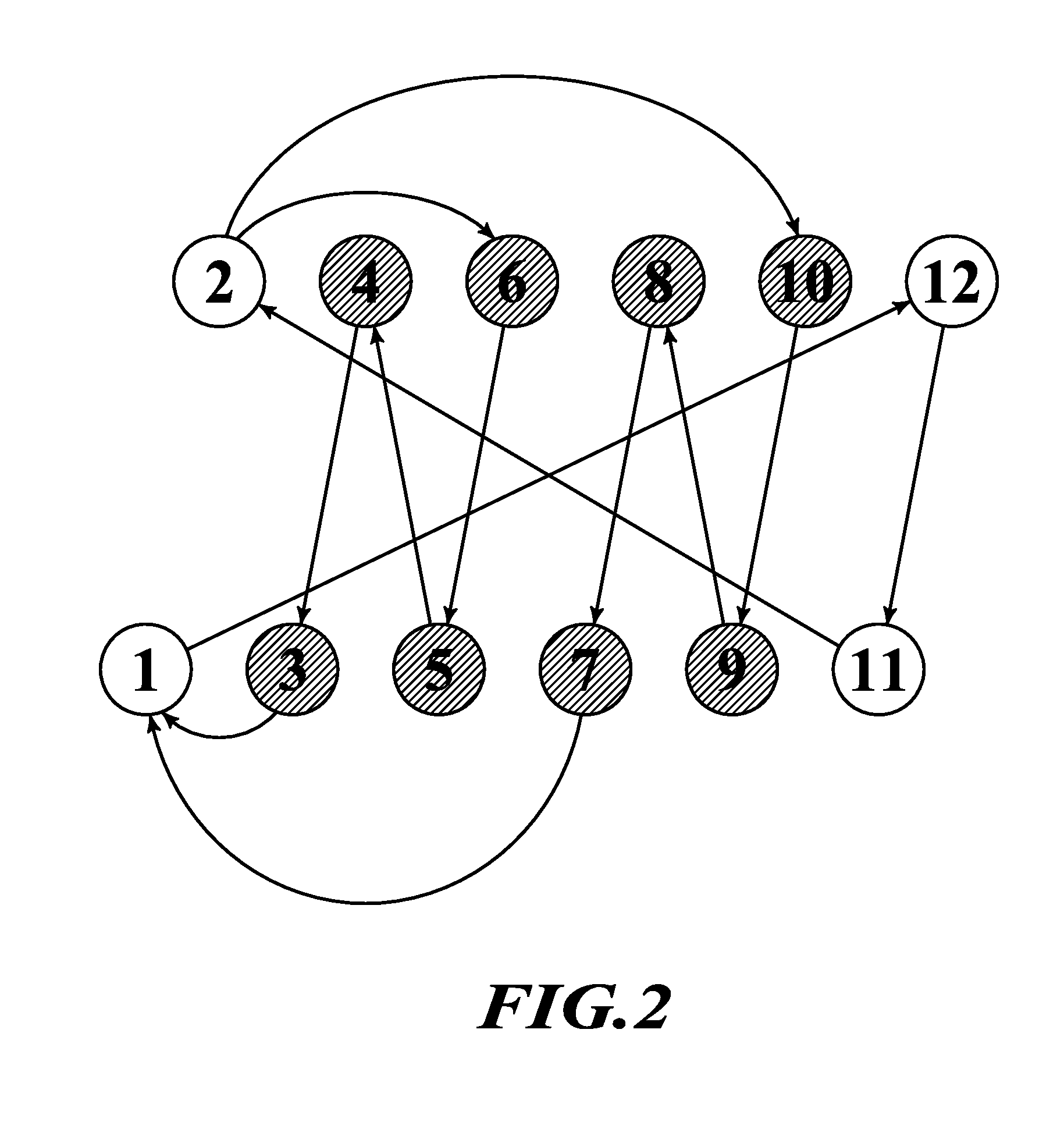
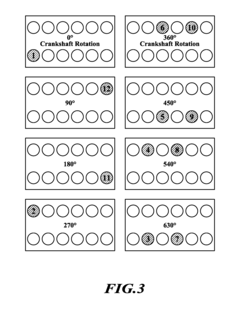
Even fire 90a°v12 IC engines, fueling and firing sequence controllers, and methods of operation by PS/p technology and IFR compensation by fuel feed control
PatentInactiveUS20090099755A1
Innovation
- Implementing a Progressive Single/Pair (PS/P) fueling and firing sequence in a 90° V12 engine, controlled by a Powertrain Control Module (PCM), which allows for Even Fire operation by selectively reducing fuel feed to specific cylinders during imbalance frequency ranges, effectively converting the engine to a balanced V8 operation during peak vibrations.
Environmental Impact of V12 Engine Software Advancements
Software innovations in V12 engine performance optimization have significant environmental implications. These advancements have led to improved fuel efficiency and reduced emissions, contributing to a more sustainable automotive industry. By fine-tuning engine parameters through sophisticated algorithms, software solutions have enabled V12 engines to operate at peak efficiency across various driving conditions.
One of the primary environmental benefits is the reduction in fuel consumption. Advanced engine management systems utilize real-time data to optimize fuel injection, ignition timing, and valve control. This precision results in more complete combustion, extracting maximum energy from each fuel molecule and reducing waste. Consequently, V12 engines equipped with cutting-edge software can achieve better mileage, reducing overall carbon dioxide emissions per kilometer traveled.
Emissions control has also seen substantial improvements through software innovations. Adaptive algorithms continuously monitor exhaust gases and adjust engine parameters to minimize harmful emissions. This dynamic approach ensures that V12 engines maintain optimal performance while adhering to stringent environmental regulations. Advanced catalytic converter management and selective catalytic reduction systems, controlled by sophisticated software, further reduce nitrogen oxides and particulate matter emissions.
The integration of start-stop technology, optimized through software, has contributed to reducing idle emissions in urban environments. By automatically shutting off the engine during brief stops and seamlessly restarting it when needed, these systems significantly decrease unnecessary fuel consumption and emissions in congested traffic conditions.
Furthermore, software advancements have enabled more effective thermal management of V12 engines. By precisely controlling coolant flow and operating temperatures, these systems ensure that the engine operates within its most efficient temperature range. This optimization not only improves performance but also reduces wear and extends engine life, indirectly contributing to environmental sustainability by reducing the frequency of engine replacements and associated manufacturing impacts.
The environmental impact of these software innovations extends beyond direct emissions. By improving overall engine efficiency, they reduce the demand for raw materials and energy in fuel production and distribution. Additionally, the extended lifespan of optimized V12 engines means fewer resources are required for manufacturing replacement engines, further reducing the automotive industry's environmental footprint.
One of the primary environmental benefits is the reduction in fuel consumption. Advanced engine management systems utilize real-time data to optimize fuel injection, ignition timing, and valve control. This precision results in more complete combustion, extracting maximum energy from each fuel molecule and reducing waste. Consequently, V12 engines equipped with cutting-edge software can achieve better mileage, reducing overall carbon dioxide emissions per kilometer traveled.
Emissions control has also seen substantial improvements through software innovations. Adaptive algorithms continuously monitor exhaust gases and adjust engine parameters to minimize harmful emissions. This dynamic approach ensures that V12 engines maintain optimal performance while adhering to stringent environmental regulations. Advanced catalytic converter management and selective catalytic reduction systems, controlled by sophisticated software, further reduce nitrogen oxides and particulate matter emissions.
The integration of start-stop technology, optimized through software, has contributed to reducing idle emissions in urban environments. By automatically shutting off the engine during brief stops and seamlessly restarting it when needed, these systems significantly decrease unnecessary fuel consumption and emissions in congested traffic conditions.
Furthermore, software advancements have enabled more effective thermal management of V12 engines. By precisely controlling coolant flow and operating temperatures, these systems ensure that the engine operates within its most efficient temperature range. This optimization not only improves performance but also reduces wear and extends engine life, indirectly contributing to environmental sustainability by reducing the frequency of engine replacements and associated manufacturing impacts.
The environmental impact of these software innovations extends beyond direct emissions. By improving overall engine efficiency, they reduce the demand for raw materials and energy in fuel production and distribution. Additionally, the extended lifespan of optimized V12 engines means fewer resources are required for manufacturing replacement engines, further reducing the automotive industry's environmental footprint.
Integration with Vehicle Connectivity and IoT
The integration of V12 engine performance optimization with vehicle connectivity and IoT represents a significant leap forward in automotive technology. This convergence allows for real-time monitoring, analysis, and adjustment of engine parameters, leading to enhanced performance, efficiency, and reliability.
Connected vehicles equipped with V12 engines can now leverage cloud-based computing and big data analytics to continuously optimize engine performance. By collecting and analyzing vast amounts of data from various sensors throughout the engine and vehicle, these systems can make instantaneous adjustments to fuel injection, ignition timing, and valve control. This level of precision and adaptability was previously unattainable with traditional engine management systems.
IoT connectivity enables V12 engines to benefit from over-the-air (OTA) updates, ensuring that the engine's software is always running the latest optimization algorithms. These updates can introduce new features, improve existing functionalities, and address any performance issues without requiring physical intervention. This capability significantly reduces maintenance costs and enhances the longevity of the engine.
Furthermore, the integration of V12 engines with IoT platforms allows for predictive maintenance. By analyzing patterns in engine performance data, potential issues can be identified and addressed before they lead to failures or decreased performance. This proactive approach not only improves reliability but also optimizes maintenance schedules, reducing downtime and extending the engine's lifespan.
Vehicle-to-vehicle (V2V) and vehicle-to-infrastructure (V2I) communication systems can also contribute to V12 engine optimization. By sharing real-time traffic and road condition data, these systems enable the engine management software to anticipate and adapt to changing driving conditions, further enhancing performance and efficiency.
The integration of artificial intelligence (AI) and machine learning algorithms with connected V12 engines opens up new possibilities for personalized performance optimization. These systems can learn from individual driving patterns and preferences, tailoring the engine's behavior to suit specific drivers or driving conditions. This level of customization ensures that the V12 engine delivers optimal performance while meeting the unique requirements of each user.
As the automotive industry moves towards autonomous driving, the role of connected V12 engines becomes even more critical. The ability to seamlessly integrate engine performance data with autonomous driving systems ensures that these high-performance engines can operate efficiently and safely in a variety of driving scenarios, from urban environments to high-speed motorways.
Connected vehicles equipped with V12 engines can now leverage cloud-based computing and big data analytics to continuously optimize engine performance. By collecting and analyzing vast amounts of data from various sensors throughout the engine and vehicle, these systems can make instantaneous adjustments to fuel injection, ignition timing, and valve control. This level of precision and adaptability was previously unattainable with traditional engine management systems.
IoT connectivity enables V12 engines to benefit from over-the-air (OTA) updates, ensuring that the engine's software is always running the latest optimization algorithms. These updates can introduce new features, improve existing functionalities, and address any performance issues without requiring physical intervention. This capability significantly reduces maintenance costs and enhances the longevity of the engine.
Furthermore, the integration of V12 engines with IoT platforms allows for predictive maintenance. By analyzing patterns in engine performance data, potential issues can be identified and addressed before they lead to failures or decreased performance. This proactive approach not only improves reliability but also optimizes maintenance schedules, reducing downtime and extending the engine's lifespan.
Vehicle-to-vehicle (V2V) and vehicle-to-infrastructure (V2I) communication systems can also contribute to V12 engine optimization. By sharing real-time traffic and road condition data, these systems enable the engine management software to anticipate and adapt to changing driving conditions, further enhancing performance and efficiency.
The integration of artificial intelligence (AI) and machine learning algorithms with connected V12 engines opens up new possibilities for personalized performance optimization. These systems can learn from individual driving patterns and preferences, tailoring the engine's behavior to suit specific drivers or driving conditions. This level of customization ensures that the V12 engine delivers optimal performance while meeting the unique requirements of each user.
As the automotive industry moves towards autonomous driving, the role of connected V12 engines becomes even more critical. The ability to seamlessly integrate engine performance data with autonomous driving systems ensures that these high-performance engines can operate efficiently and safely in a variety of driving scenarios, from urban environments to high-speed motorways.
Unlock deeper insights with Patsnap Eureka Quick Research — get a full tech report to explore trends and direct your research. Try now!
Generate Your Research Report Instantly with AI Agent
Supercharge your innovation with Patsnap Eureka AI Agent Platform!