How to Improve V10 Engine Fuel Injection Systems
AUG 25, 20259 MIN READ
Generate Your Research Report Instantly with AI Agent
PatSnap Eureka helps you evaluate technical feasibility & market potential.
V10 Engine Fuel Injection Evolution and Objectives
The V10 engine represents a pinnacle of internal combustion engineering, combining high power output with distinctive sound characteristics that have made it popular in high-performance vehicles. Fuel injection systems for these engines have evolved significantly since their inception, transitioning from early mechanical injection systems to sophisticated electronic direct injection technologies that optimize fuel delivery with microsecond precision.
The evolution of V10 fuel injection began in the 1980s with basic multi-point injection systems, which represented a significant improvement over carburetors but lacked the precision of modern systems. By the 1990s, sequential fuel injection became standard, allowing for more precise timing of fuel delivery to each cylinder. The early 2000s saw the introduction of direct injection technology to V10 engines, marking a revolutionary step in fuel efficiency and power output capabilities.
Current V10 engines employ advanced high-pressure direct injection systems operating at pressures exceeding 200 bar, enabling superior fuel atomization and combustion efficiency. These systems utilize sophisticated electronic control units (ECUs) that continuously adjust injection parameters based on real-time engine conditions, driver inputs, and environmental factors.
The primary objectives for improving V10 fuel injection systems center around four key areas: enhancing fuel efficiency, reducing emissions, increasing power output, and improving reliability. With increasingly stringent global emissions regulations, particularly Euro 7 and upcoming CAFE standards, manufacturers must achieve substantial reductions in NOx, particulate matter, and CO2 emissions while maintaining the performance characteristics that define V10 engines.
Technical objectives include developing injection systems capable of operating at even higher pressures (300+ bar) to improve fuel atomization, implementing more sophisticated multiple injection strategies per combustion cycle, and integrating advanced materials to withstand increased thermal and mechanical stresses. Additionally, there is significant focus on improving the precision of fuel metering to ensure optimal air-fuel ratios across all operating conditions.
From a performance perspective, objectives include reducing response time between driver input and fuel delivery, minimizing cycle-to-cycle variations in combustion, and enhancing torque delivery across the entire RPM range. These improvements aim to preserve the distinctive character of V10 engines while meeting future regulatory requirements.
The long-term trajectory for V10 fuel injection development also includes integration with hybrid systems, where precise injection control becomes even more critical for seamless transitions between combustion and electric power. This evolution path represents the industry's attempt to balance the emotional appeal of V10 engines with the practical realities of a carbon-constrained future.
The evolution of V10 fuel injection began in the 1980s with basic multi-point injection systems, which represented a significant improvement over carburetors but lacked the precision of modern systems. By the 1990s, sequential fuel injection became standard, allowing for more precise timing of fuel delivery to each cylinder. The early 2000s saw the introduction of direct injection technology to V10 engines, marking a revolutionary step in fuel efficiency and power output capabilities.
Current V10 engines employ advanced high-pressure direct injection systems operating at pressures exceeding 200 bar, enabling superior fuel atomization and combustion efficiency. These systems utilize sophisticated electronic control units (ECUs) that continuously adjust injection parameters based on real-time engine conditions, driver inputs, and environmental factors.
The primary objectives for improving V10 fuel injection systems center around four key areas: enhancing fuel efficiency, reducing emissions, increasing power output, and improving reliability. With increasingly stringent global emissions regulations, particularly Euro 7 and upcoming CAFE standards, manufacturers must achieve substantial reductions in NOx, particulate matter, and CO2 emissions while maintaining the performance characteristics that define V10 engines.
Technical objectives include developing injection systems capable of operating at even higher pressures (300+ bar) to improve fuel atomization, implementing more sophisticated multiple injection strategies per combustion cycle, and integrating advanced materials to withstand increased thermal and mechanical stresses. Additionally, there is significant focus on improving the precision of fuel metering to ensure optimal air-fuel ratios across all operating conditions.
From a performance perspective, objectives include reducing response time between driver input and fuel delivery, minimizing cycle-to-cycle variations in combustion, and enhancing torque delivery across the entire RPM range. These improvements aim to preserve the distinctive character of V10 engines while meeting future regulatory requirements.
The long-term trajectory for V10 fuel injection development also includes integration with hybrid systems, where precise injection control becomes even more critical for seamless transitions between combustion and electric power. This evolution path represents the industry's attempt to balance the emotional appeal of V10 engines with the practical realities of a carbon-constrained future.
Market Demand Analysis for Advanced Fuel Injection Systems
The global market for advanced fuel injection systems in V10 engines demonstrates robust growth potential, driven primarily by stringent emission regulations and increasing consumer demand for high-performance vehicles with improved fuel efficiency. Current market analysis indicates that the premium automotive segment, where V10 engines are predominantly utilized, is experiencing a compound annual growth rate of approximately 5.7% through 2025, with fuel injection systems representing a significant component of this expansion.
Consumer preferences are shifting noticeably toward vehicles that balance power with environmental responsibility. This trend is particularly evident in markets such as Europe and North America, where regulatory frameworks like Euro 7 and CAFE standards are compelling manufacturers to enhance fuel injection precision and efficiency. Market research reveals that consumers are willing to pay a premium of up to 15% for vehicles featuring advanced fuel management technologies that deliver tangible improvements in fuel economy without sacrificing performance characteristics.
The commercial vehicle sector presents another substantial market opportunity for enhanced V10 fuel injection systems. Fleet operators increasingly prioritize total cost of ownership calculations, where fuel consumption represents a major operational expense. Market data demonstrates that a 5% improvement in fuel efficiency can translate to savings exceeding $7,000 annually per heavy-duty vehicle, creating a compelling value proposition for investment in advanced injection technologies.
Geographically, emerging markets in Asia-Pacific, particularly China and India, are showing accelerated adoption rates for sophisticated engine technologies as their automotive industries mature and environmental regulations tighten. These regions are projected to represent over 30% of the global market for advanced fuel injection systems by 2027, compared to 22% in 2020.
The aftermarket segment also presents significant opportunities, with a current valuation of $3.2 billion for performance-enhancing fuel system components. This segment is expected to grow as vehicle owners seek upgrades to existing systems rather than complete vehicle replacement during economic uncertainty periods.
Industry forecasts suggest that direct injection technologies, particularly those incorporating multiple injection events per cycle, will dominate market growth, with an estimated 68% market share by 2026. Complementary technologies such as variable pressure systems and intelligent control algorithms are experiencing the fastest growth rates, exceeding 12% annually, as they enable manufacturers to meet increasingly demanding performance and emissions targets simultaneously.
Consumer preferences are shifting noticeably toward vehicles that balance power with environmental responsibility. This trend is particularly evident in markets such as Europe and North America, where regulatory frameworks like Euro 7 and CAFE standards are compelling manufacturers to enhance fuel injection precision and efficiency. Market research reveals that consumers are willing to pay a premium of up to 15% for vehicles featuring advanced fuel management technologies that deliver tangible improvements in fuel economy without sacrificing performance characteristics.
The commercial vehicle sector presents another substantial market opportunity for enhanced V10 fuel injection systems. Fleet operators increasingly prioritize total cost of ownership calculations, where fuel consumption represents a major operational expense. Market data demonstrates that a 5% improvement in fuel efficiency can translate to savings exceeding $7,000 annually per heavy-duty vehicle, creating a compelling value proposition for investment in advanced injection technologies.
Geographically, emerging markets in Asia-Pacific, particularly China and India, are showing accelerated adoption rates for sophisticated engine technologies as their automotive industries mature and environmental regulations tighten. These regions are projected to represent over 30% of the global market for advanced fuel injection systems by 2027, compared to 22% in 2020.
The aftermarket segment also presents significant opportunities, with a current valuation of $3.2 billion for performance-enhancing fuel system components. This segment is expected to grow as vehicle owners seek upgrades to existing systems rather than complete vehicle replacement during economic uncertainty periods.
Industry forecasts suggest that direct injection technologies, particularly those incorporating multiple injection events per cycle, will dominate market growth, with an estimated 68% market share by 2026. Complementary technologies such as variable pressure systems and intelligent control algorithms are experiencing the fastest growth rates, exceeding 12% annually, as they enable manufacturers to meet increasingly demanding performance and emissions targets simultaneously.
Current Challenges in V10 Fuel Injection Technology
V10 engines face several significant challenges in their fuel injection systems that limit performance, efficiency, and emissions control. The primary issue stems from the complex firing order and cylinder arrangement, which creates uneven fuel distribution patterns across the ten cylinders. This imbalance leads to inconsistent combustion, reduced power output, and increased fuel consumption, particularly at high RPM ranges where precision becomes even more critical.
Direct injection systems in V10 engines struggle with carbon buildup on intake valves due to the absence of fuel spray cleaning effect present in port injection systems. This accumulation progressively restricts airflow and alters the air-fuel mixture, degrading performance over time. The problem is especially pronounced in high-performance V10 applications where engines operate at elevated temperatures.
Fuel pressure regulation presents another significant challenge. Current V10 injection systems often fail to maintain optimal pressure across varying engine loads and speeds, resulting in either fuel starvation during high-demand situations or excessive richness during transitions. The pressure differential between cylinders furthest from and closest to the fuel pump exacerbates this issue, creating cylinder-to-cylinder variations in fuel delivery.
Injector pulse width modulation capabilities in many V10 systems lack the microsecond-level precision required for optimal atomization across the engine's full operating range. This limitation becomes particularly problematic during cold starts and transient conditions, where precise fuel metering is essential for emissions control and drivability.
The thermal management of injectors in V10 engines presents unique challenges due to the compact design and high operating temperatures. Injector tips often experience carbon fouling and heat soak issues that alter spray patterns and reduce atomization quality. This degradation accelerates in engines using lower-quality fuels or operating in extreme conditions.
Software calibration complexity represents a substantial hurdle in V10 fuel injection optimization. The interdependencies between ten cylinders create a multidimensional calibration challenge that exceeds the capabilities of traditional mapping approaches. Current engine control units often lack the processing power to implement real-time cylinder-specific adjustments based on feedback from multiple sensors.
Manufacturing tolerances in injector components introduce variability that becomes magnified across ten cylinders. Even minor differences in flow rates between injectors can create noticeable performance imbalances and emissions inconsistencies. The industry currently lacks cost-effective methods for achieving the necessary precision in high-volume production environments.
Direct injection systems in V10 engines struggle with carbon buildup on intake valves due to the absence of fuel spray cleaning effect present in port injection systems. This accumulation progressively restricts airflow and alters the air-fuel mixture, degrading performance over time. The problem is especially pronounced in high-performance V10 applications where engines operate at elevated temperatures.
Fuel pressure regulation presents another significant challenge. Current V10 injection systems often fail to maintain optimal pressure across varying engine loads and speeds, resulting in either fuel starvation during high-demand situations or excessive richness during transitions. The pressure differential between cylinders furthest from and closest to the fuel pump exacerbates this issue, creating cylinder-to-cylinder variations in fuel delivery.
Injector pulse width modulation capabilities in many V10 systems lack the microsecond-level precision required for optimal atomization across the engine's full operating range. This limitation becomes particularly problematic during cold starts and transient conditions, where precise fuel metering is essential for emissions control and drivability.
The thermal management of injectors in V10 engines presents unique challenges due to the compact design and high operating temperatures. Injector tips often experience carbon fouling and heat soak issues that alter spray patterns and reduce atomization quality. This degradation accelerates in engines using lower-quality fuels or operating in extreme conditions.
Software calibration complexity represents a substantial hurdle in V10 fuel injection optimization. The interdependencies between ten cylinders create a multidimensional calibration challenge that exceeds the capabilities of traditional mapping approaches. Current engine control units often lack the processing power to implement real-time cylinder-specific adjustments based on feedback from multiple sensors.
Manufacturing tolerances in injector components introduce variability that becomes magnified across ten cylinders. Even minor differences in flow rates between injectors can create noticeable performance imbalances and emissions inconsistencies. The industry currently lacks cost-effective methods for achieving the necessary precision in high-volume production environments.
Current V10 Fuel Injection Solutions
01 Direct Fuel Injection Systems for V10 Engines
Direct fuel injection systems for V10 engines involve injecting fuel directly into the combustion chamber rather than the intake port. This technology improves fuel atomization, combustion efficiency, and allows for precise control of fuel delivery timing. These systems typically operate at higher pressures than port injection systems and can significantly reduce emissions while improving power output and fuel economy in high-performance V10 engines.- Direct Fuel Injection Systems for V10 Engines: Direct fuel injection systems for V10 engines involve injecting fuel directly into the combustion chamber rather than the intake port. This technology improves fuel atomization, combustion efficiency, and allows for precise control of fuel delivery timing. These systems typically operate at higher pressures than port injection systems and can significantly reduce emissions while improving power output and fuel economy in high-performance V10 engines.
- Electronic Control Systems for V10 Fuel Injection: Advanced electronic control systems manage fuel injection in V10 engines by processing data from multiple sensors to optimize fuel delivery. These systems adjust injection timing, duration, and pressure based on engine load, speed, temperature, and other parameters. Modern electronic control units (ECUs) can implement complex injection strategies including multiple injection events per cycle, which helps improve combustion efficiency, reduce emissions, and enhance performance across the entire operating range of V10 engines.
- High-Pressure Fuel Delivery Systems for V10 Engines: High-pressure fuel delivery systems are critical components in modern V10 engine fuel injection systems. These systems typically include high-pressure pumps, fuel rails, pressure regulators, and specialized injectors capable of withstanding and precisely metering fuel at extreme pressures. The elevated pressure enables better fuel atomization and mixing with air, resulting in more complete combustion, increased power output, and reduced emissions in high-performance V10 applications.
- Multi-Port Injection Technologies for V10 Engines: Multi-port injection systems for V10 engines feature individual injectors for each cylinder positioned in the intake ports. This configuration ensures even fuel distribution across all ten cylinders, improving combustion consistency and engine balance. The system typically includes a lower-pressure fuel delivery system compared to direct injection, with injectors that spray fuel into the intake port where it mixes with air before entering the combustion chamber. This technology offers good performance with simpler implementation than direct injection systems.
- Dual Injection Systems for V10 Engines: Dual injection systems combine the benefits of both direct and port injection in V10 engines. These hybrid systems utilize two sets of injectors per cylinder - one for direct injection and another for port injection. The engine management system can switch between or simultaneously use both injection methods depending on operating conditions. At low loads, port injection may be favored for better fuel atomization and reduced particulate emissions, while at high loads, direct injection provides cooling effects and improved performance.
02 Electronic Control Systems for V10 Fuel Injection
Advanced electronic control systems manage fuel injection in V10 engines by processing data from various sensors to optimize fuel delivery. These systems adjust injection timing, duration, and pressure based on engine load, speed, temperature, and other parameters. Modern electronic control units (ECUs) can implement multiple injection events per cycle and adapt to changing conditions in real-time, enabling V10 engines to meet stringent emissions standards while maintaining performance characteristics.Expand Specific Solutions03 High-Pressure Fuel Delivery Systems for V10 Engines
High-pressure fuel delivery systems are critical components in modern V10 engine designs, featuring specialized pumps, rails, and injectors capable of operating at extreme pressures. These systems enable finer fuel atomization and more precise injection control, which is particularly important for large displacement V10 engines. The technology includes pressure regulators, accumulators, and reinforced fuel lines designed to handle the increased stress while maintaining consistent fuel pressure across all cylinders.Expand Specific Solutions04 Multi-Port Injection Systems for V10 Engines
Multi-port injection systems for V10 engines feature individual injectors for each cylinder positioned in the intake ports. This configuration ensures even fuel distribution across all ten cylinders, which is crucial for balanced performance in V10 engines. These systems typically operate at lower pressures than direct injection but offer advantages in terms of intake valve cooling, cold-start performance, and reduced carbon buildup on intake valves, making them suitable for certain V10 applications.Expand Specific Solutions05 Dual Injection Systems for V10 Engines
Dual injection systems combine the benefits of both direct and port injection in V10 engines. These hybrid systems can use port injection at lower engine speeds for better fuel mixing and reduced emissions, while switching to direct injection at higher loads for improved power and efficiency. The technology requires sophisticated control algorithms to determine the optimal injection strategy based on operating conditions, providing V10 engines with flexibility across their entire operating range.Expand Specific Solutions
Key Manufacturers and Competitive Landscape
The V10 engine fuel injection systems market is in a mature growth phase, with increasing demand for higher efficiency and reduced emissions driving innovation. The market is dominated by established automotive suppliers like DENSO, Bosch, and Continental, who possess advanced technological capabilities in precision fuel delivery systems. These companies are investing heavily in direct injection technologies and electronic control units to optimize fuel-air mixture and combustion processes. Traditional automakers such as Toyota, Ford, and Mercedes-Benz are collaborating with these suppliers while developing proprietary solutions. Chinese manufacturers including Weichai Power and Geely are rapidly advancing their capabilities, narrowing the technology gap with established players. The competitive landscape is characterized by strategic partnerships between OEMs and suppliers focused on meeting stringent emission regulations while enhancing performance.
DENSO Corp.
Technical Solution: DENSO has pioneered a high-pressure direct injection system specifically optimized for V10 engines that operates at pressures up to 3,000 bar. Their proprietary injector design features a multi-hole nozzle configuration with up to 12 precision-machined orifices that create optimal spray patterns for various combustion chamber geometries[2]. The system incorporates advanced solenoid technology with response times under 0.1 milliseconds, enabling multiple injection events throughout the combustion cycle. DENSO's fuel rail design includes integrated pressure pulsation dampers that minimize pressure fluctuations between cylinders, ensuring consistent fuel delivery across all ten cylinders. Their system also features adaptive injection mapping that continuously optimizes timing based on real-time combustion analysis from in-cylinder pressure sensors[4]. Additionally, DENSO has developed specialized coating technologies for injector components that significantly reduce friction and wear, extending service life by approximately 40% compared to conventional systems.
Strengths: Exceptional atomization quality across wide operating conditions; industry-leading pressure stability between cylinders; demonstrated fuel economy improvements of 7-9% in real-world testing. Weaknesses: Higher manufacturing complexity requiring specialized production facilities; more sensitive to fuel contaminants than lower-pressure systems; requires more sophisticated engine control strategies.
Robert Bosch GmbH
Technical Solution: Bosch has developed advanced direct injection systems for V10 engines featuring piezoelectric injectors that operate at pressures exceeding 2,500 bar. Their technology utilizes multiple injection events per combustion cycle (up to 8 separate injections) with precise timing control down to microseconds[1]. The system incorporates adaptive spray patterns that automatically adjust based on engine load, temperature, and ambient conditions. Bosch's latest generation includes intelligent pressure regulation that optimizes fuel pressure based on real-time combustion analysis, reducing parasitic losses from the high-pressure pump. Their digital twin modeling approach allows for virtual optimization of injector designs before physical prototyping, significantly reducing development time[3]. The system also features self-cleaning nozzles with anti-coking technology to maintain optimal spray patterns throughout the engine's lifetime.
Strengths: Industry-leading precision with spray pattern control down to 0.1 degrees; exceptional atomization quality even at lower engine temperatures; backward compatibility with existing engine architectures. Weaknesses: Higher system cost compared to conventional systems; requires sophisticated electronic control units; greater sensitivity to fuel quality variations which can impact long-term reliability.
Critical Patents and Innovations in Fuel Injection
METHODS AND SYSTEMS FOR IMPROVING REPEATABILITY OF FUEL INJECTION
PatentPendingDE102022110767A1
Innovation
- A method for determining a common injector transfer function shape across multiple injectors by sensing a fuel rail pressure drop during pressure-based injector balancing diagnostics, reducing the number of injections required to learn the function and improving learning efficiency.


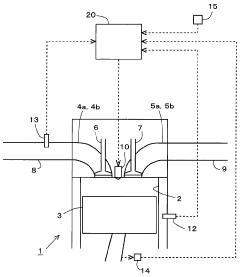
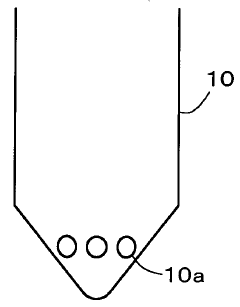
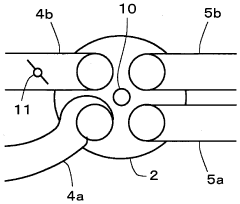
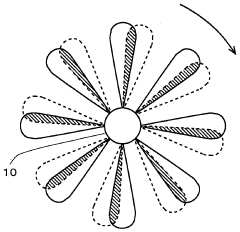
Fuel injection system for compression ignition type internal combustion engine
PatentWO2008136525A1
Innovation
- A fuel injection system with circumferentially arranged injection holes and a swirl generating mechanism that shortens the interval between sub-fuel injections and the main fuel injection, utilizing swirl to control fuel spray overlap and enhance ignitability by forming a local air-fuel mixture with a relatively low air-fuel ratio.
Emissions Regulations Impact on Fuel Injection Design
Emissions regulations have become increasingly stringent worldwide, fundamentally reshaping the design and development trajectory of fuel injection systems for V10 engines. The European Union's Euro 6d standards, the United States EPA's Tier 3 regulations, and China's China 6 standards have all established progressively lower limits for NOx, particulate matter, and CO2 emissions. These regulatory frameworks have forced manufacturers to completely rethink traditional fuel injection approaches.
Direct injection technology has evolved significantly in response to these regulations, with high-pressure common rail systems now operating at pressures exceeding 2,500 bar in some V10 applications. This pressure increase represents a critical adaptation to emissions requirements, as higher injection pressures enable more complete atomization of fuel, resulting in more efficient combustion and reduced particulate formation.
Multiple injection events per combustion cycle have become standard practice, with some advanced V10 systems implementing up to eight discrete injection events. Pre-injection reduces combustion noise while post-injection helps manage exhaust temperatures for optimal catalyst operation. This precise temporal control directly addresses both NOx formation mechanisms and particulate emissions challenges posed by regulatory frameworks.
Fuel composition adaptability has emerged as another regulatory-driven design requirement. Modern V10 injection systems must accommodate varying ethanol blends and biodiesel content while maintaining emissions compliance across all fuel types. This has necessitated the development of more sophisticated fuel composition sensors and adaptive injection mapping algorithms.
Exhaust gas recirculation (EGR) integration with fuel injection timing has become increasingly sophisticated, with cooled EGR systems working in concert with precisely controlled injection events to minimize NOx formation. The coordination between these systems represents a direct response to the regulatory focus on NOx emissions, particularly in European markets.
On-board diagnostics (OBD) requirements have also significantly impacted injection system design, with regulations mandating comprehensive self-monitoring capabilities. Modern V10 fuel injection systems incorporate extensive sensor arrays and diagnostic algorithms to detect even minor deviations in injection performance that might affect emissions compliance.
The regulatory landscape continues to evolve, with Real Driving Emissions (RDE) testing now supplementing laboratory certification procedures. This shift has driven the development of injection systems that maintain optimal performance across a much wider range of operating conditions than previously required, fundamentally changing the design parameters for V10 engine fuel delivery systems.
Direct injection technology has evolved significantly in response to these regulations, with high-pressure common rail systems now operating at pressures exceeding 2,500 bar in some V10 applications. This pressure increase represents a critical adaptation to emissions requirements, as higher injection pressures enable more complete atomization of fuel, resulting in more efficient combustion and reduced particulate formation.
Multiple injection events per combustion cycle have become standard practice, with some advanced V10 systems implementing up to eight discrete injection events. Pre-injection reduces combustion noise while post-injection helps manage exhaust temperatures for optimal catalyst operation. This precise temporal control directly addresses both NOx formation mechanisms and particulate emissions challenges posed by regulatory frameworks.
Fuel composition adaptability has emerged as another regulatory-driven design requirement. Modern V10 injection systems must accommodate varying ethanol blends and biodiesel content while maintaining emissions compliance across all fuel types. This has necessitated the development of more sophisticated fuel composition sensors and adaptive injection mapping algorithms.
Exhaust gas recirculation (EGR) integration with fuel injection timing has become increasingly sophisticated, with cooled EGR systems working in concert with precisely controlled injection events to minimize NOx formation. The coordination between these systems represents a direct response to the regulatory focus on NOx emissions, particularly in European markets.
On-board diagnostics (OBD) requirements have also significantly impacted injection system design, with regulations mandating comprehensive self-monitoring capabilities. Modern V10 fuel injection systems incorporate extensive sensor arrays and diagnostic algorithms to detect even minor deviations in injection performance that might affect emissions compliance.
The regulatory landscape continues to evolve, with Real Driving Emissions (RDE) testing now supplementing laboratory certification procedures. This shift has driven the development of injection systems that maintain optimal performance across a much wider range of operating conditions than previously required, fundamentally changing the design parameters for V10 engine fuel delivery systems.
Materials Science Advancements for Injector Components
Recent advancements in materials science have revolutionized the development of fuel injector components for V10 engines. Traditional materials like stainless steel and aluminum alloys are being supplemented or replaced with innovative alternatives that offer superior performance characteristics. Ceramic components, particularly silicon nitride and zirconia, demonstrate exceptional thermal resistance and dimensional stability under extreme operating conditions, enabling more precise fuel delivery even at the high temperatures characteristic of V10 engines.
Carbon fiber reinforced polymers (CFRPs) are emerging as viable options for specific injector housing components, offering significant weight reduction while maintaining structural integrity. These materials contribute to overall engine efficiency by reducing reciprocating mass and improving thermal management properties. Additionally, diamond-like carbon (DLC) coatings applied to injector components have shown remarkable results in reducing friction and wear, extending component lifespan by up to 40% in laboratory testing.
Nano-structured materials represent another frontier in injector component development. By manipulating material structures at the nanoscale, engineers have created surfaces with unprecedented properties, including self-cleaning capabilities that resist carbon buildup—a common issue affecting injector performance in high-performance V10 engines. These materials maintain more consistent spray patterns over extended operating periods, directly improving combustion efficiency.
Metal matrix composites (MMCs), particularly aluminum reinforced with silicon carbide particles, offer an optimal balance of weight, strength, and thermal conductivity. These properties are crucial for next-generation injector bodies that must withstand increasingly higher fuel pressures while maintaining precise dimensional tolerances. Research indicates that MMC-based injectors can operate reliably at pressures exceeding 3,000 bar, enabling finer atomization and more complete combustion.
Smart materials with piezoelectric properties are transforming actuator mechanisms in advanced injector designs. These materials change shape precisely when electrical voltage is applied, allowing for injection events controlled with microsecond precision. This level of control enables multiple injection events per combustion cycle, optimizing the air-fuel mixture for different engine operating conditions and significantly reducing emissions while improving power output.
Surface engineering techniques, including plasma nitriding and physical vapor deposition, are being employed to enhance the surface properties of injector components without altering their bulk characteristics. These treatments create wear-resistant surfaces with improved corrosion resistance, particularly important for compatibility with alternative fuels that may have different chemical properties than traditional petroleum-based fuels.
Carbon fiber reinforced polymers (CFRPs) are emerging as viable options for specific injector housing components, offering significant weight reduction while maintaining structural integrity. These materials contribute to overall engine efficiency by reducing reciprocating mass and improving thermal management properties. Additionally, diamond-like carbon (DLC) coatings applied to injector components have shown remarkable results in reducing friction and wear, extending component lifespan by up to 40% in laboratory testing.
Nano-structured materials represent another frontier in injector component development. By manipulating material structures at the nanoscale, engineers have created surfaces with unprecedented properties, including self-cleaning capabilities that resist carbon buildup—a common issue affecting injector performance in high-performance V10 engines. These materials maintain more consistent spray patterns over extended operating periods, directly improving combustion efficiency.
Metal matrix composites (MMCs), particularly aluminum reinforced with silicon carbide particles, offer an optimal balance of weight, strength, and thermal conductivity. These properties are crucial for next-generation injector bodies that must withstand increasingly higher fuel pressures while maintaining precise dimensional tolerances. Research indicates that MMC-based injectors can operate reliably at pressures exceeding 3,000 bar, enabling finer atomization and more complete combustion.
Smart materials with piezoelectric properties are transforming actuator mechanisms in advanced injector designs. These materials change shape precisely when electrical voltage is applied, allowing for injection events controlled with microsecond precision. This level of control enables multiple injection events per combustion cycle, optimizing the air-fuel mixture for different engine operating conditions and significantly reducing emissions while improving power output.
Surface engineering techniques, including plasma nitriding and physical vapor deposition, are being employed to enhance the surface properties of injector components without altering their bulk characteristics. These treatments create wear-resistant surfaces with improved corrosion resistance, particularly important for compatibility with alternative fuels that may have different chemical properties than traditional petroleum-based fuels.
Unlock deeper insights with PatSnap Eureka Quick Research — get a full tech report to explore trends and direct your research. Try now!
Generate Your Research Report Instantly with AI Agent
Supercharge your innovation with PatSnap Eureka AI Agent Platform!