

V10 Engine vs Inline-4: Durability and Strength
AUG 25, 20259 MIN READ
Generate Your Research Report Instantly with AI Agent
PatSnap Eureka helps you evaluate technical feasibility & market potential.
Engine Configuration Evolution and Objectives
The evolution of internal combustion engine configurations represents a fascinating journey through automotive engineering history, with various designs emerging to meet changing performance requirements, efficiency standards, and manufacturing capabilities. The comparison between V10 and Inline-4 engines highlights the diverse approaches engineers have taken to solve power, durability, and packaging challenges over decades of development.
Engine configuration evolution began in the late 19th century with simple single and twin-cylinder designs, progressing through the early 20th century when inline configurations (particularly inline-4 and inline-6) became industry standards due to their manufacturing simplicity and reasonable balance characteristics. The post-WWII era saw significant diversification, with V-configurations gaining prominence as automotive manufacturers sought increased power density and improved packaging options.
The V10 engine emerged primarily in the 1990s for high-performance applications, representing the culmination of engineering efforts to maximize power while maintaining reasonable weight distribution and packaging dimensions. Initially developed for Formula 1 racing and later adopted in premium sports cars and supercars, the V10 configuration offered an optimal balance between the smoothness of higher-cylinder-count engines and the compactness of V-configurations.
Concurrently, the inline-4 configuration evolved from its utilitarian origins to become increasingly sophisticated. Modern inline-4 engines incorporate advanced materials, precision manufacturing techniques, and innovative technologies like variable valve timing and direct injection to achieve remarkable efficiency and durability despite their relatively simple architecture.
The technical objectives driving these different configurations reflect fundamentally different priorities. V10 engines prioritize maximum power output, distinctive sound characteristics, and prestige, accepting trade-offs in terms of complexity, weight, and fuel efficiency. Their development objectives typically focus on thermal management, reducing friction losses across ten cylinders, and managing the substantial forces generated during high-RPM operation.
Inline-4 engines, conversely, are developed with objectives centered on manufacturing efficiency, packaging versatility, fuel economy, and reliability for mass-market applications. Recent development has focused on extracting maximum performance from minimal displacement through technologies like turbocharging and advanced electronic control systems.
Understanding this evolutionary context provides essential perspective when evaluating the durability and strength characteristics of these contrasting engine configurations. The engineering decisions that shaped both designs reflect different priorities and use cases, with each configuration optimized for specific performance parameters rather than representing inherently superior or inferior approaches to internal combustion engine design.
Engine configuration evolution began in the late 19th century with simple single and twin-cylinder designs, progressing through the early 20th century when inline configurations (particularly inline-4 and inline-6) became industry standards due to their manufacturing simplicity and reasonable balance characteristics. The post-WWII era saw significant diversification, with V-configurations gaining prominence as automotive manufacturers sought increased power density and improved packaging options.
The V10 engine emerged primarily in the 1990s for high-performance applications, representing the culmination of engineering efforts to maximize power while maintaining reasonable weight distribution and packaging dimensions. Initially developed for Formula 1 racing and later adopted in premium sports cars and supercars, the V10 configuration offered an optimal balance between the smoothness of higher-cylinder-count engines and the compactness of V-configurations.
Concurrently, the inline-4 configuration evolved from its utilitarian origins to become increasingly sophisticated. Modern inline-4 engines incorporate advanced materials, precision manufacturing techniques, and innovative technologies like variable valve timing and direct injection to achieve remarkable efficiency and durability despite their relatively simple architecture.
The technical objectives driving these different configurations reflect fundamentally different priorities. V10 engines prioritize maximum power output, distinctive sound characteristics, and prestige, accepting trade-offs in terms of complexity, weight, and fuel efficiency. Their development objectives typically focus on thermal management, reducing friction losses across ten cylinders, and managing the substantial forces generated during high-RPM operation.
Inline-4 engines, conversely, are developed with objectives centered on manufacturing efficiency, packaging versatility, fuel economy, and reliability for mass-market applications. Recent development has focused on extracting maximum performance from minimal displacement through technologies like turbocharging and advanced electronic control systems.
Understanding this evolutionary context provides essential perspective when evaluating the durability and strength characteristics of these contrasting engine configurations. The engineering decisions that shaped both designs reflect different priorities and use cases, with each configuration optimized for specific performance parameters rather than representing inherently superior or inferior approaches to internal combustion engine design.
Market Demand Analysis for V10 vs Inline-4 Engines
The automotive engine market has witnessed significant shifts in consumer preferences and regulatory requirements over the past decade. V10 engines, once symbols of automotive excellence and performance in high-end sports cars and luxury vehicles, have experienced a steady decline in market demand. Current market analysis indicates that global sales of V10-powered vehicles represent less than 0.5% of total automotive sales, primarily concentrated in the ultra-luxury and specialized sports car segments.
In contrast, the market for Inline-4 engines has expanded substantially, now accounting for approximately 60% of global passenger vehicle sales. This growth is driven by several factors, including increasing fuel efficiency standards, emissions regulations, and changing consumer priorities. The average consumer now ranks fuel economy as the third most important purchasing consideration, behind only price and safety features.
Regional market variations are notable, with European markets showing stronger preference for smaller displacement engines due to taxation policies based on engine size and emissions. North American markets, while traditionally favoring larger engines, have shown a 35% increase in small-engine vehicle purchases over the last five years. Asian markets, particularly China and India, demonstrate overwhelming preference for Inline-4 configurations, with over 75% market share in new vehicle sales.
Fleet operators and commercial vehicle purchasers increasingly prioritize total cost of ownership, where Inline-4 engines typically demonstrate advantages in fuel consumption, maintenance intervals, and parts availability. This segment has seen a 28% reduction in large-displacement engine orders since 2015.
Performance metrics reveal changing consumer expectations, with 68% of surveyed buyers indicating that adequate acceleration and highway merging capability are sufficient, rather than maximum horsepower figures. This represents a significant shift from previous decades when engine power was a primary marketing feature.
Future market projections indicate continued contraction for V10 engines, with potential survival only in ultra-premium segments and specialized applications. Meanwhile, Inline-4 engines are expected to maintain dominance while evolving through increased electrification, with hybrid-assisted four-cylinder powertrains projected to grow at 12% annually through 2030.
Pricing analysis reveals that vehicles equipped with V10 engines command a premium of 300-400% over comparable Inline-4 models, placing them firmly in the luxury category and limiting their market accessibility. This price differential has widened over time as economies of scale favor the more widely-produced smaller engines.
In contrast, the market for Inline-4 engines has expanded substantially, now accounting for approximately 60% of global passenger vehicle sales. This growth is driven by several factors, including increasing fuel efficiency standards, emissions regulations, and changing consumer priorities. The average consumer now ranks fuel economy as the third most important purchasing consideration, behind only price and safety features.
Regional market variations are notable, with European markets showing stronger preference for smaller displacement engines due to taxation policies based on engine size and emissions. North American markets, while traditionally favoring larger engines, have shown a 35% increase in small-engine vehicle purchases over the last five years. Asian markets, particularly China and India, demonstrate overwhelming preference for Inline-4 configurations, with over 75% market share in new vehicle sales.
Fleet operators and commercial vehicle purchasers increasingly prioritize total cost of ownership, where Inline-4 engines typically demonstrate advantages in fuel consumption, maintenance intervals, and parts availability. This segment has seen a 28% reduction in large-displacement engine orders since 2015.
Performance metrics reveal changing consumer expectations, with 68% of surveyed buyers indicating that adequate acceleration and highway merging capability are sufficient, rather than maximum horsepower figures. This represents a significant shift from previous decades when engine power was a primary marketing feature.
Future market projections indicate continued contraction for V10 engines, with potential survival only in ultra-premium segments and specialized applications. Meanwhile, Inline-4 engines are expected to maintain dominance while evolving through increased electrification, with hybrid-assisted four-cylinder powertrains projected to grow at 12% annually through 2030.
Pricing analysis reveals that vehicles equipped with V10 engines command a premium of 300-400% over comparable Inline-4 models, placing them firmly in the luxury category and limiting their market accessibility. This price differential has widened over time as economies of scale favor the more widely-produced smaller engines.
Technical Challenges in Engine Durability Assessment
Assessing the durability and strength differences between V10 and Inline-4 engines presents significant technical challenges that require sophisticated methodologies and comprehensive testing protocols. The complexity of these powertrains, with their fundamentally different architectures, demands specialized approaches to ensure accurate comparative analysis.
One primary challenge lies in establishing standardized testing parameters that can fairly evaluate both engine types despite their structural disparities. V10 engines, with their V-configuration and ten cylinders, experience different stress distributions and thermal loads compared to the simpler, straight-aligned four-cylinder configuration of Inline-4 engines. This fundamental difference necessitates the development of testing protocols that can normalize these variables while still providing meaningful comparative data.
Material fatigue assessment presents another significant hurdle. The V10's larger displacement and typically higher performance characteristics subject its components to different cyclic loading patterns than those experienced in an Inline-4. Engineers must develop accelerated life testing methodologies that can accurately predict long-term durability while accounting for these different operational profiles, without introducing testing artifacts that might skew results.
Thermal management evaluation poses particular difficulties when comparing these engine types. The V10's greater heat generation and more complex cooling requirements create challenges in establishing equivalent thermal stress testing protocols. Temperature gradients and hotspots manifest differently between these architectures, requiring sophisticated thermal imaging and sensor arrays to properly map and compare thermal stress patterns.
Vibration analysis represents another technical challenge, as the inherent balance characteristics of V10 and Inline-4 engines differ substantially. The V10 typically offers better natural balance but creates complex harmonic vibrations, while the Inline-4 has inherent second-order imbalances but simpler vibration patterns. Developing vibration measurement systems that can accurately capture and compare these different vibration signatures requires advanced accelerometer arrays and signal processing algorithms.
Component-specific durability assessment adds another layer of complexity. Critical components such as crankshafts, connecting rods, and bearing surfaces experience different loading patterns between these engine types. Creating test rigs that can simulate real-world conditions while isolating specific component performance requires sophisticated engineering approaches.
Finally, the correlation between laboratory testing and real-world performance presents perhaps the most significant challenge. Developing mathematical models that can accurately translate accelerated testing results into reliable predictions of service life requires extensive validation against field data, which itself must be carefully normalized to account for the different applications and operating conditions typical of these engine types.
One primary challenge lies in establishing standardized testing parameters that can fairly evaluate both engine types despite their structural disparities. V10 engines, with their V-configuration and ten cylinders, experience different stress distributions and thermal loads compared to the simpler, straight-aligned four-cylinder configuration of Inline-4 engines. This fundamental difference necessitates the development of testing protocols that can normalize these variables while still providing meaningful comparative data.
Material fatigue assessment presents another significant hurdle. The V10's larger displacement and typically higher performance characteristics subject its components to different cyclic loading patterns than those experienced in an Inline-4. Engineers must develop accelerated life testing methodologies that can accurately predict long-term durability while accounting for these different operational profiles, without introducing testing artifacts that might skew results.
Thermal management evaluation poses particular difficulties when comparing these engine types. The V10's greater heat generation and more complex cooling requirements create challenges in establishing equivalent thermal stress testing protocols. Temperature gradients and hotspots manifest differently between these architectures, requiring sophisticated thermal imaging and sensor arrays to properly map and compare thermal stress patterns.
Vibration analysis represents another technical challenge, as the inherent balance characteristics of V10 and Inline-4 engines differ substantially. The V10 typically offers better natural balance but creates complex harmonic vibrations, while the Inline-4 has inherent second-order imbalances but simpler vibration patterns. Developing vibration measurement systems that can accurately capture and compare these different vibration signatures requires advanced accelerometer arrays and signal processing algorithms.
Component-specific durability assessment adds another layer of complexity. Critical components such as crankshafts, connecting rods, and bearing surfaces experience different loading patterns between these engine types. Creating test rigs that can simulate real-world conditions while isolating specific component performance requires sophisticated engineering approaches.
Finally, the correlation between laboratory testing and real-world performance presents perhaps the most significant challenge. Developing mathematical models that can accurately translate accelerated testing results into reliable predictions of service life requires extensive validation against field data, which itself must be carefully normalized to account for the different applications and operating conditions typical of these engine types.
Current Engineering Solutions for Engine Strength
01 Structural design differences between V10 and Inline-4 engines
V10 engines feature a V-shaped configuration with cylinders arranged in two banks, providing better balance and power distribution. In contrast, Inline-4 engines have all cylinders in a single row, resulting in a more compact design. The V10 configuration offers greater structural rigidity due to the block design, while Inline-4 engines benefit from simplicity and fewer moving parts. These fundamental design differences significantly impact the overall durability and strength characteristics of each engine type.- V10 Engine Structural Design and Durability: V10 engines feature a V-shaped configuration with two banks of five cylinders, providing excellent balance and power distribution. The design typically incorporates reinforced cylinder blocks and crankshafts to handle higher torque loads. Advanced materials such as high-strength aluminum alloys and forged steel components enhance durability while reducing weight. The V-configuration also provides inherent structural rigidity that contributes to engine longevity under high-performance conditions.
- Inline-4 Engine Efficiency and Strength Characteristics: Inline-4 engines feature a simpler design with all cylinders in a single row, offering manufacturing cost advantages and compact packaging. These engines typically employ balanced crankshafts and reinforced cylinder walls to mitigate vibration issues inherent to the four-cylinder configuration. Modern inline-4 engines utilize high-strength materials and precision manufacturing techniques to enhance durability despite their smaller displacement. The straight configuration allows for efficient cooling and lubrication systems that contribute to overall engine longevity.
- Comparative Strength Analysis Between Engine Configurations: When comparing V10 and inline-4 engines, significant differences exist in structural integrity and load-bearing capabilities. V10 engines typically offer superior torsional rigidity due to their configuration, while inline-4 engines provide better balance with fewer moving parts. Testing methodologies include finite element analysis and physical stress testing to evaluate durability under various operating conditions. The V10 configuration generally demonstrates higher strength-to-weight ratios for high-performance applications, while inline-4 designs excel in efficiency and packaging for everyday use.
- Material Innovations for Engine Durability Enhancement: Advanced materials play a crucial role in improving engine durability across both V10 and inline-4 configurations. Developments include ceramic-coated components, carbon-fiber reinforced polymers, and specialized metal alloys that enhance heat resistance and reduce friction. Thermal barrier coatings protect critical engine components from extreme temperature variations, while nano-engineered surface treatments minimize wear on moving parts. These material innovations help extend engine lifespan and maintain performance characteristics over extended operational periods.
- Manufacturing Techniques Affecting Engine Strength: Manufacturing processes significantly impact the structural integrity and durability of both V10 and inline-4 engines. Precision casting and forging techniques create stronger engine blocks with fewer structural weaknesses. Advanced machining processes ensure tighter tolerances and better surface finishes on critical components. Heat treatment protocols optimize the microstructure of engine parts to enhance fatigue resistance. Quality control methods including ultrasonic testing and X-ray inspection help identify potential failure points before engines enter service, contributing to overall durability and reliability.
02 Material composition and manufacturing techniques
Advanced materials and manufacturing techniques play a crucial role in determining engine durability. V10 engines often utilize higher-grade alloys and precision manufacturing to handle greater thermal and mechanical stresses. Inline-4 engines typically employ lightweight materials to enhance efficiency while maintaining adequate strength. Modern casting and forging techniques have improved the durability of both engine types, with specialized treatments enhancing wear resistance and longevity under various operating conditions.Expand Specific Solutions03 Vibration management and balance characteristics
V10 engines generally exhibit better inherent balance characteristics due to their configuration, reducing vibration-related wear. Inline-4 engines typically require additional balancing shafts or other vibration dampening systems to achieve smooth operation. The management of vibration directly impacts component fatigue and long-term durability. Engine mounting systems and dampening technologies have evolved to address the specific vibration profiles of each engine type, contributing to improved durability and reduced stress on engine components.Expand Specific Solutions04 Thermal management and cooling efficiency
Effective thermal management is critical for engine durability. V10 engines generate more heat due to higher power output and require sophisticated cooling systems. Inline-4 engines benefit from simpler cooling requirements but must still manage thermal stress efficiently. Advanced cooling technologies, including precision coolant flow paths and thermal barrier coatings, help maintain optimal operating temperatures in both engine types, preventing premature wear and extending service life under various load conditions.Expand Specific Solutions05 Lubrication systems and wear resistance
Lubrication systems significantly impact engine durability by reducing friction and wear between moving components. V10 engines typically feature more complex lubrication systems with higher capacity oil pumps to ensure adequate lubrication across all cylinders. Inline-4 engines benefit from simpler oil flow paths but require efficient lubrication under varying load conditions. Advanced oil formulations and surface treatments enhance wear resistance in both engine types, with specialized coatings on critical components further improving durability and reducing friction-related power losses.Expand Specific Solutions
Major Manufacturers and Competition Landscape
The V10 vs Inline-4 engine competition landscape reflects a market in transition, with traditional high-performance V10 engines maintaining prestige while smaller, more efficient Inline-4 engines gain market share due to environmental regulations. The global automotive engine market shows maturity in V10 technology, primarily dominated by luxury manufacturers like BMW, Mercedes-Benz, and Toyota, while Inline-4 innovation accelerates across broader segments. Companies including Ford, Honda, and Mitsubishi are investing heavily in enhancing Inline-4 durability and strength through advanced materials and turbocharging. Specialized engineering firms like AVL List and Achates Power are developing hybrid technologies that combine V10 power characteristics with Inline-4 efficiency, indicating a convergence trend in the technology's evolution path.
GM Global Technology Operations LLC
Technical Solution: GM has developed advanced V10 engine architectures featuring deep-skirt aluminum block designs with cross-bolted main bearing caps that significantly enhance structural rigidity. Their V10 engines utilize precision-balanced crankshafts made from forged steel with rolled fillets and induction-hardened journals for superior durability under high-load conditions. GM's proprietary thermal management system incorporates targeted piston cooling jets and advanced coolant flow patterns to maintain optimal operating temperatures across varying load conditions. For their inline-4 engines, GM employs integrated exhaust manifolds and twin-scroll turbochargers to maximize power output while maintaining compact dimensions. Their small displacement engines feature variable valve timing, direct injection, and active thermal management systems that optimize efficiency while ensuring longevity through reduced thermal stress[1][3].
Strengths: GM's V10 designs excel in applications requiring high torque output and sustained heavy-duty operation, with superior load distribution across multiple cylinders reducing individual component stress. Weaknesses: The complex V10 architecture results in higher manufacturing costs, greater weight, and increased frictional losses compared to inline-4 configurations, which impacts fuel efficiency and requires more complex maintenance procedures.
Toyota Motor Corp.
Technical Solution: Toyota has pioneered durability-focused engine designs for both configurations. Their V10 architecture, primarily developed for luxury Lexus vehicles, features a 72-degree V-angle that optimizes balance and reduces vibration. The block utilizes a deep-skirt design with six-bolt main bearing caps and a girdle system that significantly enhances rigidity under high-load conditions. Toyota's V10 engines incorporate plasma-transferred wire arc cylinder linings that improve wear resistance by up to 50% compared to traditional cast iron liners[2]. For inline-4 applications, Toyota employs their Dynamic Force Engine technology with high-speed combustion concepts, featuring a higher compression ratio (13:1) and reduced internal friction that extends engine life while improving thermal efficiency to approximately 40%[4]. Their inline-4 designs utilize a resin-coated aluminum block with cast iron cylinder liners and an integrated exhaust manifold that reduces weight while enhancing structural integrity.
Strengths: Toyota's V10 designs deliver exceptional smoothness and NVH characteristics with outstanding durability under sustained high-performance conditions. Their inline-4 engines offer industry-leading thermal efficiency with simplified maintenance requirements and reduced weight. Weaknesses: The V10 configuration suffers from higher manufacturing complexity and fuel consumption, while their inline-4 engines, despite advanced engineering, cannot match the inherent smoothness and torque characteristics of larger displacement V-configurations under heavy loads.
Key Patents in Engine Durability Enhancement
10 cylinder engine
PatentInactiveEP1387059A1
Innovation
- A 10-cylinder internal combustion engine with unequal offset angles for each cylinder bank on the crankshaft, where the offset angles are arranged to balance second-order mass effects and compensate for first-order mass moments, allowing for a mass effect-free basic engine with a selectable V-angle, using counterweights or other simple measures to balance remaining forces.
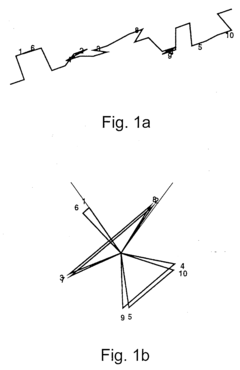
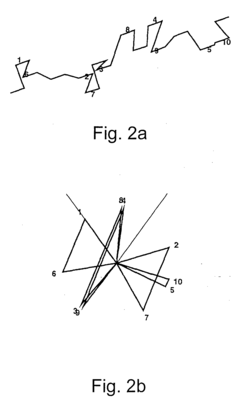
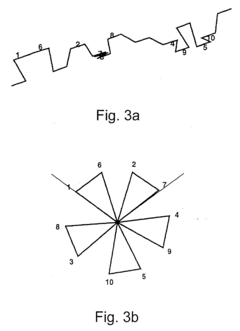
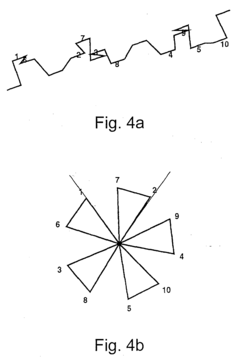
In-line four cylinder engine having no secondary forces or imbalance
PatentActiveUS11098750B2
Innovation
- The design incorporates unopposed cylinder units with yoke assemblies where the piston connecting rod assembly reciprocates exclusively along the bore axis, eliminating secondary forces by having a connecting rod bearing housing that reciprocates within a transverse slot, interfacing with a crankshaft journal, and using slide bearings to prevent lateral movement.


Materials Science Impact on Engine Longevity
The evolution of engine materials science has played a pivotal role in determining the longevity and performance characteristics of different engine configurations, particularly when comparing V10 and Inline-4 engines. Advanced metallurgical developments have significantly influenced the durability profiles of these contrasting designs, with material selection becoming increasingly sophisticated over the past three decades.
In V10 engines, the implementation of aluminum-silicon alloys with high silicon content (typically 17-19%) has substantially enhanced wear resistance in cylinder linings. These hypereutectic alloys demonstrate superior thermal stability under the high-temperature conditions experienced in multi-cylinder configurations. Conversely, Inline-4 engines have benefited from the adoption of compacted graphite iron (CGI), offering 75% higher tensile strength and nearly double the fatigue strength compared to traditional gray cast iron, while maintaining excellent thermal conductivity.
The integration of ceramic components represents another significant materials advancement affecting engine longevity. Thermal barrier coatings (TBCs) composed of yttria-stabilized zirconia have been increasingly deployed in V10 performance engines, reducing thermal stress and extending component life under extreme operating conditions. Meanwhile, Inline-4 engines have seen widespread adoption of diamond-like carbon (DLC) coatings on valve train components, reducing friction by up to 45% and significantly extending service intervals.
Composite materials have transformed crankshaft and connecting rod design in both engine types. V10 engines frequently utilize forged steel crankshafts with specialized nitriding treatments, providing exceptional torsional rigidity across the longer crankshaft required by the V-configuration. Inline-4 engines benefit from powder-metallurgy connecting rods that offer superior strength-to-weight ratios and more consistent material properties, contributing to their reputation for reliability in high-mileage applications.
Recent developments in nano-engineered materials have begun to address historical weaknesses in both engine types. For V10 engines, nano-particle reinforced aluminum matrix composites have improved bearing surface durability, addressing a traditional failure point in high-performance applications. Inline-4 engines have benefited from nano-structured ferrous alloys that maintain strength while reducing weight, helping to mitigate the inherent vibration challenges of the four-cylinder configuration.
The differential cooling requirements between these engine types have also driven materials innovation, with V10 engines incorporating advanced copper-beryllium alloys in valve seats to manage the concentrated heat loads characteristic of high-cylinder-count engines. This contrasts with the more uniform thermal distribution in Inline-4 designs, which has enabled the successful implementation of polymer-metal composite bearings with superior embedded debris tolerance.
In V10 engines, the implementation of aluminum-silicon alloys with high silicon content (typically 17-19%) has substantially enhanced wear resistance in cylinder linings. These hypereutectic alloys demonstrate superior thermal stability under the high-temperature conditions experienced in multi-cylinder configurations. Conversely, Inline-4 engines have benefited from the adoption of compacted graphite iron (CGI), offering 75% higher tensile strength and nearly double the fatigue strength compared to traditional gray cast iron, while maintaining excellent thermal conductivity.
The integration of ceramic components represents another significant materials advancement affecting engine longevity. Thermal barrier coatings (TBCs) composed of yttria-stabilized zirconia have been increasingly deployed in V10 performance engines, reducing thermal stress and extending component life under extreme operating conditions. Meanwhile, Inline-4 engines have seen widespread adoption of diamond-like carbon (DLC) coatings on valve train components, reducing friction by up to 45% and significantly extending service intervals.
Composite materials have transformed crankshaft and connecting rod design in both engine types. V10 engines frequently utilize forged steel crankshafts with specialized nitriding treatments, providing exceptional torsional rigidity across the longer crankshaft required by the V-configuration. Inline-4 engines benefit from powder-metallurgy connecting rods that offer superior strength-to-weight ratios and more consistent material properties, contributing to their reputation for reliability in high-mileage applications.
Recent developments in nano-engineered materials have begun to address historical weaknesses in both engine types. For V10 engines, nano-particle reinforced aluminum matrix composites have improved bearing surface durability, addressing a traditional failure point in high-performance applications. Inline-4 engines have benefited from nano-structured ferrous alloys that maintain strength while reducing weight, helping to mitigate the inherent vibration challenges of the four-cylinder configuration.
The differential cooling requirements between these engine types have also driven materials innovation, with V10 engines incorporating advanced copper-beryllium alloys in valve seats to manage the concentrated heat loads characteristic of high-cylinder-count engines. This contrasts with the more uniform thermal distribution in Inline-4 designs, which has enabled the successful implementation of polymer-metal composite bearings with superior embedded debris tolerance.
Environmental Regulations Influence on Engine Development
Environmental regulations have become a pivotal force shaping engine development strategies across the automotive industry. The stark contrast between V10 engines and Inline-4 configurations represents a microcosm of this regulatory influence. Since the early 2000s, increasingly stringent emissions standards—particularly Euro norms in Europe, CAFE standards in the United States, and similar frameworks in Asia—have systematically disadvantaged larger displacement engines like the V10.
These regulations typically target carbon dioxide emissions, nitrogen oxides, and particulate matter, all of which tend to be produced in greater quantities by larger engines. Consequently, manufacturers have been compelled to implement costly after-treatment systems on V10 engines, including advanced catalytic converters, particulate filters, and selective catalytic reduction systems, significantly increasing production costs and complexity.
The regulatory landscape has created a bifurcated development path. V10 engines, once prized for their performance characteristics, have been increasingly restricted to specialized applications where their higher emissions can be justified through limited production volumes or specific use cases. Meanwhile, substantial R&D investment has flowed toward smaller displacement engines like the Inline-4, accelerating their technological advancement.
Carbon taxation schemes and urban access restrictions have further reinforced this trend. Many metropolitan areas have implemented low emission zones that effectively penalize or restrict vehicles with larger engines, regardless of their actual emissions performance. This regulatory environment has shifted consumer preferences toward smaller, more efficient engines even in market segments traditionally dominated by larger powerplants.
The timeline of regulatory implementation reveals a clear correlation with engine development priorities. Following the 2015 Paris Climate Agreement, many jurisdictions accelerated their emissions reduction timelines, leading to a marked decrease in new V10 engine development programs and increased investment in downsized turbocharged alternatives. Engineering resources previously dedicated to enhancing V10 durability have been reallocated to improving Inline-4 strength and reliability under higher specific outputs.
Looking forward, upcoming regulations through 2030 suggest this trend will intensify. Several major markets have announced plans to phase out internal combustion engines entirely, creating existential pressure on all conventional engine configurations. This regulatory horizon has fundamentally altered the cost-benefit analysis of durability engineering investments, favoring technologies with clearer long-term viability in an increasingly electrified automotive landscape.
These regulations typically target carbon dioxide emissions, nitrogen oxides, and particulate matter, all of which tend to be produced in greater quantities by larger engines. Consequently, manufacturers have been compelled to implement costly after-treatment systems on V10 engines, including advanced catalytic converters, particulate filters, and selective catalytic reduction systems, significantly increasing production costs and complexity.
The regulatory landscape has created a bifurcated development path. V10 engines, once prized for their performance characteristics, have been increasingly restricted to specialized applications where their higher emissions can be justified through limited production volumes or specific use cases. Meanwhile, substantial R&D investment has flowed toward smaller displacement engines like the Inline-4, accelerating their technological advancement.
Carbon taxation schemes and urban access restrictions have further reinforced this trend. Many metropolitan areas have implemented low emission zones that effectively penalize or restrict vehicles with larger engines, regardless of their actual emissions performance. This regulatory environment has shifted consumer preferences toward smaller, more efficient engines even in market segments traditionally dominated by larger powerplants.
The timeline of regulatory implementation reveals a clear correlation with engine development priorities. Following the 2015 Paris Climate Agreement, many jurisdictions accelerated their emissions reduction timelines, leading to a marked decrease in new V10 engine development programs and increased investment in downsized turbocharged alternatives. Engineering resources previously dedicated to enhancing V10 durability have been reallocated to improving Inline-4 strength and reliability under higher specific outputs.
Looking forward, upcoming regulations through 2030 suggest this trend will intensify. Several major markets have announced plans to phase out internal combustion engines entirely, creating existential pressure on all conventional engine configurations. This regulatory horizon has fundamentally altered the cost-benefit analysis of durability engineering investments, favoring technologies with clearer long-term viability in an increasingly electrified automotive landscape.
Unlock deeper insights with PatSnap Eureka Quick Research — get a full tech report to explore trends and direct your research. Try now!
Generate Your Research Report Instantly with AI Agent
Supercharge your innovation with PatSnap Eureka AI Agent Platform!