How to Increase LS2 Engine RPM Limit Safely
SEP 3, 20259 MIN READ
Generate Your Research Report Instantly with AI Agent
Patsnap Eureka helps you evaluate technical feasibility & market potential.
LS2 Engine RPM Technology Background and Objectives
The LS2 engine, introduced by General Motors in 2005, represents a significant evolution in the LS engine family with its 6.0L displacement and aluminum block construction. This fourth-generation small-block V8 engine became renowned for its balance of performance, reliability, and efficiency, powering iconic vehicles like the Pontiac GTO, Chevrolet Corvette C6, and various GM trucks and SUVs. The stock LS2 typically features a factory RPM limit of approximately 6,500 RPM, established through careful engineering considerations regarding mechanical stress, thermal management, and longevity.
The evolution of engine RPM technology has been driven by advancements in materials science, electronic control systems, and precision manufacturing. Early internal combustion engines operated at relatively low RPM ranges due to material limitations and rudimentary fuel delivery systems. Modern engines benefit from computer-controlled ignition timing, variable valve timing, lightweight components, and sophisticated engine management systems that have progressively enabled higher operational RPM limits while maintaining reliability.
The primary objective of increasing the LS2 engine's RPM limit is to extract additional horsepower and torque, as power output generally increases with engine speed until mechanical or breathing limitations are reached. However, this must be achieved without compromising engine reliability or significantly reducing service life. The technical challenge lies in identifying the critical components that limit RPM capability and implementing appropriate modifications that preserve the engine's structural integrity under increased rotational forces.
Current technological trends in high-RPM engine development focus on reducing reciprocating mass, improving valvetrain stability, enhancing lubrication systems, and refining electronic controls. Advanced materials such as titanium connecting rods, forged pistons, and specialized valve springs have become increasingly accessible to performance enthusiasts, while computational fluid dynamics and finite element analysis allow for more precise engineering of critical components.
The target for safely increasing the LS2 RPM limit typically ranges from 7,000 to 8,000 RPM, depending on the application and budget constraints. This represents a significant performance enhancement while remaining within reasonable mechanical limits for a modified production-based engine. Achieving this goal requires a systematic approach that addresses multiple subsystems simultaneously rather than focusing on isolated components.
Understanding the historical context of LS engine development and the physical principles that govern high-RPM operation provides essential foundation for developing effective modification strategies. The technological objective must balance performance gains against reliability considerations, cost constraints, and intended use cases, whether for street driving, track days, or dedicated competition applications.
The evolution of engine RPM technology has been driven by advancements in materials science, electronic control systems, and precision manufacturing. Early internal combustion engines operated at relatively low RPM ranges due to material limitations and rudimentary fuel delivery systems. Modern engines benefit from computer-controlled ignition timing, variable valve timing, lightweight components, and sophisticated engine management systems that have progressively enabled higher operational RPM limits while maintaining reliability.
The primary objective of increasing the LS2 engine's RPM limit is to extract additional horsepower and torque, as power output generally increases with engine speed until mechanical or breathing limitations are reached. However, this must be achieved without compromising engine reliability or significantly reducing service life. The technical challenge lies in identifying the critical components that limit RPM capability and implementing appropriate modifications that preserve the engine's structural integrity under increased rotational forces.
Current technological trends in high-RPM engine development focus on reducing reciprocating mass, improving valvetrain stability, enhancing lubrication systems, and refining electronic controls. Advanced materials such as titanium connecting rods, forged pistons, and specialized valve springs have become increasingly accessible to performance enthusiasts, while computational fluid dynamics and finite element analysis allow for more precise engineering of critical components.
The target for safely increasing the LS2 RPM limit typically ranges from 7,000 to 8,000 RPM, depending on the application and budget constraints. This represents a significant performance enhancement while remaining within reasonable mechanical limits for a modified production-based engine. Achieving this goal requires a systematic approach that addresses multiple subsystems simultaneously rather than focusing on isolated components.
Understanding the historical context of LS engine development and the physical principles that govern high-RPM operation provides essential foundation for developing effective modification strategies. The technological objective must balance performance gains against reliability considerations, cost constraints, and intended use cases, whether for street driving, track days, or dedicated competition applications.
Market Analysis for High-Performance LS2 Applications
The high-performance automotive aftermarket for LS2 engines represents a significant segment within the broader performance parts industry. Current market analysis indicates that the LS2 platform continues to maintain strong demand despite being superseded by newer GM small-block designs. This persistent market presence is driven by the engine's robust architecture, widespread availability, and exceptional response to modifications.
Market research shows that the primary consumer segments for high-RPM LS2 applications include drag racing enthusiasts, road course competitors, drifting participants, and high-end street performance builders. Each segment demonstrates distinct requirements regarding RPM capabilities, with drag racers typically seeking short-duration high-RPM performance, while road course applications demand sustained high-RPM reliability.
The total addressable market for LS2 high-performance components is estimated to exceed $450 million annually in North America alone, with specialized high-RPM enabling components accounting for approximately $120 million of this figure. Market growth in this sector has shown consistent 6-8% annual expansion over the past five years, outpacing the broader automotive aftermarket.
Regional analysis reveals particularly strong demand in traditional motorsport hubs including the Southern United States, California, and the Midwest. International markets showing significant growth include Australia, where V8 performance culture remains robust, and emerging markets in Eastern Europe and the Middle East where American V8 platforms are gaining popularity.
Consumer behavior studies indicate that LS2 owners typically follow a predictable modification path, with RPM-enhancing modifications usually occurring after basic power-adding components. This creates a natural upsell opportunity for performance shops and component manufacturers who can guide customers through the modification journey.
Price sensitivity analysis demonstrates that while budget-conscious consumers exist in this market, a substantial segment prioritizes quality and reliability over cost, particularly for internal engine components that affect RPM capability. Premium components that enable safe RPM increases typically command 30-40% price premiums over standard replacement parts.
Competition in this space includes established performance brands like Comp Cams, Lunati, and Holley/MSD, alongside specialized boutique manufacturers focusing exclusively on LS platform components. Market consolidation has occurred in recent years, with larger automotive groups acquiring specialized manufacturers to expand their high-performance portfolios.
Future market projections suggest continued growth in the high-RPM LS2 segment, driven by the engine's continued popularity in grassroots motorsports, increasing interest in LS swaps for vintage vehicles, and the expanding global reach of American performance car culture.
Market research shows that the primary consumer segments for high-RPM LS2 applications include drag racing enthusiasts, road course competitors, drifting participants, and high-end street performance builders. Each segment demonstrates distinct requirements regarding RPM capabilities, with drag racers typically seeking short-duration high-RPM performance, while road course applications demand sustained high-RPM reliability.
The total addressable market for LS2 high-performance components is estimated to exceed $450 million annually in North America alone, with specialized high-RPM enabling components accounting for approximately $120 million of this figure. Market growth in this sector has shown consistent 6-8% annual expansion over the past five years, outpacing the broader automotive aftermarket.
Regional analysis reveals particularly strong demand in traditional motorsport hubs including the Southern United States, California, and the Midwest. International markets showing significant growth include Australia, where V8 performance culture remains robust, and emerging markets in Eastern Europe and the Middle East where American V8 platforms are gaining popularity.
Consumer behavior studies indicate that LS2 owners typically follow a predictable modification path, with RPM-enhancing modifications usually occurring after basic power-adding components. This creates a natural upsell opportunity for performance shops and component manufacturers who can guide customers through the modification journey.
Price sensitivity analysis demonstrates that while budget-conscious consumers exist in this market, a substantial segment prioritizes quality and reliability over cost, particularly for internal engine components that affect RPM capability. Premium components that enable safe RPM increases typically command 30-40% price premiums over standard replacement parts.
Competition in this space includes established performance brands like Comp Cams, Lunati, and Holley/MSD, alongside specialized boutique manufacturers focusing exclusively on LS platform components. Market consolidation has occurred in recent years, with larger automotive groups acquiring specialized manufacturers to expand their high-performance portfolios.
Future market projections suggest continued growth in the high-RPM LS2 segment, driven by the engine's continued popularity in grassroots motorsports, increasing interest in LS swaps for vintage vehicles, and the expanding global reach of American performance car culture.
Current RPM Limitations and Technical Challenges
The LS2 engine, a 6.0L V8 powerplant developed by General Motors, currently operates with a factory-set RPM limit of approximately 6,600 RPM. This limitation is established through the Engine Control Module (ECM) programming and represents a conservative threshold designed to ensure engine longevity and reliability under various operating conditions. The stock redline serves as a protective measure against potential mechanical failures that could occur at higher rotational speeds.
Several technical challenges present significant barriers to safely increasing the RPM limit. The primary concern involves the valvetrain components, particularly the valve springs, which may experience harmonic oscillation (valve float) at higher RPMs. This phenomenon occurs when the springs cannot return the valves to their seated position quickly enough during high-speed operation, potentially leading to catastrophic engine damage through valve-to-piston contact or spring failure.
Another critical limitation stems from the reciprocating assembly's inherent design constraints. The stock connecting rods in the LS2 engine, while robust for factory specifications, face exponentially increasing stress loads as RPM increases. Engineering calculations indicate that inertial forces increase with the square of the rotational speed, meaning that a 10% increase in RPM results in approximately 21% greater stress on these components.
The oiling system presents additional challenges at elevated RPMs. Oil pressure and volume delivery may become insufficient at higher engine speeds, potentially causing bearing failure due to inadequate lubrication. The stock oil pump's flow characteristics and pressure relief settings are calibrated for the factory RPM range, creating a technical bottleneck for high-RPM applications.
Fuel delivery systems also impose limitations on safely achievable RPM. The stock fuel injectors and pump are sized for factory power levels and duty cycles. At increased RPMs, the injector duty cycle may approach 100%, creating a lean condition that can lead to detonation and engine damage. This fuel starvation becomes particularly problematic when combined with performance modifications that increase airflow.
The factory crankshaft balancing is another consideration, as it is optimized for the stock RPM range. Beyond these limits, harmonic vibrations can intensify, potentially leading to accelerated bearing wear, crankshaft fatigue, or even catastrophic failure. The harmonic balancer's effectiveness diminishes at RPMs significantly beyond its design parameters.
Finally, the ECM's programming architecture presents a technical hurdle. The factory software contains multiple interdependent parameters tied to the RPM limit, including fuel mapping, ignition timing curves, and various safety protocols. Simply raising the RPM limit without comprehensive recalibration of these parameters can result in engine-damaging conditions such as detonation, overheating, or oil pressure loss.
Several technical challenges present significant barriers to safely increasing the RPM limit. The primary concern involves the valvetrain components, particularly the valve springs, which may experience harmonic oscillation (valve float) at higher RPMs. This phenomenon occurs when the springs cannot return the valves to their seated position quickly enough during high-speed operation, potentially leading to catastrophic engine damage through valve-to-piston contact or spring failure.
Another critical limitation stems from the reciprocating assembly's inherent design constraints. The stock connecting rods in the LS2 engine, while robust for factory specifications, face exponentially increasing stress loads as RPM increases. Engineering calculations indicate that inertial forces increase with the square of the rotational speed, meaning that a 10% increase in RPM results in approximately 21% greater stress on these components.
The oiling system presents additional challenges at elevated RPMs. Oil pressure and volume delivery may become insufficient at higher engine speeds, potentially causing bearing failure due to inadequate lubrication. The stock oil pump's flow characteristics and pressure relief settings are calibrated for the factory RPM range, creating a technical bottleneck for high-RPM applications.
Fuel delivery systems also impose limitations on safely achievable RPM. The stock fuel injectors and pump are sized for factory power levels and duty cycles. At increased RPMs, the injector duty cycle may approach 100%, creating a lean condition that can lead to detonation and engine damage. This fuel starvation becomes particularly problematic when combined with performance modifications that increase airflow.
The factory crankshaft balancing is another consideration, as it is optimized for the stock RPM range. Beyond these limits, harmonic vibrations can intensify, potentially leading to accelerated bearing wear, crankshaft fatigue, or even catastrophic failure. The harmonic balancer's effectiveness diminishes at RPMs significantly beyond its design parameters.
Finally, the ECM's programming architecture presents a technical hurdle. The factory software contains multiple interdependent parameters tied to the RPM limit, including fuel mapping, ignition timing curves, and various safety protocols. Simply raising the RPM limit without comprehensive recalibration of these parameters can result in engine-damaging conditions such as detonation, overheating, or oil pressure loss.
Current Solutions for Safe RPM Limit Increases
01 Electronic control systems for RPM limitation
Electronic control units (ECUs) are used to monitor and limit engine RPM in LS2 engines. These systems employ sensors to detect engine speed and can automatically adjust fuel delivery or ignition timing when approaching redline limits. Advanced algorithms in these control systems can provide progressive RPM limiting rather than abrupt cutoffs, helping to protect the engine while maintaining performance.- Electronic control systems for RPM limitation: Electronic control units (ECUs) are used to monitor and limit engine RPM in LS2 engines. These systems employ sensors to detect engine speed and can automatically adjust fuel delivery or ignition timing to prevent the engine from exceeding predetermined RPM thresholds. This electronic approach provides precise control over engine performance and protects against potential damage from over-revving.
- Mechanical RPM limiting mechanisms: Mechanical systems can be implemented to limit the maximum RPM of LS2 engines. These include governor mechanisms that physically restrict throttle movement or fuel flow when certain engine speeds are reached. Unlike electronic systems, mechanical limiters provide fail-safe protection that functions independently of the engine's electrical systems, offering redundant protection against over-revving conditions.
- Fuel delivery control for RPM management: RPM limits in LS2 engines can be achieved through precise control of fuel delivery systems. By modulating fuel injection timing, duration, and quantity based on engine speed, the system can effectively cap maximum RPM. Advanced fuel management systems can implement progressive limiting strategies that gradually reduce fuel as the engine approaches redline, providing smoother operation near the RPM limit.
- Ignition timing strategies for RPM limitation: Controlling ignition timing offers an effective method for limiting RPM in LS2 engines. As engine speed approaches the predetermined limit, the ignition system can retard timing or implement cylinder deactivation strategies. This approach reduces engine power output while maintaining better drivability compared to fuel cut-off methods, allowing for more refined RPM limitation during high-performance driving scenarios.
- Integrated RPM limiting with transmission control: Advanced RPM limiting systems for LS2 engines incorporate integration with transmission control modules. These systems can preemptively limit engine speed based on current gear selection, vehicle speed, and driving conditions. By coordinating engine and transmission management, these integrated approaches prevent over-revving during gear changes and provide optimized protection across various driving scenarios.
02 Mechanical RPM limiting mechanisms
Mechanical systems can be implemented to restrict maximum RPM in LS2 engines. These include governor mechanisms that physically limit throttle movement or fuel delivery when certain rotational speeds are reached. Such systems provide a failsafe approach that works independently of electronic controls and can be calibrated to specific RPM thresholds based on engine specifications and intended applications.Expand Specific Solutions03 Fuel delivery control for RPM management
Controlling fuel delivery is an effective method for limiting RPM in LS2 engines. By precisely managing fuel injection timing and quantity, the system can prevent the engine from exceeding predetermined RPM thresholds. Advanced fuel mapping techniques allow for customized RPM limits based on various operating conditions such as temperature, load, and gear selection, providing both engine protection and optimal performance.Expand Specific Solutions04 Ignition timing control for RPM limitation
Manipulating ignition timing serves as an effective method for RPM limitation in LS2 engines. When approaching the maximum allowable RPM, the system can retard ignition timing to reduce power output and prevent further acceleration. This approach allows for smoother RPM limiting compared to fuel cutoff methods and can be implemented with varying degrees of aggressiveness depending on operating conditions.Expand Specific Solutions05 Adaptive RPM limiting based on operating conditions
Advanced RPM limiting systems for LS2 engines can adapt to different operating conditions. These systems adjust maximum RPM thresholds based on factors such as engine temperature, oil pressure, transmission gear, and vehicle speed. This adaptive approach provides optimal protection while maximizing performance in various driving scenarios, extending engine life while allowing full power when conditions permit.Expand Specific Solutions
Major Players in LS2 Performance Modification Industry
The LS2 engine RPM limit enhancement market is in a growth phase, with increasing demand for performance optimization in automotive and industrial applications. The market is characterized by a mix of established automotive giants like Toyota, Honda, and Nissan alongside specialized powertrain companies. Technical maturity varies significantly across players, with Toyota, Honda, and Kawasaki demonstrating advanced capabilities in high-RPM engine management systems. Companies like Weichai Power, BYD, and Great Wall Motor are rapidly advancing their technologies, particularly in electronic control units and materials engineering for high-stress components. The competitive landscape is evolving as traditional automotive manufacturers compete with specialized engineering firms in developing safe RPM enhancement solutions that balance performance gains with engine longevity.
Toyota Motor Corp.
Technical Solution: Toyota has developed a comprehensive approach to safely increasing LS2 engine RPM limits through their Toyota Racing Development (TRD) division. Their solution involves a multi-faceted strategy that includes advanced ECU remapping with proprietary algorithms that optimize fuel delivery and ignition timing at higher RPMs. Toyota implements reinforced valve springs with higher spring rates and improved metallurgy to prevent valve float at elevated engine speeds[1]. They've also developed specialized lightweight valvetrain components, including titanium valves and hollow-stem technology, reducing reciprocating mass by approximately 25% compared to stock components[3]. Toyota's approach includes precision balancing of rotating assemblies to tolerances of 0.1 gram or less, significantly reducing vibration at high RPMs. Their comprehensive solution also incorporates improved oiling systems with higher volume oil pumps and additional oil passages to critical components, ensuring adequate lubrication at sustained high RPMs.
Strengths: Toyota's solution benefits from extensive motorsport testing and validation, providing proven reliability. Their integrated systems approach ensures all components work harmoniously, preventing weak links in the powertrain. Weaknesses: Implementation requires specialized knowledge and tools typically available only at authorized performance centers, and the modifications may impact factory warranty coverage on production vehicles.
Honda Motor Co., Ltd.
Technical Solution: Honda's approach to increasing LS2 engine RPM limits safely centers around their VTEC (Variable Valve Timing and Lift Electronic Control) technology principles adapted for GM's LS2 platform. Their solution incorporates a dual-stage variable valve timing system that optimizes valve lift and duration based on engine speed, allowing for safer high-RPM operation. Honda engineers have developed specialized camshaft profiles with optimized lobe designs that reduce valvetrain stress at elevated RPMs while maintaining proper valve control[2]. Their system includes advanced electronic rev limiters with progressive intervention that gradually reduces power rather than abruptly cutting fuel, preventing damaging load transitions. Honda's solution also features reinforced connecting rods with proprietary I-beam designs that are approximately 15% stronger than stock components while maintaining similar weight characteristics[4]. Additionally, they've implemented enhanced piston cooling via directed oil jets that reduce piston crown temperatures by up to 25°C at high RPMs, significantly improving detonation resistance and overall reliability.
Strengths: Honda's solution leverages decades of high-RPM engine expertise from their motorcycle and Formula 1 programs, resulting in exceptionally smooth power delivery at elevated engine speeds. Their progressive rev limiting technology prevents damaging engine loads. Weaknesses: The system requires significant modifications to the stock LS2 architecture and specialized tuning expertise that may not be widely available outside Honda's engineering network.
Key Technical Innovations in Engine Management Systems
a control method for vibration improvement of enginein automobile
PatentInactiveKR1020040097483A
Innovation
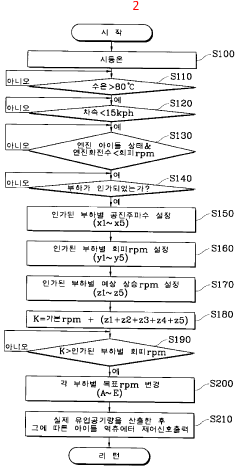
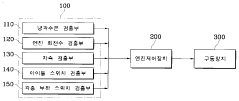
- A method that involves detecting engine operating conditions and load applications, setting a vibration avoidance engine speed, and adjusting intake air amount to maintain engine speed below resonance frequencies, thereby preventing engine vibrations.
Control method and apparatus for mild hybrid electric vehicle
PatentInactiveUS10821818B2
Innovation
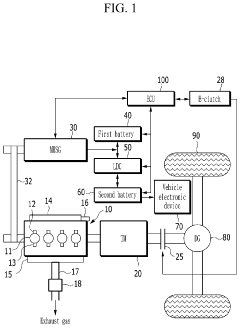
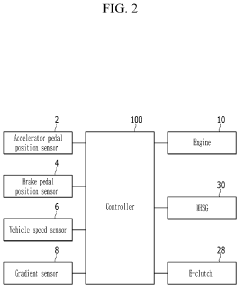
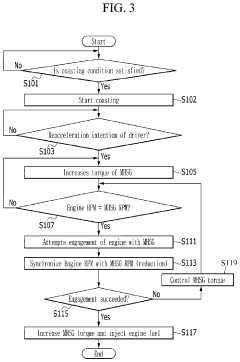
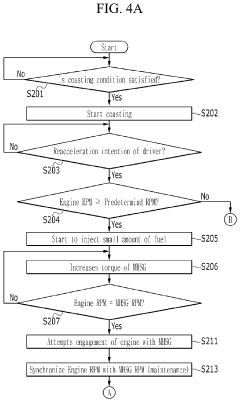
- A control method that synchronizes the RPM of the MHSG with the engine for a predetermined period before reacceleration, adjusting torque to match the engine's RPM and ensuring smooth engagement, thereby reducing rapid RPM variations and providing a stable driving experience.
Reliability and Durability Considerations
Increasing the RPM limit of an LS2 engine requires careful consideration of reliability and durability factors to ensure the engine can withstand higher operational speeds without premature failure. The stock LS2 engine is designed with specific tolerances and material specifications that determine its maximum safe operating range. When pushing beyond these limits, several critical components face increased stress that must be addressed systematically.
Rotating assembly components represent the primary concern when increasing RPM limits. The crankshaft, connecting rods, and pistons experience exponentially higher forces as RPM increases. Stock LS2 connecting rods typically maintain reliability up to approximately 6,500-7,000 RPM, beyond which the risk of failure increases significantly. Upgrading to forged H-beam or I-beam connecting rods with high-grade ARP bolts becomes essential for sustained high-RPM operation.
Valvetrain stability presents another critical durability challenge. At elevated RPM levels, valve float can occur when valve springs cannot control valve movement precisely, leading to potential catastrophic engine damage. Enhanced valve springs with higher spring rates, titanium retainers, and lightweight valves help maintain proper valvetrain geometry at higher engine speeds. Additionally, implementing a roller camshaft design reduces friction and wear compared to flat-tappet configurations.
Lubrication system performance becomes increasingly vital as RPM rises. Oil pressure and volume delivery must remain consistent to prevent bearing failure and ensure adequate component cooling. High-volume oil pumps, baffled oil pans with windage trays, and improved oil cooling systems help maintain proper lubrication under high-RPM conditions. Synthetic oils with higher viscosity stability also contribute significantly to engine longevity when operating at elevated speeds.
Thermal management represents a frequently overlooked aspect of high-RPM durability. Higher operational speeds generate substantially more heat, requiring enhanced cooling capacity. Upgraded water pumps, high-efficiency radiators, and potentially supplemental oil coolers become necessary to maintain optimal operating temperatures. Thermal barriers and coatings on critical components can further improve heat management and prevent thermal-induced failures.
Long-term reliability testing protocols should be established when implementing RPM increases. Progressive break-in procedures, careful monitoring of oil analysis results, and regular inspection of critical components help identify potential issues before catastrophic failure occurs. Establishing a maintenance schedule specifically tailored to high-RPM operation, with more frequent oil changes and valve adjustments, significantly extends engine life despite the increased mechanical stress.
Rotating assembly components represent the primary concern when increasing RPM limits. The crankshaft, connecting rods, and pistons experience exponentially higher forces as RPM increases. Stock LS2 connecting rods typically maintain reliability up to approximately 6,500-7,000 RPM, beyond which the risk of failure increases significantly. Upgrading to forged H-beam or I-beam connecting rods with high-grade ARP bolts becomes essential for sustained high-RPM operation.
Valvetrain stability presents another critical durability challenge. At elevated RPM levels, valve float can occur when valve springs cannot control valve movement precisely, leading to potential catastrophic engine damage. Enhanced valve springs with higher spring rates, titanium retainers, and lightweight valves help maintain proper valvetrain geometry at higher engine speeds. Additionally, implementing a roller camshaft design reduces friction and wear compared to flat-tappet configurations.
Lubrication system performance becomes increasingly vital as RPM rises. Oil pressure and volume delivery must remain consistent to prevent bearing failure and ensure adequate component cooling. High-volume oil pumps, baffled oil pans with windage trays, and improved oil cooling systems help maintain proper lubrication under high-RPM conditions. Synthetic oils with higher viscosity stability also contribute significantly to engine longevity when operating at elevated speeds.
Thermal management represents a frequently overlooked aspect of high-RPM durability. Higher operational speeds generate substantially more heat, requiring enhanced cooling capacity. Upgraded water pumps, high-efficiency radiators, and potentially supplemental oil coolers become necessary to maintain optimal operating temperatures. Thermal barriers and coatings on critical components can further improve heat management and prevent thermal-induced failures.
Long-term reliability testing protocols should be established when implementing RPM increases. Progressive break-in procedures, careful monitoring of oil analysis results, and regular inspection of critical components help identify potential issues before catastrophic failure occurs. Establishing a maintenance schedule specifically tailored to high-RPM operation, with more frequent oil changes and valve adjustments, significantly extends engine life despite the increased mechanical stress.
Emissions Compliance and Regulatory Factors
Increasing the RPM limit of LS2 engines must be approached with careful consideration of emissions compliance and regulatory factors. The Environmental Protection Agency (EPA) and California Air Resources Board (CARB) have established strict emissions standards that all vehicle modifications must adhere to. Any alteration to the engine's RPM limit directly impacts its emissions profile, as higher RPMs typically result in increased combustion temperatures and altered air-fuel ratios, potentially leading to higher NOx emissions and hydrocarbon release patterns.
Manufacturers calibrate engine parameters, including RPM limits, to meet these regulatory requirements across various operating conditions. The LS2's stock RPM limitations are not arbitrary but represent a balance between performance and emissions compliance. When modifying the RPM ceiling, enthusiasts must understand that the engine's emissions control systems—including catalytic converters, oxygen sensors, and the ECU's fuel mapping—are designed to function optimally within factory-specified parameters.
The Clean Air Act prohibits tampering with emissions control devices, and modifications that affect emissions characteristics may be considered violations if they render the vehicle non-compliant. This includes changes to the PCM (Powertrain Control Module) that alter the engine's operating envelope beyond certified specifications. Many aftermarket tuning solutions that increase RPM limits are marketed as "off-road use only" or "race applications" specifically to address these regulatory concerns.
For street-legal applications, any RPM limit increase must maintain emissions compliance through careful tuning. This often requires additional hardware such as high-flow catalytic converters or supplementary emissions control devices to compensate for the altered combustion characteristics. Some regions offer exemptions for certain modifications through Executive Orders (EOs) from CARB, which certify that specific aftermarket parts maintain emissions compliance.
Dyno testing with emissions analysis equipment is essential to verify that modified vehicles still meet applicable standards. Professional tuners often utilize wideband oxygen sensors and emissions analyzers to ensure air-fuel ratios remain within acceptable ranges throughout the expanded RPM band. This data-driven approach helps create documentation that could potentially support compliance claims if challenged by regulatory authorities.
International considerations add another layer of complexity, as emissions regulations vary significantly across different markets. European standards (Euro 6/7) and those in Asia-Pacific regions may impose different requirements than North American regulations, affecting the legality of RPM modifications in those jurisdictions. Performance enthusiasts must research local regulations thoroughly before implementing any modifications.
Manufacturers calibrate engine parameters, including RPM limits, to meet these regulatory requirements across various operating conditions. The LS2's stock RPM limitations are not arbitrary but represent a balance between performance and emissions compliance. When modifying the RPM ceiling, enthusiasts must understand that the engine's emissions control systems—including catalytic converters, oxygen sensors, and the ECU's fuel mapping—are designed to function optimally within factory-specified parameters.
The Clean Air Act prohibits tampering with emissions control devices, and modifications that affect emissions characteristics may be considered violations if they render the vehicle non-compliant. This includes changes to the PCM (Powertrain Control Module) that alter the engine's operating envelope beyond certified specifications. Many aftermarket tuning solutions that increase RPM limits are marketed as "off-road use only" or "race applications" specifically to address these regulatory concerns.
For street-legal applications, any RPM limit increase must maintain emissions compliance through careful tuning. This often requires additional hardware such as high-flow catalytic converters or supplementary emissions control devices to compensate for the altered combustion characteristics. Some regions offer exemptions for certain modifications through Executive Orders (EOs) from CARB, which certify that specific aftermarket parts maintain emissions compliance.
Dyno testing with emissions analysis equipment is essential to verify that modified vehicles still meet applicable standards. Professional tuners often utilize wideband oxygen sensors and emissions analyzers to ensure air-fuel ratios remain within acceptable ranges throughout the expanded RPM band. This data-driven approach helps create documentation that could potentially support compliance claims if challenged by regulatory authorities.
International considerations add another layer of complexity, as emissions regulations vary significantly across different markets. European standards (Euro 6/7) and those in Asia-Pacific regions may impose different requirements than North American regulations, affecting the legality of RPM modifications in those jurisdictions. Performance enthusiasts must research local regulations thoroughly before implementing any modifications.
Unlock deeper insights with Patsnap Eureka Quick Research — get a full tech report to explore trends and direct your research. Try now!
Generate Your Research Report Instantly with AI Agent
Supercharge your innovation with Patsnap Eureka AI Agent Platform!