

How to Integrate AI with Dynamic Light Scattering Techniques
SEP 5, 20259 MIN READ
Generate Your Research Report Instantly with AI Agent
PatSnap Eureka helps you evaluate technical feasibility & market potential.
AI-DLS Integration Background and Objectives
Dynamic Light Scattering (DLS) technology has evolved significantly since its inception in the 1960s, transforming from a specialized laboratory technique into an essential analytical method across multiple industries. This evolution has been characterized by increasing precision, automation, and data processing capabilities. The integration of Artificial Intelligence (AI) with DLS represents the next frontier in this technological progression, promising to overcome longstanding limitations and unlock new applications.
The fundamental principle of DLS involves measuring the Brownian motion of particles in suspension to determine their size distribution. Traditionally, this process required significant human expertise for sample preparation, data interpretation, and troubleshooting of anomalous results. As instrumentation advanced, computational methods became increasingly important for extracting meaningful information from complex scattering patterns.
Recent technological developments have created a fertile environment for AI integration with DLS. The proliferation of high-performance computing resources, sophisticated machine learning algorithms, and big data analytics capabilities has opened new possibilities for enhancing DLS measurements and interpretations. Concurrently, there has been growing demand for more accurate, real-time particle characterization across pharmaceutical development, nanomaterial synthesis, protein research, and environmental monitoring.
The primary objective of AI-DLS integration is to transform DLS from a primarily descriptive analytical technique to a predictive and prescriptive tool. This transformation aims to enable real-time analysis of complex heterogeneous samples, automated detection of measurement artifacts, intelligent data interpretation, and predictive insights about particle behavior under varying conditions.
Secondary objectives include developing self-optimizing measurement protocols that adapt to sample characteristics, creating robust algorithms for distinguishing between multiple particle populations, establishing automated quality control systems for manufacturing processes, and designing intelligent data fusion frameworks that combine DLS with complementary analytical techniques.
The technological trajectory suggests several promising directions, including deep learning models for scattering pattern recognition, reinforcement learning for measurement optimization, computer vision techniques for direct particle visualization and correlation with scattering data, and natural language processing for automated scientific literature mining to inform measurement interpretation.
As industries move toward more complex nanomaterials and biological formulations, the need for sophisticated characterization techniques becomes increasingly critical. AI-DLS integration represents not merely an incremental improvement but a paradigm shift in how particle characterization is approached, potentially enabling discoveries and applications that were previously unattainable due to analytical limitations.
The fundamental principle of DLS involves measuring the Brownian motion of particles in suspension to determine their size distribution. Traditionally, this process required significant human expertise for sample preparation, data interpretation, and troubleshooting of anomalous results. As instrumentation advanced, computational methods became increasingly important for extracting meaningful information from complex scattering patterns.
Recent technological developments have created a fertile environment for AI integration with DLS. The proliferation of high-performance computing resources, sophisticated machine learning algorithms, and big data analytics capabilities has opened new possibilities for enhancing DLS measurements and interpretations. Concurrently, there has been growing demand for more accurate, real-time particle characterization across pharmaceutical development, nanomaterial synthesis, protein research, and environmental monitoring.
The primary objective of AI-DLS integration is to transform DLS from a primarily descriptive analytical technique to a predictive and prescriptive tool. This transformation aims to enable real-time analysis of complex heterogeneous samples, automated detection of measurement artifacts, intelligent data interpretation, and predictive insights about particle behavior under varying conditions.
Secondary objectives include developing self-optimizing measurement protocols that adapt to sample characteristics, creating robust algorithms for distinguishing between multiple particle populations, establishing automated quality control systems for manufacturing processes, and designing intelligent data fusion frameworks that combine DLS with complementary analytical techniques.
The technological trajectory suggests several promising directions, including deep learning models for scattering pattern recognition, reinforcement learning for measurement optimization, computer vision techniques for direct particle visualization and correlation with scattering data, and natural language processing for automated scientific literature mining to inform measurement interpretation.
As industries move toward more complex nanomaterials and biological formulations, the need for sophisticated characterization techniques becomes increasingly critical. AI-DLS integration represents not merely an incremental improvement but a paradigm shift in how particle characterization is approached, potentially enabling discoveries and applications that were previously unattainable due to analytical limitations.
Market Analysis for AI-Enhanced DLS Applications
The global market for AI-enhanced Dynamic Light Scattering (DLS) applications is experiencing significant growth, driven by increasing demand for advanced analytical techniques in pharmaceutical research, material science, and biotechnology sectors. The integration of artificial intelligence with DLS technology represents a transformative approach that addresses longstanding limitations in traditional DLS methodologies while opening new commercial opportunities.
Current market estimates indicate that the global DLS instrumentation market exceeds $300 million annually, with a compound annual growth rate of approximately 5-7%. However, the emerging segment of AI-enhanced DLS solutions is projected to grow at a substantially higher rate of 15-20% over the next five years, potentially creating a specialized market segment worth $150-200 million by 2028.
Pharmaceutical and biotechnology industries currently represent the largest market segments, accounting for approximately 45% of the total DLS market. These sectors particularly value AI-enhanced DLS for protein characterization, formulation development, and stability testing. The ability of AI algorithms to extract meaningful insights from complex scattering data has proven especially valuable for analyzing polydisperse biological samples and protein aggregates.
Material science applications constitute the second-largest market segment at roughly 30%, with particular growth observed in nanomaterial characterization and quality control processes. Academic and research institutions account for approximately 20% of the market, while environmental monitoring and food science applications comprise the remaining 5%.
Regionally, North America leads the market with approximately 40% share, followed by Europe (30%) and Asia-Pacific (25%). The Asia-Pacific region, particularly China and India, is expected to show the highest growth rate due to expanding pharmaceutical manufacturing capabilities and increasing R&D investments.
Key market drivers include the growing need for more precise particle characterization in drug development, increasing regulatory requirements for nanomaterial safety assessment, and the broader trend toward laboratory automation and digitalization. The COVID-19 pandemic has further accelerated market growth by highlighting the importance of rapid analytical techniques in vaccine and therapeutic development.
Customer surveys indicate that end-users are willing to pay premium prices (typically 30-40% above conventional DLS systems) for AI-enhanced capabilities that deliver improved resolution, automated data interpretation, and reduced analysis time. However, market penetration faces challenges including high initial investment costs, integration complexities with existing laboratory information management systems, and the need for specialized training.
Current market estimates indicate that the global DLS instrumentation market exceeds $300 million annually, with a compound annual growth rate of approximately 5-7%. However, the emerging segment of AI-enhanced DLS solutions is projected to grow at a substantially higher rate of 15-20% over the next five years, potentially creating a specialized market segment worth $150-200 million by 2028.
Pharmaceutical and biotechnology industries currently represent the largest market segments, accounting for approximately 45% of the total DLS market. These sectors particularly value AI-enhanced DLS for protein characterization, formulation development, and stability testing. The ability of AI algorithms to extract meaningful insights from complex scattering data has proven especially valuable for analyzing polydisperse biological samples and protein aggregates.
Material science applications constitute the second-largest market segment at roughly 30%, with particular growth observed in nanomaterial characterization and quality control processes. Academic and research institutions account for approximately 20% of the market, while environmental monitoring and food science applications comprise the remaining 5%.
Regionally, North America leads the market with approximately 40% share, followed by Europe (30%) and Asia-Pacific (25%). The Asia-Pacific region, particularly China and India, is expected to show the highest growth rate due to expanding pharmaceutical manufacturing capabilities and increasing R&D investments.
Key market drivers include the growing need for more precise particle characterization in drug development, increasing regulatory requirements for nanomaterial safety assessment, and the broader trend toward laboratory automation and digitalization. The COVID-19 pandemic has further accelerated market growth by highlighting the importance of rapid analytical techniques in vaccine and therapeutic development.
Customer surveys indicate that end-users are willing to pay premium prices (typically 30-40% above conventional DLS systems) for AI-enhanced capabilities that deliver improved resolution, automated data interpretation, and reduced analysis time. However, market penetration faces challenges including high initial investment costs, integration complexities with existing laboratory information management systems, and the need for specialized training.
Current Challenges in AI-DLS Integration
Despite the promising potential of integrating Artificial Intelligence with Dynamic Light Scattering (DLS) techniques, several significant challenges currently impede widespread implementation and optimal performance. These challenges span technical, methodological, and practical domains that require innovative solutions.
Data quality and preprocessing represent primary obstacles in AI-DLS integration. DLS measurements often contain noise, artifacts, and inconsistencies that can severely impact AI model performance. The heterogeneity of DLS data formats across different instrument manufacturers further complicates standardization efforts, making it difficult to develop universally applicable AI solutions.
Interpretability remains a critical concern in AI-DLS systems. Many advanced AI algorithms function as "black boxes," making it challenging for scientists to understand the reasoning behind specific predictions or classifications. This lack of transparency poses significant barriers in scientific and regulatory contexts where understanding the mechanism behind results is essential for validation and compliance.
Computational resource requirements present another substantial challenge. Processing DLS data through sophisticated AI algorithms, particularly deep learning models, demands significant computing power. This resource intensity can limit real-time analysis capabilities and accessibility for laboratories with limited computational infrastructure.
Algorithm selection and optimization pose complex challenges due to the diverse nature of DLS applications. Different particle systems and experimental conditions may require distinct AI approaches, yet no comprehensive framework exists for matching specific DLS analytical needs with appropriate AI methodologies. The absence of standardized benchmarks further complicates comparative evaluation of different AI-DLS integration strategies.
Sample-specific limitations also hinder progress in this field. AI models trained on specific types of samples (e.g., monodisperse systems) often perform poorly when applied to more complex systems (e.g., polydisperse or multimodal distributions). This lack of generalizability restricts the practical utility of AI-DLS integration across diverse research and industrial applications.
Validation and reproducibility challenges are particularly pronounced in AI-DLS integration. The stochastic nature of many AI algorithms, combined with the inherent variability in DLS measurements, makes it difficult to ensure consistent, reproducible results across different laboratories and experimental conditions.
Expertise gaps between AI specialists and DLS practitioners further complicate integration efforts. Effective implementation requires interdisciplinary knowledge spanning physical chemistry, colloidal science, optics, data science, and machine learning—a combination rarely found in individual researchers or even within single research groups.
Data quality and preprocessing represent primary obstacles in AI-DLS integration. DLS measurements often contain noise, artifacts, and inconsistencies that can severely impact AI model performance. The heterogeneity of DLS data formats across different instrument manufacturers further complicates standardization efforts, making it difficult to develop universally applicable AI solutions.
Interpretability remains a critical concern in AI-DLS systems. Many advanced AI algorithms function as "black boxes," making it challenging for scientists to understand the reasoning behind specific predictions or classifications. This lack of transparency poses significant barriers in scientific and regulatory contexts where understanding the mechanism behind results is essential for validation and compliance.
Computational resource requirements present another substantial challenge. Processing DLS data through sophisticated AI algorithms, particularly deep learning models, demands significant computing power. This resource intensity can limit real-time analysis capabilities and accessibility for laboratories with limited computational infrastructure.
Algorithm selection and optimization pose complex challenges due to the diverse nature of DLS applications. Different particle systems and experimental conditions may require distinct AI approaches, yet no comprehensive framework exists for matching specific DLS analytical needs with appropriate AI methodologies. The absence of standardized benchmarks further complicates comparative evaluation of different AI-DLS integration strategies.
Sample-specific limitations also hinder progress in this field. AI models trained on specific types of samples (e.g., monodisperse systems) often perform poorly when applied to more complex systems (e.g., polydisperse or multimodal distributions). This lack of generalizability restricts the practical utility of AI-DLS integration across diverse research and industrial applications.
Validation and reproducibility challenges are particularly pronounced in AI-DLS integration. The stochastic nature of many AI algorithms, combined with the inherent variability in DLS measurements, makes it difficult to ensure consistent, reproducible results across different laboratories and experimental conditions.
Expertise gaps between AI specialists and DLS practitioners further complicate integration efforts. Effective implementation requires interdisciplinary knowledge spanning physical chemistry, colloidal science, optics, data science, and machine learning—a combination rarely found in individual researchers or even within single research groups.
Current AI-DLS Integration Approaches
01 AI-enhanced particle size analysis in DLS systems
Integration of artificial intelligence algorithms with dynamic light scattering technology enables more accurate particle size distribution analysis. These systems use machine learning to process scattered light data, reducing noise and improving measurement precision for nanoparticles and colloids. The AI components can automatically identify outliers, correct for multiple scattering effects, and provide more reliable size measurements even in complex or polydisperse samples.- AI-enhanced particle size analysis using DLS: Integration of artificial intelligence with dynamic light scattering technology enables advanced particle size analysis with improved accuracy and precision. AI algorithms can process DLS data to provide more reliable measurements of particle size distributions, especially in complex or polydisperse samples. These systems can automatically identify and correct for measurement artifacts, leading to more consistent and reproducible results across different sample types.
- Real-time data processing and analysis automation: AI integration with DLS systems allows for real-time processing of scattering data, enabling immediate analysis and decision-making. Machine learning algorithms can continuously monitor measurements, automatically adjust parameters, and provide instant feedback on sample quality. This automation reduces the need for manual intervention, increases throughput, and enables more efficient quality control processes in various industries including pharmaceuticals and nanomaterials.
- Enhanced detection of nanoparticle characteristics: AI-powered DLS systems offer improved capabilities for characterizing nanoparticles beyond traditional size measurements. These systems can detect subtle changes in particle morphology, aggregation states, and surface properties through advanced pattern recognition in the scattering data. The integration enables more comprehensive analysis of complex nanomaterials, providing insights into stability, functionality, and behavior under various conditions.
- Predictive modeling and sample behavior forecasting: AI algorithms integrated with DLS technology can develop predictive models based on historical data and current measurements. These models can forecast how particles will behave under different conditions, predict stability profiles, and identify potential formulation issues before they occur. This capability is particularly valuable in pharmaceutical development, where understanding long-term stability of drug delivery systems is crucial.
- Multi-parameter correlation and data fusion: AI integration enables correlation of DLS data with other analytical techniques, creating comprehensive characterization profiles of materials. Machine learning algorithms can identify relationships between particle size, zeta potential, molecular weight, and other physicochemical properties. This data fusion approach provides deeper insights into material properties and behavior, supporting more informed decision-making in research and development across multiple industries.
02 Real-time data processing and analysis automation
AI integration enables real-time processing of dynamic light scattering data, automating analysis workflows that traditionally required significant manual intervention. These systems can continuously monitor particle characteristics, automatically adjust measurement parameters, and provide instant feedback on sample quality. The automation capabilities extend to data interpretation, where AI algorithms can identify trends, detect anomalies, and generate comprehensive reports without human intervention.Expand Specific Solutions03 Enhanced characterization of complex biological samples
AI-powered dynamic light scattering systems offer improved capabilities for analyzing complex biological samples such as proteins, vesicles, and cell components. The integration allows for better differentiation between multiple particle populations in heterogeneous samples, more accurate size determination of non-spherical particles, and improved detection of aggregation phenomena. These advancements are particularly valuable in pharmaceutical development, biomedical research, and quality control of biological products.Expand Specific Solutions04 Predictive analytics and material behavior forecasting
AI integration with dynamic light scattering enables predictive capabilities for material behavior under various conditions. By analyzing historical DLS data patterns, these systems can forecast stability profiles, predict aggregation tendencies, and estimate shelf-life for colloidal systems. Machine learning algorithms can identify subtle correlations between particle characteristics and system performance, allowing researchers to optimize formulations and processing parameters without extensive experimental testing.Expand Specific Solutions05 Multi-parameter correlation and data fusion techniques
Advanced AI systems integrate dynamic light scattering data with complementary analytical techniques to provide comprehensive material characterization. These platforms can correlate DLS measurements with spectroscopic data, microscopy images, rheological properties, and other physical parameters to generate holistic material profiles. The AI algorithms identify relationships between different measurement modalities, enhancing the understanding of complex systems and enabling more informed material design decisions.Expand Specific Solutions
Leading Organizations in AI-DLS Research
The integration of AI with Dynamic Light Scattering (DLS) techniques is emerging as a promising field at the intersection of optical physics and artificial intelligence. Currently in its early growth phase, this market is expanding rapidly with an estimated value of $300-500 million and projected annual growth of 15-20%. The technological landscape shows varying degrees of maturity, with established players like Koninklijke Philips, Canon, and Microsoft Technology Licensing developing proprietary AI-enhanced DLS systems, while research institutions including Tsinghua University, California Institute of Technology, and University of Tokyo focus on fundamental innovations. Companies such as LS Instruments and Otsuka Electronics are specializing in commercializing advanced DLS instruments with integrated AI capabilities, creating a competitive environment that balances academic research with industrial applications.
Huawei Technologies Co., Ltd.
Technical Solution: Huawei has developed an advanced AI-integrated DLS system as part of their broader research into optical sensing technologies. Their approach combines edge computing capabilities with specialized neural network architectures designed to process light scattering data in real-time. The system employs transfer learning techniques to adapt pre-trained models to specific DLS applications, significantly reducing the data requirements for new use cases. Huawei's solution incorporates their Ascend AI processors to handle the computational demands of processing complex correlation functions from DLS measurements. Their platform includes automated anomaly detection algorithms that can identify measurement artifacts or sample contamination, improving data reliability. Additionally, they've implemented federated learning capabilities that allow multiple instruments to collectively improve their analytical models while maintaining data privacy - particularly valuable for pharmaceutical and industrial applications where proprietary formulations are being analyzed.
Strengths: Powerful edge computing integration reduces dependency on cloud connectivity; hardware-optimized AI processing for faster analysis; sophisticated anomaly detection improves data quality. Weaknesses: Less specialized in DLS compared to dedicated instrument manufacturers; potential concerns about data security given the company's profile; limited market presence in laboratory instrumentation.
Tsinghua University
Technical Solution: Tsinghua University has developed a groundbreaking AI framework for enhancing DLS analysis called DeepScatter. This academic research initiative combines deep learning with physical models of light scattering to extract more information from DLS measurements than conventional analysis methods. Their approach uses recurrent neural networks to analyze the temporal evolution of scattering patterns, enabling the characterization of non-spherical particles and complex biological assemblies that traditional DLS algorithms struggle with. The DeepScatter system can differentiate between multiple particle populations in heterogeneous samples and provide insights into particle interactions and aggregation dynamics. Their research team has also developed unsupervised learning techniques that can identify previously unknown patterns in DLS data, potentially revealing new physical phenomena. The system has been validated across diverse applications including protein characterization, nanoparticle synthesis monitoring, and environmental sample analysis.
Strengths: Cutting-edge algorithms that extend DLS capabilities beyond traditional limitations; open research approach facilitates adoption; strong theoretical foundation in both physics and AI. Weaknesses: Less commercially developed than industry solutions; requires significant computational resources; still evolving from research to practical implementation.
Key Technical Innovations in AI-DLS Systems
Method for generating an image data set for a computer-implemented simulation
PatentPendingUS20210141972A1
Innovation
- A method involving the use of kinematic data to displace a light source, acquire and compile light data, train an artificial neural network with real measurements, and generate a supplementary data set to enhance the simulation of light conditions, using a generative adversarial network for improved realism.


Photoplethysmography Device and Method
PatentActiveUS20150105638A1
Innovation
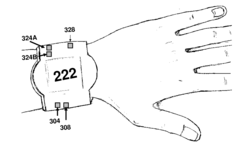
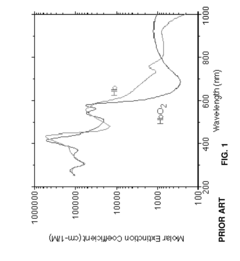
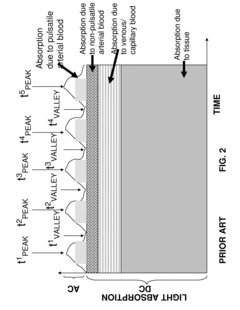
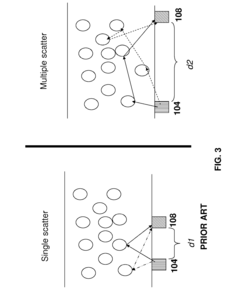
- The method combines photoplethysmography (PPG) with dynamic light scattering (DLS) to correlate light-absorption related blood analyte concentrations by synchronizing PPG measurements with DLS data that provide rheological measurements of shear stress and pulse-induced pressure waves, allowing for more accurate determination of oxygen saturation and de-emphasizing noisy data points.
Data Management and Processing Frameworks
The integration of artificial intelligence with Dynamic Light Scattering (DLS) techniques necessitates robust data management and processing frameworks to handle the complex datasets generated during particle analysis. Current frameworks typically employ a multi-tiered architecture that separates data acquisition, storage, processing, and analysis components, allowing for scalable and efficient handling of DLS measurement data.
Cloud-based data management systems have emerged as the preferred solution for DLS-AI integration, offering advantages in terms of accessibility, scalability, and computational resources. These platforms typically incorporate distributed storage systems like Hadoop Distributed File System (HDFS) or Amazon S3 for raw DLS data, coupled with NoSQL databases such as MongoDB or Cassandra for metadata management. This hybrid approach accommodates both the high-volume time-series scattering data and the associated experimental parameters.
Real-time data processing pipelines represent another critical component of these frameworks. Technologies like Apache Kafka and Apache Flink enable streaming analytics of DLS measurements, facilitating immediate anomaly detection and quality control. These systems can process incoming scattering data on-the-fly, applying preliminary filtering and normalization before storage, thus reducing downstream computational requirements.
For AI model training and inference, specialized frameworks have been developed that bridge traditional DLS analysis algorithms with modern machine learning libraries. TensorFlow and PyTorch extensions specifically designed for spectroscopic and scattering data allow seamless integration of physical models with neural network architectures. These frameworks typically include pre-processing modules for data cleaning, normalization, and feature extraction tailored to the unique characteristics of DLS signals.
Data versioning and provenance tracking systems are increasingly incorporated into these frameworks, addressing the reproducibility challenges in scientific research. Tools like DVC (Data Version Control) and MLflow enable researchers to track the entire experimental pipeline, from raw DLS measurements to final AI model predictions, ensuring transparency and facilitating collaborative development.
Interoperability standards represent a significant advancement in recent frameworks, with efforts focused on establishing common data formats and APIs for DLS-AI integration. The adoption of standards like HDF5 for data storage and REST/GraphQL for service interfaces has improved cross-platform compatibility, allowing researchers to combine tools from different vendors and open-source projects into cohesive analytical workflows.
Security and compliance features have also become essential components of modern frameworks, particularly for pharmaceutical and biomedical applications. End-to-end encryption, access control mechanisms, and audit logging capabilities ensure that sensitive research data remains protected while meeting regulatory requirements for data integrity and traceability.
Cloud-based data management systems have emerged as the preferred solution for DLS-AI integration, offering advantages in terms of accessibility, scalability, and computational resources. These platforms typically incorporate distributed storage systems like Hadoop Distributed File System (HDFS) or Amazon S3 for raw DLS data, coupled with NoSQL databases such as MongoDB or Cassandra for metadata management. This hybrid approach accommodates both the high-volume time-series scattering data and the associated experimental parameters.
Real-time data processing pipelines represent another critical component of these frameworks. Technologies like Apache Kafka and Apache Flink enable streaming analytics of DLS measurements, facilitating immediate anomaly detection and quality control. These systems can process incoming scattering data on-the-fly, applying preliminary filtering and normalization before storage, thus reducing downstream computational requirements.
For AI model training and inference, specialized frameworks have been developed that bridge traditional DLS analysis algorithms with modern machine learning libraries. TensorFlow and PyTorch extensions specifically designed for spectroscopic and scattering data allow seamless integration of physical models with neural network architectures. These frameworks typically include pre-processing modules for data cleaning, normalization, and feature extraction tailored to the unique characteristics of DLS signals.
Data versioning and provenance tracking systems are increasingly incorporated into these frameworks, addressing the reproducibility challenges in scientific research. Tools like DVC (Data Version Control) and MLflow enable researchers to track the entire experimental pipeline, from raw DLS measurements to final AI model predictions, ensuring transparency and facilitating collaborative development.
Interoperability standards represent a significant advancement in recent frameworks, with efforts focused on establishing common data formats and APIs for DLS-AI integration. The adoption of standards like HDF5 for data storage and REST/GraphQL for service interfaces has improved cross-platform compatibility, allowing researchers to combine tools from different vendors and open-source projects into cohesive analytical workflows.
Security and compliance features have also become essential components of modern frameworks, particularly for pharmaceutical and biomedical applications. End-to-end encryption, access control mechanisms, and audit logging capabilities ensure that sensitive research data remains protected while meeting regulatory requirements for data integrity and traceability.
Validation Methodologies for AI-DLS Solutions
Validation of AI-integrated Dynamic Light Scattering (DLS) solutions requires rigorous methodological approaches to ensure accuracy, reliability, and reproducibility. The validation process must address both the traditional DLS measurement parameters and the novel AI components that enhance data interpretation and analysis.
Standard validation protocols for AI-DLS integration begin with benchmark testing using reference materials with well-characterized particle size distributions. These materials, such as polystyrene latex spheres or gold nanoparticles, provide a controlled baseline against which the AI algorithms' performance can be measured. The validation should include measurements across various concentration ranges to assess the system's robustness under different sample conditions.
Cross-validation techniques represent a critical component of the validation methodology. K-fold cross-validation, where the dataset is divided into k subsets with one subset used for testing and the remaining k-1 subsets used for training, helps evaluate the AI model's generalizability. This approach prevents overfitting and ensures the AI component performs consistently across different data segments.
Statistical validation metrics must be carefully selected to quantify the performance of AI-DLS solutions. These typically include mean squared error (MSE), root mean squared error (RMSE), and coefficient of determination (R²) for regression tasks, while classification tasks may employ precision, recall, F1-score, and area under the receiver operating characteristic curve (AUC-ROC).
Blind testing protocols form another essential validation methodology, where the AI-DLS system analyzes unknown samples without prior knowledge of their characteristics. The results are then compared with measurements obtained through alternative, established techniques such as electron microscopy, analytical ultracentrifugation, or field-flow fractionation.
Reproducibility testing across different laboratories and equipment setups is paramount for validating AI-DLS solutions. This inter-laboratory comparison helps identify potential biases or limitations in the AI algorithms when applied to data collected under varying experimental conditions or with different instrument configurations.
Sensitivity analysis should be conducted to determine how variations in input parameters affect the AI model's output. This helps quantify the robustness of the AI-DLS integration and identifies potential sources of error or uncertainty. Parameters to vary include scattering angle, temperature, viscosity assumptions, and data preprocessing methods.
Finally, temporal validation assesses the AI-DLS solution's performance over time, ensuring that the system maintains its accuracy and reliability during extended use. This includes evaluating the need for recalibration or retraining of the AI component as new data becomes available or as environmental conditions change.
Standard validation protocols for AI-DLS integration begin with benchmark testing using reference materials with well-characterized particle size distributions. These materials, such as polystyrene latex spheres or gold nanoparticles, provide a controlled baseline against which the AI algorithms' performance can be measured. The validation should include measurements across various concentration ranges to assess the system's robustness under different sample conditions.
Cross-validation techniques represent a critical component of the validation methodology. K-fold cross-validation, where the dataset is divided into k subsets with one subset used for testing and the remaining k-1 subsets used for training, helps evaluate the AI model's generalizability. This approach prevents overfitting and ensures the AI component performs consistently across different data segments.
Statistical validation metrics must be carefully selected to quantify the performance of AI-DLS solutions. These typically include mean squared error (MSE), root mean squared error (RMSE), and coefficient of determination (R²) for regression tasks, while classification tasks may employ precision, recall, F1-score, and area under the receiver operating characteristic curve (AUC-ROC).
Blind testing protocols form another essential validation methodology, where the AI-DLS system analyzes unknown samples without prior knowledge of their characteristics. The results are then compared with measurements obtained through alternative, established techniques such as electron microscopy, analytical ultracentrifugation, or field-flow fractionation.
Reproducibility testing across different laboratories and equipment setups is paramount for validating AI-DLS solutions. This inter-laboratory comparison helps identify potential biases or limitations in the AI algorithms when applied to data collected under varying experimental conditions or with different instrument configurations.
Sensitivity analysis should be conducted to determine how variations in input parameters affect the AI model's output. This helps quantify the robustness of the AI-DLS integration and identifies potential sources of error or uncertainty. Parameters to vary include scattering angle, temperature, viscosity assumptions, and data preprocessing methods.
Finally, temporal validation assesses the AI-DLS solution's performance over time, ensuring that the system maintains its accuracy and reliability during extended use. This includes evaluating the need for recalibration or retraining of the AI component as new data becomes available or as environmental conditions change.
Unlock deeper insights with PatSnap Eureka Quick Research — get a full tech report to explore trends and direct your research. Try now!
Generate Your Research Report Instantly with AI Agent
Supercharge your innovation with PatSnap Eureka AI Agent Platform!