How V8 Engines Elevate Technological Standards for Spec Vehicles?
JUL 4, 20259 MIN READ
Generate Your Research Report Instantly with AI Agent
Patsnap Eureka helps you evaluate technical feasibility & market potential.
V8 Engine Evolution and Objectives
The V8 engine has been a cornerstone of automotive engineering since its inception in the early 20th century. Its evolution has been marked by continuous improvements in power, efficiency, and reliability, setting new standards for performance vehicles. The primary objective of V8 engine development has been to maximize power output while maintaining fuel efficiency and meeting increasingly stringent emissions regulations.
In the early stages, V8 engines were primarily focused on raw power, with little regard for fuel economy or environmental impact. However, as technological advancements progressed, the goals shifted towards creating more balanced powertrains. Modern V8 engines aim to deliver exceptional performance without compromising on fuel efficiency or environmental sustainability.
The evolution of V8 engines has been driven by several key technological advancements. The introduction of fuel injection systems in the 1980s marked a significant leap forward, improving fuel delivery and combustion efficiency. This was followed by the development of variable valve timing and lift systems, which allowed for better control over engine breathing and improved performance across a wider range of operating conditions.
Another crucial objective in V8 engine development has been weight reduction. Engineers have consistently worked on utilizing lighter materials and more compact designs to improve power-to-weight ratios. This has led to the adoption of aluminum blocks and heads, as well as the integration of advanced manufacturing techniques such as precision casting and 3D printing for complex components.
In recent years, the focus has shifted towards hybridization and electrification. Many manufacturers are now developing V8 engines that work in conjunction with electric motors, creating high-performance hybrid powertrains. This approach aims to combine the traditional strengths of V8 engines with the instant torque and efficiency benefits of electric propulsion.
The pursuit of higher thermal efficiency has been another key objective in V8 engine evolution. Technologies such as direct fuel injection, turbocharging, and advanced combustion chamber designs have all contributed to extracting more power from each drop of fuel. Additionally, the implementation of cylinder deactivation systems has allowed V8 engines to operate more efficiently under light load conditions, further improving overall fuel economy.
As we look to the future, the objectives for V8 engine development continue to evolve. There is an increasing emphasis on sustainable performance, with research into alternative fuels and more efficient combustion processes. The integration of advanced materials, such as carbon fiber and ceramics, is also being explored to further reduce weight and improve thermal management.
In the early stages, V8 engines were primarily focused on raw power, with little regard for fuel economy or environmental impact. However, as technological advancements progressed, the goals shifted towards creating more balanced powertrains. Modern V8 engines aim to deliver exceptional performance without compromising on fuel efficiency or environmental sustainability.
The evolution of V8 engines has been driven by several key technological advancements. The introduction of fuel injection systems in the 1980s marked a significant leap forward, improving fuel delivery and combustion efficiency. This was followed by the development of variable valve timing and lift systems, which allowed for better control over engine breathing and improved performance across a wider range of operating conditions.
Another crucial objective in V8 engine development has been weight reduction. Engineers have consistently worked on utilizing lighter materials and more compact designs to improve power-to-weight ratios. This has led to the adoption of aluminum blocks and heads, as well as the integration of advanced manufacturing techniques such as precision casting and 3D printing for complex components.
In recent years, the focus has shifted towards hybridization and electrification. Many manufacturers are now developing V8 engines that work in conjunction with electric motors, creating high-performance hybrid powertrains. This approach aims to combine the traditional strengths of V8 engines with the instant torque and efficiency benefits of electric propulsion.
The pursuit of higher thermal efficiency has been another key objective in V8 engine evolution. Technologies such as direct fuel injection, turbocharging, and advanced combustion chamber designs have all contributed to extracting more power from each drop of fuel. Additionally, the implementation of cylinder deactivation systems has allowed V8 engines to operate more efficiently under light load conditions, further improving overall fuel economy.
As we look to the future, the objectives for V8 engine development continue to evolve. There is an increasing emphasis on sustainable performance, with research into alternative fuels and more efficient combustion processes. The integration of advanced materials, such as carbon fiber and ceramics, is also being explored to further reduce weight and improve thermal management.
Market Demand for High-Performance Engines
The market demand for high-performance engines, particularly V8 engines in spec vehicles, has been steadily growing in recent years. This trend is driven by a combination of factors, including consumer preferences for powerful and responsive vehicles, advancements in engine technology, and the evolving landscape of automotive regulations.
In the performance vehicle segment, V8 engines continue to be highly sought after by enthusiasts and luxury car buyers. These engines offer superior power output, smooth operation, and a distinctive sound that appeals to many drivers. The demand is particularly strong in markets such as North America, where larger vehicles and powerful engines have traditionally been popular.
However, the market for V8 engines is not limited to high-end sports cars and luxury vehicles. There is a growing trend of incorporating V8 engines into a wider range of vehicles, including performance-oriented SUVs and trucks. This expansion has opened up new market segments and increased the overall demand for these high-performance engines.
The automotive industry's shift towards electrification has, surprisingly, not diminished the demand for V8 engines. Instead, it has created a niche market for high-performance internal combustion engines, with many consumers viewing V8-powered vehicles as desirable alternatives or complementary options to electric vehicles.
Manufacturers are responding to this demand by developing more efficient and technologically advanced V8 engines. These modern V8s often incorporate features such as direct injection, variable valve timing, and cylinder deactivation to improve fuel efficiency while maintaining high performance levels. This technological evolution has allowed V8 engines to remain relevant in an increasingly environmentally conscious market.
The racing and motorsport industries continue to be significant drivers of demand for V8 engines. Many racing series, including NASCAR and Formula 1 (until recently), have utilized V8 engines, further cementing their status as high-performance powerplants and driving technological advancements that often trickle down to production vehicles.
Despite the strong demand, manufacturers face challenges in balancing performance with increasingly stringent emissions regulations. This has led to innovations in engine design and the integration of hybrid technologies to meet both consumer expectations and regulatory requirements.
The market for aftermarket V8 engine upgrades and modifications also remains robust, indicating a sustained interest from enthusiasts in enhancing the performance of their vehicles. This segment contributes significantly to the overall ecosystem surrounding V8 engines and supports a wide range of businesses, from parts manufacturers to specialized tuning shops.
In the performance vehicle segment, V8 engines continue to be highly sought after by enthusiasts and luxury car buyers. These engines offer superior power output, smooth operation, and a distinctive sound that appeals to many drivers. The demand is particularly strong in markets such as North America, where larger vehicles and powerful engines have traditionally been popular.
However, the market for V8 engines is not limited to high-end sports cars and luxury vehicles. There is a growing trend of incorporating V8 engines into a wider range of vehicles, including performance-oriented SUVs and trucks. This expansion has opened up new market segments and increased the overall demand for these high-performance engines.
The automotive industry's shift towards electrification has, surprisingly, not diminished the demand for V8 engines. Instead, it has created a niche market for high-performance internal combustion engines, with many consumers viewing V8-powered vehicles as desirable alternatives or complementary options to electric vehicles.
Manufacturers are responding to this demand by developing more efficient and technologically advanced V8 engines. These modern V8s often incorporate features such as direct injection, variable valve timing, and cylinder deactivation to improve fuel efficiency while maintaining high performance levels. This technological evolution has allowed V8 engines to remain relevant in an increasingly environmentally conscious market.
The racing and motorsport industries continue to be significant drivers of demand for V8 engines. Many racing series, including NASCAR and Formula 1 (until recently), have utilized V8 engines, further cementing their status as high-performance powerplants and driving technological advancements that often trickle down to production vehicles.
Despite the strong demand, manufacturers face challenges in balancing performance with increasingly stringent emissions regulations. This has led to innovations in engine design and the integration of hybrid technologies to meet both consumer expectations and regulatory requirements.
The market for aftermarket V8 engine upgrades and modifications also remains robust, indicating a sustained interest from enthusiasts in enhancing the performance of their vehicles. This segment contributes significantly to the overall ecosystem surrounding V8 engines and supports a wide range of businesses, from parts manufacturers to specialized tuning shops.
V8 Technology: Current State and Challenges
V8 engines have long been at the forefront of automotive technology, setting high standards for performance and efficiency in spec vehicles. Currently, these powerplants represent a pinnacle of internal combustion engine design, offering a balance of power, torque, and reliability that continues to push the boundaries of what's possible in vehicle performance.
The current state of V8 technology is characterized by advanced materials, precision engineering, and sophisticated electronic control systems. Modern V8 engines utilize lightweight alloys, such as aluminum and magnesium, to reduce overall weight while maintaining structural integrity. This weight reduction contributes to improved fuel efficiency and handling characteristics of spec vehicles.
One of the most significant advancements in V8 technology is the widespread adoption of direct fuel injection systems. These systems allow for more precise fuel delivery, resulting in improved combustion efficiency, reduced emissions, and increased power output. Combined with variable valve timing and lift technologies, modern V8 engines can optimize performance across a wide range of operating conditions.
Despite these advancements, V8 engines face several challenges in the current automotive landscape. The most pressing issue is the need to meet increasingly stringent emissions regulations while maintaining the power and performance characteristics that define the V8 experience. This has led to the development of complex exhaust after-treatment systems and the exploration of alternative fuels and hybrid technologies.
Another significant challenge is the industry-wide push towards electrification. As automotive manufacturers invest heavily in electric vehicle technology, the future role of V8 engines in spec vehicles is being questioned. This has spurred innovation in the form of mild hybrid systems and the integration of electric turbochargers to boost efficiency and performance while reducing environmental impact.
Heat management remains a critical challenge for V8 engines, particularly in high-performance applications. Engineers continue to explore advanced cooling technologies and thermal management strategies to maintain optimal operating temperatures and prevent power loss under extreme conditions.
The geographical distribution of V8 technology development is primarily concentrated in traditional automotive manufacturing hubs, with significant advancements coming from North America, Germany, and Japan. However, emerging markets, particularly China, are increasingly contributing to V8 innovation as they seek to establish themselves in the high-performance vehicle segment.
Looking ahead, the future of V8 technology in spec vehicles will likely involve a combination of incremental improvements in traditional areas such as materials and manufacturing processes, alongside more radical innovations in electrification and alternative fuels. The challenge for engineers and manufacturers will be to preserve the character and appeal of V8 engines while adapting to a rapidly changing automotive landscape.
The current state of V8 technology is characterized by advanced materials, precision engineering, and sophisticated electronic control systems. Modern V8 engines utilize lightweight alloys, such as aluminum and magnesium, to reduce overall weight while maintaining structural integrity. This weight reduction contributes to improved fuel efficiency and handling characteristics of spec vehicles.
One of the most significant advancements in V8 technology is the widespread adoption of direct fuel injection systems. These systems allow for more precise fuel delivery, resulting in improved combustion efficiency, reduced emissions, and increased power output. Combined with variable valve timing and lift technologies, modern V8 engines can optimize performance across a wide range of operating conditions.
Despite these advancements, V8 engines face several challenges in the current automotive landscape. The most pressing issue is the need to meet increasingly stringent emissions regulations while maintaining the power and performance characteristics that define the V8 experience. This has led to the development of complex exhaust after-treatment systems and the exploration of alternative fuels and hybrid technologies.
Another significant challenge is the industry-wide push towards electrification. As automotive manufacturers invest heavily in electric vehicle technology, the future role of V8 engines in spec vehicles is being questioned. This has spurred innovation in the form of mild hybrid systems and the integration of electric turbochargers to boost efficiency and performance while reducing environmental impact.
Heat management remains a critical challenge for V8 engines, particularly in high-performance applications. Engineers continue to explore advanced cooling technologies and thermal management strategies to maintain optimal operating temperatures and prevent power loss under extreme conditions.
The geographical distribution of V8 technology development is primarily concentrated in traditional automotive manufacturing hubs, with significant advancements coming from North America, Germany, and Japan. However, emerging markets, particularly China, are increasingly contributing to V8 innovation as they seek to establish themselves in the high-performance vehicle segment.
Looking ahead, the future of V8 technology in spec vehicles will likely involve a combination of incremental improvements in traditional areas such as materials and manufacturing processes, alongside more radical innovations in electrification and alternative fuels. The challenge for engineers and manufacturers will be to preserve the character and appeal of V8 engines while adapting to a rapidly changing automotive landscape.
Current V8 Engine Design Solutions
01 Engine design and performance optimization
V8 engines are designed and optimized for improved performance, efficiency, and power output. This includes advancements in cylinder configuration, combustion chamber design, and valve timing to enhance overall engine performance and fuel economy.- Engine design and performance optimization: V8 engines are designed and optimized for improved performance, efficiency, and power output. This includes advancements in cylinder configuration, combustion processes, and overall engine architecture to meet modern technological standards.
- Fuel efficiency and emissions control: Technological standards for V8 engines focus on enhancing fuel efficiency and reducing emissions. This involves implementing advanced fuel injection systems, exhaust gas recirculation, and catalytic converters to meet stringent environmental regulations.
- Electronic control systems and diagnostics: Modern V8 engines incorporate sophisticated electronic control systems and diagnostic tools. These technologies enable precise engine management, real-time monitoring, and fault detection to ensure optimal performance and compliance with technological standards.
- Materials and manufacturing techniques: Advancements in materials science and manufacturing processes contribute to the technological standards of V8 engines. This includes the use of lightweight alloys, improved casting techniques, and precision machining to enhance durability and performance.
- Integration with hybrid and electric systems: V8 engines are being adapted to work in conjunction with hybrid and electric powertrains. This integration aims to combine the power of V8 engines with the efficiency of electric motors, meeting evolving technological standards for performance and sustainability.
02 Electronic control systems and diagnostics
Modern V8 engines incorporate advanced electronic control systems for precise management of fuel injection, ignition timing, and emissions. These systems also include sophisticated diagnostic capabilities for monitoring engine performance and identifying potential issues.Expand Specific Solutions03 Emissions reduction and environmental compliance
Technological standards for V8 engines focus on reducing emissions and meeting stringent environmental regulations. This involves the development of advanced exhaust aftertreatment systems, improved catalytic converters, and engine management strategies to minimize harmful emissions.Expand Specific Solutions04 Materials and manufacturing processes
Advancements in materials science and manufacturing techniques contribute to the development of lighter, stronger, and more durable V8 engines. This includes the use of advanced alloys, composite materials, and precision manufacturing methods to improve engine performance and longevity.Expand Specific Solutions05 Integration with hybrid and electric systems
V8 engines are being adapted to work in conjunction with hybrid and electric powertrains, combining the power of traditional internal combustion with the efficiency of electric propulsion. This integration requires new technological standards for power management, energy recovery, and system coordination.Expand Specific Solutions
Key Players in V8 Engine Manufacturing
The V8 engine technology landscape is characterized by intense competition among established automotive manufacturers and emerging players. The market is in a mature phase, with a global size estimated in billions of dollars. Technological maturity is high, with companies like BMW, Honda, Toyota, and Ford leading innovation. These firms are focusing on improving efficiency, performance, and emissions reduction in V8 engines. Emerging markets and stricter environmental regulations are driving further advancements. Companies such as Great Wall Motor and Hyundai are also making significant strides in V8 technology, challenging traditional leaders. The industry is witnessing a shift towards hybrid and electric powertrains, prompting V8 manufacturers to adapt and innovate to maintain relevance in the evolving automotive landscape.
GM Global Technology Operations LLC
Technical Solution: GM's V8 engine technology, particularly in their Small Block V8 series, has been at the forefront of elevating technological standards for spec vehicles. Their latest V8 engines incorporate advanced features such as Dynamic Fuel Management (DFM), which can deactivate cylinders in 17 different patterns to optimize fuel efficiency[1]. GM has also implemented direct injection and variable valve timing in their V8 engines, improving both performance and fuel economy. The company's focus on lightweight materials and advanced manufacturing techniques has resulted in V8 engines that are more compact and efficient than ever before[2].
Strengths: Cutting-edge cylinder deactivation technology, improved fuel efficiency, and advanced manufacturing techniques. Weaknesses: Higher initial cost compared to smaller engines, and potential complexity in maintenance due to advanced technologies.
Toyota Motor Corp.
Technical Solution: Toyota's V8 engine technology, particularly in their UR series, has been instrumental in advancing technological standards for spec vehicles. The company has implemented a D-4S (Direct injection 4-stroke gasoline engine Superior version) system, which combines both direct and port fuel injection for optimal performance and efficiency[5]. Toyota's V8 engines also feature VVT-iE (Variable Valve Timing-intelligent by Electric motor) on the intake camshafts, allowing for more precise valve timing control. Additionally, their engines incorporate an Acoustic Control Induction System (ACIS) to optimize intake efficiency across different engine speeds[6].
Strengths: Advanced dual injection system, precise valve timing control, and optimized intake efficiency. Weaknesses: Potential for increased complexity in maintenance and higher initial costs.
Core Innovations in V8 Technology
V8 engine and outboard motor
PatentActiveUS20160341097A1
Innovation
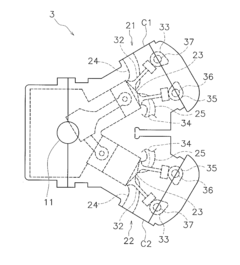
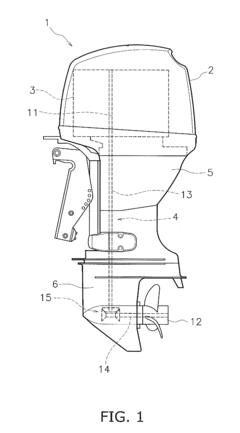
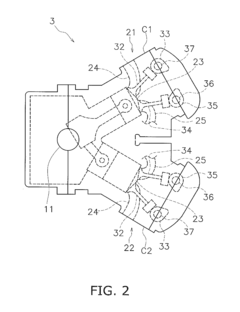
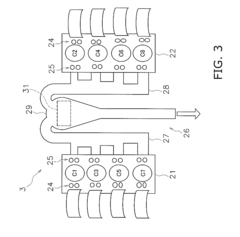
- A V8 engine design with a simple construction featuring aggregated exhaust pathways and adjustable exhaust cams, where the central angle of exhaust cams for each cylinder is optimized to minimize valve overlap and reduce exhaust interference, allowing for even firing intervals and improved exhaust gas management.
V8 engine
PatentActiveUS20230109196A1
Innovation
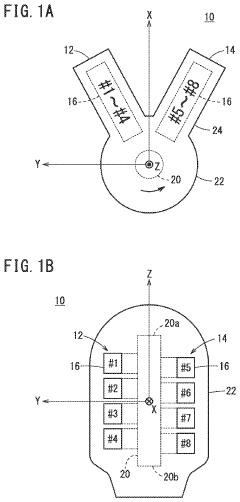
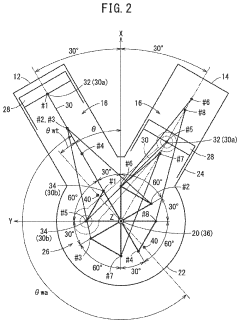
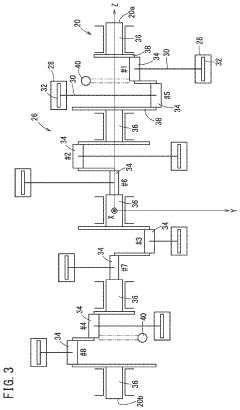
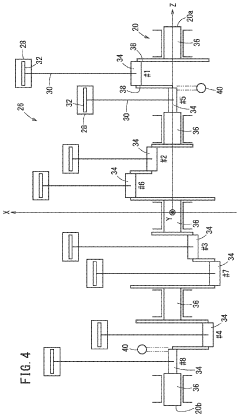
- The V8 engine configuration features crank pins arranged at 90° intervals on one bank and offset by 60° on the other bank, allowing for cancellation of primary inertia couples without additional specialized components by optimizing the arrangement of crank pins and connecting rods.
Environmental Impact and Regulations
The introduction of V8 engines in spec vehicles has significant environmental implications and has led to the development of new regulations. These powerful engines, while offering enhanced performance, also pose challenges in terms of fuel efficiency and emissions. As a result, automotive manufacturers and regulatory bodies have been working together to strike a balance between performance and environmental responsibility.
V8 engines typically consume more fuel than their smaller counterparts, leading to increased carbon dioxide emissions. This has prompted stricter emissions standards worldwide, particularly in regions like the European Union, North America, and China. These regulations have forced manufacturers to innovate and develop technologies that can reduce the environmental impact of V8 engines without compromising their performance characteristics.
One of the key areas of focus has been the implementation of advanced fuel injection systems and engine management technologies. Direct fuel injection, variable valve timing, and cylinder deactivation have become common features in modern V8 engines, allowing for improved fuel efficiency and reduced emissions during normal driving conditions. These technologies enable V8 engines to operate more efficiently at lower loads, effectively mimicking smaller engines when full power is not required.
Turbocharging and supercharging have also played a crucial role in improving the environmental performance of V8 engines. These forced induction systems allow manufacturers to downsize engines while maintaining or even increasing power output. This approach, known as "downspeeding," enables V8 engines to operate at lower RPMs, reducing fuel consumption and emissions during everyday driving scenarios.
The automotive industry has also been exploring alternative fuels and hybrid technologies to mitigate the environmental impact of V8 engines. Flex-fuel V8 engines capable of running on ethanol blends have gained popularity in some markets, offering a renewable fuel option with potentially lower carbon emissions. Additionally, mild hybrid systems and start-stop technology have been integrated into V8-powered vehicles to improve fuel efficiency in urban driving conditions.
Regulatory bodies have responded to these technological advancements by implementing more nuanced emissions testing procedures. The Worldwide Harmonized Light Vehicles Test Procedure (WLTP) and Real Driving Emissions (RDE) tests have been introduced to provide a more accurate representation of real-world driving conditions and emissions. These tests have pushed manufacturers to further refine their V8 engine technologies to meet increasingly stringent environmental standards.
As environmental concerns continue to grow, the future of V8 engines in spec vehicles remains uncertain. While technological advancements have significantly improved their efficiency and reduced emissions, the automotive industry is gradually shifting towards electrification. However, the ongoing development of synthetic fuels and hydrogen combustion technologies may provide new avenues for V8 engines to meet future environmental regulations while preserving their unique performance characteristics.
V8 engines typically consume more fuel than their smaller counterparts, leading to increased carbon dioxide emissions. This has prompted stricter emissions standards worldwide, particularly in regions like the European Union, North America, and China. These regulations have forced manufacturers to innovate and develop technologies that can reduce the environmental impact of V8 engines without compromising their performance characteristics.
One of the key areas of focus has been the implementation of advanced fuel injection systems and engine management technologies. Direct fuel injection, variable valve timing, and cylinder deactivation have become common features in modern V8 engines, allowing for improved fuel efficiency and reduced emissions during normal driving conditions. These technologies enable V8 engines to operate more efficiently at lower loads, effectively mimicking smaller engines when full power is not required.
Turbocharging and supercharging have also played a crucial role in improving the environmental performance of V8 engines. These forced induction systems allow manufacturers to downsize engines while maintaining or even increasing power output. This approach, known as "downspeeding," enables V8 engines to operate at lower RPMs, reducing fuel consumption and emissions during everyday driving scenarios.
The automotive industry has also been exploring alternative fuels and hybrid technologies to mitigate the environmental impact of V8 engines. Flex-fuel V8 engines capable of running on ethanol blends have gained popularity in some markets, offering a renewable fuel option with potentially lower carbon emissions. Additionally, mild hybrid systems and start-stop technology have been integrated into V8-powered vehicles to improve fuel efficiency in urban driving conditions.
Regulatory bodies have responded to these technological advancements by implementing more nuanced emissions testing procedures. The Worldwide Harmonized Light Vehicles Test Procedure (WLTP) and Real Driving Emissions (RDE) tests have been introduced to provide a more accurate representation of real-world driving conditions and emissions. These tests have pushed manufacturers to further refine their V8 engine technologies to meet increasingly stringent environmental standards.
As environmental concerns continue to grow, the future of V8 engines in spec vehicles remains uncertain. While technological advancements have significantly improved their efficiency and reduced emissions, the automotive industry is gradually shifting towards electrification. However, the ongoing development of synthetic fuels and hydrogen combustion technologies may provide new avenues for V8 engines to meet future environmental regulations while preserving their unique performance characteristics.
V8 Integration in Modern Vehicle Platforms
The integration of V8 engines into modern vehicle platforms represents a significant leap in automotive engineering, pushing the boundaries of performance and efficiency. This powerful engine configuration has become a cornerstone for many high-performance and luxury vehicles, setting new standards in the industry. The V8's compact design and impressive power-to-weight ratio make it an ideal choice for a wide range of vehicle types, from sports cars to luxury sedans and even some SUVs.
In recent years, manufacturers have focused on optimizing V8 engines to meet stringent emissions regulations while maintaining their characteristic power output. This has led to the development of more sophisticated engine management systems, advanced fuel injection technologies, and the incorporation of turbocharging or supercharging. These advancements have allowed V8 engines to deliver exceptional performance while improving fuel efficiency and reducing environmental impact.
The integration process involves careful consideration of the vehicle's chassis design, weight distribution, and overall balance. Engineers must optimize the engine's placement to ensure proper weight distribution and handling characteristics. This often requires redesigning the vehicle's front-end structure and modifying the suspension system to accommodate the V8's unique dimensions and weight.
Moreover, the integration of V8 engines has driven innovations in transmission technology. Many modern V8-equipped vehicles feature advanced multi-speed automatic transmissions or dual-clutch systems that can handle the engine's high torque output while providing smooth and efficient power delivery. This synergy between engine and transmission has resulted in vehicles that offer both exhilarating performance and refined driving experiences.
The cooling system is another critical aspect of V8 integration. These powerful engines generate significant heat, necessitating advanced cooling solutions. This has led to the development of more efficient radiators, oil coolers, and even active aerodynamic systems that manage airflow to critical components. Some manufacturers have also implemented cylinder deactivation technology, allowing V8 engines to operate as more fuel-efficient four-cylinder units under light load conditions.
As vehicle electrification gains momentum, the role of V8 engines is evolving. Some manufacturers are exploring hybrid V8 powertrains, combining the traditional appeal of the V8 with electric motors to boost performance and efficiency. This hybrid approach allows for the retention of the V8's iconic sound and character while meeting increasingly stringent emissions standards.
In recent years, manufacturers have focused on optimizing V8 engines to meet stringent emissions regulations while maintaining their characteristic power output. This has led to the development of more sophisticated engine management systems, advanced fuel injection technologies, and the incorporation of turbocharging or supercharging. These advancements have allowed V8 engines to deliver exceptional performance while improving fuel efficiency and reducing environmental impact.
The integration process involves careful consideration of the vehicle's chassis design, weight distribution, and overall balance. Engineers must optimize the engine's placement to ensure proper weight distribution and handling characteristics. This often requires redesigning the vehicle's front-end structure and modifying the suspension system to accommodate the V8's unique dimensions and weight.
Moreover, the integration of V8 engines has driven innovations in transmission technology. Many modern V8-equipped vehicles feature advanced multi-speed automatic transmissions or dual-clutch systems that can handle the engine's high torque output while providing smooth and efficient power delivery. This synergy between engine and transmission has resulted in vehicles that offer both exhilarating performance and refined driving experiences.
The cooling system is another critical aspect of V8 integration. These powerful engines generate significant heat, necessitating advanced cooling solutions. This has led to the development of more efficient radiators, oil coolers, and even active aerodynamic systems that manage airflow to critical components. Some manufacturers have also implemented cylinder deactivation technology, allowing V8 engines to operate as more fuel-efficient four-cylinder units under light load conditions.
As vehicle electrification gains momentum, the role of V8 engines is evolving. Some manufacturers are exploring hybrid V8 powertrains, combining the traditional appeal of the V8 with electric motors to boost performance and efficiency. This hybrid approach allows for the retention of the V8's iconic sound and character while meeting increasingly stringent emissions standards.
Unlock deeper insights with Patsnap Eureka Quick Research — get a full tech report to explore trends and direct your research. Try now!
Generate Your Research Report Instantly with AI Agent
Supercharge your innovation with Patsnap Eureka AI Agent Platform!