

Measuring V4 Engine Air-Fuel Mixture with Lambda Sensors
AUG 28, 20259 MIN READ
Generate Your Research Report Instantly with AI Agent
PatSnap Eureka helps you evaluate technical feasibility & market potential.
Lambda Sensor Technology Background and Objectives
Lambda sensors, also known as oxygen sensors, have evolved significantly since their introduction in the automotive industry in the late 1960s. Initially developed by Robert Bosch GmbH, these sensors were designed to measure the oxygen content in exhaust gases, providing crucial feedback for engine management systems to optimize the air-fuel ratio. The technology has progressed from simple on-off sensors to sophisticated wide-band sensors capable of precise measurements across a broad range of air-fuel mixtures.
The evolution of lambda sensor technology has been driven by increasingly stringent emission regulations worldwide and the automotive industry's pursuit of improved fuel efficiency. Early lambda sensors operated on a narrow-band principle, primarily indicating whether the mixture was rich or lean relative to the stoichiometric ratio of 14.7:1 for gasoline engines. Modern wide-band sensors, however, can accurately measure specific air-fuel ratios across a much broader spectrum, enabling more precise engine control.
In V4 engine applications, lambda sensors play a particularly critical role due to the compact design and specific power characteristics of these engines. The technical objective of lambda sensing in V4 engines is to achieve optimal combustion efficiency while minimizing harmful emissions such as nitrogen oxides (NOx), carbon monoxide (CO), and unburned hydrocarbons (HC). This balance is especially challenging in V4 engines where space constraints and thermal management considerations add complexity to sensor placement and operation.
Current technological goals in lambda sensor development focus on several key areas: improving sensor response time to accommodate rapid changes in engine operating conditions; enhancing durability to withstand harsh exhaust environments; miniaturizing sensors without compromising performance; and integrating advanced materials that extend sensor life and accuracy. Additionally, there is significant emphasis on developing sensors that maintain precision across wider temperature ranges and can function effectively with alternative fuels.
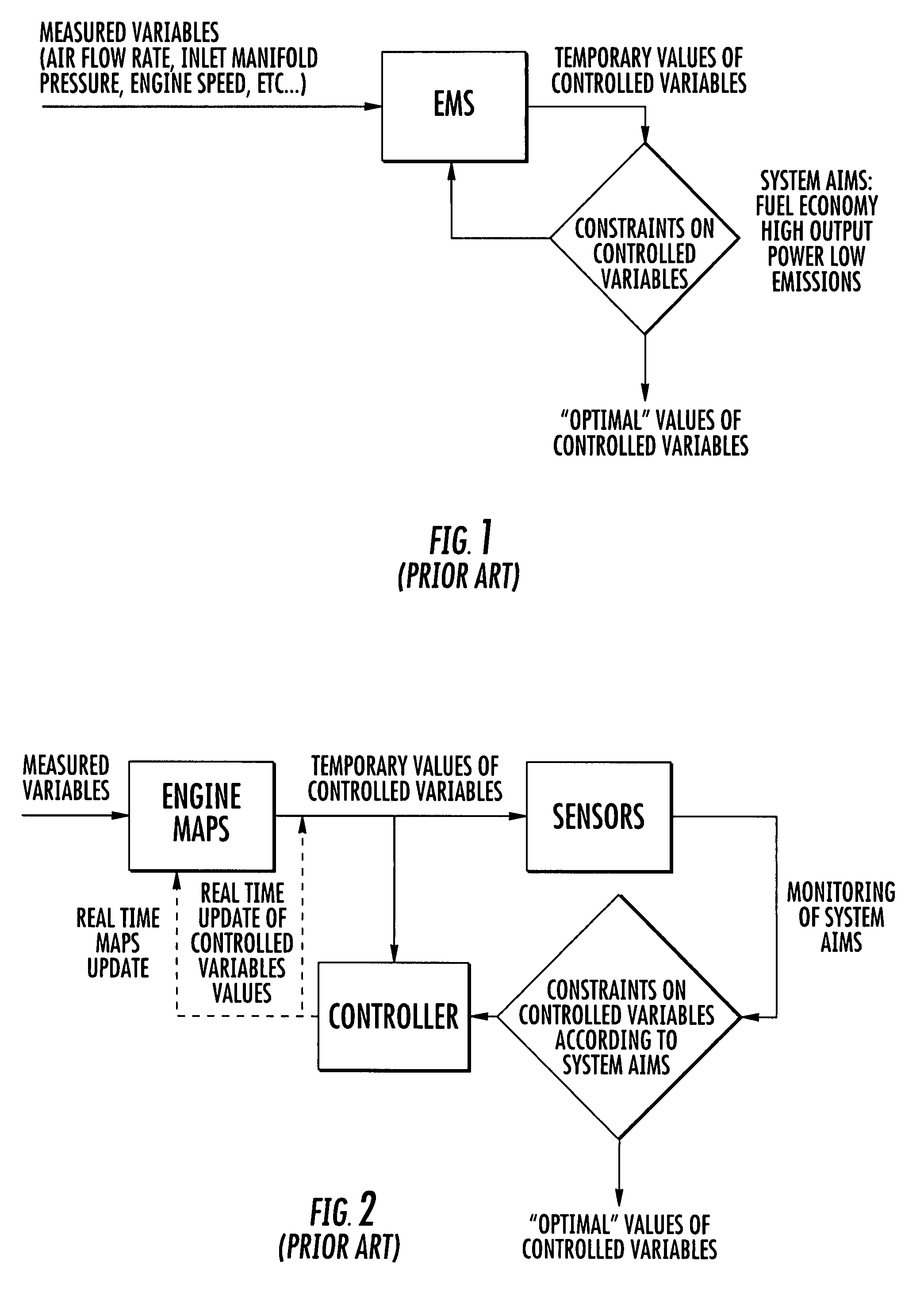
The integration of lambda sensors with modern engine control units (ECUs) represents another important technological frontier. Advanced algorithms now utilize lambda sensor data to make real-time adjustments to fuel injection timing and quantity, ignition timing, and exhaust gas recirculation rates. This integration is becoming increasingly sophisticated, with machine learning approaches being explored to predict and compensate for sensor aging and environmental factors.
Looking forward, the technological trajectory of lambda sensors is aligned with broader automotive trends toward electrification and hybridization. Even as full electric vehicles gain market share, lambda sensors will remain essential in hybrid powertrains and range extenders, where internal combustion engines continue to play a role. The technology is also evolving to support emerging combustion strategies such as homogeneous charge compression ignition (HCCI) and low-temperature combustion, which promise further efficiency gains and emissions reductions.
The evolution of lambda sensor technology has been driven by increasingly stringent emission regulations worldwide and the automotive industry's pursuit of improved fuel efficiency. Early lambda sensors operated on a narrow-band principle, primarily indicating whether the mixture was rich or lean relative to the stoichiometric ratio of 14.7:1 for gasoline engines. Modern wide-band sensors, however, can accurately measure specific air-fuel ratios across a much broader spectrum, enabling more precise engine control.
In V4 engine applications, lambda sensors play a particularly critical role due to the compact design and specific power characteristics of these engines. The technical objective of lambda sensing in V4 engines is to achieve optimal combustion efficiency while minimizing harmful emissions such as nitrogen oxides (NOx), carbon monoxide (CO), and unburned hydrocarbons (HC). This balance is especially challenging in V4 engines where space constraints and thermal management considerations add complexity to sensor placement and operation.
Current technological goals in lambda sensor development focus on several key areas: improving sensor response time to accommodate rapid changes in engine operating conditions; enhancing durability to withstand harsh exhaust environments; miniaturizing sensors without compromising performance; and integrating advanced materials that extend sensor life and accuracy. Additionally, there is significant emphasis on developing sensors that maintain precision across wider temperature ranges and can function effectively with alternative fuels.
The integration of lambda sensors with modern engine control units (ECUs) represents another important technological frontier. Advanced algorithms now utilize lambda sensor data to make real-time adjustments to fuel injection timing and quantity, ignition timing, and exhaust gas recirculation rates. This integration is becoming increasingly sophisticated, with machine learning approaches being explored to predict and compensate for sensor aging and environmental factors.
Looking forward, the technological trajectory of lambda sensors is aligned with broader automotive trends toward electrification and hybridization. Even as full electric vehicles gain market share, lambda sensors will remain essential in hybrid powertrains and range extenders, where internal combustion engines continue to play a role. The technology is also evolving to support emerging combustion strategies such as homogeneous charge compression ignition (HCCI) and low-temperature combustion, which promise further efficiency gains and emissions reductions.
Market Demand Analysis for V4 Engine Monitoring Systems
The global market for V4 engine monitoring systems, particularly those utilizing lambda sensors for air-fuel mixture measurement, has experienced significant growth driven by increasingly stringent emission regulations and the automotive industry's focus on fuel efficiency. Current market analysis indicates that the demand for advanced engine monitoring systems is projected to grow at a compound annual rate of 5.7% through 2028, with the lambda sensor segment representing approximately 22% of the total engine sensor market.
The primary market drivers include regulatory pressures such as Euro 7 standards in Europe, China 6 in Asia, and Tier 3 regulations in North America, all of which mandate lower emission thresholds that require precise air-fuel ratio control. Additionally, consumer demand for fuel-efficient vehicles has intensified as global fuel prices remain volatile, creating market pull for technologies that optimize combustion efficiency.
Commercial vehicle fleets represent a particularly promising market segment, with fleet operators increasingly investing in monitoring systems that can reduce fuel consumption and maintenance costs. Data from fleet management companies suggests that properly calibrated air-fuel mixtures can improve fuel economy by 3-7% in V4 engines, representing substantial operational savings for large fleets.
The aftermarket for lambda sensors and related monitoring systems has also expanded considerably, with replacement cycles averaging 50,000-80,000 miles depending on driving conditions and fuel quality. This creates a substantial recurring revenue stream estimated at $2.3 billion annually across global markets.
Regional analysis reveals varying adoption rates, with Western Europe leading in terms of market penetration due to stricter emissions standards, followed by North America and developed Asian markets. Emerging economies present significant growth opportunities as they implement more rigorous emissions standards and as vehicle ownership increases.
Market segmentation by end-user shows that original equipment manufacturers (OEMs) currently account for 68% of market volume, while aftermarket applications represent 32%. However, the aftermarket segment is growing faster at 7.2% annually compared to 4.9% for OEM installations.
Customer feedback and market research indicate increasing demand for integrated systems that combine lambda sensor data with broader engine management capabilities, suggesting potential for value-added services and premium product positioning. Additionally, there is growing interest in systems that can be retrofitted to existing V4 engines to improve performance and reduce emissions without requiring complete engine replacement.
The primary market drivers include regulatory pressures such as Euro 7 standards in Europe, China 6 in Asia, and Tier 3 regulations in North America, all of which mandate lower emission thresholds that require precise air-fuel ratio control. Additionally, consumer demand for fuel-efficient vehicles has intensified as global fuel prices remain volatile, creating market pull for technologies that optimize combustion efficiency.
Commercial vehicle fleets represent a particularly promising market segment, with fleet operators increasingly investing in monitoring systems that can reduce fuel consumption and maintenance costs. Data from fleet management companies suggests that properly calibrated air-fuel mixtures can improve fuel economy by 3-7% in V4 engines, representing substantial operational savings for large fleets.
The aftermarket for lambda sensors and related monitoring systems has also expanded considerably, with replacement cycles averaging 50,000-80,000 miles depending on driving conditions and fuel quality. This creates a substantial recurring revenue stream estimated at $2.3 billion annually across global markets.
Regional analysis reveals varying adoption rates, with Western Europe leading in terms of market penetration due to stricter emissions standards, followed by North America and developed Asian markets. Emerging economies present significant growth opportunities as they implement more rigorous emissions standards and as vehicle ownership increases.
Market segmentation by end-user shows that original equipment manufacturers (OEMs) currently account for 68% of market volume, while aftermarket applications represent 32%. However, the aftermarket segment is growing faster at 7.2% annually compared to 4.9% for OEM installations.
Customer feedback and market research indicate increasing demand for integrated systems that combine lambda sensor data with broader engine management capabilities, suggesting potential for value-added services and premium product positioning. Additionally, there is growing interest in systems that can be retrofitted to existing V4 engines to improve performance and reduce emissions without requiring complete engine replacement.
Current Lambda Sensor Technology Challenges
Lambda sensors, critical components in modern engine management systems, face several significant technical challenges that limit their effectiveness in precisely measuring air-fuel mixtures in V4 engines. The primary challenge lies in sensor response time, with current technologies exhibiting delays between 100-500 milliseconds. This latency proves problematic during rapid transient conditions such as sudden acceleration or deceleration, where the engine control unit (ECU) requires near-instantaneous feedback to maintain optimal combustion efficiency.
Sensor durability presents another substantial hurdle. Lambda sensors operate in extremely harsh environments characterized by high temperatures (up to 900°C), exposure to combustion byproducts, and vibration. These conditions accelerate sensor degradation, with most current models requiring replacement after 60,000-100,000 miles. This degradation manifests as reduced sensitivity and increased response time, compromising measurement accuracy over the sensor's lifespan.
Cross-sensitivity issues further complicate accurate measurements. Contemporary lambda sensors exhibit undesired sensitivity to gases beyond oxygen, including unburned hydrocarbons, carbon monoxide, and nitrogen oxides. This cross-sensitivity introduces measurement errors, particularly in engines with variable fuel quality or during cold-start conditions when combustion is less efficient.
Calibration drift represents a persistent technical challenge. Over time, lambda sensors experience calibration shifts due to thermal cycling, contamination from fuel additives, and electrode poisoning from sulfur and phosphorus compounds. Current sensor designs lack effective self-calibration mechanisms, necessitating periodic recalibration or replacement to maintain measurement accuracy.
The narrow operating temperature window of conventional lambda sensors poses significant limitations. Most sensors require heating elements to reach their optimal operating temperature (approximately 350-800°C), consuming additional energy and introducing warm-up delays. During cold starts, this warm-up period creates a measurement gap when precise air-fuel ratio control is most critical for emissions reduction.
Miniaturization constraints also impede advancement. As engine designs become more compact and complex, the physical size of lambda sensors becomes increasingly problematic. Current sensor dimensions limit optimal placement options, particularly in downsized V4 engines where space is at a premium, often forcing compromises between ideal exhaust gas sampling locations and available installation space.
Signal interference from electromagnetic sources in modern vehicles presents an emerging challenge. The proliferation of electronic systems in proximity to exhaust components can introduce noise into lambda sensor signals, requiring increasingly sophisticated signal processing and shielding solutions to maintain measurement integrity.
Sensor durability presents another substantial hurdle. Lambda sensors operate in extremely harsh environments characterized by high temperatures (up to 900°C), exposure to combustion byproducts, and vibration. These conditions accelerate sensor degradation, with most current models requiring replacement after 60,000-100,000 miles. This degradation manifests as reduced sensitivity and increased response time, compromising measurement accuracy over the sensor's lifespan.
Cross-sensitivity issues further complicate accurate measurements. Contemporary lambda sensors exhibit undesired sensitivity to gases beyond oxygen, including unburned hydrocarbons, carbon monoxide, and nitrogen oxides. This cross-sensitivity introduces measurement errors, particularly in engines with variable fuel quality or during cold-start conditions when combustion is less efficient.
Calibration drift represents a persistent technical challenge. Over time, lambda sensors experience calibration shifts due to thermal cycling, contamination from fuel additives, and electrode poisoning from sulfur and phosphorus compounds. Current sensor designs lack effective self-calibration mechanisms, necessitating periodic recalibration or replacement to maintain measurement accuracy.
The narrow operating temperature window of conventional lambda sensors poses significant limitations. Most sensors require heating elements to reach their optimal operating temperature (approximately 350-800°C), consuming additional energy and introducing warm-up delays. During cold starts, this warm-up period creates a measurement gap when precise air-fuel ratio control is most critical for emissions reduction.
Miniaturization constraints also impede advancement. As engine designs become more compact and complex, the physical size of lambda sensors becomes increasingly problematic. Current sensor dimensions limit optimal placement options, particularly in downsized V4 engines where space is at a premium, often forcing compromises between ideal exhaust gas sampling locations and available installation space.
Signal interference from electromagnetic sources in modern vehicles presents an emerging challenge. The proliferation of electronic systems in proximity to exhaust components can introduce noise into lambda sensor signals, requiring increasingly sophisticated signal processing and shielding solutions to maintain measurement integrity.
Current Air-Fuel Ratio Measurement Solutions
01 Lambda sensor design and operation principles
Lambda sensors are designed to measure the oxygen content in exhaust gases to determine the air-fuel ratio. These sensors typically use zirconium dioxide elements that generate voltage based on oxygen concentration differences between exhaust gas and reference air. The sensor output signals whether the mixture is rich (excess fuel) or lean (excess oxygen), allowing the engine control unit to adjust fuel delivery accordingly for optimal combustion efficiency.- Lambda sensor design and operation principles: Lambda sensors are designed to measure the oxygen content in exhaust gases, which directly correlates to the air-fuel ratio. These sensors typically use zirconia ceramic elements that generate voltage based on oxygen concentration differences between exhaust gas and reference air. The sensor output signals whether the mixture is rich (excess fuel) or lean (excess oxygen), allowing the engine control unit to adjust fuel delivery accordingly for optimal combustion efficiency.
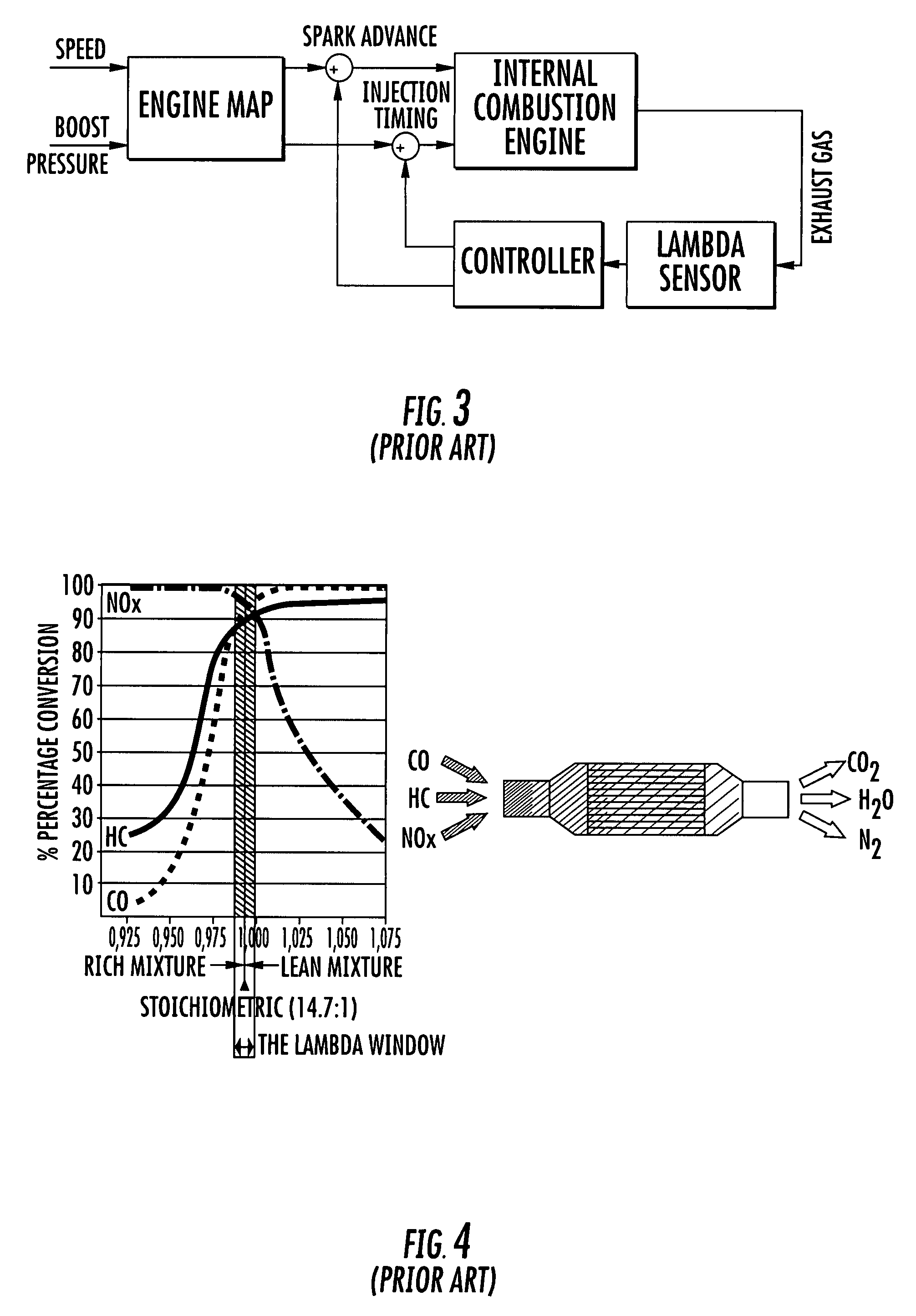
- Air-fuel ratio control systems using lambda sensors: Control systems utilize lambda sensor feedback to maintain the ideal stoichiometric air-fuel ratio (approximately 14.7:1 for gasoline engines). These closed-loop systems continuously adjust fuel injection parameters based on lambda sensor readings. The engine control unit processes the sensor signal and makes real-time corrections to fuel delivery, ensuring optimal engine performance, reduced emissions, and improved fuel economy across various operating conditions.
- Advanced lambda sensor integration with engine management: Modern engine management systems incorporate sophisticated algorithms to interpret lambda sensor data. These systems can compensate for sensor aging, temperature variations, and other factors affecting measurement accuracy. Advanced implementations may use multiple sensors positioned at different points in the exhaust system to provide comprehensive feedback. Some systems employ wideband lambda sensors that can precisely measure air-fuel ratios across a broader range rather than just indicating rich or lean conditions.
- Emission control applications of lambda sensors: Lambda sensors play a crucial role in emission control systems, particularly in catalytic converter efficiency. By maintaining the air-fuel ratio within the optimal window for catalytic converter operation, these sensors help reduce harmful emissions such as nitrogen oxides, carbon monoxide, and unburned hydrocarbons. Some advanced systems use multiple sensors positioned before and after the catalytic converter to monitor not only the air-fuel mixture but also the converter's efficiency in real-time.
- Diagnostic and fault detection systems for lambda sensors: Diagnostic systems monitor lambda sensor performance to detect deterioration or failure. These systems analyze sensor response time, signal range, and internal resistance to identify issues that could affect engine performance or emissions. When problems are detected, the engine control unit may store diagnostic trouble codes and activate warning indicators. Some advanced systems can implement compensatory strategies to maintain acceptable engine operation even when sensor performance is compromised, ensuring continued drivability until repairs can be made.
02 Air-fuel ratio control systems using lambda sensors
Control systems utilize lambda sensor feedback to maintain optimal air-fuel ratios. These systems continuously monitor exhaust gas composition and make real-time adjustments to fuel injection parameters. Advanced systems incorporate multiple sensors positioned at different points in the exhaust stream to provide comprehensive data for precise mixture control. The control algorithms can compensate for various operating conditions including temperature variations, altitude changes, and engine load fluctuations.Expand Specific Solutions03 Lambda sensor integration with catalytic converters
Lambda sensors work in conjunction with catalytic converters to reduce emissions. Positioning sensors before and after the catalytic converter allows the system to monitor both the air-fuel mixture entering the converter and the conversion efficiency. This dual-sensor arrangement enables closed-loop control that maintains the air-fuel ratio within the optimal window for catalytic converter operation, maximizing the reduction of harmful emissions such as NOx, CO, and unburned hydrocarbons.Expand Specific Solutions04 Diagnostic and calibration methods for lambda sensors
Various diagnostic and calibration methods ensure lambda sensors maintain accuracy throughout their operational life. These include self-diagnostic routines that detect sensor degradation, contamination, or failure. Calibration procedures compensate for sensor aging and environmental factors that might affect readings. Advanced systems can perform adaptive learning to maintain precise air-fuel ratio control even as sensors gradually lose sensitivity over time, ensuring consistent engine performance and emissions compliance.Expand Specific Solutions05 Innovations in lambda sensor technology
Recent innovations in lambda sensor technology include wideband sensors capable of precisely measuring actual air-fuel ratios across a broad range rather than simply indicating rich or lean conditions. These advanced sensors feature improved response times, enhanced durability, and greater resistance to contamination. Other developments include integrated heating elements that bring sensors to operating temperature more quickly, reducing emissions during cold starts, and miniaturized designs that allow for more flexible placement options within exhaust systems.Expand Specific Solutions
Key Industry Players in Engine Sensing Technology
The lambda sensor market for V4 engine air-fuel mixture measurement is in a mature growth phase, with an estimated global market size exceeding $3 billion annually. The technology has reached high maturity levels, with Robert Bosch GmbH maintaining market leadership through advanced sensor innovations. Key competitors including Denso Corp., NGK (Niterra Co., Ltd.), and Continental have established strong positions through proprietary technologies. Major automotive manufacturers like Toyota, Volkswagen, and Honda have integrated these systems into their engine management strategies. The competitive landscape shows increasing focus on enhanced durability, faster response times, and integration with advanced engine control units, with emerging players from China like Weichai Power gradually gaining market share through cost-effective solutions.
Robert Bosch GmbH
Technical Solution: Bosch's lambda sensor technology for V4 engines employs advanced wideband (LSU) sensors that precisely measure air-fuel ratios across a wide range (λ=0.7 to λ=∞). Their system integrates planar dual-cell zirconia elements with integrated heating circuits that reach optimal operating temperatures (>800°C) in under 10 seconds. The proprietary ASIC signal processing technology enables real-time compensation for exhaust temperature variations and sensor aging effects. Bosch's latest LSU 5.1 sensors feature improved response times (<100ms) and enhanced durability (>160,000 miles) through specialized protective coatings that resist contamination from fuel additives and oil ash. Their closed-loop control system continuously adjusts fuel injection parameters based on lambda readings, maintaining optimal combustion efficiency across all engine operating conditions.
Strengths: Industry-leading measurement accuracy (±1% across full measurement range); fastest warm-up times; comprehensive diagnostic capabilities; backward compatibility with existing ECU systems. Weaknesses: Higher cost compared to simpler narrow-band sensors; requires more sophisticated ECU programming; slightly more complex installation requirements.
Toyota Motor Corp.
Technical Solution: Toyota's lambda sensor system for V4 engines employs their proprietary "Intelligent Air-Fuel Ratio Management" technology that utilizes dual oxygen sensors positioned before and after the catalytic converter. Their sensors feature a specialized zirconia ceramic element with a unique microstructure that enhances ion conductivity at lower temperatures, reducing warm-up time to approximately 12 seconds. Toyota's system incorporates adaptive learning algorithms that continuously adjust sensor calibration based on operating conditions and sensor aging characteristics. Their latest generation sensors include a specialized contamination-resistant coating that protects against silicon and phosphorus poisoning, extending sensor life to over 150,000 miles. Toyota's ECU programming implements a sophisticated closed-loop control strategy that maintains optimal air-fuel ratios across all engine operating modes, including cold start, acceleration, cruise, and deceleration phases. The system features integrated self-diagnostic capabilities that can detect sensor degradation and provide early warning of potential catalytic converter efficiency issues.
Strengths: Exceptional integration with Toyota's engine management systems; highly refined control algorithms; excellent long-term reliability; comprehensive diagnostic capabilities. Weaknesses: Proprietary communication protocols limit aftermarket replacement options; slightly narrower measurement range compared to some specialized sensors; higher replacement costs through dealer networks.
Core Lambda Sensor Innovations for V4 Engines
Method and associated device for sensing the air/fuel ratio of an internal combustion engine
PatentActiveUS8131450B2
Innovation
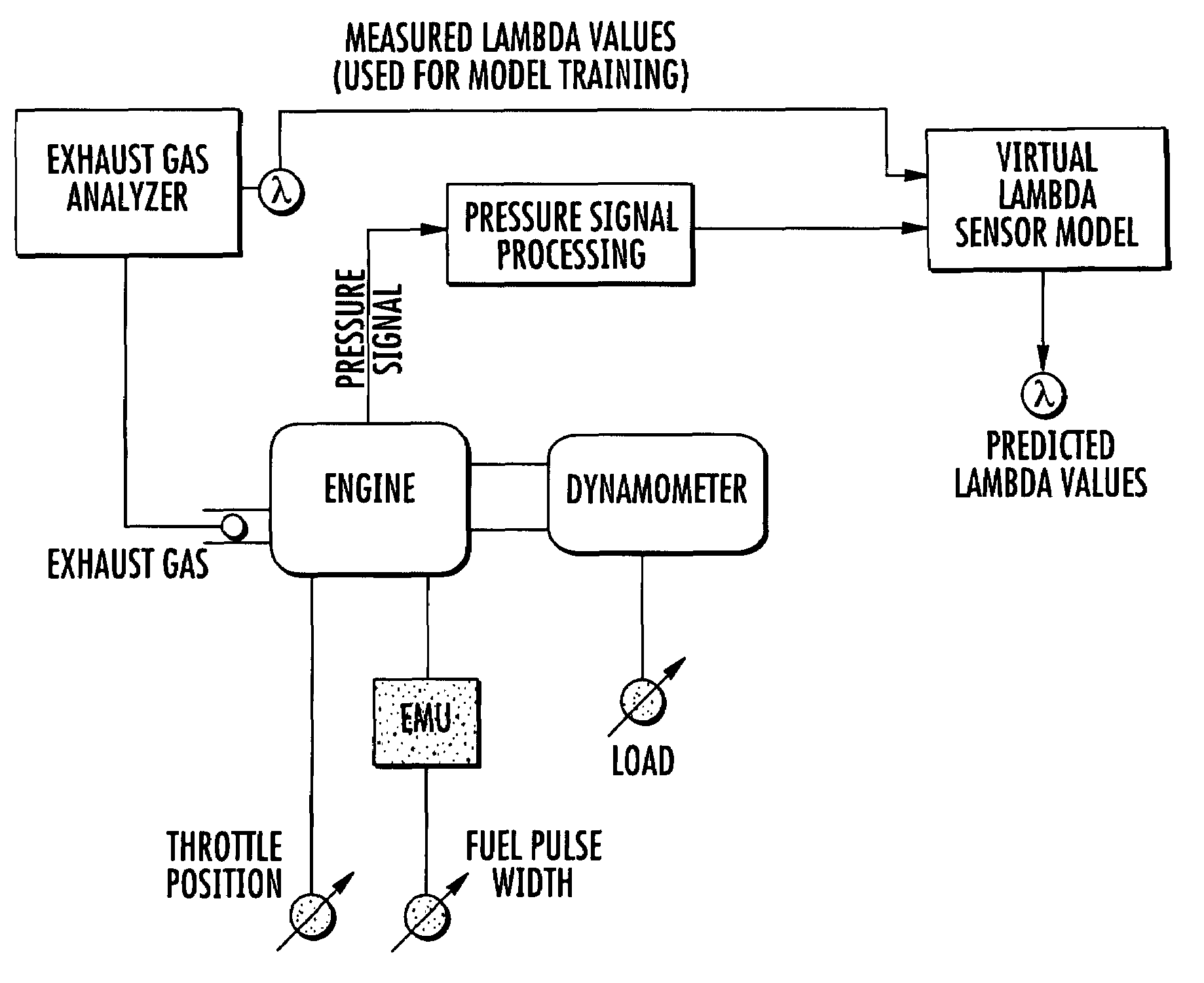
- A low-cost device utilizing a pressure sensor and a MultiSpread-PNN learning machine to process pressure waveform characteristics, generating a sensing signal for the air/fuel ratio, which is more accurate than traditional lambda sensors and functional across all engine operating conditions.


Method and associated device for sensing the air/fuel ratio of an internal combustion engine
PatentActiveUS7440839B2
Innovation
- A low-cost device utilizing a pressure sensor and a MultiSpread-PNN learning machine to process cylinder pressure waveforms, extracting characteristic parameters and generating a sensing signal for the air/fuel ratio, which is averaged over multiple cycles to improve accuracy and reduce noise.

Emissions Regulations Impact on Sensor Development
The evolution of emissions regulations has been a primary driver for the development and refinement of lambda sensor technology in automotive applications, particularly for V4 engines. Since the introduction of the first emissions standards in the 1970s, regulatory frameworks have progressively become more stringent, necessitating increasingly sophisticated air-fuel mixture monitoring systems.
The Clean Air Act amendments of 1990 marked a significant turning point, establishing more comprehensive emissions control requirements that directly influenced lambda sensor technology. These regulations mandated substantial reductions in nitrogen oxides (NOx), carbon monoxide (CO), and hydrocarbon emissions, which could only be achieved through precise air-fuel ratio management.
Euro standards in Europe and Tier regulations in the United States have continued to push the technological boundaries of lambda sensors. The transition from Euro 3 to Euro 6 standards, for instance, required a 56% reduction in NOx emissions for gasoline engines, compelling manufacturers to develop more responsive and accurate lambda sensors capable of supporting advanced closed-loop control systems.
China's implementation of China 6 standards, equivalent to Euro 6, has further expanded the global market for advanced lambda sensing technologies. This regulatory convergence has accelerated the development of wideband lambda sensors that can precisely measure air-fuel ratios across a broader range, essential for meeting these stringent requirements.
The regulatory focus on real-world driving emissions (RDE) testing has particularly influenced sensor development, as these tests expose the limitations of traditional narrow-band lambda sensors. This has led to the integration of multiple lambda sensors in exhaust systems, with pre-catalytic and post-catalytic positioning to ensure optimal catalytic converter efficiency throughout various driving conditions.
On-Board Diagnostic (OBD) requirements have also shaped lambda sensor technology, with OBD-II standards mandating continuous monitoring of catalyst efficiency through comparative analysis of upstream and downstream sensor readings. This has driven improvements in sensor durability and long-term stability, as regulations typically require emissions control systems to maintain compliance for up to 150,000 miles.
Looking forward, upcoming regulations focusing on particulate emissions from gasoline direct injection engines and the potential inclusion of cold-start emissions in regulatory frameworks will likely drive further innovation in lambda sensor technology. These developments may include faster sensor warm-up times, enhanced low-temperature performance, and integration with artificial intelligence for predictive emissions control strategies.
The Clean Air Act amendments of 1990 marked a significant turning point, establishing more comprehensive emissions control requirements that directly influenced lambda sensor technology. These regulations mandated substantial reductions in nitrogen oxides (NOx), carbon monoxide (CO), and hydrocarbon emissions, which could only be achieved through precise air-fuel ratio management.
Euro standards in Europe and Tier regulations in the United States have continued to push the technological boundaries of lambda sensors. The transition from Euro 3 to Euro 6 standards, for instance, required a 56% reduction in NOx emissions for gasoline engines, compelling manufacturers to develop more responsive and accurate lambda sensors capable of supporting advanced closed-loop control systems.
China's implementation of China 6 standards, equivalent to Euro 6, has further expanded the global market for advanced lambda sensing technologies. This regulatory convergence has accelerated the development of wideband lambda sensors that can precisely measure air-fuel ratios across a broader range, essential for meeting these stringent requirements.
The regulatory focus on real-world driving emissions (RDE) testing has particularly influenced sensor development, as these tests expose the limitations of traditional narrow-band lambda sensors. This has led to the integration of multiple lambda sensors in exhaust systems, with pre-catalytic and post-catalytic positioning to ensure optimal catalytic converter efficiency throughout various driving conditions.
On-Board Diagnostic (OBD) requirements have also shaped lambda sensor technology, with OBD-II standards mandating continuous monitoring of catalyst efficiency through comparative analysis of upstream and downstream sensor readings. This has driven improvements in sensor durability and long-term stability, as regulations typically require emissions control systems to maintain compliance for up to 150,000 miles.
Looking forward, upcoming regulations focusing on particulate emissions from gasoline direct injection engines and the potential inclusion of cold-start emissions in regulatory frameworks will likely drive further innovation in lambda sensor technology. These developments may include faster sensor warm-up times, enhanced low-temperature performance, and integration with artificial intelligence for predictive emissions control strategies.
Cost-Benefit Analysis of Advanced Lambda Systems
The implementation of advanced lambda sensor systems in V4 engines represents a significant investment decision for manufacturers. This analysis examines the financial implications of adopting sophisticated lambda sensing technologies against their technical benefits and long-term value proposition.
Initial acquisition costs for advanced lambda systems typically range between $150-300 per unit, significantly higher than basic oxygen sensors priced at $30-80. This price differential stems from the incorporation of wideband sensing capabilities, enhanced durability materials, and integrated processing electronics. However, when evaluated across production volumes, these costs can be amortized effectively, particularly for premium vehicle segments where customer expectations justify the additional expense.
Operational benefits manifest in multiple dimensions that translate to quantifiable value. Fuel efficiency improvements of 3-7% have been documented in field tests when engines utilize precise lambda feedback systems, representing substantial lifetime fuel savings for end users. Additionally, advanced lambda systems extend catalyst life by approximately 15-20%, reducing warranty-related expenses and replacement costs that manufacturers typically absorb.
Emissions compliance represents another critical cost-benefit factor. As regulatory frameworks become increasingly stringent, particularly in European and North American markets, advanced lambda systems provide a technical pathway to meet these requirements without more costly engine redesigns. The avoided penalties and compliance costs can range from $80-150 per vehicle, depending on the regulatory environment.
Manufacturing integration costs must also be considered. Production line modifications to accommodate advanced lambda systems typically require $50,000-100,000 in tooling and process adjustments per assembly line. These costs can be offset through strategic implementation during planned production cycle refreshes rather than mid-cycle introductions.
Maintenance economics favor advanced systems despite higher initial costs. Modern wideband lambda sensors demonstrate mean time between failures of 80,000-100,000 miles compared to 30,000-50,000 miles for conventional sensors. This extended service interval reduces dealer service frequency and improves customer satisfaction metrics, which correlate with brand loyalty and repeat purchases.
The return on investment timeline typically shows break-even points at 2-3 years for manufacturers and 3-4 years for end users when all factors are considered. This timeline aligns favorably with average vehicle ownership periods and manufacturer warranty timeframes, creating a compelling value proposition for all stakeholders in the vehicle lifecycle.
Initial acquisition costs for advanced lambda systems typically range between $150-300 per unit, significantly higher than basic oxygen sensors priced at $30-80. This price differential stems from the incorporation of wideband sensing capabilities, enhanced durability materials, and integrated processing electronics. However, when evaluated across production volumes, these costs can be amortized effectively, particularly for premium vehicle segments where customer expectations justify the additional expense.
Operational benefits manifest in multiple dimensions that translate to quantifiable value. Fuel efficiency improvements of 3-7% have been documented in field tests when engines utilize precise lambda feedback systems, representing substantial lifetime fuel savings for end users. Additionally, advanced lambda systems extend catalyst life by approximately 15-20%, reducing warranty-related expenses and replacement costs that manufacturers typically absorb.
Emissions compliance represents another critical cost-benefit factor. As regulatory frameworks become increasingly stringent, particularly in European and North American markets, advanced lambda systems provide a technical pathway to meet these requirements without more costly engine redesigns. The avoided penalties and compliance costs can range from $80-150 per vehicle, depending on the regulatory environment.
Manufacturing integration costs must also be considered. Production line modifications to accommodate advanced lambda systems typically require $50,000-100,000 in tooling and process adjustments per assembly line. These costs can be offset through strategic implementation during planned production cycle refreshes rather than mid-cycle introductions.
Maintenance economics favor advanced systems despite higher initial costs. Modern wideband lambda sensors demonstrate mean time between failures of 80,000-100,000 miles compared to 30,000-50,000 miles for conventional sensors. This extended service interval reduces dealer service frequency and improves customer satisfaction metrics, which correlate with brand loyalty and repeat purchases.
The return on investment timeline typically shows break-even points at 2-3 years for manufacturers and 3-4 years for end users when all factors are considered. This timeline aligns favorably with average vehicle ownership periods and manufacturer warranty timeframes, creating a compelling value proposition for all stakeholders in the vehicle lifecycle.
Unlock deeper insights with PatSnap Eureka Quick Research — get a full tech report to explore trends and direct your research. Try now!
Generate Your Research Report Instantly with AI Agent
Supercharge your innovation with PatSnap Eureka AI Agent Platform!