

Optimizing V4 Engine for Turbo Lag Reduction
AUG 28, 20259 MIN READ
Generate Your Research Report Instantly with AI Agent
PatSnap Eureka helps you evaluate technical feasibility & market potential.
V4 Engine Turbocharging Evolution and Objectives
The V4 engine configuration has evolved significantly since its introduction in the automotive industry, with turbocharging technology becoming a pivotal enhancement to overcome inherent power limitations. Initially developed as a compact alternative to inline and V6 engines, V4 engines offered a balance between size efficiency and reasonable power output. The integration of turbocharging with V4 engines began in earnest during the 1980s, primarily in motorsport applications where power density and packaging were critical factors.
The evolution of V4 turbocharging technology has been marked by several key developmental phases. Early systems suffered from significant turbo lag and reliability issues, with primitive wastegate controls and basic air delivery systems. The 1990s saw the introduction of improved materials and more sophisticated electronic engine management systems, allowing for better boost control and more predictable power delivery. By the early 2000s, variable geometry turbochargers (VGTs) began appearing in V4 applications, representing a substantial leap forward in reducing turbo lag while maintaining boost pressure across a wider RPM range.
Recent advancements have focused on twin-scroll turbocharger designs, electric turbocharging assistance, and integrated exhaust manifold technologies specifically optimized for the V4 configuration's unique firing order and exhaust pulse characteristics. These innovations have progressively addressed the historical challenges of turbo lag in V4 engines, though the issue remains a significant area for improvement.
The primary technical objective in optimizing V4 engines for turbo lag reduction is to minimize the delay between throttle input and the delivery of boosted power. This involves addressing several interconnected factors: improving transient response of the turbocharger system, optimizing air flow dynamics within the compact V4 architecture, and enhancing the integration between mechanical and electronic control systems.
Secondary objectives include maintaining or improving fuel efficiency despite increased performance parameters, ensuring durability under higher boost pressures, and developing solutions that can be cost-effectively implemented in production vehicles. The ideal outcome would be a V4 turbocharged system that delivers near-instantaneous boost response across the entire RPM range while maintaining the packaging advantages that make V4 engines attractive for certain vehicle applications.
The trajectory of V4 turbocharging technology is now moving toward hybrid-electric assistance systems, advanced materials for reduced rotating mass, and computational fluid dynamics-optimized designs that specifically address the unique challenges presented by the V4 configuration's compact dimensions and firing characteristics.
The evolution of V4 turbocharging technology has been marked by several key developmental phases. Early systems suffered from significant turbo lag and reliability issues, with primitive wastegate controls and basic air delivery systems. The 1990s saw the introduction of improved materials and more sophisticated electronic engine management systems, allowing for better boost control and more predictable power delivery. By the early 2000s, variable geometry turbochargers (VGTs) began appearing in V4 applications, representing a substantial leap forward in reducing turbo lag while maintaining boost pressure across a wider RPM range.
Recent advancements have focused on twin-scroll turbocharger designs, electric turbocharging assistance, and integrated exhaust manifold technologies specifically optimized for the V4 configuration's unique firing order and exhaust pulse characteristics. These innovations have progressively addressed the historical challenges of turbo lag in V4 engines, though the issue remains a significant area for improvement.
The primary technical objective in optimizing V4 engines for turbo lag reduction is to minimize the delay between throttle input and the delivery of boosted power. This involves addressing several interconnected factors: improving transient response of the turbocharger system, optimizing air flow dynamics within the compact V4 architecture, and enhancing the integration between mechanical and electronic control systems.
Secondary objectives include maintaining or improving fuel efficiency despite increased performance parameters, ensuring durability under higher boost pressures, and developing solutions that can be cost-effectively implemented in production vehicles. The ideal outcome would be a V4 turbocharged system that delivers near-instantaneous boost response across the entire RPM range while maintaining the packaging advantages that make V4 engines attractive for certain vehicle applications.
The trajectory of V4 turbocharging technology is now moving toward hybrid-electric assistance systems, advanced materials for reduced rotating mass, and computational fluid dynamics-optimized designs that specifically address the unique challenges presented by the V4 configuration's compact dimensions and firing characteristics.
Market Demand for Reduced Turbo Lag Performance
The automotive industry has witnessed a significant shift in consumer preferences towards high-performance vehicles with responsive power delivery. Market research indicates that turbo lag—the delay between throttle input and power delivery in turbocharged engines—has become a critical pain point for consumers across various vehicle segments. Premium vehicle buyers particularly express dissatisfaction with this performance gap, with customer satisfaction surveys showing that responsive acceleration ranks among the top five purchase considerations for luxury and sports car segments.
Recent market analysis reveals that vehicles with reduced turbo lag command price premiums of 5-15% compared to competitors with similar specifications but poorer throttle response characteristics. This price differential translates to substantial revenue potential for manufacturers who can effectively address this technical challenge in V4 engine configurations.
The aftermarket modification industry further validates this demand, with turbo lag reduction solutions representing a growing segment valued at over $2.3 billion globally. Performance tuning companies report 30-40% annual growth in requests specifically targeting turbo lag reduction in four-cylinder engines, indicating strong consumer willingness to invest in improved driving dynamics.
Fleet operators and commercial vehicle markets are also showing increased interest in reduced turbo lag solutions, primarily driven by fuel efficiency benefits. When turbo lag is minimized, drivers can maintain optimal power bands more consistently, resulting in documented fuel savings of 3-7% in real-world driving conditions. This economic incentive expands the market beyond traditional performance enthusiasts.
Regulatory pressures are simultaneously creating market pull for optimized turbocharging systems. As emissions standards tighten globally, manufacturers are downsizing engines while maintaining performance expectations. This trend has accelerated the adoption of turbocharged V4 engines across vehicle classes, from economy cars to premium crossovers, expanding the addressable market for turbo lag reduction technologies.
Consumer data from major automotive markets indicates regional variations in demand patterns. European consumers prioritize smooth power delivery across the entire RPM range, while North American buyers emphasize immediate off-the-line acceleration. Asian markets show growing preference for balanced performance with emphasis on fuel economy. These regional differences necessitate adaptable solutions that can be tuned to specific market preferences.
Industry forecasts project that by 2028, over 70% of new passenger vehicles will feature turbocharged engines, with V4 configurations representing the largest segment. This market trajectory creates a substantial and growing opportunity for technologies that can effectively minimize turbo lag while maintaining the efficiency benefits of smaller displacement turbocharged engines.
Recent market analysis reveals that vehicles with reduced turbo lag command price premiums of 5-15% compared to competitors with similar specifications but poorer throttle response characteristics. This price differential translates to substantial revenue potential for manufacturers who can effectively address this technical challenge in V4 engine configurations.
The aftermarket modification industry further validates this demand, with turbo lag reduction solutions representing a growing segment valued at over $2.3 billion globally. Performance tuning companies report 30-40% annual growth in requests specifically targeting turbo lag reduction in four-cylinder engines, indicating strong consumer willingness to invest in improved driving dynamics.
Fleet operators and commercial vehicle markets are also showing increased interest in reduced turbo lag solutions, primarily driven by fuel efficiency benefits. When turbo lag is minimized, drivers can maintain optimal power bands more consistently, resulting in documented fuel savings of 3-7% in real-world driving conditions. This economic incentive expands the market beyond traditional performance enthusiasts.
Regulatory pressures are simultaneously creating market pull for optimized turbocharging systems. As emissions standards tighten globally, manufacturers are downsizing engines while maintaining performance expectations. This trend has accelerated the adoption of turbocharged V4 engines across vehicle classes, from economy cars to premium crossovers, expanding the addressable market for turbo lag reduction technologies.
Consumer data from major automotive markets indicates regional variations in demand patterns. European consumers prioritize smooth power delivery across the entire RPM range, while North American buyers emphasize immediate off-the-line acceleration. Asian markets show growing preference for balanced performance with emphasis on fuel economy. These regional differences necessitate adaptable solutions that can be tuned to specific market preferences.
Industry forecasts project that by 2028, over 70% of new passenger vehicles will feature turbocharged engines, with V4 configurations representing the largest segment. This market trajectory creates a substantial and growing opportunity for technologies that can effectively minimize turbo lag while maintaining the efficiency benefits of smaller displacement turbocharged engines.
Technical Barriers and Global Advancements in Turbo Lag Reduction
Turbo lag remains one of the most significant challenges in modern V4 engine optimization. This phenomenon occurs due to the delay between throttle application and the turbocharger's response, creating a noticeable power delivery gap. Globally, engineers face several technical barriers when addressing turbo lag, including thermodynamic limitations, inertial constraints of rotating assemblies, and the fundamental trade-off between turbocharger size and responsiveness.
The primary technical challenge stems from the physics of exhaust gas energy utilization. Smaller turbochargers spool quickly but limit peak power, while larger units deliver substantial boost but suffer from pronounced lag. This size-response paradox represents a core engineering dilemma that has driven innovation across multiple fronts.
Material science constraints further complicate solutions, as traditional turbine wheel materials impose weight limitations that directly impact rotational inertia. The thermal management challenges are equally significant, with temperature gradients affecting both durability and performance across operating conditions.
Internationally, different approaches to turbo lag reduction have emerged. European manufacturers have pioneered variable geometry turbochargers (VGT) that mechanically alter the exhaust gas flow characteristics to optimize response across the RPM range. This technology has seen particular advancement in Germany, where precision engineering has enabled sophisticated electronically controlled vane systems that continuously adjust to driving conditions.
Japanese engineering has focused on twin-scroll turbocharger designs that effectively separate exhaust pulses from different cylinders, maintaining exhaust gas energy and improving transient response. This approach has proven especially effective in smaller displacement engines where efficiency is paramount.
American innovation has concentrated on hybrid electric-turbo systems that use electric motors to assist turbocharger spool-up, effectively eliminating lag through supplementary power input. These systems represent a significant technological leap but face implementation challenges related to electrical system integration and thermal management.
In emerging markets, particularly China, cost-effective solutions combining smaller twin-turbo configurations with advanced electronic control systems have shown promising results. These approaches prioritize accessible technology over cutting-edge materials or complex mechanical systems.
Recent advancements in computational fluid dynamics (CFD) have enabled more precise modeling of exhaust gas behavior, allowing for optimized turbocharger housing designs that minimize energy losses. Similarly, progress in bearing technology has reduced friction within turbocharger assemblies, improving responsiveness across all operating conditions.
The global research community has increasingly focused on integrated powertrain approaches that combine multiple technologies—such as variable valve timing, direct injection, and electronic boost control—to create holistic solutions to turbo lag rather than addressing it as an isolated phenomenon.
The primary technical challenge stems from the physics of exhaust gas energy utilization. Smaller turbochargers spool quickly but limit peak power, while larger units deliver substantial boost but suffer from pronounced lag. This size-response paradox represents a core engineering dilemma that has driven innovation across multiple fronts.
Material science constraints further complicate solutions, as traditional turbine wheel materials impose weight limitations that directly impact rotational inertia. The thermal management challenges are equally significant, with temperature gradients affecting both durability and performance across operating conditions.
Internationally, different approaches to turbo lag reduction have emerged. European manufacturers have pioneered variable geometry turbochargers (VGT) that mechanically alter the exhaust gas flow characteristics to optimize response across the RPM range. This technology has seen particular advancement in Germany, where precision engineering has enabled sophisticated electronically controlled vane systems that continuously adjust to driving conditions.
Japanese engineering has focused on twin-scroll turbocharger designs that effectively separate exhaust pulses from different cylinders, maintaining exhaust gas energy and improving transient response. This approach has proven especially effective in smaller displacement engines where efficiency is paramount.
American innovation has concentrated on hybrid electric-turbo systems that use electric motors to assist turbocharger spool-up, effectively eliminating lag through supplementary power input. These systems represent a significant technological leap but face implementation challenges related to electrical system integration and thermal management.
In emerging markets, particularly China, cost-effective solutions combining smaller twin-turbo configurations with advanced electronic control systems have shown promising results. These approaches prioritize accessible technology over cutting-edge materials or complex mechanical systems.
Recent advancements in computational fluid dynamics (CFD) have enabled more precise modeling of exhaust gas behavior, allowing for optimized turbocharger housing designs that minimize energy losses. Similarly, progress in bearing technology has reduced friction within turbocharger assemblies, improving responsiveness across all operating conditions.
The global research community has increasingly focused on integrated powertrain approaches that combine multiple technologies—such as variable valve timing, direct injection, and electronic boost control—to create holistic solutions to turbo lag rather than addressing it as an isolated phenomenon.
Current Turbo Lag Reduction Methodologies
01 Twin turbocharger systems for V4 engines
Twin turbocharger systems can be implemented in V4 engines to reduce turbo lag. By using two smaller turbochargers instead of one large unit, the inertia of the turbine wheels is reduced, allowing for quicker spool-up times. Each turbocharger can be dedicated to a specific bank of cylinders, improving exhaust gas flow dynamics and providing more immediate boost response at lower engine speeds.- Twin-turbo systems for V4 engines: Twin-turbo systems can be implemented in V4 engines to reduce turbo lag by using two smaller turbochargers instead of one large one. These smaller turbochargers can spool up more quickly at lower engine speeds, providing better low-end torque and responsiveness. The twin-turbo configuration can be arranged in parallel or sequentially, with each turbocharger serving specific cylinders or operating at different engine speed ranges.
- Variable geometry turbochargers: Variable geometry turbochargers (VGT) can be used in V4 engines to minimize turbo lag by adjusting the flow of exhaust gases to the turbine wheel. By changing the angle of the vanes in the turbine housing, the turbocharger can optimize performance across different engine speeds. At low engine speeds, the vanes close to increase exhaust gas velocity, helping the turbocharger spool up more quickly and reducing lag.
- Electric turbocharger assistance: Electric turbocharger systems can be integrated with V4 engines to virtually eliminate turbo lag. These systems use an electric motor to assist or directly drive the turbocharger compressor, providing immediate boost pressure before the exhaust gases reach sufficient velocity to drive the turbine. The electric assistance can be powered by the vehicle's electrical system or a hybrid powertrain, offering instantaneous response at low engine speeds.
- Advanced exhaust manifold designs: Specialized exhaust manifold designs can help reduce turbo lag in V4 engines by optimizing exhaust gas flow to the turbocharger. Pulse-converter manifolds, divided manifolds, and integrated manifold-turbocharger assemblies can maintain exhaust gas energy and temperature, allowing the turbocharger to spool up more quickly. These designs can separate exhaust pulses from different cylinders to prevent interference and maximize energy transfer to the turbine.
- Wastegate and bypass valve systems: Advanced wastegate and bypass valve systems can be implemented in turbocharged V4 engines to manage boost pressure and reduce lag. Electronic wastegates can precisely control exhaust gas flow to the turbine, while compressor bypass valves (blow-off valves) can prevent compressor surge during throttle closure. These systems can be integrated with the engine control unit to optimize turbocharger response based on driving conditions, engine load, and throttle position.
02 Variable geometry turbochargers for lag reduction
Variable geometry turbochargers (VGT) can significantly reduce turbo lag in V4 engines by adjusting the flow of exhaust gases to the turbine wheel. By changing the effective area of the turbine housing through movable vanes or nozzles, these systems can optimize turbocharger performance across the entire engine operating range. At low engine speeds, the flow area is reduced to increase exhaust gas velocity, improving turbocharger response and reducing lag.Expand Specific Solutions03 Electric assist turbocharging systems
Electric assist turbocharging systems incorporate an electric motor directly connected to the turbocharger shaft to provide immediate boost during low engine speeds. This technology helps eliminate turbo lag by spinning the compressor wheel before the exhaust gases reach sufficient velocity to drive the turbine. The electric motor can be powered by the vehicle's electrical system or through energy recovery systems, providing instantaneous response when the driver demands acceleration.Expand Specific Solutions04 Advanced exhaust manifold designs
Specialized exhaust manifold designs can minimize turbo lag in V4 engines by optimizing exhaust gas flow dynamics. Pulse-separated manifolds maintain the pressure pulses from individual cylinders, delivering more energy to the turbine wheel. Integrated manifold-turbocharger assemblies reduce thermal mass and flow restrictions, while short-runner designs minimize the distance exhaust gases travel before reaching the turbine, all contributing to faster turbocharger response and reduced lag.Expand Specific Solutions05 Sequential turbocharging and hybrid boost systems
Sequential turbocharging systems utilize multiple turbochargers of different sizes that activate at different engine speeds. A smaller turbocharger provides boost at low RPM, while a larger one takes over at higher speeds. Hybrid boost systems combine turbochargers with superchargers, where the mechanically-driven supercharger provides immediate boost at low engine speeds while the turbocharger builds pressure. These approaches effectively eliminate the lag typically experienced with traditional single turbocharger setups in V4 engines.Expand Specific Solutions
Leading Manufacturers and Competitive Landscape
The turbo lag reduction technology for V4 engines is currently in a growth phase, with an estimated market size of $2-3 billion annually and expanding at 7-9% CAGR. Major automotive manufacturers including Volkswagen AG, Ford, Hyundai, Toyota, and BMW are leading innovation, while specialized component suppliers like Continental Automotive, ZF Friedrichshafen, and DENSO are developing complementary technologies. The competitive landscape shows varying levels of technical maturity, with European and Japanese OEMs demonstrating the most advanced solutions. Emerging players from China such as Weichai Power and Guangxi Yuchai are rapidly closing the technology gap through strategic partnerships and increased R&D investment, particularly in electronic turbocharger control systems and variable geometry technologies.
Hyundai Motor Co., Ltd.
Technical Solution: Hyundai has developed Continuously Variable Valve Duration (CVVD) technology for their turbocharged engines, which represents a significant advancement in reducing turbo lag. Unlike conventional systems that only adjust valve timing or lift, CVVD controls the duration that valves remain open, optimizing both power output and efficiency. This system allows the engine to respond more quickly to throttle inputs by maintaining optimal exhaust gas energy. Hyundai's SmartStream engines also incorporate an integrated thermal management system that quickly brings the engine to optimal operating temperature, improving turbocharger response in cold conditions. Their engines feature low-inertia turbochargers with electronic wastegate control for precise boost management. Hyundai has also implemented a unique split-cooling system that maintains ideal temperatures for both the cylinder head and block, contributing to consistent turbocharger performance across varying operating conditions.
Strengths: Hyundai's CVVD technology provides unprecedented control over combustion processes, allowing for excellent throttle response. Their integrated approach to thermal management improves cold-start performance. Weaknesses: The CVVD system adds mechanical complexity that could impact long-term reliability. The technology requires sophisticated control algorithms that need extensive calibration for different markets and driving conditions.
Volkswagen AG
Technical Solution: Volkswagen has pioneered the use of twin-scroll turbochargers in their V4 TSI engines to significantly reduce turbo lag. Their system separates exhaust pulses from different cylinders to maintain more consistent exhaust energy delivery to the turbine. VW has also implemented variable turbine geometry (VTG) technology that adjusts the angle of turbine vanes based on engine speed and load conditions. This allows for optimal turbocharger efficiency across a broader operating range. Additionally, Volkswagen utilizes an advanced electronic boost pressure control system that integrates with their engine management software to predict boost requirements based on driver inputs. Their engines feature integrated exhaust manifolds that reduce thermal mass and improve catalyst light-off times, which contributes to better transient response. VW has also developed cylinder deactivation technology that works in conjunction with their turbocharging systems to optimize efficiency.
Strengths: VW's twin-scroll design provides excellent low-end torque and responsiveness. Their integrated approach to engine management allows for predictive boost control. Weaknesses: The complex VTG system has higher manufacturing costs and potential reliability concerns in high-temperature applications. The integrated exhaust manifold design can make some repairs more labor-intensive.
Key Patents and Innovations in Turbocharger Design
Method and system for reducing turbo lag in an engine
PatentInactiveUS20110257867A1
Innovation
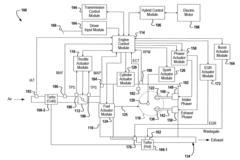
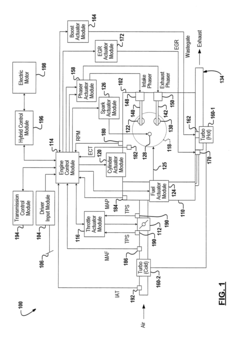
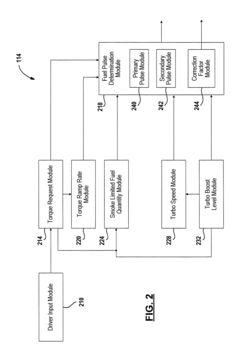
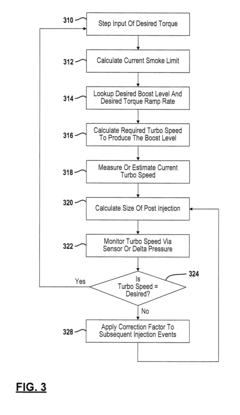
- A system and method that generate a secondary fuel pulse to increase the pressure or temperature of exhaust gases driving the turbocharger turbine, determining primary and secondary fuel injection pulsewidths based on driver-requested torque and desired boost levels to reduce turbo lag.
The variable volume manifold (v v m)
PatentWO2009106832A1
Innovation
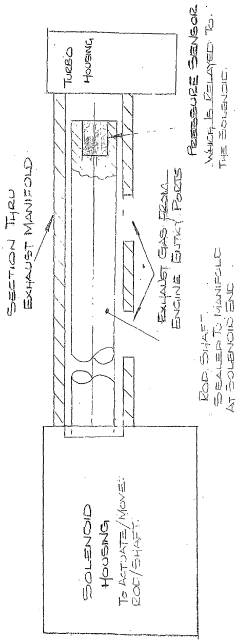
- A variable volume manifold (VVM) with an extendable and retractable rod/shaft, controlled by a pressure sensor and solenoid mechanism, adjusts the exhaust manifold volume to optimize pressure, ensuring the turbocharger is activated sooner and maintained at optimal RPM, even at low engine revs.
Emissions Regulations Impact on Turbocharger Development
Emissions regulations have become increasingly stringent worldwide, significantly influencing turbocharger development and the broader efforts to reduce turbo lag in V4 engines. The European Union's Euro 6d standards and the upcoming Euro 7 regulations have pushed manufacturers to develop turbocharging systems that not only enhance performance but also minimize emissions, particularly NOx and particulate matter.
These regulatory pressures have accelerated innovation in turbocharger design, with manufacturers investing heavily in technologies that can provide rapid boost response while maintaining compliance with emissions standards. Variable geometry turbochargers (VGTs) have gained prominence as they allow for optimized airflow across different engine speeds, effectively reducing lag while improving emissions control through more precise air-fuel ratio management.
Electric turbochargers and hybrid turbo systems have emerged as promising solutions directly influenced by emissions regulations. These systems utilize electric motors to spool the turbocharger before exhaust gases reach sufficient velocity, virtually eliminating traditional turbo lag. The integration of 48V electrical systems in modern vehicles has made these solutions increasingly viable, offering a pathway to meet both performance and emissions targets.
The regulatory landscape has also driven advancements in turbocharger materials and manufacturing techniques. Lightweight materials such as titanium aluminide and ceramic ball bearings have been adopted to reduce rotational inertia, allowing for faster spool-up times while withstanding higher temperatures necessary for efficient emissions control systems.
Dual-stage turbocharging systems have gained traction as emissions regulations have forced downsizing of engines. These systems employ a smaller turbocharger for low-end response and a larger one for peak power, providing a broader effective operating range while maintaining the efficiency needed to meet emissions targets.
Computational fluid dynamics (CFD) and advanced simulation tools have become essential in turbocharger development as regulations leave less room for trial-and-error approaches. These tools enable engineers to optimize turbocharger geometry and integration with after-treatment systems, ensuring both performance and emissions compliance without extensive physical prototyping.
The regulatory push toward electrification has also influenced hybrid turbocharging solutions, where electric motors assist conventional turbochargers during transient conditions. This approach has proven particularly effective for V4 engines, where balancing power delivery with emissions compliance presents unique challenges compared to larger displacement configurations.
These regulatory pressures have accelerated innovation in turbocharger design, with manufacturers investing heavily in technologies that can provide rapid boost response while maintaining compliance with emissions standards. Variable geometry turbochargers (VGTs) have gained prominence as they allow for optimized airflow across different engine speeds, effectively reducing lag while improving emissions control through more precise air-fuel ratio management.
Electric turbochargers and hybrid turbo systems have emerged as promising solutions directly influenced by emissions regulations. These systems utilize electric motors to spool the turbocharger before exhaust gases reach sufficient velocity, virtually eliminating traditional turbo lag. The integration of 48V electrical systems in modern vehicles has made these solutions increasingly viable, offering a pathway to meet both performance and emissions targets.
The regulatory landscape has also driven advancements in turbocharger materials and manufacturing techniques. Lightweight materials such as titanium aluminide and ceramic ball bearings have been adopted to reduce rotational inertia, allowing for faster spool-up times while withstanding higher temperatures necessary for efficient emissions control systems.
Dual-stage turbocharging systems have gained traction as emissions regulations have forced downsizing of engines. These systems employ a smaller turbocharger for low-end response and a larger one for peak power, providing a broader effective operating range while maintaining the efficiency needed to meet emissions targets.
Computational fluid dynamics (CFD) and advanced simulation tools have become essential in turbocharger development as regulations leave less room for trial-and-error approaches. These tools enable engineers to optimize turbocharger geometry and integration with after-treatment systems, ensuring both performance and emissions compliance without extensive physical prototyping.
The regulatory push toward electrification has also influenced hybrid turbocharging solutions, where electric motors assist conventional turbochargers during transient conditions. This approach has proven particularly effective for V4 engines, where balancing power delivery with emissions compliance presents unique challenges compared to larger displacement configurations.
Materials Science Advancements for Turbocharger Efficiency
Recent advancements in materials science have revolutionized turbocharger design, offering promising solutions for reducing turbo lag in V4 engines. Traditional turbochargers constructed from nickel-based superalloys face limitations in thermal efficiency and rotational inertia, contributing significantly to turbo lag. The emergence of ceramic matrix composites (CMCs) represents a breakthrough, providing superior heat resistance while reducing weight by up to 40% compared to conventional materials.
Titanium aluminide (TiAl) alloys have emerged as another critical material innovation, offering an exceptional strength-to-weight ratio that enables faster spool-up times. These alloys maintain structural integrity at temperatures exceeding 800°C while weighing approximately 50% less than nickel-based alternatives, directly addressing the rotational inertia challenges that exacerbate turbo lag in V4 engine configurations.
Carbon fiber reinforced silicon carbide (C/SiC) composites demonstrate remarkable potential for turbine wheel applications, combining lightweight properties with thermal stability. Research indicates that C/SiC turbine wheels can reduce moment of inertia by up to 70% compared to traditional designs, dramatically improving transient response characteristics critical to V4 engine performance under variable load conditions.
Surface coating technologies have advanced significantly, with thermal barrier coatings (TBCs) utilizing yttria-stabilized zirconia (YSZ) enabling higher operating temperatures and improved thermal efficiency. These coatings, when applied to turbocharger components, can withstand temperature gradients exceeding 300°C while providing thermal insulation that optimizes exhaust energy utilization.
Additive manufacturing techniques have transformed turbocharger production capabilities, allowing for complex geometries previously impossible with conventional manufacturing methods. Selective laser melting (SLM) of aluminum silicon alloys has enabled the creation of compressor wheels with optimized blade profiles and reduced mass, contributing to a 25-30% reduction in rotational inertia without compromising structural integrity.
Hybrid bearing systems incorporating ceramic ball bearings have demonstrated friction reduction of up to 40% compared to traditional journal bearings. These systems utilize silicon nitride (Si3N4) balls that maintain dimensional stability across wide temperature ranges while requiring minimal lubrication, directly addressing mechanical efficiency limitations in conventional turbocharger designs for V4 engines.
Shape memory alloys (SMAs) present innovative possibilities for variable geometry turbocharger systems, offering temperature-responsive actuation without complex electronic controls. Nickel-titanium (NiTi) alloys can be engineered to change shape at specific temperature thresholds, potentially enabling passive adaptation to exhaust flow conditions and further mitigating turbo lag in V4 engine applications.
Titanium aluminide (TiAl) alloys have emerged as another critical material innovation, offering an exceptional strength-to-weight ratio that enables faster spool-up times. These alloys maintain structural integrity at temperatures exceeding 800°C while weighing approximately 50% less than nickel-based alternatives, directly addressing the rotational inertia challenges that exacerbate turbo lag in V4 engine configurations.
Carbon fiber reinforced silicon carbide (C/SiC) composites demonstrate remarkable potential for turbine wheel applications, combining lightweight properties with thermal stability. Research indicates that C/SiC turbine wheels can reduce moment of inertia by up to 70% compared to traditional designs, dramatically improving transient response characteristics critical to V4 engine performance under variable load conditions.
Surface coating technologies have advanced significantly, with thermal barrier coatings (TBCs) utilizing yttria-stabilized zirconia (YSZ) enabling higher operating temperatures and improved thermal efficiency. These coatings, when applied to turbocharger components, can withstand temperature gradients exceeding 300°C while providing thermal insulation that optimizes exhaust energy utilization.
Additive manufacturing techniques have transformed turbocharger production capabilities, allowing for complex geometries previously impossible with conventional manufacturing methods. Selective laser melting (SLM) of aluminum silicon alloys has enabled the creation of compressor wheels with optimized blade profiles and reduced mass, contributing to a 25-30% reduction in rotational inertia without compromising structural integrity.
Hybrid bearing systems incorporating ceramic ball bearings have demonstrated friction reduction of up to 40% compared to traditional journal bearings. These systems utilize silicon nitride (Si3N4) balls that maintain dimensional stability across wide temperature ranges while requiring minimal lubrication, directly addressing mechanical efficiency limitations in conventional turbocharger designs for V4 engines.
Shape memory alloys (SMAs) present innovative possibilities for variable geometry turbocharger systems, offering temperature-responsive actuation without complex electronic controls. Nickel-titanium (NiTi) alloys can be engineered to change shape at specific temperature thresholds, potentially enabling passive adaptation to exhaust flow conditions and further mitigating turbo lag in V4 engine applications.
Unlock deeper insights with PatSnap Eureka Quick Research — get a full tech report to explore trends and direct your research. Try now!
Generate Your Research Report Instantly with AI Agent
Supercharge your innovation with PatSnap Eureka AI Agent Platform!