Role of Triton X-100 in Analyzing Protein-DNA Interactions
JUL 31, 20259 MIN READ
Generate Your Research Report Instantly with AI Agent
Patsnap Eureka helps you evaluate technical feasibility & market potential.
Triton X-100 Background
Triton X-100, a nonionic surfactant, has been a cornerstone in biochemical research for decades, particularly in the field of protein-DNA interaction analysis. This versatile compound was first synthesized in the 1950s and quickly gained prominence due to its unique properties and wide-ranging applications in molecular biology.
Chemically, Triton X-100 is composed of a hydrophilic polyethylene oxide chain and an aromatic hydrocarbon lipophilic group. This amphipathic structure allows it to effectively solubilize proteins and other biomolecules without denaturing them, making it an invaluable tool in various biochemical assays and procedures.
In the context of protein-DNA interaction studies, Triton X-100 plays a crucial role in several aspects of experimental protocols. Its primary function is to facilitate the extraction and solubilization of proteins from cellular membranes and organelles. By disrupting lipid-lipid and lipid-protein interactions, Triton X-100 enables researchers to isolate and study proteins that would otherwise be difficult to access.
Moreover, Triton X-100 has been instrumental in reducing non-specific binding in protein-DNA interaction assays. Its ability to form micelles at low concentrations helps to minimize background noise and improve the signal-to-noise ratio in experimental results. This property is particularly valuable in techniques such as chromatin immunoprecipitation (ChIP) and electrophoretic mobility shift assays (EMSA).
The historical development of Triton X-100 in biochemical research has been marked by continuous refinement of its applications. Initially used primarily as a cell lysis agent, its role has expanded to include functions such as protein refolding, membrane protein solubilization, and as a component in various buffer systems for protein purification and characterization.
In recent years, the use of Triton X-100 has been further optimized for specific applications in protein-DNA interaction studies. Researchers have fine-tuned its concentration and combination with other reagents to achieve optimal results in different experimental setups. This ongoing evolution has led to the development of specialized protocols that leverage the unique properties of Triton X-100 to enhance the accuracy and reliability of protein-DNA interaction analyses.
As the field of molecular biology continues to advance, Triton X-100 remains a critical tool in the researcher's arsenal. Its versatility and effectiveness in facilitating the study of protein-DNA interactions underscore its enduring importance in biochemical research. Understanding the background and properties of Triton X-100 is essential for researchers seeking to optimize their experimental protocols and advance our understanding of complex biological processes.
Chemically, Triton X-100 is composed of a hydrophilic polyethylene oxide chain and an aromatic hydrocarbon lipophilic group. This amphipathic structure allows it to effectively solubilize proteins and other biomolecules without denaturing them, making it an invaluable tool in various biochemical assays and procedures.
In the context of protein-DNA interaction studies, Triton X-100 plays a crucial role in several aspects of experimental protocols. Its primary function is to facilitate the extraction and solubilization of proteins from cellular membranes and organelles. By disrupting lipid-lipid and lipid-protein interactions, Triton X-100 enables researchers to isolate and study proteins that would otherwise be difficult to access.
Moreover, Triton X-100 has been instrumental in reducing non-specific binding in protein-DNA interaction assays. Its ability to form micelles at low concentrations helps to minimize background noise and improve the signal-to-noise ratio in experimental results. This property is particularly valuable in techniques such as chromatin immunoprecipitation (ChIP) and electrophoretic mobility shift assays (EMSA).
The historical development of Triton X-100 in biochemical research has been marked by continuous refinement of its applications. Initially used primarily as a cell lysis agent, its role has expanded to include functions such as protein refolding, membrane protein solubilization, and as a component in various buffer systems for protein purification and characterization.
In recent years, the use of Triton X-100 has been further optimized for specific applications in protein-DNA interaction studies. Researchers have fine-tuned its concentration and combination with other reagents to achieve optimal results in different experimental setups. This ongoing evolution has led to the development of specialized protocols that leverage the unique properties of Triton X-100 to enhance the accuracy and reliability of protein-DNA interaction analyses.
As the field of molecular biology continues to advance, Triton X-100 remains a critical tool in the researcher's arsenal. Its versatility and effectiveness in facilitating the study of protein-DNA interactions underscore its enduring importance in biochemical research. Understanding the background and properties of Triton X-100 is essential for researchers seeking to optimize their experimental protocols and advance our understanding of complex biological processes.
Market Analysis
The market for Triton X-100 in protein-DNA interaction analysis is experiencing steady growth, driven by increasing research activities in molecular biology and biochemistry. This non-ionic detergent plays a crucial role in various experimental techniques, particularly in chromatin immunoprecipitation (ChIP) assays, where it helps to lyse cells and solubilize proteins without denaturing them.
The global market for biochemicals and reagents used in protein-DNA interaction studies is expanding, with Triton X-100 being a key component. Research institutions, pharmaceutical companies, and biotechnology firms are the primary consumers of this product. The rising focus on epigenetics and gene regulation studies has further boosted the demand for Triton X-100 in research applications.
In recent years, there has been a noticeable trend towards the development of more sensitive and high-throughput methods for analyzing protein-DNA interactions. This has led to an increased demand for high-quality, ultra-pure Triton X-100, as even small impurities can significantly affect experimental results. Consequently, manufacturers are investing in advanced purification techniques to meet these stringent quality requirements.
The market is also witnessing a shift towards environmentally friendly alternatives to Triton X-100. Some researchers and institutions are exploring biodegradable surfactants that can provide similar performance in protein-DNA interaction studies. This trend is partly driven by regulatory pressures and growing environmental concerns, particularly regarding the disposal of laboratory waste containing non-biodegradable detergents.
Geographically, North America and Europe dominate the market for Triton X-100 in protein-DNA interaction analysis, owing to their well-established research infrastructure and high R&D spending. However, Asia-Pacific is emerging as a rapidly growing market, fueled by increasing investments in life sciences research and the expansion of biotechnology industries in countries like China and India.
The COVID-19 pandemic has had a mixed impact on the market. While it initially disrupted supply chains and research activities, it also spurred increased funding and research in virology and molecular biology, indirectly benefiting the demand for reagents like Triton X-100.
Looking ahead, the market for Triton X-100 in protein-DNA interaction analysis is expected to continue its growth trajectory. Factors such as the increasing prevalence of chronic diseases, growing focus on personalized medicine, and advancements in genomics and proteomics research are likely to drive demand. However, the market may face challenges from stringent regulations on chemical usage and the development of alternative technologies for studying protein-DNA interactions.
The global market for biochemicals and reagents used in protein-DNA interaction studies is expanding, with Triton X-100 being a key component. Research institutions, pharmaceutical companies, and biotechnology firms are the primary consumers of this product. The rising focus on epigenetics and gene regulation studies has further boosted the demand for Triton X-100 in research applications.
In recent years, there has been a noticeable trend towards the development of more sensitive and high-throughput methods for analyzing protein-DNA interactions. This has led to an increased demand for high-quality, ultra-pure Triton X-100, as even small impurities can significantly affect experimental results. Consequently, manufacturers are investing in advanced purification techniques to meet these stringent quality requirements.
The market is also witnessing a shift towards environmentally friendly alternatives to Triton X-100. Some researchers and institutions are exploring biodegradable surfactants that can provide similar performance in protein-DNA interaction studies. This trend is partly driven by regulatory pressures and growing environmental concerns, particularly regarding the disposal of laboratory waste containing non-biodegradable detergents.
Geographically, North America and Europe dominate the market for Triton X-100 in protein-DNA interaction analysis, owing to their well-established research infrastructure and high R&D spending. However, Asia-Pacific is emerging as a rapidly growing market, fueled by increasing investments in life sciences research and the expansion of biotechnology industries in countries like China and India.
The COVID-19 pandemic has had a mixed impact on the market. While it initially disrupted supply chains and research activities, it also spurred increased funding and research in virology and molecular biology, indirectly benefiting the demand for reagents like Triton X-100.
Looking ahead, the market for Triton X-100 in protein-DNA interaction analysis is expected to continue its growth trajectory. Factors such as the increasing prevalence of chronic diseases, growing focus on personalized medicine, and advancements in genomics and proteomics research are likely to drive demand. However, the market may face challenges from stringent regulations on chemical usage and the development of alternative technologies for studying protein-DNA interactions.
Technical Challenges
The analysis of protein-DNA interactions using Triton X-100 faces several technical challenges that researchers must overcome to obtain accurate and reliable results. One of the primary difficulties lies in maintaining the delicate balance between effectively disrupting cellular membranes and preserving the integrity of protein-DNA complexes. Triton X-100, while efficient in solubilizing membrane proteins, can potentially interfere with weak or transient protein-DNA interactions if not used at optimal concentrations.
Another significant challenge is the potential for Triton X-100 to introduce artifacts in experimental results. The detergent's ability to form micelles can lead to the aggregation of proteins and DNA, potentially creating false-positive interactions or masking true interactions. This necessitates careful optimization of Triton X-100 concentrations and experimental conditions to minimize such artifacts while still achieving effective cell lysis and protein extraction.
The heterogeneity of cellular components and the diverse nature of protein-DNA interactions further complicate the use of Triton X-100 in these analyses. Different proteins and DNA sequences may exhibit varying sensitivities to the detergent, making it challenging to establish a universal protocol that works effectively for all types of protein-DNA interactions. Researchers must often tailor their approaches to specific protein-DNA complexes, which can be time-consuming and resource-intensive.
Additionally, the presence of Triton X-100 can interfere with downstream analytical techniques, such as mass spectrometry or certain types of chromatography. This interference can limit the range of analytical methods available for studying protein-DNA interactions and may require additional purification steps, potentially leading to sample loss or alteration of the original protein-DNA complexes.
The dynamic nature of protein-DNA interactions poses another technical hurdle. Some interactions are transient or depend on specific cellular conditions, which may be disrupted by the use of Triton X-100. Capturing these fleeting interactions in the presence of a detergent requires sophisticated experimental designs and rapid analysis techniques, pushing the boundaries of current technological capabilities.
Furthermore, the potential for Triton X-100 to induce conformational changes in proteins or DNA structures adds another layer of complexity to the analysis. These structural alterations can affect binding affinities and interaction dynamics, potentially leading to misinterpretation of experimental results. Researchers must employ complementary techniques to verify that observed interactions are not artifacts of Triton X-100-induced conformational changes.
Lastly, the reproducibility of experiments involving Triton X-100 in protein-DNA interaction studies can be challenging due to batch-to-batch variations in the detergent and differences in experimental setups across laboratories. This variability necessitates rigorous standardization of protocols and the development of robust quality control measures to ensure consistent and comparable results across different research groups and experimental conditions.
Another significant challenge is the potential for Triton X-100 to introduce artifacts in experimental results. The detergent's ability to form micelles can lead to the aggregation of proteins and DNA, potentially creating false-positive interactions or masking true interactions. This necessitates careful optimization of Triton X-100 concentrations and experimental conditions to minimize such artifacts while still achieving effective cell lysis and protein extraction.
The heterogeneity of cellular components and the diverse nature of protein-DNA interactions further complicate the use of Triton X-100 in these analyses. Different proteins and DNA sequences may exhibit varying sensitivities to the detergent, making it challenging to establish a universal protocol that works effectively for all types of protein-DNA interactions. Researchers must often tailor their approaches to specific protein-DNA complexes, which can be time-consuming and resource-intensive.
Additionally, the presence of Triton X-100 can interfere with downstream analytical techniques, such as mass spectrometry or certain types of chromatography. This interference can limit the range of analytical methods available for studying protein-DNA interactions and may require additional purification steps, potentially leading to sample loss or alteration of the original protein-DNA complexes.
The dynamic nature of protein-DNA interactions poses another technical hurdle. Some interactions are transient or depend on specific cellular conditions, which may be disrupted by the use of Triton X-100. Capturing these fleeting interactions in the presence of a detergent requires sophisticated experimental designs and rapid analysis techniques, pushing the boundaries of current technological capabilities.
Furthermore, the potential for Triton X-100 to induce conformational changes in proteins or DNA structures adds another layer of complexity to the analysis. These structural alterations can affect binding affinities and interaction dynamics, potentially leading to misinterpretation of experimental results. Researchers must employ complementary techniques to verify that observed interactions are not artifacts of Triton X-100-induced conformational changes.
Lastly, the reproducibility of experiments involving Triton X-100 in protein-DNA interaction studies can be challenging due to batch-to-batch variations in the detergent and differences in experimental setups across laboratories. This variability necessitates rigorous standardization of protocols and the development of robust quality control measures to ensure consistent and comparable results across different research groups and experimental conditions.
Current Methodologies
01 Use of Triton X-100 in biochemical applications
Triton X-100 is widely used in various biochemical applications, particularly in cell lysis and protein extraction processes. It is an effective non-ionic detergent that can solubilize membrane proteins and disrupt cell membranes without denaturing proteins. This makes it valuable in research and diagnostic applications involving protein isolation and purification.- Use of Triton X-100 in biochemical assays: Triton X-100 is widely used as a detergent in various biochemical assays and experimental protocols. It is particularly effective in cell lysis, protein extraction, and membrane permeabilization. The non-ionic surfactant properties of Triton X-100 make it suitable for solubilizing proteins and other biomolecules without denaturing them.
- Application in cleaning and surface treatment: Triton X-100 is utilized in cleaning formulations and surface treatment processes. Its ability to reduce surface tension and emulsify oils makes it effective in removing contaminants and improving the wettability of surfaces. This property is exploited in industrial cleaning, textile processing, and surface preparation for various manufacturing processes.
- Role in pharmaceutical and cosmetic formulations: Triton X-100 finds applications in pharmaceutical and cosmetic formulations as an emulsifier and solubilizer. It helps in the formulation of stable emulsions and enhances the solubility of active ingredients. This surfactant is used in the preparation of various personal care products and drug delivery systems.
- Use in analytical and diagnostic techniques: Triton X-100 is employed in various analytical and diagnostic techniques. It is used in sample preparation for chromatography, electrophoresis, and immunoassays. The surfactant helps in reducing non-specific binding and improving the sensitivity of detection methods in molecular biology and clinical diagnostics.
- Application in material science and nanotechnology: Triton X-100 plays a role in material science and nanotechnology applications. It is used in the synthesis and stabilization of nanoparticles, as well as in the preparation of polymer composites. The surfactant helps in controlling particle size, preventing aggregation, and improving the dispersion of nanomaterials in various matrices.
02 Triton X-100 in analytical methods
Triton X-100 is utilized in various analytical methods, including chromatography and spectroscopy. It can improve the separation and detection of analytes by modifying surface properties or enhancing solubility. The surfactant properties of Triton X-100 make it useful in sample preparation and as a component in buffer solutions for analytical techniques.Expand Specific Solutions03 Triton X-100 in industrial cleaning and decontamination
Triton X-100 finds applications in industrial cleaning and decontamination processes. Its surfactant properties make it effective in removing oils, greases, and other contaminants from surfaces. It can be incorporated into cleaning formulations for various industries, including electronics, automotive, and manufacturing.Expand Specific Solutions04 Triton X-100 in pharmaceutical and cosmetic formulations
Triton X-100 is used in pharmaceutical and cosmetic formulations as an emulsifier and solubilizer. It can help improve the stability and bioavailability of active ingredients in various products. The surfactant properties of Triton X-100 make it useful in creating stable emulsions and enhancing the penetration of active compounds through biological membranes.Expand Specific Solutions05 Environmental and safety considerations of Triton X-100
As Triton X-100 is widely used in various applications, there are environmental and safety considerations associated with its use. Research is ongoing to assess its potential environmental impact and toxicity. Some studies focus on developing alternatives or methods to reduce its usage in certain applications, particularly where environmental concerns are paramount.Expand Specific Solutions
Key Industry Players
The field of protein-DNA interaction analysis using Triton X-100 is in a mature stage of development, with established methodologies and applications across various research areas. The market for this technology is substantial, driven by its widespread use in molecular biology and biochemistry research. The technical maturity is evident from the involvement of prestigious institutions like Massachusetts Institute of Technology, Consejo Superior de Investigaciones Científicas, and Wisconsin Alumni Research Foundation. Companies such as Novozymes A/S and Biogen MA, Inc. are also actively engaged, indicating the technology's commercial relevance. The competitive landscape is diverse, with academic institutions, research centers, and biotechnology companies all contributing to advancements in this field.
Massachusetts Institute of Technology
Technical Solution: MIT has developed advanced techniques for analyzing protein-DNA interactions using Triton X-100. Their approach involves using Triton X-100 as a non-ionic detergent to solubilize membrane proteins and extract nuclear proteins, facilitating the study of protein-DNA interactions[1]. They have optimized the concentration of Triton X-100 to maintain protein stability while effectively disrupting cellular membranes. MIT's method combines Triton X-100 treatment with chromatin immunoprecipitation (ChIP) assays, allowing for high-resolution mapping of protein binding sites on DNA[3]. This technique has been particularly useful in studying transcription factor binding and epigenetic modifications in various cellular contexts.
Strengths: High-resolution mapping of protein-DNA interactions, optimized Triton X-100 concentrations for protein stability. Weaknesses: May require specialized equipment and expertise, potential for non-specific interactions.
Consejo Superior de Investigaciones Científicas
Technical Solution: CSIC has developed a novel approach using Triton X-100 in combination with fluorescence-based techniques to analyze protein-DNA interactions. Their method involves using Triton X-100 to permeabilize cells, allowing for in situ analysis of protein-DNA binding dynamics[2]. They have optimized a protocol that uses low concentrations of Triton X-100 to maintain cellular integrity while enabling the entry of fluorescently labeled probes. This technique has been successfully applied to study the kinetics of transcription factor binding to DNA in living cells[4]. CSIC's approach also incorporates advanced imaging technologies, such as fluorescence recovery after photobleaching (FRAP), to quantify protein-DNA interaction rates in real-time.
Strengths: In situ analysis of protein-DNA interactions, real-time quantification of binding kinetics. Weaknesses: Limited to fluorescence-compatible systems, potential interference from cellular autofluorescence.
Innovative Applications
Detergent and method for purifying a biotherapeutic
PatentPendingUS20240327454A1
Innovation
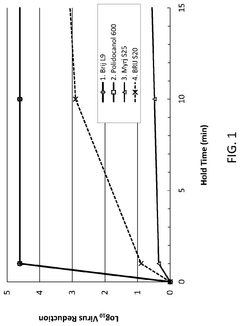
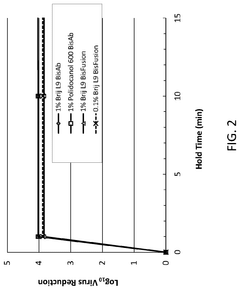
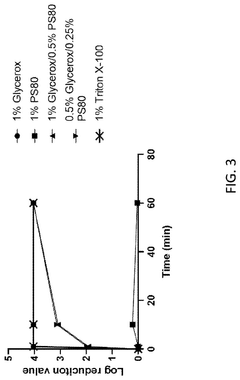
- The use of Laureth-9 as an environmentally compatible detergent for viral inactivation, cell lysis, and removal of impurities such as host cell proteins and endotoxins, which does not adversely impact product quality, is proposed. Laureth-9 is incorporated into the biotherapeutic manufacturing process for viral inactivation, cell lysis, and purification steps, demonstrating log reduction values comparable to or exceeding those of Triton X-100.

Substituted benzoindoles as SPLA2 inhibitors
PatentWO2002050028A8
Innovation
- Development of novel benz[f]indole compounds that selectively inhibit mammalian SPLA2, thereby preventing the release of fatty acids and their deleterious products, which are used in pharmaceutical compositions for treating inflammatory diseases.
Regulatory Considerations
The use of Triton X-100 in analyzing protein-DNA interactions is subject to various regulatory considerations that researchers and laboratories must be aware of. These regulations primarily focus on safety, environmental impact, and proper handling of the chemical.
Occupational safety and health regulations, such as those set by OSHA in the United States, require proper handling and storage of Triton X-100. This includes providing adequate ventilation in laboratory settings, using appropriate personal protective equipment (PPE), and implementing proper disposal methods. Material Safety Data Sheets (MSDS) must be readily available, and personnel should be trained in the safe handling of this chemical.
Environmental regulations also play a crucial role in the use of Triton X-100. The chemical is known to have potential environmental impacts, particularly on aquatic ecosystems. As a result, many jurisdictions have strict guidelines for its disposal. Researchers must adhere to local and national environmental protection agency regulations regarding the proper disposal of Triton X-100 and any solutions containing it.
In the context of research involving protein-DNA interactions, regulatory bodies such as the FDA and EMA may have specific guidelines for the use of Triton X-100 in studies related to drug development or diagnostic applications. These guidelines often address the purity of the chemical, its concentration in experimental protocols, and potential interference with analytical results.
Importation and transportation of Triton X-100 are subject to international regulations, including those set by the International Air Transport Association (IATA) for air shipments. Proper labeling, packaging, and documentation are required to comply with these regulations.
Researchers must also consider intellectual property regulations when using Triton X-100 in novel experimental protocols or developing new applications. While the chemical itself is not patented, specific methods or applications involving its use may be subject to patent protection.
As the scientific community becomes increasingly aware of the potential environmental impacts of chemicals like Triton X-100, there is a growing trend towards developing and adopting more environmentally friendly alternatives. Regulatory bodies are likely to encourage or mandate the use of such alternatives in the future, which may impact current research practices involving Triton X-100 in protein-DNA interaction studies.
Occupational safety and health regulations, such as those set by OSHA in the United States, require proper handling and storage of Triton X-100. This includes providing adequate ventilation in laboratory settings, using appropriate personal protective equipment (PPE), and implementing proper disposal methods. Material Safety Data Sheets (MSDS) must be readily available, and personnel should be trained in the safe handling of this chemical.
Environmental regulations also play a crucial role in the use of Triton X-100. The chemical is known to have potential environmental impacts, particularly on aquatic ecosystems. As a result, many jurisdictions have strict guidelines for its disposal. Researchers must adhere to local and national environmental protection agency regulations regarding the proper disposal of Triton X-100 and any solutions containing it.
In the context of research involving protein-DNA interactions, regulatory bodies such as the FDA and EMA may have specific guidelines for the use of Triton X-100 in studies related to drug development or diagnostic applications. These guidelines often address the purity of the chemical, its concentration in experimental protocols, and potential interference with analytical results.
Importation and transportation of Triton X-100 are subject to international regulations, including those set by the International Air Transport Association (IATA) for air shipments. Proper labeling, packaging, and documentation are required to comply with these regulations.
Researchers must also consider intellectual property regulations when using Triton X-100 in novel experimental protocols or developing new applications. While the chemical itself is not patented, specific methods or applications involving its use may be subject to patent protection.
As the scientific community becomes increasingly aware of the potential environmental impacts of chemicals like Triton X-100, there is a growing trend towards developing and adopting more environmentally friendly alternatives. Regulatory bodies are likely to encourage or mandate the use of such alternatives in the future, which may impact current research practices involving Triton X-100 in protein-DNA interaction studies.
Environmental Impact
The use of Triton X-100 in analyzing protein-DNA interactions has raised concerns about its potential environmental impact. As a non-ionic surfactant, Triton X-100 is known for its ability to solubilize proteins and disrupt cell membranes, making it a valuable tool in biochemical research. However, its widespread use in laboratories and subsequent release into the environment has led to growing apprehensions regarding its ecological effects.
One of the primary environmental concerns associated with Triton X-100 is its persistence in aquatic ecosystems. The compound has been shown to have a slow biodegradation rate, potentially accumulating in water bodies and sediments. This persistence can lead to long-term exposure of aquatic organisms to the surfactant, potentially disrupting their cellular functions and physiological processes.
Studies have indicated that Triton X-100 can be toxic to various aquatic organisms, including fish, invertebrates, and algae. The surfactant's ability to disrupt cell membranes can cause damage to the gills of fish and interfere with the respiratory functions of aquatic invertebrates. Additionally, it may affect the growth and reproduction of algae, which form the base of many aquatic food chains.
The bioaccumulation potential of Triton X-100 in aquatic organisms is another area of concern. While the compound itself may not significantly bioaccumulate, its degradation products, particularly octylphenol, have been shown to persist in the environment and accumulate in the tissues of aquatic organisms. This bioaccumulation can potentially lead to biomagnification up the food chain, affecting higher-level predators and possibly entering the human food supply.
Furthermore, the release of Triton X-100 into wastewater systems poses challenges for water treatment facilities. Conventional wastewater treatment processes may not effectively remove the surfactant, leading to its release into natural water bodies. This can result in the contamination of drinking water sources and pose potential risks to human health.
In response to these environmental concerns, there has been a growing emphasis on developing alternative, more environmentally friendly surfactants for use in biochemical research. Efforts are being made to create biodegradable surfactants that maintain the efficacy of Triton X-100 in protein-DNA interaction studies while minimizing environmental impact. Additionally, improved waste management practices in laboratories and stricter regulations on the disposal of Triton X-100-containing waste are being implemented to mitigate its environmental release.
One of the primary environmental concerns associated with Triton X-100 is its persistence in aquatic ecosystems. The compound has been shown to have a slow biodegradation rate, potentially accumulating in water bodies and sediments. This persistence can lead to long-term exposure of aquatic organisms to the surfactant, potentially disrupting their cellular functions and physiological processes.
Studies have indicated that Triton X-100 can be toxic to various aquatic organisms, including fish, invertebrates, and algae. The surfactant's ability to disrupt cell membranes can cause damage to the gills of fish and interfere with the respiratory functions of aquatic invertebrates. Additionally, it may affect the growth and reproduction of algae, which form the base of many aquatic food chains.
The bioaccumulation potential of Triton X-100 in aquatic organisms is another area of concern. While the compound itself may not significantly bioaccumulate, its degradation products, particularly octylphenol, have been shown to persist in the environment and accumulate in the tissues of aquatic organisms. This bioaccumulation can potentially lead to biomagnification up the food chain, affecting higher-level predators and possibly entering the human food supply.
Furthermore, the release of Triton X-100 into wastewater systems poses challenges for water treatment facilities. Conventional wastewater treatment processes may not effectively remove the surfactant, leading to its release into natural water bodies. This can result in the contamination of drinking water sources and pose potential risks to human health.
In response to these environmental concerns, there has been a growing emphasis on developing alternative, more environmentally friendly surfactants for use in biochemical research. Efforts are being made to create biodegradable surfactants that maintain the efficacy of Triton X-100 in protein-DNA interaction studies while minimizing environmental impact. Additionally, improved waste management practices in laboratories and stricter regulations on the disposal of Triton X-100-containing waste are being implemented to mitigate its environmental release.
Unlock deeper insights with Patsnap Eureka Quick Research — get a full tech report to explore trends and direct your research. Try now!
Generate Your Research Report Instantly with AI Agent
Supercharge your innovation with Patsnap Eureka AI Agent Platform!