

Self-Powered Sensor Solutions to Address Global Energy Challenges
OCT 21, 20259 MIN READ
Generate Your Research Report Instantly with AI Agent
PatSnap Eureka helps you evaluate technical feasibility & market potential.
Self-Powered Sensor Technology Background and Objectives
Self-powered sensor technology has evolved significantly over the past two decades, transitioning from laboratory curiosities to commercially viable solutions addressing critical energy challenges. The fundamental concept behind these sensors lies in their ability to harvest ambient energy from the environment—such as mechanical vibrations, thermal gradients, solar radiation, or RF signals—and convert it into electrical energy sufficient to power sensing operations without external power sources.
The evolution of this technology can be traced back to early energy harvesting research in the 1990s, which primarily focused on large-scale applications. By the early 2000s, miniaturization efforts led to the first generation of self-powered sensors, albeit with limited functionality and efficiency. The field gained substantial momentum around 2010 with breakthroughs in nanomaterials and low-power electronics, enabling more practical implementations.
Current technological trends indicate a convergence of multiple disciplines, including materials science, microelectronics, and IoT architectures. The integration of advanced nanomaterials such as piezoelectric nanowires, triboelectric nanogenerators, and flexible thermoelectric materials has dramatically improved energy conversion efficiencies. Simultaneously, the development of ultra-low-power microcontrollers and communication protocols has reduced the energy requirements for sensing and data transmission.
The primary objective of self-powered sensor technology is to create autonomous sensing systems that can operate indefinitely without battery replacement or external power sources. This addresses several critical challenges: reducing maintenance costs for remote sensing networks, enabling deployment in inaccessible locations, minimizing electronic waste from battery disposal, and supporting the exponential growth of IoT devices projected to reach 75 billion by 2025.
Beyond these immediate benefits, self-powered sensors aim to contribute to global sustainability goals by reducing energy consumption in monitoring systems for environmental parameters, industrial processes, infrastructure health, and healthcare applications. The technology seeks to enable previously impossible sensing applications, particularly in harsh environments, medical implants, and remote ecological monitoring.
The technical objectives include achieving higher energy conversion efficiencies (currently ranging from 5-30% depending on the harvesting mechanism), developing more effective energy storage solutions for intermittent harvesting scenarios, and creating adaptive power management systems that can optimize performance based on available energy and application requirements. Additionally, there is a focus on improving the reliability and longevity of these systems under real-world operating conditions.
The evolution of this technology can be traced back to early energy harvesting research in the 1990s, which primarily focused on large-scale applications. By the early 2000s, miniaturization efforts led to the first generation of self-powered sensors, albeit with limited functionality and efficiency. The field gained substantial momentum around 2010 with breakthroughs in nanomaterials and low-power electronics, enabling more practical implementations.
Current technological trends indicate a convergence of multiple disciplines, including materials science, microelectronics, and IoT architectures. The integration of advanced nanomaterials such as piezoelectric nanowires, triboelectric nanogenerators, and flexible thermoelectric materials has dramatically improved energy conversion efficiencies. Simultaneously, the development of ultra-low-power microcontrollers and communication protocols has reduced the energy requirements for sensing and data transmission.
The primary objective of self-powered sensor technology is to create autonomous sensing systems that can operate indefinitely without battery replacement or external power sources. This addresses several critical challenges: reducing maintenance costs for remote sensing networks, enabling deployment in inaccessible locations, minimizing electronic waste from battery disposal, and supporting the exponential growth of IoT devices projected to reach 75 billion by 2025.
Beyond these immediate benefits, self-powered sensors aim to contribute to global sustainability goals by reducing energy consumption in monitoring systems for environmental parameters, industrial processes, infrastructure health, and healthcare applications. The technology seeks to enable previously impossible sensing applications, particularly in harsh environments, medical implants, and remote ecological monitoring.
The technical objectives include achieving higher energy conversion efficiencies (currently ranging from 5-30% depending on the harvesting mechanism), developing more effective energy storage solutions for intermittent harvesting scenarios, and creating adaptive power management systems that can optimize performance based on available energy and application requirements. Additionally, there is a focus on improving the reliability and longevity of these systems under real-world operating conditions.
Market Demand Analysis for Energy-Autonomous Sensors
The global market for energy-autonomous sensors is experiencing unprecedented growth, driven by the convergence of IoT expansion, sustainability imperatives, and industrial digitalization. Current market valuations place the self-powered sensor sector at approximately 2.5 billion USD in 2023, with projections indicating a compound annual growth rate of 18-22% through 2030, potentially reaching 8.7 billion USD by the end of the decade.
This robust growth trajectory is primarily fueled by increasing demand across multiple sectors. In industrial applications, the need for maintenance-free monitoring solutions in remote or hazardous environments has created significant pull for self-powered sensing technologies. Manufacturing facilities are increasingly deploying energy-harvesting sensors to monitor equipment health, environmental conditions, and process parameters without the constraints of wired power or battery replacement schedules.
The smart infrastructure and building automation segment represents another substantial market driver. Energy-autonomous sensors enable comprehensive building monitoring without complex wiring infrastructure, supporting energy efficiency initiatives while simultaneously reducing installation and maintenance costs. Market research indicates that building managers can achieve 15-30% energy savings through optimized HVAC and lighting control systems powered by self-sufficient sensor networks.
Consumer electronics and wearable technology constitute a rapidly expanding application area, with health monitoring devices, smart apparel, and consumer IoT products increasingly incorporating energy-harvesting capabilities. This trend is reinforced by consumer preference for maintenance-free devices and sustainable technology solutions.
Geographic market distribution shows particular strength in North America and Europe, where regulatory frameworks increasingly favor energy-efficient technologies. However, the Asia-Pacific region is demonstrating the fastest growth rate, driven by rapid industrial modernization and smart city initiatives in countries like China, South Korea, and Singapore.
Market demand analysis reveals several key customer requirements shaping product development. Energy density and reliability rank as primary concerns, with end-users prioritizing consistent performance under variable environmental conditions. Miniaturization capabilities, cost-effectiveness at scale, and seamless integration with existing systems also feature prominently in customer specifications.
The market demonstrates particular interest in multi-modal energy harvesting solutions that can leverage multiple environmental energy sources simultaneously, thereby ensuring operational reliability across diverse deployment scenarios. This reflects a broader trend toward resilient, adaptable sensing systems capable of functioning in unpredictable environments without human intervention.
This robust growth trajectory is primarily fueled by increasing demand across multiple sectors. In industrial applications, the need for maintenance-free monitoring solutions in remote or hazardous environments has created significant pull for self-powered sensing technologies. Manufacturing facilities are increasingly deploying energy-harvesting sensors to monitor equipment health, environmental conditions, and process parameters without the constraints of wired power or battery replacement schedules.
The smart infrastructure and building automation segment represents another substantial market driver. Energy-autonomous sensors enable comprehensive building monitoring without complex wiring infrastructure, supporting energy efficiency initiatives while simultaneously reducing installation and maintenance costs. Market research indicates that building managers can achieve 15-30% energy savings through optimized HVAC and lighting control systems powered by self-sufficient sensor networks.
Consumer electronics and wearable technology constitute a rapidly expanding application area, with health monitoring devices, smart apparel, and consumer IoT products increasingly incorporating energy-harvesting capabilities. This trend is reinforced by consumer preference for maintenance-free devices and sustainable technology solutions.
Geographic market distribution shows particular strength in North America and Europe, where regulatory frameworks increasingly favor energy-efficient technologies. However, the Asia-Pacific region is demonstrating the fastest growth rate, driven by rapid industrial modernization and smart city initiatives in countries like China, South Korea, and Singapore.
Market demand analysis reveals several key customer requirements shaping product development. Energy density and reliability rank as primary concerns, with end-users prioritizing consistent performance under variable environmental conditions. Miniaturization capabilities, cost-effectiveness at scale, and seamless integration with existing systems also feature prominently in customer specifications.
The market demonstrates particular interest in multi-modal energy harvesting solutions that can leverage multiple environmental energy sources simultaneously, thereby ensuring operational reliability across diverse deployment scenarios. This reflects a broader trend toward resilient, adaptable sensing systems capable of functioning in unpredictable environments without human intervention.
Current Status and Challenges in Energy Harvesting Technologies
Energy harvesting technologies have evolved significantly over the past decade, yet remain at varying stages of maturity across different harvesting mechanisms. Solar photovoltaic technology represents the most mature sector, with commercial silicon-based PV cells achieving efficiencies of 20-25% in mass production, while research-grade multi-junction cells have demonstrated efficiencies exceeding 47%. However, indoor light harvesting still struggles with efficiency limitations under low-light conditions, typically achieving only 5-10% conversion rates.
Thermoelectric generators (TEGs) have made substantial progress with commercially available modules reaching ZT values (figure of merit) of approximately 1-1.5, though theoretical models suggest potential values of 2-3 could be achieved. The primary challenge for TEGs remains their relatively low conversion efficiency, typically 5-8% in real-world applications, limiting their power density to 10-50 μW/cm² under modest temperature gradients.
Piezoelectric energy harvesting has seen commercial deployment in niche applications, with lead zirconate titanate (PZT) materials dominating the market. Recent advances in lead-free alternatives and flexible piezoelectric materials show promise but face challenges in durability and output consistency. Power densities typically range from 10-500 μW/cm³ depending on excitation frequency and amplitude.
Triboelectric nanogenerators (TENGs) represent a newer technology with rapidly growing research interest. Despite laboratory demonstrations showing power densities up to 500 W/m², commercial implementations remain limited by material degradation issues and output inconsistency. Standardization of performance metrics and long-term reliability testing are critical challenges facing wider TENG adoption.
RF energy harvesting faces significant efficiency challenges, with typical ambient RF power densities in urban environments ranging from 0.01-0.1 μW/cm². This necessitates either very large collection areas or proximity to strong RF sources, limiting practical applications without dedicated transmitters.
Cross-cutting challenges across all energy harvesting technologies include energy storage integration, with supercapacitors and thin-film batteries still struggling to balance energy density, cycle life, and form factor requirements. Power management circuitry miniaturization while maintaining high efficiency (>80%) at sub-milliwatt levels remains technically challenging.
Geographical distribution of technology development shows concentration in East Asia (particularly Japan, South Korea, and China) for materials advancement, Europe for system integration and standardization, and North America for novel architectures and commercialization pathways. This distribution creates both collaboration opportunities and intellectual property challenges for global technology deployment.
Thermoelectric generators (TEGs) have made substantial progress with commercially available modules reaching ZT values (figure of merit) of approximately 1-1.5, though theoretical models suggest potential values of 2-3 could be achieved. The primary challenge for TEGs remains their relatively low conversion efficiency, typically 5-8% in real-world applications, limiting their power density to 10-50 μW/cm² under modest temperature gradients.
Piezoelectric energy harvesting has seen commercial deployment in niche applications, with lead zirconate titanate (PZT) materials dominating the market. Recent advances in lead-free alternatives and flexible piezoelectric materials show promise but face challenges in durability and output consistency. Power densities typically range from 10-500 μW/cm³ depending on excitation frequency and amplitude.
Triboelectric nanogenerators (TENGs) represent a newer technology with rapidly growing research interest. Despite laboratory demonstrations showing power densities up to 500 W/m², commercial implementations remain limited by material degradation issues and output inconsistency. Standardization of performance metrics and long-term reliability testing are critical challenges facing wider TENG adoption.
RF energy harvesting faces significant efficiency challenges, with typical ambient RF power densities in urban environments ranging from 0.01-0.1 μW/cm². This necessitates either very large collection areas or proximity to strong RF sources, limiting practical applications without dedicated transmitters.
Cross-cutting challenges across all energy harvesting technologies include energy storage integration, with supercapacitors and thin-film batteries still struggling to balance energy density, cycle life, and form factor requirements. Power management circuitry miniaturization while maintaining high efficiency (>80%) at sub-milliwatt levels remains technically challenging.
Geographical distribution of technology development shows concentration in East Asia (particularly Japan, South Korea, and China) for materials advancement, Europe for system integration and standardization, and North America for novel architectures and commercialization pathways. This distribution creates both collaboration opportunities and intellectual property challenges for global technology deployment.
Current Technical Solutions for Energy-Autonomous Sensors
01 Energy harvesting mechanisms for self-powered sensors
Various energy harvesting mechanisms can be employed to power sensors autonomously. These include piezoelectric, thermoelectric, photovoltaic, and electromagnetic energy harvesting techniques that convert ambient energy from the environment into electrical energy. These mechanisms enable sensors to operate without external power sources, making them suitable for remote or inaccessible locations where battery replacement is challenging.- Energy harvesting mechanisms for self-powered sensors: Various energy harvesting mechanisms can be employed to power sensors autonomously. These include piezoelectric, thermoelectric, photovoltaic, and electromagnetic energy harvesting techniques that convert ambient energy sources such as vibration, heat, light, and motion into electrical energy. These mechanisms enable sensors to operate without external power sources, making them suitable for remote or inaccessible locations.
- Triboelectric nanogenerators for sensor applications: Triboelectric nanogenerators (TENGs) utilize the triboelectric effect to convert mechanical energy into electrical energy for powering sensors. These devices generate electricity through contact-separation or sliding friction between different materials, providing a sustainable power source for various sensing applications. TENGs can be designed with different structures and materials to optimize energy generation efficiency based on the specific application requirements.
- Self-powered wearable and biomedical sensors: Self-powered sensors can be integrated into wearable devices and biomedical applications to monitor physiological parameters without requiring battery replacement. These sensors harvest energy from body movements, temperature gradients, or biochemical reactions to power themselves. The integration of energy harvesting technologies with flexible and biocompatible materials enables comfortable, long-term health monitoring solutions.
- Energy storage and management systems for self-powered sensors: Efficient energy storage and management systems are crucial for self-powered sensors to maintain operation during periods when energy harvesting is limited. These systems include specialized capacitors, micro-batteries, and power management circuits that optimize energy collection, storage, and consumption. Advanced power management algorithms can dynamically adjust sensor operation based on available energy to ensure continuous functionality.
- Environmental and industrial monitoring with self-powered sensors: Self-powered sensors are increasingly used for environmental and industrial monitoring applications where conventional power sources are impractical. These sensors can monitor parameters such as temperature, humidity, pressure, gas concentrations, and structural integrity in remote or harsh environments. By harvesting energy from their surroundings, these sensors can operate autonomously for extended periods, enabling long-term data collection without maintenance.
02 Triboelectric nanogenerators for sensor applications
Triboelectric nanogenerators (TENGs) utilize the triboelectric effect to convert mechanical energy into electricity for powering sensors. These devices generate electrical charges through friction between different materials, providing a sustainable power source for various sensing applications. TENGs can be designed in different configurations to harvest energy from human motion, vibration, or fluid flow, making them versatile for self-powered sensing systems.Expand Specific Solutions03 Wireless sensor networks with self-powering capabilities
Wireless sensor networks can be designed with integrated energy harvesting systems to achieve self-sustainability. These networks incorporate multiple self-powered sensors that can communicate with each other and transmit data wirelessly without requiring battery replacement. The energy harvesting components are optimized to match the power requirements of the sensing and communication modules, ensuring long-term operation in various environments.Expand Specific Solutions04 Biomedical applications of self-powered sensors
Self-powered sensors have significant applications in biomedical fields, including health monitoring, implantable devices, and wearable technology. These sensors can harvest energy from body heat, motion, or biochemical reactions to power themselves while monitoring vital signs or other physiological parameters. The self-powering capability eliminates the need for battery replacement in implanted devices and enables continuous health monitoring without frequent charging.Expand Specific Solutions05 Hybrid energy harvesting systems for enhanced sensor performance
Hybrid energy harvesting systems combine multiple energy sources to improve the reliability and efficiency of self-powered sensors. These systems integrate different harvesting mechanisms such as solar, vibration, thermal, and RF energy to ensure continuous power supply under varying environmental conditions. The complementary nature of different energy sources helps overcome the limitations of individual harvesting methods, resulting in more robust and versatile self-powered sensing solutions.Expand Specific Solutions
Key Industry Players in Self-Powered Sensor Development
The self-powered sensor market is currently in a growth phase, with increasing adoption driven by global energy efficiency demands. The competitive landscape features a mix of academic institutions (California Institute of Technology, Zhejiang University) conducting foundational research and commercial players developing practical applications. EnOcean GmbH leads as a pioneer in energy harvesting wireless sensor solutions, while companies like Gentle Energy Corp. and Pepperl+Fuchs are advancing specialized applications. Established corporations including Honeywell, Lockheed Martin, and OMRON are leveraging their resources to integrate self-powered sensing into broader product ecosystems. The technology is maturing rapidly with innovations in energy harvesting methods (vibration, light, thermal), though standardization and scalability challenges remain as the market expands beyond niche applications toward mainstream adoption.
EnOcean GmbH
Technical Solution: EnOcean has pioneered energy harvesting wireless technology for self-powered IoT devices. Their patented technology combines miniaturized energy harvesters with ultra-low-power electronics and reliable wireless communications. EnOcean's solutions harvest energy from ambient sources including motion, light, and temperature differentials to power wireless sensors and switches without batteries. Their Energy Harvesting Wireless Technology utilizes mechanical energy converters that generate power from minimal movements, solar cells optimized for indoor use, and thermoelectric converters that leverage temperature differences. The company has developed the EnOcean wireless standard (ISO/IEC 14543-3-10) specifically designed for ultra-low power consumption and reliable transmission in building automation and industrial environments. Their Dolphin platform integrates energy management, data acquisition, and wireless communication in a single system-on-chip solution, enabling devices to operate autonomously for decades.
Strengths: Industry-leading energy harvesting efficiency with proven deployments in over 1,000,000 buildings worldwide; interoperability through standardized protocols; eliminates battery maintenance and replacement costs. Weaknesses: Higher initial cost compared to battery-powered alternatives; performance dependent on availability of ambient energy sources; may require supplementary energy storage for operation during energy harvesting gaps.
Honeywell International Technologies Ltd.
Technical Solution: Honeywell has developed an advanced Self-Powered Wireless Sensor Network (SPWSN) platform that addresses global energy challenges through innovative energy harvesting and ultra-efficient sensing technologies. Their solution integrates multiple energy harvesting methods including high-efficiency thermoelectric generators that convert industrial waste heat into electrical power, vibration harvesters utilizing proprietary MEMS technology, and advanced photovoltaic cells optimized for indoor lighting conditions. Honeywell's sensors feature their patented PowerSave™ architecture with dynamic power scaling that adjusts sensor sampling rates and transmission frequencies based on available energy and application criticality. The system employs Honeywell's SmartMesh IP wireless technology, which uses time-synchronized channel hopping to achieve over 99.999% data reliability while maintaining ultra-low power consumption. Their energy storage solution combines supercapacitors for rapid energy capture with specialized thin-film batteries optimized for thousands of shallow charge-discharge cycles, ensuring continuous operation even during harvesting interruptions. Honeywell has successfully deployed these self-powered sensors in industrial facilities, reducing energy consumption through optimized equipment operation while eliminating battery replacement maintenance.
Strengths: Extensive industrial automation experience enables practical implementation in challenging environments; comprehensive security features protect sensitive industrial data; proven reliability with deployments in critical infrastructure applications. Weaknesses: Higher initial cost compared to conventional battery-powered sensors; complex system integration may require specialized expertise; performance in environments with minimal energy harvesting opportunities may be limited.
Core Energy Harvesting Technologies and Patents
Self-powered sensor, and monitoring system including same
PatentPendingSG10202301016WA
Innovation
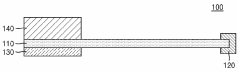
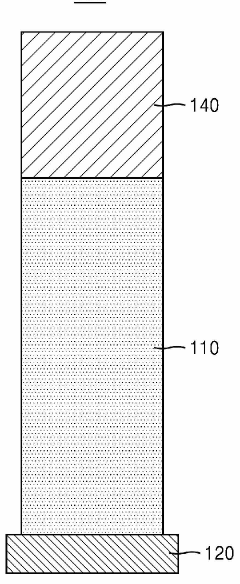
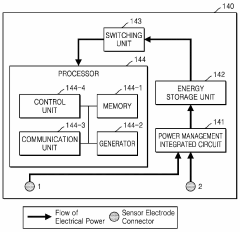
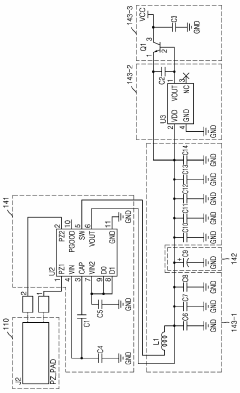
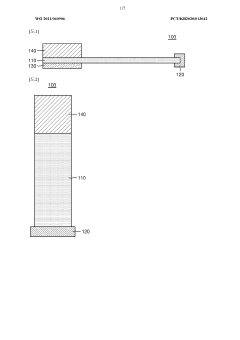
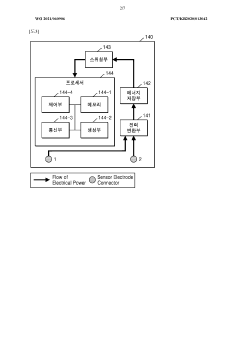
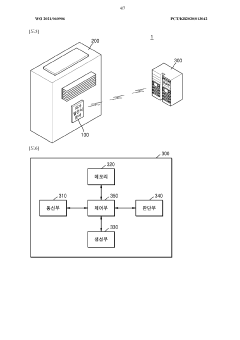
- A self-powered sensor that converts external physical stimuli into electrical energy, integrating a power generation unit with a sensing unit to transmit signals wirelessly without a separate power source, eliminating the need for wiring and enabling miniaturization and weight reduction.
Self-powered sensor, and monitoring system including same
PatentWO2021060906A1
Innovation
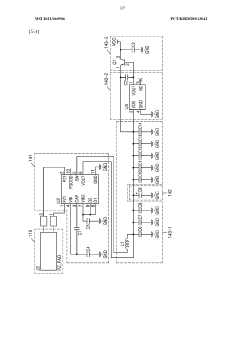
- A self-powered sensor that converts external physical stimulation into electrical energy, integrating power generation and sensing units to transmit signals wirelessly without a battery or wiring, using a power management unit to switch between energized and power-saving states based on energy storage levels.
Sustainability Impact and Environmental Benefits
Self-powered sensor solutions represent a significant advancement in sustainable technology, offering substantial environmental benefits that extend far beyond their immediate applications. These autonomous sensing systems dramatically reduce the need for conventional batteries, which contain toxic materials like lead, cadmium, and mercury that pose serious environmental hazards when improperly disposed. By harvesting ambient energy from the environment, these solutions minimize electronic waste generation, addressing a growing global concern as e-waste continues to be one of the fastest-growing waste streams worldwide.
The carbon footprint reduction associated with self-powered sensors is particularly noteworthy. Traditional battery-powered sensors require regular maintenance and replacement cycles, each involving manufacturing, transportation, and disposal processes that generate significant carbon emissions. Self-powered alternatives eliminate these recurring environmental costs, potentially reducing the carbon footprint of sensing networks by up to 70% over their operational lifetime according to recent lifecycle assessments.
In resource-constrained environments, these technologies enable critical monitoring capabilities without demanding additional energy infrastructure. This aspect is especially valuable in remote environmental monitoring applications, where self-powered sensors can track deforestation, wildlife movements, or pollution levels without human intervention or environmental disruption. The resulting data supports evidence-based conservation efforts and environmental protection initiatives that might otherwise be impossible to implement.
The scalability of self-powered sensor networks further amplifies their sustainability impact. As these technologies become more widespread in smart cities, agriculture, and industrial applications, they enable more efficient resource management across multiple sectors. Smart farming implementations utilizing self-powered soil moisture and nutrient sensors have demonstrated water usage reductions of 30-50% while maintaining or improving crop yields, directly addressing water scarcity challenges.
From a circular economy perspective, many self-powered sensor designs incorporate recyclable or biodegradable materials, further reducing their environmental footprint. Recent innovations in biopolymer-based energy harvesters and organic semiconductors point toward fully sustainable sensing solutions that can naturally decompose at end-of-life, leaving minimal environmental impact.
The long-term environmental benefits extend to enabling more sustainable human behaviors through continuous, energy-efficient monitoring and feedback systems. By providing real-time data on resource consumption and environmental conditions, these technologies empower individuals and organizations to make more environmentally conscious decisions, creating a positive feedback loop of sustainability improvements across society.
The carbon footprint reduction associated with self-powered sensors is particularly noteworthy. Traditional battery-powered sensors require regular maintenance and replacement cycles, each involving manufacturing, transportation, and disposal processes that generate significant carbon emissions. Self-powered alternatives eliminate these recurring environmental costs, potentially reducing the carbon footprint of sensing networks by up to 70% over their operational lifetime according to recent lifecycle assessments.
In resource-constrained environments, these technologies enable critical monitoring capabilities without demanding additional energy infrastructure. This aspect is especially valuable in remote environmental monitoring applications, where self-powered sensors can track deforestation, wildlife movements, or pollution levels without human intervention or environmental disruption. The resulting data supports evidence-based conservation efforts and environmental protection initiatives that might otherwise be impossible to implement.
The scalability of self-powered sensor networks further amplifies their sustainability impact. As these technologies become more widespread in smart cities, agriculture, and industrial applications, they enable more efficient resource management across multiple sectors. Smart farming implementations utilizing self-powered soil moisture and nutrient sensors have demonstrated water usage reductions of 30-50% while maintaining or improving crop yields, directly addressing water scarcity challenges.
From a circular economy perspective, many self-powered sensor designs incorporate recyclable or biodegradable materials, further reducing their environmental footprint. Recent innovations in biopolymer-based energy harvesters and organic semiconductors point toward fully sustainable sensing solutions that can naturally decompose at end-of-life, leaving minimal environmental impact.
The long-term environmental benefits extend to enabling more sustainable human behaviors through continuous, energy-efficient monitoring and feedback systems. By providing real-time data on resource consumption and environmental conditions, these technologies empower individuals and organizations to make more environmentally conscious decisions, creating a positive feedback loop of sustainability improvements across society.
Standardization and Interoperability Considerations
In the rapidly evolving landscape of self-powered sensor technologies, standardization and interoperability have emerged as critical factors determining widespread adoption and integration. Currently, the self-powered sensor ecosystem suffers from fragmentation, with various manufacturers developing proprietary solutions that operate in isolation. This fragmentation creates significant barriers to scaling these technologies across different applications and industries.
The establishment of universal standards for self-powered sensors would facilitate seamless integration with existing infrastructure and systems. Organizations such as IEEE, IEC, and ISO have begun developing frameworks specifically addressing energy harvesting technologies, communication protocols, and data formats for self-powered devices. These standardization efforts focus on critical aspects including power management interfaces, energy storage specifications, and sensor data transmission protocols.
Interoperability challenges extend beyond hardware considerations to encompass software platforms and data management systems. Self-powered sensors must communicate effectively with various IoT platforms, edge computing devices, and cloud services to deliver their full value. The development of open APIs and standardized data models represents a significant step toward creating an ecosystem where devices from different manufacturers can work together harmoniously.
Energy harvesting mechanisms present particular standardization challenges due to their diverse nature. Whether utilizing piezoelectric, thermoelectric, photovoltaic, or RF energy harvesting techniques, each approach requires specific parameters for performance measurement and comparison. Industry stakeholders are working to establish standardized testing methodologies and performance metrics that enable fair comparison across different harvesting technologies.
Security and privacy considerations must be integrated into standardization efforts from the outset. As self-powered sensors often operate in sensitive environments—from healthcare to industrial settings—ensuring consistent security protocols across devices becomes paramount. Emerging standards are incorporating requirements for secure boot processes, encrypted communications, and privacy-preserving data handling specifically tailored to the constrained resources of self-powered devices.
Cross-industry collaboration represents the most promising path forward for meaningful standardization. Consortia bringing together technology providers, end-users, and regulatory bodies have begun establishing working groups focused on self-powered sensor interoperability. These collaborative efforts aim to develop reference architectures and certification programs that verify compliance with established standards, ultimately accelerating market adoption and technological innovation in this critical field addressing global energy challenges.
The establishment of universal standards for self-powered sensors would facilitate seamless integration with existing infrastructure and systems. Organizations such as IEEE, IEC, and ISO have begun developing frameworks specifically addressing energy harvesting technologies, communication protocols, and data formats for self-powered devices. These standardization efforts focus on critical aspects including power management interfaces, energy storage specifications, and sensor data transmission protocols.
Interoperability challenges extend beyond hardware considerations to encompass software platforms and data management systems. Self-powered sensors must communicate effectively with various IoT platforms, edge computing devices, and cloud services to deliver their full value. The development of open APIs and standardized data models represents a significant step toward creating an ecosystem where devices from different manufacturers can work together harmoniously.
Energy harvesting mechanisms present particular standardization challenges due to their diverse nature. Whether utilizing piezoelectric, thermoelectric, photovoltaic, or RF energy harvesting techniques, each approach requires specific parameters for performance measurement and comparison. Industry stakeholders are working to establish standardized testing methodologies and performance metrics that enable fair comparison across different harvesting technologies.
Security and privacy considerations must be integrated into standardization efforts from the outset. As self-powered sensors often operate in sensitive environments—from healthcare to industrial settings—ensuring consistent security protocols across devices becomes paramount. Emerging standards are incorporating requirements for secure boot processes, encrypted communications, and privacy-preserving data handling specifically tailored to the constrained resources of self-powered devices.
Cross-industry collaboration represents the most promising path forward for meaningful standardization. Consortia bringing together technology providers, end-users, and regulatory bodies have begun establishing working groups focused on self-powered sensor interoperability. These collaborative efforts aim to develop reference architectures and certification programs that verify compliance with established standards, ultimately accelerating market adoption and technological innovation in this critical field addressing global energy challenges.
Unlock deeper insights with PatSnap Eureka Quick Research — get a full tech report to explore trends and direct your research. Try now!
Generate Your Research Report Instantly with AI Agent
Supercharge your innovation with PatSnap Eureka AI Agent Platform!