V12 Engine Engineering Challenges in Cold Climates
AUG 5, 20259 MIN READ
Generate Your Research Report Instantly with AI Agent
PatSnap Eureka helps you evaluate technical feasibility & market potential.
V12 Engine Cold Climate Challenges and Objectives
V12 engines, renowned for their power and prestige, face unique challenges when operating in cold climates. These environments present a complex set of engineering hurdles that demand innovative solutions to ensure optimal performance and reliability. The primary objective of addressing these challenges is to maintain the engine's efficiency, durability, and overall functionality in extreme cold conditions.
One of the most significant challenges is the increased viscosity of engine oil at low temperatures. As temperatures drop, oil becomes thicker, making it difficult for the engine to circulate it effectively. This can lead to inadequate lubrication during cold starts, potentially causing increased wear on engine components. Engineers must develop advanced oil formulations and heating systems to mitigate this issue and ensure proper lubrication from the moment the engine is started.
Cold weather also affects the battery performance and starting system of V12 engines. The chemical reactions within the battery slow down in cold temperatures, reducing its capacity to deliver the high current required for starting such a large engine. This necessitates the development of more robust starting systems and battery technologies specifically designed to perform in sub-zero conditions.
Fuel atomization and combustion efficiency are also compromised in cold climates. The low ambient temperature can cause fuel to condense or even freeze in fuel lines, leading to poor engine performance or failure to start. Engineers must focus on developing advanced fuel injection systems and heating mechanisms to ensure proper fuel delivery and combustion under all temperature conditions.
The thermal management of V12 engines in cold climates presents another significant challenge. Rapid temperature changes can cause thermal stress on engine components, potentially leading to premature wear or failure. Developing sophisticated cooling systems that can quickly bring the engine to optimal operating temperature while preventing overcooling is crucial for maintaining engine longevity and performance.
Furthermore, cold climates often come with additional environmental factors such as snow, ice, and road salt, which can accelerate corrosion and wear on engine components. Engineers must consider these factors in material selection and design, implementing corrosion-resistant materials and protective coatings to ensure the engine's durability in harsh winter conditions.
The overarching goal in addressing these challenges is to create a V12 engine that not only survives but thrives in cold climates. This involves balancing performance, reliability, and efficiency while maintaining the luxurious driving experience associated with V12 engines. By overcoming these engineering hurdles, manufacturers can expand the usability and appeal of V12-powered vehicles in regions with extreme cold weather, ultimately enhancing their market position and technological reputation.
One of the most significant challenges is the increased viscosity of engine oil at low temperatures. As temperatures drop, oil becomes thicker, making it difficult for the engine to circulate it effectively. This can lead to inadequate lubrication during cold starts, potentially causing increased wear on engine components. Engineers must develop advanced oil formulations and heating systems to mitigate this issue and ensure proper lubrication from the moment the engine is started.
Cold weather also affects the battery performance and starting system of V12 engines. The chemical reactions within the battery slow down in cold temperatures, reducing its capacity to deliver the high current required for starting such a large engine. This necessitates the development of more robust starting systems and battery technologies specifically designed to perform in sub-zero conditions.
Fuel atomization and combustion efficiency are also compromised in cold climates. The low ambient temperature can cause fuel to condense or even freeze in fuel lines, leading to poor engine performance or failure to start. Engineers must focus on developing advanced fuel injection systems and heating mechanisms to ensure proper fuel delivery and combustion under all temperature conditions.
The thermal management of V12 engines in cold climates presents another significant challenge. Rapid temperature changes can cause thermal stress on engine components, potentially leading to premature wear or failure. Developing sophisticated cooling systems that can quickly bring the engine to optimal operating temperature while preventing overcooling is crucial for maintaining engine longevity and performance.
Furthermore, cold climates often come with additional environmental factors such as snow, ice, and road salt, which can accelerate corrosion and wear on engine components. Engineers must consider these factors in material selection and design, implementing corrosion-resistant materials and protective coatings to ensure the engine's durability in harsh winter conditions.
The overarching goal in addressing these challenges is to create a V12 engine that not only survives but thrives in cold climates. This involves balancing performance, reliability, and efficiency while maintaining the luxurious driving experience associated with V12 engines. By overcoming these engineering hurdles, manufacturers can expand the usability and appeal of V12-powered vehicles in regions with extreme cold weather, ultimately enhancing their market position and technological reputation.
Market Analysis for Cold-Weather V12 Engines
The market for V12 engines in cold climates presents a unique and challenging landscape. While traditionally associated with luxury and high-performance vehicles, V12 engines face specific demands and constraints when operating in extreme cold conditions. The primary market segments for cold-weather V12 engines include luxury SUVs, high-end sedans, and specialized military vehicles designed for arctic operations.
In the luxury automotive sector, there is a growing demand for vehicles that can maintain optimal performance in harsh winter environments. This trend is particularly evident in regions such as Northern Europe, Russia, and parts of North America, where affluent consumers seek vehicles that combine prestige with cold-weather capability. The market size for luxury vehicles equipped with V12 engines in these regions is estimated to be in the tens of thousands of units annually.
The military and defense sector also represents a significant market for cold-weather V12 engines. Armed forces operating in arctic and sub-arctic regions require vehicles with exceptional power and reliability. This niche market, while smaller in volume, offers higher profit margins and long-term contracts.
Market analysis indicates that the demand for cold-weather V12 engines is driven by several factors. Firstly, there is an increasing emphasis on all-season performance among luxury vehicle buyers. Secondly, advancements in engine technology have made it possible to address some of the traditional challenges associated with V12 engines in cold climates, such as fuel efficiency and cold-start reliability.
However, the market also faces significant challenges. Stringent emissions regulations, particularly in Europe and North America, are putting pressure on manufacturers to improve the environmental performance of V12 engines. Additionally, the global shift towards electrification is impacting the long-term outlook for internal combustion engines, including V12s.
Despite these challenges, there remains a dedicated market segment that values the unique characteristics of V12 engines, even in cold climates. This segment is willing to pay a premium for vehicles that offer exceptional power, smoothness, and prestige. Manufacturers who can successfully address the engineering challenges of cold-weather operation while meeting regulatory requirements are likely to find a receptive, albeit niche, market.
The future market trajectory for cold-weather V12 engines will likely be shaped by technological innovations that enhance cold-start capabilities, improve fuel efficiency, and reduce emissions. There may also be opportunities in hybrid powertrains that combine V12 engines with electric motors, offering improved cold-weather performance and reduced environmental impact.
In the luxury automotive sector, there is a growing demand for vehicles that can maintain optimal performance in harsh winter environments. This trend is particularly evident in regions such as Northern Europe, Russia, and parts of North America, where affluent consumers seek vehicles that combine prestige with cold-weather capability. The market size for luxury vehicles equipped with V12 engines in these regions is estimated to be in the tens of thousands of units annually.
The military and defense sector also represents a significant market for cold-weather V12 engines. Armed forces operating in arctic and sub-arctic regions require vehicles with exceptional power and reliability. This niche market, while smaller in volume, offers higher profit margins and long-term contracts.
Market analysis indicates that the demand for cold-weather V12 engines is driven by several factors. Firstly, there is an increasing emphasis on all-season performance among luxury vehicle buyers. Secondly, advancements in engine technology have made it possible to address some of the traditional challenges associated with V12 engines in cold climates, such as fuel efficiency and cold-start reliability.
However, the market also faces significant challenges. Stringent emissions regulations, particularly in Europe and North America, are putting pressure on manufacturers to improve the environmental performance of V12 engines. Additionally, the global shift towards electrification is impacting the long-term outlook for internal combustion engines, including V12s.
Despite these challenges, there remains a dedicated market segment that values the unique characteristics of V12 engines, even in cold climates. This segment is willing to pay a premium for vehicles that offer exceptional power, smoothness, and prestige. Manufacturers who can successfully address the engineering challenges of cold-weather operation while meeting regulatory requirements are likely to find a receptive, albeit niche, market.
The future market trajectory for cold-weather V12 engines will likely be shaped by technological innovations that enhance cold-start capabilities, improve fuel efficiency, and reduce emissions. There may also be opportunities in hybrid powertrains that combine V12 engines with electric motors, offering improved cold-weather performance and reduced environmental impact.
Current V12 Technology and Cold Climate Limitations
V12 engines represent the pinnacle of automotive engineering, offering unparalleled power and smoothness. However, their operation in cold climates presents significant challenges that push the boundaries of current technology. The primary limitations stem from the engine's large displacement and complex design, which exacerbate issues related to cold starts, fuel efficiency, and overall performance in low-temperature environments.
One of the main challenges faced by V12 engines in cold climates is the difficulty in achieving proper oil circulation during cold starts. The increased oil viscosity at low temperatures can lead to inadequate lubrication, potentially causing severe engine damage. Current V12 technology employs advanced synthetic oils and oil heating systems to mitigate this issue, but these solutions are not always sufficient in extreme cold conditions.
Fuel atomization is another critical concern in cold climates. V12 engines typically use high-pressure direct injection systems, which can struggle to properly atomize fuel in sub-zero temperatures. This leads to incomplete combustion, increased emissions, and reduced engine efficiency. While heated fuel injectors and advanced fuel management systems have been implemented, they often fall short in maintaining optimal performance in severe cold.
The complex nature of V12 engines, with their numerous cylinders and intricate valve trains, also poses challenges in cold weather operation. The increased friction and resistance in these components can lead to higher energy requirements for engine start-up and initial operation. Current technologies, such as advanced starter motors and capacitor-based starting systems, aim to address this issue but are not always fully effective in extreme cold.
Thermal management is a crucial aspect of V12 engine operation in cold climates. These engines generate significant heat during operation, which needs to be efficiently managed to prevent overheating. Conversely, in cold start situations, rapid heating of the engine is essential for optimal performance and emissions control. Current V12 designs incorporate sophisticated cooling systems with variable coolant flow and active grille shutters, but achieving the right balance in extreme cold remains challenging.
Emissions control is another area where V12 engines face limitations in cold climates. Cold starts result in higher emissions due to incomplete combustion and inefficient catalytic converter operation. While technologies like electrically heated catalysts and advanced exhaust gas recirculation systems have been implemented, meeting stringent emissions standards in cold weather conditions remains a significant challenge for V12 engines.
In conclusion, while current V12 technology has made strides in addressing cold climate challenges, significant limitations persist. The complex nature of these engines, combined with the extreme demands of cold weather operation, continues to push the boundaries of automotive engineering. Overcoming these limitations will require further innovations in materials science, thermal management, and combustion technology.
One of the main challenges faced by V12 engines in cold climates is the difficulty in achieving proper oil circulation during cold starts. The increased oil viscosity at low temperatures can lead to inadequate lubrication, potentially causing severe engine damage. Current V12 technology employs advanced synthetic oils and oil heating systems to mitigate this issue, but these solutions are not always sufficient in extreme cold conditions.
Fuel atomization is another critical concern in cold climates. V12 engines typically use high-pressure direct injection systems, which can struggle to properly atomize fuel in sub-zero temperatures. This leads to incomplete combustion, increased emissions, and reduced engine efficiency. While heated fuel injectors and advanced fuel management systems have been implemented, they often fall short in maintaining optimal performance in severe cold.
The complex nature of V12 engines, with their numerous cylinders and intricate valve trains, also poses challenges in cold weather operation. The increased friction and resistance in these components can lead to higher energy requirements for engine start-up and initial operation. Current technologies, such as advanced starter motors and capacitor-based starting systems, aim to address this issue but are not always fully effective in extreme cold.
Thermal management is a crucial aspect of V12 engine operation in cold climates. These engines generate significant heat during operation, which needs to be efficiently managed to prevent overheating. Conversely, in cold start situations, rapid heating of the engine is essential for optimal performance and emissions control. Current V12 designs incorporate sophisticated cooling systems with variable coolant flow and active grille shutters, but achieving the right balance in extreme cold remains challenging.
Emissions control is another area where V12 engines face limitations in cold climates. Cold starts result in higher emissions due to incomplete combustion and inefficient catalytic converter operation. While technologies like electrically heated catalysts and advanced exhaust gas recirculation systems have been implemented, meeting stringent emissions standards in cold weather conditions remains a significant challenge for V12 engines.
In conclusion, while current V12 technology has made strides in addressing cold climate challenges, significant limitations persist. The complex nature of these engines, combined with the extreme demands of cold weather operation, continues to push the boundaries of automotive engineering. Overcoming these limitations will require further innovations in materials science, thermal management, and combustion technology.
Existing Cold-Start Solutions for V12 Engines
01 V12 Engine Design and Configuration
V12 engines are characterized by their unique configuration of twelve cylinders arranged in two banks of six, forming a V shape. This design allows for smooth operation, high power output, and balanced performance. The V12 layout is often used in high-performance and luxury vehicles due to its ability to produce significant horsepower while maintaining relatively compact dimensions.- V12 Engine Design and Configuration: V12 engines are typically designed with two banks of six cylinders arranged in a V-shape. This configuration allows for a compact engine design while providing high power output and smooth operation. The V12 layout is often used in high-performance and luxury vehicles due to its balance of power and refinement.
- V12 Engine Control Systems: Advanced control systems are crucial for optimizing V12 engine performance. These systems manage fuel injection, ignition timing, and valve timing to enhance power output, fuel efficiency, and emissions control. Electronic control units (ECUs) play a key role in coordinating various engine functions and adapting to different driving conditions.
- V12 Engine Cooling and Lubrication: Effective cooling and lubrication systems are essential for V12 engines due to their high power output and heat generation. Advanced cooling systems may include multiple radiators, oil coolers, and precision-engineered coolant passages. Lubrication systems are designed to ensure proper oil distribution to all critical engine components, even under high-performance conditions.
- V12 Engine Materials and Manufacturing: The use of advanced materials and manufacturing techniques is crucial in V12 engine production. Lightweight alloys, such as aluminum and magnesium, are often used to reduce engine weight while maintaining strength. Precision manufacturing processes, including computer-controlled machining and advanced casting techniques, ensure tight tolerances and high-quality components.
- V12 Engine Integration and Packaging: Integrating a V12 engine into a vehicle chassis presents unique challenges due to its size and weight. Engineers must consider factors such as weight distribution, cooling system layout, and exhaust routing. Advanced packaging solutions may include dry-sump lubrication systems to lower the engine's center of gravity and improve vehicle handling characteristics.
02 Fuel Efficiency and Emissions Control in V12 Engines
Modern V12 engines incorporate advanced technologies to improve fuel efficiency and reduce emissions. These may include direct fuel injection, variable valve timing, cylinder deactivation, and advanced exhaust gas recirculation systems. Such innovations help V12 engines meet stringent environmental regulations while maintaining their high-performance characteristics.Expand Specific Solutions03 Cooling and Lubrication Systems for V12 Engines
V12 engines require sophisticated cooling and lubrication systems to manage the heat generated by their high power output. Advanced coolant circulation designs, oil cooling systems, and precision-engineered oil galleries are employed to ensure optimal engine performance and longevity. These systems are crucial for maintaining engine efficiency and preventing overheating in high-stress conditions.Expand Specific Solutions04 V12 Engine Applications in Various Industries
While commonly associated with high-end automobiles, V12 engines find applications in various industries. They are used in marine propulsion systems, aviation, and heavy machinery. The versatility of V12 engines allows them to be adapted for different power requirements and operating conditions across diverse sectors.Expand Specific Solutions05 Aesthetic and Design Aspects of V12 Engines
The visual appeal of V12 engines is an important aspect of their design, especially in luxury and sports vehicles. Engine covers, intake manifolds, and other visible components are often designed with aesthetics in mind, showcasing the engine as a piece of mechanical art. This attention to visual detail contributes to the overall appeal and prestige associated with V12-powered vehicles.Expand Specific Solutions
Major Players in Cold-Climate V12 Engine Manufacturing
The V12 engine engineering challenges in cold climates present a complex competitive landscape. The industry is in a mature stage, with established players like Honda, Yamaha, and Caterpillar leading the market. However, the specific niche of cold climate performance is driving innovation. The market size is substantial, given the global demand for high-performance engines in extreme conditions. Technologically, companies like Audi, Volkswagen, and Volvo are making significant strides in cold-weather engine optimization. Emerging players such as ClearFlame Engines are also disrupting the space with novel approaches to engine efficiency and performance in harsh environments.
AUDI AG
Technical Solution: Audi has implemented innovative solutions for V12 engines in cold climates, focusing on their high-end luxury vehicles. Their approach includes an advanced pre-heating system that can be activated remotely, ensuring the engine is at optimal temperature before starting[4]. Audi has also developed a sophisticated lubricant circulation system that maintains oil viscosity even at extremely low temperatures, reducing wear during cold starts[5]. The company utilizes a state-of-the-art engine control unit (ECU) that adjusts ignition timing and fuel mixture based on ambient temperature, optimizing performance and emissions in cold conditions[6]. Furthermore, Audi has incorporated ceramic glow plugs that reach higher temperatures faster, aiding in cold starts for their diesel V12 engines.
Strengths: Remote pre-heating system enhances user convenience. Advanced ECU provides precise control in varying temperatures. Weaknesses: Solutions may be costly, limiting their application to high-end models.
Ford Global Technologies LLC
Technical Solution: Ford has developed advanced cold-start technologies for their V12 engines to address cold climate challenges. Their system includes a rapid warm-up strategy using electric heaters for the engine oil and coolant, combined with advanced thermal management. They've also implemented a multi-stage fuel injection system that optimizes fuel atomization at low temperatures[1]. Additionally, Ford has integrated a smart battery management system that ensures sufficient power for cold starts, even in extreme conditions[2]. The company has also focused on materials engineering, using specialized cold-resistant alloys for critical engine components to maintain performance and durability in sub-zero temperatures[3].
Strengths: Comprehensive approach addressing multiple aspects of cold climate operation. Advanced thermal management and fuel injection systems. Weaknesses: Potentially higher production costs due to specialized materials and additional heating systems.
Key Innovations in Cold-Weather V12 Engine Design
Self-contained engine block heater power supply
PatentActiveUS20220136476A1
Innovation
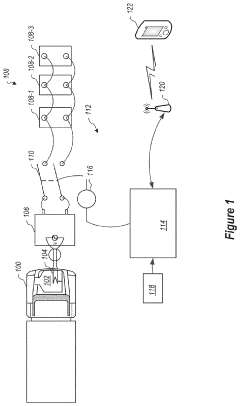
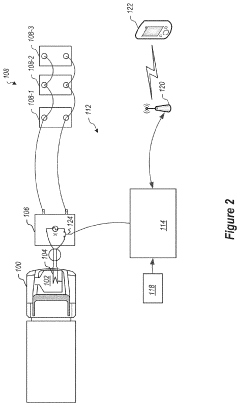
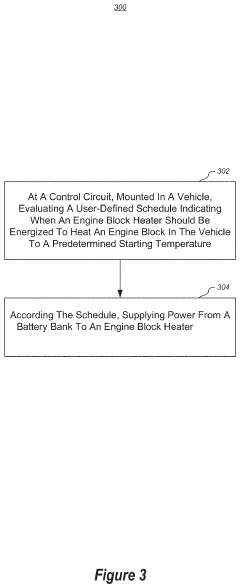
- A self-contained engine block heating system utilizing a battery bank with a DC to AC inverter to supply power to the engine block heater, coupled with control circuitry that automatically connects the battery bank to the inverter according to a user-defined schedule, allowing for off-grid operation and reduced idling time.
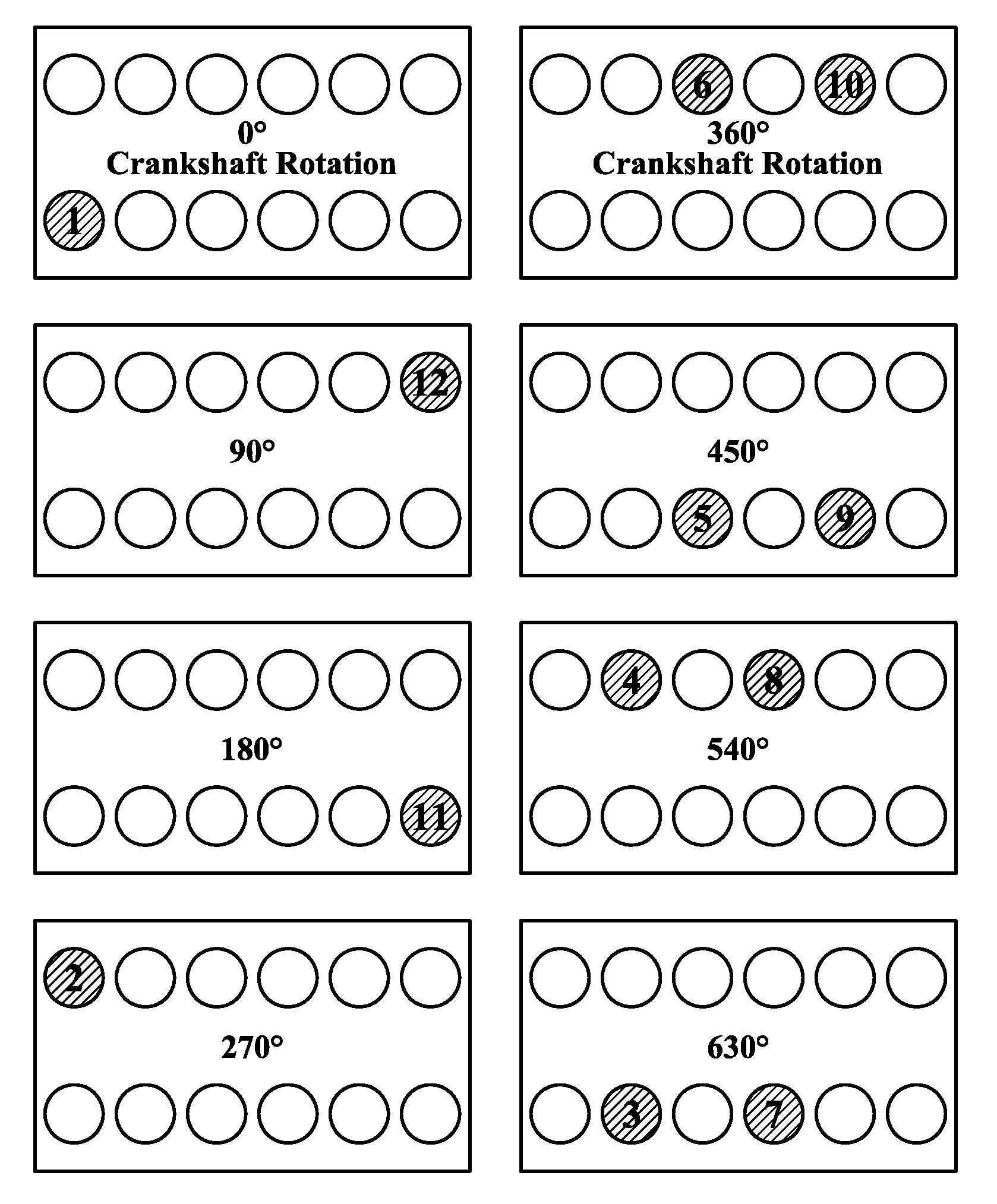
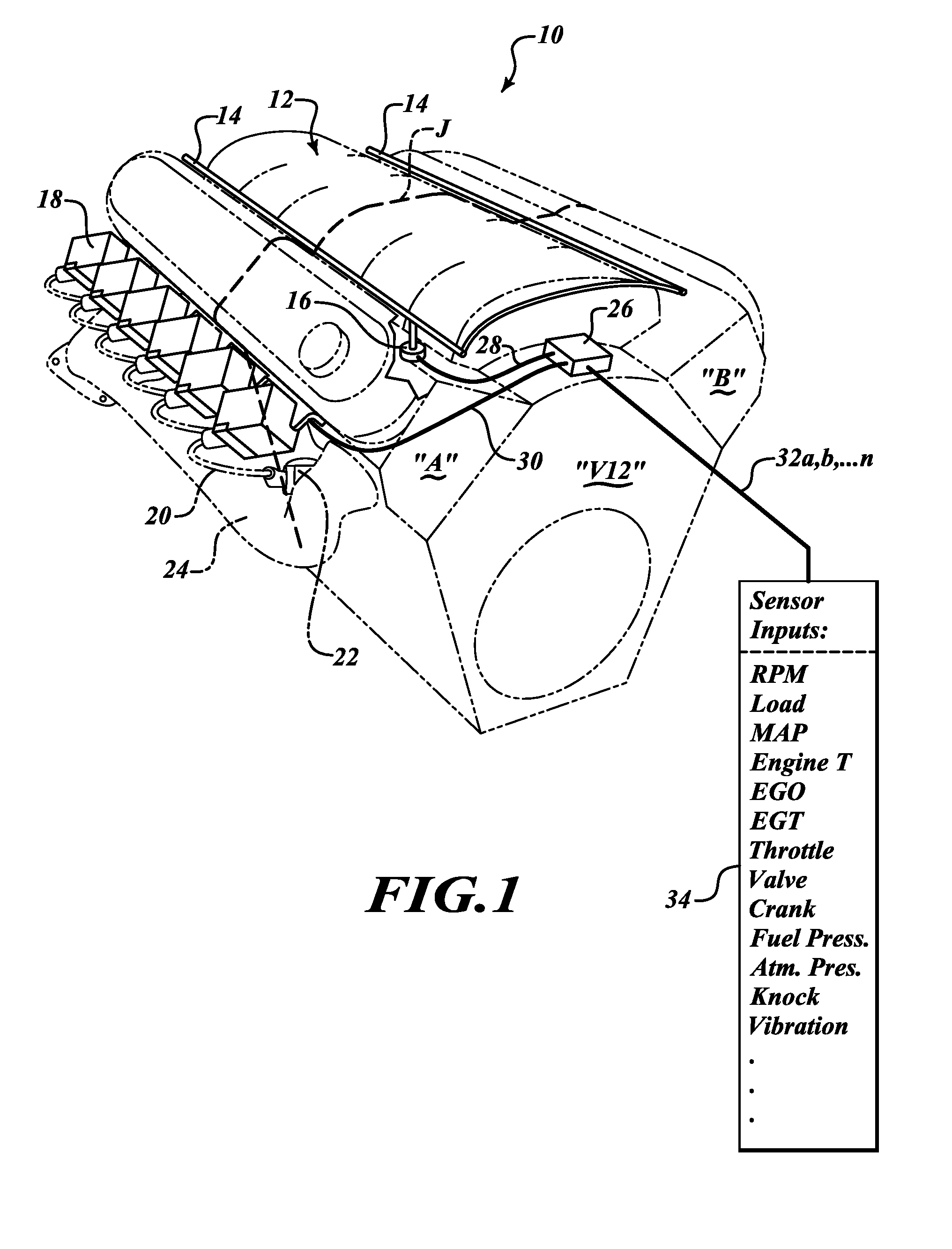
Even fire 90°V12 IC engines, fueling and firing sequence controllers, and methods of operation by PS/P technology and IFR compensation by fuel feed control
PatentInactiveUS7979193B2
Innovation
- Implementing a Progressive Single/Pair (PS/P) fueling and firing sequence controlled by a Powertrain Control Module (PCM) that allows all cylinders in a 90°V12 to operate in Even Fire mode, with Dynamic Fuel Balancing and IFR Compensation by selectively reducing fuel to specific cylinders during imbalance frequencies, effectively converting the engine's operation to a balanced V8 mode during peak vibrations.

Environmental Impact of V12 Engines in Cold Climates
The environmental impact of V12 engines in cold climates is a complex issue that requires careful consideration. These powerful engines, known for their high performance and luxury status, face unique challenges in frigid environments that can exacerbate their environmental footprint.
In cold climates, V12 engines typically require longer warm-up periods to reach optimal operating temperatures. This extended idling time leads to increased fuel consumption and, consequently, higher emissions of greenhouse gases and other pollutants. The cold start emissions are particularly problematic, as catalytic converters are less effective at lower temperatures, resulting in higher levels of unburned hydrocarbons and carbon monoxide being released into the atmosphere.
The use of winter-grade fuels in cold climates can also impact the environmental performance of V12 engines. These fuels often have different volatility characteristics to prevent cold-weather starting problems, which can affect combustion efficiency and emissions. Additionally, the increased use of auxiliary heating systems in vehicles equipped with V12 engines further contributes to fuel consumption and emissions in cold weather.
Cold temperatures also affect the viscosity of engine oil, leading to increased friction within the engine. This results in reduced fuel efficiency and higher energy losses, further contributing to increased emissions. The need for more frequent oil changes in cold climates also raises concerns about proper disposal and potential environmental contamination.
The impact on local air quality is another significant consideration. In cold climates, temperature inversions can trap pollutants close to the ground, exacerbating the effects of vehicle emissions on air quality. The high output of V12 engines, combined with these meteorological conditions, can lead to increased concentrations of particulate matter and other harmful pollutants in urban areas.
Furthermore, the production and transportation of specialized cold-weather components for V12 engines, such as block heaters and battery warmers, contribute to the overall environmental impact through increased manufacturing emissions and resource consumption. The use of these components also adds to the vehicle's energy consumption, albeit indirectly through electrical grid demand.
In terms of ecosystem impact, the increased emissions from V12 engines in cold climates can contribute to acid rain formation, which can harm vegetation and aquatic life. The deposition of particulate matter on snow and ice surfaces can also accelerate melting, potentially affecting local ecosystems and contributing to broader climate change impacts.
In cold climates, V12 engines typically require longer warm-up periods to reach optimal operating temperatures. This extended idling time leads to increased fuel consumption and, consequently, higher emissions of greenhouse gases and other pollutants. The cold start emissions are particularly problematic, as catalytic converters are less effective at lower temperatures, resulting in higher levels of unburned hydrocarbons and carbon monoxide being released into the atmosphere.
The use of winter-grade fuels in cold climates can also impact the environmental performance of V12 engines. These fuels often have different volatility characteristics to prevent cold-weather starting problems, which can affect combustion efficiency and emissions. Additionally, the increased use of auxiliary heating systems in vehicles equipped with V12 engines further contributes to fuel consumption and emissions in cold weather.
Cold temperatures also affect the viscosity of engine oil, leading to increased friction within the engine. This results in reduced fuel efficiency and higher energy losses, further contributing to increased emissions. The need for more frequent oil changes in cold climates also raises concerns about proper disposal and potential environmental contamination.
The impact on local air quality is another significant consideration. In cold climates, temperature inversions can trap pollutants close to the ground, exacerbating the effects of vehicle emissions on air quality. The high output of V12 engines, combined with these meteorological conditions, can lead to increased concentrations of particulate matter and other harmful pollutants in urban areas.
Furthermore, the production and transportation of specialized cold-weather components for V12 engines, such as block heaters and battery warmers, contribute to the overall environmental impact through increased manufacturing emissions and resource consumption. The use of these components also adds to the vehicle's energy consumption, albeit indirectly through electrical grid demand.
In terms of ecosystem impact, the increased emissions from V12 engines in cold climates can contribute to acid rain formation, which can harm vegetation and aquatic life. The deposition of particulate matter on snow and ice surfaces can also accelerate melting, potentially affecting local ecosystems and contributing to broader climate change impacts.
Materials Science Advancements for Cold-Resistant V12s
Materials science advancements have played a crucial role in addressing the engineering challenges faced by V12 engines in cold climates. The extreme low temperatures encountered in these environments can significantly impact the performance, durability, and reliability of engine components. To overcome these challenges, researchers and engineers have focused on developing innovative materials and coatings that can withstand the harsh conditions while maintaining optimal engine performance.
One of the primary areas of advancement has been in the development of cold-resistant alloys for engine blocks and cylinder heads. These alloys, typically based on aluminum or iron, are engineered to maintain their structural integrity and mechanical properties at extremely low temperatures. Advanced metallurgical techniques, such as controlled solidification and microstructure optimization, have been employed to enhance the low-temperature ductility and strength of these materials.
Coatings technology has also seen significant progress in improving the cold-weather performance of V12 engines. Thermal barrier coatings (TBCs) have been developed to provide insulation and protect critical engine components from thermal shock and rapid temperature changes. These coatings, often composed of ceramic materials like yttria-stabilized zirconia, help maintain more consistent operating temperatures and reduce thermal stress on engine parts.
Lubricant technology has been another area of focus for materials scientists. Cold-resistant synthetic oils and additives have been formulated to maintain proper viscosity and lubrication properties at extremely low temperatures. These advanced lubricants help reduce friction and wear during cold starts and ensure adequate protection of engine components throughout operation in cold climates.
Composite materials have also found applications in cold-resistant V12 engine design. Carbon fiber reinforced polymers (CFRPs) and other advanced composites are being used to create lightweight, yet durable components that can withstand thermal cycling and maintain their structural properties in extreme cold. These materials offer the added benefit of reducing overall engine weight, which can improve fuel efficiency and performance.
Nanotechnology has emerged as a promising field for enhancing the cold-weather performance of engine materials. Nanostructured coatings and materials with engineered surface properties are being developed to improve wear resistance, reduce friction, and enhance thermal management in cold environments. These innovations at the nanoscale level have the potential to significantly improve the overall efficiency and durability of V12 engines operating in extreme cold conditions.
In conclusion, materials science advancements have been instrumental in addressing the engineering challenges of V12 engines in cold climates. Through the development of cold-resistant alloys, advanced coatings, improved lubricants, composite materials, and nanotechnology applications, significant progress has been made in enhancing engine performance, durability, and reliability in extreme cold conditions. These advancements continue to push the boundaries of what is possible in engine design and performance, enabling V12 engines to operate effectively in even the most challenging cold climate environments.
One of the primary areas of advancement has been in the development of cold-resistant alloys for engine blocks and cylinder heads. These alloys, typically based on aluminum or iron, are engineered to maintain their structural integrity and mechanical properties at extremely low temperatures. Advanced metallurgical techniques, such as controlled solidification and microstructure optimization, have been employed to enhance the low-temperature ductility and strength of these materials.
Coatings technology has also seen significant progress in improving the cold-weather performance of V12 engines. Thermal barrier coatings (TBCs) have been developed to provide insulation and protect critical engine components from thermal shock and rapid temperature changes. These coatings, often composed of ceramic materials like yttria-stabilized zirconia, help maintain more consistent operating temperatures and reduce thermal stress on engine parts.
Lubricant technology has been another area of focus for materials scientists. Cold-resistant synthetic oils and additives have been formulated to maintain proper viscosity and lubrication properties at extremely low temperatures. These advanced lubricants help reduce friction and wear during cold starts and ensure adequate protection of engine components throughout operation in cold climates.
Composite materials have also found applications in cold-resistant V12 engine design. Carbon fiber reinforced polymers (CFRPs) and other advanced composites are being used to create lightweight, yet durable components that can withstand thermal cycling and maintain their structural properties in extreme cold. These materials offer the added benefit of reducing overall engine weight, which can improve fuel efficiency and performance.
Nanotechnology has emerged as a promising field for enhancing the cold-weather performance of engine materials. Nanostructured coatings and materials with engineered surface properties are being developed to improve wear resistance, reduce friction, and enhance thermal management in cold environments. These innovations at the nanoscale level have the potential to significantly improve the overall efficiency and durability of V12 engines operating in extreme cold conditions.
In conclusion, materials science advancements have been instrumental in addressing the engineering challenges of V12 engines in cold climates. Through the development of cold-resistant alloys, advanced coatings, improved lubricants, composite materials, and nanotechnology applications, significant progress has been made in enhancing engine performance, durability, and reliability in extreme cold conditions. These advancements continue to push the boundaries of what is possible in engine design and performance, enabling V12 engines to operate effectively in even the most challenging cold climate environments.
Unlock deeper insights with PatSnap Eureka Quick Research — get a full tech report to explore trends and direct your research. Try now!
Generate Your Research Report Instantly with AI Agent
Supercharge your innovation with PatSnap Eureka AI Agent Platform!