

V12 Engine Technical Prefabrication for Specialized Applications
AUG 5, 20259 MIN READ
Generate Your Research Report Instantly with AI Agent
PatSnap Eureka helps you evaluate technical feasibility & market potential.
V12 Engine Evolution and Objectives
The V12 engine has a rich history dating back to the early 20th century, evolving from its initial applications in luxury automobiles and aircraft to its current specialized uses in high-performance vehicles and marine propulsion systems. This powerful engine configuration has consistently represented the pinnacle of internal combustion engine technology, offering unparalleled smoothness, power output, and prestige.
The evolution of the V12 engine has been marked by significant technological advancements. Early V12 engines were primarily focused on achieving high power outputs for racing and luxury vehicles. As engineering capabilities improved, the emphasis shifted towards enhancing efficiency, reducing emissions, and improving reliability while maintaining the V12's characteristic power and smoothness.
In recent decades, the development of V12 engines has been driven by the need to meet increasingly stringent environmental regulations while still catering to the demands of specialized applications. This has led to the integration of advanced technologies such as direct fuel injection, variable valve timing, and cylinder deactivation systems. These innovations have allowed V12 engines to remain relevant in an era of increasing electrification and downsizing trends in the automotive industry.
The objectives for V12 engine technical prefabrication in specialized applications are multifaceted. Primarily, there is a focus on maximizing power density – achieving higher power outputs from more compact and lightweight designs. This is particularly crucial for applications in high-performance sports cars and racing vehicles where power-to-weight ratio is a critical factor.
Another key objective is to improve fuel efficiency and reduce emissions without compromising the V12's performance characteristics. This involves the development of advanced combustion technologies, the use of lightweight materials, and the integration of hybrid systems in some applications. The goal is to create V12 engines that can meet future emissions standards while still delivering the exceptional performance expected from this configuration.
Durability and reliability remain crucial objectives, especially for V12 engines used in marine applications or high-end luxury vehicles. Engineers are focusing on developing more robust components and advanced lubrication systems to ensure these engines can withstand prolonged high-performance operation.
Furthermore, there is an increasing emphasis on customization and modularity in V12 engine design. The aim is to create flexible engine platforms that can be easily adapted to various specialized applications, from supercars to luxury yachts, with minimal redesign. This approach not only reduces development costs but also allows for more rapid innovation and adaptation to specific market needs.
The evolution of the V12 engine has been marked by significant technological advancements. Early V12 engines were primarily focused on achieving high power outputs for racing and luxury vehicles. As engineering capabilities improved, the emphasis shifted towards enhancing efficiency, reducing emissions, and improving reliability while maintaining the V12's characteristic power and smoothness.
In recent decades, the development of V12 engines has been driven by the need to meet increasingly stringent environmental regulations while still catering to the demands of specialized applications. This has led to the integration of advanced technologies such as direct fuel injection, variable valve timing, and cylinder deactivation systems. These innovations have allowed V12 engines to remain relevant in an era of increasing electrification and downsizing trends in the automotive industry.
The objectives for V12 engine technical prefabrication in specialized applications are multifaceted. Primarily, there is a focus on maximizing power density – achieving higher power outputs from more compact and lightweight designs. This is particularly crucial for applications in high-performance sports cars and racing vehicles where power-to-weight ratio is a critical factor.
Another key objective is to improve fuel efficiency and reduce emissions without compromising the V12's performance characteristics. This involves the development of advanced combustion technologies, the use of lightweight materials, and the integration of hybrid systems in some applications. The goal is to create V12 engines that can meet future emissions standards while still delivering the exceptional performance expected from this configuration.
Durability and reliability remain crucial objectives, especially for V12 engines used in marine applications or high-end luxury vehicles. Engineers are focusing on developing more robust components and advanced lubrication systems to ensure these engines can withstand prolonged high-performance operation.
Furthermore, there is an increasing emphasis on customization and modularity in V12 engine design. The aim is to create flexible engine platforms that can be easily adapted to various specialized applications, from supercars to luxury yachts, with minimal redesign. This approach not only reduces development costs but also allows for more rapid innovation and adaptation to specific market needs.
Market Analysis for V12 Engines
The V12 engine market has experienced significant shifts in recent years, driven by changing consumer preferences, environmental regulations, and technological advancements. While traditionally associated with luxury and high-performance vehicles, V12 engines have found new applications in specialized sectors, creating niche markets with unique demands.
In the automotive sector, the demand for V12 engines has been declining in mainstream luxury vehicles due to stricter emissions standards and a shift towards more fuel-efficient powertrains. However, ultra-luxury and supercar segments continue to value V12 engines for their prestige, smooth power delivery, and distinctive sound. Brands like Rolls-Royce, Ferrari, and Lamborghini maintain a loyal customer base willing to pay premium prices for V12-powered vehicles.
The marine industry represents a growing market for V12 engines, particularly in high-end yachts and commercial vessels. These engines offer the power and reliability required for large watercraft, with manufacturers like MAN and MTU developing specialized marine V12 units. The offshore oil and gas sector also utilizes V12 engines in various applications, including power generation and propulsion systems for support vessels.
In the aerospace industry, V12 engines have found a niche in certain general aviation and military applications. While not as common as turbine engines, V12 configurations are valued for their reliability and performance characteristics in specific aircraft designs.
The power generation sector presents another market opportunity for V12 engines, especially in backup power systems for critical infrastructure such as hospitals, data centers, and industrial facilities. These engines offer high power output and quick response times, making them suitable for emergency power applications.
Geographically, North America and Europe remain key markets for V12 engines, particularly in luxury automotive and marine applications. However, emerging markets in Asia and the Middle East are showing increased demand for high-end vehicles and yachts, potentially expanding the global market for V12 engines.
Despite these opportunities, the overall market size for V12 engines is relatively small compared to other engine configurations. The specialized nature of V12 applications limits mass production, resulting in higher unit costs. This factor, combined with increasing environmental regulations, poses challenges for market growth.
Looking ahead, the V12 engine market is expected to remain stable in niche applications, with potential growth in specialized sectors such as marine and power generation. However, manufacturers will need to invest in research and development to improve efficiency and emissions performance to ensure the long-term viability of V12 engines in an increasingly environmentally conscious market landscape.
In the automotive sector, the demand for V12 engines has been declining in mainstream luxury vehicles due to stricter emissions standards and a shift towards more fuel-efficient powertrains. However, ultra-luxury and supercar segments continue to value V12 engines for their prestige, smooth power delivery, and distinctive sound. Brands like Rolls-Royce, Ferrari, and Lamborghini maintain a loyal customer base willing to pay premium prices for V12-powered vehicles.
The marine industry represents a growing market for V12 engines, particularly in high-end yachts and commercial vessels. These engines offer the power and reliability required for large watercraft, with manufacturers like MAN and MTU developing specialized marine V12 units. The offshore oil and gas sector also utilizes V12 engines in various applications, including power generation and propulsion systems for support vessels.
In the aerospace industry, V12 engines have found a niche in certain general aviation and military applications. While not as common as turbine engines, V12 configurations are valued for their reliability and performance characteristics in specific aircraft designs.
The power generation sector presents another market opportunity for V12 engines, especially in backup power systems for critical infrastructure such as hospitals, data centers, and industrial facilities. These engines offer high power output and quick response times, making them suitable for emergency power applications.
Geographically, North America and Europe remain key markets for V12 engines, particularly in luxury automotive and marine applications. However, emerging markets in Asia and the Middle East are showing increased demand for high-end vehicles and yachts, potentially expanding the global market for V12 engines.
Despite these opportunities, the overall market size for V12 engines is relatively small compared to other engine configurations. The specialized nature of V12 applications limits mass production, resulting in higher unit costs. This factor, combined with increasing environmental regulations, poses challenges for market growth.
Looking ahead, the V12 engine market is expected to remain stable in niche applications, with potential growth in specialized sectors such as marine and power generation. However, manufacturers will need to invest in research and development to improve efficiency and emissions performance to ensure the long-term viability of V12 engines in an increasingly environmentally conscious market landscape.
V12 Engine Challenges and Limitations
V12 engines, while renowned for their power and prestige, face several significant challenges and limitations in specialized applications. One of the primary concerns is their substantial size and weight, which can pose difficulties in integration and packaging within various vehicle designs. This is particularly problematic in applications where space is at a premium, such as in high-performance sports cars or luxury sedans where aerodynamics and weight distribution are critical factors.
Fuel efficiency remains a major hurdle for V12 engines. Their large displacement and high cylinder count inherently lead to increased fuel consumption, which is increasingly problematic in an era of stringent emissions regulations and growing environmental concerns. This challenge is exacerbated in specialized applications that demand both high performance and reasonable fuel economy, such as in long-range luxury vehicles or high-speed marine craft.
The complexity of V12 engines presents another significant limitation. With twelve cylinders, these engines require intricate cooling systems, sophisticated engine management software, and complex lubrication networks. This complexity not only increases manufacturing costs but also raises reliability concerns and complicates maintenance procedures, potentially leading to higher long-term ownership costs for end-users.
Emissions compliance is an increasingly pressing challenge for V12 engines. Meeting ever-tightening global emissions standards while maintaining the power output expected from a V12 requires advanced engineering solutions. This often involves the integration of complex aftertreatment systems, which can further increase weight and packaging challenges, as well as overall system complexity.
The high production costs associated with V12 engines limit their application to niche markets. The specialized tooling, extensive research and development, and low production volumes contribute to a high per-unit cost, making V12 engines economically viable only in high-end luxury or performance applications. This limitation restricts the potential for widespread adoption and economies of scale.
Balancing performance with NVH (Noise, Vibration, and Harshness) characteristics presents another challenge. While V12 engines are known for their smooth operation, achieving this smoothness at high power outputs requires sophisticated engineering solutions, including advanced engine mounts and sound dampening technologies, which can add weight and complexity to the overall vehicle design.
Finally, the future of V12 engines faces uncertainty in light of the automotive industry's shift towards electrification. As manufacturers invest heavily in electric and hybrid technologies, the development resources allocated to large, traditional combustion engines like the V12 are diminishing. This trend poses a significant challenge to the long-term viability and continued evolution of V12 engines in specialized applications.
Fuel efficiency remains a major hurdle for V12 engines. Their large displacement and high cylinder count inherently lead to increased fuel consumption, which is increasingly problematic in an era of stringent emissions regulations and growing environmental concerns. This challenge is exacerbated in specialized applications that demand both high performance and reasonable fuel economy, such as in long-range luxury vehicles or high-speed marine craft.
The complexity of V12 engines presents another significant limitation. With twelve cylinders, these engines require intricate cooling systems, sophisticated engine management software, and complex lubrication networks. This complexity not only increases manufacturing costs but also raises reliability concerns and complicates maintenance procedures, potentially leading to higher long-term ownership costs for end-users.
Emissions compliance is an increasingly pressing challenge for V12 engines. Meeting ever-tightening global emissions standards while maintaining the power output expected from a V12 requires advanced engineering solutions. This often involves the integration of complex aftertreatment systems, which can further increase weight and packaging challenges, as well as overall system complexity.
The high production costs associated with V12 engines limit their application to niche markets. The specialized tooling, extensive research and development, and low production volumes contribute to a high per-unit cost, making V12 engines economically viable only in high-end luxury or performance applications. This limitation restricts the potential for widespread adoption and economies of scale.
Balancing performance with NVH (Noise, Vibration, and Harshness) characteristics presents another challenge. While V12 engines are known for their smooth operation, achieving this smoothness at high power outputs requires sophisticated engineering solutions, including advanced engine mounts and sound dampening technologies, which can add weight and complexity to the overall vehicle design.
Finally, the future of V12 engines faces uncertainty in light of the automotive industry's shift towards electrification. As manufacturers invest heavily in electric and hybrid technologies, the development resources allocated to large, traditional combustion engines like the V12 are diminishing. This trend poses a significant challenge to the long-term viability and continued evolution of V12 engines in specialized applications.
Current V12 Engine Technologies
01 V12 Engine Design and Configuration
V12 engines are designed with 12 cylinders arranged in a V-shape configuration. This layout allows for a compact design while providing high power output and smooth operation. The V12 configuration is often used in high-performance vehicles and luxury cars due to its balance of power and refinement.- V12 Engine Design and Configuration: V12 engines are designed with 12 cylinders arranged in a V-shape configuration. This layout allows for a compact engine design while providing high power output and smooth operation. The V12 configuration is often used in high-performance vehicles and luxury cars due to its balance of power and refinement.
- V12 Engine Performance Optimization: Various techniques are employed to optimize the performance of V12 engines, including advanced fuel injection systems, variable valve timing, and turbocharging. These technologies help improve power output, fuel efficiency, and emissions control in V12 engines.
- V12 Engine Cooling Systems: Efficient cooling systems are crucial for V12 engines due to their high power output and heat generation. Advanced cooling solutions may include liquid cooling, oil cooling, and innovative radiator designs to maintain optimal operating temperatures and prevent overheating.
- V12 Engine Applications in Various Industries: V12 engines find applications beyond automotive use, including marine propulsion, aviation, and power generation. The versatility of V12 engines allows them to be adapted for different industries where high power and reliability are required.
- V12 Engine Aesthetic and Design Elements: The visual design of V12 engines and their integration into vehicle aesthetics are important considerations. This includes the engine's appearance, placement within the vehicle, and how it contributes to the overall design language of high-performance and luxury vehicles.
02 V12 Engine Control Systems
Advanced control systems are implemented in V12 engines to optimize performance, fuel efficiency, and emissions. These systems may include electronic fuel injection, variable valve timing, and engine management units that continuously adjust engine parameters based on driving conditions and user input.Expand Specific Solutions03 V12 Engine Applications
V12 engines find applications in various vehicles and industries, including high-end sports cars, luxury sedans, marine vessels, and even some aircraft. The versatility of V12 engines allows them to be adapted for different power requirements and operating conditions across these diverse applications.Expand Specific Solutions04 V12 Engine Cooling and Lubrication
Efficient cooling and lubrication systems are crucial for V12 engines due to their high power output and complex design. These systems often incorporate advanced technologies such as precision oil pumps, multi-stage cooling circuits, and specialized heat exchangers to maintain optimal operating temperatures and ensure longevity.Expand Specific Solutions05 V12 Engine Exhaust Systems
Exhaust systems for V12 engines are designed to optimize performance while meeting stringent emissions regulations. These systems may include variable exhaust valves, catalytic converters, and resonators to enhance engine sound and reduce harmful emissions. The exhaust layout is often carefully engineered to complement the V12 engine's power characteristics.Expand Specific Solutions
Major V12 Engine Manufacturers
The V12 engine technical prefabrication for specialized applications market is in a mature stage, with established players like Rolls-Royce, Honda, and Toyota dominating the field. The market size is substantial, driven by demand in luxury automotive, marine, and aerospace sectors. Technologically, the field is advanced, with companies like Rolls-Royce and Honda leading in innovation. However, emerging players such as Guangxi Yuchai Machinery and Wuhu Chuangzhi Automobile Technology are also making strides in engine technology, potentially disrupting the market with new approaches to V12 engine design and manufacturing for specialized applications.
Honda Motor Co., Ltd.
Technical Solution: Honda has developed a compact and efficient V12 engine for specialized applications, focusing on motorsports and high-performance vehicles. Their V12 design incorporates advanced materials such as titanium and carbon fiber to reduce weight while maintaining strength[4]. Honda's V12 engine features a high-revving design, typically capable of reaching over 15,000 RPM, achieved through precision engineering and innovative valve train technologies[5]. The company has implemented a dry-sump lubrication system to ensure consistent oil pressure under high G-forces, critical for racing applications. Honda's V12 also utilizes advanced engine management systems with individual cylinder control for optimized fuel delivery and ignition timing[6].
Strengths: High-revving capability, lightweight design, advanced materials usage. Weaknesses: Limited commercial applications, high production costs, specialized maintenance requirements.
Rolls-Royce Plc
Technical Solution: Rolls-Royce Plc has developed advanced V12 engine technologies for specialized applications, focusing on high-performance and luxury sectors. Their V12 engines feature innovative materials and manufacturing techniques, including 3D-printed components for complex geometries[1]. The company has implemented a modular design approach, allowing for customization across various applications while maintaining core efficiencies. Rolls-Royce's V12 engines incorporate advanced fuel injection systems and variable valve timing to optimize performance and fuel efficiency[2]. They have also integrated hybrid technologies into their V12 platforms, combining electric motors with the traditional combustion engine to meet evolving emissions standards while preserving the characteristic power and refinement of the V12 configuration[3].
Strengths: Unparalleled luxury and performance, brand prestige, cutting-edge materials and manufacturing. Weaknesses: High cost, limited market segment, increasing pressure from environmental regulations.
Key V12 Engine Innovations
V-type 12-cylinder diesel engine
PatentWO2019153496A1
Innovation
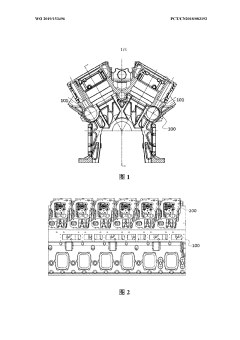
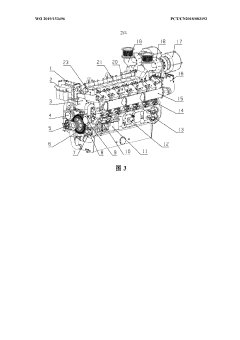
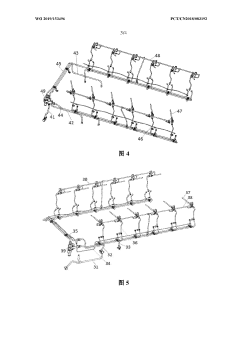
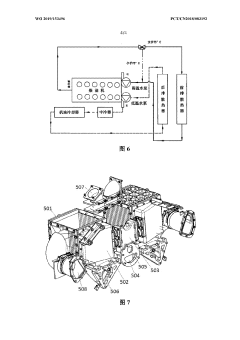
- It adopts a V-shaped 12-cylinder diesel engine design, including a V-shaped cylinder block, 12 single cylinder heads, an electronically controlled single pump diesel supply system, an air intake system and a high and low temperature water separate cooling system to achieve double-sided oil supply, supercharged cooling and Classified cooling to improve the power and performance of diesel engines.
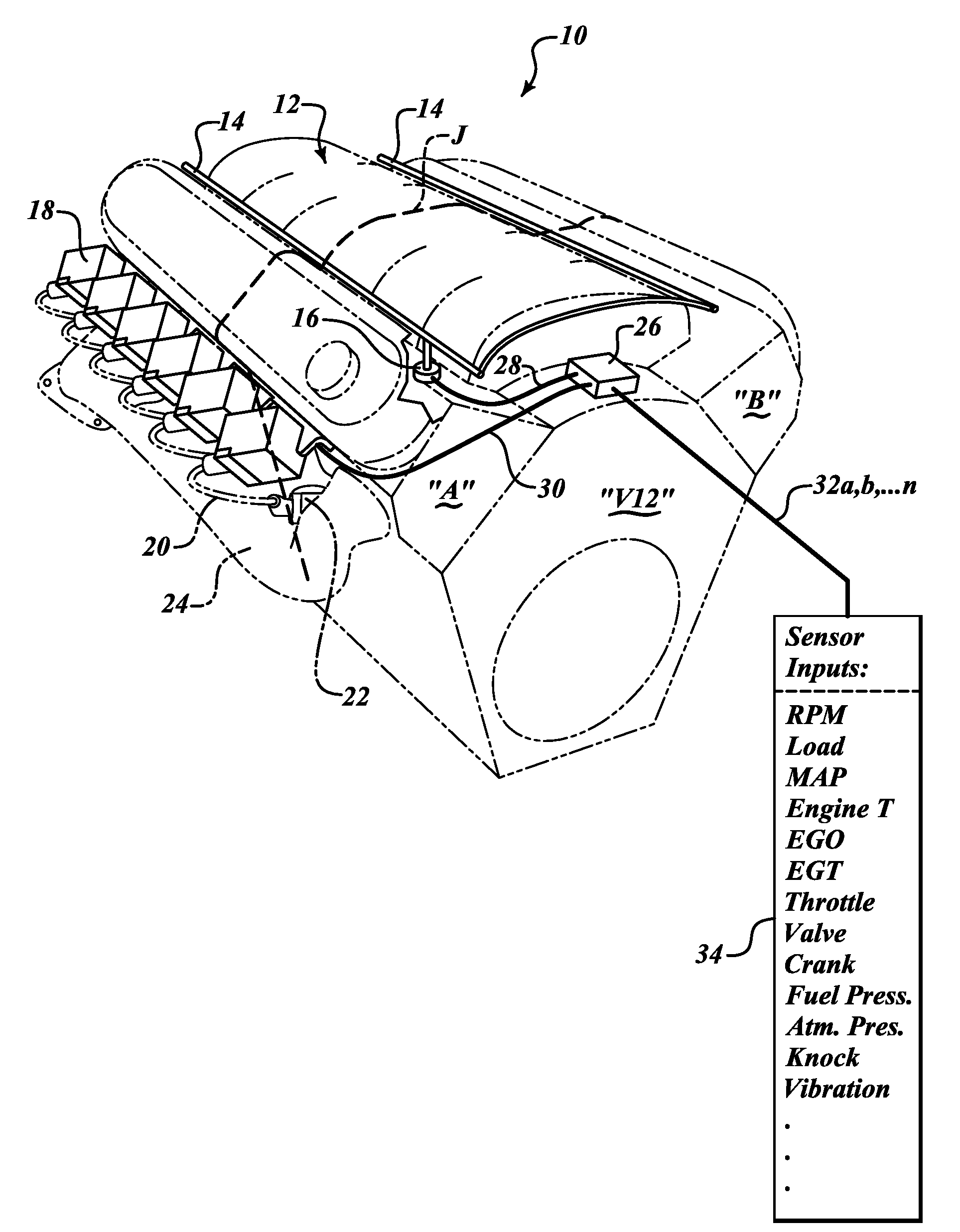
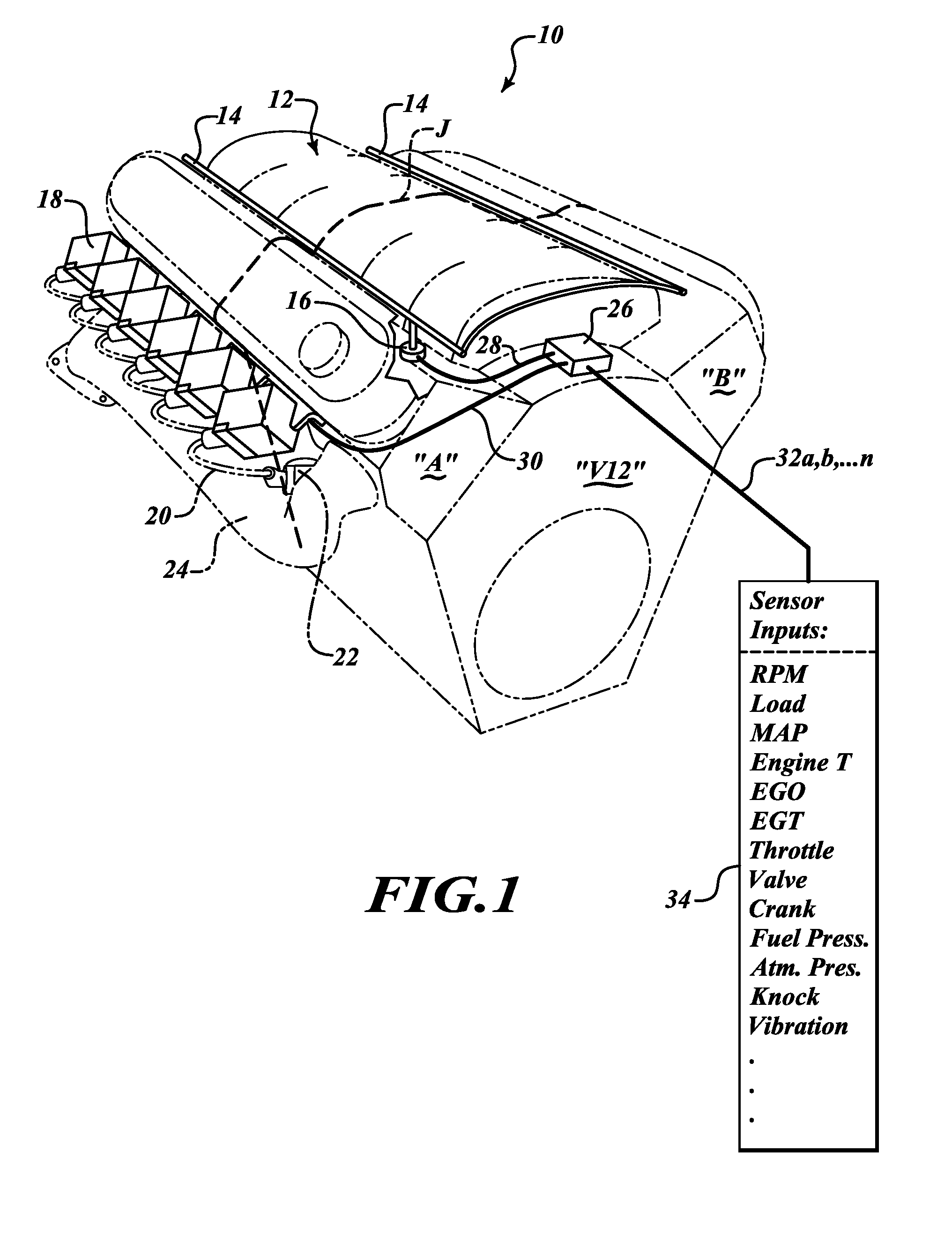
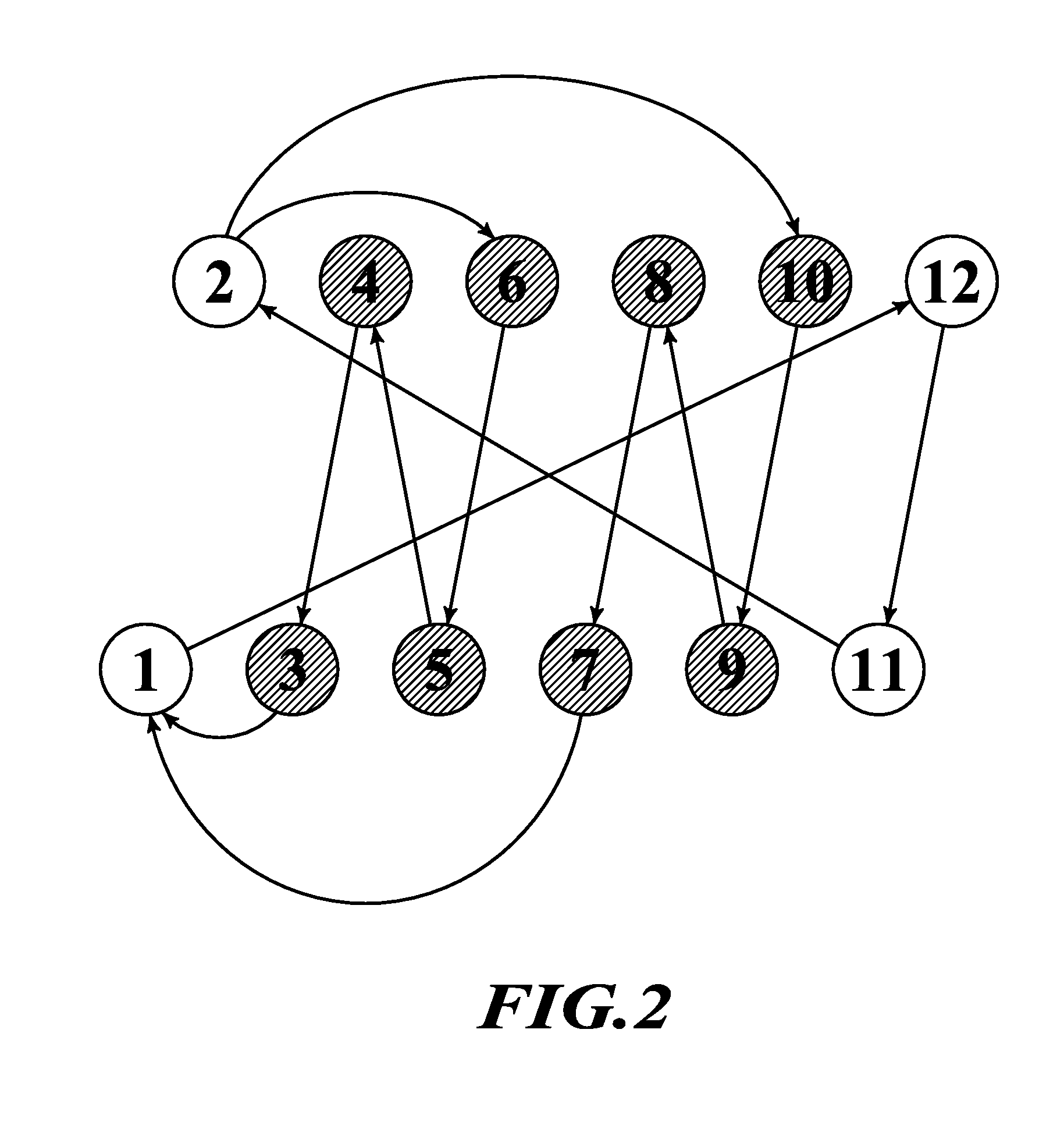
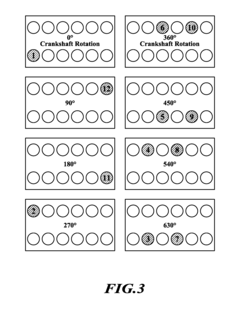
Even fire 90a°v12 IC engines, fueling and firing sequence controllers, and methods of operation by PS/p technology and IFR compensation by fuel feed control
PatentInactiveUS20090099755A1
Innovation
- Implementing a Progressive Single/Pair (PS/P) fueling and firing sequence in a 90° V12 engine, controlled by a Powertrain Control Module (PCM), which allows for Even Fire operation by selectively reducing fuel feed to specific cylinders during imbalance frequency ranges, effectively converting the engine to a balanced V8 operation during peak vibrations.
Environmental Impact of V12 Engines
The environmental impact of V12 engines is a critical consideration in the context of specialized applications. These powerful engines, while offering exceptional performance, have traditionally been associated with high fuel consumption and significant emissions. However, recent technological advancements have led to improvements in their environmental footprint.
V12 engines typically produce higher levels of carbon dioxide (CO2) emissions compared to smaller engines due to their increased fuel consumption. This is particularly relevant in the automotive sector, where stringent emissions regulations are becoming increasingly common worldwide. In specialized applications such as luxury vehicles, marine propulsion, and aviation, the environmental impact of V12 engines is often more pronounced due to their larger size and power output.
Despite these challenges, manufacturers have made significant strides in improving the environmental performance of V12 engines. Advanced fuel injection systems, variable valve timing, and cylinder deactivation technologies have contributed to enhanced fuel efficiency and reduced emissions. Some V12 engines now incorporate start-stop systems and mild hybrid technology to further minimize their environmental impact during idle periods and low-speed operation.
In the marine sector, V12 engines are being optimized for cleaner fuels such as liquefied natural gas (LNG), which can significantly reduce sulfur oxide and particulate matter emissions. Similarly, in aviation, research is ongoing to develop more sustainable fuel alternatives for V12 engines, including biofuels and synthetic fuels, which could potentially lower their carbon footprint.
The manufacturing process of V12 engines also contributes to their overall environmental impact. The production of these complex powerplants requires substantial resources and energy. However, advancements in manufacturing techniques, such as 3D printing and the use of lightweight materials, are helping to reduce the environmental burden of production.
Recycling and end-of-life considerations are becoming increasingly important aspects of V12 engine environmental impact. Manufacturers are developing strategies to improve the recyclability of engine components and reduce waste. This includes the use of more easily recyclable materials and designing engines with disassembly and material recovery in mind.
As environmental regulations continue to tighten globally, the future of V12 engines in specialized applications will likely depend on further innovations in emission reduction technologies and the development of alternative power sources. While their environmental impact remains a concern, ongoing research and development efforts are focused on making V12 engines more compatible with sustainability goals without compromising their performance characteristics.
V12 engines typically produce higher levels of carbon dioxide (CO2) emissions compared to smaller engines due to their increased fuel consumption. This is particularly relevant in the automotive sector, where stringent emissions regulations are becoming increasingly common worldwide. In specialized applications such as luxury vehicles, marine propulsion, and aviation, the environmental impact of V12 engines is often more pronounced due to their larger size and power output.
Despite these challenges, manufacturers have made significant strides in improving the environmental performance of V12 engines. Advanced fuel injection systems, variable valve timing, and cylinder deactivation technologies have contributed to enhanced fuel efficiency and reduced emissions. Some V12 engines now incorporate start-stop systems and mild hybrid technology to further minimize their environmental impact during idle periods and low-speed operation.
In the marine sector, V12 engines are being optimized for cleaner fuels such as liquefied natural gas (LNG), which can significantly reduce sulfur oxide and particulate matter emissions. Similarly, in aviation, research is ongoing to develop more sustainable fuel alternatives for V12 engines, including biofuels and synthetic fuels, which could potentially lower their carbon footprint.
The manufacturing process of V12 engines also contributes to their overall environmental impact. The production of these complex powerplants requires substantial resources and energy. However, advancements in manufacturing techniques, such as 3D printing and the use of lightweight materials, are helping to reduce the environmental burden of production.
Recycling and end-of-life considerations are becoming increasingly important aspects of V12 engine environmental impact. Manufacturers are developing strategies to improve the recyclability of engine components and reduce waste. This includes the use of more easily recyclable materials and designing engines with disassembly and material recovery in mind.
As environmental regulations continue to tighten globally, the future of V12 engines in specialized applications will likely depend on further innovations in emission reduction technologies and the development of alternative power sources. While their environmental impact remains a concern, ongoing research and development efforts are focused on making V12 engines more compatible with sustainability goals without compromising their performance characteristics.
V12 Engine Performance Metrics
V12 engines are renowned for their exceptional performance characteristics, making them a preferred choice for specialized applications that demand high power output and smooth operation. These engines typically deliver impressive horsepower and torque figures, with many modern V12 configurations producing over 600 horsepower and 500 lb-ft of torque. The power delivery is remarkably linear, providing consistent acceleration across the entire RPM range.
One of the key performance metrics of V12 engines is their high redline, often exceeding 8,000 RPM. This allows for extended power bands and contributes to their exhilarating performance in high-speed applications. The inherent balance of the V12 configuration results in minimal vibration, even at high RPMs, ensuring a refined driving experience.
Fuel efficiency, while not the primary focus of V12 engines, has seen improvements in recent years. Advanced technologies such as direct injection, variable valve timing, and cylinder deactivation have helped reduce fuel consumption without compromising performance. However, V12 engines still typically consume more fuel than smaller configurations, with average fuel economy figures ranging from 12 to 18 mpg in combined driving conditions.
Acceleration metrics for V12-powered vehicles are often impressive, with many capable of achieving 0-60 mph times under 3.5 seconds. Top speeds frequently exceed 200 mph, showcasing the engine's capability in high-performance applications. These figures vary depending on the specific application and vehicle weight, but generally outperform most other engine configurations.
Thermal efficiency is another crucial metric for V12 engines. Modern designs have achieved thermal efficiencies approaching 40%, a significant improvement over earlier generations. This enhanced efficiency translates to better overall performance and reduced heat waste.
Emissions performance has become increasingly important in recent years. V12 engines have adapted to stricter regulations through the implementation of advanced exhaust after-treatment systems, including catalytic converters and particulate filters. While they still produce higher emissions compared to smaller engines, many modern V12s meet current Euro 6 and EPA Tier 3 standards.
Durability and longevity are notable strengths of V12 engines. When properly maintained, these engines can often exceed 200,000 miles before requiring major overhauls, testament to their robust design and construction. This longevity is particularly valuable in specialized applications where reliability is paramount.
One of the key performance metrics of V12 engines is their high redline, often exceeding 8,000 RPM. This allows for extended power bands and contributes to their exhilarating performance in high-speed applications. The inherent balance of the V12 configuration results in minimal vibration, even at high RPMs, ensuring a refined driving experience.
Fuel efficiency, while not the primary focus of V12 engines, has seen improvements in recent years. Advanced technologies such as direct injection, variable valve timing, and cylinder deactivation have helped reduce fuel consumption without compromising performance. However, V12 engines still typically consume more fuel than smaller configurations, with average fuel economy figures ranging from 12 to 18 mpg in combined driving conditions.
Acceleration metrics for V12-powered vehicles are often impressive, with many capable of achieving 0-60 mph times under 3.5 seconds. Top speeds frequently exceed 200 mph, showcasing the engine's capability in high-performance applications. These figures vary depending on the specific application and vehicle weight, but generally outperform most other engine configurations.
Thermal efficiency is another crucial metric for V12 engines. Modern designs have achieved thermal efficiencies approaching 40%, a significant improvement over earlier generations. This enhanced efficiency translates to better overall performance and reduced heat waste.
Emissions performance has become increasingly important in recent years. V12 engines have adapted to stricter regulations through the implementation of advanced exhaust after-treatment systems, including catalytic converters and particulate filters. While they still produce higher emissions compared to smaller engines, many modern V12s meet current Euro 6 and EPA Tier 3 standards.
Durability and longevity are notable strengths of V12 engines. When properly maintained, these engines can often exceed 200,000 miles before requiring major overhauls, testament to their robust design and construction. This longevity is particularly valuable in specialized applications where reliability is paramount.
Unlock deeper insights with PatSnap Eureka Quick Research — get a full tech report to explore trends and direct your research. Try now!
Generate Your Research Report Instantly with AI Agent
Supercharge your innovation with PatSnap Eureka AI Agent Platform!