

V8 Engine Assembly: Precise Steps and Components
JUL 4, 20258 MIN READ
Generate Your Research Report Instantly with AI Agent
PatSnap Eureka helps you evaluate technical feasibility & market potential.
V8 Engine Evolution
The V8 engine has undergone significant evolution since its inception in the early 20th century. Initially developed by Cadillac in 1914, this engine configuration quickly gained popularity due to its compact design and smooth power delivery. The early V8 engines were relatively simple, with flathead designs and low compression ratios, but they laid the foundation for future advancements.
In the 1930s and 1940s, the introduction of overhead valve (OHV) designs marked a major leap forward in V8 technology. This allowed for higher compression ratios and improved efficiency. The post-World War II era saw rapid development, with manufacturers like Chevrolet and Ford introducing iconic V8 engines that would define the American automotive landscape for decades to come.
The 1960s and 1970s witnessed the pinnacle of V8 performance in the muscle car era. Engines grew larger and more powerful, with displacements reaching up to 7.0 liters or more. However, this period also saw the beginning of a shift towards efficiency and emissions control, driven by stricter regulations and the oil crisis.
The 1980s and 1990s brought significant changes to V8 design. Electronic fuel injection replaced carburetors, improving fuel economy and emissions. Computer-controlled engine management systems became standard, allowing for more precise control over engine operations. Manufacturers also began experimenting with overhead cam designs and variable valve timing to further enhance performance and efficiency.
In recent decades, V8 engines have continued to evolve with a focus on balancing power and efficiency. Technologies such as direct fuel injection, cylinder deactivation, and turbocharging have allowed V8 engines to maintain high performance while meeting increasingly stringent emissions standards. Some manufacturers have even developed hybrid V8 powertrains, combining traditional internal combustion with electric motors.
The latest advancements in V8 technology include the use of lightweight materials like aluminum and carbon fiber to reduce engine weight. Additionally, advanced manufacturing techniques such as 3D printing are being employed to create more complex and efficient internal components. The integration of start-stop systems and mild hybrid technology has further improved the efficiency of modern V8 engines.
Looking towards the future, V8 engines face challenges from stricter emissions regulations and the shift towards electrification. However, ongoing research into synthetic fuels and hydrogen combustion may provide new avenues for V8 development. As the automotive industry continues to evolve, the V8 engine remains an icon of performance and engineering, adapting to new technologies while maintaining its distinctive character and appeal.
In the 1930s and 1940s, the introduction of overhead valve (OHV) designs marked a major leap forward in V8 technology. This allowed for higher compression ratios and improved efficiency. The post-World War II era saw rapid development, with manufacturers like Chevrolet and Ford introducing iconic V8 engines that would define the American automotive landscape for decades to come.
The 1960s and 1970s witnessed the pinnacle of V8 performance in the muscle car era. Engines grew larger and more powerful, with displacements reaching up to 7.0 liters or more. However, this period also saw the beginning of a shift towards efficiency and emissions control, driven by stricter regulations and the oil crisis.
The 1980s and 1990s brought significant changes to V8 design. Electronic fuel injection replaced carburetors, improving fuel economy and emissions. Computer-controlled engine management systems became standard, allowing for more precise control over engine operations. Manufacturers also began experimenting with overhead cam designs and variable valve timing to further enhance performance and efficiency.
In recent decades, V8 engines have continued to evolve with a focus on balancing power and efficiency. Technologies such as direct fuel injection, cylinder deactivation, and turbocharging have allowed V8 engines to maintain high performance while meeting increasingly stringent emissions standards. Some manufacturers have even developed hybrid V8 powertrains, combining traditional internal combustion with electric motors.
The latest advancements in V8 technology include the use of lightweight materials like aluminum and carbon fiber to reduce engine weight. Additionally, advanced manufacturing techniques such as 3D printing are being employed to create more complex and efficient internal components. The integration of start-stop systems and mild hybrid technology has further improved the efficiency of modern V8 engines.
Looking towards the future, V8 engines face challenges from stricter emissions regulations and the shift towards electrification. However, ongoing research into synthetic fuels and hydrogen combustion may provide new avenues for V8 development. As the automotive industry continues to evolve, the V8 engine remains an icon of performance and engineering, adapting to new technologies while maintaining its distinctive character and appeal.
Market Demand Analysis
The market demand for V8 engine assembly has shown significant growth in recent years, driven by the automotive industry's continuous pursuit of high-performance vehicles and the increasing popularity of luxury sports cars. This demand is particularly strong in developed markets such as North America, Europe, and parts of Asia, where consumers value power, speed, and the distinctive sound associated with V8 engines.
In the automotive sector, V8 engines are predominantly used in high-end sports cars, luxury sedans, and powerful SUVs. The market for these vehicles has been expanding, especially in emerging economies where rising disposable incomes have led to increased demand for premium automobiles. Additionally, the motorsport industry continues to be a significant driver of V8 engine demand, with many racing series still relying on V8 configurations for their combination of power and reliability.
However, the market is not without challenges. Stringent emissions regulations and a global push towards fuel efficiency have put pressure on manufacturers to innovate and improve V8 engine technology. This has led to the development of more efficient V8 engines, often incorporating technologies such as cylinder deactivation, turbocharging, and hybrid systems to meet environmental standards while maintaining performance.
The aftermarket and restoration sectors also contribute significantly to the demand for V8 engine assembly. Classic car enthusiasts and custom vehicle builders often seek V8 engines for their projects, creating a steady market for both new and refurbished V8 components.
In terms of market size, the global V8 engine market represents a substantial portion of the overall automotive engine market. While exact figures vary depending on the source and methodology, industry reports consistently indicate a multi-billion dollar market value for V8 engines and related components.
Looking ahead, the market for V8 engine assembly is expected to evolve. While there is a clear trend towards electrification in the automotive industry, V8 engines are likely to maintain a niche but significant market presence. Manufacturers are investing in research and development to create more efficient and environmentally friendly V8 engines, ensuring their relevance in a changing automotive landscape.
The precision and complexity involved in V8 engine assembly also drive demand for specialized tools, advanced manufacturing processes, and skilled labor. This creates additional market opportunities in the supply chain and workforce development sectors, further expanding the economic impact of V8 engine production and assembly.
In the automotive sector, V8 engines are predominantly used in high-end sports cars, luxury sedans, and powerful SUVs. The market for these vehicles has been expanding, especially in emerging economies where rising disposable incomes have led to increased demand for premium automobiles. Additionally, the motorsport industry continues to be a significant driver of V8 engine demand, with many racing series still relying on V8 configurations for their combination of power and reliability.
However, the market is not without challenges. Stringent emissions regulations and a global push towards fuel efficiency have put pressure on manufacturers to innovate and improve V8 engine technology. This has led to the development of more efficient V8 engines, often incorporating technologies such as cylinder deactivation, turbocharging, and hybrid systems to meet environmental standards while maintaining performance.
The aftermarket and restoration sectors also contribute significantly to the demand for V8 engine assembly. Classic car enthusiasts and custom vehicle builders often seek V8 engines for their projects, creating a steady market for both new and refurbished V8 components.
In terms of market size, the global V8 engine market represents a substantial portion of the overall automotive engine market. While exact figures vary depending on the source and methodology, industry reports consistently indicate a multi-billion dollar market value for V8 engines and related components.
Looking ahead, the market for V8 engine assembly is expected to evolve. While there is a clear trend towards electrification in the automotive industry, V8 engines are likely to maintain a niche but significant market presence. Manufacturers are investing in research and development to create more efficient and environmentally friendly V8 engines, ensuring their relevance in a changing automotive landscape.
The precision and complexity involved in V8 engine assembly also drive demand for specialized tools, advanced manufacturing processes, and skilled labor. This creates additional market opportunities in the supply chain and workforce development sectors, further expanding the economic impact of V8 engine production and assembly.
Technical Challenges
The assembly of a V8 engine presents several technical challenges that require precision, expertise, and advanced manufacturing techniques. One of the primary difficulties lies in achieving and maintaining tight tolerances across multiple components. The intricate design of a V8 engine demands exceptional accuracy in the machining and fitting of parts, as even minor deviations can lead to significant performance issues or engine failure.
Balancing the crankshaft is a particularly complex task in V8 engine assembly. The crankshaft must be perfectly balanced to minimize vibrations and ensure smooth operation across a wide range of engine speeds. This process involves precise measurements and adjustments, often requiring specialized equipment and skilled technicians.
Another challenge is the alignment of the camshafts, especially in overhead cam designs. Proper timing and synchronization between the camshafts and the crankshaft are critical for optimal engine performance. Achieving this alignment requires meticulous attention to detail during assembly and often involves the use of advanced timing tools and techniques.
The installation of piston rings presents its own set of challenges. These components must be installed with the correct orientation and tension to ensure proper sealing and oil control. The risk of ring breakage during installation is high, necessitating careful handling and specialized tools.
Sealing the engine against oil and coolant leaks is another significant challenge. The numerous gaskets and seals in a V8 engine must be installed correctly to prevent fluid loss and maintain proper engine operation. This task is complicated by the high temperatures and pressures experienced within the engine, which can cause seals to degrade over time.
The assembly of the valve train components, including valves, springs, and lifters, requires precise adjustment to ensure proper valve timing and clearances. This process is critical for engine efficiency and longevity but can be time-consuming and requires specialized knowledge and tools.
Lastly, the integration of modern electronic systems into V8 engines adds another layer of complexity to the assembly process. Sensors, wiring harnesses, and control modules must be carefully installed and calibrated to work in harmony with the mechanical components of the engine.
These technical challenges underscore the need for highly skilled technicians, advanced manufacturing processes, and rigorous quality control measures in V8 engine assembly. Overcoming these obstacles is essential for producing high-performance, reliable engines that meet the demanding standards of modern automotive applications.
Balancing the crankshaft is a particularly complex task in V8 engine assembly. The crankshaft must be perfectly balanced to minimize vibrations and ensure smooth operation across a wide range of engine speeds. This process involves precise measurements and adjustments, often requiring specialized equipment and skilled technicians.
Another challenge is the alignment of the camshafts, especially in overhead cam designs. Proper timing and synchronization between the camshafts and the crankshaft are critical for optimal engine performance. Achieving this alignment requires meticulous attention to detail during assembly and often involves the use of advanced timing tools and techniques.
The installation of piston rings presents its own set of challenges. These components must be installed with the correct orientation and tension to ensure proper sealing and oil control. The risk of ring breakage during installation is high, necessitating careful handling and specialized tools.
Sealing the engine against oil and coolant leaks is another significant challenge. The numerous gaskets and seals in a V8 engine must be installed correctly to prevent fluid loss and maintain proper engine operation. This task is complicated by the high temperatures and pressures experienced within the engine, which can cause seals to degrade over time.
The assembly of the valve train components, including valves, springs, and lifters, requires precise adjustment to ensure proper valve timing and clearances. This process is critical for engine efficiency and longevity but can be time-consuming and requires specialized knowledge and tools.
Lastly, the integration of modern electronic systems into V8 engines adds another layer of complexity to the assembly process. Sensors, wiring harnesses, and control modules must be carefully installed and calibrated to work in harmony with the mechanical components of the engine.
These technical challenges underscore the need for highly skilled technicians, advanced manufacturing processes, and rigorous quality control measures in V8 engine assembly. Overcoming these obstacles is essential for producing high-performance, reliable engines that meet the demanding standards of modern automotive applications.
Current Assembly Methods
01 Cylinder block and crankcase assembly
The V8 engine assembly involves the integration of the cylinder block and crankcase. This forms the core structure of the engine, housing the cylinders, crankshaft, and other essential components. The design focuses on optimizing strength, weight, and cooling efficiency.- Cylinder block and crankcase assembly: The V8 engine assembly involves the integration of the cylinder block and crankcase. This forms the core structure of the engine, housing the cylinders, crankshaft, and other essential components. The design focuses on optimizing strength, weight, and cooling efficiency to enhance overall engine performance.
- Valve train and camshaft configuration: The valve train system in V8 engines includes camshafts, valves, and related components. Various configurations are employed to optimize engine breathing and performance. This may involve overhead camshafts, pushrod systems, or variable valve timing mechanisms to enhance power output and efficiency across different operating conditions.
- Fuel injection and intake system: Modern V8 engines utilize advanced fuel injection systems and intake manifolds to optimize fuel delivery and air-fuel mixture. This includes direct injection technology, variable intake geometry, and electronic control systems to improve combustion efficiency, power output, and emissions performance across a wide range of operating conditions.
- Cooling and lubrication systems: Effective cooling and lubrication are crucial for V8 engine performance and longevity. Advanced cooling systems may incorporate precision coolant flow control and targeted cooling for high-stress areas. Lubrication systems are designed to ensure proper oil distribution to all moving parts, even under high-performance conditions or varying engine orientations.
- Engine balancing and vibration reduction: V8 engines require careful balancing to minimize vibrations and ensure smooth operation. This involves precise design of counterweights on the crankshaft, as well as the use of balance shafts in some configurations. Advanced materials and manufacturing techniques are employed to reduce reciprocating mass and improve overall engine balance.
02 Valve train and camshaft configuration
The valve train system in V8 engines includes camshafts, valves, and related components. Various configurations are employed to optimize engine performance, including overhead valve (OHV) and overhead camshaft (OHC) designs. The arrangement of these components significantly impacts engine efficiency and power output.Expand Specific Solutions03 Fuel injection and ignition system
Modern V8 engines incorporate advanced fuel injection and ignition systems. These components are crucial for precise fuel delivery and combustion timing. The integration of electronic control units (ECUs) allows for optimized engine performance, improved fuel efficiency, and reduced emissions.Expand Specific Solutions04 Cooling and lubrication systems
Effective cooling and lubrication are essential for V8 engine performance and longevity. The assembly includes water jackets, oil passages, and related components to ensure proper heat dissipation and lubrication throughout the engine. Advanced designs may incorporate oil-cooled pistons or integrated cooling channels.Expand Specific Solutions05 Engine balancing and vibration reduction
V8 engines require careful balancing to minimize vibrations and ensure smooth operation. This involves the design and placement of counterweights on the crankshaft, as well as the integration of balance shafts in some configurations. Advanced materials and manufacturing techniques are employed to reduce overall engine weight while maintaining structural integrity.Expand Specific Solutions
Key Industry Players
The V8 engine assembly market is in a mature stage, with established players dominating the industry. The global market size for V8 engines is substantial, driven by demand in high-performance vehicles and luxury segments. Technologically, V8 engines are well-developed, with major manufacturers like GM, Ford, and Honda continuously refining their designs. Companies such as Jaguar Land Rover, Nissan, and BMW are also significant players, focusing on performance and efficiency improvements. The competitive landscape is characterized by ongoing innovation in areas like fuel efficiency, power output, and emissions reduction, with companies like Caterpillar and MAN Truck & Bus expanding applications beyond automotive into industrial and commercial sectors.
GM Global Technology Operations LLC
Technical Solution: GM's V8 engine assembly process incorporates advanced robotics and precision automation. Their system utilizes a modular approach, allowing for flexible manufacturing of various V8 configurations on the same line. Key steps include block preparation, crankshaft installation, cylinder head mounting, and final testing. GM employs real-time quality control measures, using sensors and machine vision to ensure proper torque application and component alignment throughout the assembly process[1][3]. The company has also implemented AI-driven predictive maintenance to minimize downtime and optimize production efficiency.
Strengths: Highly automated process, flexible manufacturing capabilities, and advanced quality control. Weaknesses: High initial investment costs and potential over-reliance on technology.
Ford Global Technologies LLC
Technical Solution: Ford's V8 engine assembly incorporates a mix of human expertise and cutting-edge automation. Their process begins with precision machining of the engine block and cylinder heads. Ford utilizes a unique "cell manufacturing" approach, where small teams are responsible for specific assembly stages, enhancing quality control and worker engagement[2]. The company employs advanced torque monitoring systems to ensure proper bolt tightening sequences and pressures. Ford has also developed a proprietary coolant filling system that minimizes air pockets, improving engine cooling efficiency. The final assembly includes a comprehensive cold test to verify proper operation before the engine leaves the line[4].
Strengths: Balanced approach combining human skill and automation, innovative cell manufacturing, and advanced testing procedures. Weaknesses: Potential for human error in some stages and higher labor costs compared to fully automated systems.
Critical Components
V8 engine
PatentWO2021171405A1
Innovation
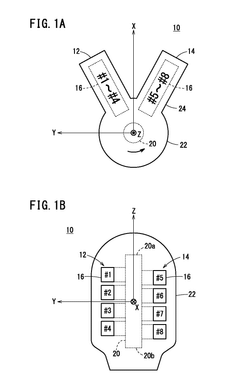
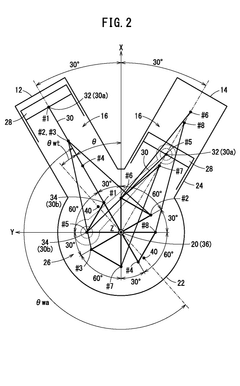
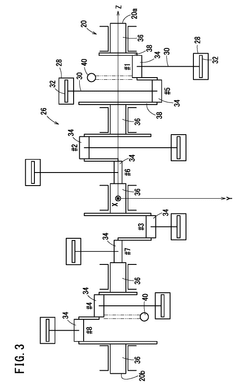
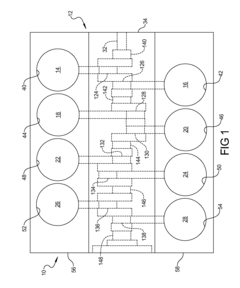
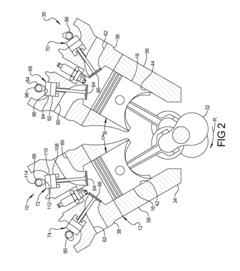
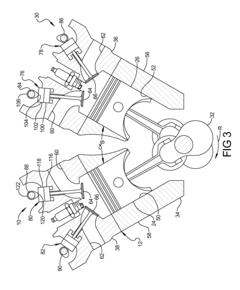
- The engine is configured with a 60° bank angle, where crank pins on one bank are arranged at 90° intervals and offset by 60° from the other bank, allowing for cancellation of the primary inertia couple without additional special parts, and the ignition timing is set to achieve balanced explosions similar to conventional V8 engines.

Engine assembly including crankshaft for v8 arrangement
PatentInactiveUS20120210958A1
Innovation
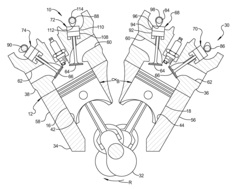
- A V8 engine crankshaft design with rotationally offset and aligned crank pins, allowing for primary balance without balance shafts and maintaining consistent firing intervals across all eight cylinders, as well as during operation with six or seven cylinders, through a specific arrangement of crank pins and bearing journals.
Quality Control Measures
Quality control measures are paramount in the assembly of V8 engines to ensure optimal performance, reliability, and safety. The process begins with rigorous inspection of incoming components, utilizing advanced measurement tools and non-destructive testing methods to verify dimensional accuracy and material integrity. Each part is subjected to stringent tolerance checks, with particular attention paid to critical components such as crankshafts, camshafts, and cylinder heads.
During assembly, multiple quality checkpoints are established at key stages. Precision torque tools are employed to ensure proper tightening of bolts and fasteners, with each torque value electronically recorded for traceability. Specialized gauges and alignment tools are used to verify correct positioning of components, especially for bearing clearances and valve train geometry.
Leak testing is conducted at various stages of assembly, including pressure testing of the cooling system, oil galleries, and intake manifold to detect any potential flaws. Advanced imaging techniques, such as borescope inspections, are utilized to examine internal engine surfaces for defects or contamination that could compromise performance.
As assembly progresses, functional tests are performed on subsystems. This includes verifying proper operation of the oil pump, fuel system components, and valve timing mechanisms. Electronic diagnostic tools are employed to check sensor functionality and calibrate engine management systems.
The final quality control measure involves comprehensive dynamometer testing of the fully assembled engine. This process evaluates power output, fuel efficiency, emissions, and overall performance across various operating conditions. Vibration analysis and acoustic testing are conducted to identify any abnormalities that may indicate assembly issues or component defects.
Throughout the assembly process, statistical process control (SPC) methods are implemented to monitor key quality indicators and detect trends that may signal potential issues. This data-driven approach allows for continuous improvement of the assembly process and early identification of any deviations from quality standards.
Traceability is maintained through the use of unique identifiers for each engine, with detailed records of component serial numbers, assembly personnel, and test results. This comprehensive documentation ensures accountability and facilitates rapid response to any quality concerns that may arise post-production.
During assembly, multiple quality checkpoints are established at key stages. Precision torque tools are employed to ensure proper tightening of bolts and fasteners, with each torque value electronically recorded for traceability. Specialized gauges and alignment tools are used to verify correct positioning of components, especially for bearing clearances and valve train geometry.
Leak testing is conducted at various stages of assembly, including pressure testing of the cooling system, oil galleries, and intake manifold to detect any potential flaws. Advanced imaging techniques, such as borescope inspections, are utilized to examine internal engine surfaces for defects or contamination that could compromise performance.
As assembly progresses, functional tests are performed on subsystems. This includes verifying proper operation of the oil pump, fuel system components, and valve timing mechanisms. Electronic diagnostic tools are employed to check sensor functionality and calibrate engine management systems.
The final quality control measure involves comprehensive dynamometer testing of the fully assembled engine. This process evaluates power output, fuel efficiency, emissions, and overall performance across various operating conditions. Vibration analysis and acoustic testing are conducted to identify any abnormalities that may indicate assembly issues or component defects.
Throughout the assembly process, statistical process control (SPC) methods are implemented to monitor key quality indicators and detect trends that may signal potential issues. This data-driven approach allows for continuous improvement of the assembly process and early identification of any deviations from quality standards.
Traceability is maintained through the use of unique identifiers for each engine, with detailed records of component serial numbers, assembly personnel, and test results. This comprehensive documentation ensures accountability and facilitates rapid response to any quality concerns that may arise post-production.
Environmental Impact
The environmental impact of V8 engine assembly is a critical consideration in the automotive industry's pursuit of sustainability. The production process involves several stages that contribute to environmental concerns, primarily through energy consumption, resource utilization, and waste generation.
Energy consumption during V8 engine assembly is significant, with high-powered machinery and precision tools requiring substantial electricity. This energy demand often relies on fossil fuel-based power sources, contributing to greenhouse gas emissions. Additionally, the heating and cooling systems necessary for maintaining optimal assembly conditions further increase the carbon footprint of the production process.
Material usage in V8 engine assembly also poses environmental challenges. The production of engine components, such as cylinder blocks, crankshafts, and pistons, requires the extraction and processing of raw materials, including metals like aluminum, steel, and various alloys. These processes are resource-intensive and can lead to habitat destruction, soil erosion, and water pollution in mining areas.
The use of lubricants, coolants, and other chemical substances during assembly presents potential risks to the environment. Improper handling or disposal of these materials can result in soil and water contamination. Furthermore, the production of these chemicals often involves petrochemical processes, which have their own set of environmental implications.
Waste management is another crucial aspect of V8 engine assembly's environmental impact. The production process generates various types of waste, including metal shavings, packaging materials, and defective parts. While many of these materials can be recycled, the recycling processes themselves require energy and resources. Proper disposal of non-recyclable waste is essential to prevent environmental contamination.
Air quality is also affected by V8 engine assembly operations. Machining processes, painting, and the use of volatile organic compounds (VOCs) in various stages of production can release particulate matter and harmful gases into the atmosphere. These emissions contribute to air pollution and can have adverse effects on local ecosystems and human health.
To mitigate these environmental impacts, many automotive manufacturers are implementing sustainable practices in their V8 engine assembly processes. These include adopting energy-efficient machinery, implementing closed-loop recycling systems, using eco-friendly materials and lubricants, and investing in renewable energy sources for production facilities. Additionally, advancements in precision manufacturing techniques are helping to reduce material waste and improve overall production efficiency.
Energy consumption during V8 engine assembly is significant, with high-powered machinery and precision tools requiring substantial electricity. This energy demand often relies on fossil fuel-based power sources, contributing to greenhouse gas emissions. Additionally, the heating and cooling systems necessary for maintaining optimal assembly conditions further increase the carbon footprint of the production process.
Material usage in V8 engine assembly also poses environmental challenges. The production of engine components, such as cylinder blocks, crankshafts, and pistons, requires the extraction and processing of raw materials, including metals like aluminum, steel, and various alloys. These processes are resource-intensive and can lead to habitat destruction, soil erosion, and water pollution in mining areas.
The use of lubricants, coolants, and other chemical substances during assembly presents potential risks to the environment. Improper handling or disposal of these materials can result in soil and water contamination. Furthermore, the production of these chemicals often involves petrochemical processes, which have their own set of environmental implications.
Waste management is another crucial aspect of V8 engine assembly's environmental impact. The production process generates various types of waste, including metal shavings, packaging materials, and defective parts. While many of these materials can be recycled, the recycling processes themselves require energy and resources. Proper disposal of non-recyclable waste is essential to prevent environmental contamination.
Air quality is also affected by V8 engine assembly operations. Machining processes, painting, and the use of volatile organic compounds (VOCs) in various stages of production can release particulate matter and harmful gases into the atmosphere. These emissions contribute to air pollution and can have adverse effects on local ecosystems and human health.
To mitigate these environmental impacts, many automotive manufacturers are implementing sustainable practices in their V8 engine assembly processes. These include adopting energy-efficient machinery, implementing closed-loop recycling systems, using eco-friendly materials and lubricants, and investing in renewable energy sources for production facilities. Additionally, advancements in precision manufacturing techniques are helping to reduce material waste and improve overall production efficiency.
Unlock deeper insights with PatSnap Eureka Quick Research — get a full tech report to explore trends and direct your research. Try now!
Generate Your Research Report Instantly with AI Agent
Supercharge your innovation with PatSnap Eureka AI Agent Platform!