V8 Engine Influence on Global Distribution and Logistics Models
JUL 4, 20259 MIN READ
Generate Your Research Report Instantly with AI Agent
Patsnap Eureka helps you evaluate technical feasibility & market potential.
V8 Engine Evolution and Objectives
The V8 engine, a powerful and iconic internal combustion engine configuration, has played a significant role in shaping global distribution and logistics models since its inception. This technology has evolved considerably over the years, influencing various aspects of transportation and supply chain management.
The development of the V8 engine can be traced back to the early 20th century, with its widespread adoption in the automotive industry occurring in the 1930s and 1940s. Initially designed for high-performance vehicles, the V8 engine quickly became a symbol of power and efficiency in transportation. As the technology progressed, it found applications beyond personal vehicles, extending to commercial trucks, marine vessels, and even aircraft.
The evolution of the V8 engine has been driven by several key objectives. Primarily, manufacturers have sought to improve fuel efficiency while maintaining or enhancing power output. This goal has led to the development of advanced fuel injection systems, variable valve timing, and cylinder deactivation technologies. Another critical objective has been to reduce emissions, in response to increasingly stringent environmental regulations worldwide.
In the context of global distribution and logistics, the V8 engine's evolution has had far-reaching implications. Its power-to-weight ratio and reliability have made it a preferred choice for long-haul trucking, enabling faster and more efficient transportation of goods across vast distances. This has contributed to the expansion of global trade networks and the development of just-in-time inventory systems.
The ongoing technological advancements in V8 engines have also influenced logistics planning and route optimization. Improved fuel efficiency has allowed for longer travel distances without refueling, while enhanced durability has reduced maintenance downtime. These factors have collectively reshaped distribution strategies, enabling companies to streamline their supply chains and reduce operational costs.
Looking ahead, the objectives for V8 engine development continue to evolve. There is a growing focus on integrating hybrid and electric technologies with traditional V8 configurations to further improve efficiency and reduce environmental impact. Additionally, the advent of autonomous vehicles presents new challenges and opportunities for V8 engine design, particularly in the realm of long-haul trucking and logistics.
As we move towards a more sustainable future, the V8 engine faces the challenge of adapting to a changing energy landscape. The industry is exploring alternative fuels and advanced materials to ensure the continued relevance of this powerful engine configuration in global distribution and logistics models. The ultimate goal is to balance the V8's renowned performance characteristics with the demands of a more environmentally conscious world.
The development of the V8 engine can be traced back to the early 20th century, with its widespread adoption in the automotive industry occurring in the 1930s and 1940s. Initially designed for high-performance vehicles, the V8 engine quickly became a symbol of power and efficiency in transportation. As the technology progressed, it found applications beyond personal vehicles, extending to commercial trucks, marine vessels, and even aircraft.
The evolution of the V8 engine has been driven by several key objectives. Primarily, manufacturers have sought to improve fuel efficiency while maintaining or enhancing power output. This goal has led to the development of advanced fuel injection systems, variable valve timing, and cylinder deactivation technologies. Another critical objective has been to reduce emissions, in response to increasingly stringent environmental regulations worldwide.
In the context of global distribution and logistics, the V8 engine's evolution has had far-reaching implications. Its power-to-weight ratio and reliability have made it a preferred choice for long-haul trucking, enabling faster and more efficient transportation of goods across vast distances. This has contributed to the expansion of global trade networks and the development of just-in-time inventory systems.
The ongoing technological advancements in V8 engines have also influenced logistics planning and route optimization. Improved fuel efficiency has allowed for longer travel distances without refueling, while enhanced durability has reduced maintenance downtime. These factors have collectively reshaped distribution strategies, enabling companies to streamline their supply chains and reduce operational costs.
Looking ahead, the objectives for V8 engine development continue to evolve. There is a growing focus on integrating hybrid and electric technologies with traditional V8 configurations to further improve efficiency and reduce environmental impact. Additionally, the advent of autonomous vehicles presents new challenges and opportunities for V8 engine design, particularly in the realm of long-haul trucking and logistics.
As we move towards a more sustainable future, the V8 engine faces the challenge of adapting to a changing energy landscape. The industry is exploring alternative fuels and advanced materials to ensure the continued relevance of this powerful engine configuration in global distribution and logistics models. The ultimate goal is to balance the V8's renowned performance characteristics with the demands of a more environmentally conscious world.
Global Logistics Market Analysis
The global logistics market has experienced significant growth and transformation in recent years, driven by factors such as globalization, e-commerce expansion, and technological advancements. The market size reached $9.6 trillion in 2022 and is projected to grow at a compound annual growth rate (CAGR) of 5.7% from 2023 to 2030. This growth is fueled by increasing international trade, rising consumer expectations for faster deliveries, and the need for more efficient supply chain management.
E-commerce has emerged as a major driver of logistics market growth, with online retail sales surpassing $4.9 trillion globally in 2021. This shift in consumer behavior has led to a surge in demand for last-mile delivery services, warehousing, and fulfillment solutions. As a result, logistics companies are investing heavily in expanding their networks and adopting innovative technologies to meet the evolving needs of e-commerce businesses and consumers.
The COVID-19 pandemic has accelerated several trends in the logistics industry, including the adoption of contactless delivery methods, increased focus on supply chain resilience, and the rise of omnichannel fulfillment strategies. These changes have prompted logistics providers to reevaluate their operations and invest in digital technologies to enhance visibility, flexibility, and efficiency across the supply chain.
Sustainability has become a key focus area for the logistics industry, with growing pressure from consumers, regulators, and investors to reduce carbon emissions and environmental impact. Many logistics companies are implementing green initiatives, such as electric vehicle fleets, sustainable packaging solutions, and optimized routing algorithms to minimize fuel consumption and emissions.
Emerging markets, particularly in Asia-Pacific and Africa, are presenting significant growth opportunities for logistics providers. The rapid urbanization, rising middle-class population, and increasing adoption of e-commerce in these regions are driving demand for logistics services. China, India, and Southeast Asian countries are expected to be major contributors to market growth in the coming years.
The logistics market is highly fragmented, with a mix of global players, regional specialists, and local operators. Major companies such as DHL, FedEx, UPS, and Amazon are expanding their global footprint and investing in advanced technologies to maintain their competitive edge. At the same time, numerous startups and technology companies are entering the market with innovative solutions, challenging traditional business models and driving industry-wide innovation.
E-commerce has emerged as a major driver of logistics market growth, with online retail sales surpassing $4.9 trillion globally in 2021. This shift in consumer behavior has led to a surge in demand for last-mile delivery services, warehousing, and fulfillment solutions. As a result, logistics companies are investing heavily in expanding their networks and adopting innovative technologies to meet the evolving needs of e-commerce businesses and consumers.
The COVID-19 pandemic has accelerated several trends in the logistics industry, including the adoption of contactless delivery methods, increased focus on supply chain resilience, and the rise of omnichannel fulfillment strategies. These changes have prompted logistics providers to reevaluate their operations and invest in digital technologies to enhance visibility, flexibility, and efficiency across the supply chain.
Sustainability has become a key focus area for the logistics industry, with growing pressure from consumers, regulators, and investors to reduce carbon emissions and environmental impact. Many logistics companies are implementing green initiatives, such as electric vehicle fleets, sustainable packaging solutions, and optimized routing algorithms to minimize fuel consumption and emissions.
Emerging markets, particularly in Asia-Pacific and Africa, are presenting significant growth opportunities for logistics providers. The rapid urbanization, rising middle-class population, and increasing adoption of e-commerce in these regions are driving demand for logistics services. China, India, and Southeast Asian countries are expected to be major contributors to market growth in the coming years.
The logistics market is highly fragmented, with a mix of global players, regional specialists, and local operators. Major companies such as DHL, FedEx, UPS, and Amazon are expanding their global footprint and investing in advanced technologies to maintain their competitive edge. At the same time, numerous startups and technology companies are entering the market with innovative solutions, challenging traditional business models and driving industry-wide innovation.
V8 Engine Technical Challenges
The V8 engine, a powerful and iconic internal combustion engine design, has faced numerous technical challenges throughout its development and implementation in global distribution and logistics models. One of the primary issues is the engine's fuel efficiency, which has been a constant concern due to its large displacement and high fuel consumption. This challenge has become increasingly significant in the face of stricter environmental regulations and the global push for reduced carbon emissions.
Another technical hurdle for V8 engines in logistics applications is their weight and size. The bulky nature of these engines can limit payload capacity in trucks and other transport vehicles, potentially reducing overall efficiency in cargo movement. This has led to ongoing efforts to optimize engine design and materials to achieve a better power-to-weight ratio without compromising performance.
Durability and maintenance requirements pose additional challenges for V8 engines in distribution and logistics. The complex nature of these engines, with more moving parts compared to smaller configurations, can lead to increased wear and tear, especially under the demanding conditions of long-haul transportation. This necessitates more frequent maintenance and potentially higher operational costs, which can impact the overall efficiency of logistics operations.
Heat management is another critical technical challenge for V8 engines. The substantial power output generates significant heat, requiring advanced cooling systems to maintain optimal performance and prevent engine damage. This is particularly crucial in diverse global environments, where engines must operate efficiently in a wide range of temperatures and climatic conditions.
Emissions control represents a significant technical hurdle for V8 engines, especially in the context of evolving global environmental standards. Meeting increasingly stringent emissions regulations while maintaining the power output expected from V8 engines has necessitated the development of advanced technologies such as direct injection, variable valve timing, and sophisticated exhaust after-treatment systems.
The integration of V8 engines with modern logistics technologies presents another set of challenges. As the industry moves towards more connected and data-driven operations, there is a need to seamlessly integrate engine management systems with broader logistics management platforms. This requires advanced sensors, real-time data processing capabilities, and robust communication protocols to optimize engine performance and overall fleet efficiency.
Lastly, the adaptation of V8 engines to alternative fuels and hybrid technologies poses significant technical challenges. As the logistics industry explores more sustainable options, engineers must find ways to modify V8 engines to work effectively with biofuels, natural gas, or in hybrid configurations, all while maintaining the power and reliability that have made these engines a staple in heavy-duty transportation.
Another technical hurdle for V8 engines in logistics applications is their weight and size. The bulky nature of these engines can limit payload capacity in trucks and other transport vehicles, potentially reducing overall efficiency in cargo movement. This has led to ongoing efforts to optimize engine design and materials to achieve a better power-to-weight ratio without compromising performance.
Durability and maintenance requirements pose additional challenges for V8 engines in distribution and logistics. The complex nature of these engines, with more moving parts compared to smaller configurations, can lead to increased wear and tear, especially under the demanding conditions of long-haul transportation. This necessitates more frequent maintenance and potentially higher operational costs, which can impact the overall efficiency of logistics operations.
Heat management is another critical technical challenge for V8 engines. The substantial power output generates significant heat, requiring advanced cooling systems to maintain optimal performance and prevent engine damage. This is particularly crucial in diverse global environments, where engines must operate efficiently in a wide range of temperatures and climatic conditions.
Emissions control represents a significant technical hurdle for V8 engines, especially in the context of evolving global environmental standards. Meeting increasingly stringent emissions regulations while maintaining the power output expected from V8 engines has necessitated the development of advanced technologies such as direct injection, variable valve timing, and sophisticated exhaust after-treatment systems.
The integration of V8 engines with modern logistics technologies presents another set of challenges. As the industry moves towards more connected and data-driven operations, there is a need to seamlessly integrate engine management systems with broader logistics management platforms. This requires advanced sensors, real-time data processing capabilities, and robust communication protocols to optimize engine performance and overall fleet efficiency.
Lastly, the adaptation of V8 engines to alternative fuels and hybrid technologies poses significant technical challenges. As the logistics industry explores more sustainable options, engineers must find ways to modify V8 engines to work effectively with biofuels, natural gas, or in hybrid configurations, all while maintaining the power and reliability that have made these engines a staple in heavy-duty transportation.
Current V8 Engine Solutions
01 V8 Engine Design and Configuration
V8 engines are designed with eight cylinders arranged in two banks of four, forming a V-shape. This configuration allows for a compact design, improved power output, and balanced operation. Various aspects of V8 engine design, including cylinder arrangement, crankshaft configuration, and valve timing, are optimized for performance and efficiency.- V8 Engine Design and Configuration: V8 engines are designed with eight cylinders arranged in two banks of four, forming a V-shape. This configuration allows for a compact design, improved balance, and higher power output compared to inline engines. Various aspects of V8 engine design, including cylinder arrangement, crankshaft configuration, and valve timing, are optimized for performance and efficiency.
- Fuel Efficiency and Emissions Control: Modern V8 engines incorporate technologies to improve fuel efficiency and reduce emissions. These may include direct fuel injection, variable valve timing, cylinder deactivation, and advanced exhaust gas recirculation systems. Such innovations help V8 engines meet stringent environmental regulations while maintaining high performance.
- Performance Enhancement and Tuning: Various methods are employed to enhance V8 engine performance, including turbocharging, supercharging, and electronic engine management systems. Aftermarket tuning and modifications can further increase power output and torque. Advanced materials and manufacturing techniques are used to improve engine durability and reduce weight.
- Cooling and Lubrication Systems: Efficient cooling and lubrication are crucial for V8 engine reliability and longevity. Advanced cooling systems may include precision-controlled electric water pumps and innovative radiator designs. Oil circulation systems are optimized to ensure proper lubrication under high-performance conditions, with features such as piston cooling jets and variable-flow oil pumps.
- Integration with Vehicle Systems: V8 engines are integrated with various vehicle systems for optimal performance and drivability. This includes advanced transmission systems, traction control, and stability management. Engine mounts and noise reduction technologies are designed to minimize vibration and enhance comfort. Some V8 engines also feature hybrid or start-stop systems for improved efficiency in urban driving conditions.
02 Fuel Injection and Combustion Systems
Advanced fuel injection and combustion systems are crucial for V8 engine performance. These systems include direct injection, variable valve timing, and advanced ignition control. Improvements in fuel delivery and combustion efficiency lead to increased power output, reduced emissions, and better fuel economy in V8 engines.Expand Specific Solutions03 Turbocharging and Supercharging
Forced induction systems, such as turbochargers and superchargers, are often employed in V8 engines to boost power output. These systems compress the intake air, allowing more fuel to be burned and increasing engine performance. Various designs and configurations of turbochargers and superchargers are used to optimize V8 engine performance across different operating conditions.Expand Specific Solutions04 Engine Block and Cylinder Head Design
The design of V8 engine blocks and cylinder heads is critical for performance and durability. Advanced materials and manufacturing techniques are used to create lightweight yet strong engine components. Innovations in cooling systems, oil passages, and structural reinforcements contribute to improved engine efficiency and longevity.Expand Specific Solutions05 Emissions Control and Efficiency Improvements
Modern V8 engines incorporate various technologies to reduce emissions and improve overall efficiency. These include advanced exhaust gas recirculation systems, catalytic converters, and variable displacement technologies. Innovations in engine management systems and thermal efficiency contribute to meeting stringent emissions standards while maintaining high performance.Expand Specific Solutions
Key V8 Engine Manufacturers
The V8 engine's influence on global distribution and logistics models is at a mature stage, with a well-established market and significant technological advancements. Major players like GM, Honda, BMW, Toyota, and Nissan have long been at the forefront of V8 engine development, continuously refining the technology. However, the industry is experiencing a shift towards more fuel-efficient and environmentally friendly alternatives, such as hybrid and electric powertrains. This transition is reshaping the competitive landscape, with companies like Tesla and emerging Chinese manufacturers challenging traditional automakers. The market size remains substantial, but growth is slowing as regulations and consumer preferences evolve towards greener technologies.
GM Global Technology Operations LLC
Technical Solution: GM has developed a V8 engine optimization strategy that focuses on improving fuel efficiency and reducing emissions while maintaining performance. Their approach includes advanced cylinder deactivation technology, which allows the engine to operate on four cylinders during light load conditions, improving fuel economy by up to 15% [1]. Additionally, GM has implemented a dynamic fuel management system that can deactivate any number of cylinders, from one to seven, depending on driving conditions [2]. This technology has been integrated into their global logistics models, allowing for more efficient transportation of goods and materials across their supply chain. GM has also invested in predictive maintenance algorithms for their V8 engines, which use real-time data to anticipate potential issues and optimize maintenance schedules, reducing downtime and improving overall fleet efficiency [3].
Strengths: Advanced cylinder deactivation technology, dynamic fuel management, and predictive maintenance algorithms improve fuel efficiency and reduce operational costs. Weaknesses: The complexity of these systems may lead to higher initial costs and potential reliability issues in the long term.
Toyota Motor Corp.
Technical Solution: Toyota has developed a high-efficiency V8 engine that incorporates direct injection, variable valve timing, and a high compression ratio to improve fuel economy and reduce emissions. Their D-4S (Direct injection 4-stroke gasoline engine Superior version) technology combines both direct and port fuel injection, optimizing fuel delivery based on driving conditions [4]. Toyota has also implemented a lean-burn combustion system in their V8 engines, which allows for a more efficient air-fuel mixture, further improving fuel economy by up to 8% [5]. In terms of global distribution and logistics, Toyota has integrated these advanced V8 engines into their just-in-time (JIT) manufacturing and distribution system. This integration allows for more precise inventory management and reduced transportation costs, as the improved fuel efficiency of their V8-powered vehicles translates to lower operational expenses across their global supply chain [6].
Strengths: Advanced fuel injection technology, lean-burn combustion system, and integration with JIT logistics improve overall efficiency. Weaknesses: The complexity of the D-4S system may lead to higher maintenance costs and potential reliability issues in some markets.
V8 Engine Core Innovations
V8 engine
PatentActiveUS20230109196A1
Innovation
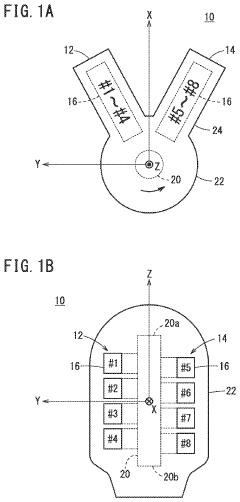
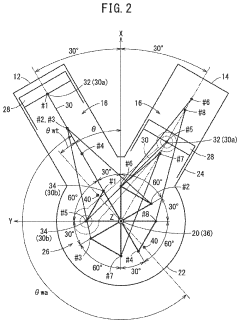
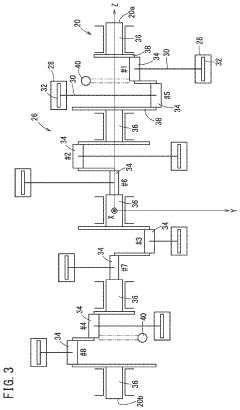
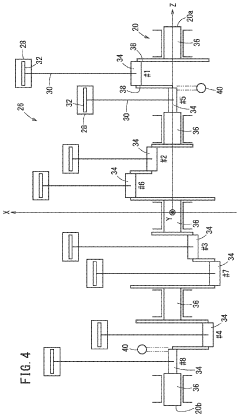
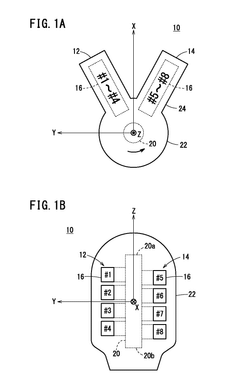
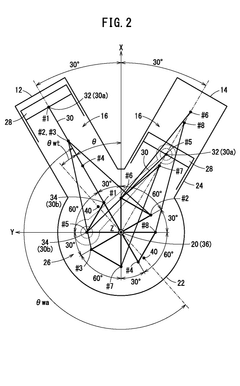
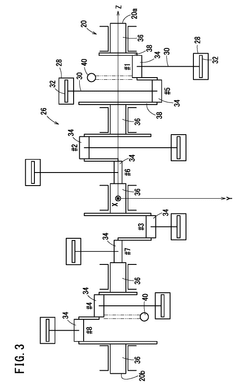
- The V8 engine configuration features crank pins arranged at 90° intervals on one bank and offset by 60° on the other bank, allowing for cancellation of primary inertia couples without additional specialized components by optimizing the arrangement of crank pins and connecting rods.
V8 engine
PatentWO2021171405A1
Innovation
- The engine is configured with a 60° bank angle, where crank pins on one bank are arranged at 90° intervals and offset by 60° from the other bank, allowing for cancellation of the primary inertia couple without additional special parts, and the ignition timing is set to achieve balanced explosions similar to conventional V8 engines.

Environmental Impact of V8 Engines
The environmental impact of V8 engines has been a subject of increasing concern in recent years, particularly as global awareness of climate change and air pollution has grown. V8 engines, known for their power and performance, have long been a staple in large vehicles, luxury cars, and high-performance sports cars. However, their significant fuel consumption and emissions output have placed them at the center of environmental debates.
V8 engines typically produce higher levels of carbon dioxide (CO2) emissions compared to smaller, more fuel-efficient engines. This contributes directly to greenhouse gas accumulation in the atmosphere, exacerbating global warming trends. Additionally, these engines often emit higher levels of nitrogen oxides (NOx) and particulate matter, which are major contributors to air pollution and can have severe health implications for urban populations.
The environmental impact extends beyond direct emissions. The production and distribution of fuel required to power V8 engines also contribute to their overall carbon footprint. As these engines consume more fuel per mile traveled, they necessitate more frequent refueling, leading to increased demand for petroleum products and the associated environmental costs of oil extraction, refining, and transportation.
In response to these environmental concerns, many countries have implemented stricter emissions standards and fuel economy regulations. This has led to a decline in the popularity of V8 engines in certain markets, particularly in Europe and parts of Asia. Manufacturers have been forced to invest heavily in technologies to improve the efficiency of V8 engines or to develop alternative powertrains.
The shift away from V8 engines has implications for global distribution and logistics models. As consumer preferences and regulatory pressures favor more fuel-efficient vehicles, the supply chains and distribution networks built around V8-powered vehicles are being forced to adapt. This includes changes in manufacturing processes, parts sourcing, and even the skills required in the automotive workforce.
However, it's important to note that advancements in engine technology have allowed some manufacturers to improve the efficiency of V8 engines significantly. Technologies such as cylinder deactivation, direct injection, and turbocharging have helped reduce fuel consumption and emissions while maintaining performance. These improvements have somewhat mitigated the environmental impact of V8 engines, though they still generally lag behind smaller engines in terms of overall efficiency.
The environmental impact of V8 engines also varies depending on the specific use case and geographical context. In regions with cleaner electricity grids, the relative environmental cost of V8 engines compared to electric vehicles is higher. Conversely, in areas still heavily reliant on fossil fuels for electricity generation, the gap in environmental impact between V8 engines and electric alternatives may be less pronounced.
V8 engines typically produce higher levels of carbon dioxide (CO2) emissions compared to smaller, more fuel-efficient engines. This contributes directly to greenhouse gas accumulation in the atmosphere, exacerbating global warming trends. Additionally, these engines often emit higher levels of nitrogen oxides (NOx) and particulate matter, which are major contributors to air pollution and can have severe health implications for urban populations.
The environmental impact extends beyond direct emissions. The production and distribution of fuel required to power V8 engines also contribute to their overall carbon footprint. As these engines consume more fuel per mile traveled, they necessitate more frequent refueling, leading to increased demand for petroleum products and the associated environmental costs of oil extraction, refining, and transportation.
In response to these environmental concerns, many countries have implemented stricter emissions standards and fuel economy regulations. This has led to a decline in the popularity of V8 engines in certain markets, particularly in Europe and parts of Asia. Manufacturers have been forced to invest heavily in technologies to improve the efficiency of V8 engines or to develop alternative powertrains.
The shift away from V8 engines has implications for global distribution and logistics models. As consumer preferences and regulatory pressures favor more fuel-efficient vehicles, the supply chains and distribution networks built around V8-powered vehicles are being forced to adapt. This includes changes in manufacturing processes, parts sourcing, and even the skills required in the automotive workforce.
However, it's important to note that advancements in engine technology have allowed some manufacturers to improve the efficiency of V8 engines significantly. Technologies such as cylinder deactivation, direct injection, and turbocharging have helped reduce fuel consumption and emissions while maintaining performance. These improvements have somewhat mitigated the environmental impact of V8 engines, though they still generally lag behind smaller engines in terms of overall efficiency.
The environmental impact of V8 engines also varies depending on the specific use case and geographical context. In regions with cleaner electricity grids, the relative environmental cost of V8 engines compared to electric vehicles is higher. Conversely, in areas still heavily reliant on fossil fuels for electricity generation, the gap in environmental impact between V8 engines and electric alternatives may be less pronounced.
V8 Engine Regulatory Landscape
The regulatory landscape surrounding V8 engines has undergone significant changes in recent years, driven by increasing environmental concerns and the push for more sustainable transportation solutions. Governments worldwide have implemented stricter emissions standards, fuel efficiency requirements, and noise regulations that directly impact the production and use of V8 engines.
In the United States, the Corporate Average Fuel Economy (CAFE) standards have been progressively tightened, putting pressure on manufacturers to improve the fuel efficiency of their vehicle fleets. This has led to a reduction in the number of V8-powered vehicles offered in the market, as automakers shift towards smaller, more efficient engines or alternative powertrains.
The European Union has introduced increasingly stringent Euro emissions standards, with the latest Euro 6d-TEMP and Euro 6d regulations imposing tough limits on nitrogen oxide (NOx) and particulate matter emissions. These regulations have made it challenging for V8 engines to comply without significant technological advancements or the implementation of costly aftertreatment systems.
China, the world's largest automotive market, has also implemented its own emissions standards based on the European framework. The China 6 standards, phased in from 2020, are among the most stringent globally, further limiting the viability of V8 engines in this crucial market.
The regulatory landscape has not only affected passenger vehicles but also commercial and industrial applications of V8 engines. In the logistics and distribution sector, many countries have introduced low emission zones in urban areas, restricting the use of older, more polluting vehicles. This has implications for fleet operators using V8-powered trucks and vans, necessitating a shift towards more environmentally friendly alternatives.
Furthermore, noise regulations have become increasingly important, particularly in urban environments. V8 engines, known for their distinctive sound, often struggle to meet these stricter noise limits without significant modifications or sound dampening measures.
The global push towards electrification and zero-emission vehicles has also influenced the regulatory landscape. Many countries have announced plans to phase out internal combustion engines, including V8s, in favor of electric vehicles. For instance, the United Kingdom has set a target to end the sale of new petrol and diesel cars by 2030, with similar initiatives being considered or implemented in other nations.
These regulatory changes have had a profound impact on the global distribution and logistics models associated with V8 engines. Manufacturers have had to adapt their production strategies, often centralizing V8 engine production in fewer locations to achieve economies of scale while meeting diverse regional requirements. This has led to more complex supply chains and distribution networks, as engines and components are shipped across borders to meet varying demand and regulatory compliance needs.
In the United States, the Corporate Average Fuel Economy (CAFE) standards have been progressively tightened, putting pressure on manufacturers to improve the fuel efficiency of their vehicle fleets. This has led to a reduction in the number of V8-powered vehicles offered in the market, as automakers shift towards smaller, more efficient engines or alternative powertrains.
The European Union has introduced increasingly stringent Euro emissions standards, with the latest Euro 6d-TEMP and Euro 6d regulations imposing tough limits on nitrogen oxide (NOx) and particulate matter emissions. These regulations have made it challenging for V8 engines to comply without significant technological advancements or the implementation of costly aftertreatment systems.
China, the world's largest automotive market, has also implemented its own emissions standards based on the European framework. The China 6 standards, phased in from 2020, are among the most stringent globally, further limiting the viability of V8 engines in this crucial market.
The regulatory landscape has not only affected passenger vehicles but also commercial and industrial applications of V8 engines. In the logistics and distribution sector, many countries have introduced low emission zones in urban areas, restricting the use of older, more polluting vehicles. This has implications for fleet operators using V8-powered trucks and vans, necessitating a shift towards more environmentally friendly alternatives.
Furthermore, noise regulations have become increasingly important, particularly in urban environments. V8 engines, known for their distinctive sound, often struggle to meet these stricter noise limits without significant modifications or sound dampening measures.
The global push towards electrification and zero-emission vehicles has also influenced the regulatory landscape. Many countries have announced plans to phase out internal combustion engines, including V8s, in favor of electric vehicles. For instance, the United Kingdom has set a target to end the sale of new petrol and diesel cars by 2030, with similar initiatives being considered or implemented in other nations.
These regulatory changes have had a profound impact on the global distribution and logistics models associated with V8 engines. Manufacturers have had to adapt their production strategies, often centralizing V8 engine production in fewer locations to achieve economies of scale while meeting diverse regional requirements. This has led to more complex supply chains and distribution networks, as engines and components are shipped across borders to meet varying demand and regulatory compliance needs.
Unlock deeper insights with Patsnap Eureka Quick Research — get a full tech report to explore trends and direct your research. Try now!
Generate Your Research Report Instantly with AI Agent
Supercharge your innovation with Patsnap Eureka AI Agent Platform!