

V8 Engine Role in Creating Novel Powertrain Systems
JUL 4, 20259 MIN READ
Generate Your Research Report Instantly with AI Agent
PatSnap Eureka helps you evaluate technical feasibility & market potential.
V8 Engine Evolution and Objectives
The V8 engine has been a cornerstone of automotive engineering since its inception in the early 20th century. Its evolution has been marked by continuous improvements in power output, efficiency, and environmental performance. Initially designed for high-performance applications, the V8 engine has since found its way into a wide range of vehicles, from luxury cars to trucks and sports cars.
The development of V8 engines has been driven by several key objectives. Primarily, engineers have sought to increase power output while simultaneously improving fuel efficiency. This has led to the implementation of advanced technologies such as direct fuel injection, variable valve timing, and cylinder deactivation. These innovations have allowed V8 engines to maintain their performance characteristics while meeting increasingly stringent emissions regulations.
Another significant objective in V8 engine evolution has been the reduction of weight and size. As automotive design trends have shifted towards more compact and aerodynamic vehicles, engine designers have had to adapt. This has resulted in the development of more compact V8 configurations, often utilizing lightweight materials such as aluminum alloys for engine blocks and heads.
In recent years, the focus of V8 engine development has shifted towards integration with hybrid and electric powertrain systems. This represents a new frontier in V8 technology, where the traditional internal combustion engine is combined with electric motors to create novel powertrain solutions. The objective here is to leverage the power and performance characteristics of the V8 engine while addressing the need for improved fuel economy and reduced emissions.
The role of V8 engines in creating novel powertrain systems is multifaceted. They serve as a bridge between conventional internal combustion technology and emerging electric propulsion systems. By integrating V8 engines with electric motors, engineers can create powertrains that offer the best of both worlds: the instant torque and efficiency of electric motors combined with the range and power of a V8 engine.
Looking forward, the objectives for V8 engine development in novel powertrain systems include further improvements in thermal efficiency, integration of advanced materials for weight reduction, and seamless interaction with electric drive components. There is also a growing emphasis on developing V8 engines that can run on alternative fuels or hydrogen, expanding their relevance in a future dominated by sustainable energy sources.
As we progress into an era of increasing electrification, the V8 engine's role is evolving. While it may see reduced application in mainstream vehicles, it continues to be a critical component in high-performance and luxury segments. The challenge for engineers is to continue innovating and adapting the V8 engine to meet future performance and environmental standards while maintaining its iconic status in automotive culture.
The development of V8 engines has been driven by several key objectives. Primarily, engineers have sought to increase power output while simultaneously improving fuel efficiency. This has led to the implementation of advanced technologies such as direct fuel injection, variable valve timing, and cylinder deactivation. These innovations have allowed V8 engines to maintain their performance characteristics while meeting increasingly stringent emissions regulations.
Another significant objective in V8 engine evolution has been the reduction of weight and size. As automotive design trends have shifted towards more compact and aerodynamic vehicles, engine designers have had to adapt. This has resulted in the development of more compact V8 configurations, often utilizing lightweight materials such as aluminum alloys for engine blocks and heads.
In recent years, the focus of V8 engine development has shifted towards integration with hybrid and electric powertrain systems. This represents a new frontier in V8 technology, where the traditional internal combustion engine is combined with electric motors to create novel powertrain solutions. The objective here is to leverage the power and performance characteristics of the V8 engine while addressing the need for improved fuel economy and reduced emissions.
The role of V8 engines in creating novel powertrain systems is multifaceted. They serve as a bridge between conventional internal combustion technology and emerging electric propulsion systems. By integrating V8 engines with electric motors, engineers can create powertrains that offer the best of both worlds: the instant torque and efficiency of electric motors combined with the range and power of a V8 engine.
Looking forward, the objectives for V8 engine development in novel powertrain systems include further improvements in thermal efficiency, integration of advanced materials for weight reduction, and seamless interaction with electric drive components. There is also a growing emphasis on developing V8 engines that can run on alternative fuels or hydrogen, expanding their relevance in a future dominated by sustainable energy sources.
As we progress into an era of increasing electrification, the V8 engine's role is evolving. While it may see reduced application in mainstream vehicles, it continues to be a critical component in high-performance and luxury segments. The challenge for engineers is to continue innovating and adapting the V8 engine to meet future performance and environmental standards while maintaining its iconic status in automotive culture.
Market Demand Analysis for V8 Powertrains
The market demand for V8 powertrains has been evolving significantly in recent years, driven by a complex interplay of factors including environmental regulations, consumer preferences, and technological advancements. Despite the global push towards electrification and downsizing, V8 engines continue to maintain a strong presence in certain market segments, particularly in high-performance vehicles, luxury cars, and heavy-duty trucks.
In the performance car segment, V8 engines remain highly sought after for their distinctive sound, power delivery, and emotional appeal. Sports car manufacturers and premium brands continue to offer V8 options to cater to enthusiasts who value the raw power and character of these engines. This demand is particularly strong in markets like North America and the Middle East, where fuel prices are relatively lower and performance-oriented driving culture is more prevalent.
The luxury car market also shows sustained demand for V8 powertrains, especially in full-size sedans and SUVs. These engines are valued for their smooth operation, effortless acceleration, and prestige associated with larger displacement engines. However, this segment is increasingly adopting hybrid V8 systems to balance performance with improved fuel efficiency and reduced emissions.
In the commercial vehicle sector, V8 engines maintain their relevance in heavy-duty trucks and large SUVs, where high torque output and towing capacity are crucial. The durability and reliability of V8 engines make them a preferred choice for applications requiring sustained power delivery over long periods.
However, the overall market trend shows a gradual decline in V8 engine demand across most passenger vehicle segments. This shift is primarily driven by stringent emissions regulations, increasing fuel prices, and growing consumer awareness of environmental issues. Many automakers are responding by developing more efficient V6 engines or four-cylinder turbocharged alternatives that can match V8 performance while offering better fuel economy.
The future market for V8 powertrains is likely to be more niche-oriented, focusing on specialized applications where their unique characteristics are most valued. This includes high-end sports cars, luxury vehicles, and specific commercial applications. To remain relevant, V8 engines are increasingly being integrated into hybrid powertrains, combining their traditional strengths with electrification to meet evolving market demands and regulatory requirements.
In conclusion, while the overall market for V8 powertrains is contracting, there remains a significant demand in specific segments. The challenge for manufacturers lies in innovating V8 technologies to improve efficiency and emissions while preserving the performance characteristics that make these engines desirable to their core customer base.
In the performance car segment, V8 engines remain highly sought after for their distinctive sound, power delivery, and emotional appeal. Sports car manufacturers and premium brands continue to offer V8 options to cater to enthusiasts who value the raw power and character of these engines. This demand is particularly strong in markets like North America and the Middle East, where fuel prices are relatively lower and performance-oriented driving culture is more prevalent.
The luxury car market also shows sustained demand for V8 powertrains, especially in full-size sedans and SUVs. These engines are valued for their smooth operation, effortless acceleration, and prestige associated with larger displacement engines. However, this segment is increasingly adopting hybrid V8 systems to balance performance with improved fuel efficiency and reduced emissions.
In the commercial vehicle sector, V8 engines maintain their relevance in heavy-duty trucks and large SUVs, where high torque output and towing capacity are crucial. The durability and reliability of V8 engines make them a preferred choice for applications requiring sustained power delivery over long periods.
However, the overall market trend shows a gradual decline in V8 engine demand across most passenger vehicle segments. This shift is primarily driven by stringent emissions regulations, increasing fuel prices, and growing consumer awareness of environmental issues. Many automakers are responding by developing more efficient V6 engines or four-cylinder turbocharged alternatives that can match V8 performance while offering better fuel economy.
The future market for V8 powertrains is likely to be more niche-oriented, focusing on specialized applications where their unique characteristics are most valued. This includes high-end sports cars, luxury vehicles, and specific commercial applications. To remain relevant, V8 engines are increasingly being integrated into hybrid powertrains, combining their traditional strengths with electrification to meet evolving market demands and regulatory requirements.
In conclusion, while the overall market for V8 powertrains is contracting, there remains a significant demand in specific segments. The challenge for manufacturers lies in innovating V8 technologies to improve efficiency and emissions while preserving the performance characteristics that make these engines desirable to their core customer base.
V8 Technology Status and Challenges
The V8 engine, a stalwart of automotive powertrains, faces significant challenges and opportunities in the current technological landscape. While still widely used in high-performance vehicles and heavy-duty applications, V8 engines are under increasing pressure to adapt to stringent emissions regulations and the global shift towards electrification.
Currently, V8 engines are primarily employed in luxury vehicles, sports cars, and large SUVs, where their power output and characteristic sound are highly valued. However, the automotive industry's focus on reducing carbon emissions has led to a decline in V8 engine production and implementation. Many manufacturers are downsizing to smaller, turbocharged engines or hybrid powertrains to meet fuel efficiency standards.
The main technical challenges facing V8 engines revolve around improving fuel efficiency and reducing emissions without compromising performance. Engineers are exploring various solutions, including advanced fuel injection systems, variable valve timing, cylinder deactivation, and lightweight materials. These innovations aim to optimize combustion processes and reduce parasitic losses, thereby enhancing overall efficiency.
Another significant challenge is the integration of V8 engines into hybrid powertrains. This approach allows manufacturers to retain the power and prestige associated with V8 engines while significantly reducing fuel consumption and emissions. However, the complexity of combining traditional internal combustion technology with electric propulsion systems presents substantial engineering hurdles.
The geographical distribution of V8 engine development and production is primarily concentrated in North America and Europe, with some presence in Asia. North American manufacturers, particularly those in the United States, have a long history of V8 engine production and continue to be at the forefront of V8 technology. European luxury car makers also maintain a strong focus on V8 engines, especially for their high-performance models.
Despite these challenges, there are ongoing efforts to future-proof V8 engines. Research into alternative fuels, such as hydrogen and synthetic fuels, could potentially extend the lifespan of V8 engines in a carbon-neutral future. Additionally, advancements in materials science and manufacturing techniques are enabling the creation of more efficient and lighter V8 engines.
The role of V8 engines in creating novel powertrain systems is evolving. While they may not be the primary focus of future mass-market vehicles, V8 engines are finding new applications in niche markets and specialized vehicles. Their integration into hybrid systems and potential adaptation to alternative fuels demonstrate the ongoing relevance of V8 technology in the automotive industry's transition towards more sustainable propulsion methods.
Currently, V8 engines are primarily employed in luxury vehicles, sports cars, and large SUVs, where their power output and characteristic sound are highly valued. However, the automotive industry's focus on reducing carbon emissions has led to a decline in V8 engine production and implementation. Many manufacturers are downsizing to smaller, turbocharged engines or hybrid powertrains to meet fuel efficiency standards.
The main technical challenges facing V8 engines revolve around improving fuel efficiency and reducing emissions without compromising performance. Engineers are exploring various solutions, including advanced fuel injection systems, variable valve timing, cylinder deactivation, and lightweight materials. These innovations aim to optimize combustion processes and reduce parasitic losses, thereby enhancing overall efficiency.
Another significant challenge is the integration of V8 engines into hybrid powertrains. This approach allows manufacturers to retain the power and prestige associated with V8 engines while significantly reducing fuel consumption and emissions. However, the complexity of combining traditional internal combustion technology with electric propulsion systems presents substantial engineering hurdles.
The geographical distribution of V8 engine development and production is primarily concentrated in North America and Europe, with some presence in Asia. North American manufacturers, particularly those in the United States, have a long history of V8 engine production and continue to be at the forefront of V8 technology. European luxury car makers also maintain a strong focus on V8 engines, especially for their high-performance models.
Despite these challenges, there are ongoing efforts to future-proof V8 engines. Research into alternative fuels, such as hydrogen and synthetic fuels, could potentially extend the lifespan of V8 engines in a carbon-neutral future. Additionally, advancements in materials science and manufacturing techniques are enabling the creation of more efficient and lighter V8 engines.
The role of V8 engines in creating novel powertrain systems is evolving. While they may not be the primary focus of future mass-market vehicles, V8 engines are finding new applications in niche markets and specialized vehicles. Their integration into hybrid systems and potential adaptation to alternative fuels demonstrate the ongoing relevance of V8 technology in the automotive industry's transition towards more sustainable propulsion methods.
Current V8 Powertrain Solutions
01 V8 Engine Design and Configuration
V8 engines are designed with eight cylinders arranged in two banks of four, forming a V-shape. This configuration allows for a compact design, improved balance, and higher power output compared to inline engines. Various aspects of V8 engine design, including cylinder arrangement, crankshaft configuration, and valve timing, are optimized for performance and efficiency.- V8 Engine Design and Configuration: V8 engines are designed with eight cylinders arranged in two banks of four, forming a V-shape. This configuration allows for compact packaging, improved balance, and higher power output. Various designs exist, including cross-plane and flat-plane crankshafts, which affect engine characteristics such as power delivery and sound.
- Fuel Efficiency and Emissions Improvements: Modern V8 engines incorporate technologies to enhance fuel efficiency and reduce emissions. These may include variable valve timing, direct fuel injection, cylinder deactivation, and advanced engine management systems. Such improvements help V8 engines meet stringent environmental regulations while maintaining performance.
- Performance Enhancements: Various methods are employed to boost V8 engine performance, including turbocharging, supercharging, and optimizing intake and exhaust systems. Advanced materials and manufacturing techniques are used to reduce weight and improve durability, allowing for higher revs and increased power output.
- Cooling and Lubrication Systems: Efficient cooling and lubrication are crucial for V8 engine reliability and performance. Innovations in these areas include improved coolant flow designs, oil pump efficiency, and the use of advanced lubricants. Some designs incorporate dry sump systems for high-performance applications.
- Integration with Hybrid and Electric Systems: To meet future emissions standards and improve overall vehicle efficiency, V8 engines are being integrated with hybrid and electric systems. This includes mild hybrid configurations, full hybrid powertrains, and the development of V8 engines optimized for use in plug-in hybrid electric vehicles.
02 Fuel Efficiency and Emissions Control
Modern V8 engines incorporate technologies to improve fuel efficiency and reduce emissions. These may include direct fuel injection, variable valve timing, cylinder deactivation, and advanced exhaust gas recirculation systems. Such innovations help V8 engines meet stringent environmental regulations while maintaining high performance.Expand Specific Solutions03 Performance Enhancement and Tuning
Various methods are employed to enhance V8 engine performance, including turbocharging, supercharging, and electronic engine management systems. Aftermarket tuning and modifications can further improve power output, torque, and overall engine responsiveness. Advanced materials and manufacturing techniques are also used to reduce weight and increase durability.Expand Specific Solutions04 Cooling and Lubrication Systems
Effective cooling and lubrication are crucial for V8 engine reliability and longevity. Advanced cooling systems may include precision-controlled electric water pumps, improved radiator designs, and optimized coolant flow paths. Lubrication systems are designed to ensure proper oil distribution to all critical components, even under high-performance conditions.Expand Specific Solutions05 Integration with Transmission and Drivetrain
V8 engines are often integrated with advanced transmission systems and drivetrains to optimize power delivery and efficiency. This may include the use of multi-speed automatic transmissions, dual-clutch systems, or advanced all-wheel-drive configurations. The integration focuses on maximizing performance while maintaining drivability and fuel economy.Expand Specific Solutions
Major Players in V8 Engine Manufacturing
The V8 engine's role in creating novel powertrain systems is characterized by a competitive landscape in a mature yet evolving industry. Major players like GM, Ford, Toyota, and Honda are at the forefront of innovation, leveraging their extensive R&D capabilities to develop more efficient and powerful V8 engines. The market size remains substantial, driven by demand in high-performance vehicles and heavy-duty applications. However, the industry is experiencing a shift towards electrification and hybrid technologies, with companies like BMW, Volkswagen, and Nissan investing heavily in alternative powertrain solutions. This transition is pushing traditional V8 engine manufacturers to adapt and integrate new technologies to maintain relevance in a changing automotive landscape.
GM Global Technology Operations LLC
Technical Solution: GM's V8 engine innovation focuses on Dynamic Fuel Management (DFM) technology, which enables the engine to operate in 17 different cylinder patterns to optimize power delivery and efficiency. The system uses sophisticated algorithms to continuously determine the number of cylinders needed based on driver inputs and vehicle load[1]. GM has also integrated this technology with their eAssist mild-hybrid system, allowing for improved fuel economy without sacrificing the power and torque characteristics that V8 engines are known for[2]. Additionally, GM has developed a new small block V8 architecture that incorporates advanced materials and manufacturing techniques to reduce weight and improve thermal efficiency[3].
Strengths: Improved fuel efficiency without compromising performance, seamless integration with hybrid systems. Weaknesses: Complexity of the DFM system may lead to increased maintenance costs, potential reliability concerns in the long term.
Honda Motor Co., Ltd.
Technical Solution: Honda's approach to V8 engine development in novel powertrain systems focuses on high-performance applications, particularly in racing. Their V8 engine for IndyCar racing features direct fuel injection, multi-hole fuel injectors, and advanced engine management systems to optimize power output and fuel efficiency[4]. Honda has also explored the use of twin-turbocharging in their V8 engines, which allows for increased power density and improved low-end torque[5]. In their road car applications, Honda has integrated their V8 engines with hybrid technology, utilizing electric motors to supplement low-end torque and improve overall efficiency[6].
Strengths: High-performance capabilities, successful integration with hybrid systems. Weaknesses: Limited application in mainstream vehicles, potentially higher production costs due to specialized technologies.
Key V8 Engine Innovations
V8 engine
PatentActiveUS11821359B2
Innovation
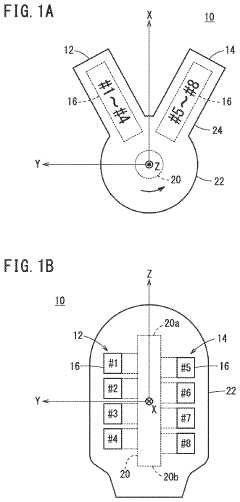
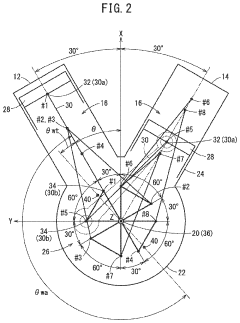
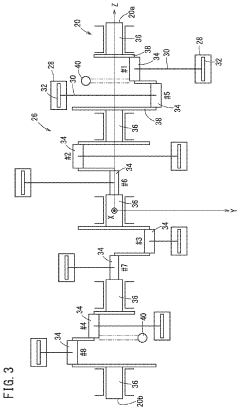
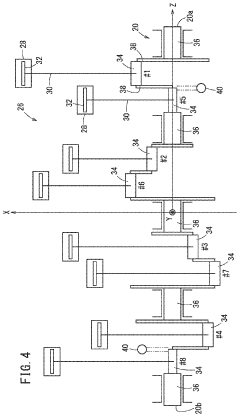
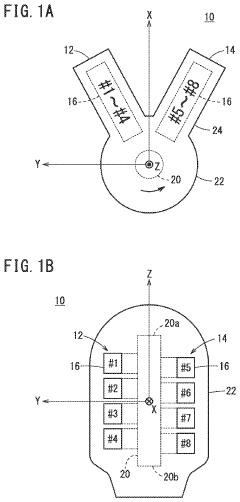
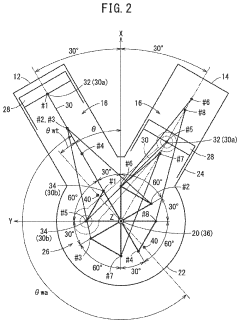
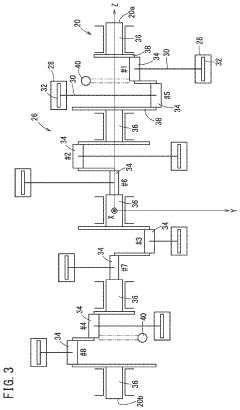
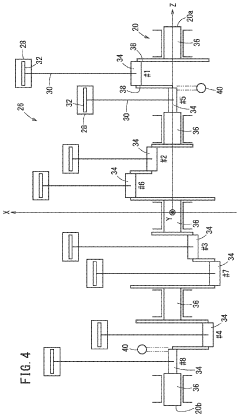
- The V8 engine configuration features crank pins arranged at 90° intervals on one bank and offset by 60° on the other bank, allowing for cancellation of primary inertia couples without additional specialized parts by optimizing the arrangement of crank pins and connecting rods.
V8 engine
PatentActiveUS20230109196A1
Innovation
- The V8 engine configuration features crank pins arranged at 90° intervals on one bank and offset by 60° on the other bank, allowing for cancellation of primary inertia couples without additional specialized components by optimizing the arrangement of crank pins and connecting rods.
Environmental Impact of V8 Engines
The environmental impact of V8 engines has been a subject of increasing concern in recent years, as the automotive industry grapples with the need for more sustainable transportation solutions. V8 engines, known for their power and performance, have long been associated with high fuel consumption and significant carbon emissions. These engines typically produce higher levels of carbon dioxide (CO2) per kilometer driven compared to smaller, more efficient engine configurations.
The combustion process in V8 engines releases various pollutants, including nitrogen oxides (NOx), carbon monoxide (CO), and particulate matter. These emissions contribute to air pollution, smog formation, and potential health risks in urban areas. Additionally, the production of V8 engines requires more raw materials and energy compared to smaller engines, further increasing their environmental footprint throughout their lifecycle.
However, advancements in engine technology have led to improvements in V8 efficiency and emissions control. Modern V8 engines often incorporate direct fuel injection, variable valve timing, and cylinder deactivation systems, which can significantly reduce fuel consumption and emissions under certain driving conditions. Some manufacturers have also implemented start-stop technology and mild hybrid systems in V8-powered vehicles to further mitigate environmental impact.
Despite these improvements, V8 engines still face challenges in meeting increasingly stringent emissions regulations worldwide. Many countries and regions have implemented or proposed strict CO2 emission targets and fuel economy standards, putting pressure on automakers to phase out or significantly modify their V8 offerings. This regulatory landscape has accelerated the development of alternative powertrain technologies, such as downsized turbocharged engines, full hybrids, and electric vehicles.
The environmental impact of V8 engines extends beyond their operational emissions. The manufacturing process, including the extraction and processing of raw materials, contributes to their overall ecological footprint. Furthermore, the disposal and recycling of V8 engines at the end of their life cycle present additional environmental challenges, particularly due to the presence of various metals and potentially hazardous materials.
As the automotive industry transitions towards more sustainable technologies, the role of V8 engines in future vehicle lineups remains uncertain. While some manufacturers are exploring ways to make V8 engines more environmentally friendly through electrification and advanced materials, others are shifting their focus entirely to alternative powertrain solutions. The environmental impact of V8 engines will likely continue to be a critical factor in shaping the future of automotive design and engineering, influencing both consumer preferences and regulatory policies in the coming years.
The combustion process in V8 engines releases various pollutants, including nitrogen oxides (NOx), carbon monoxide (CO), and particulate matter. These emissions contribute to air pollution, smog formation, and potential health risks in urban areas. Additionally, the production of V8 engines requires more raw materials and energy compared to smaller engines, further increasing their environmental footprint throughout their lifecycle.
However, advancements in engine technology have led to improvements in V8 efficiency and emissions control. Modern V8 engines often incorporate direct fuel injection, variable valve timing, and cylinder deactivation systems, which can significantly reduce fuel consumption and emissions under certain driving conditions. Some manufacturers have also implemented start-stop technology and mild hybrid systems in V8-powered vehicles to further mitigate environmental impact.
Despite these improvements, V8 engines still face challenges in meeting increasingly stringent emissions regulations worldwide. Many countries and regions have implemented or proposed strict CO2 emission targets and fuel economy standards, putting pressure on automakers to phase out or significantly modify their V8 offerings. This regulatory landscape has accelerated the development of alternative powertrain technologies, such as downsized turbocharged engines, full hybrids, and electric vehicles.
The environmental impact of V8 engines extends beyond their operational emissions. The manufacturing process, including the extraction and processing of raw materials, contributes to their overall ecological footprint. Furthermore, the disposal and recycling of V8 engines at the end of their life cycle present additional environmental challenges, particularly due to the presence of various metals and potentially hazardous materials.
As the automotive industry transitions towards more sustainable technologies, the role of V8 engines in future vehicle lineups remains uncertain. While some manufacturers are exploring ways to make V8 engines more environmentally friendly through electrification and advanced materials, others are shifting their focus entirely to alternative powertrain solutions. The environmental impact of V8 engines will likely continue to be a critical factor in shaping the future of automotive design and engineering, influencing both consumer preferences and regulatory policies in the coming years.
V8 Engine Hybridization Strategies
V8 engine hybridization strategies have emerged as a crucial area of focus in the automotive industry's pursuit of more efficient and environmentally friendly powertrain systems. These strategies aim to combine the power and performance of traditional V8 engines with the benefits of electric propulsion, creating novel powertrain solutions that address both consumer demands and regulatory requirements.
One of the primary approaches to V8 engine hybridization is the parallel hybrid system. In this configuration, an electric motor is integrated alongside the V8 engine, allowing for power assist during acceleration and energy recovery through regenerative braking. This setup enables the V8 engine to operate more efficiently by reducing its load during low-demand situations and providing additional power when needed.
Another strategy involves the development of plug-in hybrid systems for V8-powered vehicles. This approach incorporates a larger battery pack and more powerful electric motors, allowing for extended electric-only driving ranges. The V8 engine in these systems often serves as a range extender, providing power for longer trips or when additional performance is required.
Mild hybrid systems have also gained traction in V8 engine applications. These systems typically utilize a 48-volt electrical architecture and a small electric motor-generator to provide start-stop functionality, torque assist, and improved fuel efficiency without significantly altering the vehicle's overall powertrain layout.
Advanced cylinder deactivation technologies have been integrated into hybrid V8 powertrains to further enhance efficiency. These systems allow for seamless switching between different cylinder configurations, optimizing fuel consumption based on driving conditions and power demands.
The integration of electric turbochargers or e-boosters with V8 engines represents another innovative hybridization strategy. These electrically-driven forced induction systems can provide instant boost pressure, eliminating turbo lag and improving overall engine responsiveness while maintaining efficiency.
Manufacturers are also exploring the potential of split-power hybrid systems for V8 engines. In this configuration, the engine's power is divided between mechanical propulsion and electricity generation, allowing for more flexible power management and improved overall system efficiency.
As the automotive industry continues to evolve, V8 engine hybridization strategies will play a crucial role in balancing performance expectations with increasingly stringent emissions regulations. These innovative approaches demonstrate the ongoing relevance of V8 engines in the development of advanced powertrain systems, ensuring their place in the future of automotive technology.
One of the primary approaches to V8 engine hybridization is the parallel hybrid system. In this configuration, an electric motor is integrated alongside the V8 engine, allowing for power assist during acceleration and energy recovery through regenerative braking. This setup enables the V8 engine to operate more efficiently by reducing its load during low-demand situations and providing additional power when needed.
Another strategy involves the development of plug-in hybrid systems for V8-powered vehicles. This approach incorporates a larger battery pack and more powerful electric motors, allowing for extended electric-only driving ranges. The V8 engine in these systems often serves as a range extender, providing power for longer trips or when additional performance is required.
Mild hybrid systems have also gained traction in V8 engine applications. These systems typically utilize a 48-volt electrical architecture and a small electric motor-generator to provide start-stop functionality, torque assist, and improved fuel efficiency without significantly altering the vehicle's overall powertrain layout.
Advanced cylinder deactivation technologies have been integrated into hybrid V8 powertrains to further enhance efficiency. These systems allow for seamless switching between different cylinder configurations, optimizing fuel consumption based on driving conditions and power demands.
The integration of electric turbochargers or e-boosters with V8 engines represents another innovative hybridization strategy. These electrically-driven forced induction systems can provide instant boost pressure, eliminating turbo lag and improving overall engine responsiveness while maintaining efficiency.
Manufacturers are also exploring the potential of split-power hybrid systems for V8 engines. In this configuration, the engine's power is divided between mechanical propulsion and electricity generation, allowing for more flexible power management and improved overall system efficiency.
As the automotive industry continues to evolve, V8 engine hybridization strategies will play a crucial role in balancing performance expectations with increasingly stringent emissions regulations. These innovative approaches demonstrate the ongoing relevance of V8 engines in the development of advanced powertrain systems, ensuring their place in the future of automotive technology.
Unlock deeper insights with PatSnap Eureka Quick Research — get a full tech report to explore trends and direct your research. Try now!
Generate Your Research Report Instantly with AI Agent
Supercharge your innovation with PatSnap Eureka AI Agent Platform!