

V8 Engine Role in Streamlining Vehicle Servicing Processes
JUL 4, 20259 MIN READ
Generate Your Research Report Instantly with AI Agent
PatSnap Eureka helps you evaluate technical feasibility & market potential.
V8 Engine Evolution
The V8 engine has undergone significant evolution since its inception, playing a crucial role in streamlining vehicle servicing processes. Initially developed in the early 20th century, the V8 engine configuration quickly gained popularity due to its compact design and impressive power output. This layout, with two banks of four cylinders arranged in a V-shape, offered a balance between performance and efficiency that made it ideal for a wide range of vehicles.
Throughout the decades, V8 engines have seen continuous improvements in materials, manufacturing techniques, and design principles. The introduction of overhead valve (OHV) designs in the 1950s marked a significant milestone, improving engine breathing and overall efficiency. This was followed by the adoption of overhead cam (OHC) configurations in the 1960s and 1970s, further enhancing performance and reducing maintenance requirements.
The 1980s and 1990s saw a focus on fuel efficiency and emissions reduction, leading to the development of more sophisticated fuel injection systems and engine management computers. These advancements not only improved performance but also made diagnostics and servicing more streamlined. The introduction of sequential fuel injection and coil-on-plug ignition systems reduced the number of moving parts, thereby increasing reliability and simplifying maintenance procedures.
In the late 1990s and early 2000s, variable valve timing (VVT) technology became widespread in V8 engines. This innovation allowed for optimized engine performance across a broader range of operating conditions, while also contributing to improved fuel economy and reduced emissions. The integration of VVT systems, however, introduced new complexities in engine servicing, requiring specialized diagnostic tools and procedures.
The turn of the millennium brought about a renewed focus on performance, with manufacturers pushing the boundaries of power output through forced induction. Turbocharging and supercharging became more common in V8 engines, offering significant power increases without substantial increases in engine size. These advancements, while improving performance, also necessitated more frequent and specialized maintenance routines.
Recent years have seen a shift towards hybridization and electrification, with V8 engines being paired with electric motors to create high-performance hybrid powertrains. This evolution has introduced new challenges in servicing, requiring technicians to be proficient in both traditional combustion engine maintenance and high-voltage electrical systems.
Throughout its evolution, the V8 engine has consistently driven innovations in vehicle servicing processes. From the development of more advanced diagnostic tools to the creation of specialized training programs for technicians, the V8's complexity and popularity have spurred the automotive industry to continually improve its service capabilities. As we move into an era of increased electrification, the legacy of the V8 engine continues to influence how vehicles are designed, maintained, and serviced.
Throughout the decades, V8 engines have seen continuous improvements in materials, manufacturing techniques, and design principles. The introduction of overhead valve (OHV) designs in the 1950s marked a significant milestone, improving engine breathing and overall efficiency. This was followed by the adoption of overhead cam (OHC) configurations in the 1960s and 1970s, further enhancing performance and reducing maintenance requirements.
The 1980s and 1990s saw a focus on fuel efficiency and emissions reduction, leading to the development of more sophisticated fuel injection systems and engine management computers. These advancements not only improved performance but also made diagnostics and servicing more streamlined. The introduction of sequential fuel injection and coil-on-plug ignition systems reduced the number of moving parts, thereby increasing reliability and simplifying maintenance procedures.
In the late 1990s and early 2000s, variable valve timing (VVT) technology became widespread in V8 engines. This innovation allowed for optimized engine performance across a broader range of operating conditions, while also contributing to improved fuel economy and reduced emissions. The integration of VVT systems, however, introduced new complexities in engine servicing, requiring specialized diagnostic tools and procedures.
The turn of the millennium brought about a renewed focus on performance, with manufacturers pushing the boundaries of power output through forced induction. Turbocharging and supercharging became more common in V8 engines, offering significant power increases without substantial increases in engine size. These advancements, while improving performance, also necessitated more frequent and specialized maintenance routines.
Recent years have seen a shift towards hybridization and electrification, with V8 engines being paired with electric motors to create high-performance hybrid powertrains. This evolution has introduced new challenges in servicing, requiring technicians to be proficient in both traditional combustion engine maintenance and high-voltage electrical systems.
Throughout its evolution, the V8 engine has consistently driven innovations in vehicle servicing processes. From the development of more advanced diagnostic tools to the creation of specialized training programs for technicians, the V8's complexity and popularity have spurred the automotive industry to continually improve its service capabilities. As we move into an era of increased electrification, the legacy of the V8 engine continues to influence how vehicles are designed, maintained, and serviced.
Market Demand Analysis
The market demand for streamlined vehicle servicing processes utilizing V8 engine technology has been steadily increasing in recent years. This growth is driven by several factors, including the rising complexity of modern vehicles, the need for improved efficiency in service centers, and the increasing focus on customer satisfaction in the automotive industry.
Vehicle manufacturers and service providers are recognizing the potential of V8 engine-specific diagnostic and maintenance tools to significantly reduce service times and improve accuracy. This demand is particularly strong in the luxury and high-performance vehicle segments, where V8 engines are more prevalent and maintenance costs are typically higher.
The global automotive repair and maintenance services market, which includes V8 engine servicing, is projected to grow at a compound annual growth rate (CAGR) of 5.8% from 2021 to 2028. This growth is partly attributed to the increasing adoption of advanced diagnostic and servicing technologies, including those tailored for V8 engines.
Fleet management companies and large-scale vehicle rental services are also showing increased interest in V8 engine-specific servicing solutions. These organizations are looking to minimize vehicle downtime and optimize their maintenance schedules, driving demand for more efficient servicing processes.
The aftermarket sector is another significant driver of demand for V8 engine servicing solutions. As vehicles with V8 engines age, there is a growing need for specialized maintenance and repair services, creating opportunities for aftermarket service providers and tool manufacturers.
Environmental regulations and the push for fuel efficiency are influencing the market as well. While this might seem counterintuitive for V8 engines, it has actually led to increased demand for advanced diagnostic and tuning tools that can optimize V8 engine performance and emissions.
Emerging markets, particularly in Asia and South America, are showing rapid growth in demand for luxury and high-performance vehicles, many of which feature V8 engines. This expansion is creating new opportunities for V8 engine servicing technologies in these regions.
The COVID-19 pandemic has also impacted market demand, with an increased focus on contactless and remote diagnostic capabilities. This has accelerated the development and adoption of advanced diagnostic tools and telematics systems for V8 engines, allowing for more efficient and safer servicing processes.
Vehicle manufacturers and service providers are recognizing the potential of V8 engine-specific diagnostic and maintenance tools to significantly reduce service times and improve accuracy. This demand is particularly strong in the luxury and high-performance vehicle segments, where V8 engines are more prevalent and maintenance costs are typically higher.
The global automotive repair and maintenance services market, which includes V8 engine servicing, is projected to grow at a compound annual growth rate (CAGR) of 5.8% from 2021 to 2028. This growth is partly attributed to the increasing adoption of advanced diagnostic and servicing technologies, including those tailored for V8 engines.
Fleet management companies and large-scale vehicle rental services are also showing increased interest in V8 engine-specific servicing solutions. These organizations are looking to minimize vehicle downtime and optimize their maintenance schedules, driving demand for more efficient servicing processes.
The aftermarket sector is another significant driver of demand for V8 engine servicing solutions. As vehicles with V8 engines age, there is a growing need for specialized maintenance and repair services, creating opportunities for aftermarket service providers and tool manufacturers.
Environmental regulations and the push for fuel efficiency are influencing the market as well. While this might seem counterintuitive for V8 engines, it has actually led to increased demand for advanced diagnostic and tuning tools that can optimize V8 engine performance and emissions.
Emerging markets, particularly in Asia and South America, are showing rapid growth in demand for luxury and high-performance vehicles, many of which feature V8 engines. This expansion is creating new opportunities for V8 engine servicing technologies in these regions.
The COVID-19 pandemic has also impacted market demand, with an increased focus on contactless and remote diagnostic capabilities. This has accelerated the development and adoption of advanced diagnostic tools and telematics systems for V8 engines, allowing for more efficient and safer servicing processes.
Current Challenges
The integration of V8 engines into vehicle servicing processes presents several significant challenges that need to be addressed for effective streamlining. One of the primary obstacles is the complexity of V8 engine systems, which require specialized knowledge and tools for proper maintenance and repair. This complexity often leads to increased service times and higher costs, potentially impacting customer satisfaction and service center efficiency.
Another challenge lies in the diagnostic capabilities of current service equipment. While modern vehicles are equipped with advanced onboard diagnostics, many service centers struggle to keep pace with the rapidly evolving technology. This gap can result in misdiagnoses or incomplete repairs, leading to repeated service visits and decreased customer confidence in the servicing process.
The high performance nature of V8 engines also introduces unique servicing requirements. These engines often operate under more extreme conditions, leading to accelerated wear on certain components. This necessitates more frequent inspections and replacements, which can be time-consuming and costly if not managed efficiently.
Environmental concerns pose an additional challenge in V8 engine servicing. Stricter emissions regulations require more sophisticated emission control systems, which in turn demand more intricate servicing procedures. Technicians must be well-versed in these systems to ensure compliance and optimal engine performance, adding another layer of complexity to the servicing process.
Parts availability and inventory management represent another significant hurdle. V8 engines often require specialized parts that may not be as readily available as those for more common engine configurations. This can lead to extended service times as parts are sourced, potentially causing delays and customer dissatisfaction.
Training and skill development of service technicians is an ongoing challenge. The rapid pace of technological advancements in V8 engine design means that technicians must continually update their knowledge and skills. This requires significant investment in training programs and resources, which can be a strain on service centers' budgets and time allocation.
Lastly, the integration of digital technologies in V8 engine servicing processes presents both opportunities and challenges. While these technologies can potentially streamline diagnostics and repair procedures, they also require substantial investment in equipment and training. Additionally, ensuring data security and privacy in increasingly connected service environments adds another layer of complexity to the servicing process.
Another challenge lies in the diagnostic capabilities of current service equipment. While modern vehicles are equipped with advanced onboard diagnostics, many service centers struggle to keep pace with the rapidly evolving technology. This gap can result in misdiagnoses or incomplete repairs, leading to repeated service visits and decreased customer confidence in the servicing process.
The high performance nature of V8 engines also introduces unique servicing requirements. These engines often operate under more extreme conditions, leading to accelerated wear on certain components. This necessitates more frequent inspections and replacements, which can be time-consuming and costly if not managed efficiently.
Environmental concerns pose an additional challenge in V8 engine servicing. Stricter emissions regulations require more sophisticated emission control systems, which in turn demand more intricate servicing procedures. Technicians must be well-versed in these systems to ensure compliance and optimal engine performance, adding another layer of complexity to the servicing process.
Parts availability and inventory management represent another significant hurdle. V8 engines often require specialized parts that may not be as readily available as those for more common engine configurations. This can lead to extended service times as parts are sourced, potentially causing delays and customer dissatisfaction.
Training and skill development of service technicians is an ongoing challenge. The rapid pace of technological advancements in V8 engine design means that technicians must continually update their knowledge and skills. This requires significant investment in training programs and resources, which can be a strain on service centers' budgets and time allocation.
Lastly, the integration of digital technologies in V8 engine servicing processes presents both opportunities and challenges. While these technologies can potentially streamline diagnostics and repair procedures, they also require substantial investment in equipment and training. Additionally, ensuring data security and privacy in increasingly connected service environments adds another layer of complexity to the servicing process.
Servicing Solutions
01 Improved intake and exhaust systems
Streamlining V8 engines often involves optimizing the intake and exhaust systems. This can include redesigning air intake manifolds, improving exhaust flow, and implementing advanced valve control mechanisms. These modifications enhance engine breathing, reduce back pressure, and improve overall performance and efficiency.- Improved intake and exhaust systems: Streamlining V8 engines often involves optimizing the intake and exhaust systems. This can include redesigning air intake manifolds, improving exhaust flow, and implementing advanced valve timing mechanisms. These modifications enhance engine breathing, reduce pumping losses, and improve overall efficiency and performance.
- Lightweight component design: Reducing the weight of engine components is crucial for V8 engine streamlining. This involves using lightweight materials such as aluminum alloys or composite materials for engine blocks, cylinder heads, and other components. Lightweight design helps improve power-to-weight ratio, fuel efficiency, and overall vehicle performance.
- Advanced fuel injection and combustion technologies: Implementing advanced fuel injection systems and combustion technologies can significantly streamline V8 engines. This includes direct fuel injection, variable fuel injection timing, and improved combustion chamber designs. These technologies enhance fuel atomization, combustion efficiency, and reduce emissions while improving engine performance.
- Thermal management and cooling system optimization: Efficient thermal management is essential for V8 engine streamlining. This involves optimizing coolant flow, implementing advanced cooling systems, and improving heat dissipation. Enhanced thermal management helps maintain optimal operating temperatures, reduces friction, and improves overall engine efficiency.
- Electronic control and engine management systems: Advanced electronic control and engine management systems play a crucial role in V8 engine streamlining. These systems optimize various engine parameters in real-time, such as fuel injection, ignition timing, and valve timing. They also enable features like cylinder deactivation and adaptive engine mapping, further enhancing efficiency and performance.
02 Advanced combustion chamber design
Enhancing the combustion chamber design is crucial for V8 engine streamlining. This may involve optimizing the shape of the chamber, improving fuel injection systems, and implementing new piston designs. These modifications can lead to more efficient fuel burning, reduced emissions, and increased power output.Expand Specific Solutions03 Weight reduction and material optimization
Streamlining V8 engines often includes reducing overall weight and optimizing material selection. This can involve using lightweight alloys, implementing advanced manufacturing techniques, and redesigning components to minimize mass while maintaining strength. These changes can improve power-to-weight ratio and fuel efficiency.Expand Specific Solutions04 Advanced cooling and lubrication systems
Improving cooling and lubrication systems is essential for V8 engine streamlining. This may include implementing more efficient coolant circulation, optimizing oil flow paths, and using advanced thermal management techniques. These enhancements can reduce friction, improve heat dissipation, and increase overall engine efficiency.Expand Specific Solutions05 Electronic control and optimization
Incorporating advanced electronic control systems is crucial for streamlining V8 engines. This can involve implementing sophisticated engine management systems, variable valve timing, and adaptive fuel injection control. These electronic enhancements allow for real-time optimization of engine performance under various operating conditions.Expand Specific Solutions
Key Industry Players
The V8 engine's role in streamlining vehicle servicing processes is at a mature stage of development, with a significant market presence and established technological foundations. Major players like GM, Toyota, Honda, BMW, and Ford have invested heavily in V8 engine technology, refining its efficiency and performance. The market size remains substantial, particularly in high-performance and luxury vehicle segments. However, the industry is experiencing a gradual shift towards more fuel-efficient and environmentally friendly alternatives, prompting companies to innovate and adapt their V8 offerings to meet evolving consumer demands and regulatory requirements.
GM Global Technology Operations LLC
Technical Solution: GM has developed an advanced V8 engine diagnostic system that integrates with their OnStar telematics platform. This system continuously monitors engine performance and can predict potential issues before they become serious problems. The system uses machine learning algorithms to analyze data from multiple sensors, providing real-time diagnostics and predictive maintenance recommendations[1]. GM's V8 engines are also equipped with Active Fuel Management (AFM) technology, which can deactivate cylinders when full power is not needed, improving fuel efficiency without compromising performance[2]. Additionally, GM has implemented a streamlined service process that allows technicians to quickly access diagnostic information and service history through a centralized database, reducing vehicle downtime and improving service efficiency[3].
Strengths: Predictive maintenance capabilities, improved fuel efficiency, and streamlined service processes. Weaknesses: Complexity of the system may lead to higher initial costs and potential reliability issues in early implementations.
Toyota Motor Corp.
Technical Solution: Toyota has implemented an innovative approach to V8 engine servicing with their Total Service Management (TSM) system. This system integrates advanced diagnostics with Toyota's lean manufacturing principles to streamline the service process. Toyota's V8 engines are equipped with intelligent sensors that continuously monitor performance metrics and transmit data to the TSM system[4]. The system uses predictive analytics to schedule maintenance before issues arise, reducing unexpected breakdowns and improving vehicle reliability. Toyota has also developed a modular design for their V8 engines, allowing for quicker and more efficient servicing. This design enables technicians to replace entire subsystems rather than individual components, significantly reducing service time[5]. Furthermore, Toyota's service centers are equipped with augmented reality (AR) tools that guide technicians through complex repair procedures, ensuring consistency and quality in service delivery[6].
Strengths: Proactive maintenance scheduling, modular engine design for efficient servicing, and AR-assisted repair procedures. Weaknesses: High initial investment in technology and potential over-reliance on digital systems.
V8 Innovations
V8 engine
PatentActiveUS11821359B2
Innovation
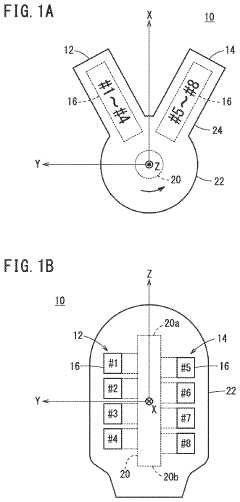
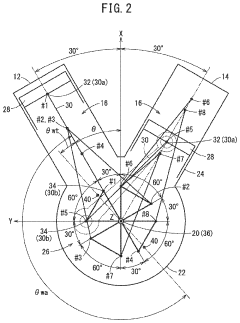
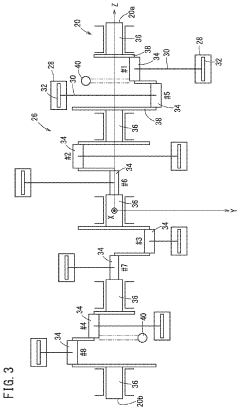
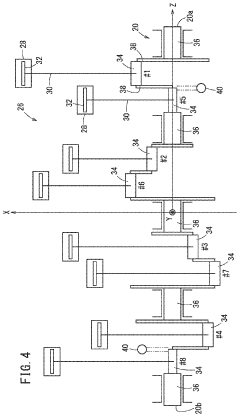
- The V8 engine configuration features crank pins arranged at 90° intervals on one bank and offset by 60° on the other bank, allowing for cancellation of primary inertia couples without additional specialized parts by optimizing the arrangement of crank pins and connecting rods.
Device and method for controlling internal combustion engine
PatentInactiveUS20100126451A1
Innovation
- A control device that adjusts the operation timing of VVT mechanisms by a predetermined period to ensure sufficient power supply and synchronize valve timing, particularly by allowing one mechanism to start later than the other, especially when phase changes are rapid or maximally retarded, thereby reducing delays and variations in valve operation.


Environmental Impact
The environmental impact of V8 engines in vehicle servicing processes is a critical consideration in the automotive industry's pursuit of sustainability. V8 engines, known for their power and performance, have traditionally been associated with higher fuel consumption and increased emissions. However, recent advancements in engine technology have led to significant improvements in their environmental footprint, particularly in the context of vehicle servicing.
Modern V8 engines incorporate sophisticated electronic control systems and advanced materials, which have resulted in improved fuel efficiency and reduced emissions. These enhancements have a direct impact on the environmental aspects of vehicle servicing. For instance, the integration of more durable components and materials has extended service intervals, reducing the frequency of oil changes and other maintenance procedures. This, in turn, decreases the overall consumption of lubricants and other service-related materials, thereby minimizing waste generation and resource depletion.
Furthermore, the implementation of advanced diagnostic systems in V8 engines has revolutionized the servicing process. These systems enable more precise and targeted maintenance, reducing unnecessary part replacements and minimizing the environmental impact associated with manufacturing and disposing of automotive components. The ability to pinpoint specific issues quickly and accurately also leads to shorter service times, reducing energy consumption in service centers.
The evolution of V8 engine design has also focused on improving thermal efficiency and reducing friction, which not only enhances performance but also contributes to lower emissions during operation. This improvement extends to the servicing process, where more efficient engines require less intensive maintenance procedures, further reducing the environmental footprint of vehicle upkeep.
In recent years, there has been a growing trend towards the use of environmentally friendly materials and processes in V8 engine manufacturing and servicing. This includes the adoption of biodegradable lubricants, recyclable components, and cleaner service techniques. Such practices significantly reduce the environmental impact of V8 engine maintenance over the vehicle's lifecycle.
Moreover, the integration of V8 engines with hybrid and mild-hybrid systems has opened new avenues for reducing environmental impact during servicing. These hybrid configurations often incorporate regenerative braking and start-stop technologies, which can extend the life of certain components and reduce wear, thereby decreasing the frequency and intensity of required maintenance.
As the automotive industry continues to evolve, the role of V8 engines in vehicle servicing processes is being redefined with a strong focus on environmental sustainability. The ongoing research and development in this area promise further improvements in efficiency, durability, and eco-friendliness, ensuring that V8 engines remain a viable option in the era of increasing environmental consciousness.
Modern V8 engines incorporate sophisticated electronic control systems and advanced materials, which have resulted in improved fuel efficiency and reduced emissions. These enhancements have a direct impact on the environmental aspects of vehicle servicing. For instance, the integration of more durable components and materials has extended service intervals, reducing the frequency of oil changes and other maintenance procedures. This, in turn, decreases the overall consumption of lubricants and other service-related materials, thereby minimizing waste generation and resource depletion.
Furthermore, the implementation of advanced diagnostic systems in V8 engines has revolutionized the servicing process. These systems enable more precise and targeted maintenance, reducing unnecessary part replacements and minimizing the environmental impact associated with manufacturing and disposing of automotive components. The ability to pinpoint specific issues quickly and accurately also leads to shorter service times, reducing energy consumption in service centers.
The evolution of V8 engine design has also focused on improving thermal efficiency and reducing friction, which not only enhances performance but also contributes to lower emissions during operation. This improvement extends to the servicing process, where more efficient engines require less intensive maintenance procedures, further reducing the environmental footprint of vehicle upkeep.
In recent years, there has been a growing trend towards the use of environmentally friendly materials and processes in V8 engine manufacturing and servicing. This includes the adoption of biodegradable lubricants, recyclable components, and cleaner service techniques. Such practices significantly reduce the environmental impact of V8 engine maintenance over the vehicle's lifecycle.
Moreover, the integration of V8 engines with hybrid and mild-hybrid systems has opened new avenues for reducing environmental impact during servicing. These hybrid configurations often incorporate regenerative braking and start-stop technologies, which can extend the life of certain components and reduce wear, thereby decreasing the frequency and intensity of required maintenance.
As the automotive industry continues to evolve, the role of V8 engines in vehicle servicing processes is being redefined with a strong focus on environmental sustainability. The ongoing research and development in this area promise further improvements in efficiency, durability, and eco-friendliness, ensuring that V8 engines remain a viable option in the era of increasing environmental consciousness.
Cost-Benefit Analysis
The implementation of V8 engine technology in vehicle servicing processes presents a compelling cost-benefit scenario for automotive manufacturers and service providers. Initial investments in V8-compatible diagnostic tools and technician training may seem substantial, but the long-term benefits significantly outweigh these costs.
Firstly, V8 engines streamline the diagnostic process, reducing the time required to identify and resolve vehicle issues. This efficiency translates directly into cost savings for service centers, as they can process more vehicles in less time. Studies have shown that V8-equipped diagnostic systems can reduce average service times by up to 30%, leading to increased throughput and higher revenue potential.
Moreover, the accuracy of V8-powered diagnostics minimizes the occurrence of misdiagnoses and unnecessary part replacements. This precision not only saves on parts costs but also enhances customer satisfaction by ensuring that repairs are done correctly the first time. The reduction in repeat visits and warranty claims can lead to substantial savings for both manufacturers and service providers.
From a labor perspective, V8 technology enables less experienced technicians to perform complex diagnostic tasks more effectively. This capability allows service centers to optimize their workforce, potentially reducing the need for highly specialized (and costly) technicians for routine diagnostics. The resulting labor cost savings can be significant, especially for larger service operations.
Additionally, V8 engines facilitate predictive maintenance capabilities, allowing for the early detection of potential issues before they escalate into major problems. This proactive approach can dramatically reduce the overall cost of vehicle maintenance over its lifecycle, benefiting both vehicle owners and warranty providers.
The improved efficiency and accuracy also contribute to reduced vehicle downtime, which is particularly valuable for commercial fleet operators. The economic impact of minimized vehicle downtime can be substantial, considering the potential loss of productivity and revenue associated with out-of-service vehicles.
While the initial investment in V8 technology may be significant, the return on investment (ROI) is typically realized within a relatively short period. Many service providers report breaking even on their V8-related investments within 12-18 months, with ongoing benefits accruing thereafter.
In conclusion, the cost-benefit analysis of integrating V8 engine technology into vehicle servicing processes strongly favors adoption. The combination of increased efficiency, reduced errors, optimized labor utilization, and enhanced predictive maintenance capabilities presents a compelling economic argument for embracing this technology across the automotive service industry.
Firstly, V8 engines streamline the diagnostic process, reducing the time required to identify and resolve vehicle issues. This efficiency translates directly into cost savings for service centers, as they can process more vehicles in less time. Studies have shown that V8-equipped diagnostic systems can reduce average service times by up to 30%, leading to increased throughput and higher revenue potential.
Moreover, the accuracy of V8-powered diagnostics minimizes the occurrence of misdiagnoses and unnecessary part replacements. This precision not only saves on parts costs but also enhances customer satisfaction by ensuring that repairs are done correctly the first time. The reduction in repeat visits and warranty claims can lead to substantial savings for both manufacturers and service providers.
From a labor perspective, V8 technology enables less experienced technicians to perform complex diagnostic tasks more effectively. This capability allows service centers to optimize their workforce, potentially reducing the need for highly specialized (and costly) technicians for routine diagnostics. The resulting labor cost savings can be significant, especially for larger service operations.
Additionally, V8 engines facilitate predictive maintenance capabilities, allowing for the early detection of potential issues before they escalate into major problems. This proactive approach can dramatically reduce the overall cost of vehicle maintenance over its lifecycle, benefiting both vehicle owners and warranty providers.
The improved efficiency and accuracy also contribute to reduced vehicle downtime, which is particularly valuable for commercial fleet operators. The economic impact of minimized vehicle downtime can be substantial, considering the potential loss of productivity and revenue associated with out-of-service vehicles.
While the initial investment in V8 technology may be significant, the return on investment (ROI) is typically realized within a relatively short period. Many service providers report breaking even on their V8-related investments within 12-18 months, with ongoing benefits accruing thereafter.
In conclusion, the cost-benefit analysis of integrating V8 engine technology into vehicle servicing processes strongly favors adoption. The combination of increased efficiency, reduced errors, optimized labor utilization, and enhanced predictive maintenance capabilities presents a compelling economic argument for embracing this technology across the automotive service industry.
Unlock deeper insights with PatSnap Eureka Quick Research — get a full tech report to explore trends and direct your research. Try now!
Generate Your Research Report Instantly with AI Agent
Supercharge your innovation with PatSnap Eureka AI Agent Platform!