

V8 Engine Technologies: Cutting-Edge Developments
JUL 4, 20259 MIN READ
Generate Your Research Report Instantly with AI Agent
PatSnap Eureka helps you evaluate technical feasibility & market potential.
V8 Engine Evolution and Objectives
The V8 engine, a marvel of automotive engineering, has undergone significant evolution since its inception in the early 20th century. Initially developed to provide more power and smoother operation compared to inline engines, V8s have become synonymous with performance and luxury vehicles. The evolution of V8 engines has been driven by the constant pursuit of increased power output, improved fuel efficiency, and reduced emissions.
In the early stages, V8 engines were primarily focused on raw power delivery. However, as environmental concerns and fuel economy became more prominent, the objectives shifted towards creating more efficient and cleaner V8 engines. This led to the development of technologies such as variable valve timing, direct fuel injection, and cylinder deactivation.
The advent of turbocharging and supercharging technologies has allowed V8 engines to maintain their power output while reducing displacement, a trend known as "downsizing." This approach has been crucial in meeting increasingly stringent emissions regulations without sacrificing performance. Manufacturers have also explored the use of lightweight materials and advanced manufacturing techniques to reduce engine weight and improve overall vehicle efficiency.
In recent years, the integration of hybrid and electric technologies with V8 engines has emerged as a significant trend. This hybridization allows for improved fuel economy and reduced emissions while still providing the characteristic power and sound that V8 enthusiasts crave. Some high-performance vehicles now feature V8 engines combined with electric motors, creating powerful yet more environmentally friendly powertrains.
The current objectives in V8 engine development are multifaceted. Engineers are striving to further enhance thermal efficiency, reduce friction losses, and optimize combustion processes. There is also a strong focus on integrating advanced materials and coatings to improve durability and reduce wear. Additionally, the development of smart engine management systems that can adapt to various driving conditions and optimize performance in real-time is a key area of research.
Looking ahead, the future of V8 engines lies in their ability to adapt to a changing automotive landscape. This includes the potential for carbon-neutral fuels, such as hydrogen or synthetic fuels, which could allow V8 engines to continue operating with significantly reduced environmental impact. The integration of artificial intelligence and machine learning in engine control systems is also expected to play a crucial role in optimizing performance and efficiency.
As the automotive industry moves towards electrification, the role of V8 engines is evolving. While they may become less common in mainstream vehicles, V8s are likely to maintain their presence in high-performance and luxury segments, where their unique characteristics are highly valued. The challenge for engineers is to continue innovating and adapting V8 technology to meet future performance, efficiency, and emissions standards while preserving the engine's iconic status in automotive culture.
In the early stages, V8 engines were primarily focused on raw power delivery. However, as environmental concerns and fuel economy became more prominent, the objectives shifted towards creating more efficient and cleaner V8 engines. This led to the development of technologies such as variable valve timing, direct fuel injection, and cylinder deactivation.
The advent of turbocharging and supercharging technologies has allowed V8 engines to maintain their power output while reducing displacement, a trend known as "downsizing." This approach has been crucial in meeting increasingly stringent emissions regulations without sacrificing performance. Manufacturers have also explored the use of lightweight materials and advanced manufacturing techniques to reduce engine weight and improve overall vehicle efficiency.
In recent years, the integration of hybrid and electric technologies with V8 engines has emerged as a significant trend. This hybridization allows for improved fuel economy and reduced emissions while still providing the characteristic power and sound that V8 enthusiasts crave. Some high-performance vehicles now feature V8 engines combined with electric motors, creating powerful yet more environmentally friendly powertrains.
The current objectives in V8 engine development are multifaceted. Engineers are striving to further enhance thermal efficiency, reduce friction losses, and optimize combustion processes. There is also a strong focus on integrating advanced materials and coatings to improve durability and reduce wear. Additionally, the development of smart engine management systems that can adapt to various driving conditions and optimize performance in real-time is a key area of research.
Looking ahead, the future of V8 engines lies in their ability to adapt to a changing automotive landscape. This includes the potential for carbon-neutral fuels, such as hydrogen or synthetic fuels, which could allow V8 engines to continue operating with significantly reduced environmental impact. The integration of artificial intelligence and machine learning in engine control systems is also expected to play a crucial role in optimizing performance and efficiency.
As the automotive industry moves towards electrification, the role of V8 engines is evolving. While they may become less common in mainstream vehicles, V8s are likely to maintain their presence in high-performance and luxury segments, where their unique characteristics are highly valued. The challenge for engineers is to continue innovating and adapting V8 technology to meet future performance, efficiency, and emissions standards while preserving the engine's iconic status in automotive culture.
Market Demand Analysis for V8 Engines
The market demand for V8 engines has been evolving rapidly in recent years, driven by a combination of technological advancements, changing consumer preferences, and regulatory pressures. In the automotive sector, V8 engines have long been associated with high-performance vehicles, luxury cars, and heavy-duty trucks. However, the market landscape is shifting due to several factors.
One of the primary drivers of market demand for V8 engines is the continued desire for power and performance among automotive enthusiasts and luxury vehicle buyers. These engines offer superior acceleration, towing capacity, and a distinctive engine note that appeals to a specific segment of consumers. In the sports car and high-end luxury vehicle markets, V8 engines remain a significant selling point, with manufacturers continually innovating to improve power output and efficiency.
The truck and SUV market also plays a crucial role in sustaining demand for V8 engines. As consumers increasingly prefer larger vehicles for their perceived safety and versatility, manufacturers have responded by offering V8 options in full-size trucks and SUVs. This trend is particularly strong in North America, where these vehicle types dominate sales charts.
However, the market for V8 engines faces challenges from increasing environmental regulations and a global push towards fuel efficiency and reduced emissions. Many countries have implemented stricter fuel economy standards and emissions regulations, putting pressure on manufacturers to develop more efficient powertrains. This has led to a decline in V8 engine offerings in some vehicle segments, particularly in mid-size sedans and smaller SUVs.
In response to these challenges, the V8 engine market has seen significant technological advancements. Manufacturers are investing in cutting-edge developments such as cylinder deactivation, direct injection, and advanced turbocharging to improve fuel efficiency without sacrificing performance. These innovations have helped maintain the relevance of V8 engines in a market increasingly focused on environmental concerns.
The luxury and performance vehicle segments continue to be key drivers of V8 engine demand. Brands like Mercedes-AMG, BMW M, and Audi RS still offer V8 options in their high-performance models, catering to customers who prioritize power and prestige. In the supercar market, V8 engines remain a popular choice, with manufacturers like Ferrari and McLaren continuing to develop advanced V8 powertrains.
Looking ahead, the market demand for V8 engines is expected to face further challenges as electrification gains momentum. However, there remains a niche market for these engines, particularly in high-performance and luxury applications. The future of V8 engines likely lies in hybrid powertrains, where electric motors can complement the V8's power while addressing efficiency concerns.
One of the primary drivers of market demand for V8 engines is the continued desire for power and performance among automotive enthusiasts and luxury vehicle buyers. These engines offer superior acceleration, towing capacity, and a distinctive engine note that appeals to a specific segment of consumers. In the sports car and high-end luxury vehicle markets, V8 engines remain a significant selling point, with manufacturers continually innovating to improve power output and efficiency.
The truck and SUV market also plays a crucial role in sustaining demand for V8 engines. As consumers increasingly prefer larger vehicles for their perceived safety and versatility, manufacturers have responded by offering V8 options in full-size trucks and SUVs. This trend is particularly strong in North America, where these vehicle types dominate sales charts.
However, the market for V8 engines faces challenges from increasing environmental regulations and a global push towards fuel efficiency and reduced emissions. Many countries have implemented stricter fuel economy standards and emissions regulations, putting pressure on manufacturers to develop more efficient powertrains. This has led to a decline in V8 engine offerings in some vehicle segments, particularly in mid-size sedans and smaller SUVs.
In response to these challenges, the V8 engine market has seen significant technological advancements. Manufacturers are investing in cutting-edge developments such as cylinder deactivation, direct injection, and advanced turbocharging to improve fuel efficiency without sacrificing performance. These innovations have helped maintain the relevance of V8 engines in a market increasingly focused on environmental concerns.
The luxury and performance vehicle segments continue to be key drivers of V8 engine demand. Brands like Mercedes-AMG, BMW M, and Audi RS still offer V8 options in their high-performance models, catering to customers who prioritize power and prestige. In the supercar market, V8 engines remain a popular choice, with manufacturers like Ferrari and McLaren continuing to develop advanced V8 powertrains.
Looking ahead, the market demand for V8 engines is expected to face further challenges as electrification gains momentum. However, there remains a niche market for these engines, particularly in high-performance and luxury applications. The future of V8 engines likely lies in hybrid powertrains, where electric motors can complement the V8's power while addressing efficiency concerns.
Current V8 Technology Landscape
The V8 engine technology landscape has undergone significant advancements in recent years, driven by the need for improved performance, fuel efficiency, and reduced emissions. Modern V8 engines incorporate a range of cutting-edge technologies that push the boundaries of internal combustion engine design.
One of the most prominent developments is the widespread adoption of direct fuel injection systems. This technology allows for precise control over fuel delivery, resulting in improved combustion efficiency and reduced fuel consumption. Many contemporary V8 engines also feature variable valve timing and lift systems, which optimize engine performance across a wide range of operating conditions.
Turbocharging and supercharging have become increasingly common in V8 engines, enabling manufacturers to extract more power from smaller displacement engines. This trend towards "downsized" V8s has been driven by the need to meet stringent emissions regulations while maintaining high performance levels.
Advanced materials and manufacturing techniques have also played a crucial role in shaping the current V8 technology landscape. Lightweight alloys, such as aluminum and magnesium, are now widely used in engine construction to reduce overall weight and improve power-to-weight ratios. Additionally, precision manufacturing processes, including 3D printing of complex components, have enabled the creation of more intricate and efficient engine designs.
Cylinder deactivation technology has gained traction in recent years, allowing V8 engines to operate on fewer cylinders under light load conditions, thereby improving fuel economy. This technology seamlessly switches between full V8 mode and a more efficient four-cylinder configuration, depending on driving demands.
The integration of sophisticated engine management systems and sensors has revolutionized V8 engine control. These systems continuously monitor and adjust various parameters, such as fuel mixture, ignition timing, and valve operation, to optimize performance and efficiency in real-time.
Hybrid and mild-hybrid technologies are increasingly being incorporated into V8 powertrains. These systems combine the traditional V8 engine with electric motors to provide additional power and improve fuel efficiency. Some manufacturers have introduced 48-volt electrical systems to support these hybrid configurations and power advanced accessories.
Lastly, the current V8 technology landscape is characterized by a focus on emissions reduction. Advanced exhaust aftertreatment systems, including particulate filters and selective catalytic reduction, are now standard features in modern V8 engines to meet stringent environmental regulations.
One of the most prominent developments is the widespread adoption of direct fuel injection systems. This technology allows for precise control over fuel delivery, resulting in improved combustion efficiency and reduced fuel consumption. Many contemporary V8 engines also feature variable valve timing and lift systems, which optimize engine performance across a wide range of operating conditions.
Turbocharging and supercharging have become increasingly common in V8 engines, enabling manufacturers to extract more power from smaller displacement engines. This trend towards "downsized" V8s has been driven by the need to meet stringent emissions regulations while maintaining high performance levels.
Advanced materials and manufacturing techniques have also played a crucial role in shaping the current V8 technology landscape. Lightweight alloys, such as aluminum and magnesium, are now widely used in engine construction to reduce overall weight and improve power-to-weight ratios. Additionally, precision manufacturing processes, including 3D printing of complex components, have enabled the creation of more intricate and efficient engine designs.
Cylinder deactivation technology has gained traction in recent years, allowing V8 engines to operate on fewer cylinders under light load conditions, thereby improving fuel economy. This technology seamlessly switches between full V8 mode and a more efficient four-cylinder configuration, depending on driving demands.
The integration of sophisticated engine management systems and sensors has revolutionized V8 engine control. These systems continuously monitor and adjust various parameters, such as fuel mixture, ignition timing, and valve operation, to optimize performance and efficiency in real-time.
Hybrid and mild-hybrid technologies are increasingly being incorporated into V8 powertrains. These systems combine the traditional V8 engine with electric motors to provide additional power and improve fuel efficiency. Some manufacturers have introduced 48-volt electrical systems to support these hybrid configurations and power advanced accessories.
Lastly, the current V8 technology landscape is characterized by a focus on emissions reduction. Advanced exhaust aftertreatment systems, including particulate filters and selective catalytic reduction, are now standard features in modern V8 engines to meet stringent environmental regulations.
Cutting-Edge V8 Engine Solutions
01 V8 Engine Design and Configuration
V8 engines are designed with eight cylinders arranged in two banks of four, forming a V-shape. This configuration allows for a compact design, improved balance, and higher power output compared to inline engines. Various aspects of V8 engine design, including cylinder arrangement, crankshaft configuration, and valve timing, are optimized for performance and efficiency.- V8 Engine Design and Configuration: V8 engines are designed with eight cylinders arranged in two banks of four, forming a V-shape. This configuration allows for a compact design, improved power output, and better balance compared to inline engines. Various aspects of V8 engine design, including cylinder arrangement, crankshaft configuration, and valve train systems, are continuously improved to enhance performance and efficiency.
- Fuel Efficiency and Emissions Control: Modern V8 engines incorporate advanced technologies to improve fuel efficiency and reduce emissions. These may include direct fuel injection, variable valve timing, cylinder deactivation, and advanced exhaust gas recirculation systems. Innovations in engine management systems and combustion processes aim to optimize performance while meeting stringent environmental regulations.
- Performance Enhancement and Tuning: Various methods and components are developed to enhance V8 engine performance. These include turbocharging, supercharging, intercooling, and high-flow intake and exhaust systems. Advanced materials and manufacturing techniques are employed to reduce weight, increase strength, and improve thermal efficiency of engine components.
- Cooling and Lubrication Systems: Effective cooling and lubrication are crucial for V8 engine performance and longevity. Innovations in coolant flow design, oil circulation systems, and thermal management contribute to improved engine efficiency and reliability. Advanced cooling techniques may include precision coolant control and integrated thermal management systems.
- Integration with Hybrid and Electric Systems: As automotive technology evolves, V8 engines are being integrated with hybrid and electric systems to improve overall vehicle efficiency and performance. This includes the development of mild hybrid systems, regenerative braking, and advanced power management strategies that complement the V8 engine's characteristics while reducing fuel consumption and emissions.
02 Fuel Efficiency and Emissions Control
Modern V8 engines incorporate technologies to improve fuel efficiency and reduce emissions. These may include direct fuel injection, variable valve timing, cylinder deactivation, and advanced exhaust gas recirculation systems. Such innovations help V8 engines meet stringent environmental regulations while maintaining high performance.Expand Specific Solutions03 Performance Enhancement and Tuning
Various methods and components are used to enhance V8 engine performance. These may include turbocharging, supercharging, high-flow intake and exhaust systems, and engine management system tuning. Performance enhancements aim to increase horsepower, torque, and overall engine responsiveness.Expand Specific Solutions04 Cooling and Lubrication Systems
Effective cooling and lubrication are crucial for V8 engine reliability and longevity. Advanced cooling systems may incorporate precision coolant flow control, while lubrication systems often feature high-capacity oil pumps and advanced filtration. These systems help manage the high heat and stress generated by high-performance V8 engines.Expand Specific Solutions05 Manufacturing and Assembly Techniques
Specialized manufacturing and assembly techniques are employed in V8 engine production. These may include precision machining of engine blocks and components, advanced casting methods, and automated assembly processes. Such techniques ensure consistent quality and performance across production runs.Expand Specific Solutions
Key Players in V8 Engine Manufacturing
The V8 engine technology market is in a mature stage, with established players and ongoing innovation. The global market size for V8 engines is substantial, driven by demand in high-performance vehicles and luxury segments. Technologically, V8 engines are well-developed, but advancements continue in areas like fuel efficiency and emissions reduction. Key players like Toyota, Honda, BMW, and Ford are investing in V8 engine R&D, focusing on performance optimization and integration with hybrid systems. Emerging companies such as Guangxi Yuchai Machinery are also contributing to technological progress. The competitive landscape is characterized by a mix of traditional automotive giants and specialized engine manufacturers, all striving to balance power output with environmental considerations.
Toyota Motor Corp.
Technical Solution: Toyota has been at the forefront of V8 engine technology development, focusing on improving efficiency and performance. Their latest V8 engine, the 3UR-FE, features direct injection, variable valve timing, and an advanced cooling system. Toyota has also developed a new twin-turbo V8 engine for their high-performance vehicles, incorporating a water-to-air intercooler and electric wastegate actuators for improved responsiveness[1]. Additionally, Toyota is exploring hybrid V8 powertrains, combining traditional V8 power with electric motors for enhanced fuel efficiency and reduced emissions[2].
Strengths: Advanced fuel injection and valve timing technologies, hybrid integration capabilities. Weaknesses: Higher production costs, complexity in maintenance for advanced systems.
Bayerische Motoren Werke AG
Technical Solution: BMW has been innovating in V8 engine technology with a focus on performance and efficiency. Their latest V8 engines feature TwinPower Turbo technology, which combines twin-scroll turbochargers with variable valve control (Double-VANOS and Valvetronic) and high-precision direct injection[3]. BMW has also implemented a cross-bank exhaust manifold for improved throttle response and fuel efficiency. The company is working on a new generation of V8 engines that incorporate mild-hybrid technology, using a 48V electrical system to power an electric motor that assists the engine during acceleration and enables smoother start-stop functionality[4].
Strengths: High-performance output, advanced turbocharging technology, integration of mild-hybrid systems. Weaknesses: Complexity in design, potentially higher maintenance costs.
Innovative V8 Technologies Analysis
V8 engine
PatentActiveUS11821359B2
Innovation
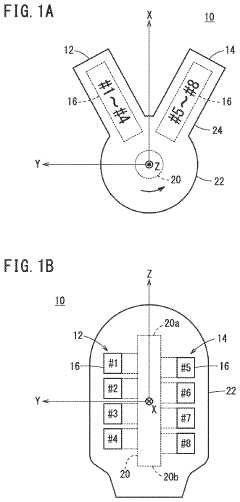
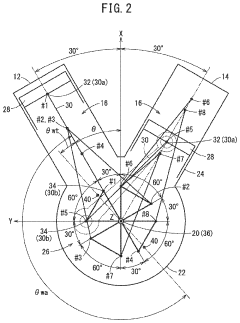
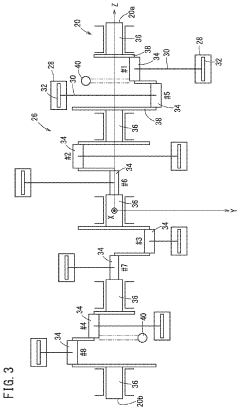
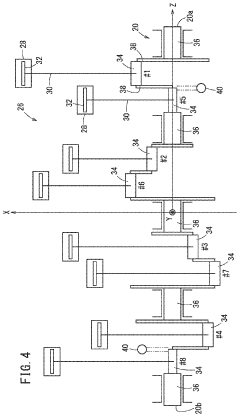
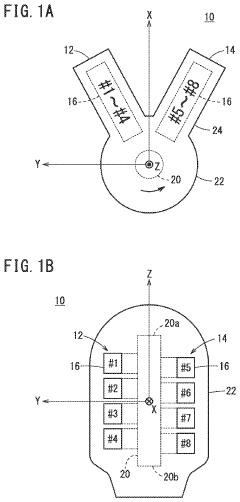
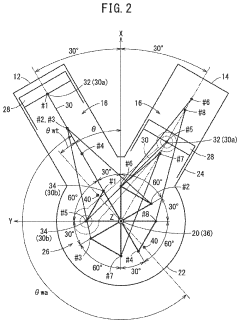
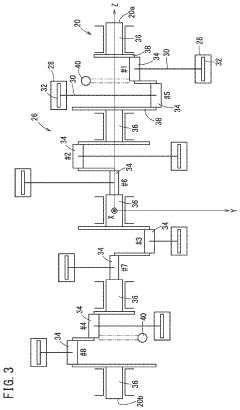
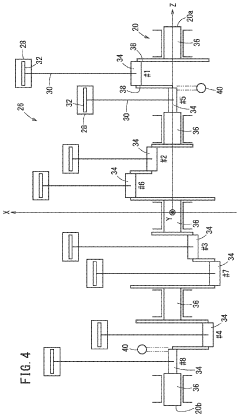
- The V8 engine configuration features crank pins arranged at 90° intervals on one bank and offset by 60° on the other bank, allowing for cancellation of primary inertia couples without additional specialized parts by optimizing the arrangement of crank pins and connecting rods.
V8 engine
PatentActiveUS20230109196A1
Innovation
- The V8 engine configuration features crank pins arranged at 90° intervals on one bank and offset by 60° on the other bank, allowing for cancellation of primary inertia couples without additional specialized components by optimizing the arrangement of crank pins and connecting rods.
Environmental Impact of V8 Engines
The environmental impact of V8 engines has been a subject of increasing concern in recent years, as the automotive industry grapples with the need for more sustainable transportation solutions. V8 engines, known for their power and performance, have long been associated with high fuel consumption and significant carbon emissions. However, cutting-edge developments in V8 engine technologies are addressing these environmental challenges.
One of the primary areas of focus has been improving fuel efficiency. Advanced fuel injection systems, such as direct injection and variable valve timing, have been implemented to optimize fuel delivery and combustion processes. These technologies allow for more precise control over the air-fuel mixture, resulting in improved fuel economy and reduced emissions. Additionally, cylinder deactivation technology has been introduced, enabling V8 engines to operate on fewer cylinders during low-load conditions, further enhancing fuel efficiency.
Emissions reduction has been another critical aspect of V8 engine development. Modern V8 engines are equipped with sophisticated exhaust aftertreatment systems, including catalytic converters and particulate filters, to minimize harmful pollutants. The integration of advanced materials and coatings in engine components has also contributed to reduced friction and improved thermal efficiency, leading to lower emissions and better overall performance.
The adoption of hybrid and mild-hybrid technologies in V8 engines has further mitigated their environmental impact. These systems incorporate electric motors and battery packs to assist the internal combustion engine, reducing fuel consumption and emissions during acceleration and low-speed driving. Some manufacturers have even developed plug-in hybrid V8 powertrains, allowing for limited all-electric driving capabilities and significantly reduced emissions in urban environments.
Advancements in engine management systems and electronic control units have enabled more precise control over engine operations, optimizing performance while minimizing environmental impact. These systems continuously monitor and adjust various parameters, such as fuel injection timing, ignition timing, and valve lift, to ensure optimal efficiency across different driving conditions.
The use of alternative fuels in V8 engines has also gained traction as a means to reduce environmental impact. Flex-fuel V8 engines capable of running on ethanol blends have been developed, offering lower carbon emissions compared to traditional gasoline-only engines. Some manufacturers are exploring the potential of hydrogen-powered V8 engines, which could potentially eliminate carbon emissions entirely.
While these advancements have significantly improved the environmental performance of V8 engines, challenges remain. The inherent size and power output of V8 engines still result in higher fuel consumption and emissions compared to smaller engine configurations. As a result, some automakers are gradually phasing out V8 engines in favor of smaller, turbocharged engines or fully electric powertrains to meet increasingly stringent environmental regulations.
One of the primary areas of focus has been improving fuel efficiency. Advanced fuel injection systems, such as direct injection and variable valve timing, have been implemented to optimize fuel delivery and combustion processes. These technologies allow for more precise control over the air-fuel mixture, resulting in improved fuel economy and reduced emissions. Additionally, cylinder deactivation technology has been introduced, enabling V8 engines to operate on fewer cylinders during low-load conditions, further enhancing fuel efficiency.
Emissions reduction has been another critical aspect of V8 engine development. Modern V8 engines are equipped with sophisticated exhaust aftertreatment systems, including catalytic converters and particulate filters, to minimize harmful pollutants. The integration of advanced materials and coatings in engine components has also contributed to reduced friction and improved thermal efficiency, leading to lower emissions and better overall performance.
The adoption of hybrid and mild-hybrid technologies in V8 engines has further mitigated their environmental impact. These systems incorporate electric motors and battery packs to assist the internal combustion engine, reducing fuel consumption and emissions during acceleration and low-speed driving. Some manufacturers have even developed plug-in hybrid V8 powertrains, allowing for limited all-electric driving capabilities and significantly reduced emissions in urban environments.
Advancements in engine management systems and electronic control units have enabled more precise control over engine operations, optimizing performance while minimizing environmental impact. These systems continuously monitor and adjust various parameters, such as fuel injection timing, ignition timing, and valve lift, to ensure optimal efficiency across different driving conditions.
The use of alternative fuels in V8 engines has also gained traction as a means to reduce environmental impact. Flex-fuel V8 engines capable of running on ethanol blends have been developed, offering lower carbon emissions compared to traditional gasoline-only engines. Some manufacturers are exploring the potential of hydrogen-powered V8 engines, which could potentially eliminate carbon emissions entirely.
While these advancements have significantly improved the environmental performance of V8 engines, challenges remain. The inherent size and power output of V8 engines still result in higher fuel consumption and emissions compared to smaller engine configurations. As a result, some automakers are gradually phasing out V8 engines in favor of smaller, turbocharged engines or fully electric powertrains to meet increasingly stringent environmental regulations.
V8 Engine Performance Benchmarks
V8 engine performance benchmarks serve as crucial indicators of engine efficiency, power output, and overall capabilities. These benchmarks are essential for comparing different V8 engines and assessing their suitability for various applications, from high-performance sports cars to heavy-duty trucks.
One of the primary performance metrics for V8 engines is horsepower, which measures the engine's overall power output. Modern V8 engines can produce anywhere from 300 to over 1000 horsepower, depending on their design and intended use. Torque, another critical benchmark, indicates the engine's rotational force and is particularly important for towing and acceleration. V8 engines typically excel in torque production, with figures ranging from 300 to 800 lb-ft or more.
Fuel efficiency is an increasingly important benchmark for V8 engines, especially as environmental concerns and fuel costs continue to rise. Advanced technologies such as direct injection, variable valve timing, and cylinder deactivation have significantly improved fuel economy in recent years. Some modern V8 engines can achieve fuel efficiency ratings of 20-25 mpg on the highway, a substantial improvement over their predecessors.
Emissions performance is another crucial benchmark, with stringent regulations driving innovations in engine design and exhaust treatment systems. Many contemporary V8 engines utilize advanced catalytic converters, particulate filters, and selective catalytic reduction (SCR) systems to meet or exceed emissions standards.
Durability and longevity are essential benchmarks for V8 engines, particularly in commercial and industrial applications. Manufacturers often conduct extensive testing, including accelerated wear tests and long-duration running cycles, to ensure their engines can withstand prolonged use under various conditions.
Power-to-weight ratio is a critical benchmark for high-performance applications, indicating how efficiently an engine produces power relative to its mass. This metric is particularly important in racing and sports car applications, where weight reduction is crucial for overall vehicle performance.
Thermal efficiency, which measures how effectively an engine converts fuel energy into mechanical work, is becoming an increasingly important benchmark. Some of the most advanced V8 engines can achieve thermal efficiencies of up to 40%, a significant improvement over older designs.
Noise, vibration, and harshness (NVH) characteristics are also important benchmarks, especially for luxury vehicle applications. Modern V8 engines often incorporate advanced balancing techniques, sound-dampening materials, and active noise cancellation systems to provide a smooth and refined driving experience.
One of the primary performance metrics for V8 engines is horsepower, which measures the engine's overall power output. Modern V8 engines can produce anywhere from 300 to over 1000 horsepower, depending on their design and intended use. Torque, another critical benchmark, indicates the engine's rotational force and is particularly important for towing and acceleration. V8 engines typically excel in torque production, with figures ranging from 300 to 800 lb-ft or more.
Fuel efficiency is an increasingly important benchmark for V8 engines, especially as environmental concerns and fuel costs continue to rise. Advanced technologies such as direct injection, variable valve timing, and cylinder deactivation have significantly improved fuel economy in recent years. Some modern V8 engines can achieve fuel efficiency ratings of 20-25 mpg on the highway, a substantial improvement over their predecessors.
Emissions performance is another crucial benchmark, with stringent regulations driving innovations in engine design and exhaust treatment systems. Many contemporary V8 engines utilize advanced catalytic converters, particulate filters, and selective catalytic reduction (SCR) systems to meet or exceed emissions standards.
Durability and longevity are essential benchmarks for V8 engines, particularly in commercial and industrial applications. Manufacturers often conduct extensive testing, including accelerated wear tests and long-duration running cycles, to ensure their engines can withstand prolonged use under various conditions.
Power-to-weight ratio is a critical benchmark for high-performance applications, indicating how efficiently an engine produces power relative to its mass. This metric is particularly important in racing and sports car applications, where weight reduction is crucial for overall vehicle performance.
Thermal efficiency, which measures how effectively an engine converts fuel energy into mechanical work, is becoming an increasingly important benchmark. Some of the most advanced V8 engines can achieve thermal efficiencies of up to 40%, a significant improvement over older designs.
Noise, vibration, and harshness (NVH) characteristics are also important benchmarks, especially for luxury vehicle applications. Modern V8 engines often incorporate advanced balancing techniques, sound-dampening materials, and active noise cancellation systems to provide a smooth and refined driving experience.
Unlock deeper insights with PatSnap Eureka Quick Research — get a full tech report to explore trends and direct your research. Try now!
Generate Your Research Report Instantly with AI Agent
Supercharge your innovation with PatSnap Eureka AI Agent Platform!