
Brazilian split method for measuring elastic parameter of rock under extension condition
A technology of elastic parameters and Brazilian splitting, which is applied in the direction of applying stable tension/pressure to test the strength of materials, and can solve problems such as insufficient science
Patent Information
- Authority / Receiving Office
- CN · China
- Current Assignee / Owner
- Publication Date
- 2011-09-14
- Estimated Expiration
- Not applicable · inactive patent
Smart Images
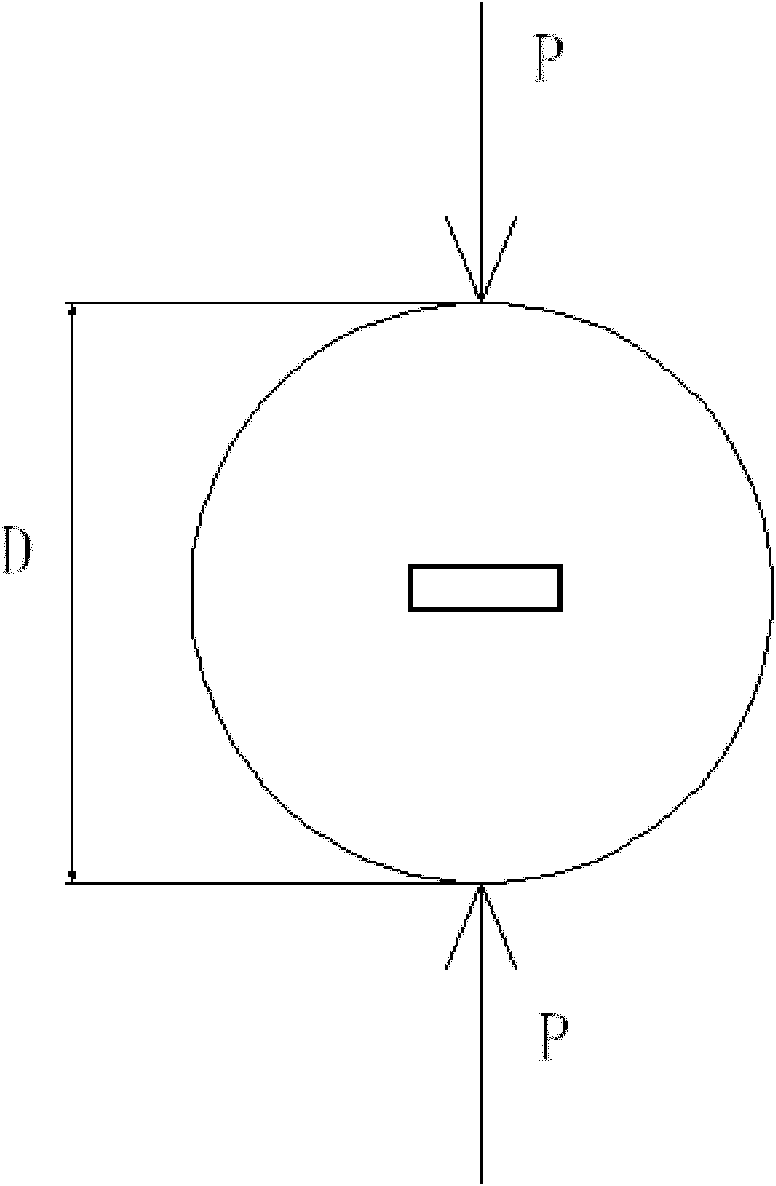
Figure 1 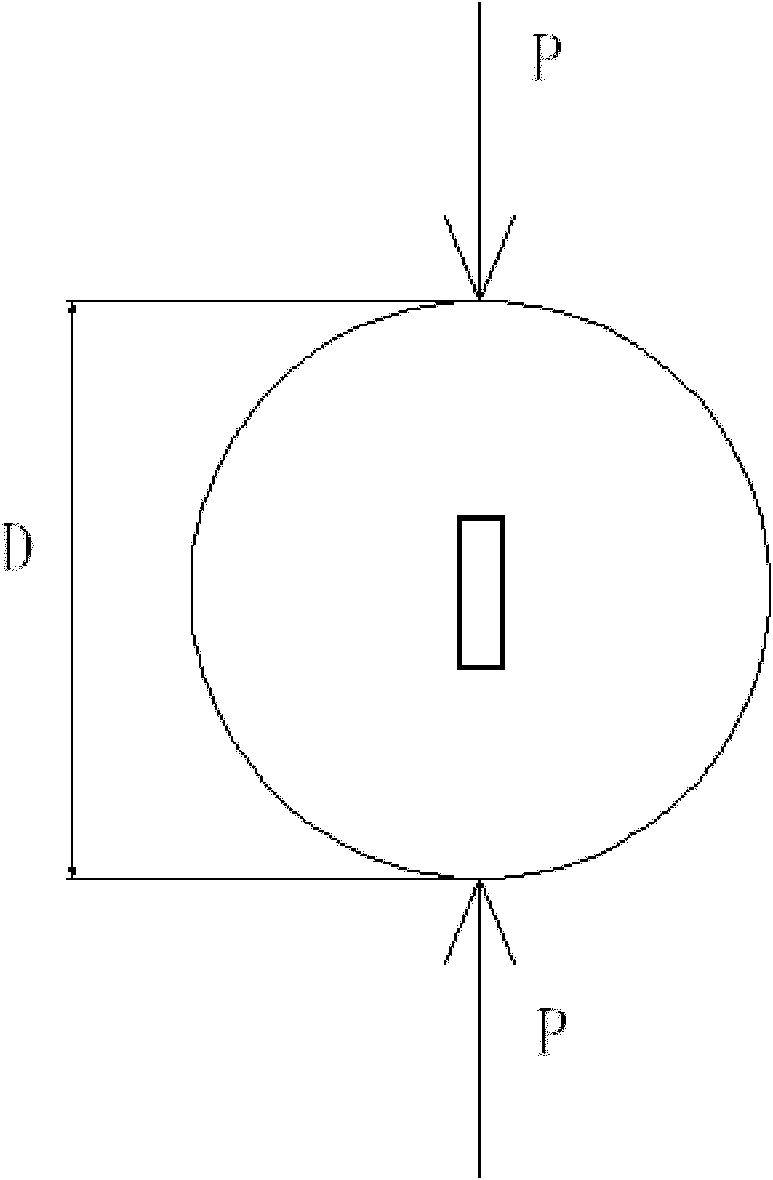
Figure 2 
Figure 3
Abstract
Description
technical field
[0001] The present invention relates to the Brazilian splitting method for measuring the tensile strength of rocks, and more specifically relates to a Brazilian splitting method for measuring rock elastic parameters under tensile failure conditions. Elastic properties under tension failure. It is well known that the tensile properties and compressive properties of rock materials are very different, and in the current hot issues of rock mechanics, more and more attention is paid to the special properties of rocks exhibited by tensile failure. The patent of the present invention aims at the tensile failure of the rock, and simply improves the Brazilian splitting method, so as to obtain the tensile strength of the rock, the elastic modulus E and the Poisson's ratio μ under the tensile failure. Background technique
[0002] At present, with the continuous development of large-scale water conservancy, hydropower and mining projects in China, rock mechanics is con...
Examples
Embodiment 1
[0043] A Brazilian splitting method for measuring elastic parameters of rock under tensile conditions, the steps are as follows:
[0044] A. Brazilian disc splitting method (Brazilian test) places the processed disc-shaped specimen horizontally between the pressure plates of the press, and places a diameter The hard steel wire with a diameter of 2 mm is used as a pad, and the pad is perpendicular to the symmetry plane of the test piece. Apply pressure to the upper and lower bearing plates, so that the specimen produces a tensile force perpendicular to the direction of the upper and lower loads until the specimen is destroyed. According to the mechanical characteristics of this test method, the tensile strength of rock can be expressed as:
[0045] σ 1 = - 2 P πD - - - ( 1 )
[0046] where σ 1 ——...