
A kind of chlorinated aromatic compound (r 1 -x m ) dechlorination method
A technology for aromatic compounds and copper catalysts is applied in the field of dechlorination of chlorinated aromatic compounds, which can solve the problems of reducing the added value of products and increasing treatment costs.
Patent Information
- Authority / Receiving Office
- CN · China
- Patent Type
- Patents(China)
- Current Assignee / Owner
- Publication Date
- 2020-10-27
Smart Images
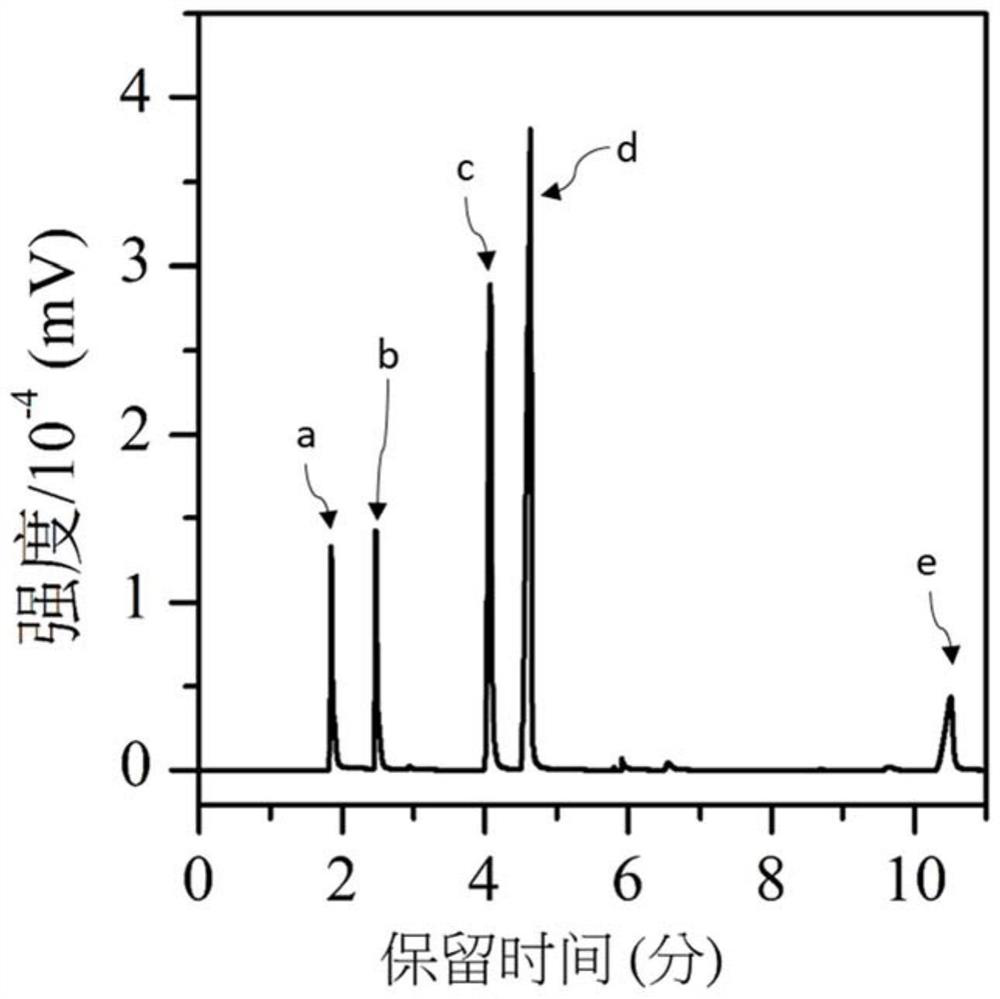
Figure 1 
Figure 2
Abstract
Description
technical field
[0001] The present invention relates to a kind of chlorinated aromatic compound (R 1 -X m ) dechlorination method. Background technique
[0002] The chemical properties of polychlorobenzene compounds and their derivatives are stable, and they are easy to accumulate in organisms. Once it enters the environment, it will pose a long-term threat to human beings and the ecological environment. It has been listed as one of the pollutants that are prioritized for global environmental control. However, polychlorobenzene by-products, including trichlorobenzene and tetrachlorobenzene, are unavoidably generated in current industrial production. The annual output of polychlorobenzene by-products is more than 10,000 tons, which not only pollutes the environment but also takes up space, coupled with high processing costs, it becomes a great burden in industrial production.
[0003] Low-chlorine aromatics are chemical raw materials, organic synthesis intermediates and o...
Examples
Embodiment 1
[0047] According to the dechlorination kit and method provided by the present invention, in 100mL polytetrafluoroethylene lining, add 10mL methanol, 0.9073g 1,2,3-trichlorobenzene as a substrate, 292mg Cu catalyst, 0.8g NaOH to get mixture. The mixture was stirred evenly, placed in a high-pressure reactor, and hydrogenated at 130° C. for 80 minutes. After the reaction, the reaction product was analyzed by gas chromatography, such as figure 1 As shown, the peaks a, b, c, d, and e from left to right in the figure represent benzene, chlorobenzene, m-dichlorobenzene, o-dichlorobenzene, and 1,2,3-trichlorobenzene respectively. The conversion rate of 1,2,3-trichlorobenzene is 90%, and the selectivity of dichlorobenzene is 88%. The reaction result shows that the dechlorination kit provided by the present invention has high selectivity.
Embodiment 2
[0049] According to the dechlorination kit and method provided by the present invention, in a 100-mL polytetrafluoroethylene liner, add 10mL methanol, 0.9073g 1,2,3-trichlorobenzene as a substrate, 292mg Cu catalyst, 0.8g NaOH mixture. The mixture was stirred evenly, placed in a high-pressure reactor, and hydrogenated at 180° C. for 30 minutes. After the reaction, the reaction product was analyzed by gas chromatography. As a result, the conversion rate of 1,2,3-trichlorobenzene was 100%, and the selectivity of dichlorobenzene was 79%.
Embodiment 3
[0051] According to the dechlorination kit and method provided by the present invention, in a 100-mL polytetrafluoroethylene liner, add 10mL methanol, 0.9073g 1,2,3-trichlorobenzene as a substrate, 292mg Cu catalyst, 1.12g KOH mixture. The mixture was stirred evenly, placed in a high-pressure reactor, and hydrogenated at 130° C. for 60 minutes. After the reaction, the reaction product was analyzed by gas chromatography. As a result, the conversion rate of 1,2,3-trichlorobenzene was 93%, and the selectivity of dichlorobenzene was 89%.