

Polymer based joint implants and method of manufacture
a polymer and joint technology, applied in joint implants, prostheses, coatings, etc., can solve the problems of high material waste, prone to fracture, high cost, etc., and achieve excellent toughness and fatigue resistance.
Patent Information
- Authority / Receiving Office
- US · United States
- Patent Type
- Applications(United States)
- Current Assignee / Owner
- Publication Date
- 2016-11-03
Smart Images
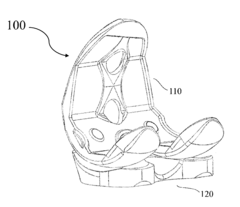
Figure 1 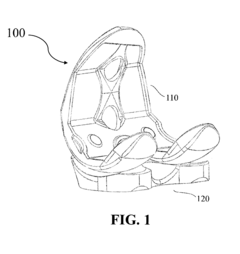
Figure 2 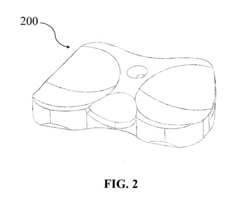
Figure 3
Abstract
Description
CROSS REFERENCE TO RELATED APPLICATIONS
[0001] This application claims the benefit of U.S. Provisional Application No. 61 / 787,270, filed 15 Mar. 2013, entitled: “POLYMER BASED IMPLANTS AND METHOD OF MANUFACTURE”, the contents of which are incorporated herein by reference thereto.COPYRIGHT & LEGAL NOTICE
[0002] A portion of the disclosure of this patent document contains material which is subject to copyright protection. The Applicant has no objection to the facsimile reproduction by anyone of the patent document or the patent disclosure as it appears in the Patent and Trademark Office patent file or records, but otherwise reserves all copyright rights whatsoever. Further, no references to third party patents or articles made herein is to be construed as an admission that the present invention is not entitled to antedate such material by virtue of prior invention.FIELD OF THE INVENTION
[0003] This invention relates to an economical method of creating medical implants with a mechanical stru...
Examples
Embodiment Construction
[0045]The following description is not intended to limit the scope of the invention in any way as to they are exemplary in nature, serving to describe the best mode of the invention known the inventors as of the filing date hereof. Consequently, changes may be made in the arrangement and / or function of any of the elements described in the exemplary embodiments disclosed herein without departing from the spirit and scope of the invention.
[0046]Thus, whereas the following description applies to the specific example of a tibial insert for a total knee replacement, the method can equally be applied to all kinds of orthopedic, cardio, neuro or any other implantable or non-implantable medical devices. Other examples are acetabular cup inserts for total hip replacement, and glenoid implants for total shoulder replacement, spinal implants, trauma implants.
[0047]All these devices have a number of features in common, such as a variable-density body with a wear resistant, dense outer surface, ...