
Apparatuses and methods for minimizing wound dehiscense, scar spread, and/or the like
a technology of scar spread and applicator, applied in the field of applicator and method for minimizing wound dehiscence, scar spread, etc., can solve the problems of scar tissue in high-tension areas such as the back, shoulders, thighs, etc., and increase the risk of scar tissue spreading and wound dehiscence, so as to minimize the risk of wound dehiscence and scar spread
- Summary
- Abstract
- Description
- Claims
- Application Information
AI Technical Summary
Benefits of technology
Problems solved by technology
Method used
Image

Examples
Embodiment Construction
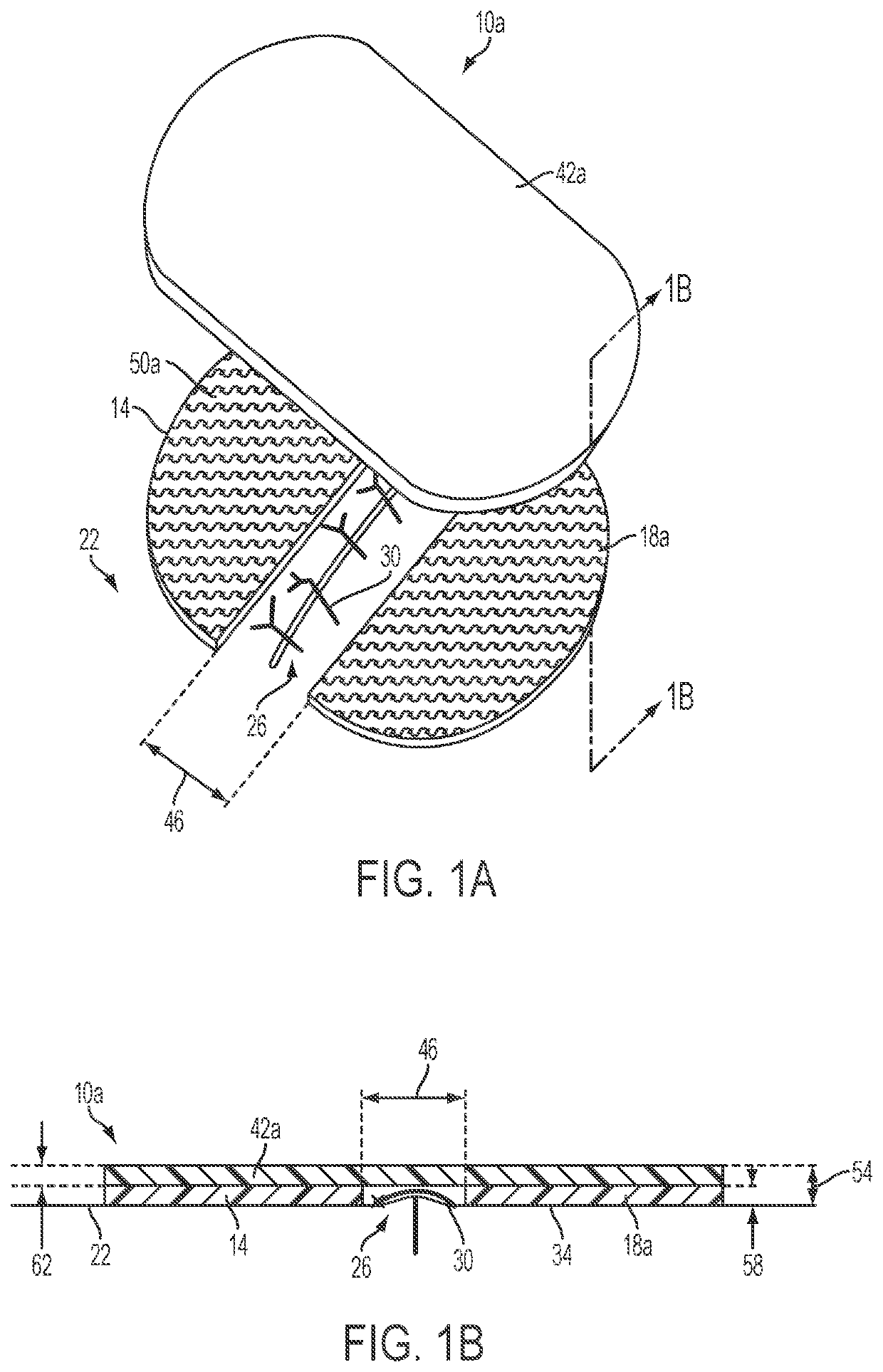
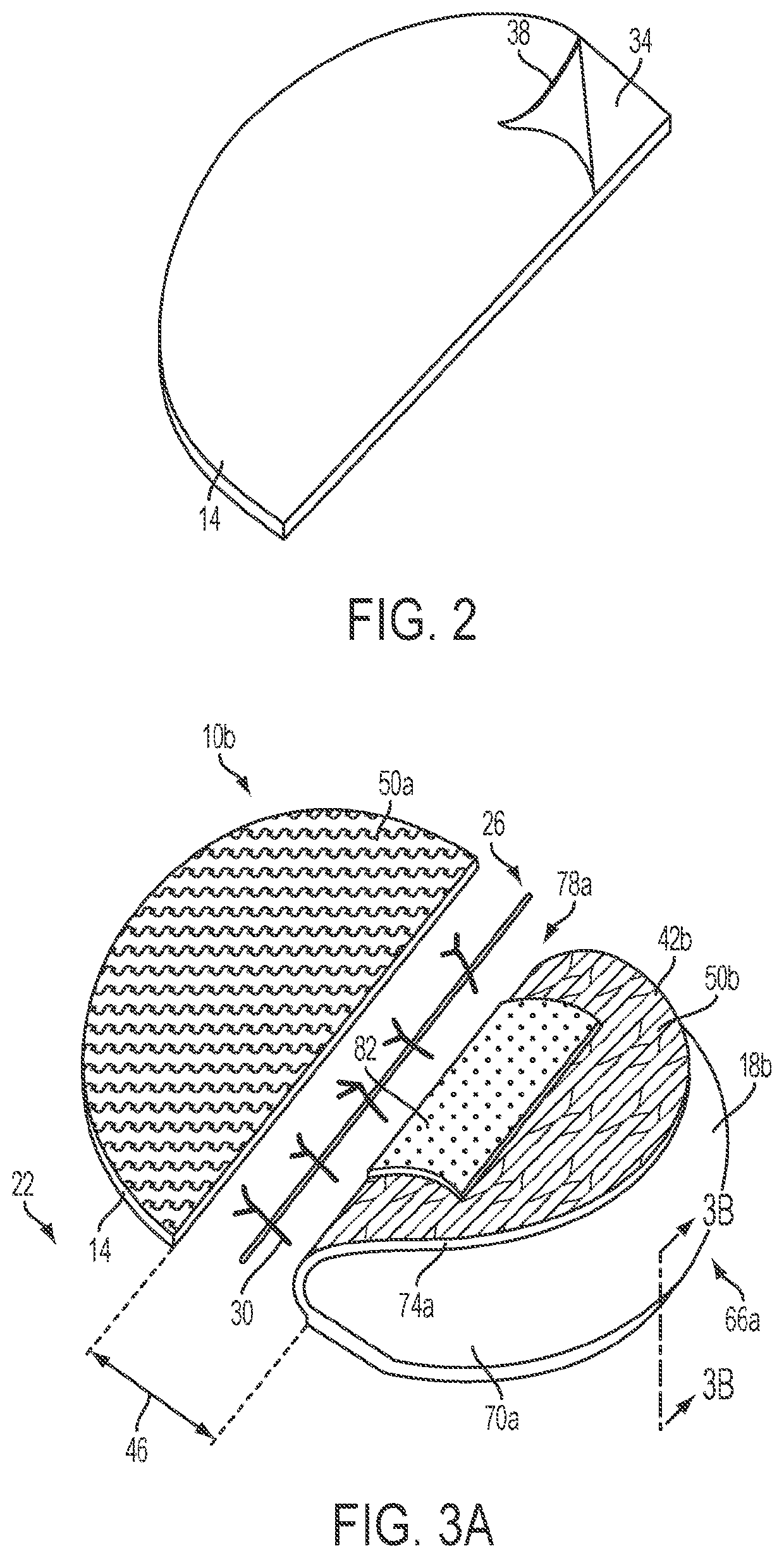
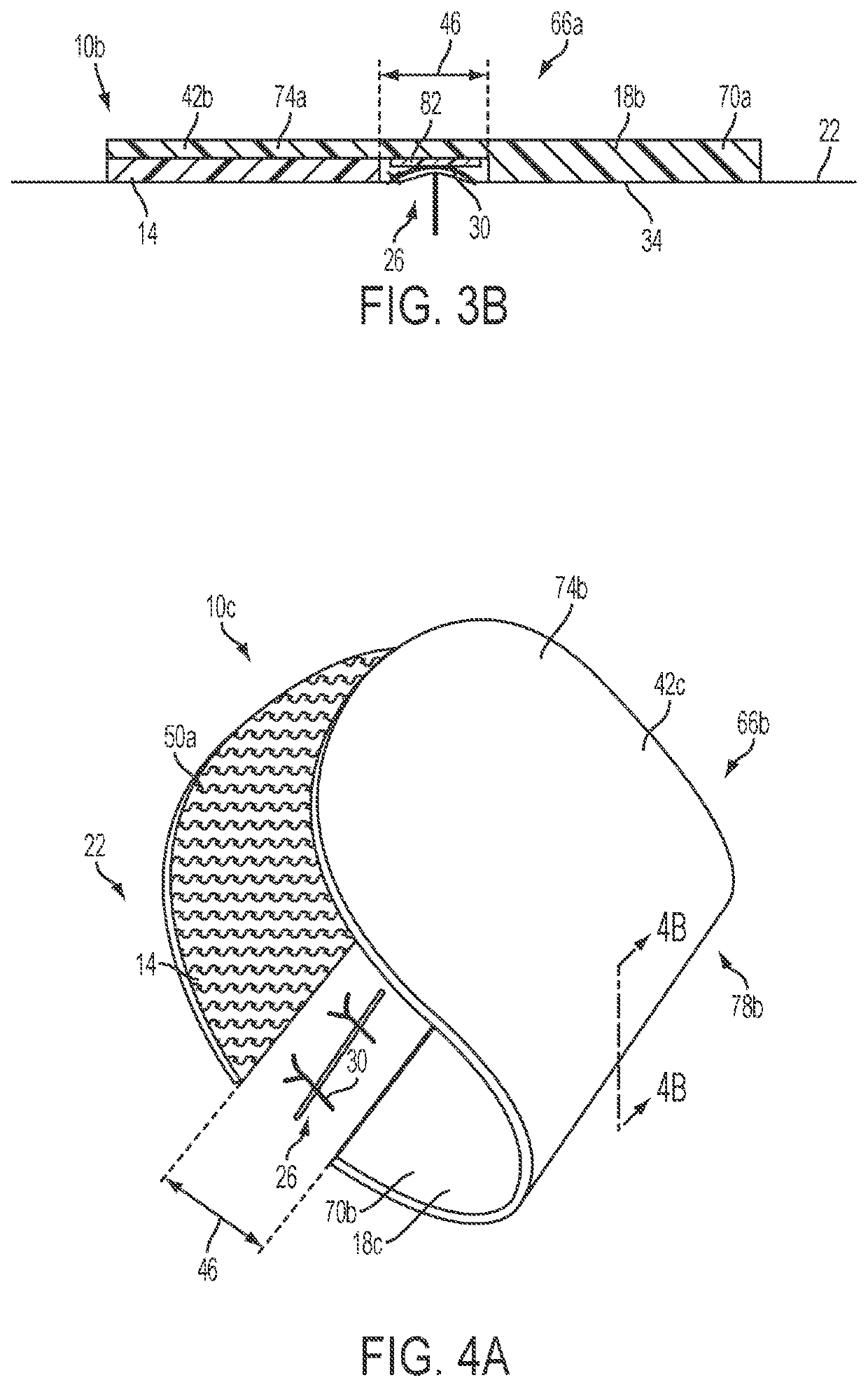
[0034]Referring now to the drawings, and more particularly to FIGS. 1A, 1B, and 2, shown therein and designated by the reference numeral 10a is a first embodiment of the present wound care apparatuses. In the embodiment shown, apparatus 10a comprises a flexible first strip 14 and a flexible second strip 18a. For example, strips 14 and 18a are flexible in that they are configured to couple and contour to any suitable surface on a patient's body (e.g., as a patient ambulates and / or otherwise moves). For example, strips 14 and 18a can each comprise a synthetic cloth (e.g., nylon and / or the like), natural cloth (e.g., cotton and / or the like), plastic, and / or the like. As shown, apparatus 10a comprises two (2) flexible strips; however, other embodiments can comprise any suitable number of flexible strips, such as, for example, 2, 3, 4, 5, 6, 7, 8, 9, 10, or more flexible strips.
[0035]In this embodiment, strips 14 and 18a are configured to be coupled to a patient's skin (e.g., 22) on oppo...
PUM
 Login to View More
 Abstract
Description
Claims
Application Information
 Login to View More