

Helicopter ship board landing system
a technology of landing system and helicopter, which is applied in the direction of process and machine control, instruments, etc., can solve the problems of less than single point accuracy in relative positions between the two systems, effective damping of the noise effect of both systems, etc., and achieves low latency, high accuracy, and low latency.
Patent Information
- Authority / Receiving Office
- US · United States
- Patent Type
- Patents(United States)
- Current Assignee / Owner
- Publication Date
- 2015-02-03
Smart Images
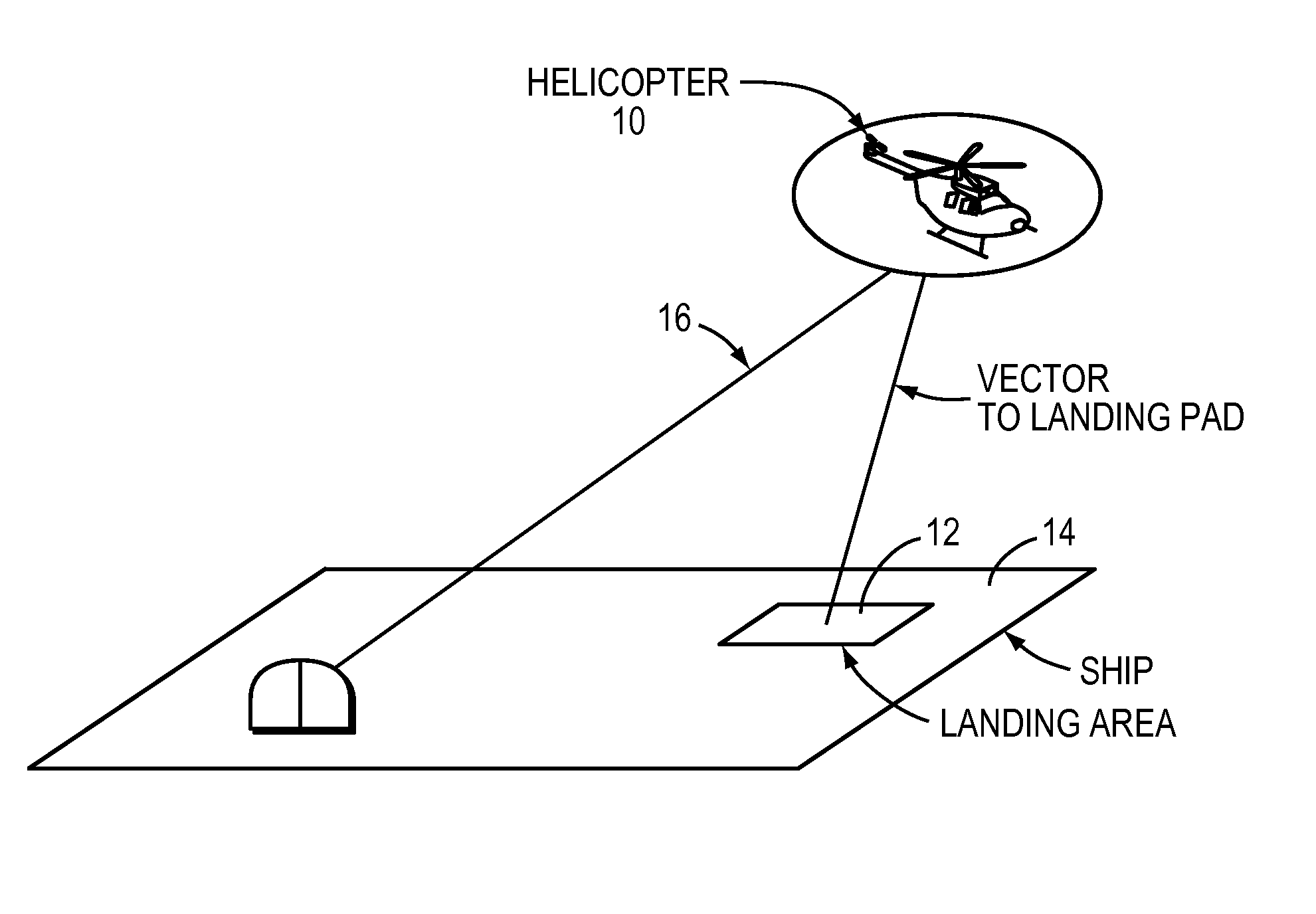
Figure 1 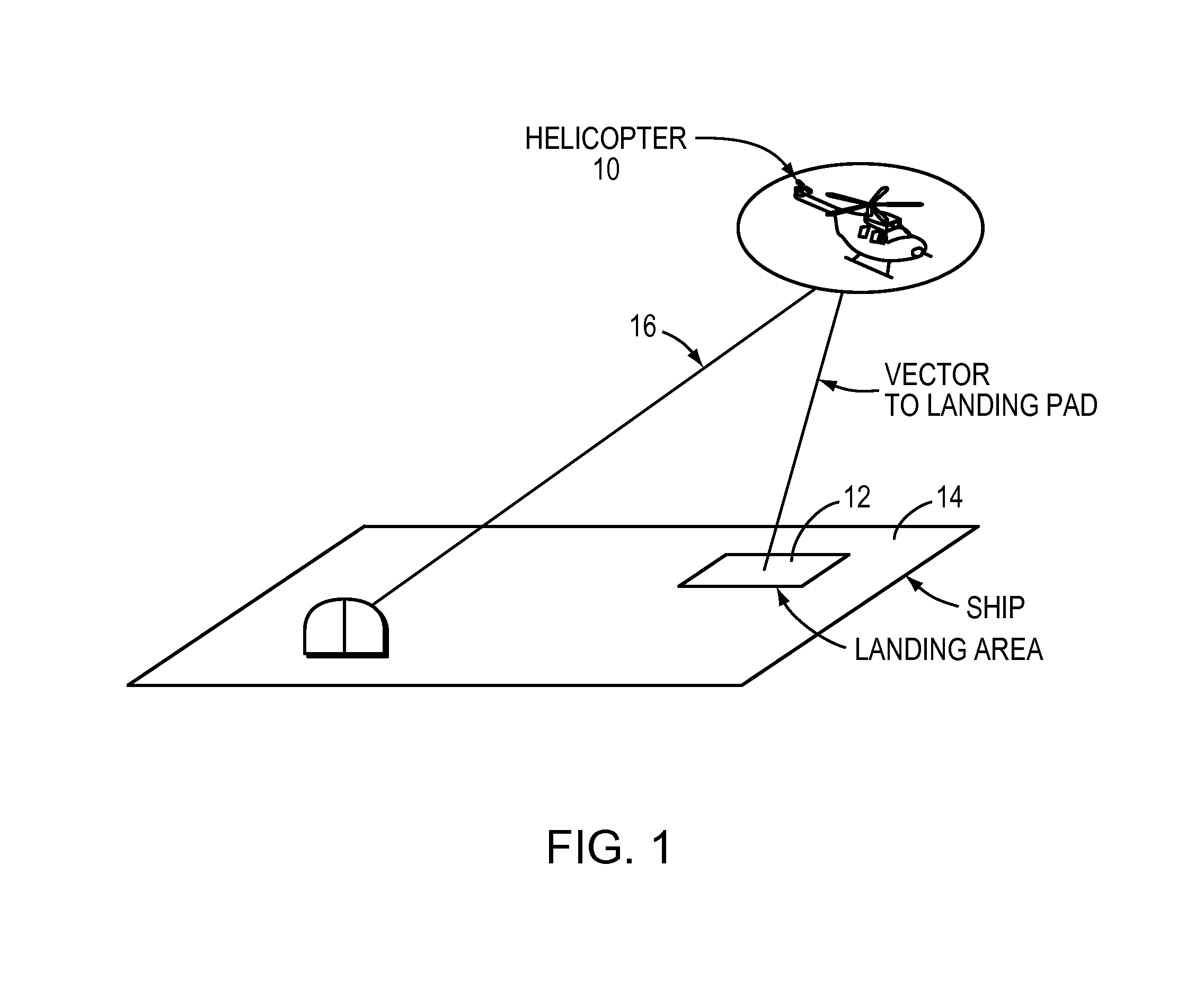
Figure 2 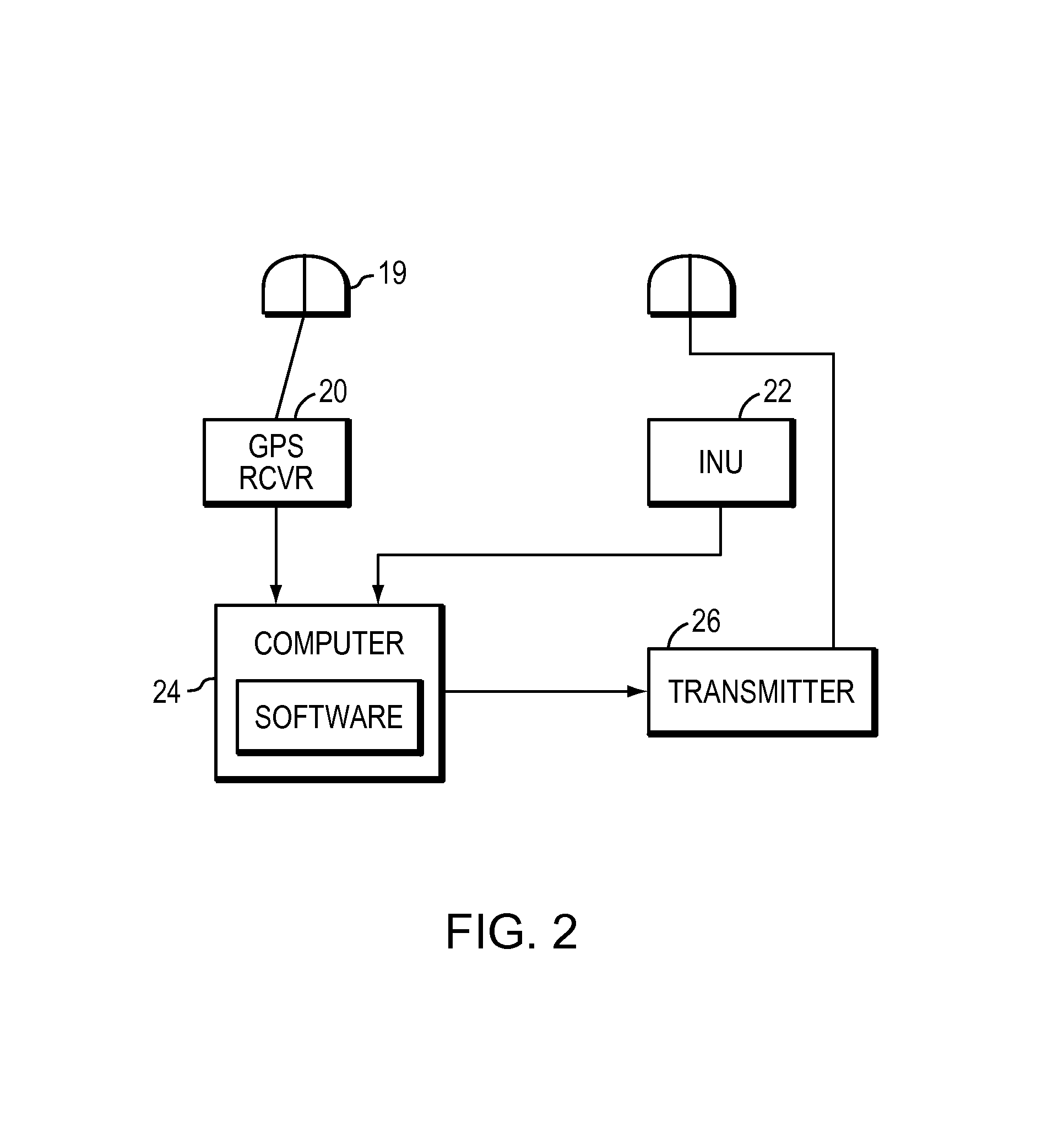
Figure 3
Abstract
Description
CROSS-REFERENCE TO RELATED APPLICATIONS
[0001] The present application claims the benefit of U.S. Provisional Patent Application Ser. No. 60 / 716,897, which was filed on Sep. 14, 2005, by Thomas J. Ford for a HELICOPTER SHIP BOARD LANDING SYSTEM and is hereby incorporated by reference.BACKGROUND OF THE INVENTION
[0002] 1. Field of the Invention
[0003] This invention relates to the navigation of an aircraft (fixed wing or helicopter) relative to ships at sea.
[0004] More specifically, it relates to the takeoff, landing and sling load re-supply operations involving a helicopter and a sea-going vessel.
[0005] 2. Background Information
[0006] Shipboard helicopter operations provide a difficult operational environment. Wind over the deck and wake turbulence shed by the ship super structure offer challenging and unpredictable conditions during takeoff and landing. This is especially true in the operational environment that includes sea-state six, with associated twenty-foot and thirty-three knot winds...
Examples
Embodiment Construction
[0024]As shown in FIG. 1, the invention relates to the positioning of an aircraft 10, such as a helicopter, for landing on a designated pad 12 on the deck 14 of a sea going vessel. Both the ship and the aircraft have navigation arrangements described herein and they are provided with a wireless link 16 for transmission of data from the ship to the aircraft.
[0025]With reference to FIG. 2, the ship carries a navigation unit 18 comprising a GPS antenna 19, a GPS receiver 20, an inertial navigation unit (INU) 22, a computer 24 and an RTK transmitter 26. The GPS receiver 20 provides position readings but at a rate that is to too low for the operations contemplated by the invention. These readings are used by the computer 24 to update the INU 22, which is subject to long term drift but provides position data at a relatively high rate. An arrangement for integrating an INU with a GPS receiver is described in “OEM4 Inertial: An Inertial / GPS Navigation System on the OEM4 Receiver”, Proceedin...