
Method for detecting greenhouse gas emission of transgenic rice
Patent Information
- Authority / Receiving Office
- CN · China
- Patent Type
- Applications(China)
- Current Assignee / Owner
- Publication Date
- 2011-05-11
- Estimated Expiration
- Not applicable · inactive patent
Smart Images
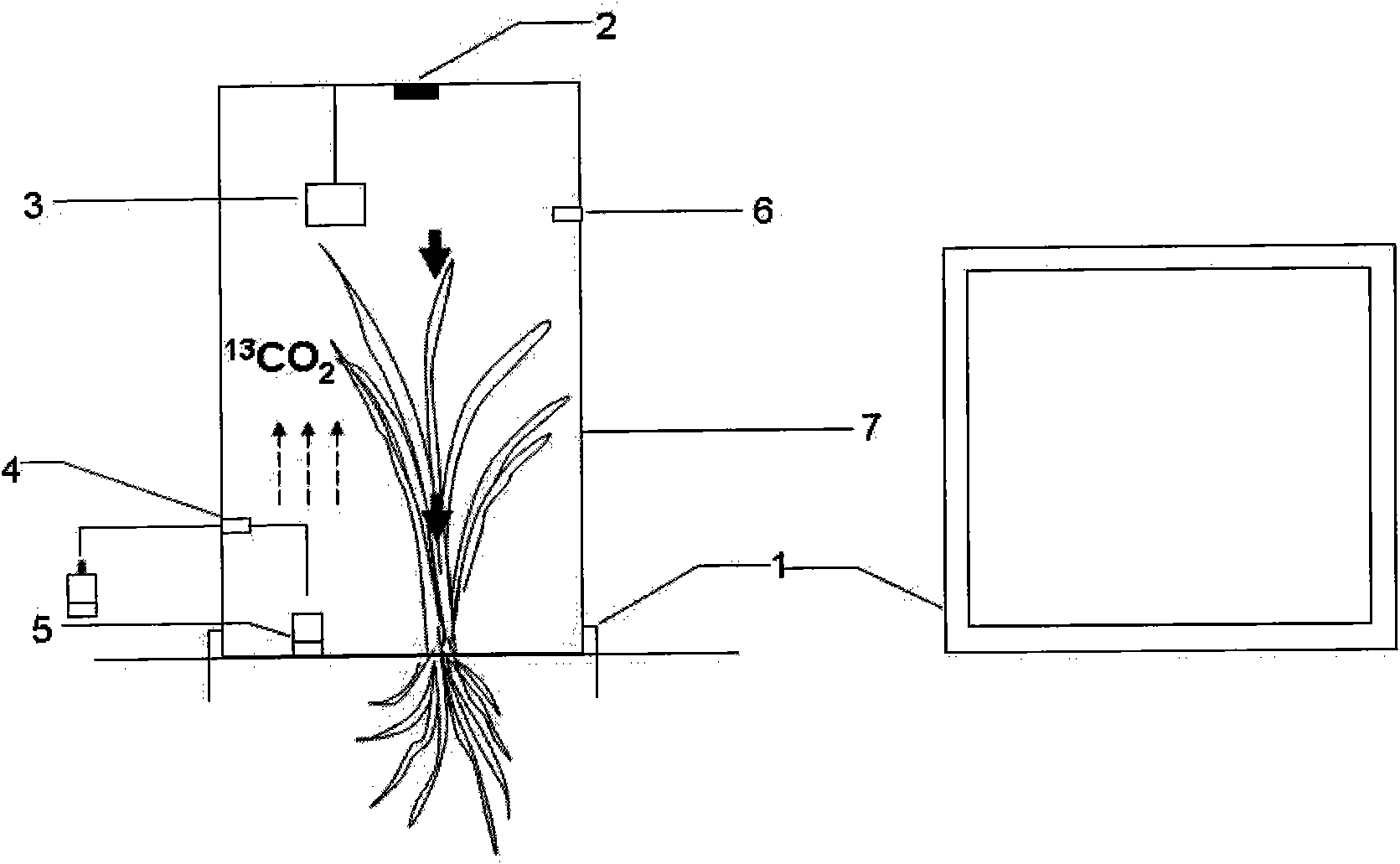
Figure 1 
Figure 2 
Figure 3
Abstract
Description
technical field
[0001] The present invention relates to a 13 C isotope labeling, accurate detection of transgenic rice greenhouse gas (CO 2 and CH 4 ) method of emission. Background technique
[0002] Global warming and its possible serious ecological environment and socio-economic impacts have been widely concerned by governments and scientists around the world. Many studies have shown that human activities have a significant impact on atmospheric composition, and the greenhouse effect is an important cause of global warming. At the Global Climate Summit in Copenhagen, the Chinese government solemnly promised to delay the emission of carbon dioxide, that is, by 2020, China's carbon dioxide emission per unit of gross domestic product (GDP) will be reduced by 40%-45% compared with 2005. The rice field ecosystem is an important source of greenhouse gas emissions. my country's conventional rice plantation area is about 450 million mu. How to reduce the greenhouse gas emissi...
Examples
Embodiment
[0019] In this example, a Bt gene-transfer rice and its parent rice and their straws were taken as objects, and the marked Bt-gene rice straws were returned to the rice field for 7 days, 15 days, 30 days, 55 days, and 80 days respectively. and 110 days for transgenic Bt gene and parental rice 13 C-CH 4 and 13 C-CO 2 Detect and evaluate the impact of transgenic Bt gene on rice greenhouse gas emissions.
[0020] The method for detecting greenhouse gas emissions from transgenic rice, the specific steps are as follows:
[0021] (1) production 13 C stable carbon isotope labeling box (see figure 1 ): The marking box is composed of a 5mm thick transparent barrel-shaped box 7 and a base 1, and the surfaces of the plexiglass are bonded with chloroform, and the length, width, and height of the box are adjusted according to different rice varieties and different growth stages of the plants. Generally, the length and width of a single rice plant are about 20 cm, and the length and w...