
Processing method of ogs capacitive touch screen cover glass
A capacitive touch screen, cover glass technology, applied in the direction of electrical digital data processing, data processing input/output process, instruments, etc., can solve the problems of low product yield, high production cost, glass breakage, etc., to improve production Efficiency, improved quality, and improved dimensional accuracy
Patent Information
- Authority / Receiving Office
- CN · China
- Patent Type
- Patents(China)
- Current Assignee / Owner
- Publication Date
- 2016-07-06
Smart Images
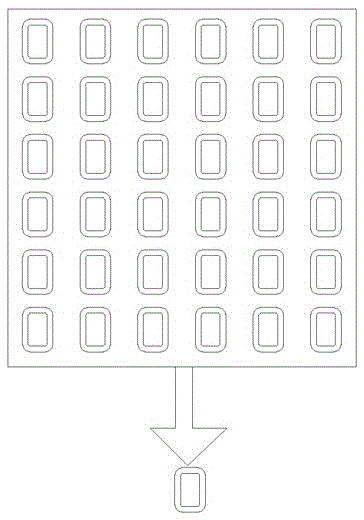
Figure 1 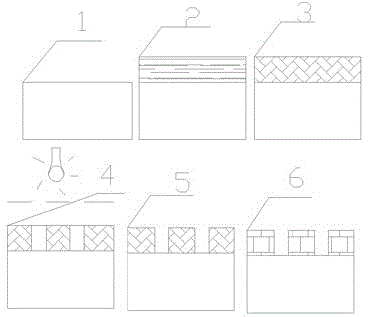
Figure 2 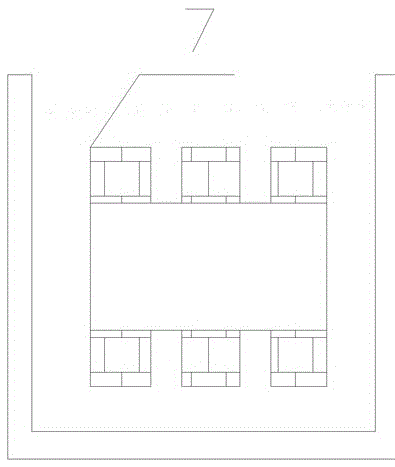
Figure 3
Abstract
Description
technical field
[0001] The invention relates to a method for cutting and processing a touch screen of an electronic product, in particular to a method for processing an OGS capacitive touch screen cover glass. Background technique
[0002] The traditional capacitive touch screen is composed of two pieces of glass, one is a sensor flat glass with inductive capacitance and its circuit, and the other is a protective glass with high hardness requirements. The OGS technology is a transformational display touch technology, which mainly uses a piece of glass instead of two pieces of glass (or a piece of glass and a piece of film), that is, the capacitive sensor is directly fabricated on the window (cover glass). For the convenience of processing, usually a lot of small pieces of OGS are made on a large piece of strengthened glass, and then the small pieces of OGS are cut out. The cutting process will cause mechanical damage to the edge of the glass, so the small pieces of OGS after...
Examples
Embodiment 1
[0029] Step 1: Print an acid-resistant protective layer with a thickness of 20 mm on one of the front and back sides of a large OGS tempered glass plate with a thickness of 0.3 cm, and then sequentially bake and dry the acid-resistant protective layer. Drying is done in an infrared oven. The drying time is 25 minutes and the temperature is 130°C. After baking and drying, exposure, development, and film hardening are performed to form a follow-up on one side of the large OGS tempered glass plate. Etching patterns required when etching small pieces of OGS strengthened glass plates; using the same process steps on the other side of the large piece of OGS strengthened glass plates to form etching patterns required for subsequent etching of small pieces of OGS strengthened glass plates on the other side;
[0030] The second step: the large piece of OGS strengthened glass plate treated in the first step is immersed in an etching solution at a temperature of 21° C. for etching treatme...
Embodiment 2
[0032] Same as Example 1, the difference is that the thickness of the large OGS strengthened glass plate in the first step is 0.4-0.5 cm; the etching width formed by etching in the second step is 0.6-0.7 cm.
Embodiment 3
[0034] Same as Example 1, the difference is that in the first step, an acid-resistant protective layer with a thickness of 25 mm is screen-printed on one of the front and back sides of the large OGS tempered glass plate.