
Novel intelligent electric quantity balance method adopting power real-time operation
A technology of power balancing and real-time computing, applied in electrical components, circuit devices, AC network circuits, etc., can solve problems such as the inability of real-time online power balance in the power efficiency management system
Patent Information
- Authority / Receiving Office
- CN · China
- Current Assignee / Owner
- Publication Date
- 2014-04-02
- Estimated Expiration
- Not applicable · inactive patent
Smart Images
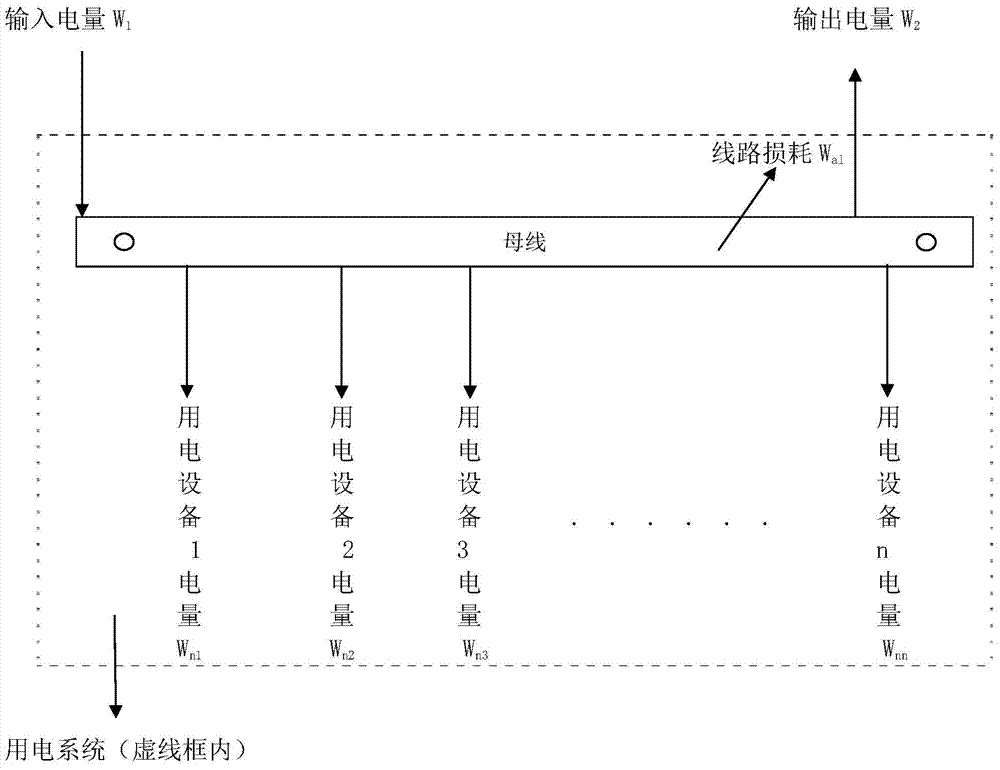
Figure 1 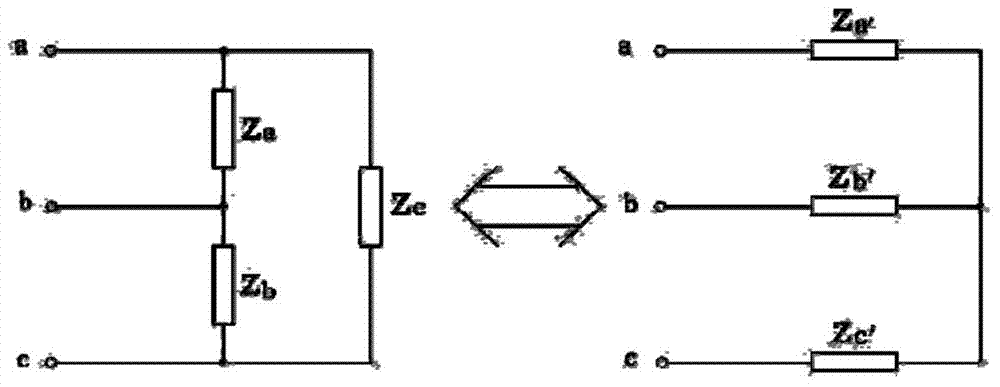
Figure 2 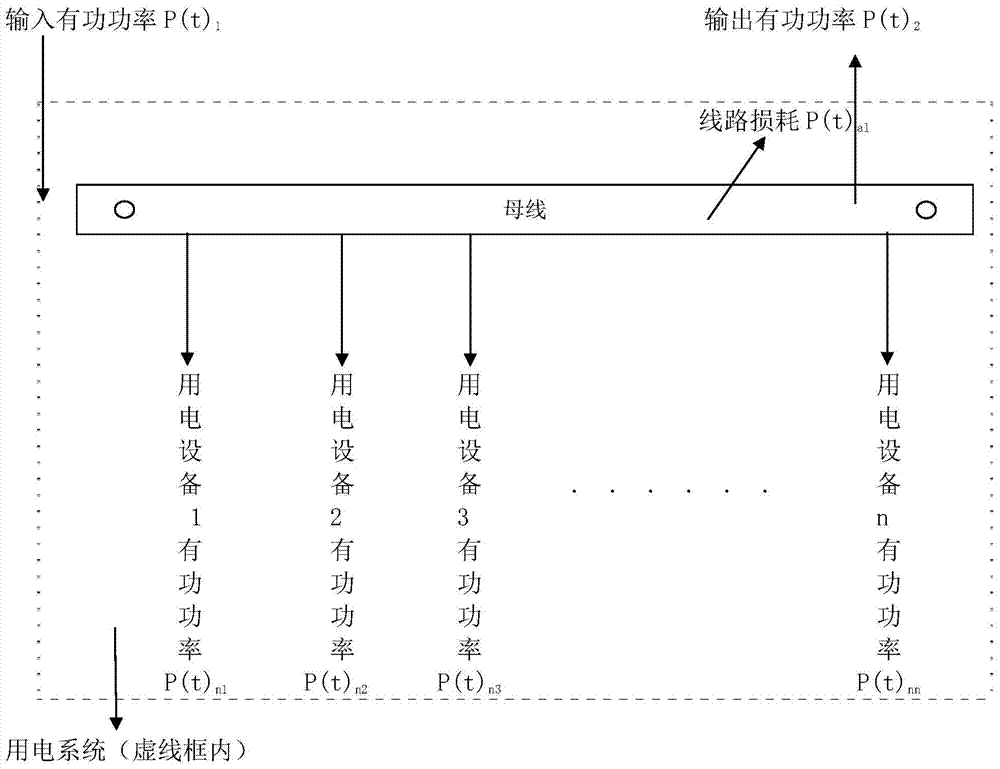
Figure 3
Abstract
Description
technical field
[0001] The patent of the invention relates to a new type of intelligent power balance method for real-time calculation of power, which is suitable for power consumption systems of different voltage levels in thermal power plants, hydropower stations, nuclear power stations and power distribution systems, and can be used for different buses, different power consumption equipment and systems, based on the new Real-time power calculation method, real-time, online, dynamic power balance function, suitable for online, remote, intelligent electric energy efficiency management system, fine management of electric equipment and online real-time balance function of electric energy. Background technique
[0002] Electric energy balance is to study and analyze the distribution and utilization of a certain amount of electric energy after it enters the power consumption system, that is, how much power is effectively used and how much power is lost in each link of the power ...
Examples
Embodiment
[0103] Down Figure 6It is a schematic diagram of the application of the intelligent power balance method for real-time calculation of new power in a power plant. The power balance is used instead of the power balance for the generator-transformer group, 10kV sub-section A, 10kV sub-section B, and 10kV desulfurization bus. System unbalanced power and unbalanced rate.
[0104] Take the generator-transformer unit of a power plant as an example:
[0105] ①The power balance is as follows:
[0106] (P(t)g-P(t)n)=(P(t) 1 +P(t) 2 +P(t) tl +ΔP(t)t+P(t) 3 )+ΔP(t)l1
[0107] ② The unbalanced power is calculated as follows:
[0108] ΔP(t) f =(P(t)g-P(t)n)-((P(t) 1 +P(t) 2 +P(t) tl +ΔP(t)t+P(t) 3 )+ΔP(t)l1)
[0109] in:
[0110] ΔP(t) f — unbalanced power, kW;
[0111] P(t)g—generator active power, kW; see item 1 in the table below.
[0112] P(t)n——active power of main transformer outlet (on-grid), kW;
[0113] P(t) 1 ——High variable active power of unit A plant, kW;
...