
Generating method of spherical panorama based on overlapping method
A technology of overlapping and panorama images, applied in graphics and image conversion, image data processing, instruments, etc., can solve the problems of slow generation speed and high cost, and achieve the effect of low cost, improved quality and simple data source.
Patent Information
- Authority / Receiving Office
- CN · China
- Patent Type
- Patents(China)
- Current Assignee / Owner
- Publication Date
- 2020-12-29
Smart Images
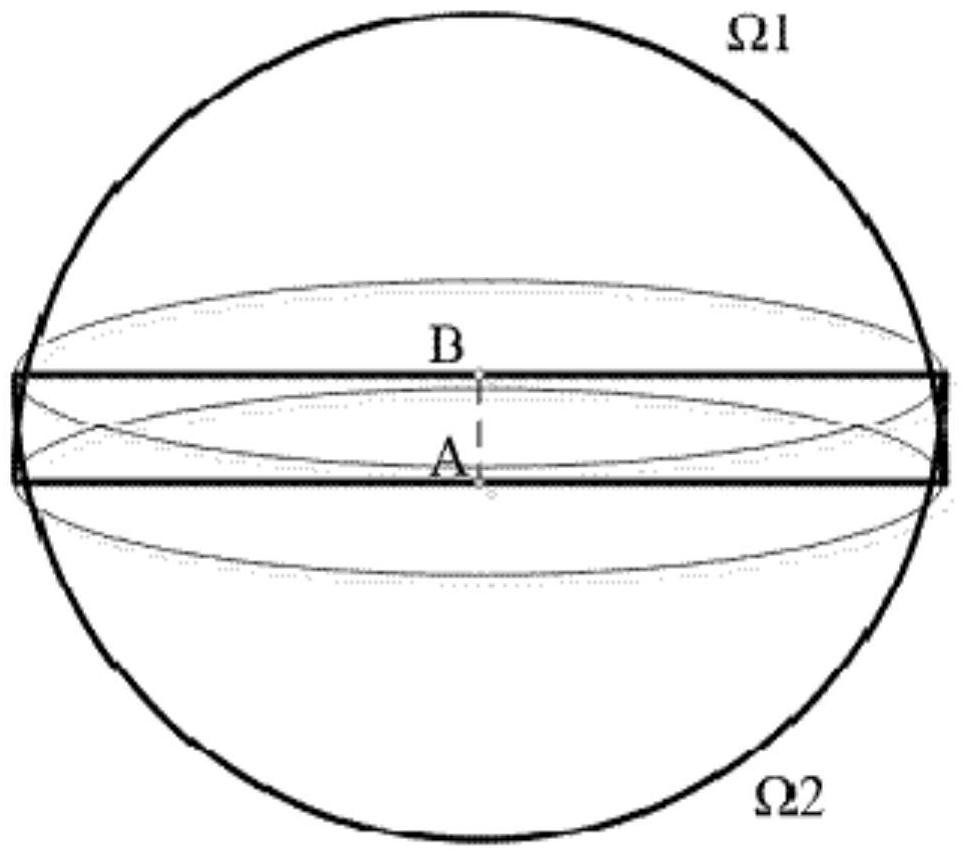
Figure 1 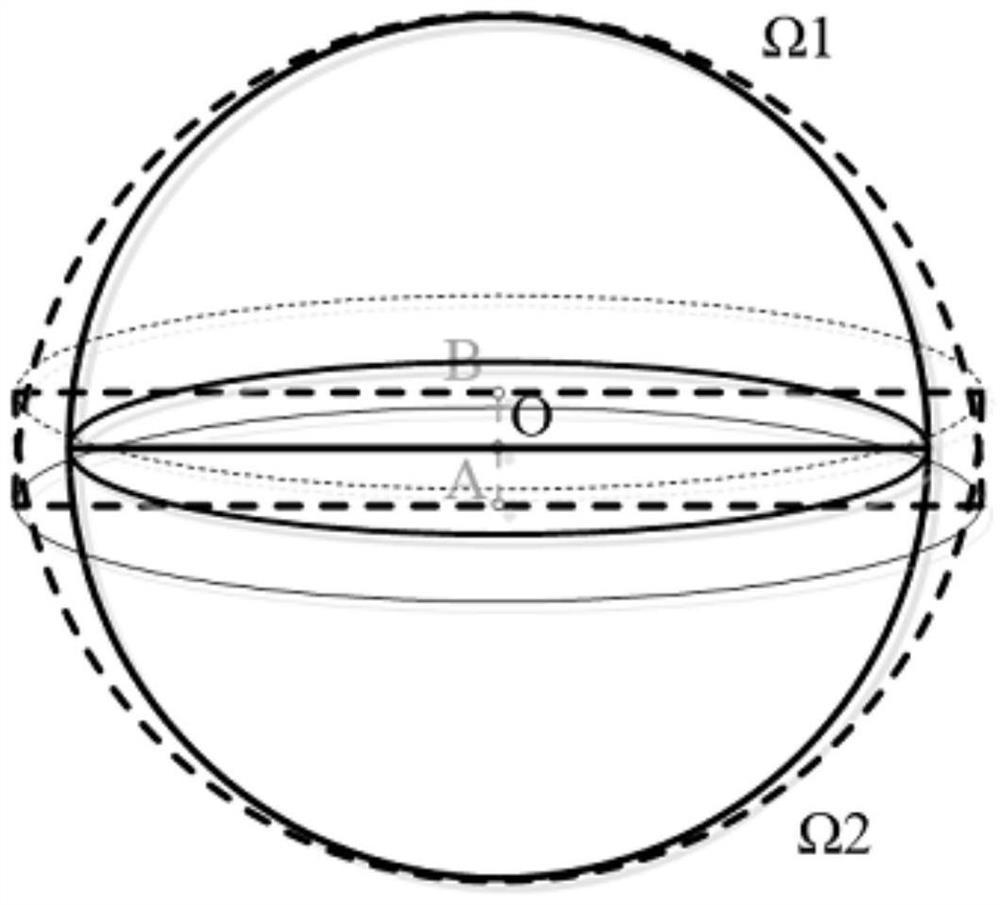
Figure 2 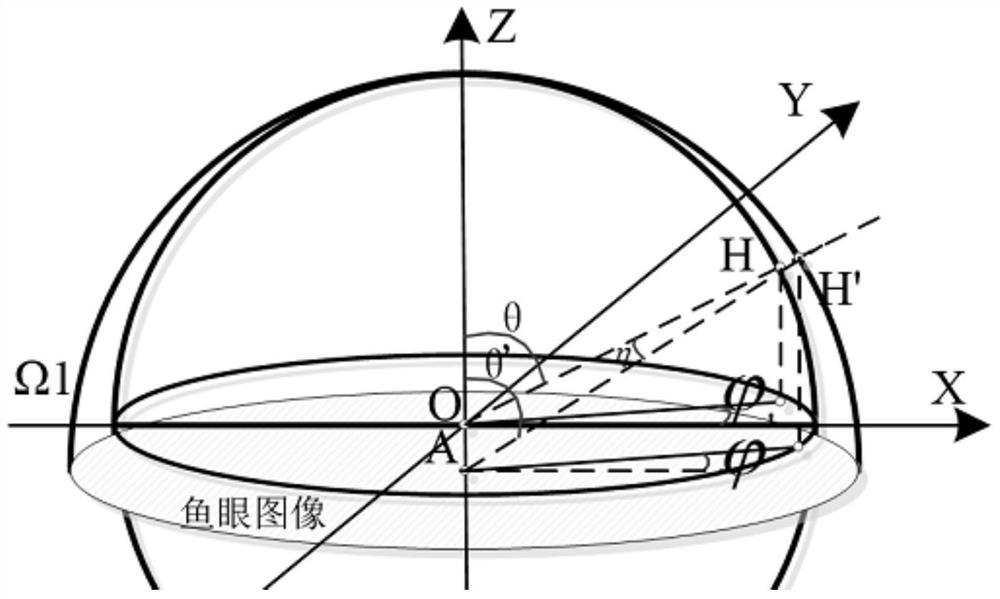
Figure 3
Abstract
Description
technical field
[0001] The invention belongs to the field of computer graphics, and specifically relates to a method for generating a spherical panorama based on an overlapping method, that is, collecting two fisheye images based on the overlapping method, and generating a spherical panorama by utilizing the mapping relationship between the imaging space of the fisheye image and the spherical space . Background technique
[0002] In the fields of smart tourism, video surveillance, augmented reality, robot navigation, etc., it is often necessary to obtain images with a wider range of angles. Even the use of wide-angle and fisheye lenses sometimes cannot meet the needs, and panoramas can achieve full viewing angles. It can meet the needs of the above fields, so it has been widely used. The surrounding scene is projected onto the spherical model with the viewpoint as the center of the sphere, and the virtual space formed with the center of the sphere as the viewpoint, where yo...
Examples
Embodiment Construction
[0035] The present invention firstly needs to control the distance between two shooting points, then unify the distance and the pixel distance in units, and finally perform corresponding follow-up calculations.
[0036] A method for generating a spherical panorama based on an overlapping method, the specific processing method is shown in the following steps:
[0037] (1) Collect two fisheye images, shoot two fisheye images P1 and P2 in opposite directions through the fisheye lens, and control the interval between the front and rear shooting positions to be 2D;
[0038] (2) Unify the dimension and calculate the pixel value corresponding to the shooting coincidence distance:
[0039] Note that the distance between the shooting points of the fisheye lens is 2D (cm), mark a point G on a piece of white paper, and control the distance between this point and the lens shot by the fisheye lens as 2D (cm), and G can be known by shooting with the fisheye lens The point is at point M, th...