
Antistatic agent as well as preparation method and application thereof
A technology of antistatic agent and active agent, which is applied in the field of antistatic agent and its preparation, can solve the problems of dye discoloration, light fastness reduction, large dosage, etc., and achieve the effect of soft skin, excellent hygroscopicity, and easy operation
Patent Information
- Authority / Receiving Office
- CN · China
- Patent Type
- Applications(China)
- Current Assignee / Owner
- Publication Date
- 2016-07-13
- Estimated Expiration
- Not applicable · inactive patent
Smart Images
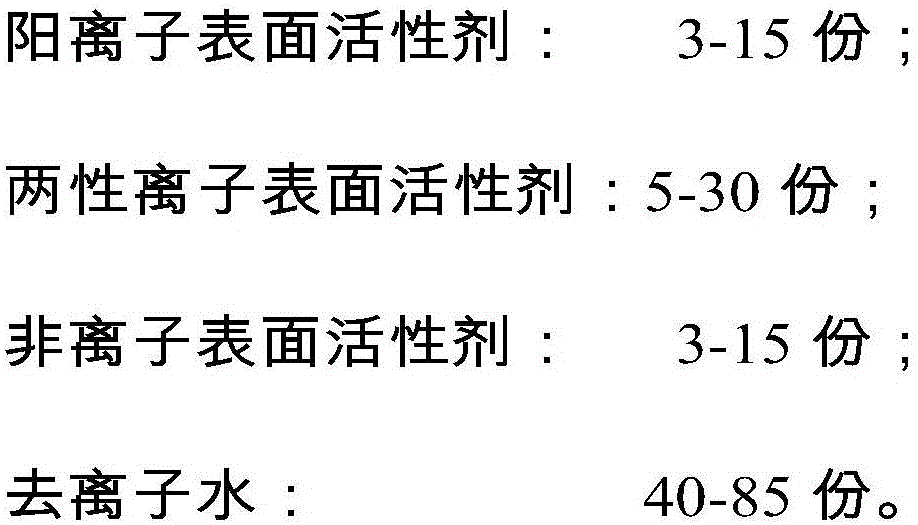
Figure 1 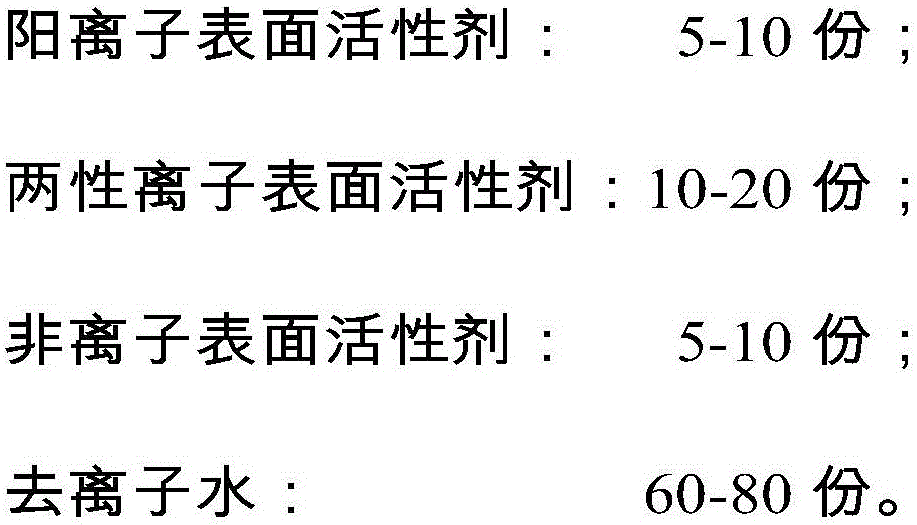
Figure 2 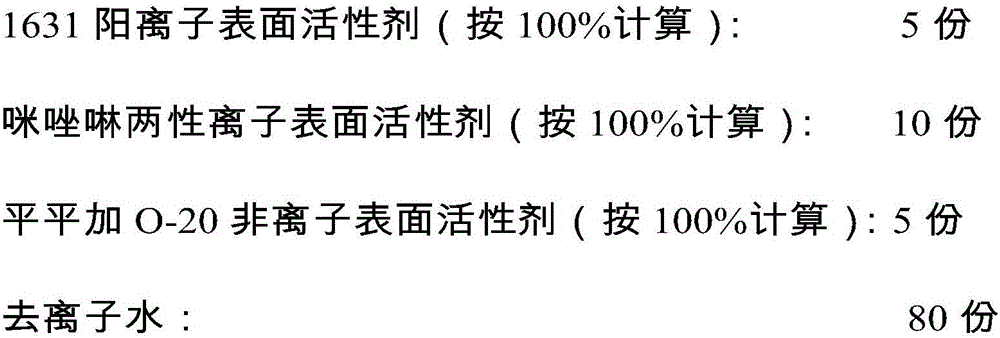
Figure 3
Abstract
Description
technical field
[0001] The invention relates to the field of chemical industry, in particular to an antistatic agent and its preparation method and application. Background technique
[0002] Two different or the same objects rub against each other, and the two objects move electrons, thereby generating static electricity. Static electricity will also be generated when fur is rubbed between quilts, which will hinder the normal process operation and make the fur absorb dust. Therefore, it is very important to prevent and eliminate static electricity generated in fur during processing.
[0003] The antistatic agent can give the fur surface a certain degree of ionicity and hygroscopicity, thereby improving the electrical conductivity, neutralizing the charge, and achieving the effect of preventing and eliminating static electricity.
[0004] Many surfactants have antistatic effect and can be used as antistatic agents. Alkyl sulfonate, polyoxyethylene ether sulfate and phospha...
Examples
Embodiment 1
[0037]
[0038] Prepared by mixing and compounding. First, add the required weight of deionized water into the steam heating reaction tank, and heat it to 40°C-50°C. Then add cationic surfactant, zwitterionic surfactant and nonionic surfactant in no particular order. After all the addition is completed, mix for 30 minutes at 40°C-50°C by controlling the stirring speed at 15-30 rpm through a frequency converter, and then discharge.
Embodiment 2
[0040]
[0041] Prepared by mixing and compounding. First, add the required weight of deionized water into the steam heating reaction tank, and heat it to 40°C-50°C. Then add cationic surfactant, zwitterionic surfactant and nonionic surfactant in no particular order. After all the addition is completed, mix for 30 minutes at 40°C-50°C by controlling the stirring speed at 15-30 rpm through a frequency converter, and then discharge.
Embodiment 3
[0043]
[0044] Prepared by mixing and compounding. First, add the required weight of deionized water into the steam heating reaction tank, and heat it to 40°C-50°C. Then add cationic surfactant, zwitterionic surfactant and nonionic surfactant in no particular order. After all the addition is completed, mix for 30 minutes at 40°C-50°C by controlling the stirring speed at 15-30 rpm through a frequency converter, and then discharge.