
A method for producing starch-zinc complex nutritional enhancer by using pulsed electric field
A nutrient enhancer and pulse electric field technology, applied in the field of modified starch, can solve the problems of long reaction time between starch and metal, high cost of enzymatic degradation, and easy falling off of zinc ions, so as to improve the efficiency of coordination reaction and reduce the activation energy of reaction , The effect of shortening the preparation time
Patent Information
- Authority / Receiving Office
- CN · China
- Patent Type
- Patents(China)
- Current Assignee / Owner
- Publication Date
- 2019-10-18
Smart Images
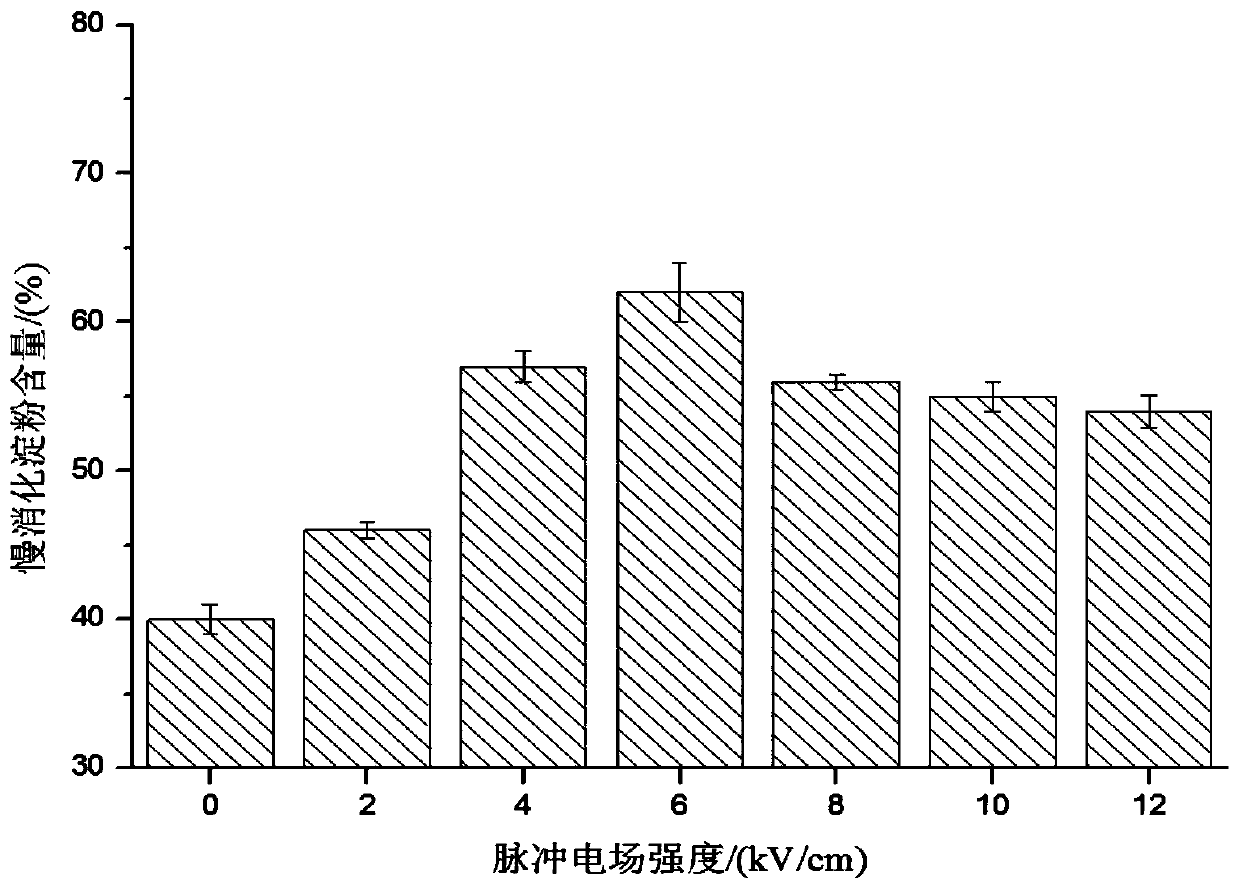
Figure 1 
Figure 2 
Figure 3
Abstract
Description
technical field
[0001] The invention relates to a method for modifying starch, in particular to a method for producing a starch-zinc complex nutrition enhancer by using a pulse electric field. Background technique
[0002] At present, more than 20 kinds of trace elements such as iodine, iron, copper, zinc, selenium, cobalt, chromium, manganese, etc. have been found and are necessary for the human body. The process aspect plays a very important role, and the lack of trace elements seriously affects human health. Zinc can promote growth and development, maintain normal sense of taste, smell, vision, participate in the regulation of the body's immune function, and accelerate the regeneration of wounded tissues. Zinc deficiency can cause loss of appetite, growth retardation, and stunted growth. Insufficient intake of zinc in children can lead to Developmental stagnation, mental retardation, and modern science has confirmed that the incidence of coronary heart disease is positiv...
Examples
Embodiment 1
[0040] Rice starch and 0.02mol / L zinc acetate solution were configured as an emulsion with a concentration of 30% (w / v), mixed for 3 minutes, adjusted to pH 6.5 with sodium hydroxide solution, and chlorinated with 0.2mol / L Sodium adjusted the conductivity of the above solution to 0.5mS / cm, and then treated it with a pulsed electric field for 0.5 hours, wherein the pulsed electric field intensity was 4.0kV / cm, the pulse width was 40μs, and the flow rate was 100L / h, and it was washed with deionized water for several times until There is no free zinc, and finally washed with absolute ethanol, suction filtered, dried in an oven at 40°C, and then ground and dried at 80 mesh to obtain a starch-zinc complex nutrition enhancer with a zinc content of 140mg / g. The conversion rate was 40%, and the SDS was 57%, the data is shown in figure 1 , figure 1 Under the above conditions, the content of slowly digestible starch (SDS) in starch complexes under different pulse electric field intensi...
Embodiment 2
[0042] Potato starch and 2.0 mol / L zinc acetate solution were configured as an emulsion with a concentration of 10% (w / v), mixed for 3 minutes, adjusted to pH 7.0 with sodium hydroxide solution, and chlorinated with 0.3 mol / L Sodium adjusted the conductivity of the above solution to 1.0mS / cm, and then treated it with a pulsed electric field for 1.5 hours, wherein the pulsed electric field intensity was 6.0kV / cm, the pulse width was 40μs, and the flow rate was 200L / h, and it was washed with deionized water several times until There is no free zinc, finally washed with absolute ethanol, suction filtered, dried in an oven at 40°C, and then ground and dried at 60 mesh to obtain a starch-zinc complex nutrition enhancer with a zinc content of 220mg / g. The conversion rate is 78%, and the SDS is 60%, the data can be found in image 3 , image 3 Under the above conditions, the zinc content and conversion rate in the starch complex under different pulse electric field intensities.
Embodiment 3
[0044] Cornstarch and 2.0mol / L zinc acetate solution were configured as an emulsion with a concentration of 8% (w / v), mixed for 3 minutes, adjusted to pH 8.0 with sodium hydroxide solution, and chlorinated with 0.3mol / L Sodium adjusted the conductivity of the above solution to 2.0mS / cm, and then treated it with a pulsed electric field for 2.5 hours, wherein the pulsed electric field intensity was 6.0kV / cm, the pulse width was 40μs, and the flow rate was 100L / h, and it was washed with deionized water for several times until No free zinc exists, finally washed with absolute ethanol, suction filtered, dried in an oven at 40°C, then ground and dried at 80 mesh to obtain a starch-zinc complex nutritional enhancer with a zinc content of 230mg / g. The conversion rate is 80%, and the SDS is 62%, the data can be found in Figure 4 ,in Figure 4 Under the above conditions, the zinc content and conversion rate in the starch complex after different pulse electric field treatment times.