
Application of astilbin in aspect of preventing and treating Parkinson's disease
A technology for astilbin and Parkinson's disease, applied in the field of medical neuropharmacology, can solve the problems of large development space, insufficient exploration, unable to inhibit or delay the disease process, etc., and achieve the effect of improving neurons and improving the symptoms of motor retardation.
Patent Information
- Authority / Receiving Office
- CN · China
- Patent Type
- Applications(China)
- Current Assignee / Owner
- Publication Date
- 2017-04-26
- Estimated Expiration
- Not applicable · inactive patent
Smart Images
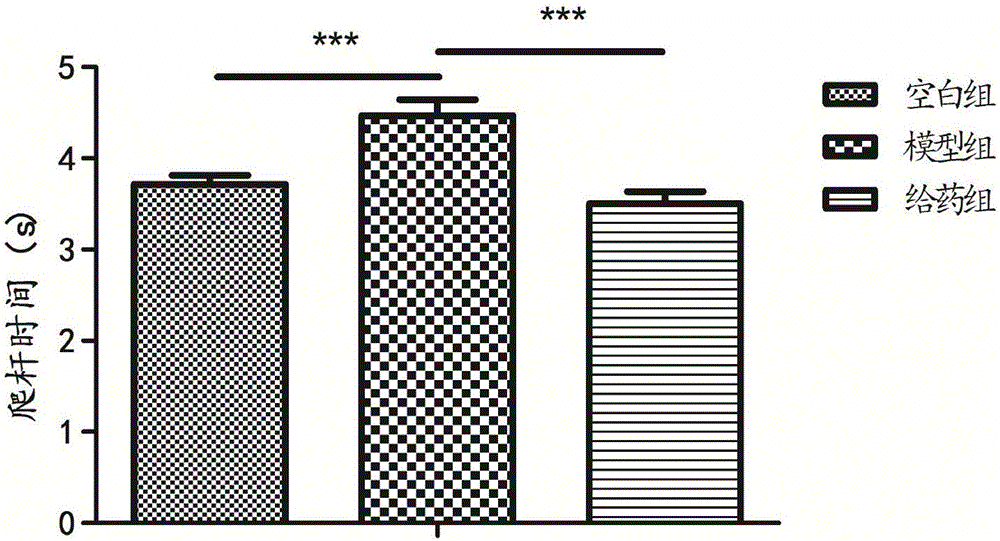
Figure 1 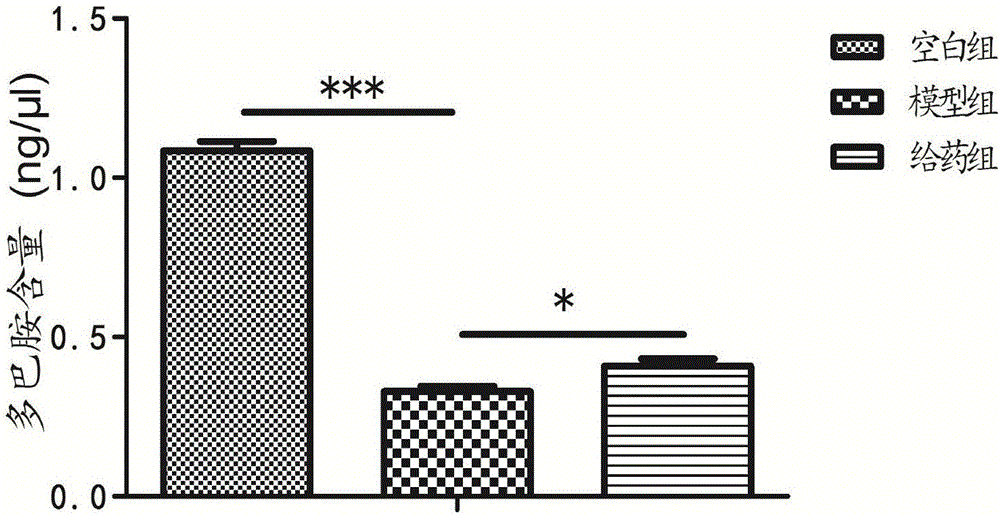
Figure 2 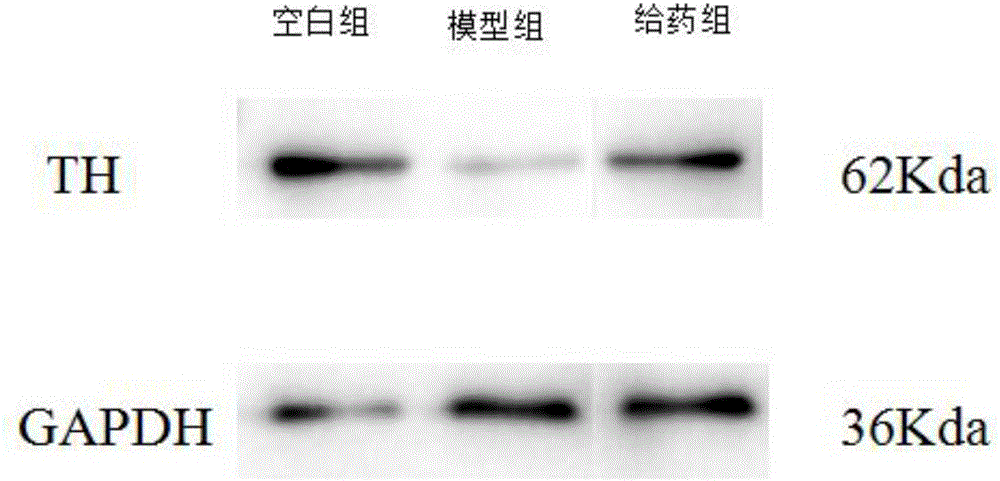
Figure 3
Abstract
Description
technical field
[0001] The invention relates to the application of astilbin in preventing and treating Parkinson's disease, and belongs to the technical field of medical neuropharmacology. Background technique
[0002] Parkinson's disease (PD) is the most common degenerative disease of the motor nervous system, the main clinical manifestations are: resting tremor, slowness of movement, unsteady standing and postural reflex disorder. The main lesions in the brain of patients with Parkinson's disease are the substantia nigra and striatum. The death and reduction of dopaminergic neurons in the substantia nigra compacta is the direct cause of the decrease in dopamine projected to the striatum. As the second largest neurodegenerative disease after Alzheimer's disease, the incidence and prevalence of Parkinson's disease increase sharply with age, and the prevalence rate reaches 1% among the elderly over 60 years old. People over the age of 85 account for 5%-6%. At present, the num...
Examples
Embodiment 1
[0025] Example 1: Establishment and grouping of animal models
[0026] Body weight 20-25g, 8 weeks old, male C57BL / 6 mice, were randomly divided into control group, MPTP model group (first give MPTP and then give normal saline), astilbin administration group (first give MPTP and then give astilbin ), 20 per group. Placed at 23±2°C, the lighting time is 12h / day, and the animals are given drugs after one week of adaptation to the environment. The MPTP model group was intraperitoneally injected with MPTP (30 mg / kg) once a day for 5 consecutive days, and then injected with normal saline once a day for 7 consecutive days. The administration group was intraperitoneally injected with MPTP (30 mg / kg) once a day for 5 consecutive days, and then injected astilbin (50 mg / kg) solution once a day for 7 consecutive days. The control group was given normal saline for 12 consecutive days. Then the behavior of mice was evaluated by pole climbing test, and then the content of dopamine in str...