
Non-fusion lumbar vertebra fixing device
A fixation device and non-fusion technology, applied in the direction of fixators, internal fixators, and internal bone synthesis, can solve the problems of irregular space structure between spinous processes, loose pedicle screws, and large surgical trauma, so as to reduce errors. The effect of operational risk, large contact area, and strong fixation strength
Patent Information
- Authority / Receiving Office
- CN · China
- Patent Type
- Applications(China)
- Current Assignee / Owner
- Publication Date
- 2017-06-20
- Estimated Expiration
- Not applicable · inactive patent
Smart Images
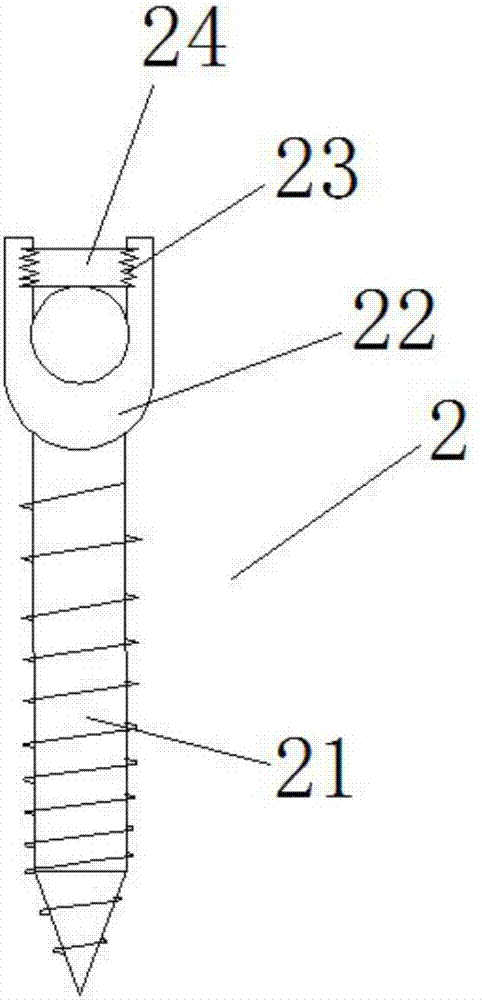
Figure 1 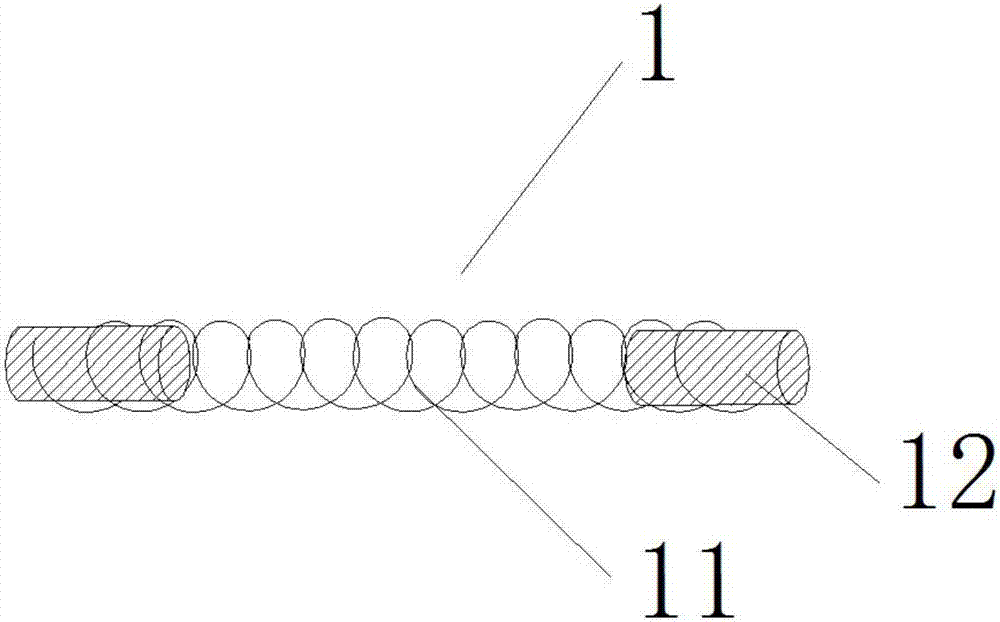
Figure 2 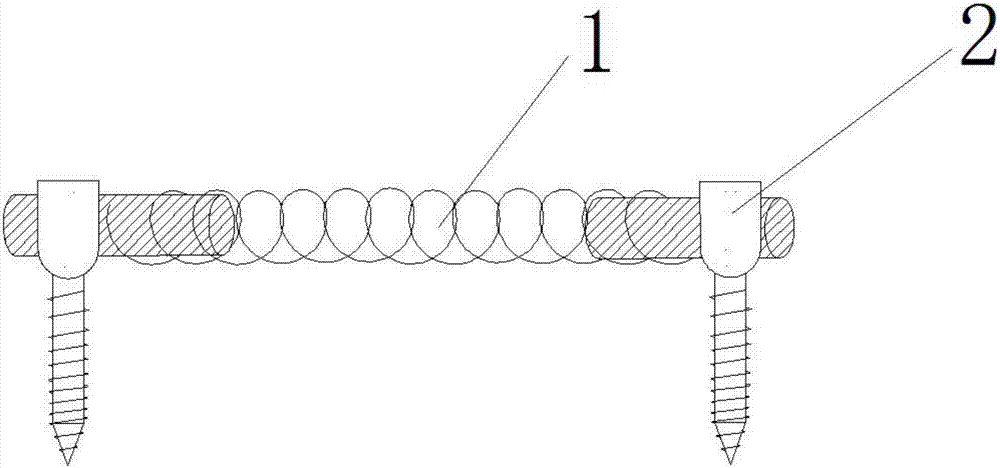
Figure 3
Abstract
Description
technical field
[0001] The invention relates to an internal fixation device for orthopedics, in particular to a non-fusion lumbar spine fixation device. Background technique
[0002] The trend of aging is a severe reality that mainland China will soon face, and big cities such as Shanghai have taken the lead in entering the aging society. Degenerative spinal disease is a common and frequently-occurring disease among the elderly. Lumbar instability and lumbar spinal stenosis caused by lumbar disc degeneration often become one of the main factors that seriously affect the quality of life of patients and increase the burden on families and society.
[0003] Degenerative lumbar spinal stenosis is caused by herniation of the intervertebral disc and the loosening and instability of the vertebral joints, resulting in secondary facet joint hyperplasia and hypertrophy of the ligamentum flavum. Causes narrowing of the neural tube, resulting in symptoms of nerve compression. The typi...
Examples
Embodiment 1
[0029] Such as Figure 1~3 As shown, the non-fusion lumbar fixation device provided by Embodiment 1 of the present invention includes an elastic connecting rod 1 and lumbar facet joint cortical screws 2 arranged at both ends of the elastic connecting rod; the elastic part 11 of the elastic connecting rod 1 is a spring, and the elastic connecting rod The inelastic part 12 of 1 is a cylindrical titanium alloy rod; the screw part 21 of the lumbar facet joint cortical screw 2 is a self-tapping cortical screw with double threads, and the top view structure of the screw tail 22 of the lumbar facet joint cortical screw 2 is U-shaped. There is a thread 23 inside the U-shaped mouth, which can lock the elastic connecting rod 1 through the inner lock nut 24; the connection between the screw part 21 and the screw tail 22 has 1 mm without thread; the elastic connecting rod 1 is made of memory metal (such as titanium alloy), It can be stretched and has the shortest initial length.
[0030]...
Embodiment 2
[0044] Such as figure 1 , 4 , 5, the non-fusion lumbar fixation device provided by Embodiment 1 of the present invention includes an elastic connecting rod 1 and lumbar facet joint cortical screws 2 arranged at both ends of the elastic connecting rod; the elastic part 11 of the elastic connecting rod 1 is irregularly hollowed out The hollow titanium alloy tube, the non-elastic part 12 of the elastic connecting rod is a cylindrical titanium alloy rod; the screw part 21 of the lumbar facet joint cortical screw 2 is a self-tapping cortical screw with double threads, and the screw tail of the lumbar facet joint cortical screw 2 The top view structure of 22 is U-shaped, and there is thread 23 inside the U-shaped mouth, which can lock the elastic connecting rod 1 through the inner lock nut 24; the connection between the screw part 21 and the screw tail 22 has 1 mm without thread; the elastic connecting rod 1 is a memory metal (such as titanium alloy), can be stretched and has the s...