
Single-system air-cooled refrigerator
An air-cooled refrigerator, single-system technology, applied in refrigerators, refrigeration components, refrigeration and liquefaction, etc., can solve the problems of rapid temperature drop, difficulty in ideal conditions, and temperature fluctuations that are not ideal, so as to facilitate food preservation, Good cooling effect, prevent frostbite effect
Patent Information
- Authority / Receiving Office
- CN · China
- Patent Type
- Applications(China)
- Current Assignee / Owner
- Publication Date
- 2017-12-15
Smart Images
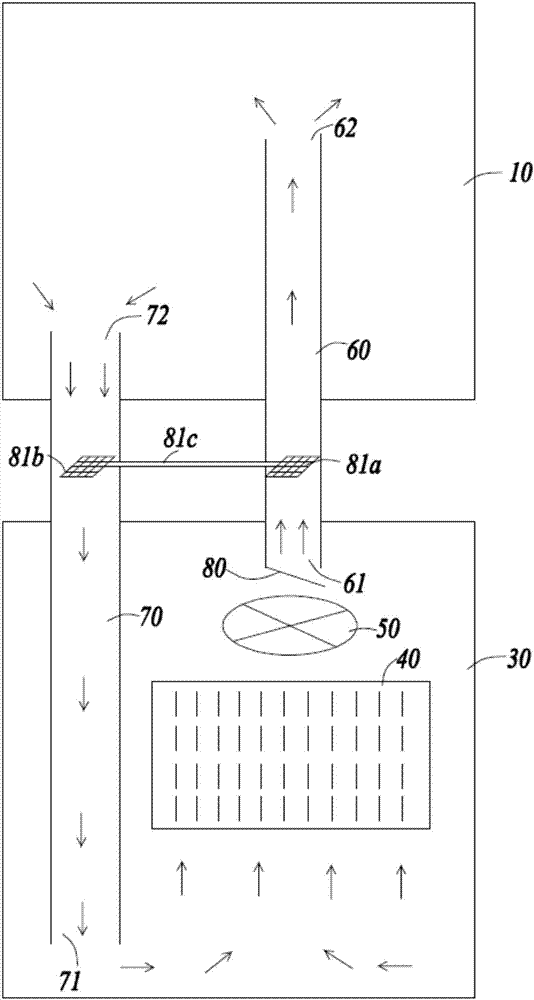
Figure 1 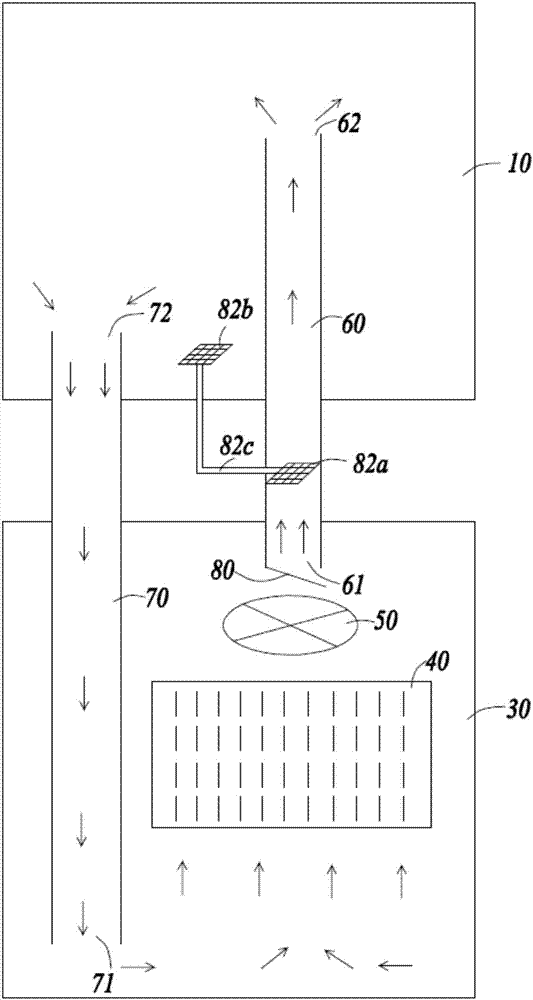
Figure 2 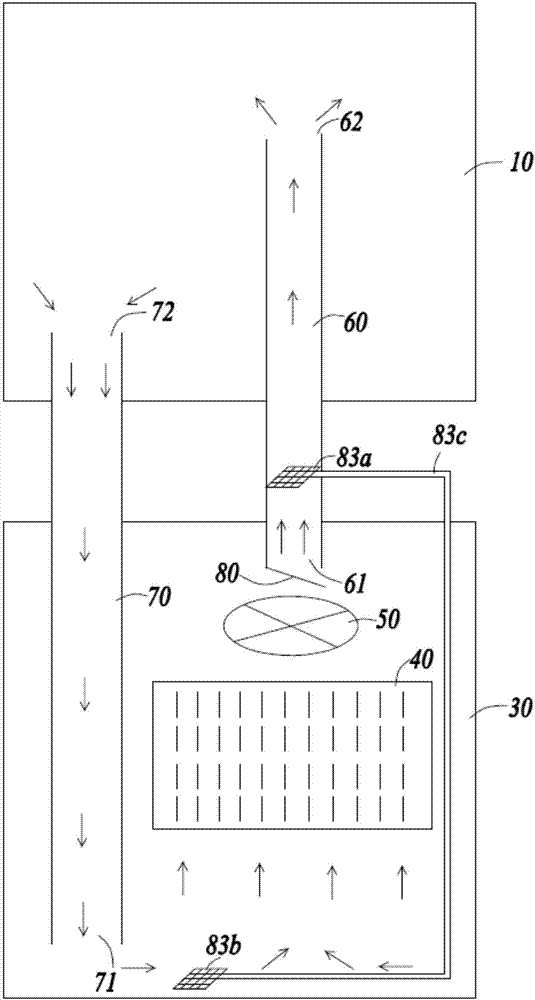
Figure 3
Abstract
Description
technical field
[0001] The invention relates to the field of household appliances, in particular to a single-system air-cooled refrigerator. Background technique
[0002] In the prior art, refrigerators generally refer to single-door, double-door, double-temperature, three-door, three-temperature, and cabinet-type multi-door refrigerators, which generally have independent freezers and refrigerators for separate storage according to different storage temperatures. The refrigeration principle of this refrigerator-freezer is divided into direct cooling and air cooling. Direct-cooling refrigeration systems often use solenoid valves to control the flow of refrigerant, and supply refrigerant to the evaporators of each refrigerating (freezing) room to cool each space to the required temperature. Air-cooled refrigerators and freezers need to set up corresponding air ducts to supply air to each space.
[0003] Compared with direct-cooling refrigerators, air-cooled refrigerators hav...
Examples
Embodiment Construction
[0059] The present invention will be described in detail below in conjunction with specific embodiments shown in the accompanying drawings. However, these embodiments do not limit the present invention, and any structural, method, or functional changes made by those skilled in the art according to these embodiments are included in the protection scope of the present invention.
[0060] It should be noted that, in each of the following embodiments, the "front", "rear", "upper", "lower", "left" and "right" do not represent absolute distinctions in structure or function, but only It is for the clarity and convenience of description; and, in different implementations, the same symbols or signs may be used, which do not represent any structural or functional connections; in addition, multiple examples appear in the following implementations, multiple In the embodiment, the components with the same structure are represented by unified characters and the same labels. For different co...